
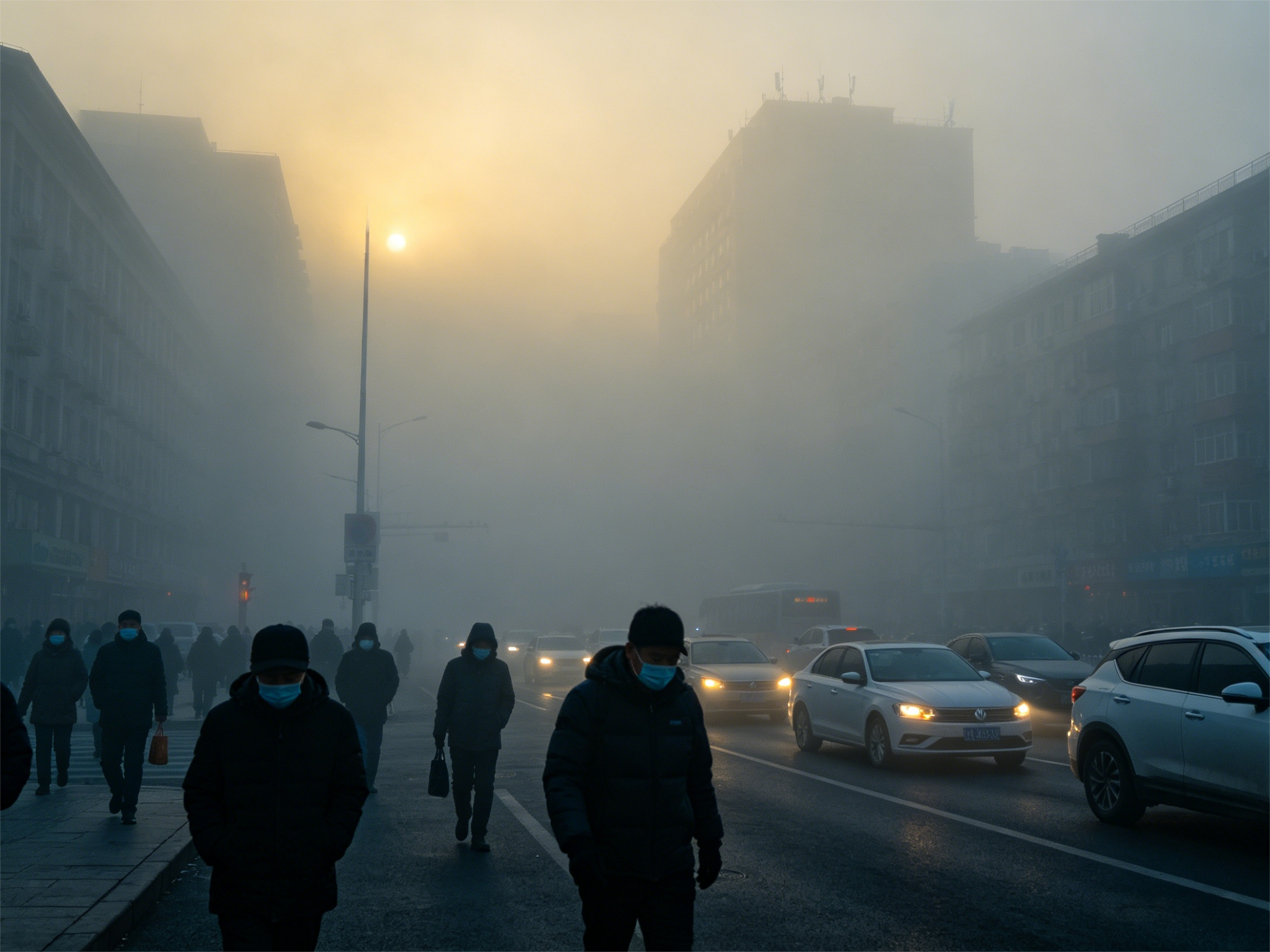
Respiratory health is increasingly dictated by the quality of indoor environments. According to the World Health Organization (WHO), 99% of the global population resides in areas where air quality exceeds safe limits. Because most individuals spend approximately 90% of their time indoors, the performance of air purification systems is critical. However, a common misconception exists that air purifiers maintain a constant level of efficiency until a warning light is triggered. In reality, filtration performance follows a complex degradation curve influenced by physical and chemical principles.
A study published in Environmental Science & Technology (2022) further confirmed that indoor PM2.5 concentrations can be two to five times higher than outdoor levels in poorly ventilated spaces—underscoring the point that passive reliance on installed equipment, without understanding its degradation mechanics, offers a false sense of security.
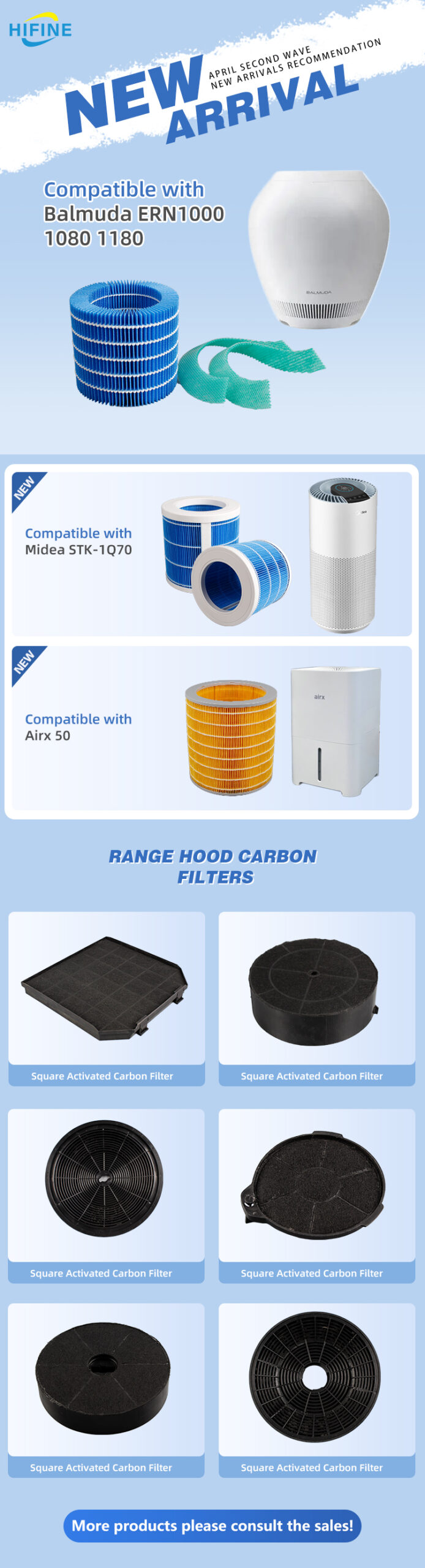
For businesses and health-conscious consumers, understanding the lifecycle of a filter is essential for maintaining a safe environment. As a specialized filter cartridge manufacturer, HIFINE provides H13 and H14 grade solutions designed to address these specific technical challenges.
How H13/H14 HEPA Filters Operate
A certified HEPA filter does not act as a simple sieve. It utilizes four distinct physical mechanisms to capture particulate matter (PM) across various sizes:
- Inertial Impaction: Large particles possess enough inertia to deviate from the airstream and collide directly with the filter fibers. This mechanism is most effective for particles exceeding 1 micron and is largely independent of airflow velocity fluctuations.
- Interception: Mid-sized particles follow the airflow but come close enough to a fiber to be captured by its surface. The effectiveness of this mechanism depends heavily on fiber diameter and packing density—design variables that HIFINE optimizes during the OEM manufacturing process.
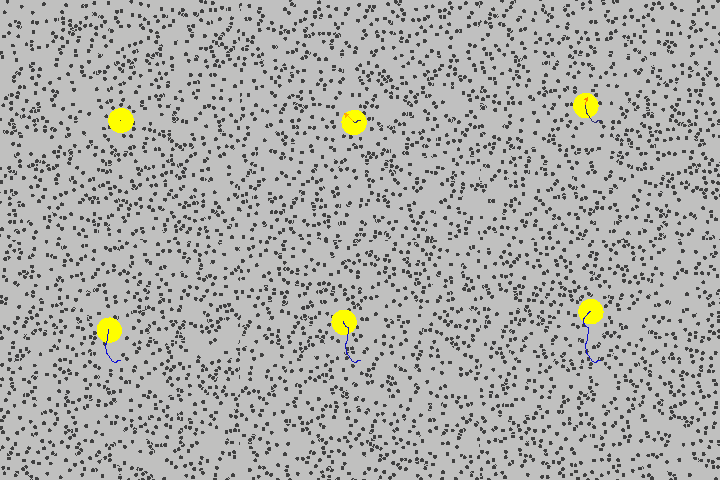
- Diffusion: Ultrafine particles (below 0.1 microns) exhibit Brownian motion, moving erratically until they contact a fiber. This is the primary mechanism for the smallest, most dangerous pollutants—including combustion byproducts and certain viral aerosols. Notably, diffusion efficiency increases as airflow velocity decreases, creating a design tension that engineers must carefully balance.
- Electrostatic Attraction: Supplementary forces used in high-efficiency manufacturing to pull particles toward fibers, enhancing the overall capture rate. However, this effect is sensitive to humidity; at relative humidity levels above 80%, the electrostatic charge on filter fibers can dissipate significantly, reducing its contribution to total capture efficiency.
H13 and H14 grade HEPA filters, which HIFINE offers through our OEM/ODM filter services, are tested to EN 1822 standards. These filters achieve a minimum efficiency of 99.97% to 99.995% at 0.3 microns—the most penetrating particle size (MPPS). It is worth emphasizing that EN 1822 mandates individual filter testing rather than type testing alone, which means every unit leaving HIFINE’s production line carries verified, traceable performance data rather than a class-level assumption.
The Progressive Loss of Filtration Efficiency
Filter failure is rarely a binary event. Instead, it is a gradual process of performance decay that is invisible to the end-user.
Airflow Resistance and HEPA Loading
As a HEPA filter accumulates particulate load, the spaces between fibers become obstructed. This increases “pressure drop”—the resistance air faces when passing through the medium. While a moderate load can sometimes increase capture efficiency by narrowing the gaps between fibers, it eventually leads to a decline in “face velocity” (the speed of air passing through the filter).
Quantitatively, research from the ASHRAE Transactions (2020) demonstrated that a 25% reduction in face velocity corresponded to a measurable drop in CADR of up to 18% in standard residential units—a degradation that most end-users would never detect without instrumentation.
If the pressure becomes too high, previously captured particles can be forced through the medium—a process known as re-entrainment—effectively releasing pollutants back into the room. In high-pollution environments such as construction sites or industrial facilities, this threshold can be reached in as little as six to eight weeks of continuous operation.
The Chemical Limits of Activated Carbon
Activated carbon layers address gaseous pollutants, such as Volatile Organic Compounds (VOCs) and formaldehyde, through a process called adsorption. One gram of activated carbon provides between 500 and 1,500 square meters of internal surface area. However, these adsorption sites are finite. Once the internal pores are saturated, gaseous molecules pass through the filter entirely unimpeded.
The saturation rate is not linear. High-concentration pollution events—such as a fresh coat of interior paint or a period of heavy cooking—can exhaust a significant portion of a carbon filter’s capacity within hours rather than weeks. HIFINE’s custom carbon filter configurations allow specification of carbon bed depth and granule grade to match the anticipated pollutant load of a given deployment environment.
Furthermore, carbon filtration is sensitive to temperature. Research published in the Journal of Hazardous Materials demonstrates that at elevated temperatures, adsorbed molecules can desorb. This means a saturated carbon filter can transform from a purifier into an active source of chemical contamination—a risk that is particularly acute in environments where air purifiers operate near heat-generating appliances.
Real-World Performance vs. Laboratory Standards
Standardized replacement intervals (e.g., 6 to 12 months) are often based on ideal laboratory conditions that assume a constant, moderate particulate load and stable ambient temperature. However, real-world variables such as pet dander, frequent cooking, or recent interior renovations significantly accelerate the saturation process.
A field study published in Building and Environment (2021) observed that 68% of residential filters showed a statistically significant reduction in PM2.5 capture efficiency after only four months of use. A separate investigation by the Indoor Air journal (2022) extended this finding to commercial settings, reporting that open-plan offices in urban environments exhibited filter degradation rates approximately 40% faster than residential equivalents, attributable to higher occupant density and greater infiltration of outdoor particulates.
For organizations managing large-scale environments—hospitals, cleanrooms, educational institutions, or commercial real estate portfolios—sourcing wholesale air purifier filters with verifiable performance data is necessary to ensure that CADR (Clean Air Delivery Rate) remains within safe parameters over time. HIFINE supports procurement teams with batch-level certification documentation and customizable replacement cycle recommendations calibrated to specific use-case parameters.
Clinical Implications for Respiratory Health
The relationship between filter maintenance and clinical outcomes is well-documented. A randomized trial published in JAMA Internal Medicine revealed that homes with properly maintained filtration systems showed a 20% reduction in fine particle concentration and a corresponding decrease in respiratory symptoms for occupants with asthma or COPD.
Subsequent meta-analyses have reinforced this finding. A review in The Lancet Respiratory Medicine concluded that sustained, high-efficiency indoor air filtration was associated with a statistically significant reduction in emergency department visits related to respiratory exacerbation among high-risk populations—provided that filter replacement protocols were consistently followed. Conversely, homes that neglected filter replacement showed no statistically significant health benefits, despite the air purifiers remaining in operation.
This distinction carries important implications for corporate wellness programs and building management standards: the procurement decision does not end at installation. The ongoing filter replacement schedule is operationally inseparable from the health outcome.
Identifying Efficiency Loss in Air Filtration
In the absence of advanced sensor technology, several indicators suggest that a filter has reached its effective end-of-life:
- Discoloration of the HEPA Medium: Significant graying or darkening of the fibers indicates heavy particulate loading. A uniform gray tone generally reflects normal accumulation, while uneven dark patches may indicate channeling—a structural failure where airflow bypasses the filter medium entirely through gaps in the seal or pleats.
- Olfactory Indicators: The presence of persistent odors from the air outlet suggests that the activated carbon layer has reached chemical saturation. In some cases, this is accompanied by a faintly musty smell, which may indicate microbial growth on the surface of a heavily loaded HEPA medium—a secondary health risk independent of particulate filtration.
- Mechanical Strain: An increase in fan noise or a decrease in airflow at fixed settings indicates that the pressure drop across the filter has reached a critical limit. In smart-enabled devices, this is often reflected in a drop in reported CADR values from integrated particle sensors, offering a more objective diagnostic than sensory assessment alone.
HIFINE’s custom filter solutions are engineered to meet ISO9001 and BSCI certifications, ensuring that replacement filters provide the same level of protection as original equipment. Each filter variant undergoes dimensional tolerance verification to guarantee proper sealing against bypass leakage—a failure mode that laboratory-certified filters can still exhibit if the housing fit is compromised. For those managing chronic respiratory health or professional indoor environments, the quality and frequency of filter replacement are the most critical factors in air purification—and the choice of a manufacturer with verifiable production standards is the foundation upon which that quality rests.