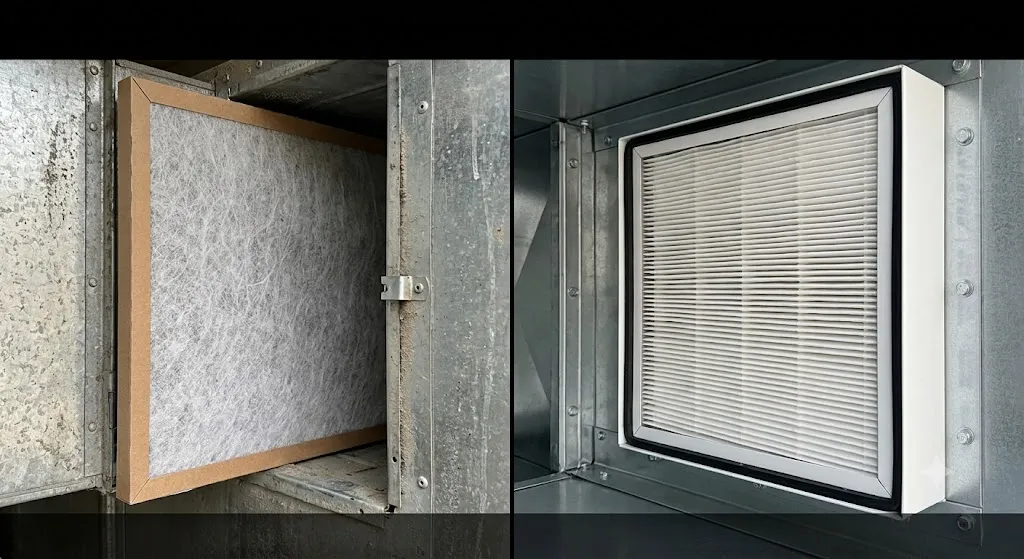

Buy two filters stamped with the same HEPA rating, and they can still behave differently once they’re moving real air through a real room. The rating tells you what a filter caught in a lab test. It does not tell you how it will perform after three months of dust, at the airflow your unit actually pushes, or in the humidity of your climate. Efficiency is not one number. It is a set of design decisions, and most buyers only ever see one of them.
The efficiency of HEPA filters goes beyond just what the label says
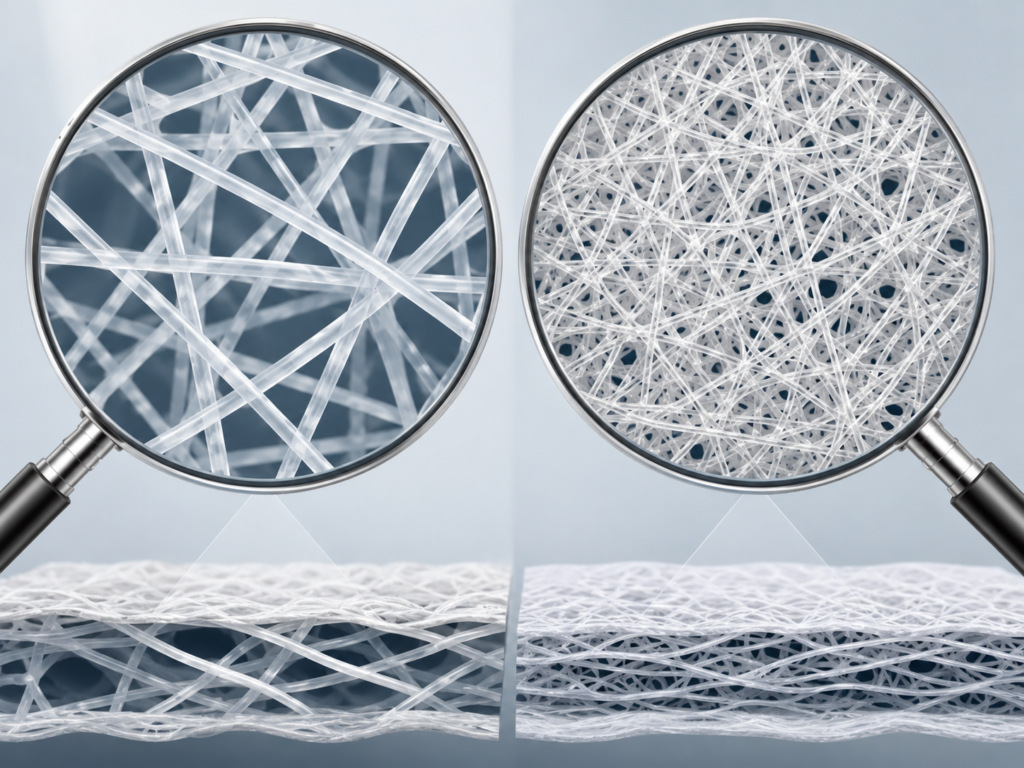
A filter earns its HEPA classification under EN 1822, which requires capturing at least 99.95% of particles at the Most Penetrating Particle Size for H13 grade, tested under fixed laboratory conditions. That number is real, but it describes one moment in a controlled test chamber. It does not describe what happens when the same media is folded into a different pleat pattern, run at a different face velocity, or installed with a gap along the frame seal. Two filters can pass the same EN 1822 test and still deliver noticeably different results once they’re doing daily work in a purifier or vacuum.
We’ve already covered how thickness affects filtration physics and chemistry in a separate piece, so this article focuses on the other variables that shape performance alongside it.
How Fiber Diameter Shapes HEPA Filter Performance
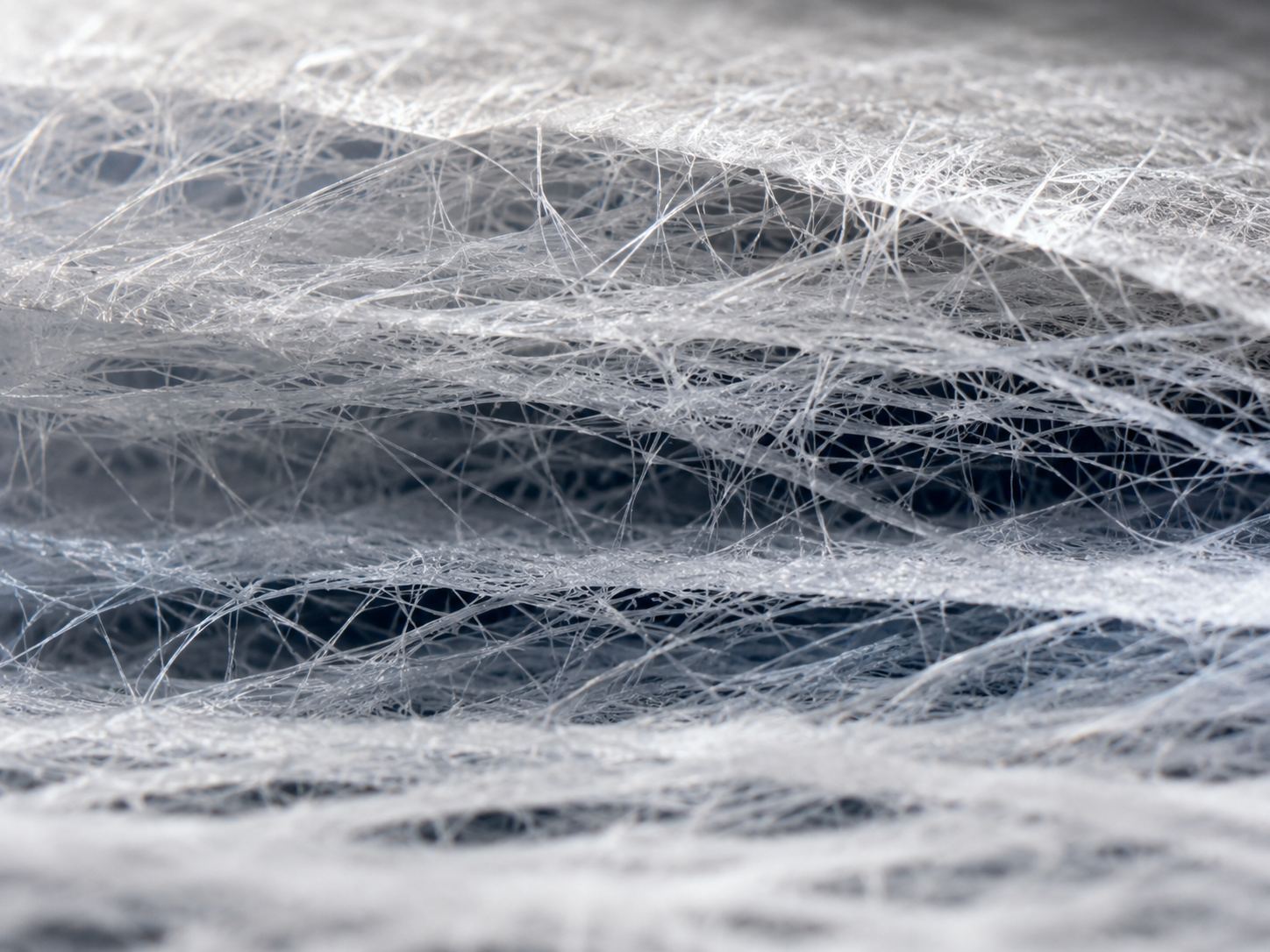
HEPA media is built from randomly layered microfibers, typically glass fiber, and the diameter of those fibers matters more than most buyers realize. Thinner fibers create more surface area and more random crossing points per gram of material, which increases the odds that a small particle collides with a fiber strand before it can pass through. This is why two filters of identical thickness can differ sharply in capture rate: one may use fibers averaging under a micron in diameter, while a cheaper alternative uses coarser fibers that pack less capture surface into the same physical space.
The trade-off is airflow resistance. Finer fiber networks are denser and harder for air to pass through, which raises static pressure and can force a blower motor to work harder. Manufacturers balance fiber diameter against this resistance constantly, and it’s one reason OEM filter specifications rarely disclose fiber size even though it drives most of the real-world performance difference between “budget HEPA” and true H13/H14 media.
What Pleat Design Does to HEPA Filter Airflow and Dust Capacity
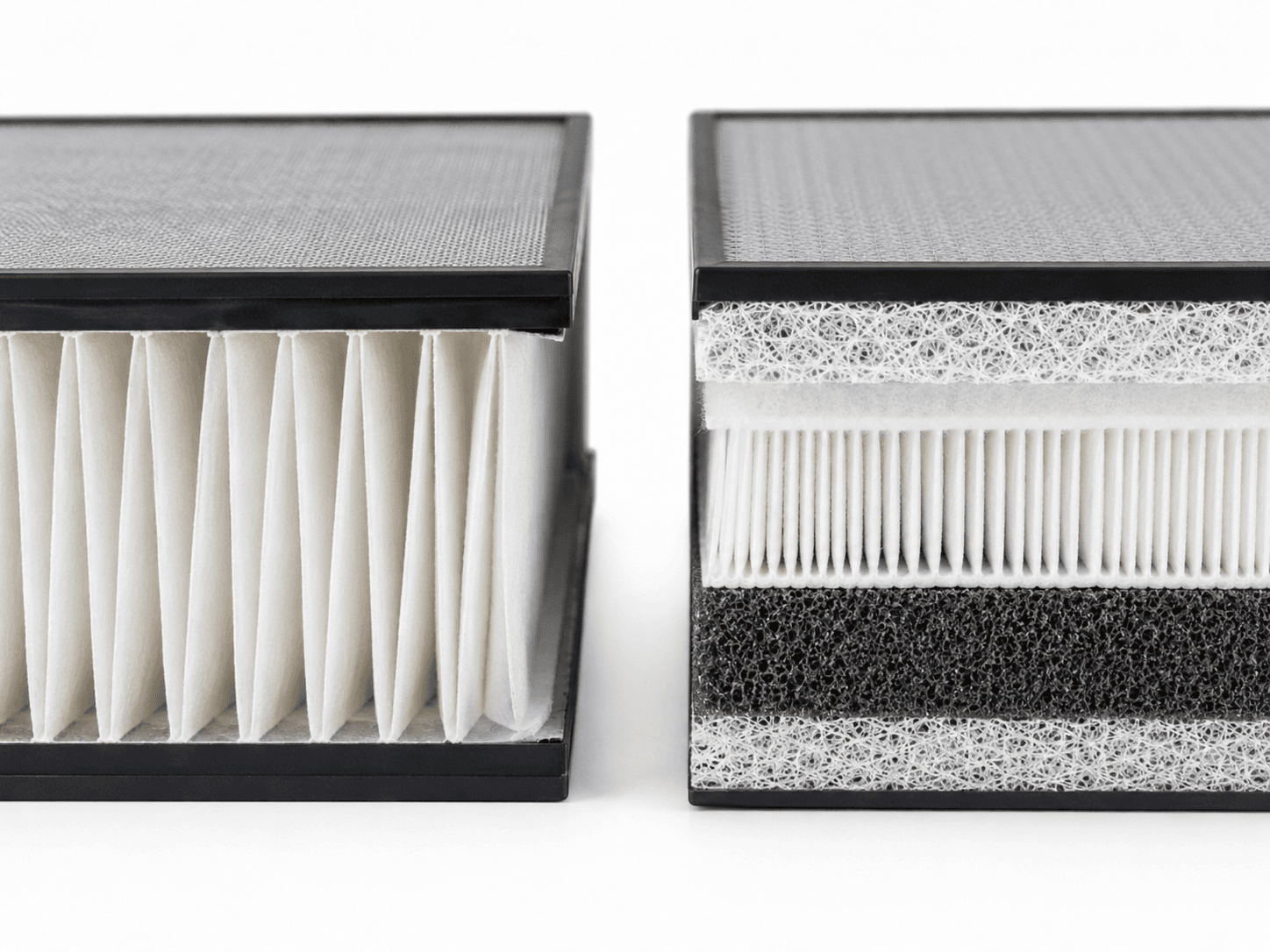
Flat, unpleated media has a fixed surface area equal to the size of the filter frame. Pleating folds that same media into accordion shapes, multiplying the usable surface area many times over without changing the external dimensions. More surface area means air moves through more slowly per square inch of media, which lowers resistance and extends the time before the filter clogs.
Pleat count and pleat depth both matter here. Too few pleats waste the media’s potential; too many pleats packed too tightly can collapse against each other and choke airflow before the filter ever saturates with dust. ASHRAE Standard 52.2 testing protocols track this by measuring performance across a full dust-loading cycle rather than a single clean-filter snapshot, which is closer to how a filter behaves in an actual home or office over weeks of use.
How Electrostatic Charge Boosts HEPA Filtration Without Adding Thickness
Some HEPA and near-HEPA media carries an electret charge, a permanent electrostatic field applied to the fibers during manufacturing. Charged fibers attract fine particles toward them rather than relying purely on physical interception, which allows a filter to capture more without needing thicker or denser media. This is part of why electrostatically enhanced filters can achieve strong initial efficiency at lower airflow resistance than purely mechanical media of the same thickness.
The catch is that electret charge fades. Humidity, oils, and general aging gradually neutralize the static field, and a filter that measured impressively on day one may rely almost entirely on mechanical structure by month six. Buyers sourcing filters for humid climates should ask suppliers directly whether efficiency claims reflect initial performance or loaded, aged performance, since the gap between the two can be significant.
Why Face Velocity Changes Real-World HEPA Filter Performance
Face velocity is the speed at which air moves across the filter surface, and it is set by the fan or motor of the device the filter sits inside, not by the filter itself. Push air through media faster than it was designed for, and particles have less time near each fiber to be intercepted, which lowers capture efficiency even though the filter itself hasn’t changed. This is why a HEPA filter rated for a specific air purifier model may underperform if installed in a higher-airflow unit, or in a household running several devices at once, including appliances like induction cookers that add heat and airborne particulates to the room’s air load.
This is also why HIFINE builds filter media specifications around the actual airflow curve of each partner brand’s device rather than a single generic capture rate, since a filter tuned for the wrong face velocity undersells the material’s true potential.
How Humidity and Aging Affect Long-Term HEPA Filter Efficiency
Filtration efficiency measured on day one is a starting point, not a guarantee. Humidity can swell fibers and alter pore structure over time; accumulated dust initially improves capture by adding physical obstruction, then eventually restricts airflow enough to strain the motor; and any charge-based media loses its electrostatic advantage as described above. The World Health Organization’s air quality guidance and EPA indoor air resources both note that filtration systems require regular replacement schedules precisely because no medium holds its rated performance indefinitely, regardless of how it tested when new.
For B2B buyers, this means efficiency data should always be paired with a realistic service life recommendation, not treated as a permanent spec.
What This Means for Buyers Sourcing HEPA Filter Media
A HEPA rating confirms a minimum standard was met under test conditions. It does not confirm how a filter will behave across fiber diameter choices, pleat geometry, electrostatic treatment, the airflow of the host device, or the humidity of the region it ships to. Brand owners and private label buyers evaluating filter media suppliers should ask for data across all of these variables together, not the EN 1822 number alone.