
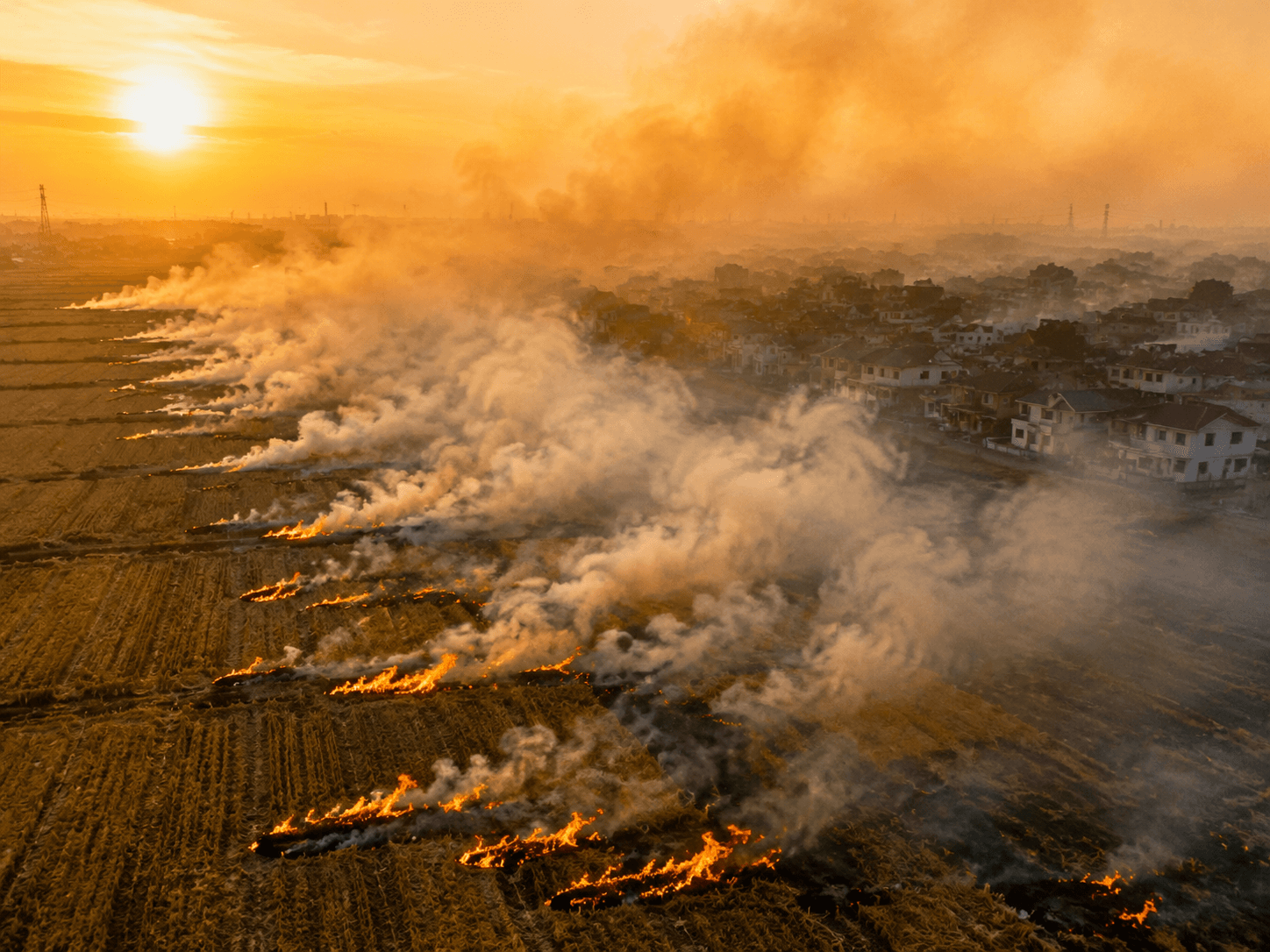
Every autumn, across agricultural regions from California’s Central Valley to the Indo-Gangetic Plain, farmers burn leftover crop stubble — the dry straw and root material that remains in the field after harvest. It clears land quickly and costs almost nothing, which is why the practice persists even where restrictions exist.
For anyone living downwind, the result is weeks of dense, low-lying smoke that settles over neighborhoods and works its way indoors. Unlike wildfire smoke, which arrives without warning, straw burning follows a harvest calendar. That makes the exposure predictable. And a predictable hazard is one you can prepare for — if you have the right filter media in place before the season begins.
What Crop Stubble Smoke Actually Contains

Stubble is not clean fuel. Damp plant fiber, soil residue, and pesticide-treated straw combust together at field temperatures — hot enough to burn, but not hot enough to burn cleanly. Unlike sealed indoor appliances such as induction cookers, which deliver precision combustion with minimal byproducts, open field burning produces a chemically complex smoke mixture that taxes filtration systems in ways ordinary household dust does not.
What’s in straw burning smoke:
- Fine particulate matter (PM2.5): Particles under 2.5 microns that travel through nasal passages unfiltered and deposit directly in lung tissue. The EPA sets its 24-hour PM2.5 standard at 35 μg/m³. Air quality readings near active burning crops regularly reach 100–200 μg/m³ or higher during peak events.
- Polycyclic aromatic hydrocarbons (PAHs): Toxic organic compounds produced when biomass burns incompletely. The International Agency for Research on Cancer (IARC) classifies several PAHs — including benzo[a]pyrene — as Group 1 human carcinogens.
- Volatile organic compounds (VOCs) and carbon monoxide: Gases that pass through HEPA filter media entirely unchanged. They require 活性炭 to be captured.
- Black carbon and tar aerosols: Sticky sub-micron particles that load filter media significantly faster than ordinary household dust, compressing effective filter life during smoke events.
Research from Lawrence Berkeley National Laboratory has documented that outdoor biomass burning events raise indoor PM2.5 concentrations by 60% or more above pre-event baseline within hours of onset — even in homes with closed windows and standard HVAC filtration running. Your building envelope is not a reliable barrier. Your filter is.
Why Standard Filters Fail When Burning Crops Fill the Air
Most residential HVAC systems come equipped with a MERV 8 filter or even higher by the factory. — sufficient for pollen, dust mites, and pet dander under normal conditions, but the wrong tool for crop smoke. Two problems emerge simultaneously during a straw burning event.
First, ambient PM2.5 concentrations spike to 10–20 times normal, which accelerates how fast the filter media loads with particles. Second, smoke particles are smaller and stickier than typical household dust. They don’t distribute evenly across filter media. They concentrate at high-airflow zones, creating localized saturation points that push air through lower-resistance gaps at filter edges. A MERV 8 filter rated for 90 days under average conditions can reach functional saturation in under two weeks during burning season — while still looking only lightly discolored on visual inspection.
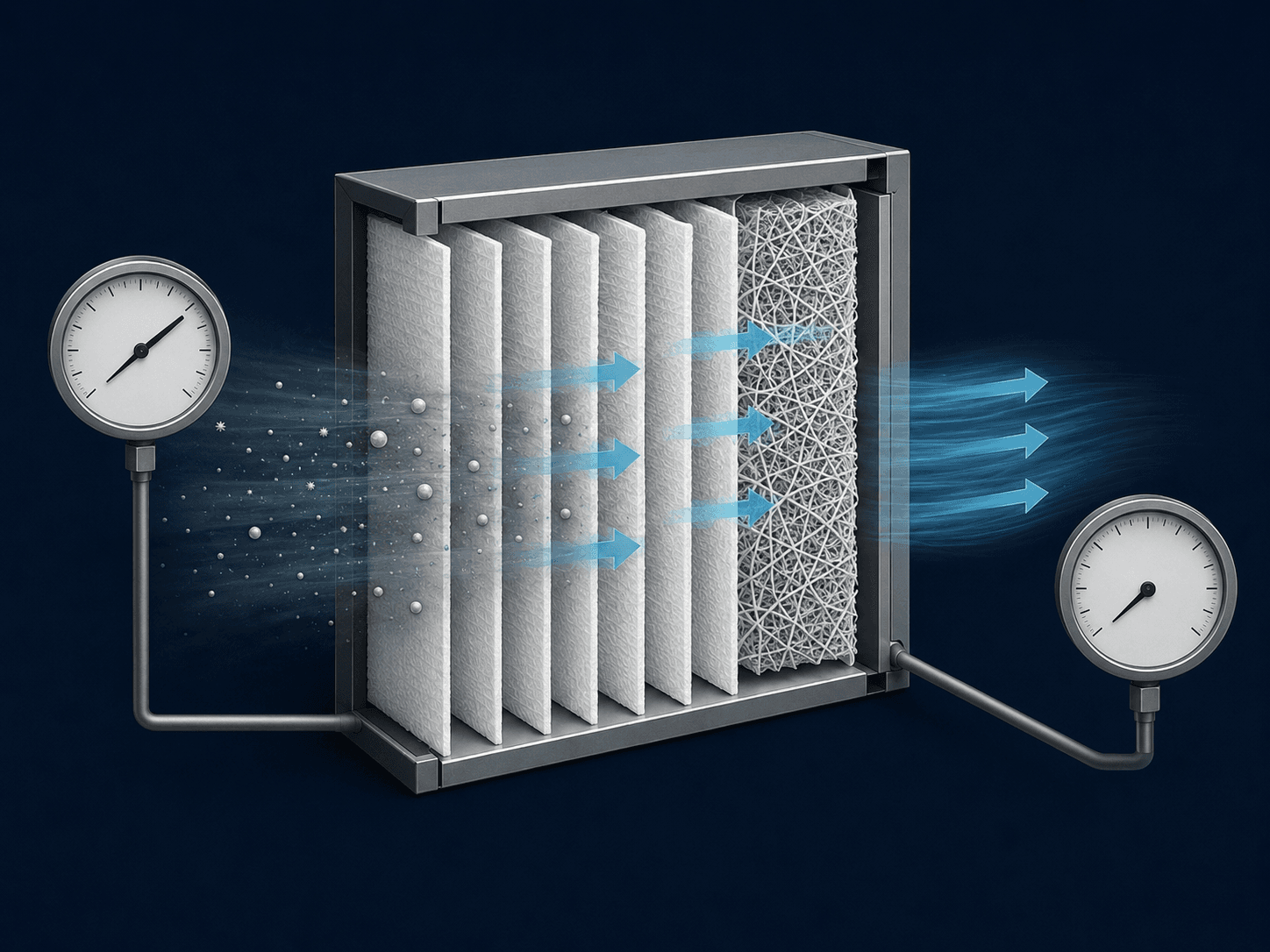
This is the core mismatch: visual inspection is a poor saturation indicator for smoke-loaded filters. Pressure drop is more reliable. If your HVAC system has a differential pressure gauge, monitor it. If not, treat the start of burning season as a hard reset on your filter change schedule — not a continuation of the previous interval.
Filter Specifications That Match the Straw Burning Threat
H13 HEPA rating is the lowest specification for PM2.5 produced by crop burning
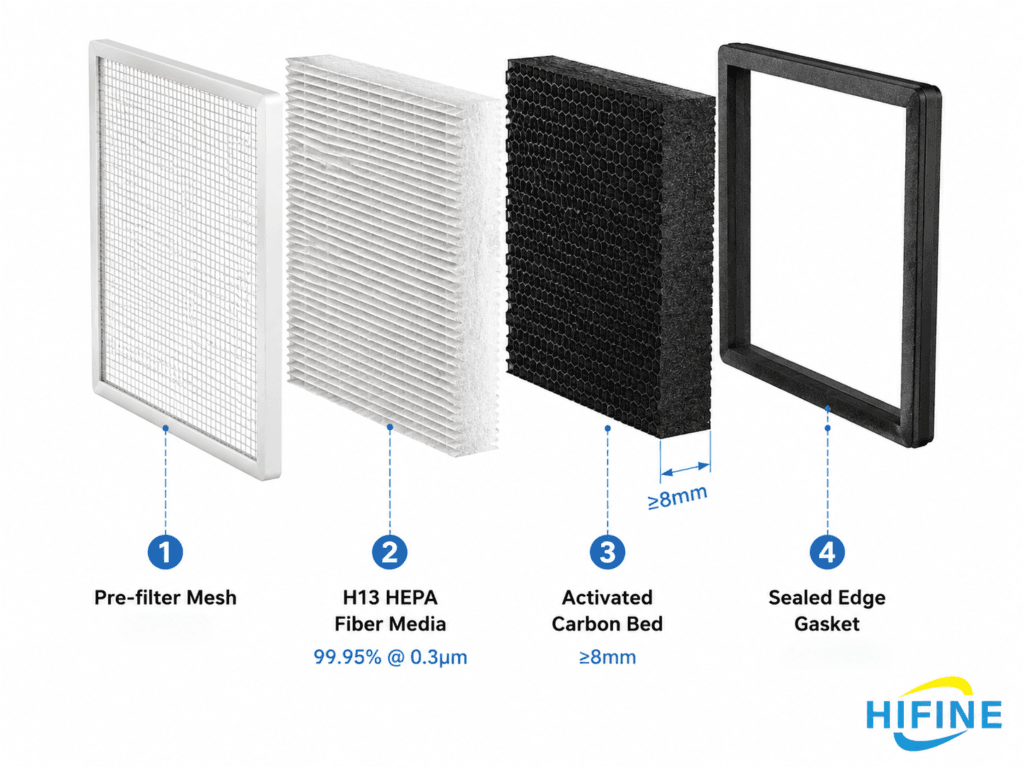
True HEPA under EN 1822 — the governing European standard widely adopted by manufacturers globally — means the filter captures at least 99.95% of particles at 0.3 microns, the most penetrating particle size for fibrous filter media. For straw burning smoke, H13 is the minimum credible specification. Filters marketed as “HEPA-type,” “HEPA-like,” or “high-efficiency” without explicit EN 1822 H13 certification carry no standardized performance guarantee and typically offer substantially lower efficiency at PM2.5 particle sizes.
Three specifications beyond the grade rating determine real-world performance under heavy smoke loading:
- Pleat count and media surface area: More pleats mean more filtration surface area per unit, which slows the rate of pressure drop buildup under sustained crop smoke loading. A high-pleat H13 filter outlasts a low-pleat filter of identical grade during burning season.
- Media density and holding capacity: Expressed in grams per square meter (g/m²), this figure determines how much particulate the filter retains before performance degrades. Suppliers can provide this data. Retail packaging almost never does.
- Sealed edge construction: If the filter media doesn’t create a positive seal against the housing frame, PM2.5-laden air bypasses around it entirely. This is the most common — and most overlooked — failure mode in aftermarket replacement filters.
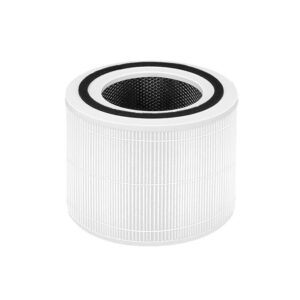
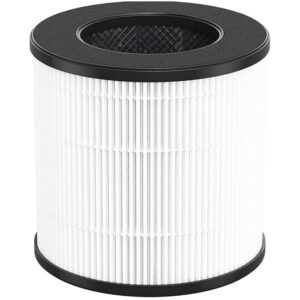
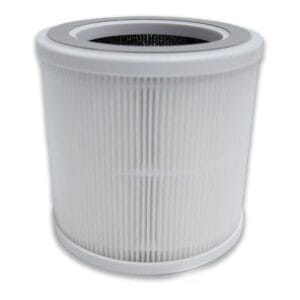
HIFINE 的 replacement HEPA filter media is manufactured to H13 grade with sealed edge construction, specifically to close the bypass gap that undermines most aftermarket options under heavy smoke load conditions.
Activated Carbon: The Only Layer That Handles Smoke Gases
HEPA handles particles. Activated carbon handles gases. Straw burning smoke carries a significant VOC and gas load that HEPA filter media cannot reduce at all. The critical variable in carbon filtration is not the presence of carbon — it’s the volume of carbon.
Thin carbon mats, carbon-impregnated fabric layers, and surface carbon coatings saturate quickly and then become transparent to VOCs. Once available adsorption sites are exhausted, the carbon layer adds no gas removal. For meaningful protection during burning season:
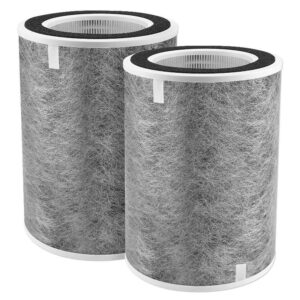
- Target a carbon bed depth of at least 5–10mm, not a surface treatment or impregnated mesh
- Coconut shell-derived activated carbon offers higher micropore surface area than coal-based alternatives — relevant for capturing the smaller VOC molecules typical of agricultural combustion smoke
- In practice, carbon stages saturate faster than HEPA stages during smoke events; treat them as separate replacement items on their own schedule
Timing Filter Changes Around Burning Season
Calendar-based filter intervals are calibrated for average dust loads. During burning season, they become unreliable. A more practical protocol:
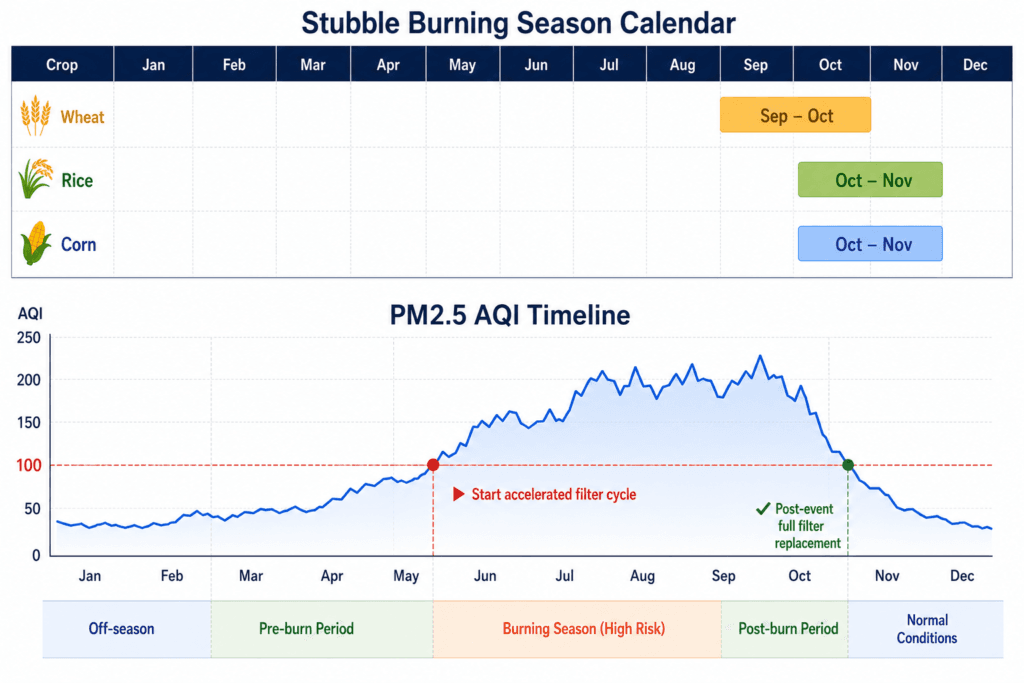
- Monitor EPA AirNow (airnow.gov) or a local PurpleAir sensor network. When the 24-hour PM2.5 AQI exceeds 100 for three or more consecutive days, treat that as the start of an accelerated change cycle.
- Stock replacement filter media before harvest season begins. Supply of H13-grade replacement media tightens during regional air quality events — the same events that create the highest demand.
- After the burning event ends and AQI returns to baseline for at least 48 hours, replace all filter stages before resuming standard timing. Residual tar and black carbon carried in a spent filter continues to degrade airflow performance and can partially off-gas back into circulated air.
What Farmers Do With Crop Residue
In the field of agriculture, stubble disposal has grown more regulated over the past decade. Many regions now restrict or ban open burning and push farmers toward alternatives: baling residue for animal feed, deep tillage incorporation, or biochar production. But enforcement is uneven, exemptions exist, and during compressed harvest windows, farmers disposal decisions shift quickly under time and weather pressure. Even where straw burning bans are on the books, violation rates spike when wet weather narrows the window for field preparation before the next planting season.
The practical implication for filter planning: when burning is legally permitted or enforcement is light, it happens intensively. Compressed burning windows create concentrated exposure spikes rather than diffuse chronic exposure. In multi-crop agricultural regions, wheat stubble burning in September may overlap with rice straw burning in October and November — extending total household exposure across two or three months without a full recovery period between events.
Knowing your region’s crop calendar is one of the most underrated filter management tools available. Local agricultural extension offices publish harvest schedules. Regional air quality management districts often track permitted burning days and issue advance notifications. Combining these with AQI monitoring provides as close to real-time burning season forecasting as most households can practically access.
The Replacement Filter Quality Gap Nobody Talks About
Two H13 高效过滤器 can both carry the same certification and perform very differently under sustained crop smoke. The difference is manufacturing tolerance and media specification: fiber diameter, fiber distribution uniformity, binder chemistry, and pleat geometry all affect how quickly a filter’s performance degrades under continuous heavy carbon and tar loading — and how much PM2.5 passes through as degradation progresses.
Mass-market replacement filters optimize for cost. Media density gets reduced, pleats get shallower, carbon layers get thinner. Under normal residential conditions, the performance difference between a cost-optimized filter and a specification-grade replacement is marginal and nearly impossible to detect without instrumentation. Under two weeks of continuous operation during a burning crops event, the difference shows up in pressure drop acceleration, in visible media discoloration patterns, and ultimately in the PM2.5 readings your indoor air quality monitor returns.
HIFINE’s filter media meet OEM specifications and are the same as those used by air purifier manufacturers, making them available as aftermarket replacements. For households that continuously operate their filtration systems during straw burning season, media quality is not just a theoretical concern, but a crucial factor determining whether the system can operate stably or silently fail due to overload.
A Practical Layered Defense Against Stubble Smoke Season
Seal the envelope first. Weatherstripping gaps around windows and exterior doors allow unfiltered outdoor air to infiltrate directly, bypassing whatever filter media you’re running. During peak burning days, infiltration through building gaps can exceed what even correctly specified H13 filtration can compensate for on its own.
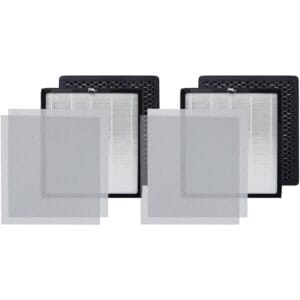
Add a pre-filter stage. A pre-filter placed upstream of the HEPA layer captures large particles and slows the rate at which black carbon and tar aerosols saturate the HEPA media surface. During burning events with sustained high particle counts, this meaningfully extends effective HEPA filter life.
Run continuously at medium speed. Research from Lawrence Berkeley National Laboratory consistently shows that continuous medium-speed operation removes more cumulative PM2.5 than intermittent high-speed cycles — with slower filter wear and lower energy consumption. Running at maximum speed during the worst days and off overnight is a common strategy that leaves the biggest exposure window.
Verify with a sensor. A low-cost indoor PM2.5 monitor — PurpleAir, Ikea Vindriktning, Atmotube, or equivalent — provides real-time feedback on whether your filtration setup is actually holding indoor air quality below exposure thresholds. If indoor PM2.5 closely tracks outdoor levels during burning events, your filtration chain has a problem: bypass, saturation, or insufficient runtime.
Replace on event triggers, not calendar dates. Straw burning is a conditional event tied to agricultural schedules, not a predictable constant. Let AQI data drive your replacement decisions rather than a fixed interval calibrated for average dust loads.
Crop stubble burning is a scheduled emergency — unlike wildfires or industrial accidents, it follows a harvest calendar you can track and prepare for. The households that get through burning season without significant indoor exposure spikes are the ones running H13 HEPA filter media with sealed edge construction, real activated carbon volume rather than a token surface treatment, and event-based replacement timing. The filter is the variable that matters most. A substandard replacement filter running continuously during peak straw burning season is not a cost-saving measure — it is an unexamined health exposure that plays out over the weeks most at-risk households think they are protected.