
Not all water filter cartridges work the same way. Walk into any hardware store or browse any online supplier, and you’ll find at least four distinct types staring back at you: PP cotton, activated carbon, ultrafiltration membranes, and reverse osmosis membranes. Each targets different contaminants at different price points.
Picking the wrong one doesn’t just waste money. It can leave you thinking your water is clean when it isn’t.
This guide breaks down how each cartridge type works, what it does well, where it falls short, and how to figure out which combination makes sense for your home or facility.
What Each Cartridge Type Actually Does
PP Cotton
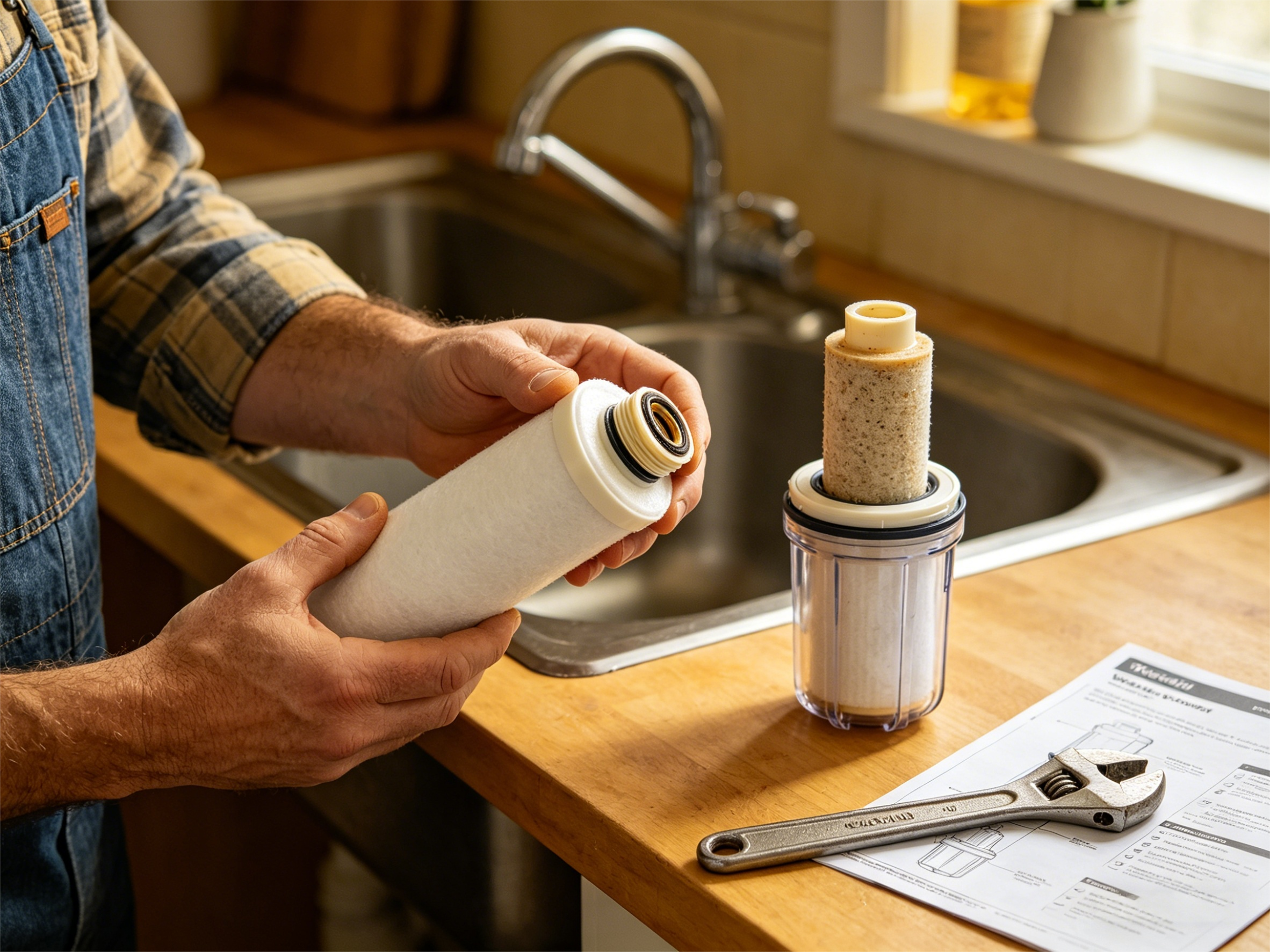
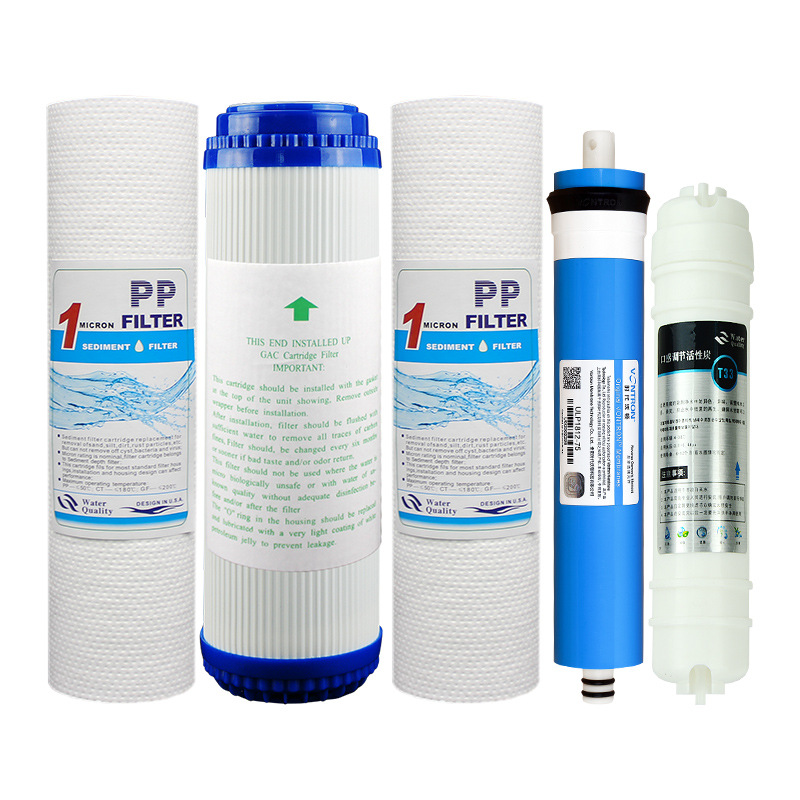
PP cotton is almost always the first stage in any multi-stage water filtration system. It’s a physical filter—a tightly wound or melt-blown polypropylene fiber that catches visible and near-visible particles as water flows through it.
What PP cotton removes:
- Sediment, rust, and sand
- Dirt and debris
- Larger particles down to 1–5 microns
What PP cotton does NOT remove:
- Dissolved chemicals
- Heavy metals
- Bacteria or viruses
- Chlorine, chloramines, or odors
PP cotton cartridges are inexpensive to replace and essential for protecting downstream filter stages from clogging prematurely. Think of it as the front line—it handles the visible stuff so your more specialized filters can do their jobs efficiently.
Activated Carbon Filters
Activated carbon is the workhorse of water filtration. Made from coconut shells, coal, or wood that’s been processed at high temperatures to create an enormous network of microscopic pores, it works primarily through adsorption—contaminants bond to the carbon surface as water passes by.
What activated carbon removes effectively:
- Chlorine and chloramines
- Volatile organic compounds
- Herbicides and pesticides
- Disinfection byproducts
- Bad taste and odor
- Some heavy metals
What activated carbon does NOT remove:
- Fluoride
- Nitrates
- Most dissolved heavy metals
- Bacteria or viruses
- Total dissolved solids
There are two main forms to know about. Granular activated carbon allows water to find the path of least resistance and may leave some contaminants untouched. Carbon block packs carbon into a solid form for more consistent contact time and better contaminant reduction across the board.
For most households on municipal water, a quality carbon block filter addresses the most common water quality concerns—chlorine taste, odor, and trace organic chemicals—affordably and effectively.
Ultrafiltration Membranes
Ultrafiltration is a membrane-based technology with pore sizes typically ranging from 0.01 to 0.1 microns. That’s small enough to block bacteria and most viruses, but large enough that dissolved minerals—both harmful and beneficial—pass through freely.
What UF removes:
- Bacteria
- Viruses
- Cysts like Giardia and Cryptosporidium
- Colloids and larger particles
What UF does NOT remove:
- Chlorine or chloramines
- Heavy metals
- Nitrates or fluoride
- Total dissolved solids
UF is popular in areas where biological contamination is the main concern but the mineral content of the water is acceptable. Because it doesn’t strip out beneficial minerals like calcium and magnesium, the water retains a natural taste. It’s also low-maintenance compared to RO—no wastewater, no pressure requirements, and cartridges typically last 6–12 months.
For areas with generally reliable municipal water but occasional bacterial contamination concerns, UF is worth considering as a standalone or combined solution.
Reverse Osmosis Membranes
Reverse osmosis is the most thorough filtration method available for residential and commercial use. Water is forced through a semi-permeable membrane with pores as small as 0.0001 microns—small enough to reject almost everything dissolved in it.
What RO removes:
- Heavy metals
- Fluoride
- Nitrates and nitrites
- Total dissolved solids
- Most bacteria and viruses
- Pharmaceuticals and microplastics
What RO does NOT remove consistently:
- Some low-molecular-weight VOCs and certain pesticides
- Dissolved gases like radon or hydrogen sulfide
- Certain herbicides with small molecular structures
The trade-offs are worth knowing. Traditional RO systems discard 3–4 gallons of water for every gallon produced, operate slowly, and remove beneficial minerals alongside harmful ones. Many modern systems address the mineral issue with a remineralization post-filter. Tankless RO technology has also significantly improved wastewater ratios in recent years.
If you have well water, confirmed heavy metal contamination, or very high TDS levels, RO is usually the right answer—even accounting for the higher upfront cost.
How to Choose Based on Your Situation
If You’re on City or Municipal Water
City water is typically treated with chlorine or chloramines and generally meets safety standards, but many people find the taste and odor objectionable. A two-stage system—PP cotton pre-filter followed by an activated carbon block—handles this well and is affordable to maintain.
If you want additional protection against lead, add a carbon block certified to NSF/ANSI Standard 53 for lead reduction, or step up to a three-stage system incorporating a KDF stage.
If You’re on Well Water
Well water is unregulated and can contain a wide variety of contaminants depending on local geology: arsenic, iron, manganese, bacteria, nitrates, and more. Without a water test, you’re guessing—and guessing wrong has real consequences.
Get your well tested first. Then design your filtration system around the actual results. Most well water situations benefit from a multi-stage approach: PP cotton → activated carbon → UF or RO membrane.
If You Have Young Children or Immunocompromised Family Members
The stakes are higher when vulnerable people are involved. UF or RO at the point of use provides the highest level of biological and chemical protection. Single-stage systems or basic pitcher filters aren’t sufficient for these households.
If Budget Is Your Primary Constraint
A quality carbon block filter certified to NSF 53 covers the most common concerns for most people at the lowest ongoing cost. Replace the cartridge on schedule and you’ll get consistent performance without overspending on technology you may not need.
Understanding Filter Ratings and Certifications
Filter cartridge specifications aren’t always straightforward. A few things worth knowing:
- Micron rating: Lower numbers mean smaller pores and finer filtration. A 1-micron filter catches more than a 5-micron filter. Absolute micron ratings are more reliable than nominal ratings, which only capture a percentage of particles at the stated size.
- NSF/ANSI certifications: The most important ones for water filtration are NSF 42, NSF 53, NSF 58, and NSF 244. These require independent laboratory verification, not just manufacturer claims.
- Filter lifespan: Measured in gallons or months, whichever comes first. Exceeding the rated lifespan reduces performance and risks what’s called contaminant breakthrough—where previously captured substances are released back into the filtered water.
Building a Multi-Stage System That Works
Most effective home water filtration systems use multiple cartridges in sequence. A common and well-proven configuration:
- PP cotton (5 micron): Removes sediment, rust, and larger particles
- Activated carbon block: Removes chlorine, VOCs, taste and odor issues
- RO membrane: Removes heavy metals, TDS, dissolved contaminants
- Post-carbon or remineralization: Polishes taste, restores beneficial minerals
Each stage protects the next. Without the PP cotton pre-filter, sediment clogs the carbon stage. Without the carbon stage, chlorine degrades the RO membrane prematurely. The order matters as much as the technology choices.
What This Means for OEM and Commercial Buyers
For product developers and OEM buyers specifying filtration systems, understanding how these cartridge types interact is critical. A single-stage product positioned for the general market performs differently than a multi-stage system designed for specific contamination profiles.
For a deeper look at how specific contaminants interact with different media—particularly heavy metals—see our companion guide on whether filter cartridges can actually remove heavy metals.
常见问题
Not recommended as a standalone solution. PP cotton only removes physical particles—it won’t affect chemical contaminants, taste, or microorganisms. It works best as a pre-filter that protects downstream stages and extends their useful life.
Not necessarily. Price reflects materials, certifications, brand positioning, and marketing budgets. A mid-range NSF-certified carbon block from a reputable manufacturer often outperforms an expensive uncertified filter. Check certifications and tested performance data, not price tags.
As a general guideline: PP cotton every 1–3 months, activated carbon every 3–6 months, UF membrane every 6–12 months, and RO membrane every 2–3 years under normal use.