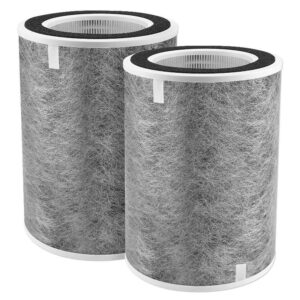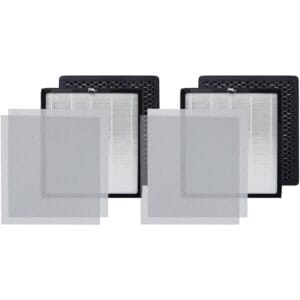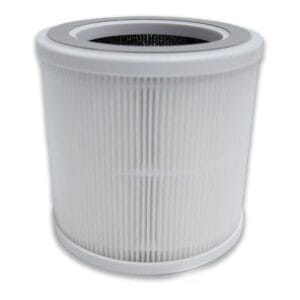

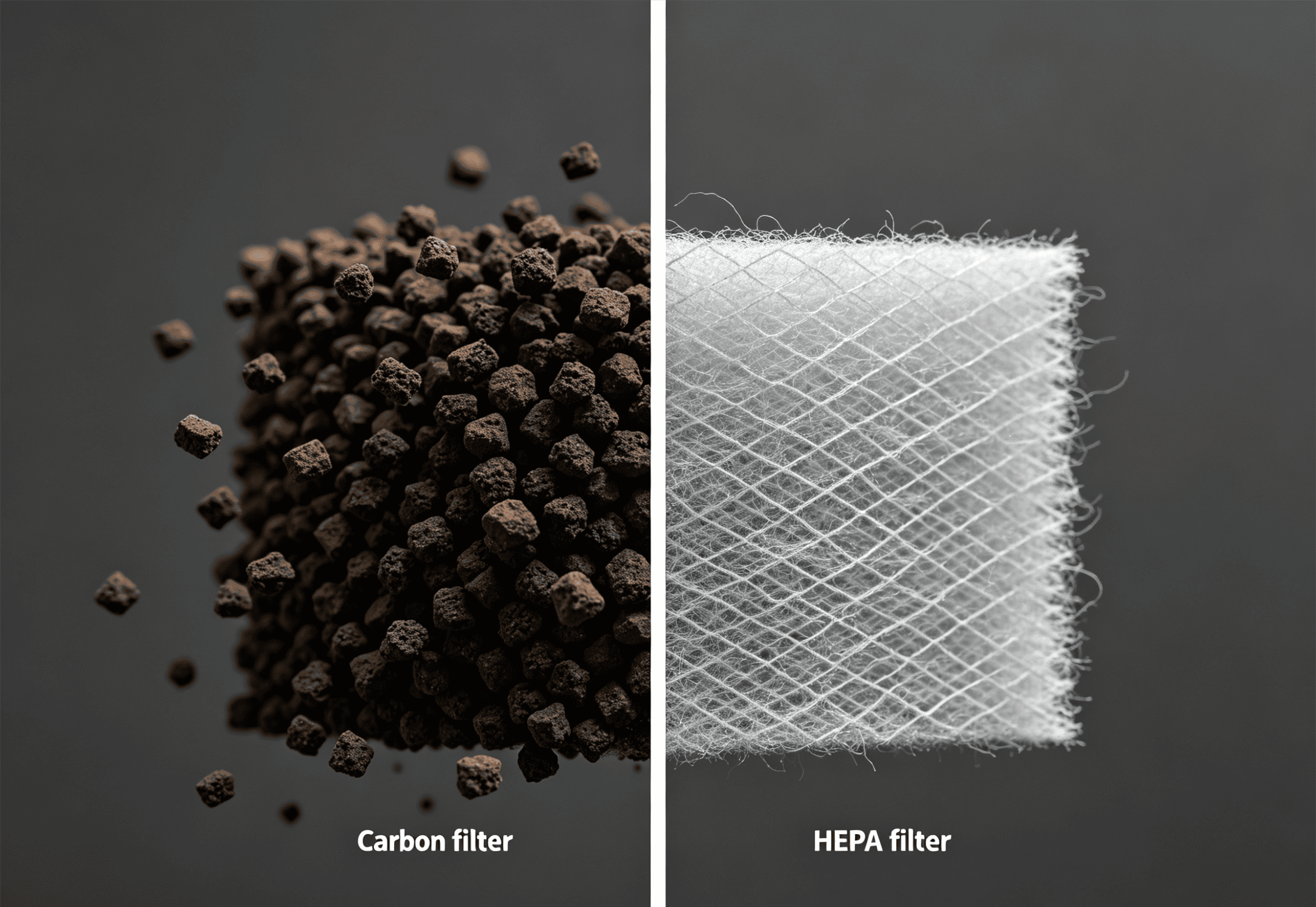
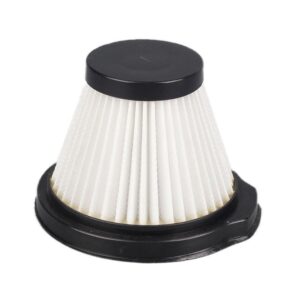
There’s a question we see everywhere — in product reviews, Reddit threads, and customer emails. People want to know which filter is better: carbon or HEPA? It’s a reasonable question, but it’s also the wrong one. As a manufacturer that makes both, we can tell you this clearly: these two filters were never designed to compete. They were designed to clean things the other one physically cannot.
If you walk away from this article understanding one thing, make it this: HEPA catches particles. Activated carbon adsorbs gases. The air in your home contains both — and once you know which problem you’re actually solving, the rest of the buying decision becomes a lot less confusing.
Two Filters, Two Completely Different Physics
This isn’t a competition. It’s more like asking whether a sieve or a sponge is better — they’re built around different mechanisms, for different targets.
What HEPA filtration is actually doing inside the media
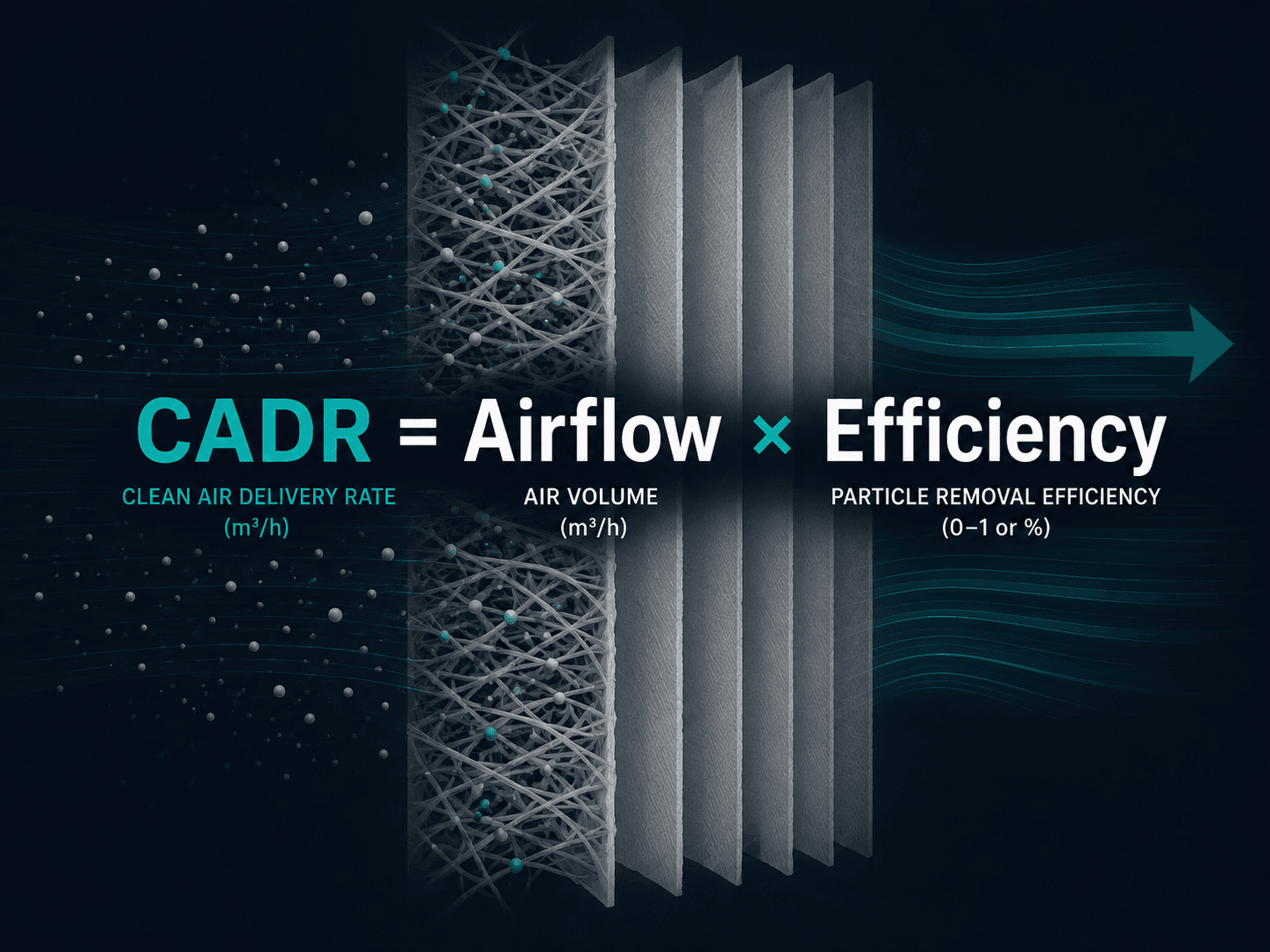
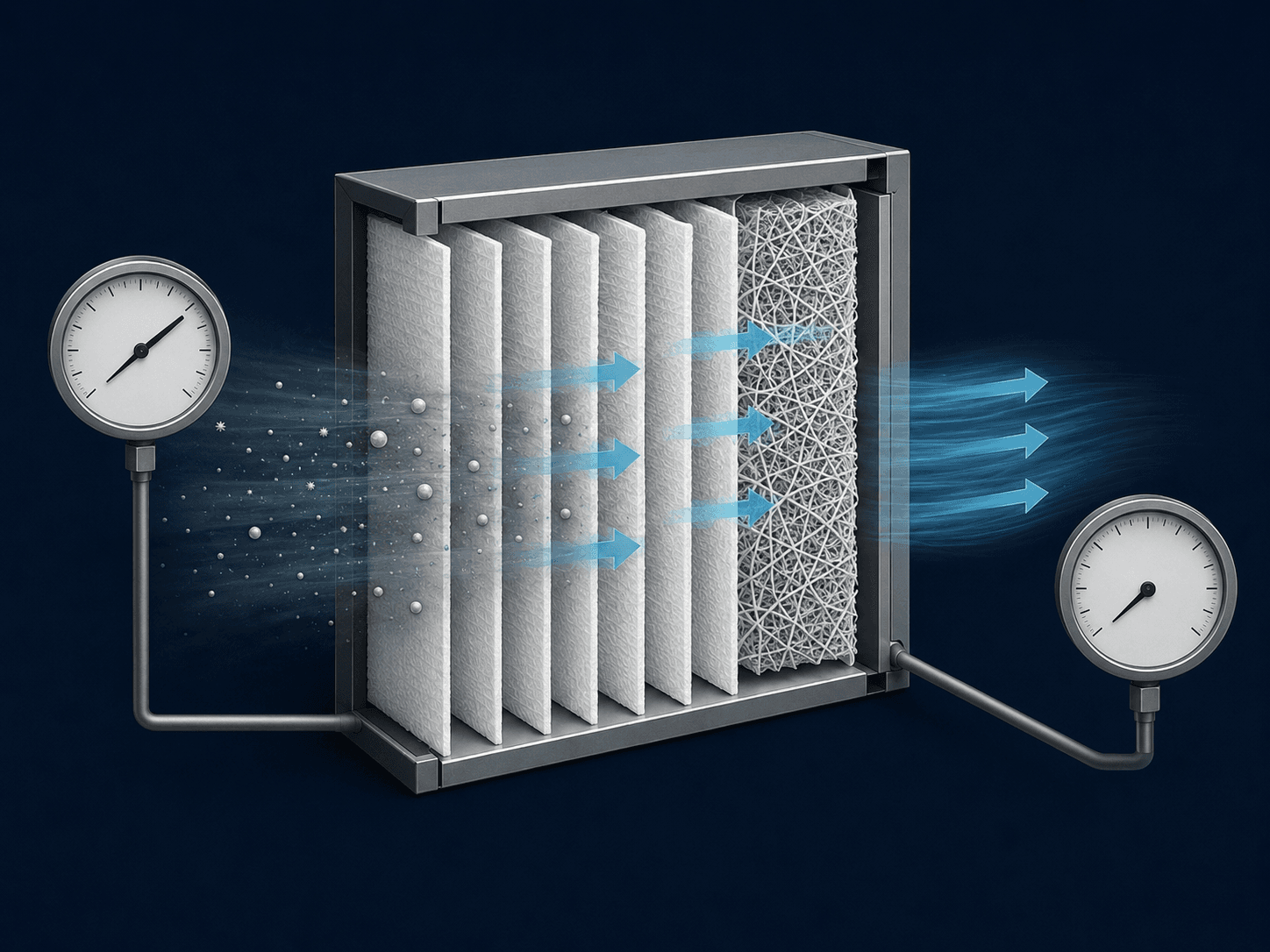
A True HEPA filter is a compressed mat of borosilicate or polypropylene microfibers. Air is forced through this maze-like structure, and particles get trapped through three distinct mechanisms — impaction, interception, and diffusion. The result: 99.97% capture efficiency for particles at 0.3 microns and larger. That covers every common allergen — dust mite debris, pollen, mold spores, pet dander, and most bacteria.
Here’s what it cannot touch: gas molecules. A formaldehyde molecule is roughly 0.0003 microns — one thousand times smaller than HEPA’s target range. It moves through the fiber mat without resistance, as if the filter weren’t there.
Why activated carbon works through chemistry, not physics
Activated carbon works through adsorption — a chemical process where gas molecules bond to the carbon surface rather than being physically blocked. The raw material is treated at high temperatures in an oxygen-limited environment, creating a structure riddled with micro-pores. A single gram of quality activated carbon has a surface area that can exceed 1,000 square meters — which is why even a modest carbon bed can intercept a large volume of volatile organic compounds, smoke chemicals, formaldehyde, cooking odors, and pet smells.
What carbon cannot do: grip particles. Dust or dander will sit on the carbon surface temporarily and can be re-released into the air with any pressure change. Carbon alone will never address your allergy symptoms.
The clearest way to think about it: HEPA removes what the lab can weigh — particles with mass. Carbon removes what the lab measures chemically — gases and volatile compounds. Your home contains both.
The Scenarios Where the Wrong Filter Quietly Fails You
Most air quality problems aren’t purely one category. That’s where single-filter assumptions break down.
Wildfire or cigarette smoke: This is the clearest example of a dual-pollutant problem. Smoke is simultaneously fine particulate matter (PM2.5) — a HEPA target — and a cocktail of chemical compounds including benzene, acrolein, and carbon monoxide — carbon targets. A HEPA-only purifier will clear the haze and measurably reduce PM2.5 but leave the gas-phase toxins intact. A carbon-only setup does the inverse. You need both, and this isn’t a case where “better than nothing” is the right standard.
New construction or renovation off-gassing: Freshly installed laminate flooring, paint, cabinetry adhesives, and foam insulation all release formaldehyde and other VOCs for weeks to months. HEPA will do nothing here. You need a carbon bed with sufficient weight — the spec we look for is a minimum of 300g of granular activated carbon for meaningful VOC reduction in a standard-sized room.
Pet households: Dander (HEPA) and pet odor (carbon) are two separate problems wearing the same “pet issue” label. If your eyes water near the cat, that’s an allergen — HEPA’s job. If the room smells like dog, that’s a gas — carbon’s job. You need both, but you can prioritize based on which symptom is worse.
Watch for thin carbon layers: Budget purifiers often list “activated carbon layer” while actually using a thin carbon-impregnated fabric sheet — not a granular carbon bed. Dwell time (how long air stays in contact with carbon) determines VOC removal efficiency. A 2mm sheet provides almost no dwell time. Always check the carbon weight in the spec sheet, not just whether carbon is present.
| Pollutant Type | HEPA Filter | Carbon Filter |
|---|---|---|
| Dust & dust mite debris | ✓ Removes | ✗ Misses |
| Pollen & mold spores | ✓ Removes | ✗ Misses |
| Pet dander (allergen) | ✓ Removes | ✗ Misses |
| Pet odors | ✗ Misses | ✓ Removes |
| Smoke particles (PM2.5) | ✓ Removes | ✗ Misses |
| Smoke gases & VOCs | ✗ Misses | ✓ Removes |
| Formaldehyde | ✗ Misses | ✓ Removes |
| Cooking odors | ✗ Misses | ✓ Removes |
| Bacteria (airborne) | ✓ Removes | ✗ Misses |
| Key spec to verify | H13 / True HEPA rating | Carbon weight (min. 300g) |
How a Dual-Filter System Actually Works Together

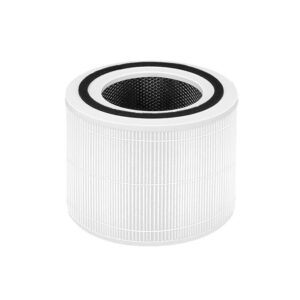
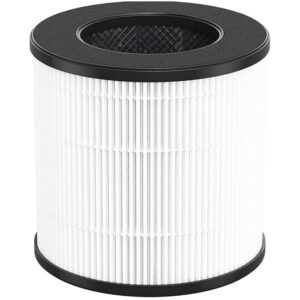
In a well-designed dual-filter air purifier, air flows through the carbon stage first, then through the HEPA layer. This order matters. The carbon bed handles oil-based particles and chemical vapors that would otherwise coat the HEPA fibers and accelerate degradation. The HEPA layer then captures everything with physical mass that the carbon can’t hold. The two stages extend each other’s effective life when sequenced correctly.
One practical point that most product pages skip: the two filters exhaust at different rates. HEPA filters visibly discolor and noticeably restrict airflow as they load up with particles — you can often see and measure when replacement is due. Activated carbon saturates chemically without any visible change. A carbon filter can look brand new and be completely spent. The signal is functional, not visual: if odors are returning in a room where the purifier is running, the carbon bed is exhausted regardless of how it looks.
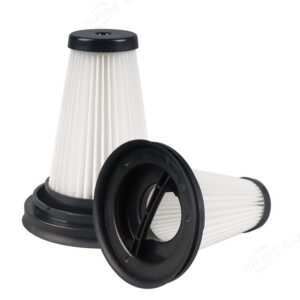
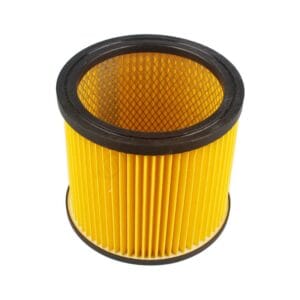
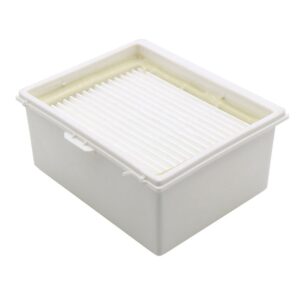
HIFINE’s air purifier filter range lists carbon weight and HEPA grade on every product page precisely because of this. If a listing doesn’t include carbon weight, assume the layer is decorative rather than functional. You can also find our vacuum cleaner HEPA filters — the same H13-grade media used in our air purifier line applies across our robotic vacuum replacement filters as well.
FAQ
You can, but it only makes sense in a narrow scenario. For any living space, running carbon alone leaves allergens, dust, mold spores, and bacteria completely unaddressed. In households with any allergy sensitivity or respiratory conditions, that’s a significant gap. The standard in quality air purification is to layer both, with carbon upstream and HEPA downstream.
HEPA handles the visible component — the fine particulate matter that creates haze and poses the most immediate respiratory risk. But smoke smell comes from volatile organic compounds and chemical gases that physically pass through HEPA fiber.
Unlike HEPA filters, carbon filters give no visual signal of saturation. The carbon granules look unchanged even when they’re chemically exhausted.
The filtration media grade can be identical — HIFINE uses H13-grade HEPA across both our air purifier and robotic vacuum filter lines. The practical difference is in how airflow works in each system. Air purifiers draw air through the filter passively at a lower pressure differential, while robot vacuums push air through at higher velocity and with more particulate load from floor debris.