
Start with the equation:
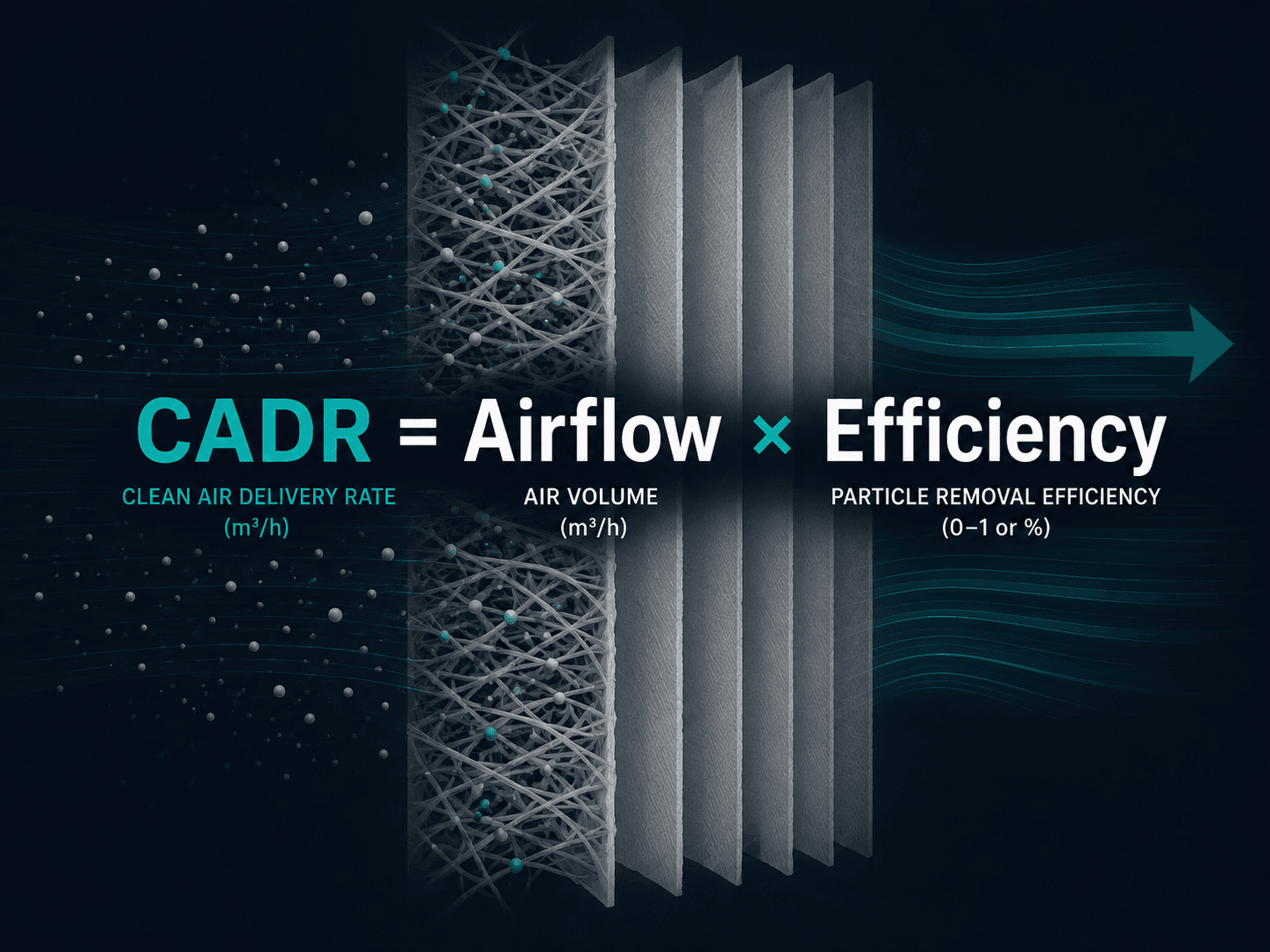
CADR = Airflow Rate × Single-Pass Filtration Efficiency
That one line explains most of what goes wrong when people compare air purifiers — or pick the wrong replacement filter.
CADR Is a Product, Not a Feature
Most buyers treat CADR as a spec printed on a box. It’s actually the output of a two-variable system: how much air the device pulls through per hour, and what fraction of particles the filter captures in each pass.
AHAM AC-1 — the industry-standard CADR testing protocol used by the Association of Home Appliance Manufacturers — measures this across three particle categories: tobacco smoke (0.09–1.0 μm), dust (0.5–3.0 μm), and pollen (5.0–11.0 μm). Each produces a separate CADR value because filtration efficiency shifts with particle size. A filter certified H13 under EN 1822-1:2019 captures 99.95% of particles at 0.3 μm (the hardest size to trap), and even higher percentages for larger particles.
The takeaway: CADR is never about the filter alone, and never about the fan alone.
The Trade-Off Manufacturers Rarely Mention
Higher Efficiency Cuts Airflow
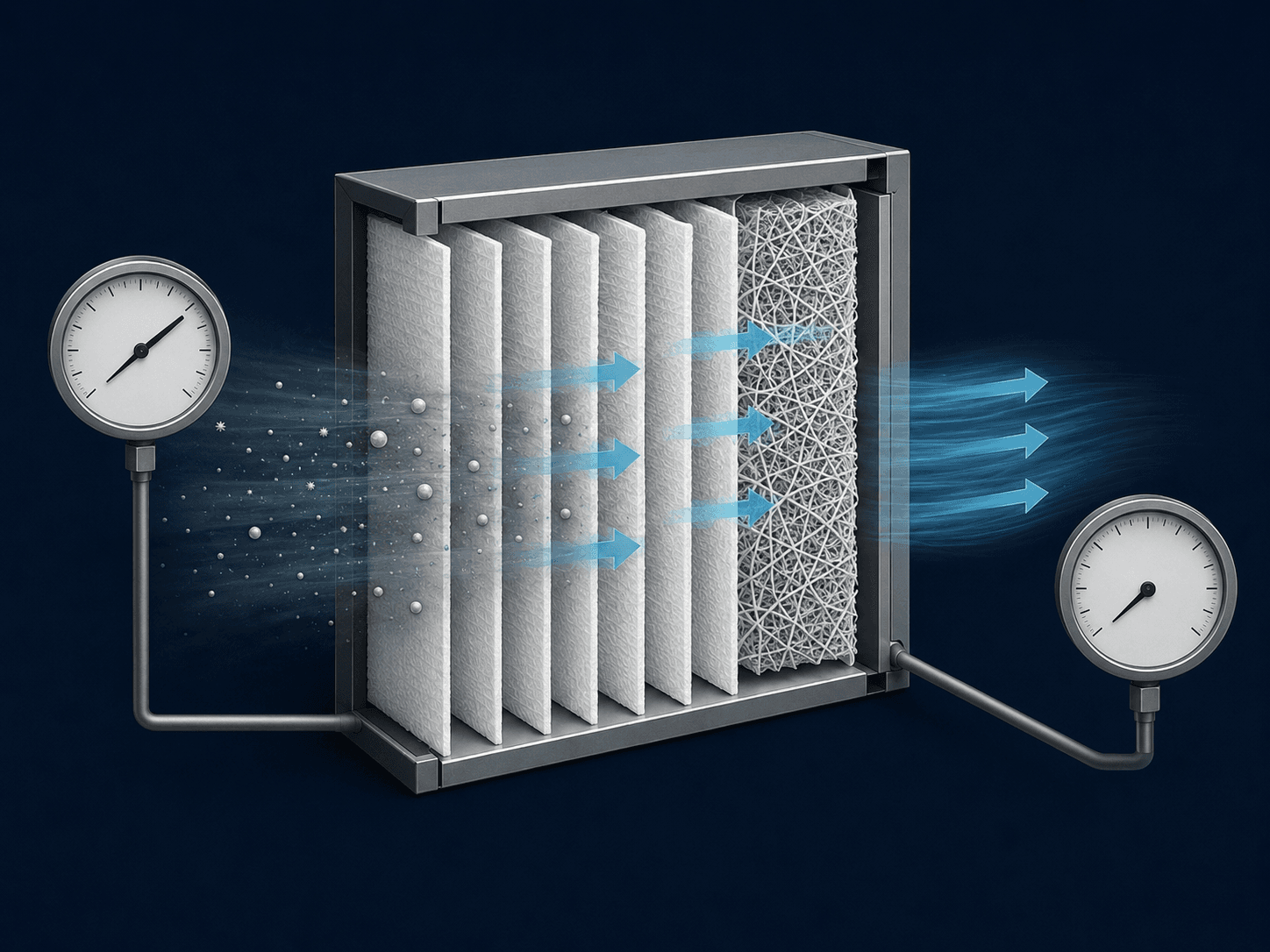
Denser filter media improves single-pass efficiency — and increases airflow resistance. An H13 HEPA filter at rated flow generates 150–250 Pa of pressure drop (EN 1822-1:2019). Step up to H14 and that climbs to 200–300 Pa. If the device fan can’t compensate, actual airflow drops.
Lower airflow at higher efficiency can produce the same CADR — or worse — compared to a moderate-efficiency filter running at full throughput. Some “true HEPA” labeled devices underperform for exactly this reason.
Higher Airflow Doesn’t Rescue a Weak Filter
The reverse is equally true. An 85%-efficient filter at 300 m³/h delivers CADR of 255 m³/h. A 95%-efficient filter at the same airflow delivers 285 m³/h — a meaningful gap for fine particulate matter in any real room.
High airflow through a mediocre filter moves a lot of air. It doesn’t clean it well.
What This Means When You Replace a Filter
Replacement filters change both variables at once — and most buyers don’t account for that.
Lower-density media reduces filtration efficiency and lowers pressure drop. The CADR equation rarely benefits: for PM2.5 and sub-micron particles, efficiency losses outweigh the marginal airflow gain.
Higher-density media improves efficiency but can restrict airflow on devices with less powerful motors.
The right replacement holds OEM pressure drop within ±10% — keeping both variables inside the design envelope the device was built around.
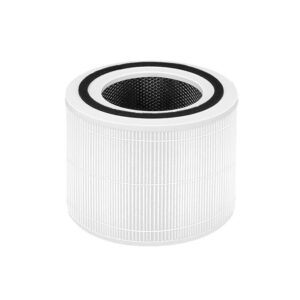
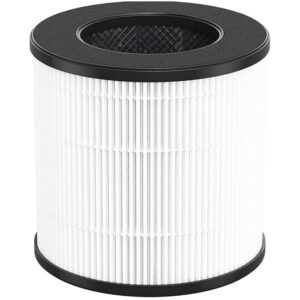
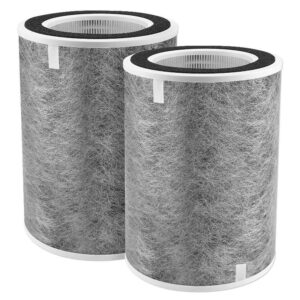
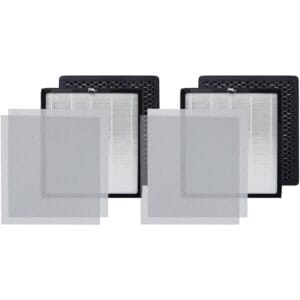
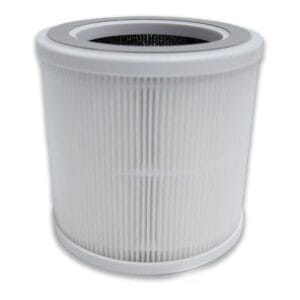
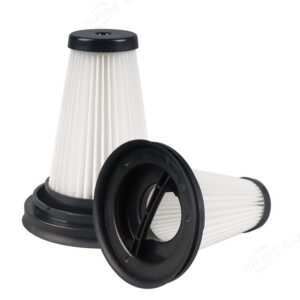
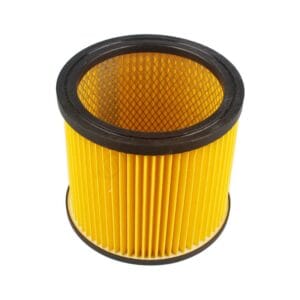
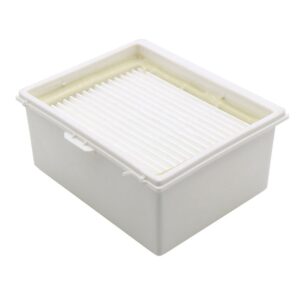
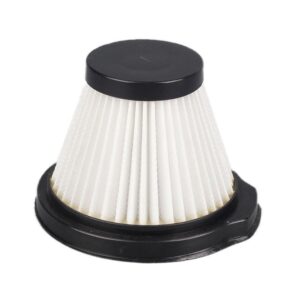
Наш сайт air purifier HEPA filter replacements и HEPA-фильтры для пылесосов are designed to OEM pressure drop tolerances, so the CADR value remains within the rated range after replacement.
How to calculate your air purifier needs
CADR only matters relative to the room it’s working in. The EPA recommends at least 4–5 air changes per hour (ACH) for effective particulate reduction:
ACH = CADR ÷ Room Volume (m³)
For a 30 m² room with 2.5 m ceilings (75 m³), hitting 5 ACH requires a CADR of at least 375 m³/h. A device rated CADR 200 m³/h — regardless of its filter grade — can’t reach that threshold.
This is why CADR is the practical spec for sizing an air purifier to a room. A HEPA-certified filter in an underpowered unit cleans a small volume of air very well. It doesn’t scale to the space.
The Relationship in Plain Terms
These three metrics aren’t independent specs. They form a closed system:
- Air volume sets how much air enters the filter per hour
- Filtration efficiency determines what fraction of particles is removed per pass
- CADR is the result — and the only number that tells you what the device actually delivers in practice
Push either input too hard without accounting for the other, and CADR stalls or falls. The best filter replacements, like the best air purifiers, are designed around the balance between all three — not just whichever number looks best on packaging.