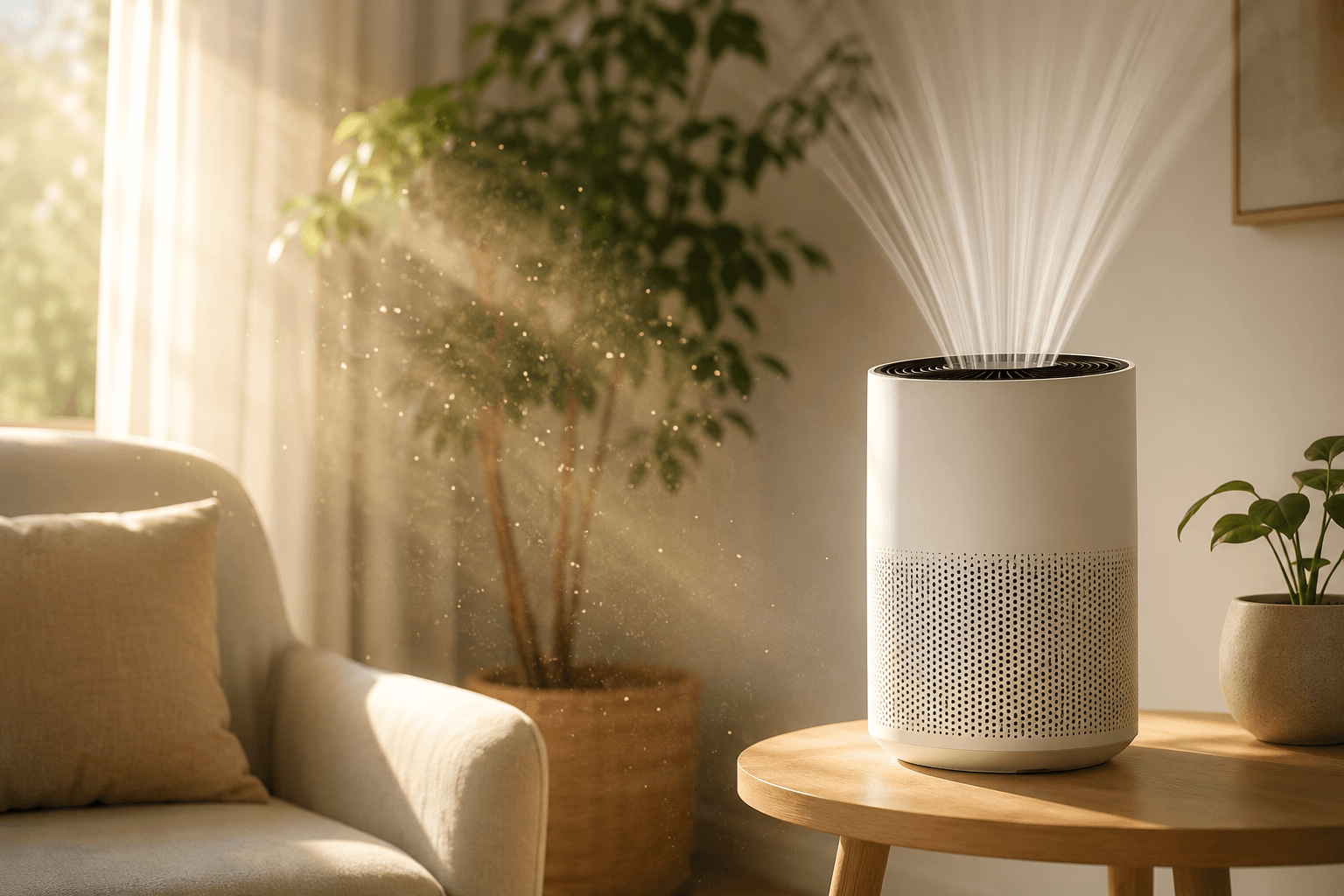


Air purifiers can capture airborne mold spores moving through your indoor air. What they cannot do is remove mold colonies that have already taken root on walls, ceilings, or inside ductwork. They also won’t stop mold from continuing to grow if moisture remains the problem underneath.
That line between what a filter does and doesn’t do gets blurred constantly — by vague product marketing, by well-meaning home improvement advice, and by the natural assumption that if a device is running and you feel better, the problem must be solved. Often, it isn’t.
Here’s a clear-eyed look at what the science actually supports.
What we are really facing is spores and growth.
Mold exists in two distinct states that require two different responses.
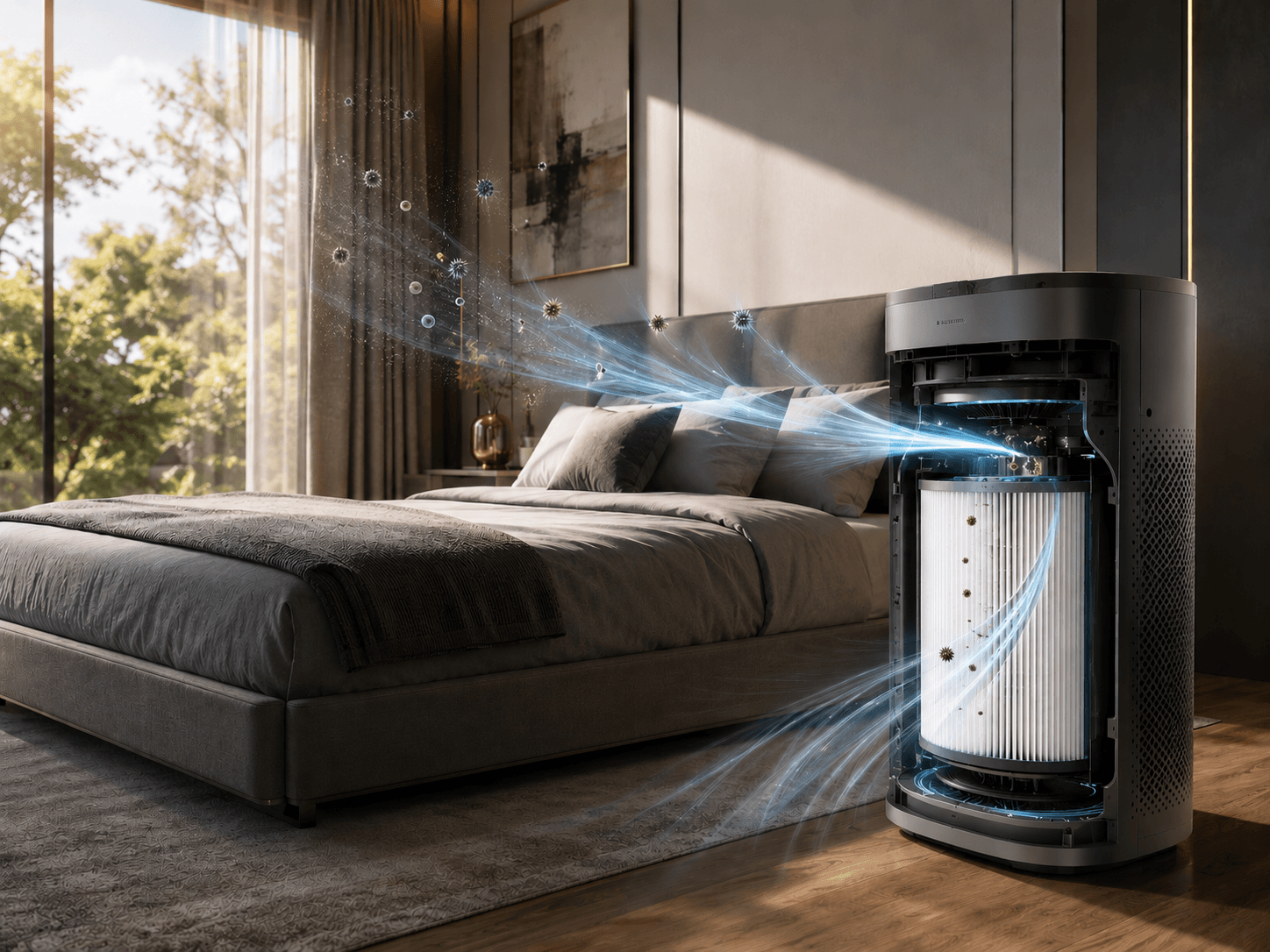
The first is airborne mold spores — invisible particles that travel through your indoor air constantly. The U.S. Environmental Protection Agency (EPA) notes that mold spores are present in virtually every indoor environment; what varies is concentration. Spores range from 1 to 30 microns in diameter, which puts them well within the capture range of a properly rated mechanical filter.
The second is active mold growth — colonies that form once spores land on a damp surface and begin germinating. Once mold is physically growing on your drywall, window sealant, or bathroom grout, no amount of air filtration removes it. You need direct remediation: cleaning, encapsulation, or professional removal depending on the scope.
A filter addresses the first problem. It does nothing about the second.
Why This Distinction Costs Homeowners Time and Money
Most households buy an air purifier after spotting visible mold — which means active growth is already present. The purifier runs, the air smells slightly less musty, and the colony behind the baseboard continues expanding. The Centers for Disease Control and Prevention (CDC) is explicit: the moisture source must be addressed before air treatment has any lasting effect.
Filtration is a complementary layer in a complete strategy. Alone, it’s not enough.
How Well Do Air Purifiers Actually Capture Mold Spores?
Effectiveness here comes down almost entirely to filter technology — not brand name, not the number of fan speeds, not the device price.
True HEPA vs. “HEPA-Type”: A Distinction That Matters
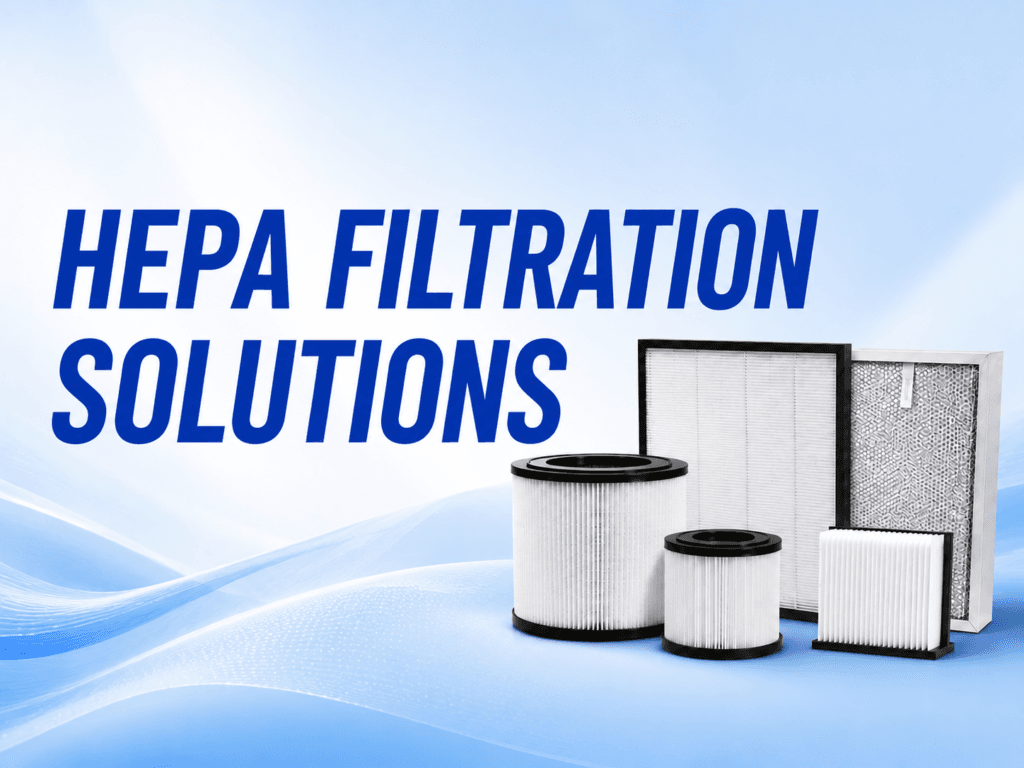
A настоящий HEPA-фильтр must meet a tested performance standard: 99.97% efficiency at capturing particles 0.3 microns or larger. Since most mold spores fall well above that threshold (1–30 microns), a genuine HEPA filter catches them reliably on each pass through the unit.
“HEPA-type,” “HEPA-style,” and similar labels carry no standardized performance guarantee. In practice, these filters often operate at substantially lower efficiency — relevant information if you’re dealing with an actual mold spore problem.
A 2020 study published in Строительство и окружающая среда confirmed that mechanical HEPA filtration significantly reduces airborne fungal concentrations in controlled indoor environments, including spores from Cladosporium, Aspergillus, и Penicillium — the three most common genera found in residential settings. The effect was measurable within hours of operation.
One important caveat: a purifier only captures spores that pass through the unit. Spores settled on furniture, bedding, or flooring stay there unless re-suspended into the air — which is also why regular vacuuming with a HEPA-rated vacuum matters alongside air filtration.
Activated Carbon and the Mold Smell Problem
A HEPA filter does nothing for the musty odor that mold-affected spaces carry. That smell comes from microbial volatile organic compounds (mVOCs) — gases released by mold colonies as a metabolic byproduct. These molecules are orders of magnitude smaller than spores and move right through mechanical filtration.
. активированный уголь layer handles VOC-class molecules through adsorption — the gas molecules bind to the porous carbon surface rather than passing through. This is why a dual-filter system (HEPA + activated carbon) is the standard recommendation for mold-related air quality concerns, not HEPA alone.
If your purifier still smells musty after the air seems cleaner, the carbon layer is saturated. That’s a filter replacement signal, not a sign the unit is broken.
UV-C Lamps and Ionizers: Tempered Expectations Required
Some air purifiers include UV-C lamps promoted for germicidal properties, or ionizers marketed to neutralize biological contaminants. The underlying science isn’t wrong — UV-C radiation can inactivate fungal spores — but the application matters significantly.
A 2018 review in the Journal of Aerosol Science found that most consumer-grade UV-C systems provide far too little dwell time (the duration a spore is actually exposed to UV light) for reliable inactivation. The lamp exists; the kill rate in real conditions is not what the marketing implies.
Ionizers carry a separate concern: ozone generation as a byproduct. The EPA classifies ozone as a respiratory irritant, which makes it a particularly poor choice for anyone dealing with mold-triggered breathing issues.
MERV Ratings: What They Mean for Mold Filtration in Your HVAC
If you’re relying on a central HVAC system in addition to a standalone purifier, filter grade becomes a separate consideration.
MERV (Minimum Efficiency Reporting Value) measures how effectively a filter captures particles across different size ranges. For mold spore capture, the practical threshold is MERV 11 or higher. A MERV 8 filter — the standard in many residential systems — passes a meaningful percentage of smaller mold spores without capture.
| MERV Rating | Mold Spore Capture Efficiency |
|---|---|
| MERV 6–8 | Low — large spores only |
| MERV 11-13 | High — effective across most mold spore sizes |
| MERV 14–16 | Very High — hospital/clean room grade |
HIFINE’s replacement filters for residential HVAC systems are designed for MERV 13-equivalent performance — the tier that captures the particle range most relevant to mold spore filtration without creating the airflow restriction that higher-rated filters can cause in standard home ductwork. Browse HIFINE replacement filter options →
What Air Purifiers Cannot Do
Being specific about limitations isn’t pessimism — it’s how you actually solve the problem.
Surface mold removal. Active mold colonies on physical surfaces require direct treatment. The EPA’s mold remediation guidelines define anything over 10 square feet as requiring professional assessment. A running air purifier has no effect on existing growth.
Humidity control. Mold requires relative humidity above approximately 60% to grow and spread. Air purifiers don’t dehumidify. In high-risk areas — basements, bathrooms, laundry rooms — pairing an air purifier with a dedicated dehumidifier is more effective than either device alone.
Replacing ventilation. Fresh air dilution remains one of the most effective tools for reducing indoor airborne pollutant concentration. A purifier in a sealed room hits diminishing returns; adequate exhaust ventilation in kitchens and bathrooms addresses mold risk at the source.
Smart Air Purifiers and Mold: Early Detection as a Practical Layer
Modern smart air purifiers include PM2.5 and PM10 particulate sensors that detect elevated particle concentrations in real time — not mold species specifically, but overall airborne particle load including spore-sized particles. When concentrations spike, a smart unit can automatically increase fan speed and log the anomaly.
HIFINE’s smart home filtration systems connect to standard home automation platforms, routing real-time air quality data into broader environmental responses — triggering a dehumidifier, alerting your phone to an unusual particle reading, or adjusting purifier output based on time-of-day humidity patterns.
This isn’t a substitute for moisture control. It’s a practical early-warning layer in a well-structured indoor air quality approach.
A Practical Setup for Real Results Against Mold Spores
If you’ve confirmed a mold problem — or live in a high-humidity region where risk is structurally elevated — here’s a rational approach to air filtration as part of a complete strategy.
Fix the Moisture First
No filtration strategy survives an unaddressed moisture source. Locate and seal leaks, improve bathroom and kitchen exhaust, and target 30–50% relative indoor humidity per EPA recommendations.
Choose the Right Filter Stack
For mold-related air quality: True HEPA (not HEPA-type) for spore capture + activated carbon for mVOC odor elimination + a pre-filter layer to protect both and extend replacement intervals.
Match Unit Size to Room Volume
Purifiers are rated by CADR (Clean Air Delivery Rate), a standardized metric established by AHAM measuring cubic feet of clean air delivered per minute. For effective mold spore filtration, size your unit so its CADR covers at least two-thirds of your room area, calculated for actual ceiling height.
Replace Filters on Schedule
A clogged HEPA filter doesn’t just underperform — it can become a reservoir for captured biological material. Most HEPA filters should be replaced every 12–18 months under normal use, shorter in high-spore environments. Activated carbon layers typically need replacement every 6–12 months depending on VOC load. See HIFINE’s filter maintenance guide →
Итоги
Air purifiers remove airborne mold spores with real, measurable effectiveness — provided you’re using true HEPA filtration, the unit is properly sized for the space, and filter maintenance is kept current.
They don’t remove mold from surfaces. They don’t prevent mold from growing. They don’t address the humidity conditions that allow mold to establish itself in the first place.
Used correctly as part of a broader strategy — one that starts with moisture control and includes adequate ventilation — a well-specified air purifier is a legitimate tool for improving indoor air quality in mold-affected environments. Used as a standalone response to a visible mold problem, it will fall short of expectations.
The filter inside is what determines real-world performance. That part deserves serious attention.