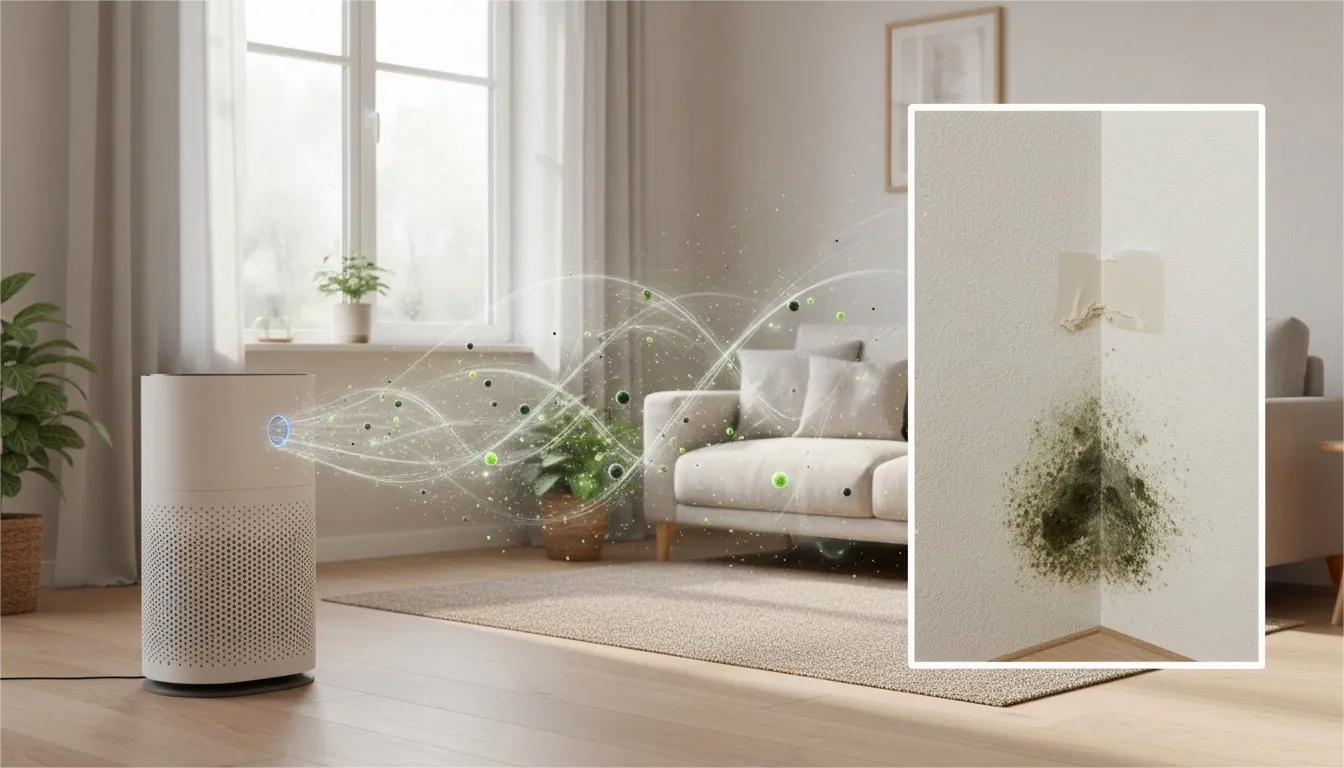
HEPA air purifiers can help to clean airborne mold spores from indoor air, but they will not remove mold that is growing on walls, ceilings, floors, or within building materials.
This difference is important. Mold problems are typically twofold, involving mold growth at the source and the movement of mold spores through the air.
The second problem can be aided with an air purifier. It doesn’t fix the initial problem.
What a HEPA air purifier for mold can actually do, where its limits are, and what to look for when choosing a filtration system
Mold Growth and Mold Spores Are Separate Concerns
Mold spores are tiny particles that can become airborne and float through indoor spaces. They can come from outdoor air, from existing indoor growth, or from contaminated materials.
Then there is active mold growth. Once mold begins to grow on drywall, wood, grout, carpet, or any other material, the source needs to be addressed directly.
A HEPA air purifier cannot get rid of a mold colony on a wall.
It can, however, filter airborne particles that pass through its filtration system.
That’s why an air purifier should be considered as part of an indoor air quality strategy, not a replacement for moisture control or mold remediation.
Can a HEPA Air Purifier Get Rid of Mold Spores?
Yeah. A properly specified HEPA filter is designed to capture minimal airborne particles, including many mold spores, as they pass through the filter media.
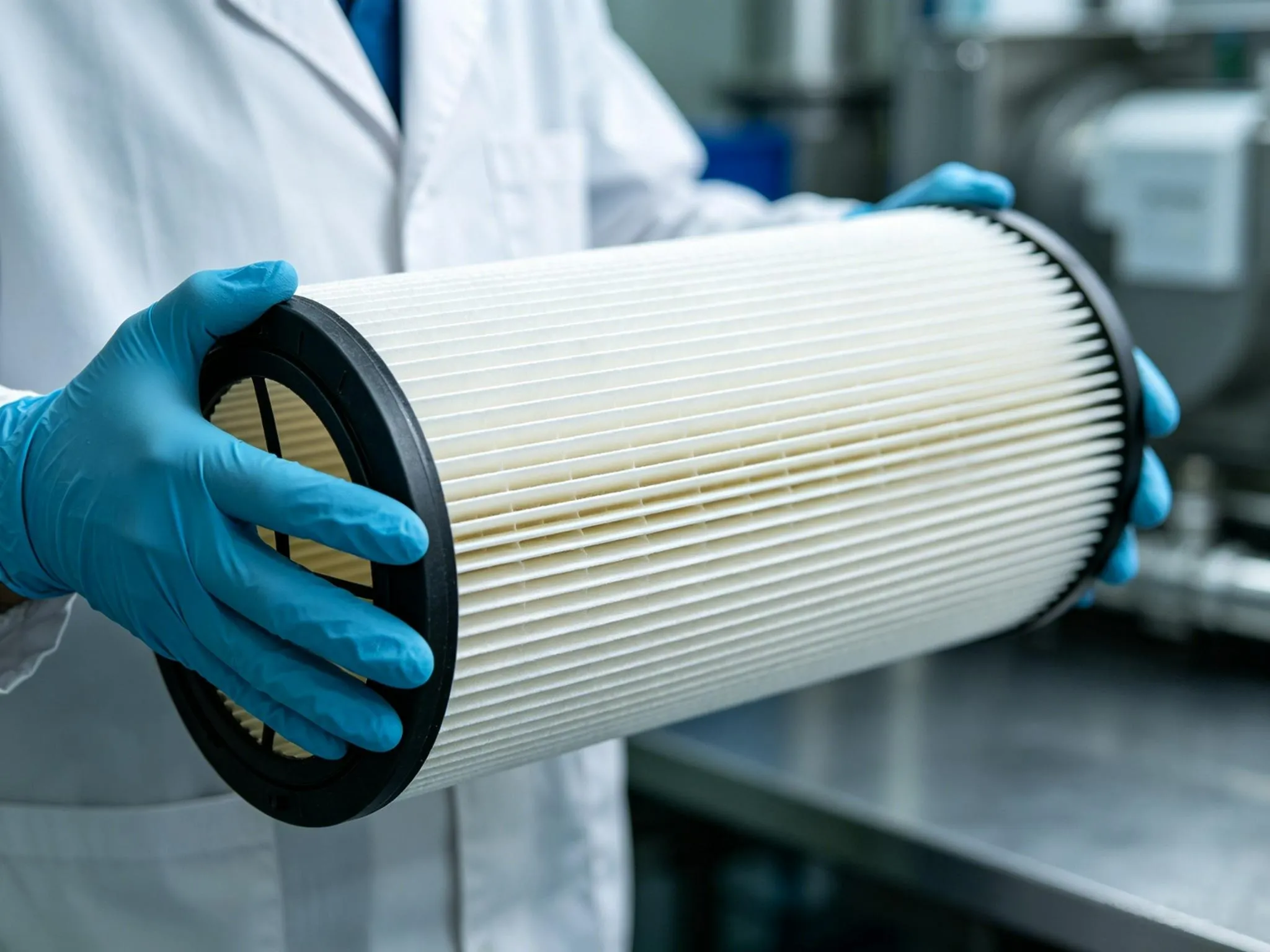
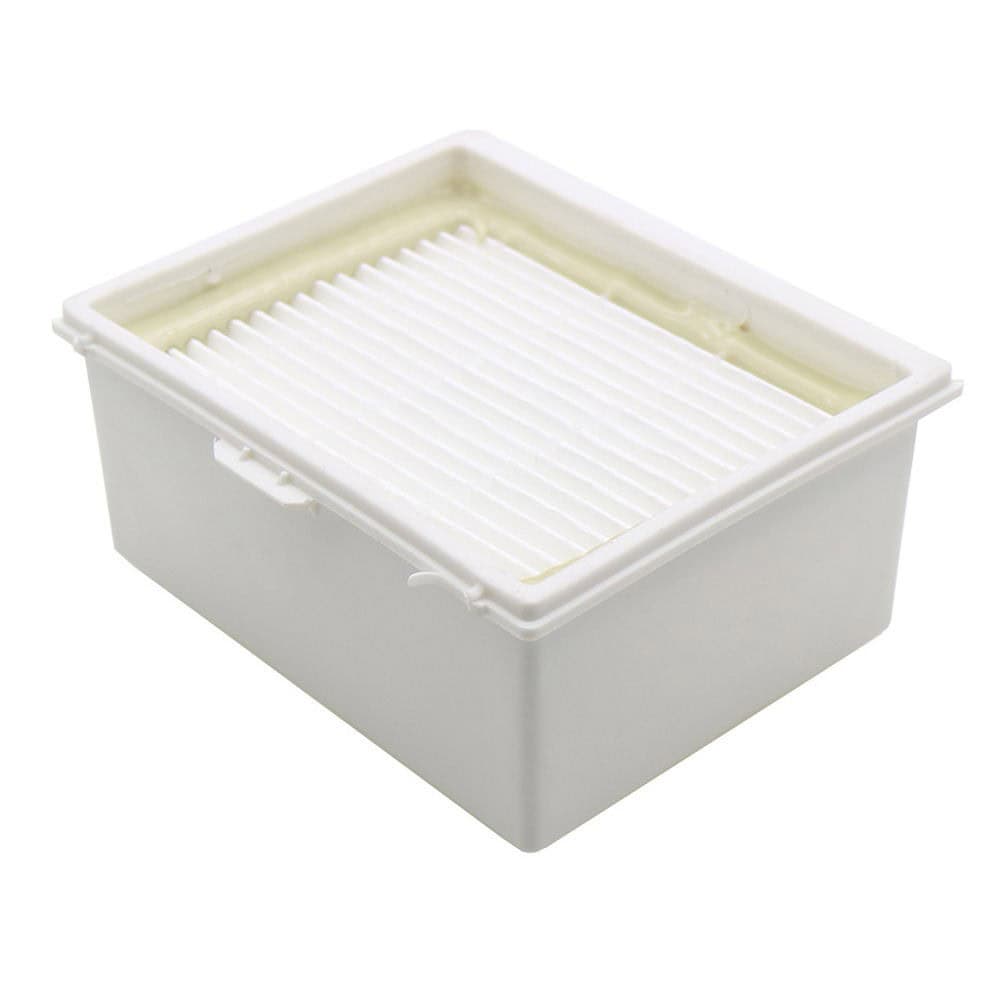
HEPA filtration works through mechanical particle capture. A fan moves room air through a dense layer of filter media, where particles are retained by the fibers.
A commonly referenced HEPA performance level is at least 99.97 percent efficiency at the 0.3 micron test point under the applicable test method.
Mold spores vary in size, but many can be captured by high-efficiency mechanical filtration.
The important limitation is that the purifier can only capture particles that actually pass through the filter.
Spores that have already settled on furniture, bedding, flooring, or other surfaces are not removed simply because the purifier is running.
What Can an Air Purifier Do for Mold?
A properly designed air purifier can help reduce airborne particle concentrations in the area where it operates.
Its main role is to:
- Catch airborne particles
- Reduce the suspended particulate matter
- Continuously filter air during unit operation
- Add another layer of particle control after the source is addressed
It’s the filtration system as a whole that counts, not the mere presence of the word HEPA on the filter label.
Factors such as airflow, filter area, pressure drop, filter loading, and sealing can affect actual performance.
What Air Purifiers Can’t Do
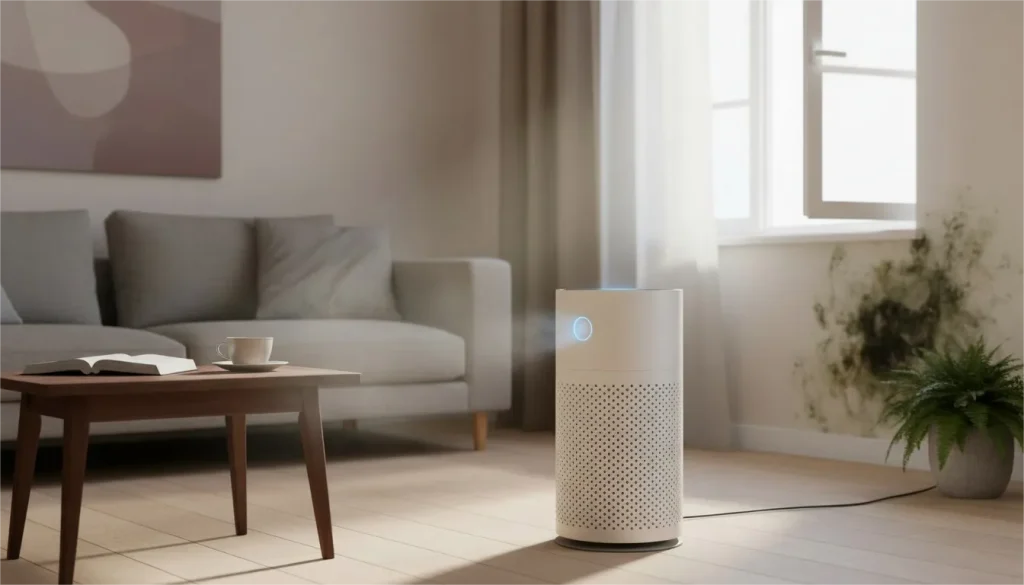
Air filtration has its limits. A HEPA air purifier cannot do:
- How to Clean Mold from a Wall or Ceiling
- Fix leaks or water damage
- Drying wet building materials
- Remove hidden mold from walls or other materials
- Stop new growth if there is too much moisture
Moisture control is the beginning of mold control.
Leaks should be repaired, wet materials dried, and excessive indoor humidity corrected. An air purifier can help these efforts by removing some airborne particles, but it is not a mold remediation system.
Does Activated Carbon Remove Mold Odor?
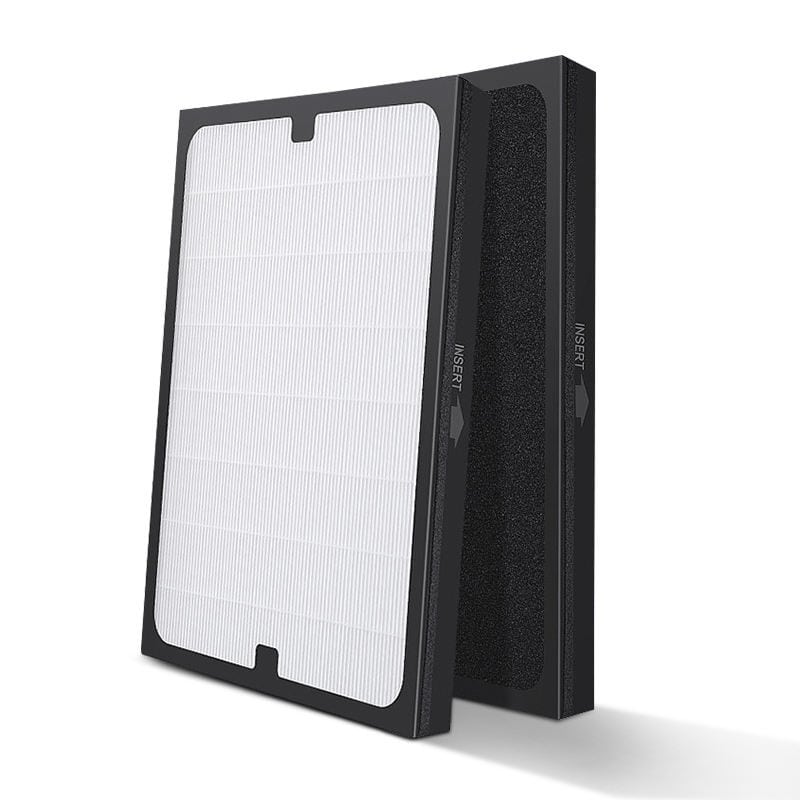
HEPA and activated carbon do different things. HEPA filters trap particles that are in the air.
Activated carbon can adsorb specific gases and odor-producing compounds. This is helpful if the room has a lingering musty smell.
But activated carbon doesn’t eliminate the source of the mold.
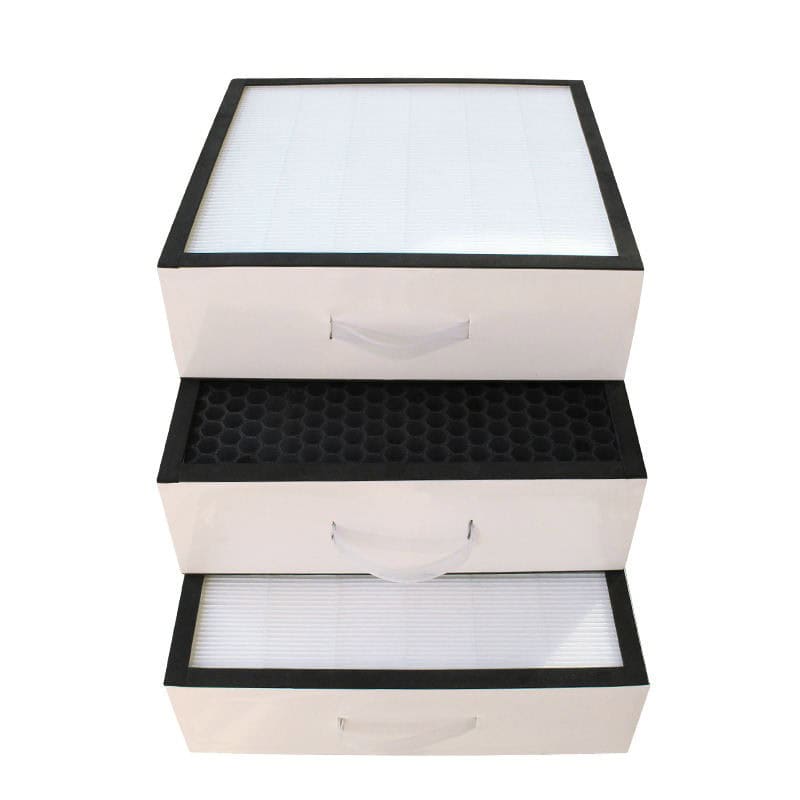
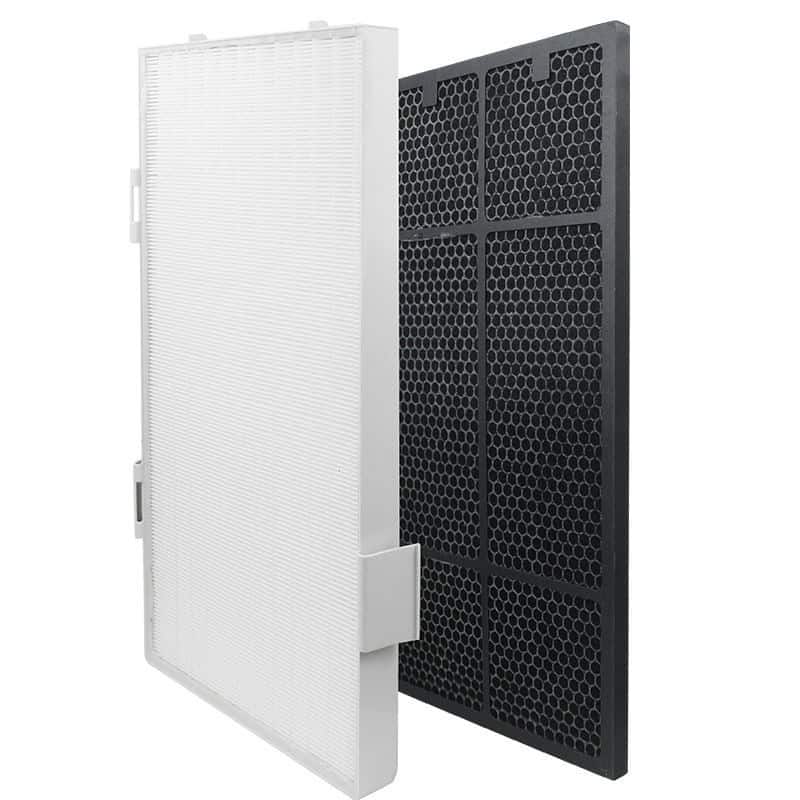
Thus, a combination system can treat different parts of the indoor air quality:
- HEPA for particles in the air
- Activated carbon for specific gases and smells
For a closer comparison of the two, check out our guide to activated carbon filters vs. HEPA filters.
Will this change affect the mold particle removal?
Yes, that’s right.
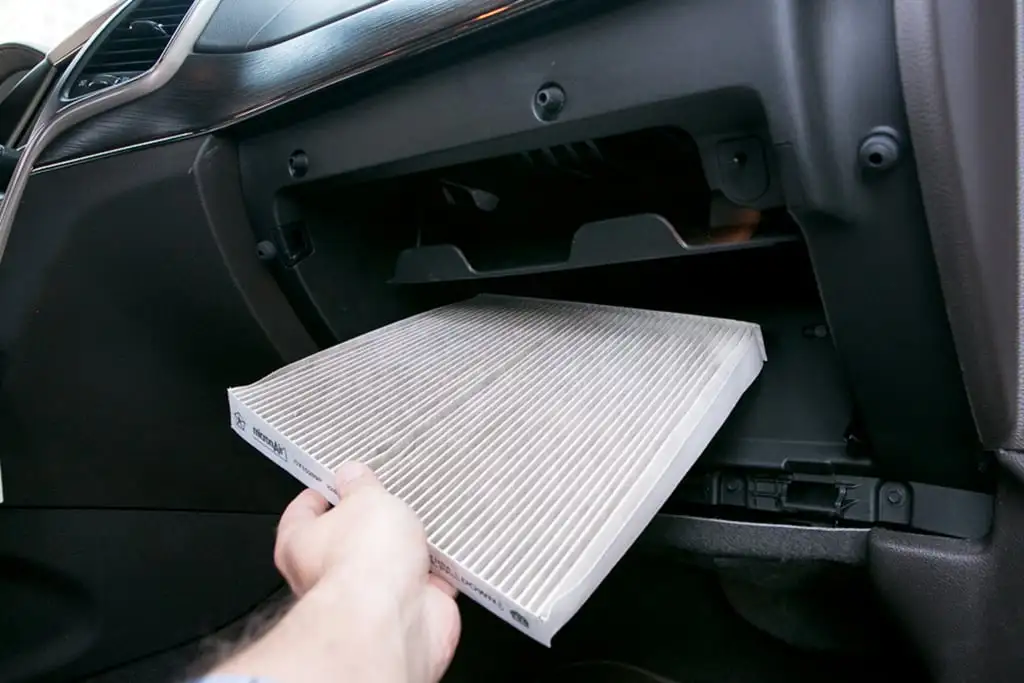
A filter can only capture the air that passes through its filtration media. If there are spaces between the filter and housing, some air may sneak around the media instead.
Several design details become crucial:
- Size of filter
- Building Frame
- Gasket place
- Filter thickness
- Housing match
- Air flow
A good-fitting filter will sit level in its housing and make even contact all the way around the sealing surface.
If you’re a manufacturer of custom air purifier filters, our OEM filter CAD drawing checklist guides you on how to specify dimensions, tolerances, gaskets, and mounting features before production.
How to Select an Air Purifier for Mold-Related Air Quality
Look at the filtration system first, not the marketing on the package.
Look for a purifier that explicitly states the HEPA filter and has the air flow performance to cover the room.
It’s also worth checking:
- HEPA filter information
- Size of filter
- CADR or airflow data
- Availability of replacement filters
- Activated carbon configuration for odor control
- Sealing around the filter correctly
- Manufacturer’s replacement suggestion
Filter life is a function of operating time, indoor particle levels, filter size, and amount of material collected.
Please replace the filter as recommended by the purifier manufacturer and inspect it as it becomes loaded.
Mold in an HVAC System? What About It?
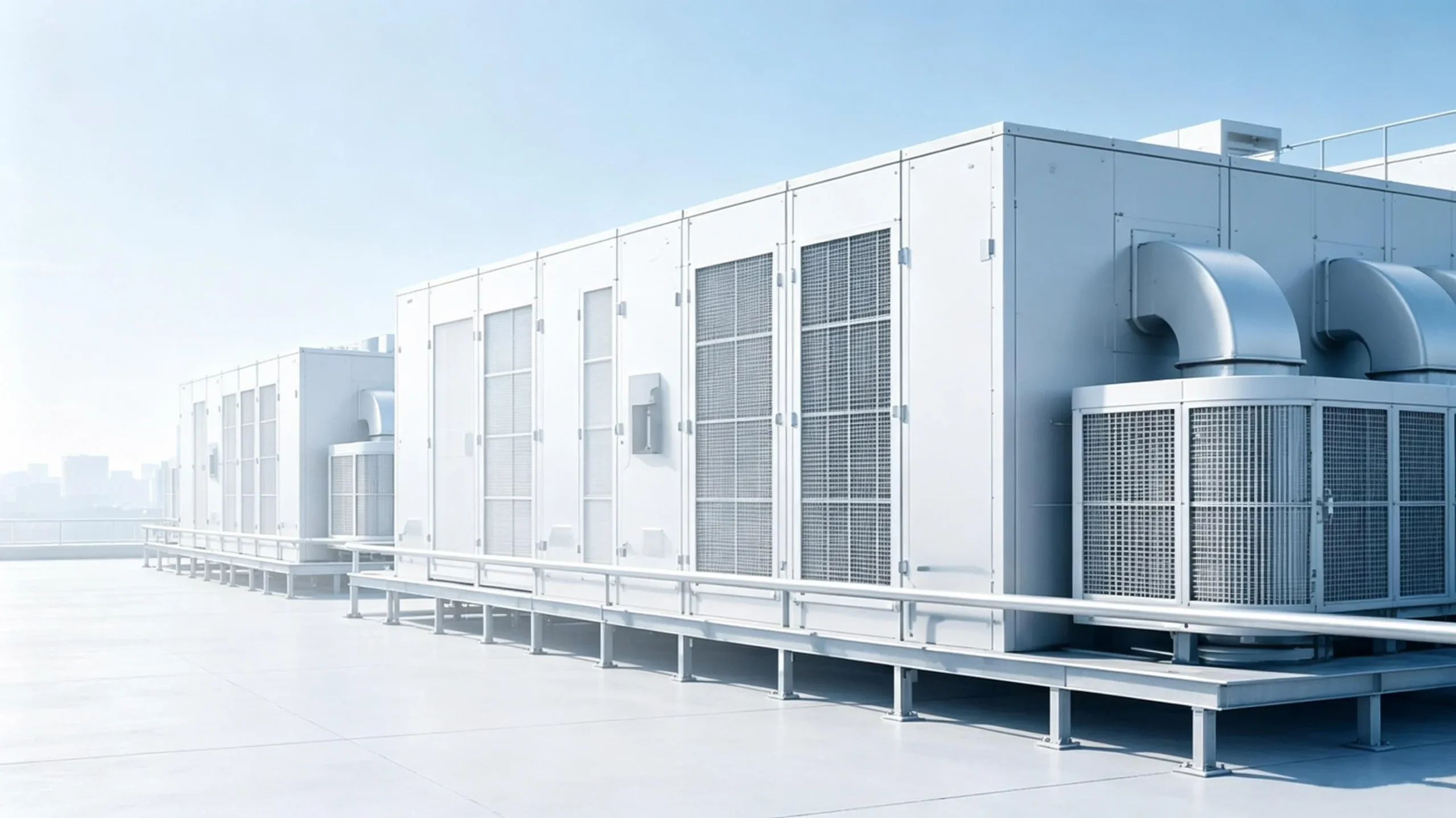
Whole-house mold problems can be more complex because the HVAC system can transport air and particles.
Adding a high-efficiency filter to an HVAC system without consideration of airflow resistance can damage system performance.
The filter needs to be compatible with the system’s available airflow and pressure capability.
Therefore, for ducted applications, filtration should be considered as part of the total HVAC design, not as an isolated component.
HEPA Filtration Is a Support Measure, Not a Mold Cure
An air purifier is most useful for the airborne aspect of a mold problem.
A practical approach is
- Find the moisture source and eliminate it
- Removal or remediation of any existing mold as appropriate.
- Indoor humidity management
- With proper ventilation
- Using HEPA filtration to reduce airborne particulates
- Keep filters clean and change as needed
This difference helps avoid the common mistake of believing that if the air smells cleaner, the mold problem has been solved.
A purifier may help with indoor air quality, but it doesn’t solve the basic problem of moisture or mold.
Can Air Purifiers Eliminate Mold?
Well, yes, a properly designed HEPA air purifier can trap airborne mold spores that pass through its filter.
No, it will not kill existing mold or fix the moisture problem that caused it.
The best remedy is to treat the cause of the moisture, treat any existing mold, and use proper air filtration to help control airborne particles.
HEPA media is just one aspect of filter performance in air purifier systems. Dimensions, airflow, pressure drop, sealing, and overall construction—all must work together.
This is why picking the right filter design is a crucial part of building an effective air purification system.
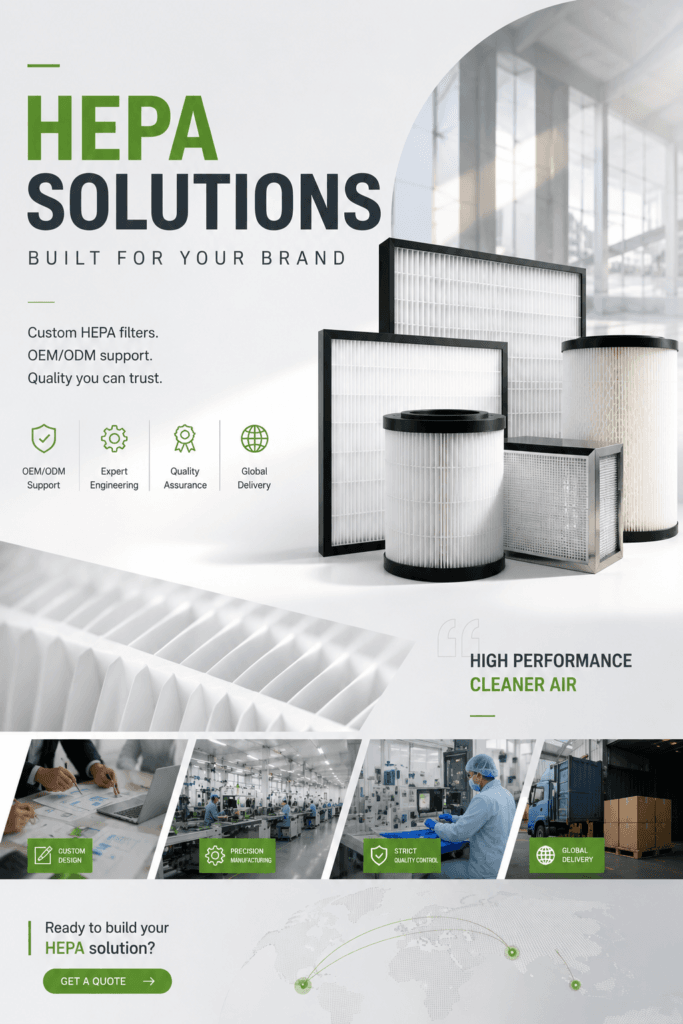
See HIFINE air purifier filter solutions for various filter configurations and application requirements.