Car cabin air filters do two main jobs, and most drivers get them backwards. Their first job is to protect your car’s air conditioning and ventilation system from damage. Their second job is to clean the air that reaches people inside the car. Most factory-installed filters only handle the basics, and they cut corners on fine particle protection to keep production costs low. There’s a lot more to these simple parts than most people realize.
What a Cabin Air Filter Actually Does
The number one job of a cabin air filter is to keep dirt and debris out of your HVAC system. Without one, road dust, leaves, bug remains, and other gunk would get pulled into the air intake, build up on the blower fan and evaporator, and clog the ducts over time. That leads to weak airflow, poor heating and cooling performance, and even expensive repairs down the line. Research from SAE International shows a severely clogged filter can reduce total airflow by up to 30 percent, forcing the system to work harder and waste energy.
For passengers, the filter adds a basic layer of protection against pollen and large dust particles. But standard factory filters do very little to stop fine particulate matter like PM2.5, exhaust fumes, or strong odors. Only a small number of premium brands build in stronger filtration from the factory. For most cars, you’ll need an upgrade to get that level of air quality.
If you want a full breakdown of how this buildup damages internal components over time, you can read more about how cabin filters protect your ventilation system.
Car brands love to advertise cabin air purification as a feature, especially as air quality concerns grow. But automakers are not filtration specialists. In a competitive market, they have tight cost controls across every part of the vehicle, and cabin filters are an easy place to cut corners. For most models, the factory filter is built to meet minimum requirements, not deliver the best possible air quality.
Where Your Cabin Air Filter Sits in the Car
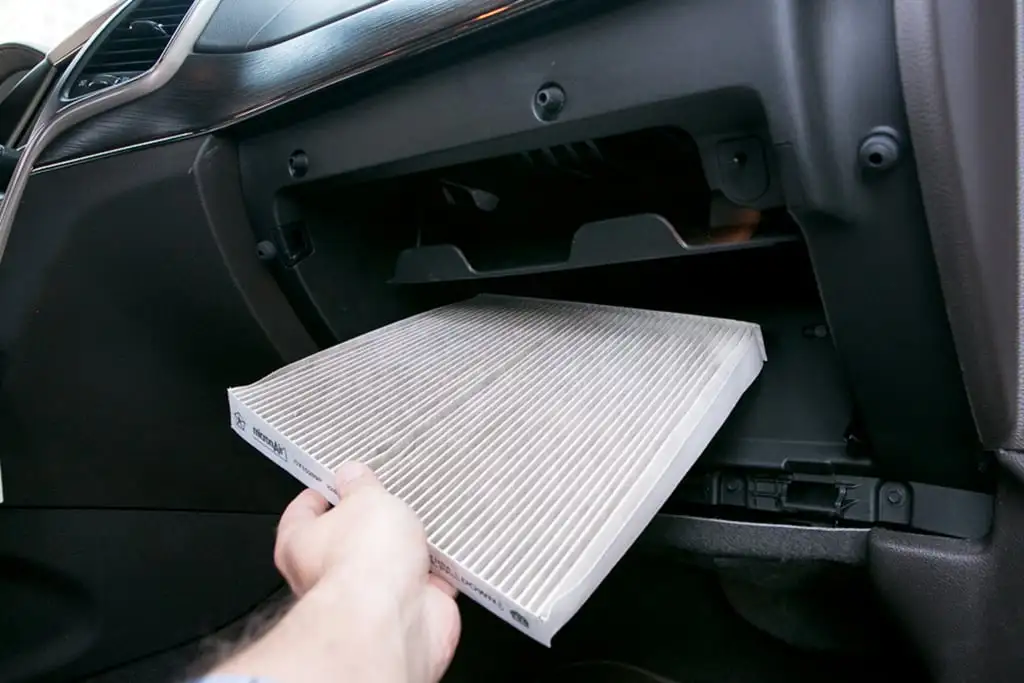
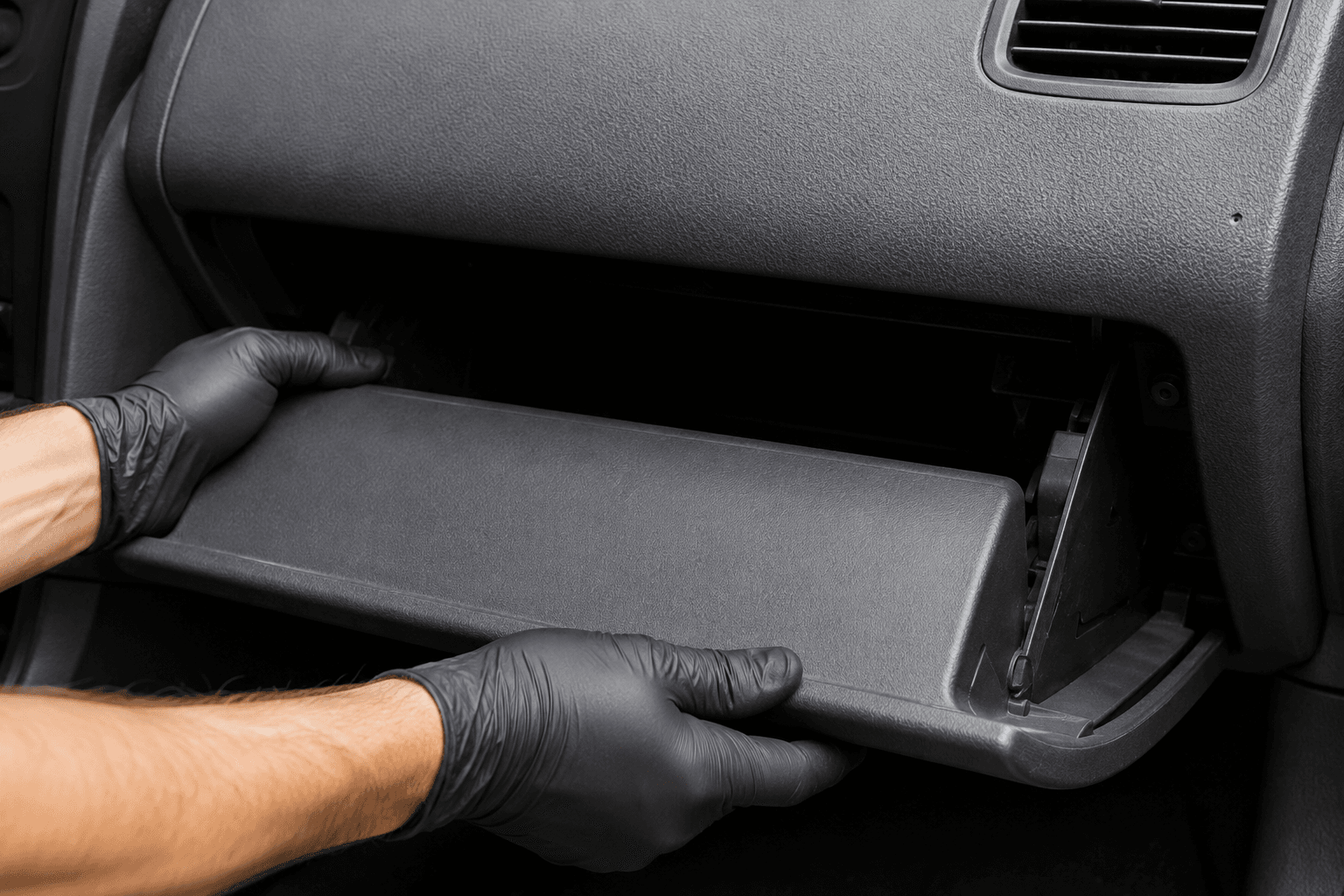
Most cars have only one cabin air filter, and it’s located right behind the glove box on the passenger side. That’s where you go to check it or swap it out.
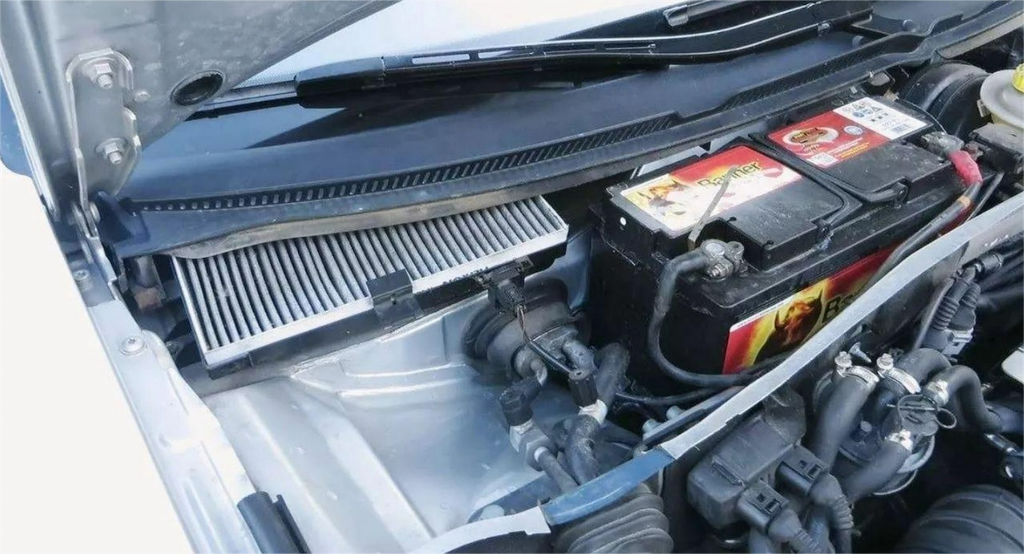
Many luxury and higher-end vehicles use a two-filter setup instead. They have one external filter in the engine bay, near the base of the windshield on the passenger side, and one internal filter behind the glove box.
The external filter acts as a pre-filter. It catches large debris like leaves, twigs, and heavy dust before air ever reaches the main internal filter. This keeps the blower motor much cleaner and extends the life of the main filter. It makes a huge difference in dusty areas or places with lots of trees and road debris.
If your car didn’t come with an external pre-filter, you can often add one as an aftermarket upgrade. Some people make DIY versions out of fabric, but a purpose-built filter is a better idea. If the filter you add creates too much air resistance, it will reduce airflow and hurt your AC’s cooling ability. Stick to well-reviewed products made for your specific vehicle.
Filter Materials and How They Work
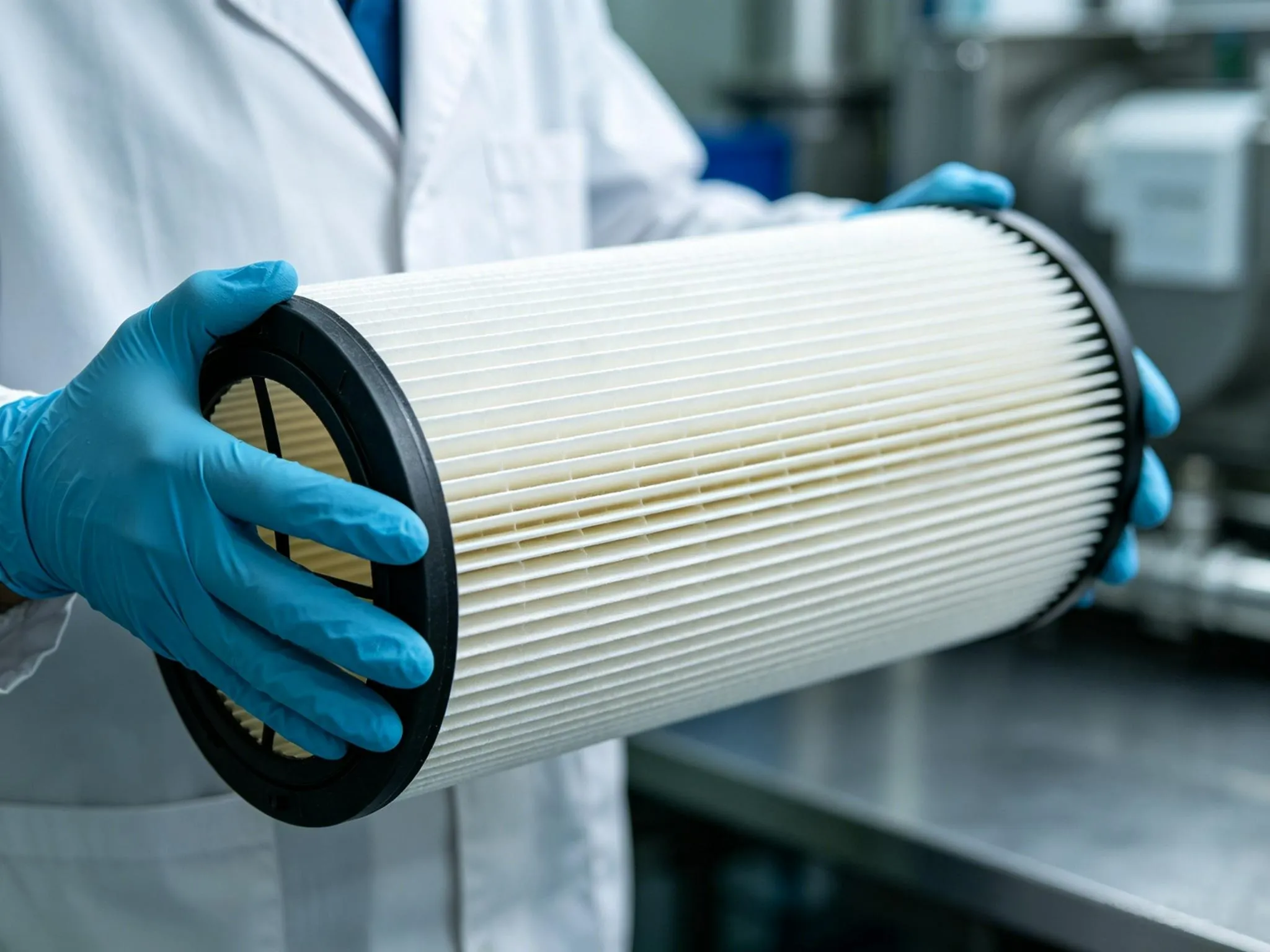
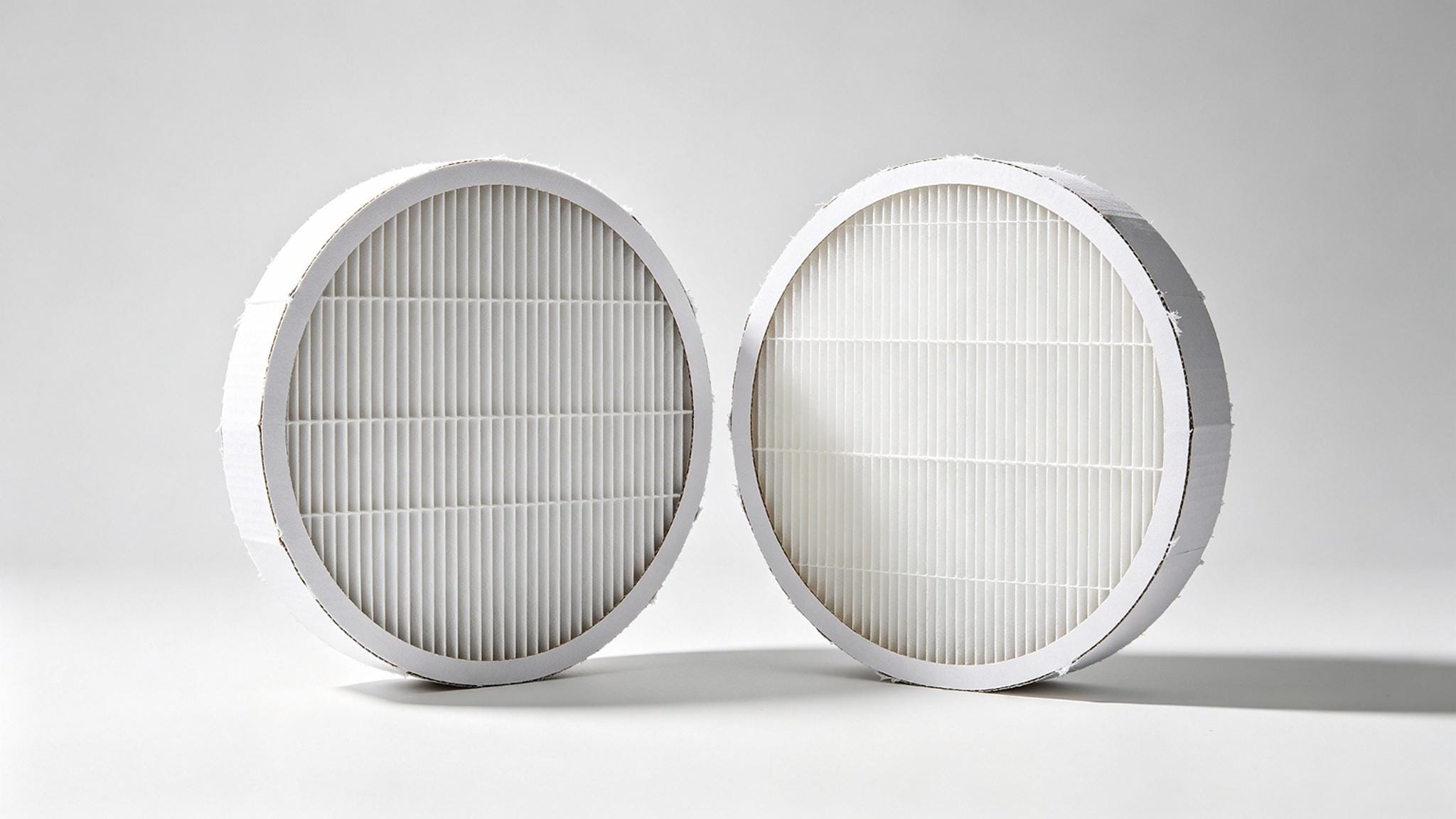
Cabin air filters work by forcing air through layers of folded filter media. The folded design creates more surface area, so air flows through easily while particles get trapped in the fibers.
The filter paper itself can be made from a few different materials. The most common are cellulose, glass fiber, and polypropylene non-woven fabric. PP non-woven is what people usually mean when they talk about “non-woven” filters.
On its own, basic filter paper only catches larger particles. To improve performance without increasing air resistance, most filters are treated with an electrostatic charge. This static charge pulls in finer particles that would otherwise slip right through the gaps in the fibers.
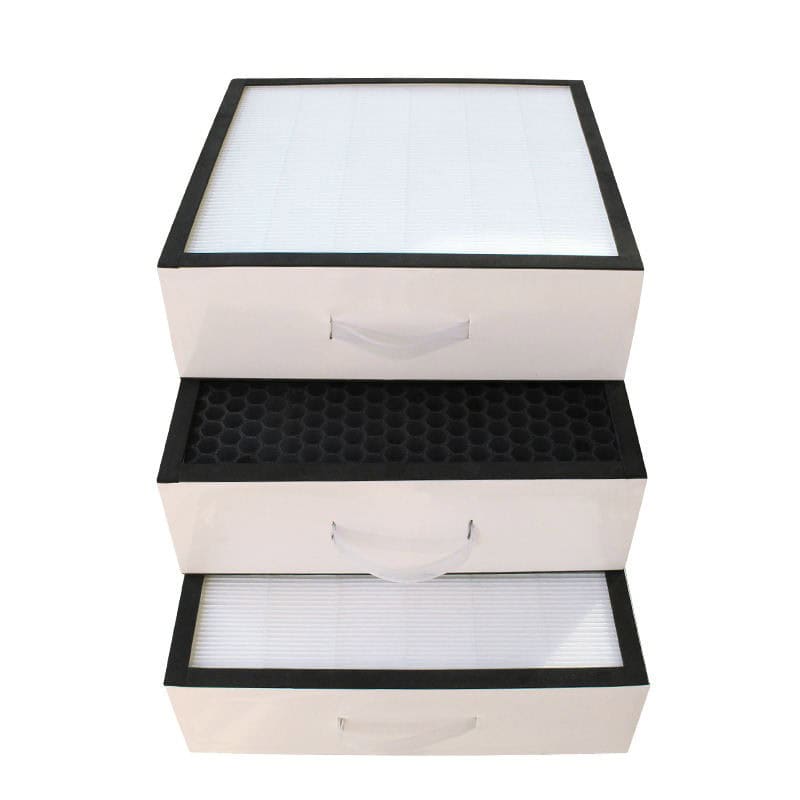
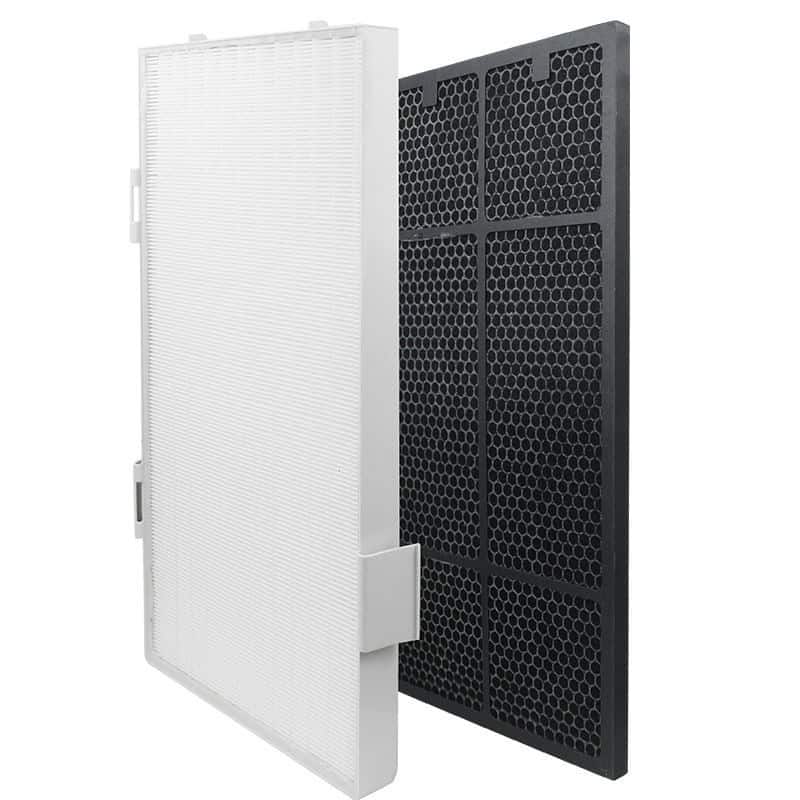
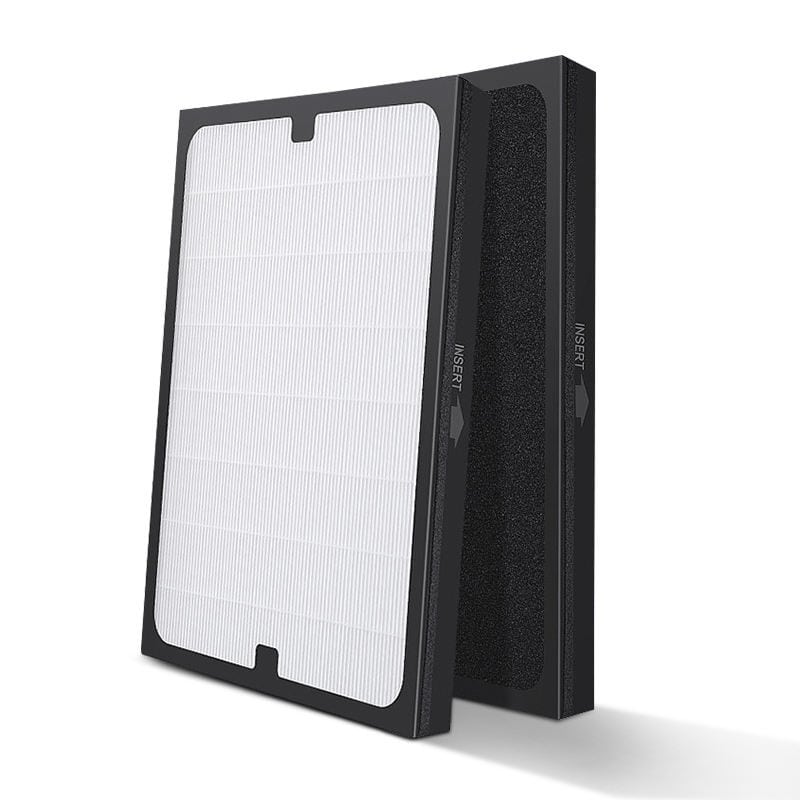
For even better performance, many filters add a layer of activated carbon. The porous charcoal absorbs gaseous pollutants like carbon monoxide, sulfur dioxide, and formaldehyde, plus common traffic odors. That’s why carbon filters are dark gray or black, instead of the off-white color of basic particle filters. When you combine high-efficiency particle media with activated carbon, you get much more complete air cleaning than either material alone. You can learn more about why combining HEPA and carbon filter media works better than single filtration in our full breakdown.
Here’s the hard truth about standard filters: most only reliably filter particles down to about PM10. They do almost nothing for PM2.5, the tiny particles that pose the biggest health risks.
The Truth About HEPA Cabin Filters
When people want better PM2.5 protection, they usually think of HEPA filters. HEPA technology started in medical settings and is now widely used in air purification. It works very well, but there’s a lot of misinformation about how it works.
A lot of people think HEPA filters have super tiny holes that block particles. If that were true, air resistance would be way too high, and barely any air would come through your vents.
What actually happens is more interesting. HEPA filters use dense layers of fine fibers to catch particles through physical principles like Brownian motion and van der Waals forces. Very small particles drift randomly and get stuck in the fibers. Larger particles run straight into the fiber strands and get trapped.
By global EN 1822 standards, a true HEPA filter removes at least 99.97 percent of 0.3-micron particles. That specific size is used as the standard because it’s the hardest one for filters to capture. Particles bigger or smaller than 0.3 microns are actually easier to trap.
HEPA cabin filters have become much more common in new electric vehicles, where clean cabin air is sold as a premium feature. Demand for HEPA filters for models like the Tesla Model Y has been rising fast as more buyers prioritize in-car air quality.
That said, don’t overestimate what a cabin HEPA filter can do for your overall health. You spend most of your time outside the car, so a cabin filter alone won’t fully protect you from air pollution. It makes a noticeable difference during commutes and traffic jams, but it’s not a complete solution. You can also buy HEPA filter sheets to lay on top of your existing carbon filter, but for most people, a good quality upgraded cabin filter is enough.
How Often You Really Need to Replace It
People ask all the time how often they should change their cabin air filter. There is no one-size-fits-all answer. It depends entirely on where you live and how you drive.
Most owner’s manuals say every 20,000 miles or once a year. For example, Mercedes-Benz recommends replacement every 20,000 miles or 12 months. But that advice is based on mild, average driving conditions. In the real world, it’s often not very accurate.
If you drive on dirt roads, park under trees, or commute in heavy city traffic every day, your filter will get dirty much faster. Sometimes it’s visibly filthy at 10,000 miles. Other times, it still looks fine at the 20,000 mile mark.
The best approach is to check it yourself every 10,000 miles. Pull it out and take a look. If it’s only lightly dusty, you can tap it out gently and put it back in. Never wash a paper cabin filter — water will ruin the fiber structure and wipe away the electrostatic charge. If it’s gray, caked with dirt, or full of leaves and debris, replace it.
If you have a two-filter setup, replace the external pre-filter every 10,000 miles. That’s the one that catches all the heavy debris, so it gets dirty the fastest. You can wait longer to change the main internal filter.
If you’ve never replaced one before and want to try it yourself, we have a simple guide that shows you how to easily replace the cabin air filter in most vehicles.
Whatever you do, don’t just ignore it forever. Over time, a dirty filter will collect mold, bacteria, and rotting debris. That causes bad smells inside the car and can even create health risks for regular drivers and passengers. If you’re curious about the long-term costs of skipping replacements, we’ve put together a full cost breakdown behind cabin air filter replacement.
Better Options Beyond OEM Filters
When it’s time for a replacement, a lot of drivers just buy the OEM filter from the dealer. But OEM filters are not always the best quality option.
Most car brands don’t make their own cabin filters. They source them from third-party filtration manufacturers. Well-known names like Bosch, Mann, Mahle, 3M, and Fram supply filters to many automakers for factory installation.
Since car brands pick the most cost-effective version for production, you can often buy a higher-grade filter from the same manufacturer that fits your car perfectly. For example, you can swap a basic paper OEM filter for an activated carbon or HEPA version with no modifications to your vehicle. You can also add an external pre-filter if your car didn’t come with one.
There are also electronic cabin filters on the market that use electrostatic plates to attract dust. We don’t recommend them for most drivers, and we’ll cover the reasons in detail in a separate post.
With so many options available, it can be hard to know which one is right for your car and your driving conditions. We put together practical tips to help you choose the right cabin air filter for your needs.
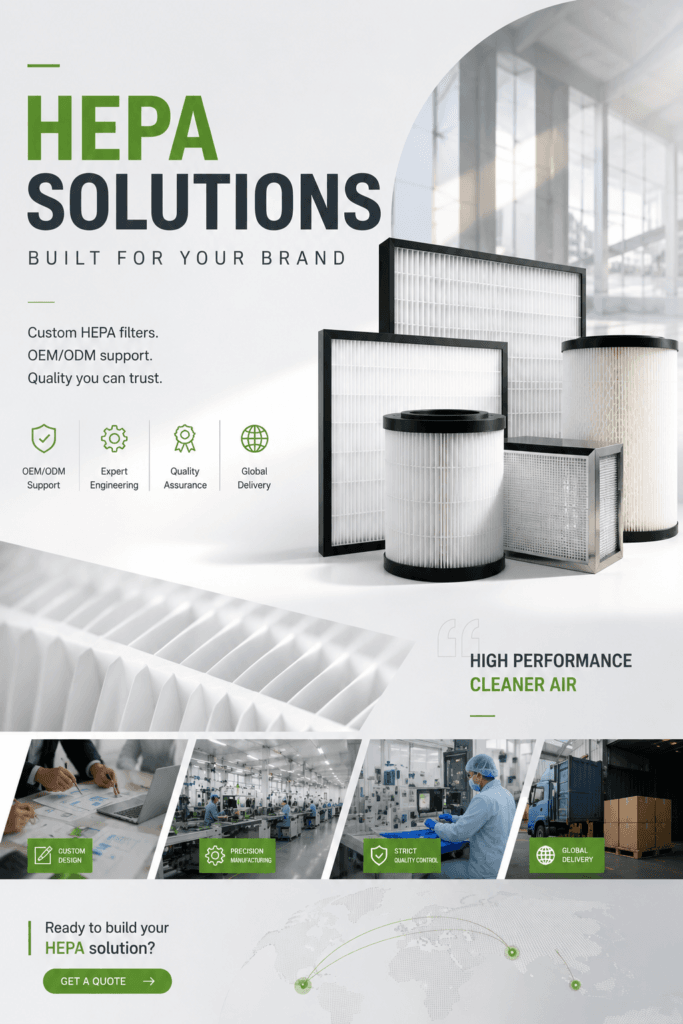
For businesses, wholesalers, and private label brands, working directly with an experienced OEM/ODM filtration manufacturer like HIFINE gives you access to custom filter designs, consistent quality control, and competitive bulk pricing. We produce standard, carbon, and HEPA cabin filters for all major vehicle makes and models, built to match or exceed OEM fit and performance.
Cabin air filters are small, low-cost parts, but they have a big impact on both your car’s long-term reliability and your daily comfort behind the wheel. Knowing the basics helps you make smarter maintenance choices and avoid unnecessary problems down the road.