A purifier that filters more air per watt is a better product. Most brands assume the way to get there is choosing a higher filter grade. That assumption is backwards. H14 captures more particles than H13. It also resists airflow harder, so the fan needs more power to push the same volume of air. The number that actually decides energy use is not efficiency grade. It is pressure drop.
Pressure drop is the resistance a filter creates against moving air. Engineers measure it in pascals. The lower the number, the easier air flows through, and the less work the fan has to do. For products that run all day, that difference shows up on the electricity bill. It also shows up in the noise level of the room. This guide explains what drives pressure drop. It also covers how manufacturers lower it without sacrificing efficiency, and what OEM buyers should put in a spec sheet.
Why Pressure Drop Matters More Than Efficiency Grade
Every filter trades airflow resistance against capture efficiency. The filter must be dense enough to catch fine particles. Every layer of density makes the fan work harder. On a small purifier, that trade off is minor. On a whole home system or a cleanroom that runs continuously, the cost compounds over years.
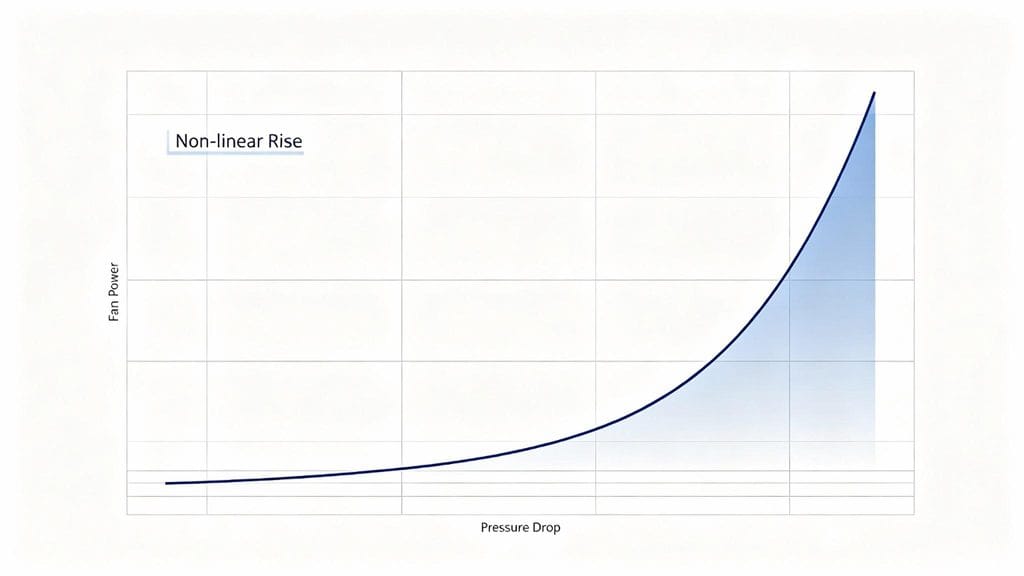
The energy relationship is not linear. A small rise in pressure drop forces a much larger rise in fan power. The motor must spin faster to overcome the added resistance. Fan power climbs with the cube of speed. A filter that adds 20 percent more resistance can push fan power up by 50 percent or more.
That hidden cost is why the fast growing segment of the market is not the highest efficiency filters. Demand for energy efficient filter designs grew by roughly 48 percent in recent industry tracking. Standard filter demand grew far more slowly. Buyers and regulators are both pushing toward lower energy use. The filter is the easiest place to find it.
What Actually Determines Pressure Drop
Pressure drop comes from four design decisions, and each one can be tuned without touching the efficiency grade.
Media Surface Area
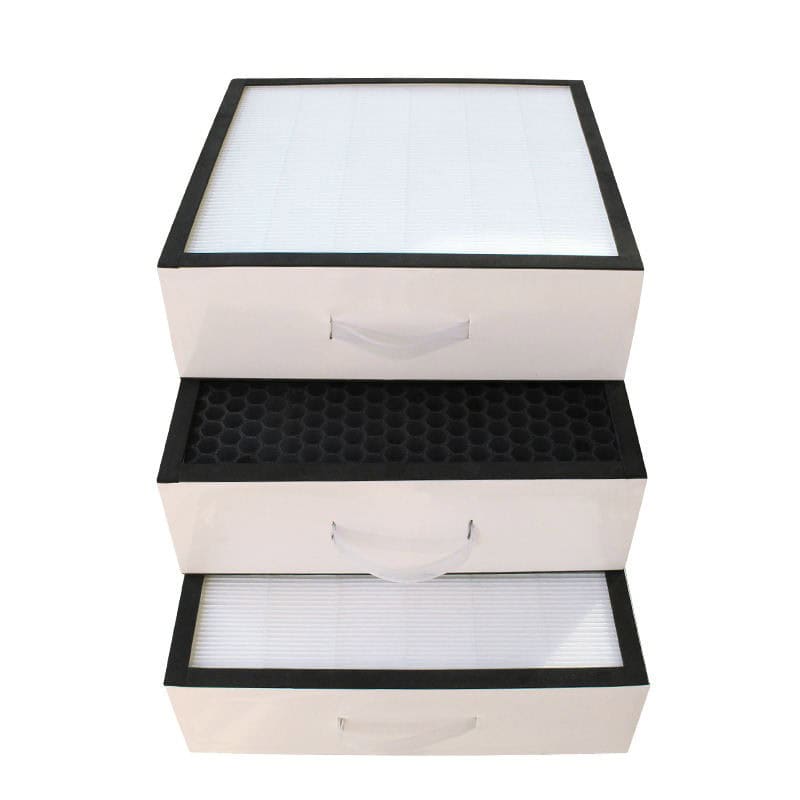
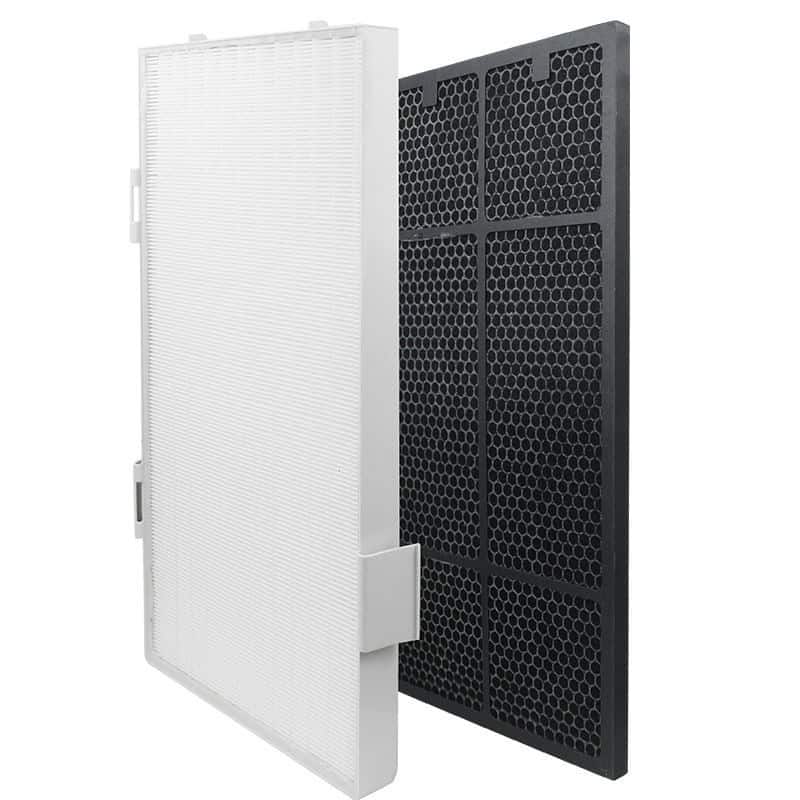
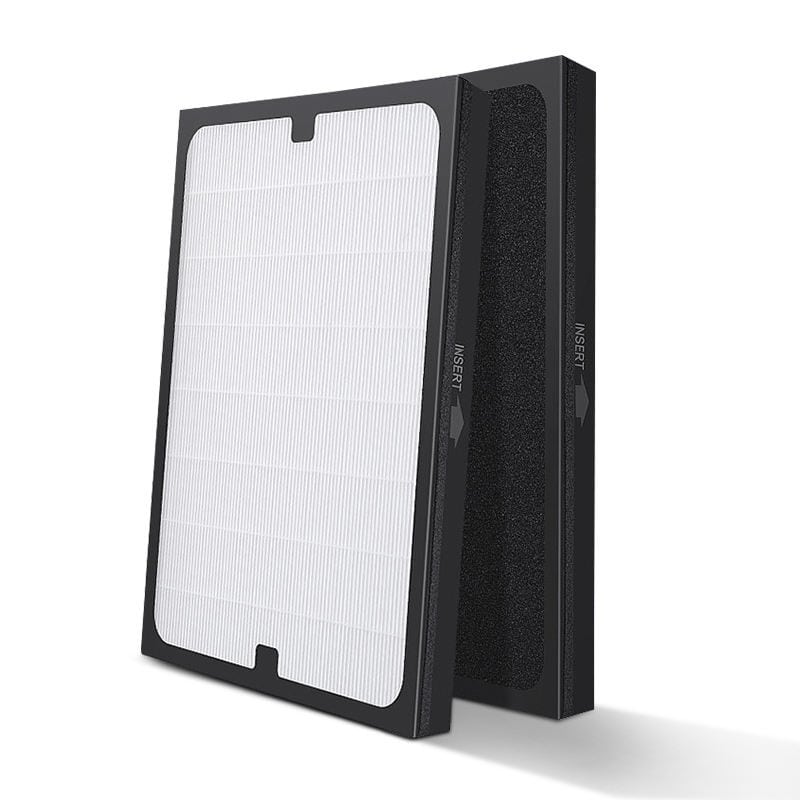
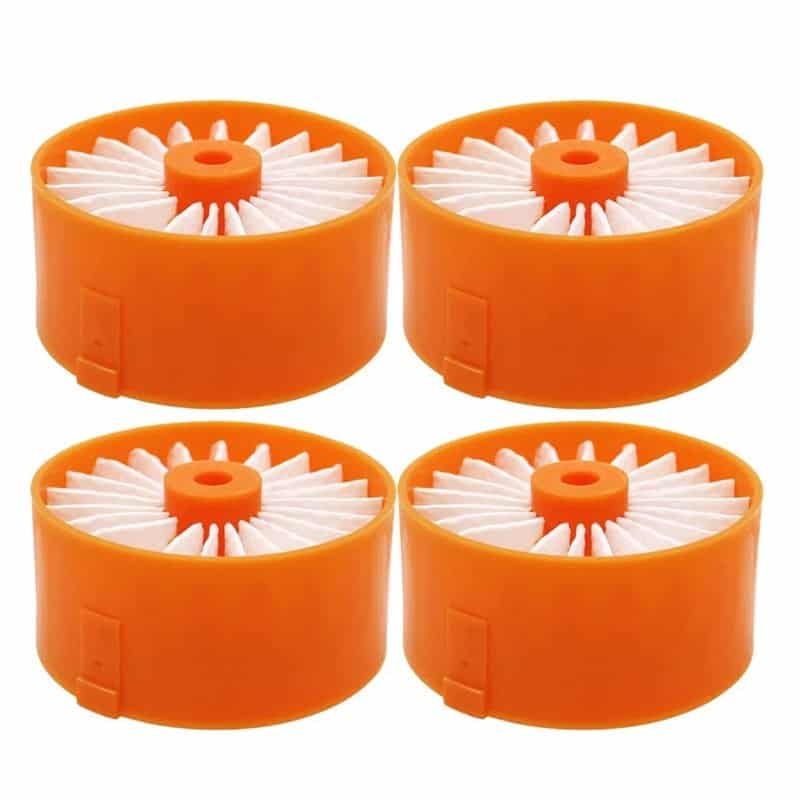
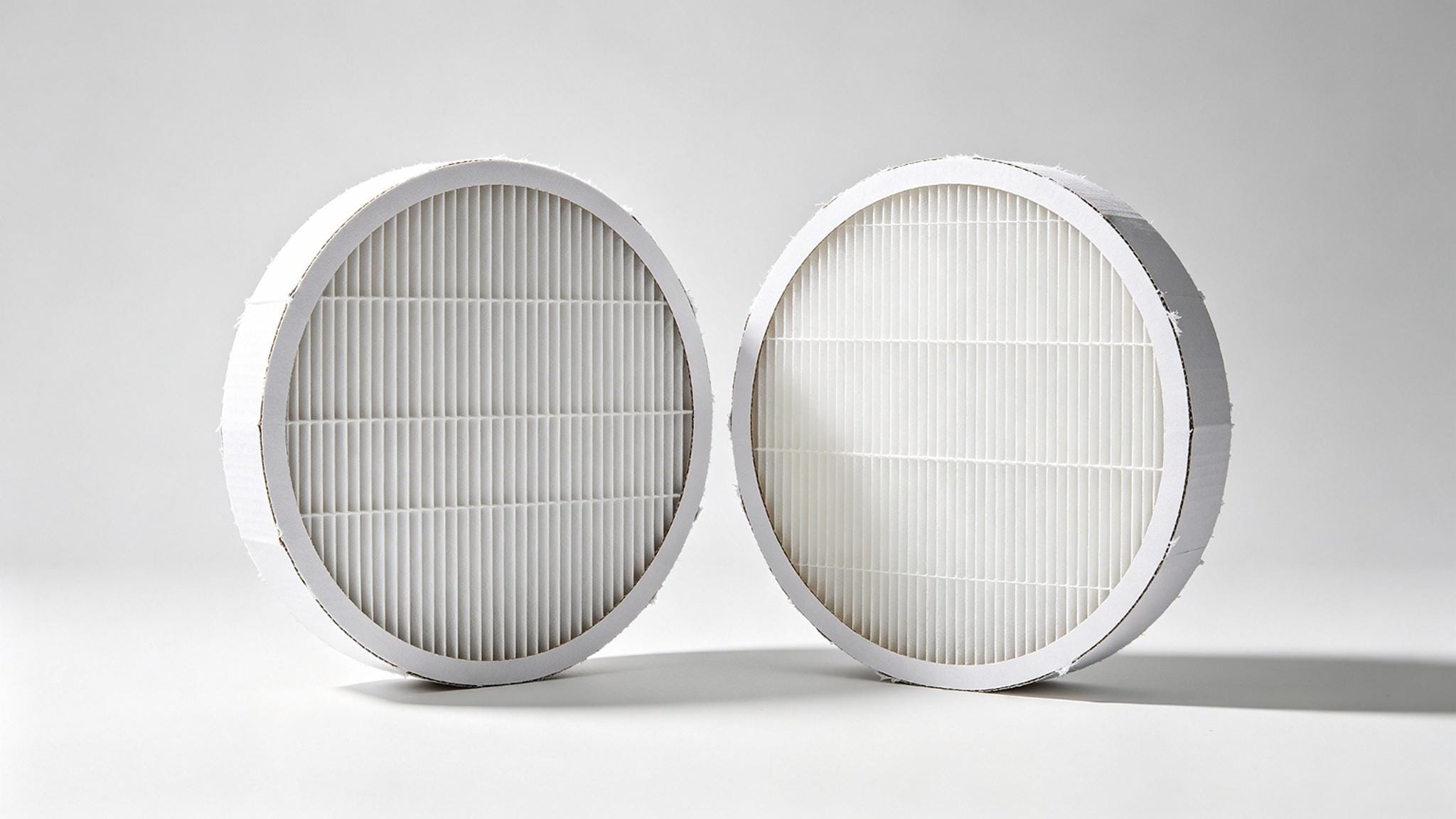
The single biggest factor is how much filter media the air has to pass through. A pleated filter with deep pleats and a large media area spreads the same airflow over more surface, so the air moves slower through the material. Slower face velocity means lower resistance. Two filters with the same H13 grade can differ in pressure drop by 30 percent or more just on pleat geometry.
Media Fiber Structure
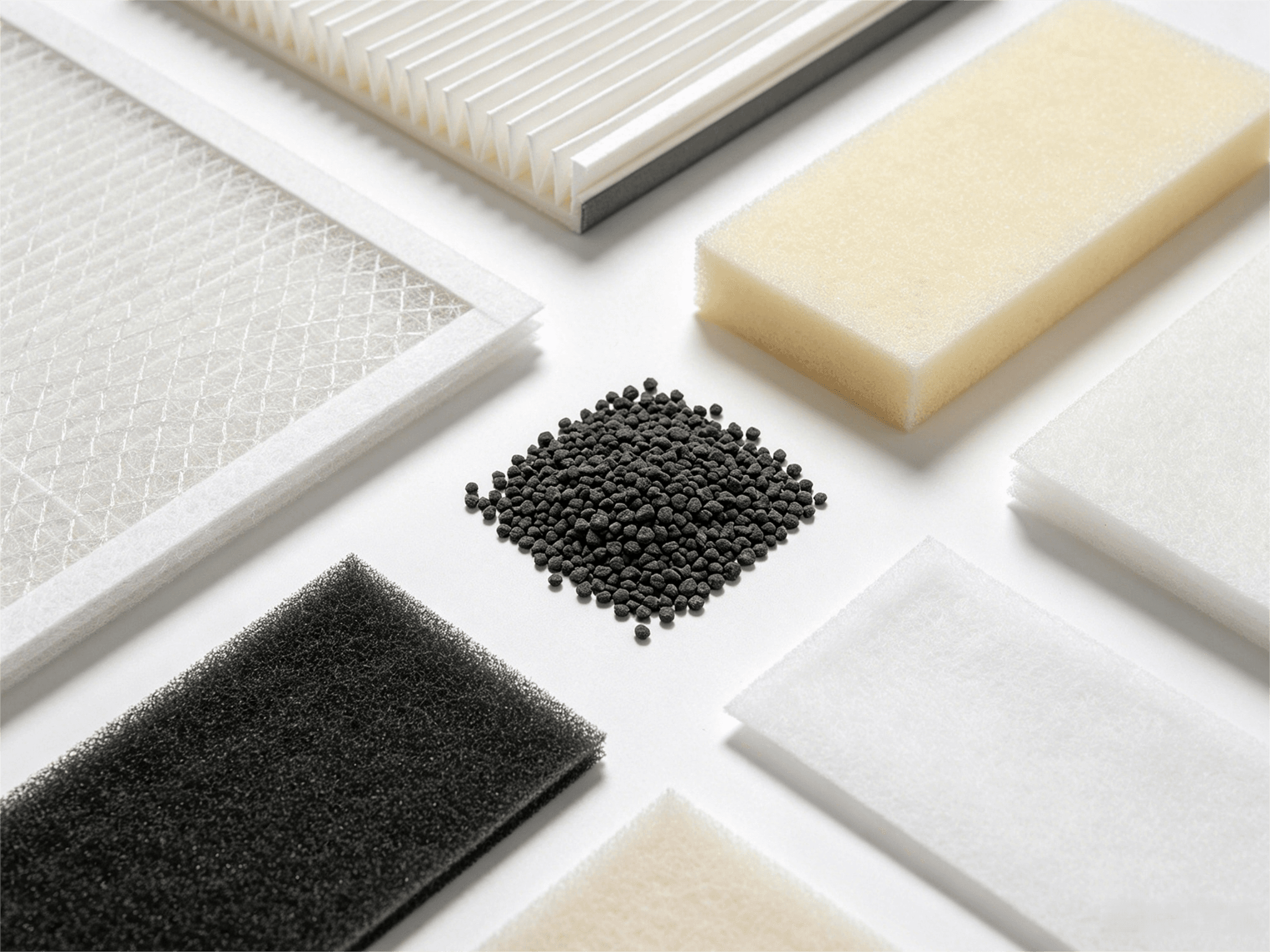
The material itself sets a floor on resistance. Glass fiber media, the standard for true HEPA, delivers reliable mechanical capture but carries a relatively high pressure drop. ePTFE membrane media captures the same particle size at roughly half the resistance because its pore structure lets air pass more freely. The trade off is cost. ePTFE media runs significantly more expensive, which is why it appears in premium products rather than budget lines.
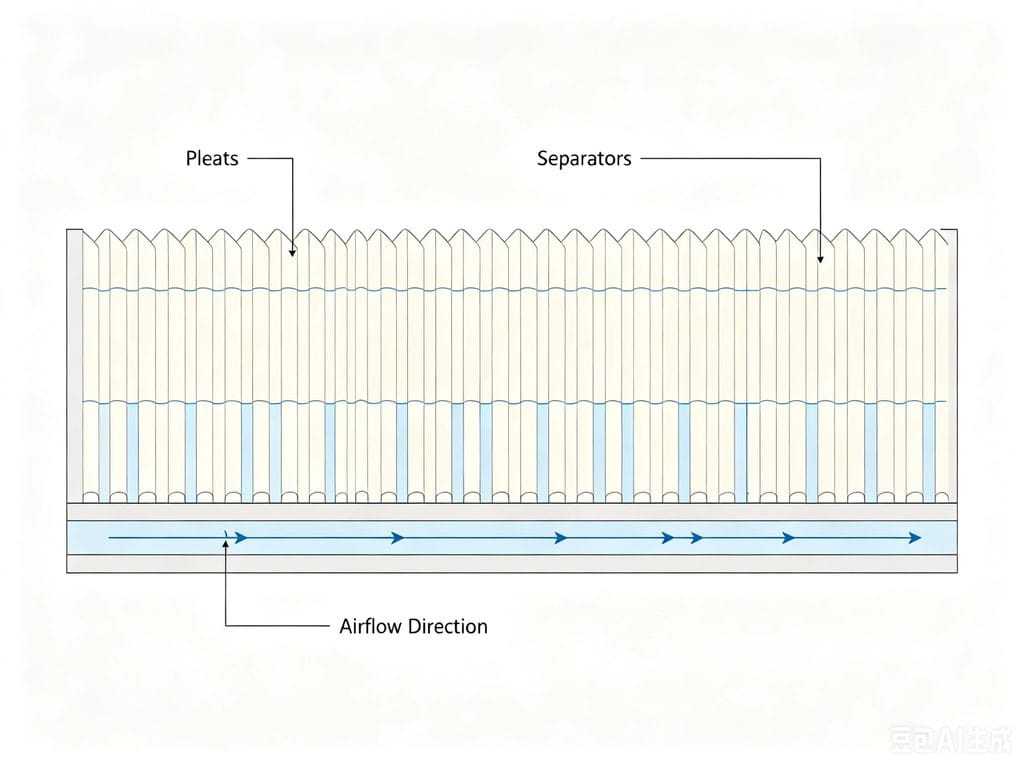
Pleat Spacing and Separators
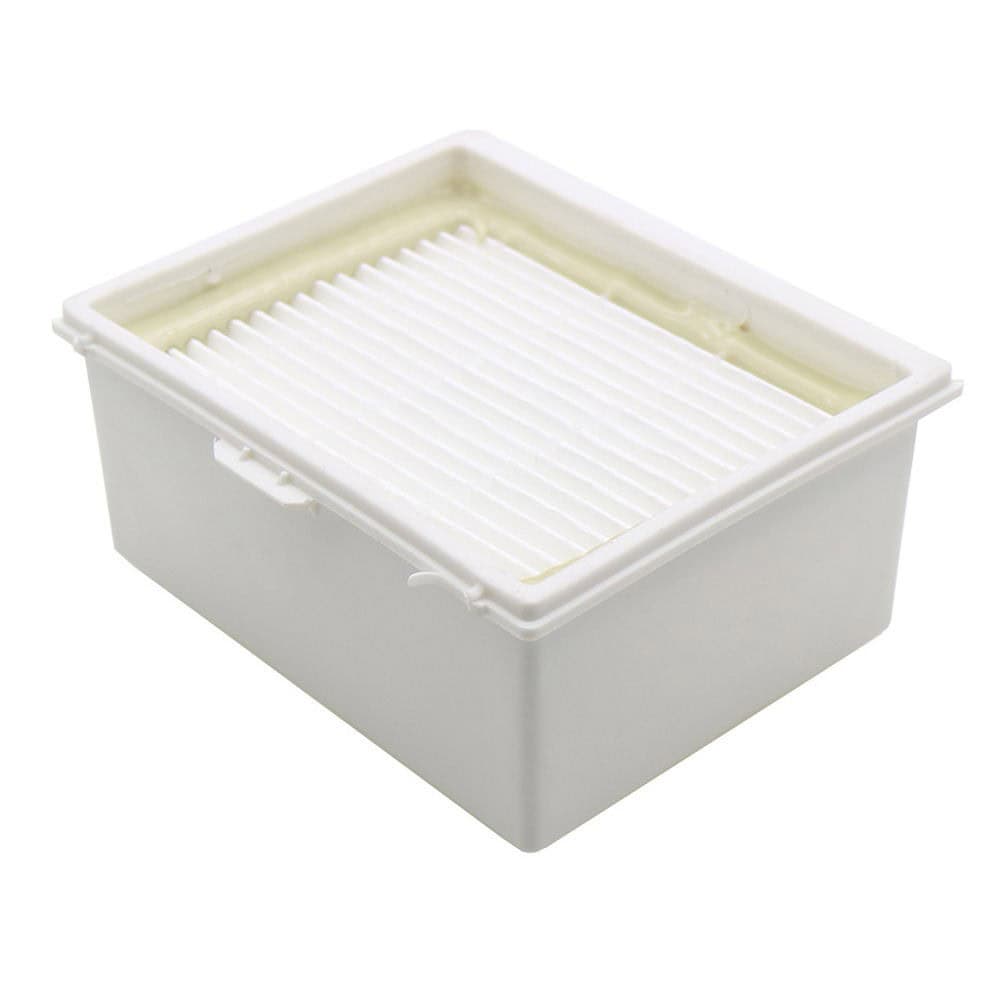
How tightly the pleats sit together changes the airflow path. Pleats packed too close create a bottleneck at the media surface and push pressure drop up. Filters with spacers or wider pleat intervals keep the channels open and lower resistance. The catch is that wider spacing means less media in the same frame, so the filter reaches its dust holding limit sooner.
Frame and Airflow Channel Design
The frame and the area around it matter more than people expect. A frame with sharp corners or a narrow inlet creates turbulence that adds resistance even when the media is efficient. A clean airflow channel with rounded transitions keeps the pressure drop close to the theoretical media value.
The Efficiency Versus Pressure Drop Trade Off
Choosing a filter grade should never be a habit. H13 and H14 are both true HEPA grades, and the right choice depends on the application.
H13 captures at least 99.95 percent of particles at most penetrating size under EN 1822 standards. It is the standard for residential and light commercial purifiers because it balances efficiency with manageable pressure drop. H14 captures 99.995 percent, but that extra 0.045 percent comes at a measurable resistance cost. For a home purifier, that added resistance buys almost nothing in real world air quality while raising fan power, noise, and energy use.
H14 earns its place in medical, pharmaceutical, and cleanroom applications where the standard requires it. It should not be used as a default upgrade in consumer products. A well designed H13 with a low pressure drop media will often deliver a better product than a poorly designed H14 with a high resistance filter.
What a Low Pressure Drop Filter Means for Your Product
For an OEM brand, specifying a low pressure drop filter changes the product in four visible ways.
The fan can run slower to move the same air, which cuts motor size, cost, and noise. The purifier achieves a higher CADR at the same fan speed, which is a number reviewers and buyers actually compare. Energy consumption drops, which matters for Energy Star qualification and for marketing claims about running cost. And the filter lasts longer between changes because the system operates below its pressure ceiling, so the fan does not strain and the media loads more evenly.
Energy Star sets a limit on the energy a purifier may use per unit of clean air delivered, and low pressure drop filters are the most direct way to pass that test. A product built around a low resistance filter qualifies more easily and carries the certification badge that drives retail sales.
What to Specify When You Buy
If you are sourcing filters for a new product line, put pressure drop requirements into the request for quote instead of leaving it to the supplier.
Ask for initial pressure drop at the rated airflow in pascals, measured per EN 1822 test conditions. Ask for the final resistance at which the filter should be replaced, because that number decides how long the product can run before the fan struggles. Ask for media type and pleat geometry in the drawing, not just the efficiency grade. Two suppliers quoting the same H13 filter can deliver very different pressure drop numbers, and the lower one is usually worth a higher unit price.
Request test data rather than a spec sheet claim. A filter that says low pressure drop on the box without a measured value gives you nothing to compare against. The best suppliers provide a pressure drop curve across airflow rates, which lets your engineer confirm the filter matches the fan curve before you commit to tooling.
If you want to understand what normal pressure drop looks like across different applications and how to judge when a filter has reached its replacement threshold, our guide to pressure drop normal range covers the reference values in detail.
End
Energy efficiency in air filtration comes from low pressure drop, not from a higher efficiency grade. The filter media area, the fiber structure, the pleat spacing, and the frame design all control resistance, and all of them can be tuned while keeping H13 efficiency. For OEM brands, specifying a measured pressure drop and a documented test curve is the difference between a product that meets Energy Star easily and one that struggles.
HIFINE manufactures low pressure drop H13 and H14 HEPA filters for OEM brands, with deep pleat geometry, glass fiber and ePTFE media options, and measured pressure drop data for every production run. We design filters around your fan curve rather than forcing your product to fit a stock filter. Send your airflow and dimensional requirements for a quotation within 24 hours.