
If you’ve turned on your AC and noticed a musty smell, weak airflow, or your allergies acting up out of nowhere, there’s a good chance the cause is one small part most drivers never think about, the cabin air filter.
What Does a Cabin Air Filter Do
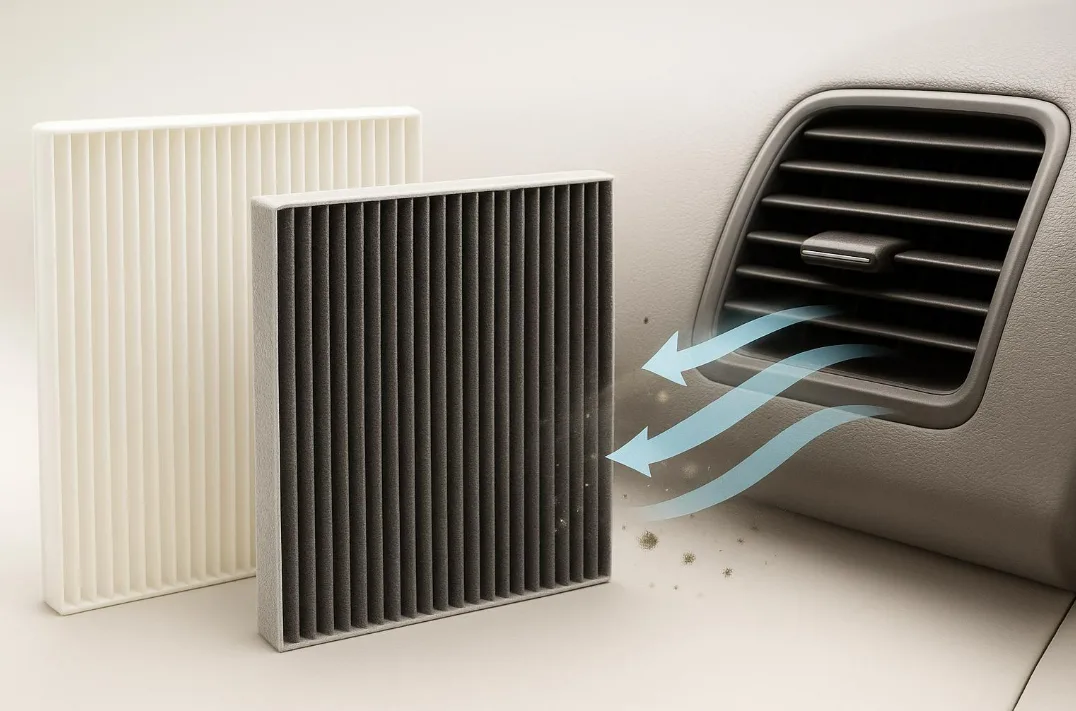
A cabin air filter sits in your car’s ventilation path and cleans the air before it reaches the driver and passengers. Every time you run the AC, the heater, or just fresh air mode, the air passes through this filter first.
Depending on the filter type, it can capture:
- Dust and road grit
- Pollen and other allergens
- Soot and smog particles
- Some odors and exhaust-related gases
According to AAA, cabin air filters are standard on most late-model vehicles and are a key part of keeping the air inside the car clean and comfortable.
A cabin air filter doesn’t make your engine run better or improve fuel economy. What it does is protect what you breathe, and it helps your HVAC system move air the way it was designed to.
How a Cabin Air Filter Works
Most cabin air filters sit behind the glove box, though some vehicles place them under the hood near the windshield cowl or behind interior dash trim. iFixit’s overview of cabin air filters notes that the filter cleans air entering the cabin through the HVAC system, and that indoor air in a car can get several times more polluted than the air outside if that filter isn’t doing its job.
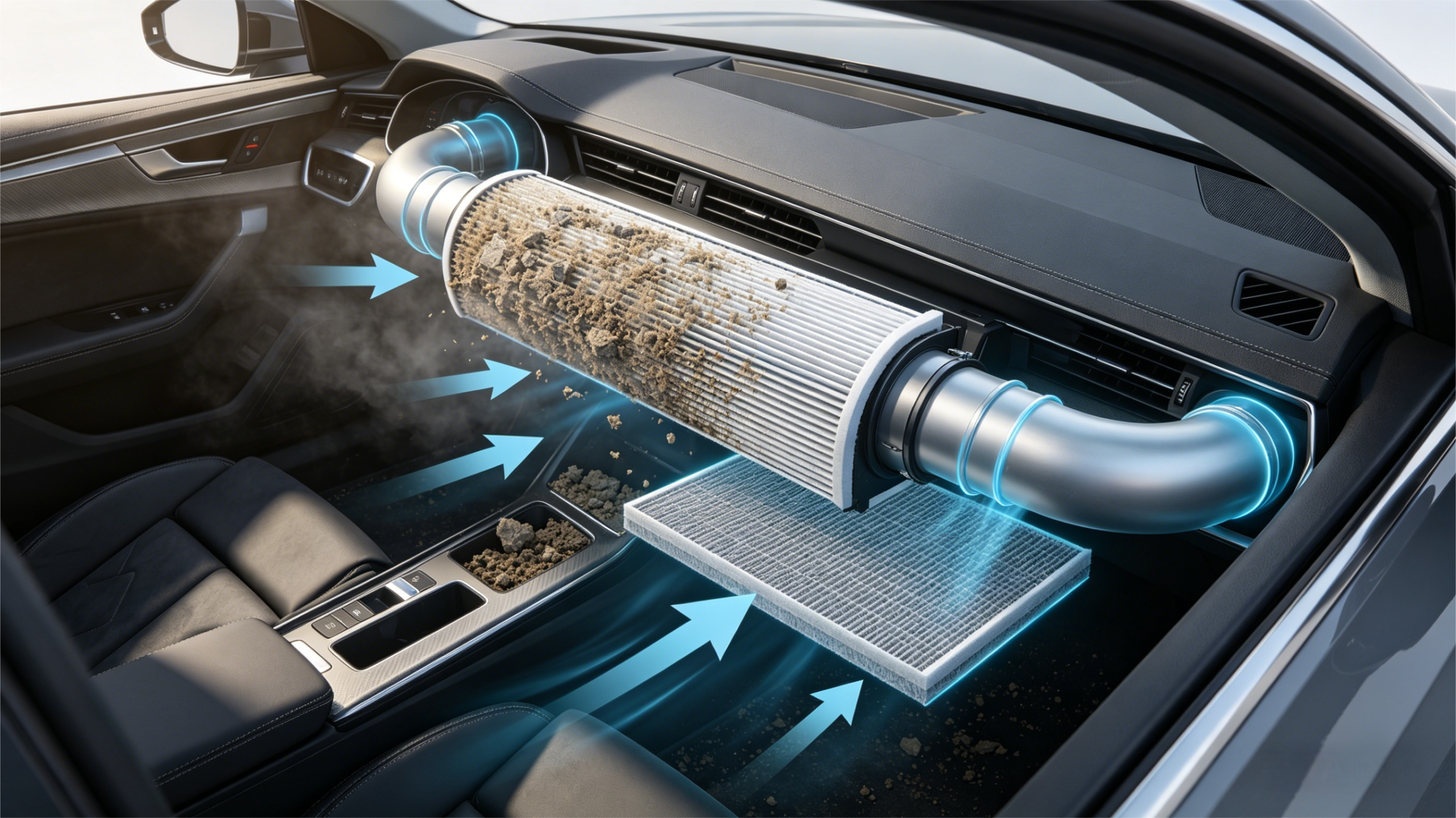
The basic airflow path looks like this:
- Outside air enters through an intake at the base of the windshield
- Air passes through the cabin air filter
- The blower motor pushes filtered air across the AC evaporator or heater core
- Air comes out through your vents
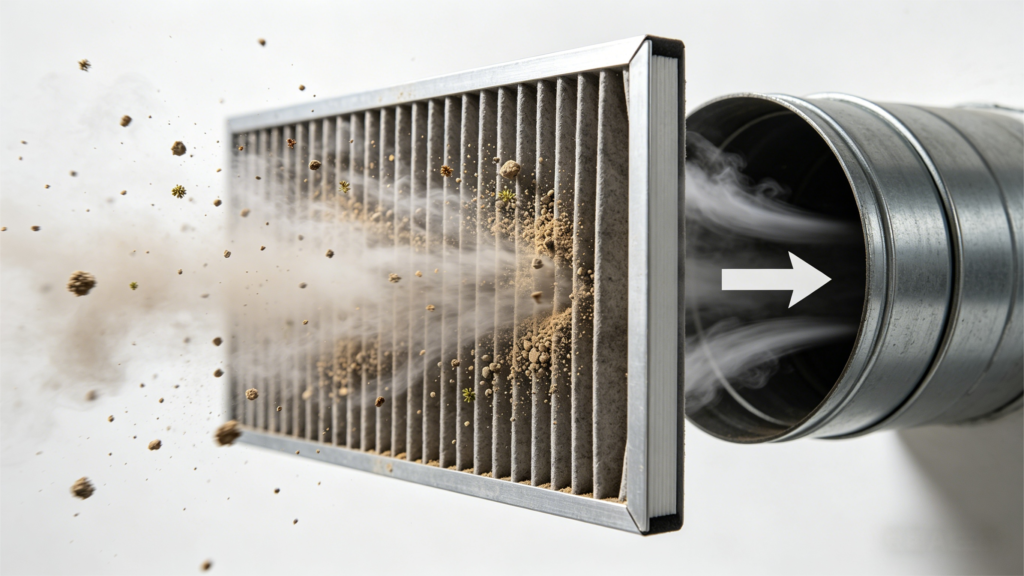
Because the filter sits upstream of the blower, a clogged one forces the fan to work harder just to push the same amount of air through. That’s usually the first thing drivers notice, not a smell, just weaker airflow than usual.
Particulate vs Activated Carbon Cabin Air Filters
Not all cabin filters are built the same way. If you’ve ever seen a “charcoal” option while shopping for one, that’s the main split.
Particulate Cabin Air Filters
These use pleated fiber media designed to trap physical particles like dust and pollen. A standard particulate filter makes sense if you mainly want less dust in the cabin, don’t have strong odor complaints, and want to keep replacement costs down.
Activated Carbon Cabin Air Filters
An activated carbon filter adds a carbon layer on top of the particulate media. iFixit’s guide notes that this layer is aimed specifically at odors and certain gaseous pollutants that plain particulate media can’t catch.
A simple way to think about the difference: particulate media works like a net that catches dust and pollen, while activated carbon works more like a sponge that pulls in odors and fumes. If you drive in heavy traffic, deal with wildfire smoke, or notice an exhaust smell at stoplights, activated carbon is usually the upgrade you’ll actually notice.
Further reading: How to choose the right cabin air filter for your car
Signs of a Dirty Cabin Air Filter
There’s no single perfect replacement interval, since it depends heavily on where and how you drive. Most maintenance guides put the range at 15,000 to 30,000 miles, and Jiffy Lube’s guidance recommends checking your owner’s manual for the exact number on your vehicle.
Even without tracking mileage closely, your car usually gives you warning signs. FRAM lists several common indicators of a dirty cabin air filter, including:
- Reduced airflow from the vents, even with the fan on high
- A musty or sour smell when the AC or heater first turns on
- Windows fogging up more, and defrosting slower than usual
- More dust settling inside the cabin than normal
- More sneezing or itchy eyes if you’re prone to allergies
Weak airflow in winter is worth paying attention to in particular. A clogged filter slows down defogging right when you need clear windows most.
Replacing a Cabin Air Filter Yourself
For most vehicles, this is one of the easier maintenance jobs you can do without a mechanic. The general pattern is the same across most cars: find the filter access panel, usually behind the glove box, remove the cover, slide out the old filter, clear any loose debris from the housing, and slide in the new filter facing the correct direction.
That last part trips up more people than anything else. Most air filter frames have arrows printed on them to indicate the direction of airflow. Reversing the installation will not only fail to solve the problem but will also restrict airflow. For information on how to replace the cabin air filter for different car models, please refer to our “Complete Guide to Replacing Your Car’s Air Filter“.
About HIFINE
HIFINE is an ISO 9001 certified factory with more than 10 years of experience manufacturing HEPA filters, air purifier filter media, and appliance filtration accessories. We work with overseas brand owners, wholesalers, distributors, and private label clients on OEM and ODM filter production, including H13 True HEPA filters and H11 True HEPA filters.
FAQ
No. The engine air filter protects your engine. The cabin air filter protects the air you and your passengers breathe through the HVAC vents.
It won’t change the refrigerant system, but if your old filter was badly clogged, a new one can restore airflow—so the A/C feels stronger and cools the cabin faster.
Not necessarily. If odors, fumes, or city driving are a problem, it can be worth it. If you mostly want dust/pollen control, a standard particulate filter is often enough.