
HEPA filtration started in hospitals and industrial clean rooms, but it has worked its way into everyday home appliances. Most households already run two or three devices that depend on a HEPA filter without giving it much thought. The technology shows up wherever air needs to be cleaned of particles small enough to stay suspended and get breathed in.
This page covers the main places HEPA filters appear in a typical home, what they do in each appliance, and why the same filter grade does not work the same way across every device. For custom HEPA filter manufacturing across all home appliance categories, see our solutions page.
Air Purifier Filters
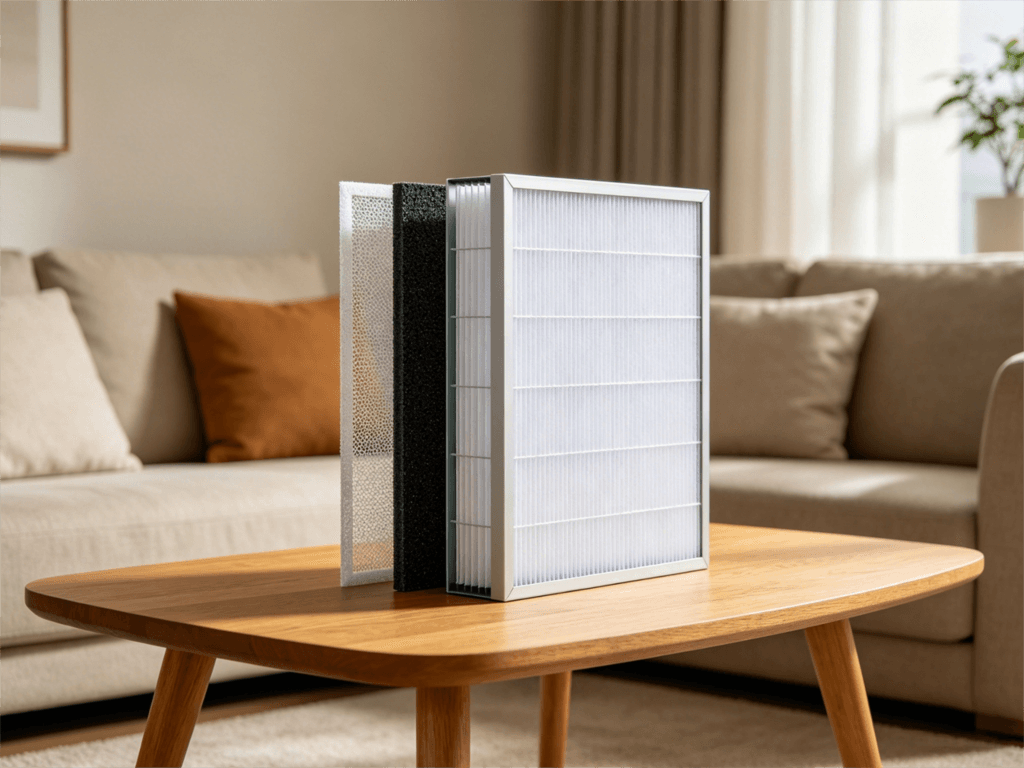
Air purifiers are the most direct use of HEPA filtration in a home. The device pulls room air through a fan, forces it through a HEPA media layer, and pushes cleaned air back into the room. This runs continuously, often 24 hours a day, so the filter is working against a steady load of household dust, pollen, pet dander, cooking particles, and mold spores.
HEPA grade matters here more than in most other home appliances because the air is being recirculated directly into the breathing zone. An H13 grade filter captures 99.95 percent of particles at the most penetrating size, while H14 pushes that to 99.995 percent. Homes with allergy sufferers, asthma patients, or indoor pets typically need at least H13. Pet dander is especially tricky because it is microscopic and light enough to float for hours after settling, which is why standard filters fall short in homes with dogs or cats. Learn more about why standard purifiers fail for pets.
Homes with babies and toddlers add another consideration. Crawling infants breathe closer to the floor where heavier particles settle, and they put objects in their mouths constantly. A HEPA filter for this environment should use clean media without added fragrances or chemical coatings. See our nursery filter guide for details.
Robot Vacuum Filters
Robot vacuums use HEPA filters in a very different way from air purifiers. Instead of running continuously against airborne dust, the filter only works when the robot is running, and the air it cleans is loaded with debris the brush has just lifted off the floor. This means the filter faces a much heavier particulate load in a much shorter time.
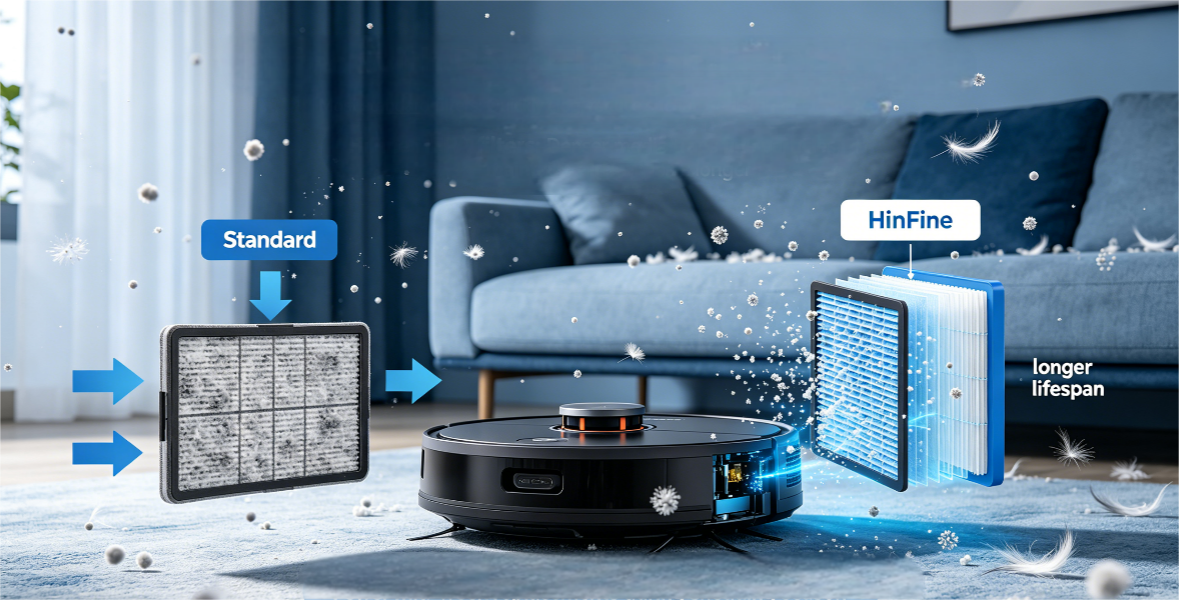
The filter sits between the suction motor and the exhaust air. Its job is to catch fine dust that the dustbin or primary filter has missed, so the air blown back into the room is clean. A worn or clogged filter does two things at once. It reduces suction because airflow is restricted, and it lets fine dust escape through the exhaust, which means the robot is essentially stirring up dirt and blowing it around the room.
Use case changes the requirements dramatically. Pet owners deal with hair and dander that fill a filter fast, often within a week. Carpeted homes pull up far more debris than hard floors, so a filter that lasts months on tile can clog in weeks. Allergy sensitive households need a true HEPA with a sealed frame, because any gap around the edge lets unfiltered air sneak past the media entirely. These differences are why one generic robot vacuum filter rarely performs well across every home.
Upright and Canister Vacuum Cleaners
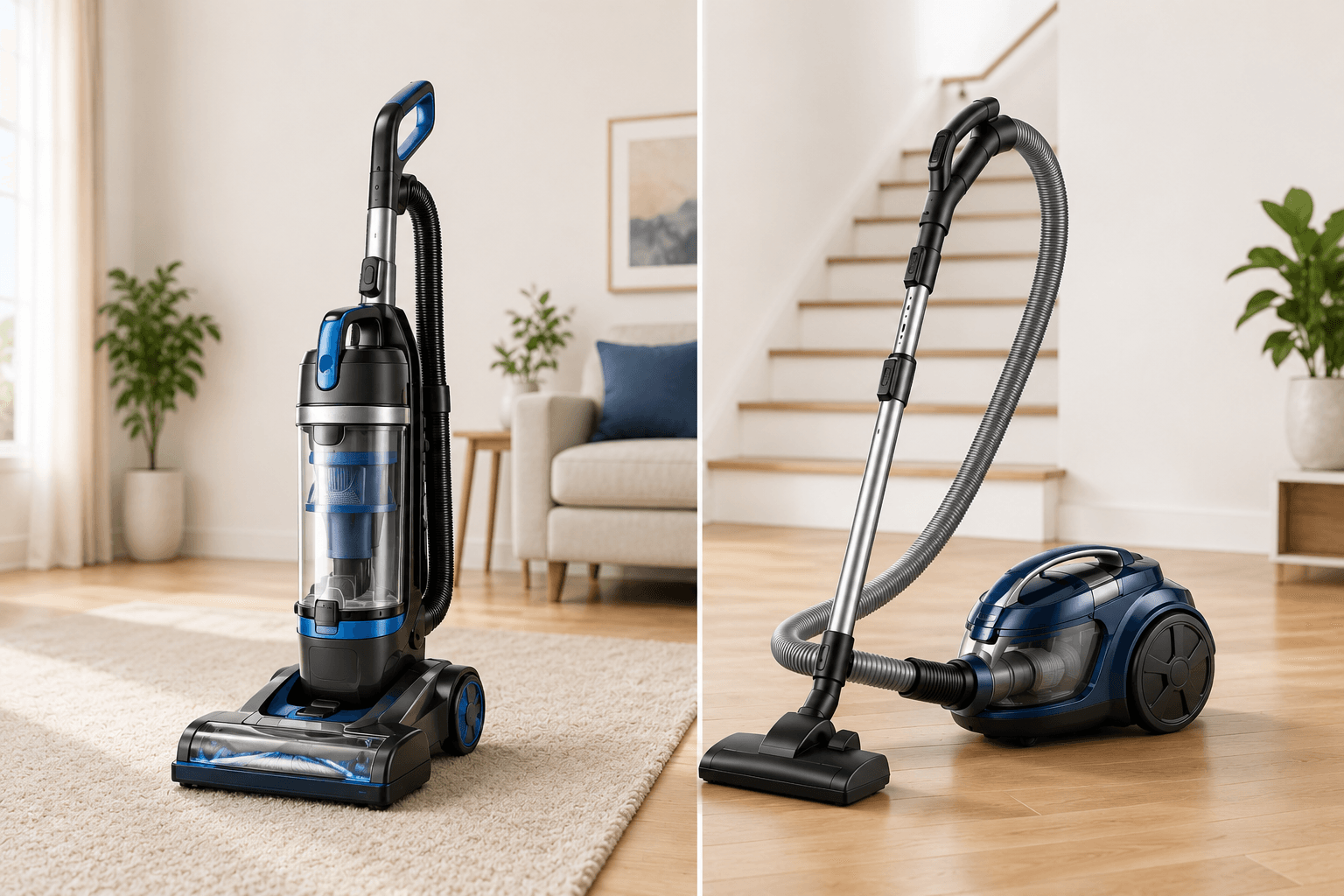
Traditional upright and canister vacuums follow the same principle as robot vacuums but at a larger scale. The HEPA filter sits after the dustbag or cyclonic separator and before the motor exhaust, capturing fine particles that the primary collection stage has missed. Bagged vacuums often use the bag itself as a pre filter, with a HEPA exhaust filter as the final stage. Bagless models rely on cyclonic separation plus a HEPA cartridge.
This is where HEPA filtration matters most for people with allergies. Older vacuums without HEPA exhaust filters blow fine dust, mite allergens, and pollen right back into the air during cleaning, which can trigger symptoms for hours afterward. A true HEPA exhaust filter prevents that. The same sealed frame rule applies here as with robot vacuums. A filter that is rated HEPA but does not seal against the housing will allow air to bypass the media.
Handheld and Stick Vacuums
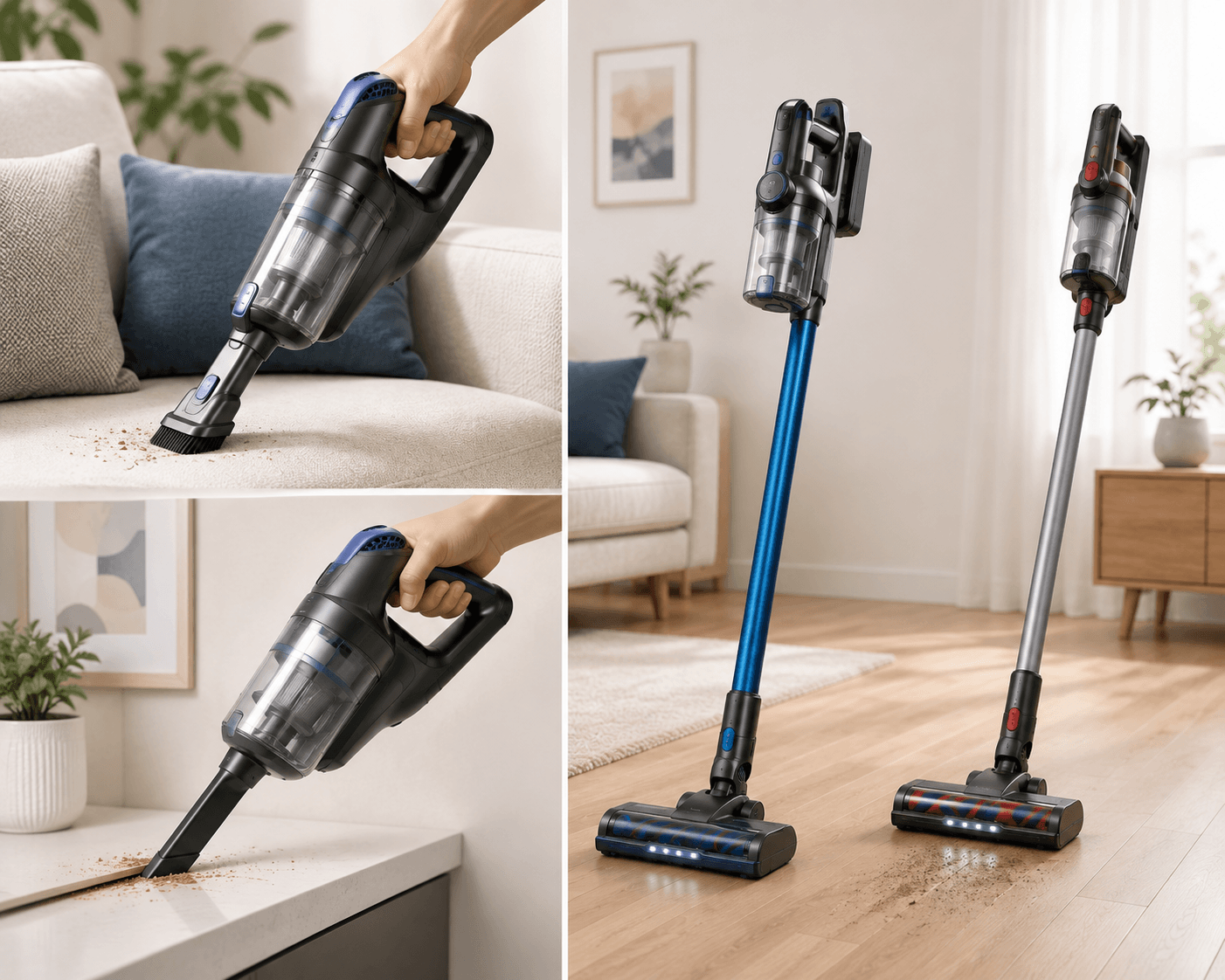
Handheld and stick vacuums are compact versions of the same filtration setup. They are used for quick cleanups, stairs, car interiors, and furniture, so they tend to run for shorter bursts but often handle concentrated debris like crumbs, pet hair on upholstery, or dust from shelves. The HEPA filter in these devices is smaller, which means it reaches capacity faster and needs more frequent replacement.
The small form factor also makes frame sealing more challenging. There is less surface area for a gasket, and the filter housing is often plastic that flexes under suction. For manufacturers and brands sourcing these filters, consistent frame dimensions and gasket quality are just as important as the HEPA media grade itself.
Whole House HVAC and Fresh Air Systems
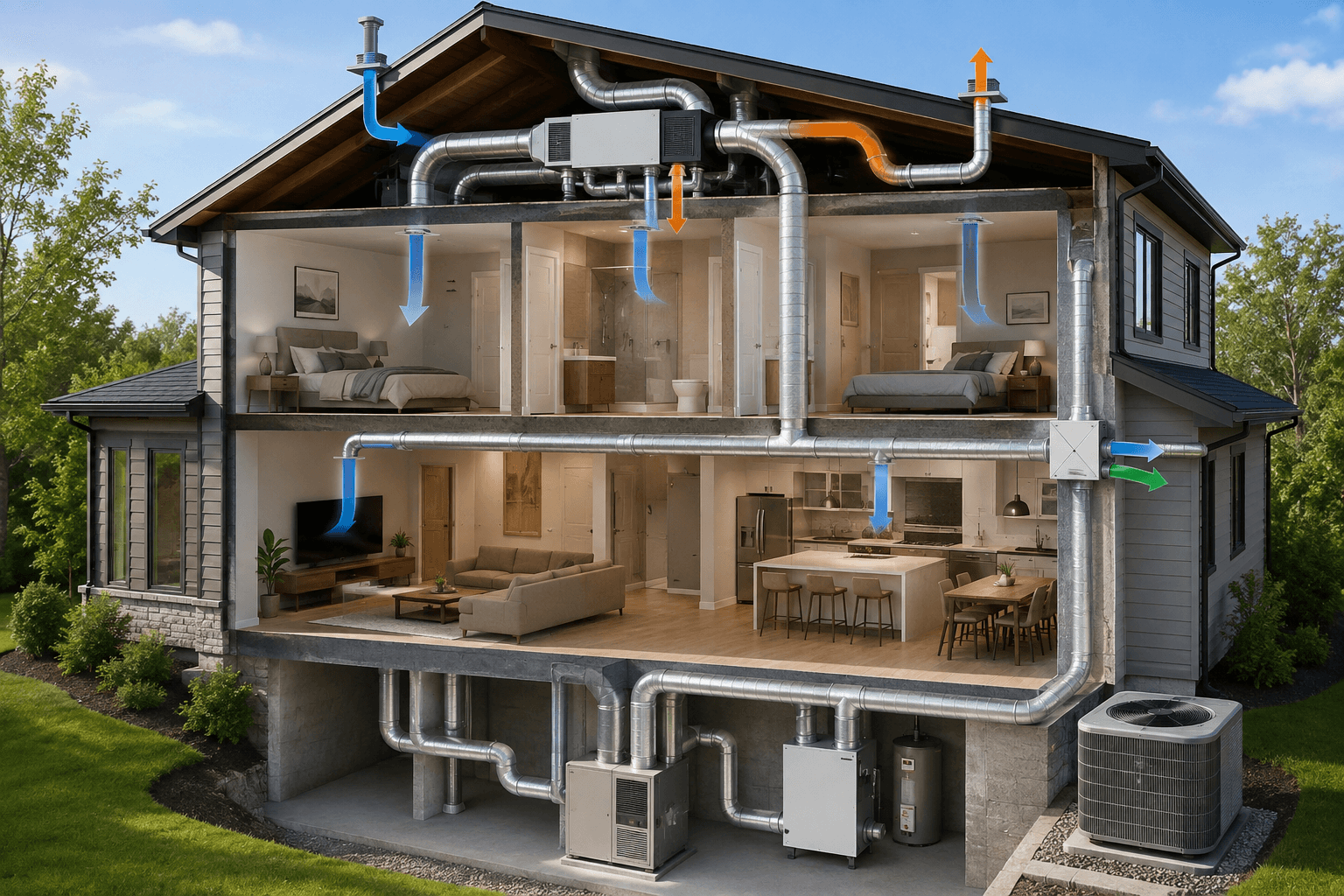
Some central HVAC systems and fresh air units use HEPA filtration, though this is less common than portable air purifiers. A whole house HEPA filter is installed in the ductwork or air handler, cleaning the air as it circulates through the home. This is a higher end setup, often found in homes with severe allergy needs, immunocompromised residents, or in regions with poor outdoor air quality.
The challenge with whole house HEPA is airflow resistance. HEPA media is dense, and a whole house system moves far more air than a portable purifier. The filter must be sized large enough to handle the system airflow without dropping static pressure too much, which would strain the blower motor. This is why whole house HEPA systems often use large cartridge or V bank filters rather than the flat panels used in portable units.
Other Home Appliances
HEPA and high efficiency filtration also appears in smaller home devices less commonly associated with air cleaning. Some high end dehumidifiers include a HEPA stage to clean the air as it passes over the cooling coils. Certain air fryers and countertop ovens use HEPA exhaust filters to reduce cooking odors and smoke. Range hoods with external filtration may use HEPA or activated carbon combined filters, though most rely on carbon rather than HEPA.
These niche applications are growing as consumers become more aware of indoor air quality, and they represent an opportunity for brands that can engineer HEPA filters into non traditional form factors.
Sourcing HEPA Filters for Home Appliance Brands
Every application on this page demands a different filter. Air purifiers need continuous duty against airborne particles. Vacuums need high debris capacity and sealed frames. Whole house systems need low airflow resistance at high volume. A filter engineered for one of these will not perform well in another, even if the media grade looks the same on paper.
HIFINE manufactures HEPA filters for all major home appliance categories, including air purifiers, robot vacuums, upright and canister vacuums, handheld units, and custom whole house cartridges. All production runs under ISO 9001 quality systems, with independent test documentation available for HEPA efficiency claims. OEM and ODM programs support custom dimensions, private label packaging, and media grades from H11 through H14.
Browse our robotic vacuum cleaner parts category for current models, or contact our solutions team to discuss a custom filter for your home appliance line.