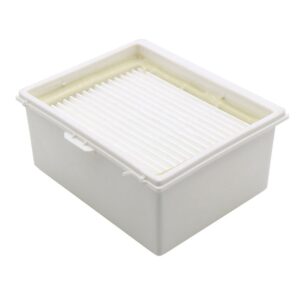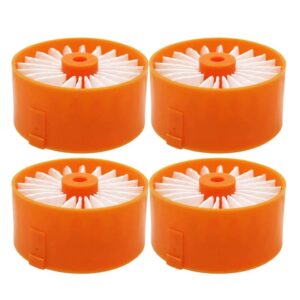

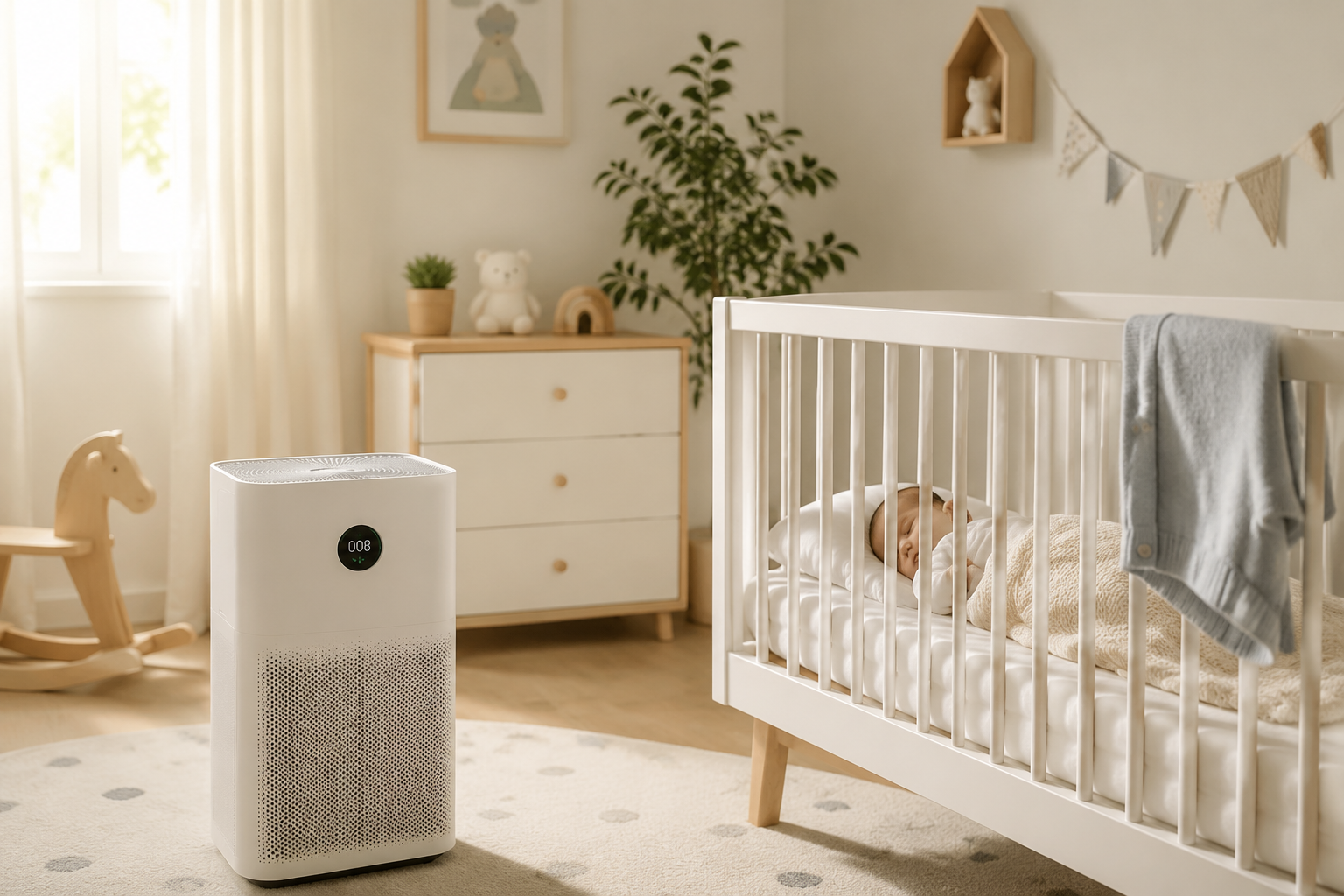
Short answer first: the best air purifier filter for a nursery is a true HEPA filter rated H13 or higher, combined with an activated carbon layer, with no ionizer function, and sized to the room using its Clean Air Delivery Rate. The rest of this guide breaks down why each of those points matters and how to check for them before you buy.
Baby-store shelves are full of purifiers dressed up in nursery photography, a soft color palette, and the word “HEPA” printed somewhere on the box. None of that tells you what’s actually installed inside. Two units can look identical, same housing, same app, same price tag, and still leave a nursery with very different air quality, because the filter grade is where the real difference sits.
What Makes an Air Purifier Filter Actually Safe for a Nursery
A nursery has its own pollutant mix. Alongside the usual dust and pollen, you’re often dealing with a freshly painted room, a brand-new crib, new carpet or flooring, and a mattress still off-gassing from the factory. IQAir’s research on nursery air quality names these chemical sources as something parents typically overlook while they’re focused on dust and allergens. So the filter needs to do two separate jobs: trap fine particles, and pull chemical vapors out of the air. One filter type rarely does both well, which is the real reason the best setup for a nursery is usually two filter types working together, not one all-in-one product.
Best HEPA Filter Grade for a Baby Room: True HEPA H13, Not “HEPA-Type”
A true HEPA filter tested under EN1822 or the U.S. IEST-RP-CC001 standard captures at least 99.95% of particles at its hardest-to-catch size. That includes dust, pet dander, and the fine particulate matter (PM2.5) known to irritate a developing respiratory system. Filters sold as “HEPA-type” or “HEPA-like” never went through that testing. Independent reviewers who’ve pulled apart budget units have found some capture well under 80% of particles in practice, despite the HEPA label on the box.
Marketing Terms That Don’t Mean the Filter Was Actually Tested
“Hospital-grade,” “medical-grade,” and “advanced filtration technology” sound reassuring, but none of them are regulated terms, and none require a lab report to use on packaging. A listing worth trusting names a specific class and a tested percentage at a stated particle size. If it doesn’t, treat the HEPA claim as unverified until you can confirm it.
Best Filters for Nursery Odors and New-Furniture VOCs: HEPA Plus Activated Carbon
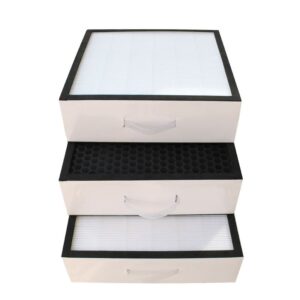
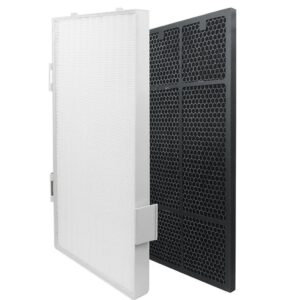
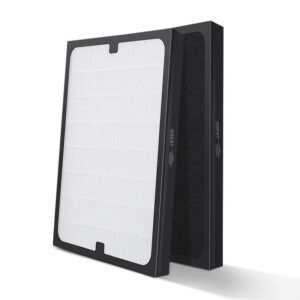
HEPA media traps particles. It does nothing for gases. That faintly plasticky smell from a new crib or fresh paint passes straight through a HEPA-only filter and keeps circulating in the room. What actually removes it is activated carbon, either as its own layer or built into a combined HEPA-and-carbon filter. If the nursery was recently painted, furnished, or carpeted, a carbon layer isn’t optional. It’s doing the part of the job a HEPA layer physically can’t.
Why an Ozone-Free Air Purifier Filter Matters More in a Baby’s Room
Some purifiers add an ionizer or “plasma” function to strengthen marketing claims about killing germs. These features can generate ozone as a byproduct, and ozone is a known lung irritant. A developing respiratory system reacts to it more strongly than an adult’s does. The EPA advises against ozone-generating air cleaners in general, and pediatric health guidance repeats that warning specifically for nurseries. Check whether an ionizer feature can be switched off completely before you buy. If the manual or manufacturer can’t confirm that, leave the model out of the baby’s room.
How to Size an Air Purifier Filter for a Nursery: CADR by Room Size
A filter rated correctly for particle capture still won’t clean a room it’s too small for. The number that answers this is CADR, or Clean Air Delivery Rate. The EPA and the Association of Home Appliance Manufacturers (AHAM), which developed the CADR test, point to a CADR of roughly two-thirds of the room’s square footage as enough for about four to five air changes per hour.
| Nursery Size | Recommended CADR |
|---|---|
| 80 sq ft | ~55 |
| 100 sq ft | ~65 |
| 120 sq ft | ~80 |
| 150 sq ft | ~100 |
Undersize it and the unit runs constantly while only partly cleaning the air. If the ceiling runs taller than 8 feet, move up a size from this table.
How Often to Replace a Nursery Air Purifier Filter
A nursery loads a filter faster than most other rooms in the house. Babies shed skin cells constantly, laundry gets changed almost daily, and plenty of parents run a humidifier next to the purifier. That extra moisture makes dust and lint stick to the filter media faster than it would in a dry room, and it can encourage mold on a filter that’s already overdue. A simple monthly check works: hold the filter up to a window. If daylight doesn’t pass through the pleats, or the pre-filter looks visibly grey, replace it rather than waiting for the calendar reminder built into the factory’s average estimate.
Nursery Air Purifier Filter Checklist: Quick Answer
- True HEPA, H13 or better, independently tested, not “HEPA-type”
- Activated carbon or a HEPA-carbon combo layer for new-furniture VOCs
- No ionizer, or one you can fully switch off
- CADR sized to roughly two-thirds of the room’s square footage
- Checked monthly, replaced before the pleats look grey
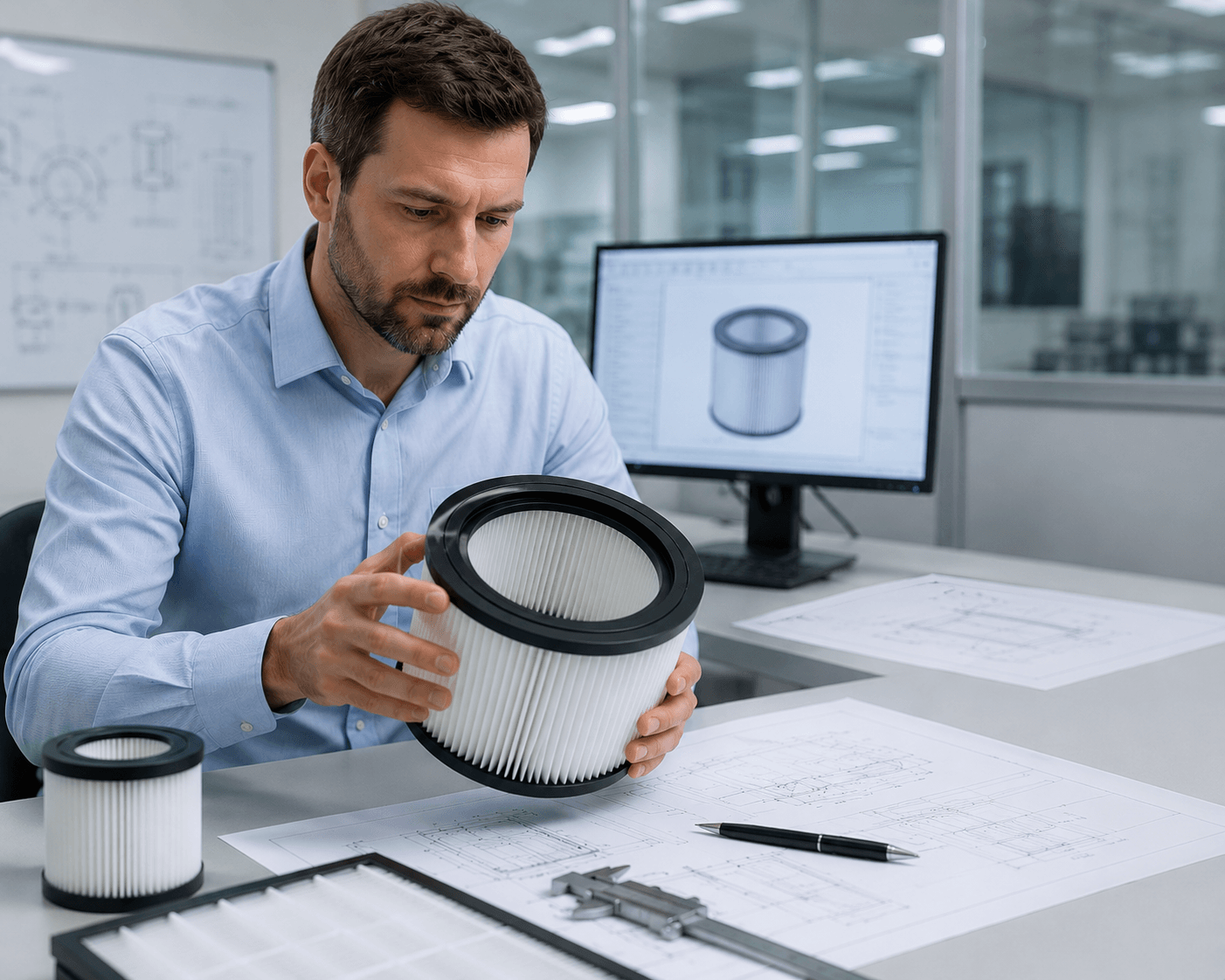
If you’re sourcing or building a nursery-focused air purifier line rather than shopping for one, the filter is also the easiest part to get wrong at scale. A small dimensional error or an unverified HEPA claim turns into a recall risk fast. Our guide on how to read a HEPA filter test report covers what a legitimate certificate should show before you approve a production run. Hifine’s H13 True HEPA filters and HEPA + activated carbon combination filters are built for exactly this kind of application.