

Trading companies routinely add 10% to 30% on top of the factory’s actual price. For a product like a HEPA replacement filter, where raw material costs are transparent and manufacturing is heavily concentrated in China, that markup is often pure margin drain. If you’re an FBA seller moving filter SKUs, that leak adds up fast.
The 23% Price Shock No One Warned You About
Sourcing overseas already feels like walking through a minefield. According to a 2025 McKinsey survey cited by industry analysts, 68% of sellers relying on overseas partners got hit with price hikes averaging 23% over the past year. When your supplier is a trading company, you’re not just absorbing their markup. You’re also absorbing their delayed communication, their quality-control handoffs, and their inability to tweak product specs without running back to the actual manufacturer.
The global air purifier market is projected to grow from $18.1 billion in 2025 to $30.1 billion by 2033, with HEPA technology alone capturing 41.7% of that revenue. Replacement filters represent the real recurring goldmine. HEPA filter replacements already command 42.3% of the aftermarket segment. Sellers who own their supply chain from day one are positioning themselves to capture that repeat-purchase revenue at a cost basis their competitors can’t touch.
Where Your Margin Actually Goes
Let’s talk about the profit funnel. Private-label FBA sellers typically aim for 25-30% net margins. But that math falls apart when your landed cost is inflated by a middleman. If your trading company quotes $4.20 per HEPA filter and the factory’s actual FOB price is $3.20, you’re paying a 31% premium before the container even hits the water.
That extra dollar isn’t buying you better quality. It’s buying you a contact who forwards your messages. Direct factory relationships let you negotiate tiered MOQs, lock in multi-year pricing, and, critically, control your packaging and branding without paying a surcharge. For sellers building a private label air filter brand, every cent of COGS optimization compounds across thousands of replacement-filter reorders.
Why Filters Are the Perfect Product to Cut Out the Middleman
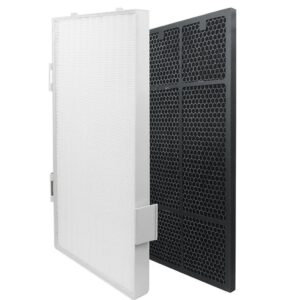
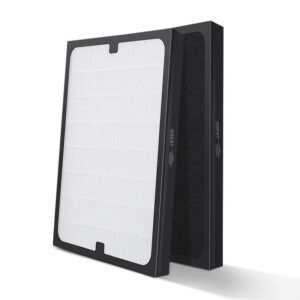
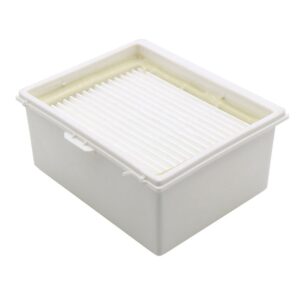
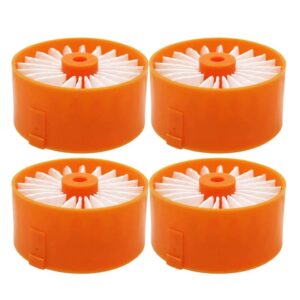
Not every category benefits equally from factory-direct sourcing. Complex electronics with 200+ components? A trading company might actually earn their keep. But filters, whether HEPA air purifier cartridges, vacuum cleaner HEPA replacements, or activated-carbon pre-filters, are different.
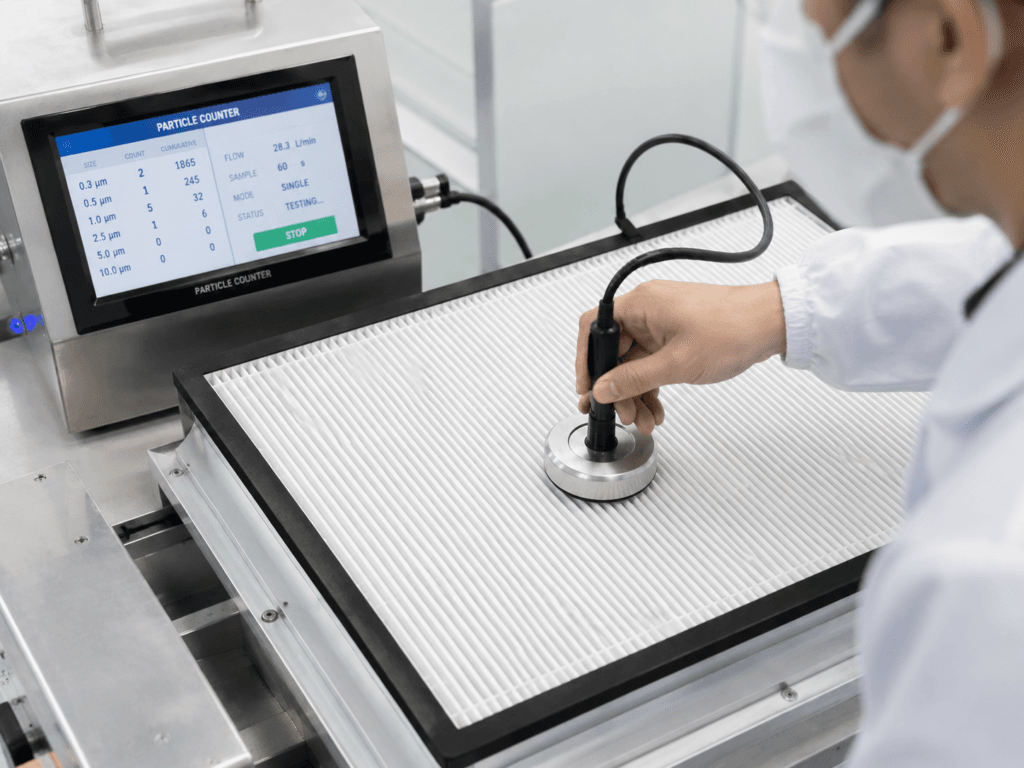
The manufacturing process is standardized. Pleating machines, filter media bonding, and frame injection are well-understood processes. Certifications like H13 HEPA efficiency or EN1822 compliance are testable and verifiable. You don’t need a trading company’s “expertise” to interpret whether a filter meets spec. You need a factory with ISO 9001, in-house particle-count testing, and the ability to customize frame dimensions, add your logo, and adjust activated-carbon loading to match your target price point.
China accounts for over 70% of global small-appliance manufacturing output. The filter supply chain is geographically clustered. Suzhou, Ningbo, and Dongguan house dense networks of media suppliers, pleating shops, and assembly plants. A real factory can walk you through their production line on a video call in 24 hours. A trading company will send you a PDF catalog and ask for a deposit.
The Factory-Direct Playbook for FBA Sellers
Going direct doesn’t mean flying blind. It means shifting your due diligence from “trusting a middleman” to “verifying a manufacturer.” Here’s what actually matters:
Verify the facility. Ask for a live video tour of the pleating and assembly lines. Check their business license and export records. Look for the “Manufacturer” badge on Alibaba, not “Trading Company.” If they hesitate to show you the workshop floor, you’re talking to a broker.
Demand filter-specific certifications. A legitimate HEPA filter OEM should have H13/H14 test reports, material safety data sheets for their fiberglass or PP meltblown media, and RoHS compliance. Don’t accept a generic “CE certificate” that covers the entire factory. Ask for the specific filter model’s third-party lab report.
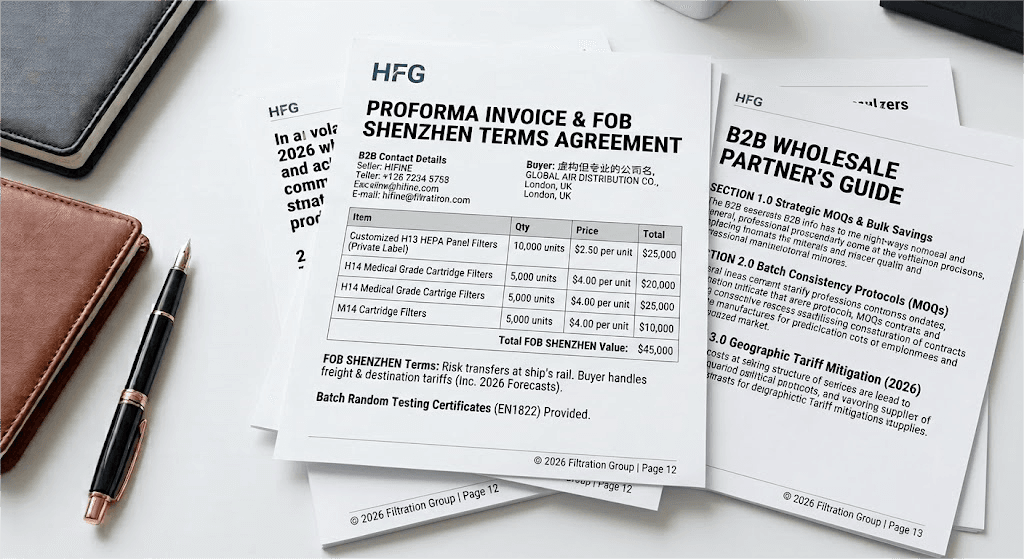
Negotiate tiered MOQs. Factory-direct orders often start at 500-1,000 units for pilot runs, scaling to 5,000+ for preferred pricing. Industry data shows every doubling of order volume typically yields an 8-12% unit-cost reduction. That’s leverage you rarely get through a trading company protecting their own margin.
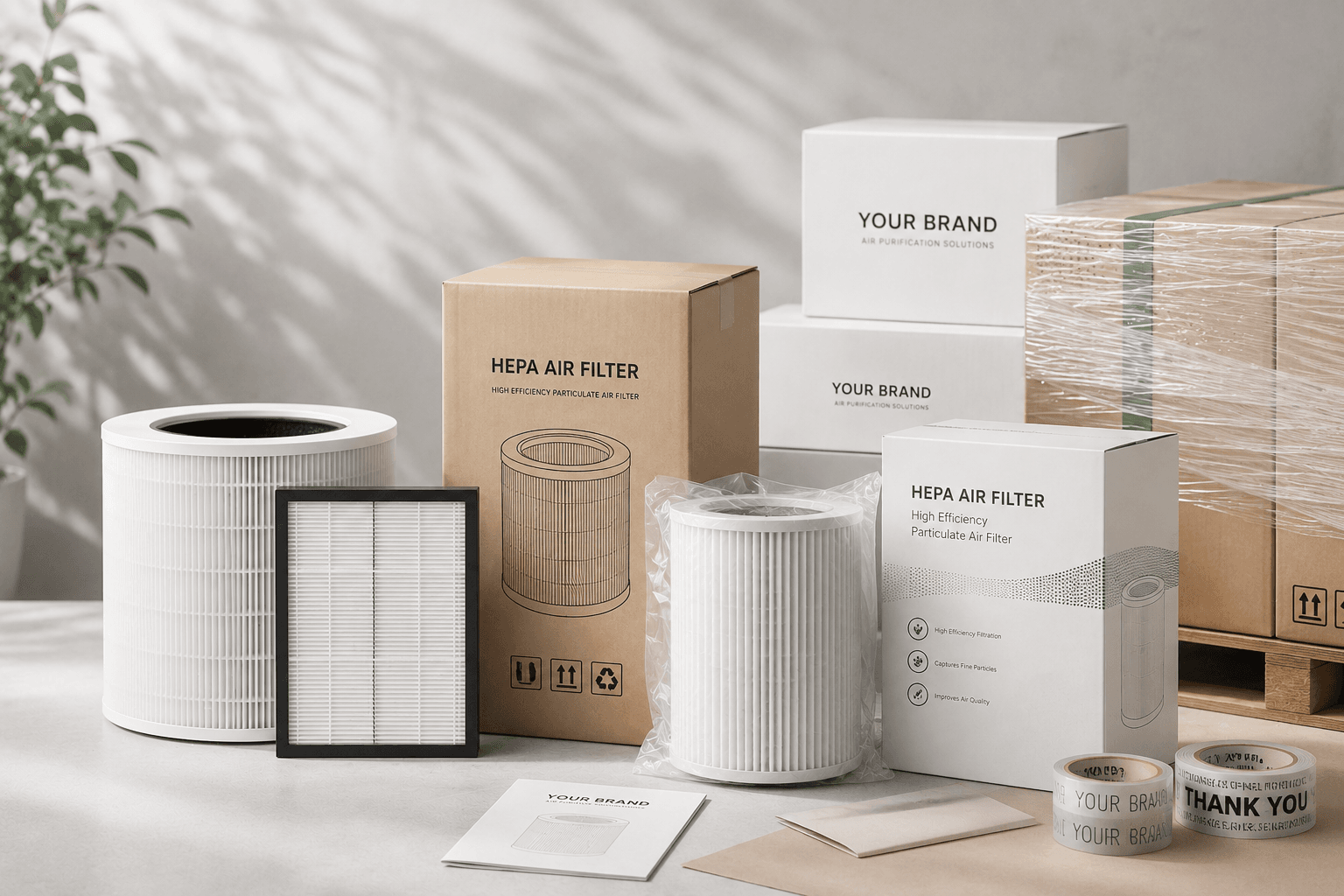
Control the packaging narrative. FBA success lives and dies by packaging. Factories can customize retail boxes, insert cards, and bundle configurations without the trading company’s “design fee.” If you’re building a recurring-revenue model around replacement filter subscriptions, packaging consistency matters more than most sellers realize.
When a Trading Company Still Makes Sense
Let’s be real. Trading companies aren’t evil. If you’re ordering 50 units to test a bizarre SKU, or you need someone to consolidate ten unrelated products into one container, a trader saves you headaches. But for your core filter line, the SKUs that will generate 80% of your profit, you’re leaving money on the table.
Jungle Scout’s 2025 research shows 62% of successful sellers now use a hybrid sourcing strategy: direct factory relationships for high-volume core products, and trading companies for experimental or low-volume SKUs. That’s the playbook. Don’t romanticize one approach. Optimize for margin where it counts.
The Bottom Line
The HEPA and vacuum filter market is growing at a 6.4% CAGR, driven by health-conscious consumers and the explosion of smart-home air purifiers. FBA sellers who own their supply chain, who can tweak filter media, adjust carbon ratios, and control packaging without a middleman’s permission, will outcompete on margin, speed, and brand consistency.
Trading companies sell convenience. Factories sell control. In a category where the same customer buys from you every six months for three years, control wins.
At HIFINE, we manufacture HEPA filters, vacuum replacement cartridges, and activated-carbon filter assemblies for Amazon private-label brands, wholesalers, and OEM distributors. No trading-company markup. Direct engineering support. MOQs starting at 500 units. If you’re ready to stop leaking margin, talk to our team about your next SKU.