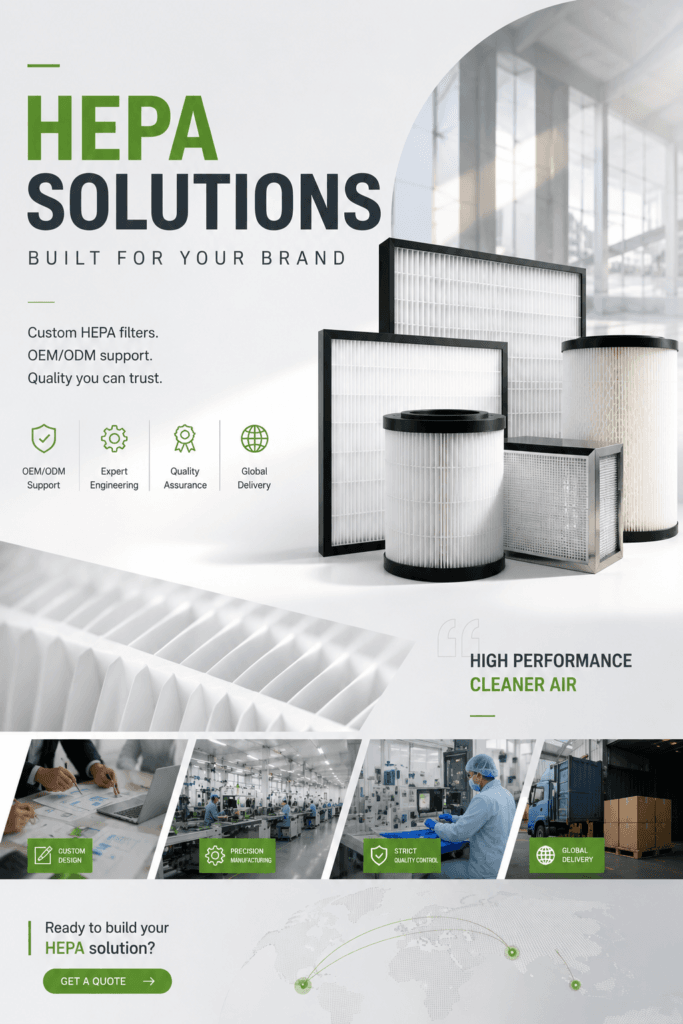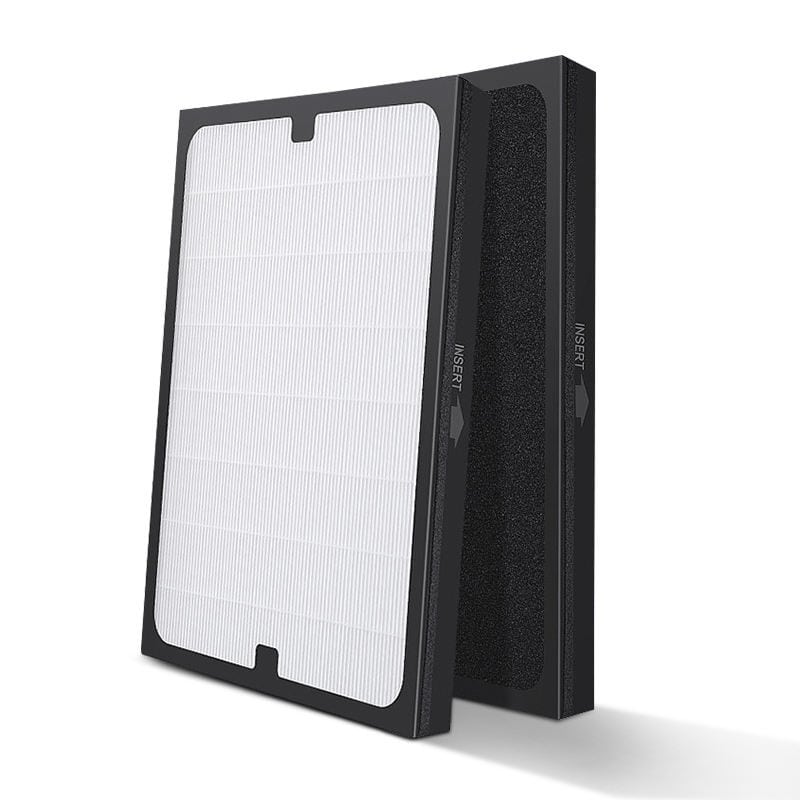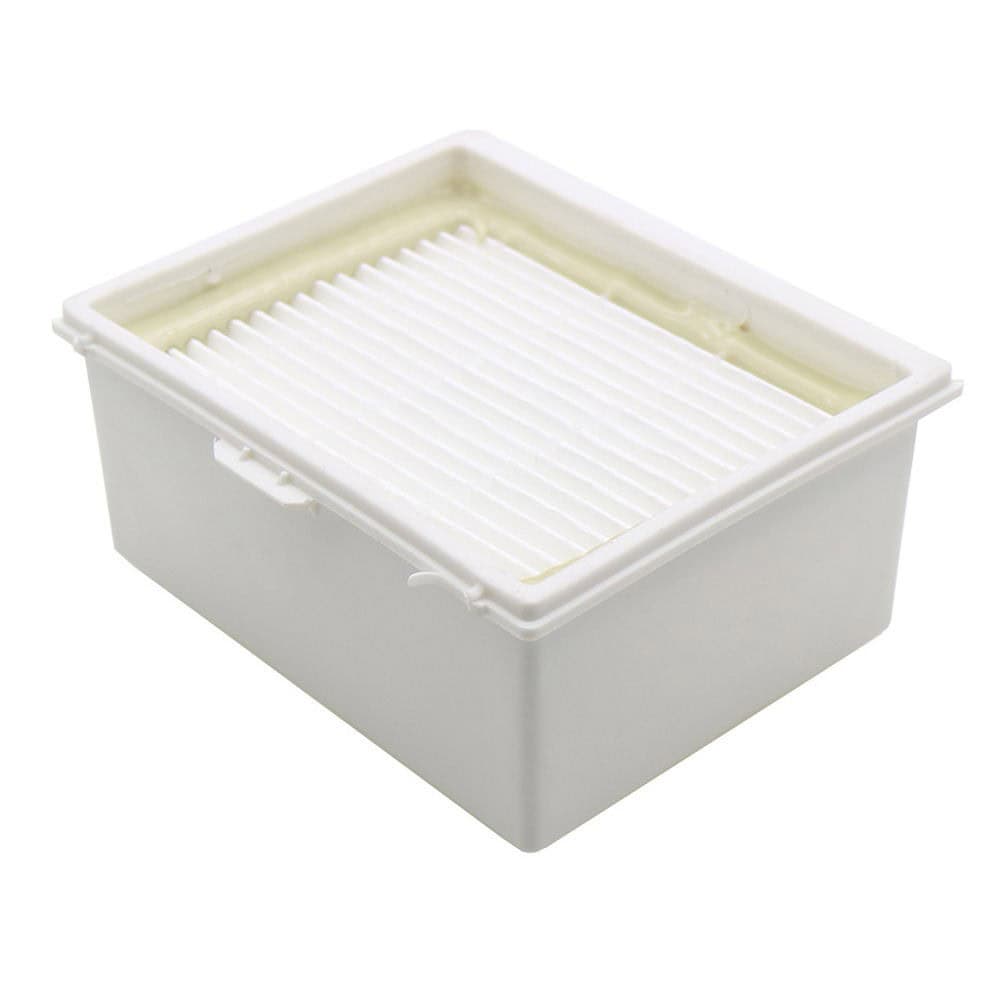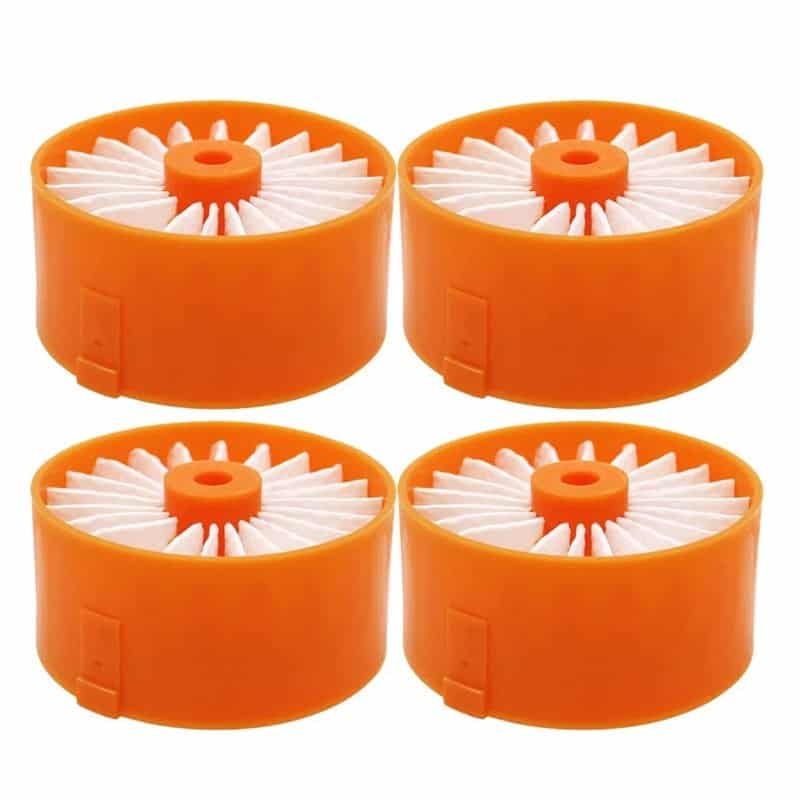
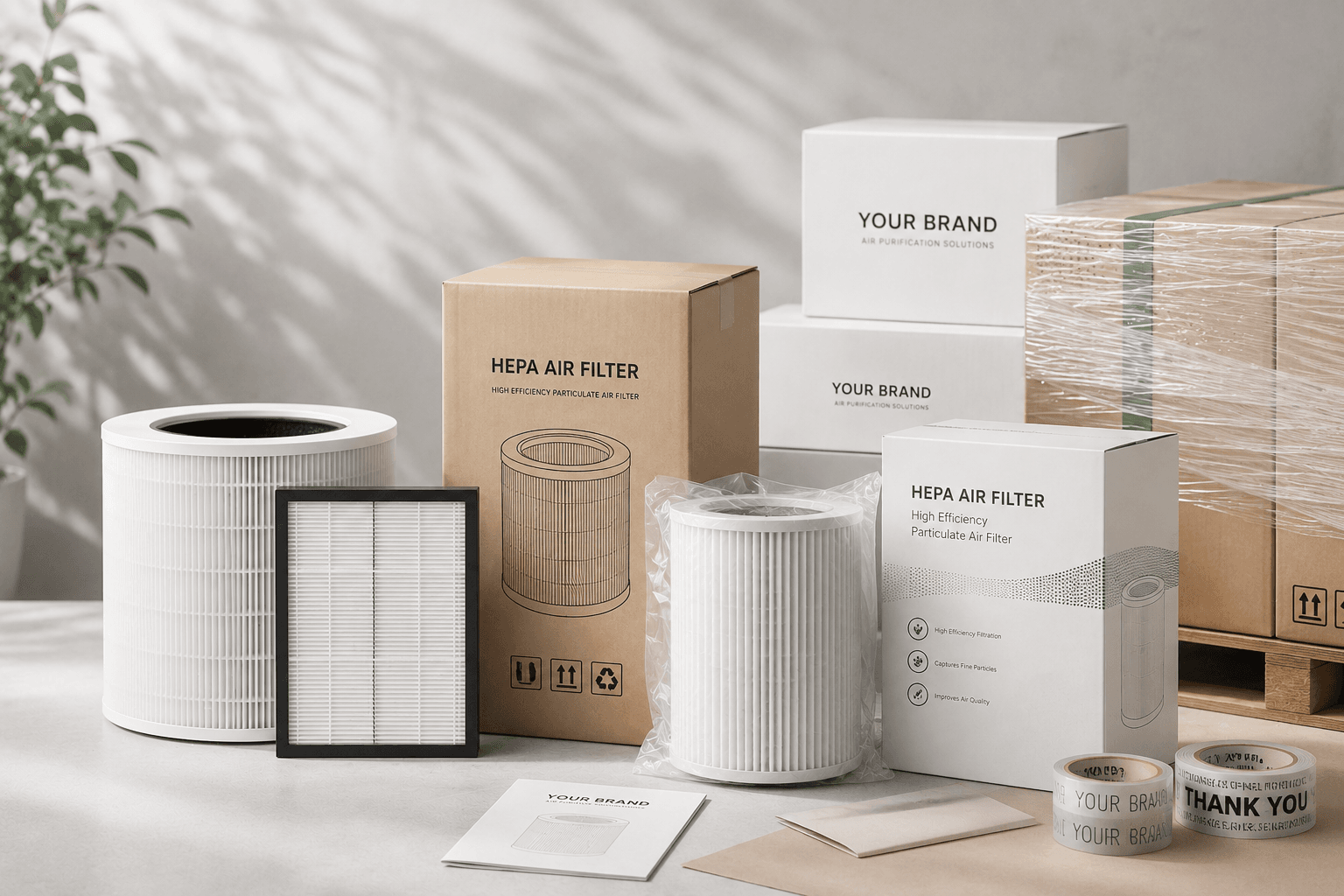
Starting a private label for HEPA filters is a lot more involved than slapping a logo on a product you’re already making. The packaging, the specs, the testing, the minimum order quantity, the production process, and the filter itself all have to come together.
The first challenge for brands, distributors, wholesalers, and private label sellers is typically finding a manufacturer that can provide the right mix of filtration performance, product customization, packaging, and production capacity.
Private label and OEM manufacturing are similar, but not always the same. Private label programs can use an existing filter design with your identity on it, and OEM projects may require changes in dimensions, materials, construction, or performance requirements.
In this guide we’ll walk you through how manufacturing of private label HEPA filters works, what you can customize, how MOQ is determined, and what to ask before placing your first production order.
What Is a Private Label HEPA Filter?
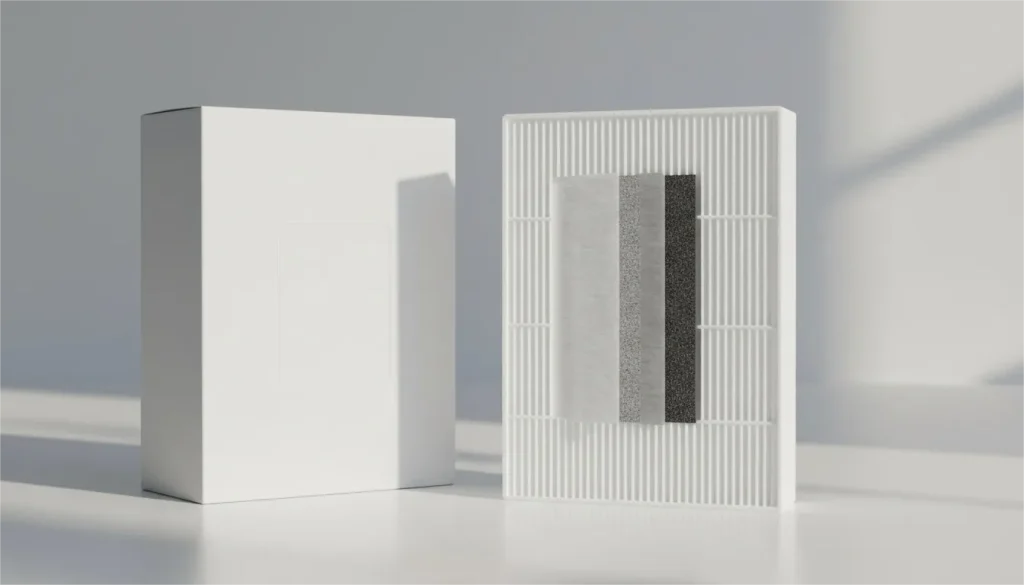
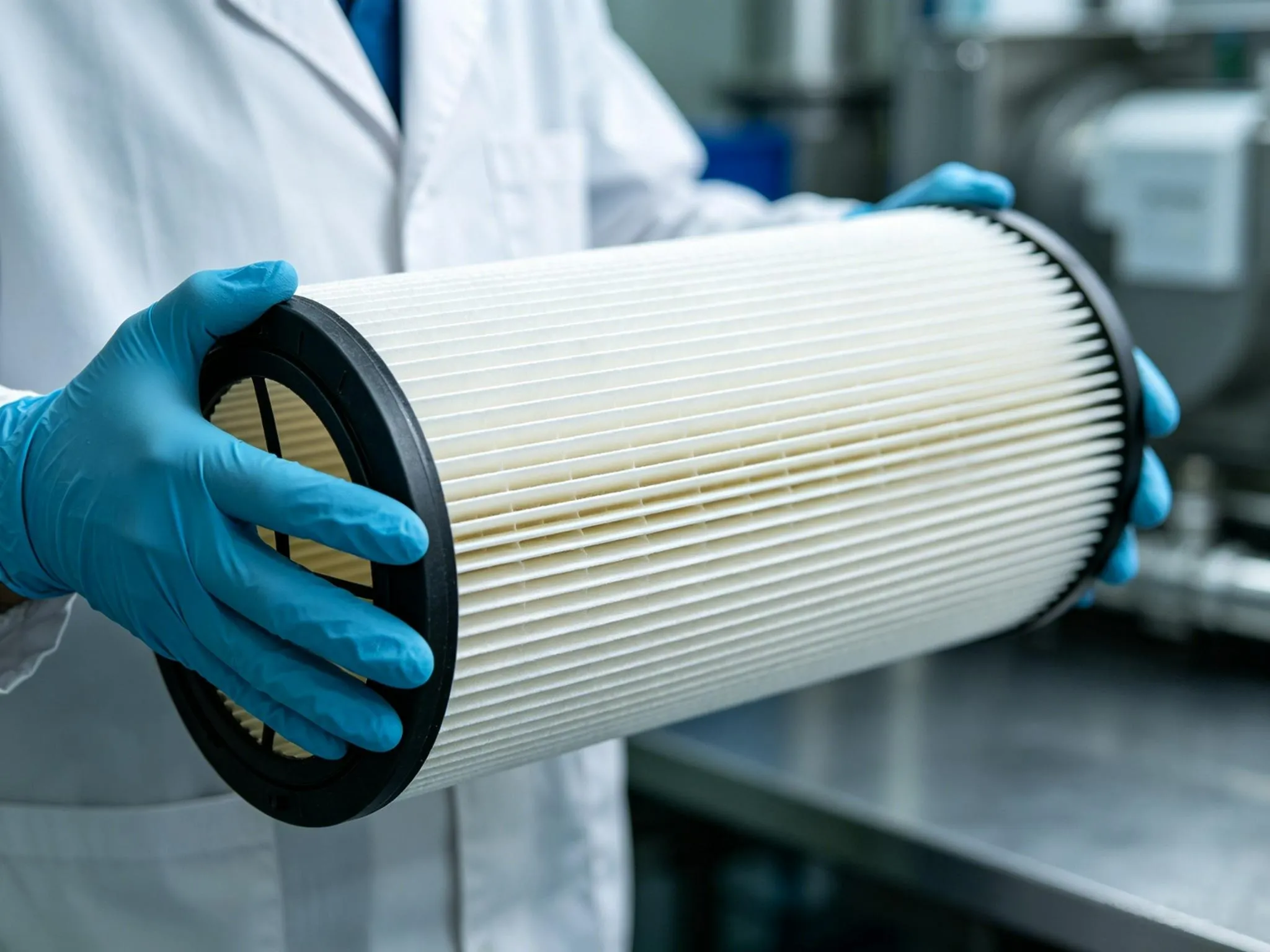
A private label HEPA filter is a filtration product that is made by a factory but sold under your own brand.
The manufacturer may already have a filter spec that will work for your application. If so, then the focus of the customization can be primarily on branding and packaging.
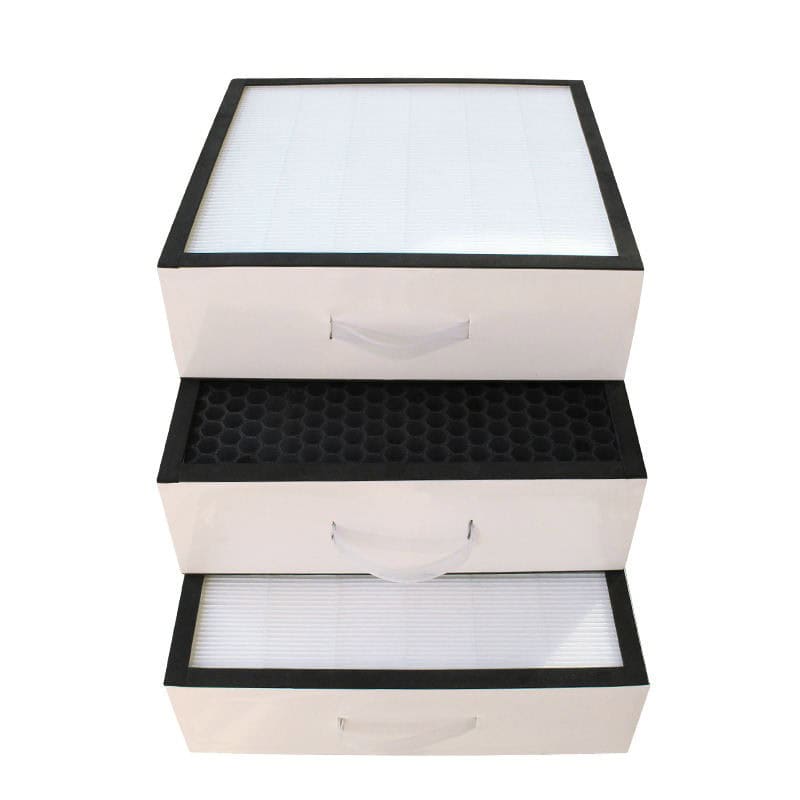
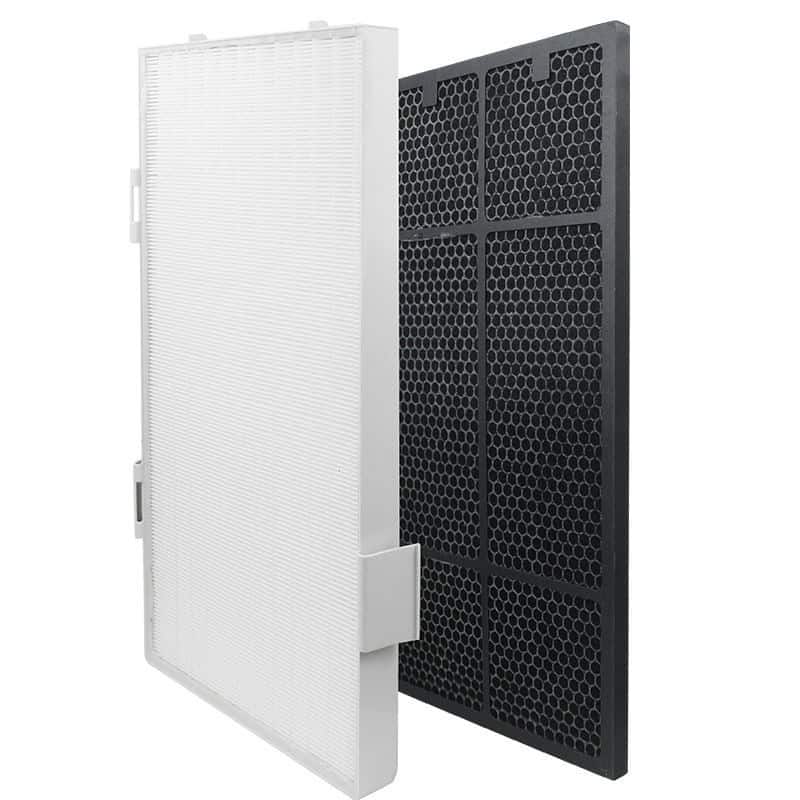
In the case of more specialized products, you may also need to change the filter itself. The dimensions, frame materials, filter media, pleat configuration, sealing, and other construction details can be customized to suit a particular air purifier or application.
This scenario leads to two prevalent approaches.
Existing Filter Design With Private Label
“Usually that’s the best way.”
The manufacturer will provide a current filter specification, and you will place your brand on packaging, labels, inserts, or other approved areas.
It can also reduce development time and upfront costs, making it a good strategy for brands testing demand or launching multiple SKUs.
Custom HEPA Filters with Private Label
A more advanced private label program might necessitate modifications to the filter itself.
For example, you might need:
- Filter sizes made to order
- A different frame shape
- Various HEPA media
- Particular pleat arrangement
- A specific pressure drop target
- A layer of activated charcoal
- Custom seal or gasket requirements
- Packaging optimized for retail channels
At this stage the project is more like OEM or ODM development.
For a more in-depth look at how OEM projects work, refer to our guide to OEM manufacturing.
HEPA Filters: OEM & Private Label
“Private label” and “OEM” are frequently used interchangeably, but they refer to different aspects of the manufacturing relationship.
HEPA Filters Private Label
With private label you usually take a product from a manufacturer and sell it under your own brand.
You can customize elements such as the filter specification, which might already exist.
- Brand name
- Logo
- Product label
- Printed box
- Insert card
- Barcode
- Retail pack
This approach works well if you want to launch a branded product without building a new brand filter from scratch.
OEM HEPA Filter
OEM manufacturing is, in general, the production of filters to a customer specification.
Such specifications may include:
- Size of filter
- Frame or housing requirements
- Filter media
- Filter efficiency
- Air flow
- Pressure loss
- Structure pleat
- Sealing
- Packaging
- Specification testing
So an OEM project can have a lot more engineering work than a standard private label order.
When Private Label and OEM Collide
The two models can also collaborate.
A brand could begin with an existing HIFINE filter, add private label packaging, and then develop a customized version as sales volumes grow.
That approach allows for mitigating risk in the early development while still allowing product differentiation later.
What Can Be Customized on a Private Label HEPA Filter?
With a private label, you can customize the filter and how you present the product to the customer.
Filter Specs
The main part of the product is the filter itself.
Customization can include, depending on the application:
- Length, width & thickness
- Filter media
- HEPA quality
- Number and shape of pleats
- Material frame
- Gasket or seal design
- Pressure loss requirements
- Airflow Needs
- Activated carbon system
Physical filter size and performance requirements affect the final product, and these specifications should be verified prior to finalizing packaging.
Our filter design and customization guide will tell you that you may need new tools when your project requires more detailed engineering design.
Labels & Branding
Branding may be applied to the packaging and to the filter itself, depending on the product design.
Some common options are
- Printing logos
- Labels for products
- Model Number
- Installation instructions
- Instructions for replacing
- Information on Batches
- Data on Compliance
Specific labeling requirements will vary by product configuration and destination market.
Custom Printed Boxes
Packaging is frequently one of the most visible aspects of a private label program.
Your custom-printed box can include:
- Brand colors
- Logo
- Photography of products
- Details of the Product
- Installation notes
- Feature Description
- Barcode
- Data on Compliance
HIFINE also provides custom printed boxes and private label packaging of filter programs.
For most companies, the customization of packaging starts with the box and then moves on to inserts, labels, and other retail materials.
Barcodes & Inserts
The insert card may contain installation instructions, replacement instructions, warranty information, or customer service information.
You may also need a registered barcode for retail-ready products.
It’s important to verify these requirements before production starts, as packaging artwork generally needs to be finalized before the boxes go to print.
What is the minimum order quantity for private label HEPA filters?
One of the first questions buyers ask is regarding MOQ, but there is no single MOQ that applies to every private label HEPA filter.
The actual requirement depends on things like
- Size of filter
- Construction of filters
- Material
- Current Tools
- Custom tools
- Type of packaging
- SKU count
- Level of customization
HIFINE can accept custom filter requirements from 500 pcs, and the final MOQ will depend on the product design and customization requirement.
For example, an existing filter spec in branded packaging may have a different MOQ than a completely new filter that requires tooling and custom development.
Why MOQ is normally worked out per SKU
MOQ is generally quoted per SKU since different filter sizes and constructions require separate production planning.
A buyer may order 1,000 units in total but will still need to confirm if that quantity applies to one filter size, each filter size, one packaging design, or each individual SKU.
A useful way to compare private label options is
| Project Type | Typical Customization | MOQ Considerations |
|---|---|---|
| Existing filter with branding | Logo, label, standard packaging | Usually the simplest starting point |
| Existing filter with custom packaging | Printed box, insert, barcode | Packaging quantity and print requirements affect MOQ. |
| Custom filter design | Dimensions, media, frame, sealing | Tooling and development can increase MOQ. |
| Multi-SKU private label program | Several filter models | The manufacturer normally evaluates MOQ by SKU. |
It’s best to ask the manufacturer to specify the MOQ by SKU instead of just providing a single total order quantity.
For a first launch, starting with your strongest one or two SKUs can also reduce inventory risk.
How Much Customization Do You Want?
A private label project doesn’t have to be a brand new product. The proper amount of customization depends on your market, sales volume, product positioning, and development budget.
Existing Filter With New Logo
This variant is the basic model.
The filter specification is unchanged, and the brand and packaging are customized.
It can be a useful way to test the market demand before investing in further product development.
Current Filter With Custom Packaging
The filter remains largely unchanged, but we make the product retail-ready with custom boxes, labels, inserts, and other packaging components.
This alternative allows for more brand control without full filter engineering.
How to Create Custom Filters
The filter itself can be changed to a more differentiated product.
This might include custom sizes, materials, frame structures, media setups, or performance objectives.
At this stage technical drawings, samples, and engineering reviews become increasingly important.
If you already have a drawing or product specification, you can also review our OEM filter CAD drawing checklist before contacting a manufacturer.
What Questions Should You Ask a Private Label HEPA Filter Manufacturer?
A professional manufacturer can obviously answer technical and commercial questions before production.
Can you provide test documentation?
Could you please check with the manufacturer if test reports are available for the specific filter configuration being supplied?
Depending on the application, documentation may include filtration efficiency, pressure drop, airflow, or other relevant performance information.
Avoid relying only on a generic certificate that does not clearly identify the product being purchased.
What Is the MOQ Per SKU?
Ask for the MOQ for each individual filter model.
Also confirm whether packaging customization changes the minimum quantity.
Can You Make Custom Dimensions?
This is especially important when the filter needs to fit an existing air purifier.
Confirm the dimensional tolerances, frame construction, sealing method, and whether new tooling is required.
What’s Included in the Private Label Package?
Ask specifically if the quotation includes:
- Printing logos
- Personalized box
- Insert card
- Barcode
- tags
- Packing Assembly
- Artwork assistance
- Examples
This avoids packaging costs popping up later on in the project.
What Is the Production Timeline?
Break the timeline down into:
- Sample development
- Sample approved
- Artwork review
- production in bulk
- Packaging
- Shipping
The separation of these stages makes it much easier to develop a realistic launch schedule.
How Do You Make Private Label HEPA Filters?
A typical project goes through several stages.
Step 1: Product Needs
You tell the manufacturer the filter dimensions, application, performance you want, branding you want, and expected order volume.
Existing samples, drawings, photos, or model numbers can also be useful to the manufacturer in determining the type of construction required.
Step 2: Technical quotation review
The manufacturer reviews the requirements and provides a quotation based on materials, construction, quantity, packaging, and customization.
At this point, clarify the MOQ and whether tooling is required.
Step 3: Development of Sample
The factory prepares a sample according to the confirmed specification.
This may require changes to the filter structure or tooling for a custom project.
Step 4: Test and Approve
The buyer will assess fit, dimensions, filtration performance, packaging, and any other mutually agreed requirements.
Any changes should be done prior to mass production.
Step 5. Approve the packaging.
Final art, labels, inserts, and barcodes are subject to approval before packaging production.
Step 6: Production
The manufacturer then begins production once the sample and packaging have been approved.
A reliable manufacturer should be able to deliver the agreed filter specification throughout the production run.
Common Mistakes with Private Label HEPA Filters
First-time buyers tend to look at the logo and packaging and not the technical details of the filter.
Selecting a Filter Prior to Applying for Confirmation
The filter needs to be compatible with the airflow and physical limitations of the intended air purifier.
Attractive product specifications are not enough if the filter does not fit or has too high resistance.
Order too many SKUs.
Launching 10 or 20 SKUs at a time creates unnecessary pressure on inventory.
Once you’ve identified your strongest models, it can make the initial investment easier to manage.
Packaging Too Late to Finalize
Take care of box artwork, bar codes, labels, and inserts early.
Even if the filter is ready, late packaging changes can delay production.
Excluding the Accepted Sample
Mass production shall not be initiated until the final filter specification has been reviewed and approved.
Fixing a problem discovered after thousands of units have been manufactured is much more expensive.
Making Compliance Someone Else’s Problem
Requirements differ from market to market.
Before finalizing your packaging artwork, make sure to confirm which documents, markings, warnings, or labeling requirements apply to your product.
Selecting a Private Label HEPA Filter Manufacturer
The right manufacturer should be able to handle the commercial and technical parts of the project.
Don’t just look at the per-unit cost quoted; consider:
- Experience in manufacturing
- “filter engineering capability”
- Testing and quality assurance
- Flexibility on MOQ
- Ability to customize
- Development of Packaging.
- Process of sampling
- Production Capability
- Communicating
- Documentation
If a manufacturer can do filter development, testing, packaging, and mass production all under one system, it can minimize coordination problems during the launch process.
HIFINE is a genuine filter manufacturer with in-house R&D, testing, production, and packaging capabilities. The company supports OEM, ODM, wholesale, and private label filter programs for various applications.
For brands developing air purification products, the project can be anything from private label filters with branded packaging to fully customized filter constructions.
See the kinds of OEM and ODM filtration needs we address with our HIFINE air purifier filter solutions.
Start Your Own Private Label HEPA Filter Company
Private label HEPA filter manufacturing doesn’t need to commence with a new product.
Many brands begin with an existing filter spec, add their branding and packaging, and grow into custom product development as their business grows.
The key is that you define the product requirements before you start producing.
Please confirm filter size, filtration requirement, airflow, pressure drop, sealing, MOQ, packing, testing, and lead time before order confirmation.
HIFINE can support a custom private label project from filter specification and sampling through packaging development and mass production.
Get a quote from HIFINE for your specific SKUs, customization requirements, and target quantities