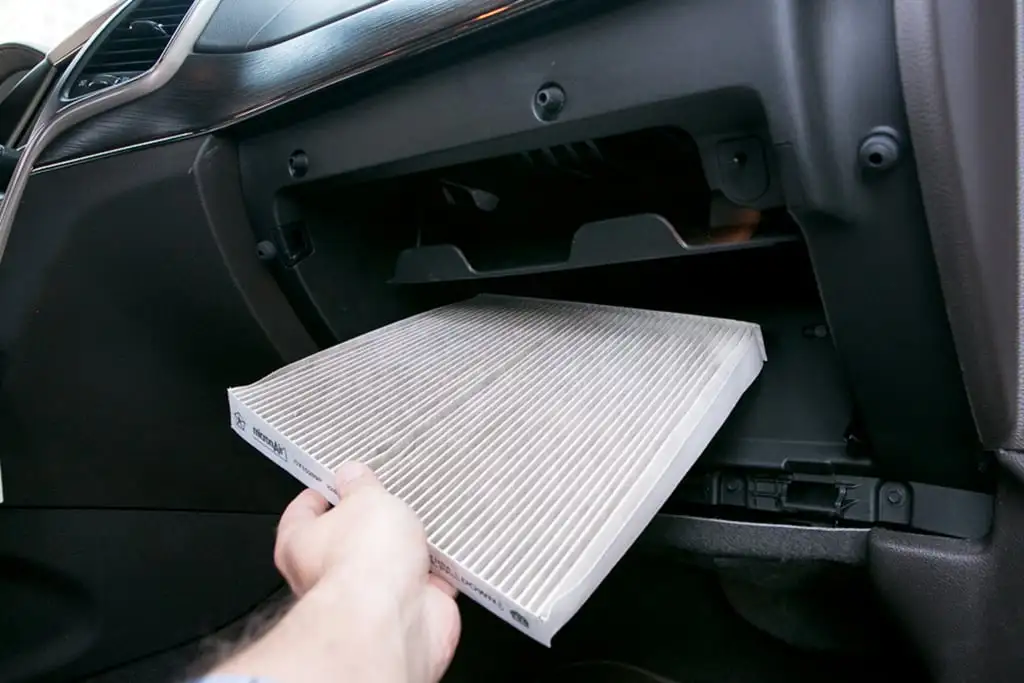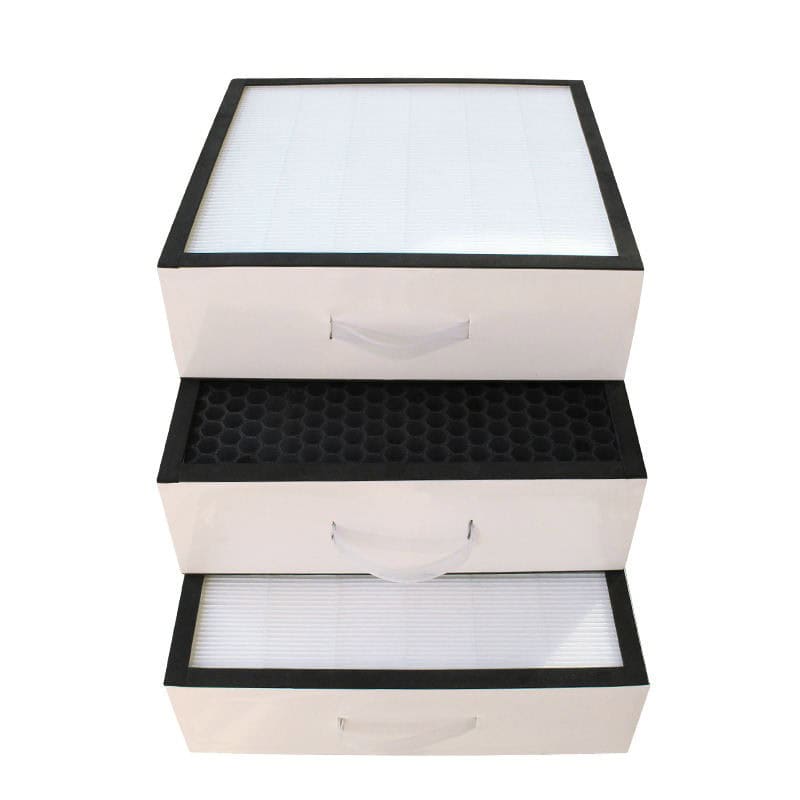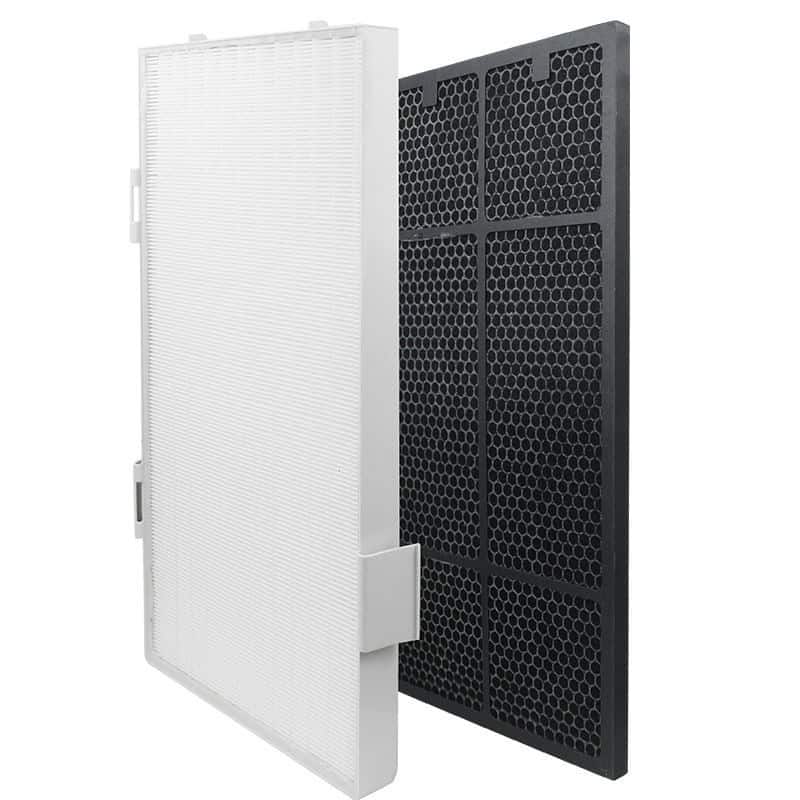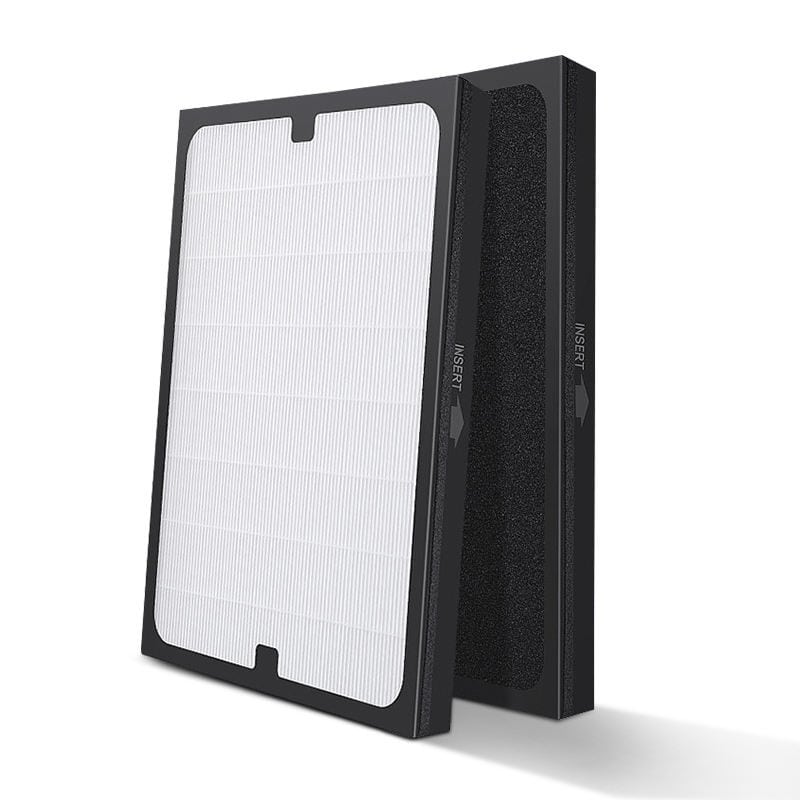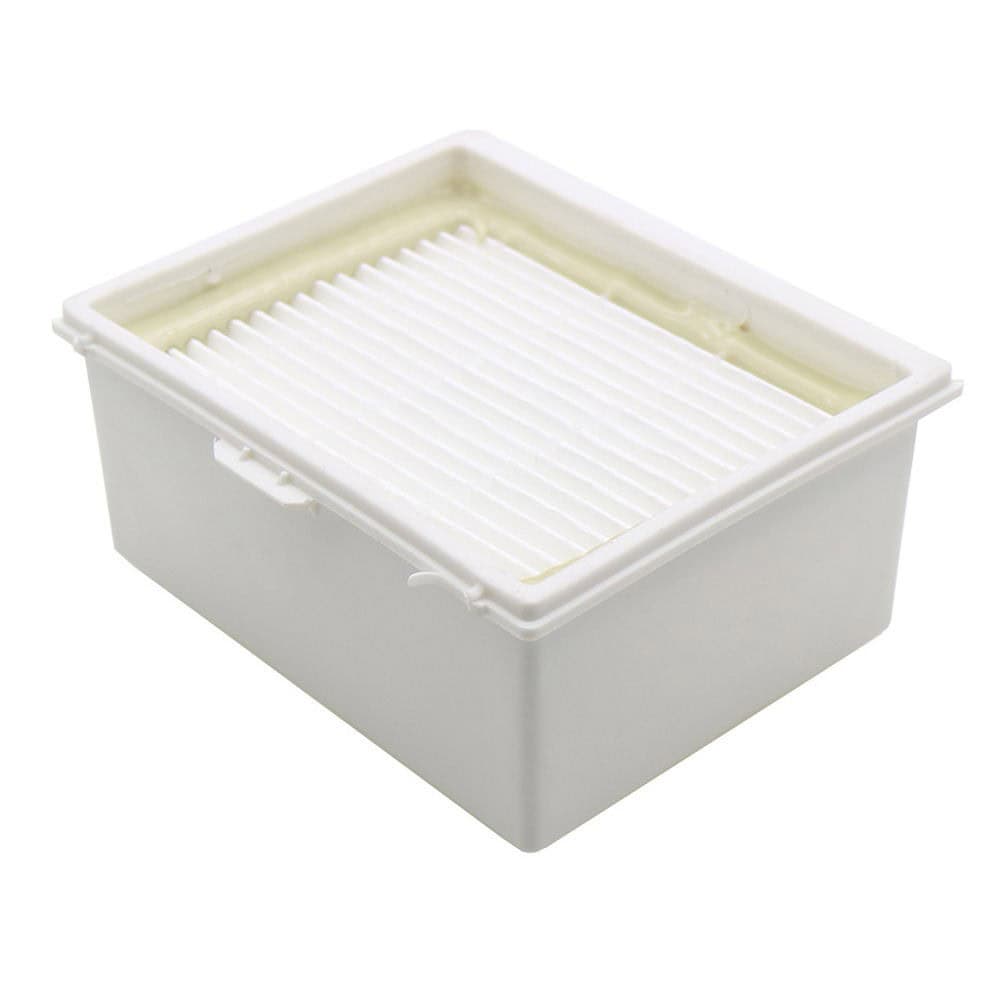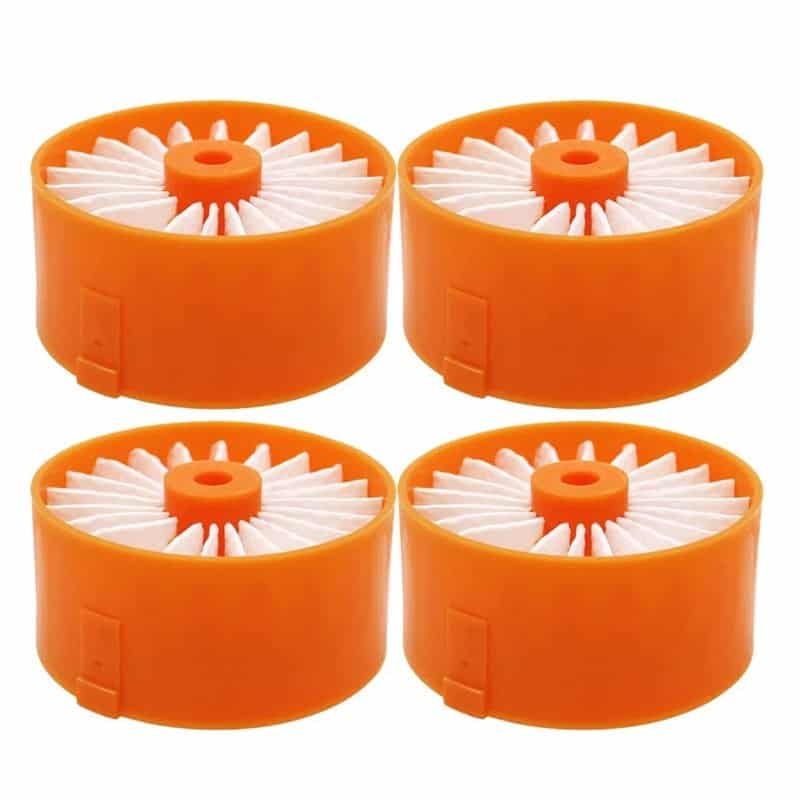
You are looking at two replacement filters online. They look exactly the same. They have the same white pleated paper, the same black foam borders, and they both say “HEPA” somewhere on the box. But one is half the price of the other.
Why? Because one is a true HEPA filter, and the other is a “HEPA-type” filter.
If you are buying an air purifier or replacing a vacuum filter, the difference between these two terms is massive. One guarantees hospital-grade air filtration. The other is a clever marketing trick designed to make you feel safe while letting microscopic pollutants blow right back into your room.
Whether you are a homeowner trying to manage severe allergies, or a brand manager sourcing thousands of filters for your private label business, you need to know exactly what you are paying for.
Let’s break down the strict rules behind real HEPA, expose the marketing loopholes, and show you exactly how to verify the quality of your next filter.
What “True HEPA” Legally Means
The term “HEPA” stands for High-Efficiency Particulate Air. But in the air filtration industry, true HEPA is not just an acronym—it is a strict, mathematical performance standard.
To legally earn the title of a true HEPA filter, the media must capture at least 99.97% of particles that are 0.3 microns in size.
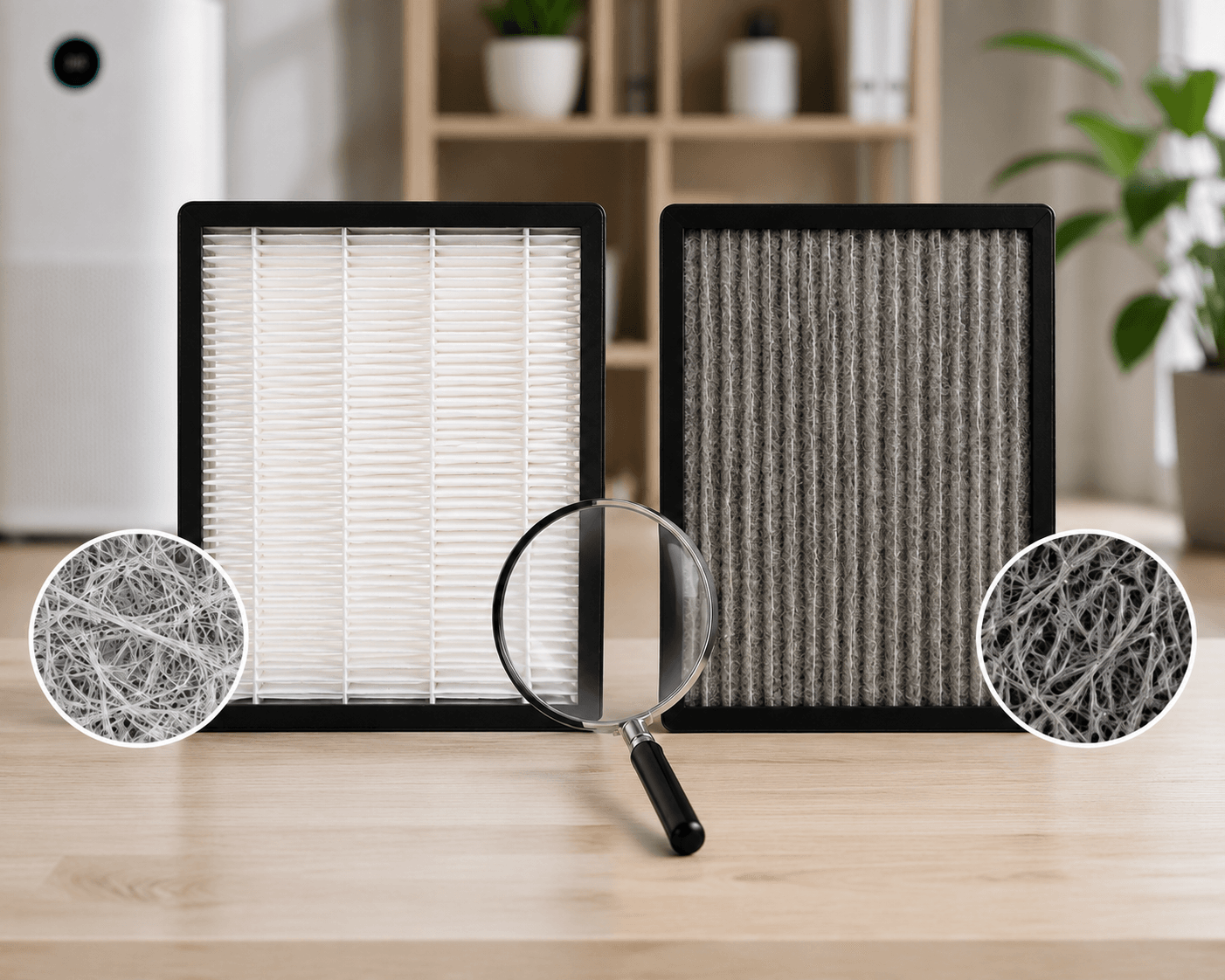
Why exactly 0.3 microns? It is not because that is the smallest particle in the air. It is actually because 0.3 microns is the hardest particle size to catch. Scientists refer to this as the Most Penetrating Particle Size. Larger particles get trapped easily by the dense web of fibers. Smaller particles bounce around erratically—a phenomenon called Brownian motion—and crash into the filter fibers on their own.
Particles exactly 0.3 microns in size are just the right size to slip perfectly through the air currents between the fibers. If a filter can catch 99.97% of these tricky 0.3-micron particles, it will catch close to 100% of everything else, both larger and smaller.
Depending on where you are in the world, true HEPA filters must meet specific government or industry standards:
- The US Department of Energy: Dictates the classic 99.97% at 0.3 microns standard.
- The European Standard: Uses a tiered grading system. True HEPA begins at the H13 level and goes up to H14.
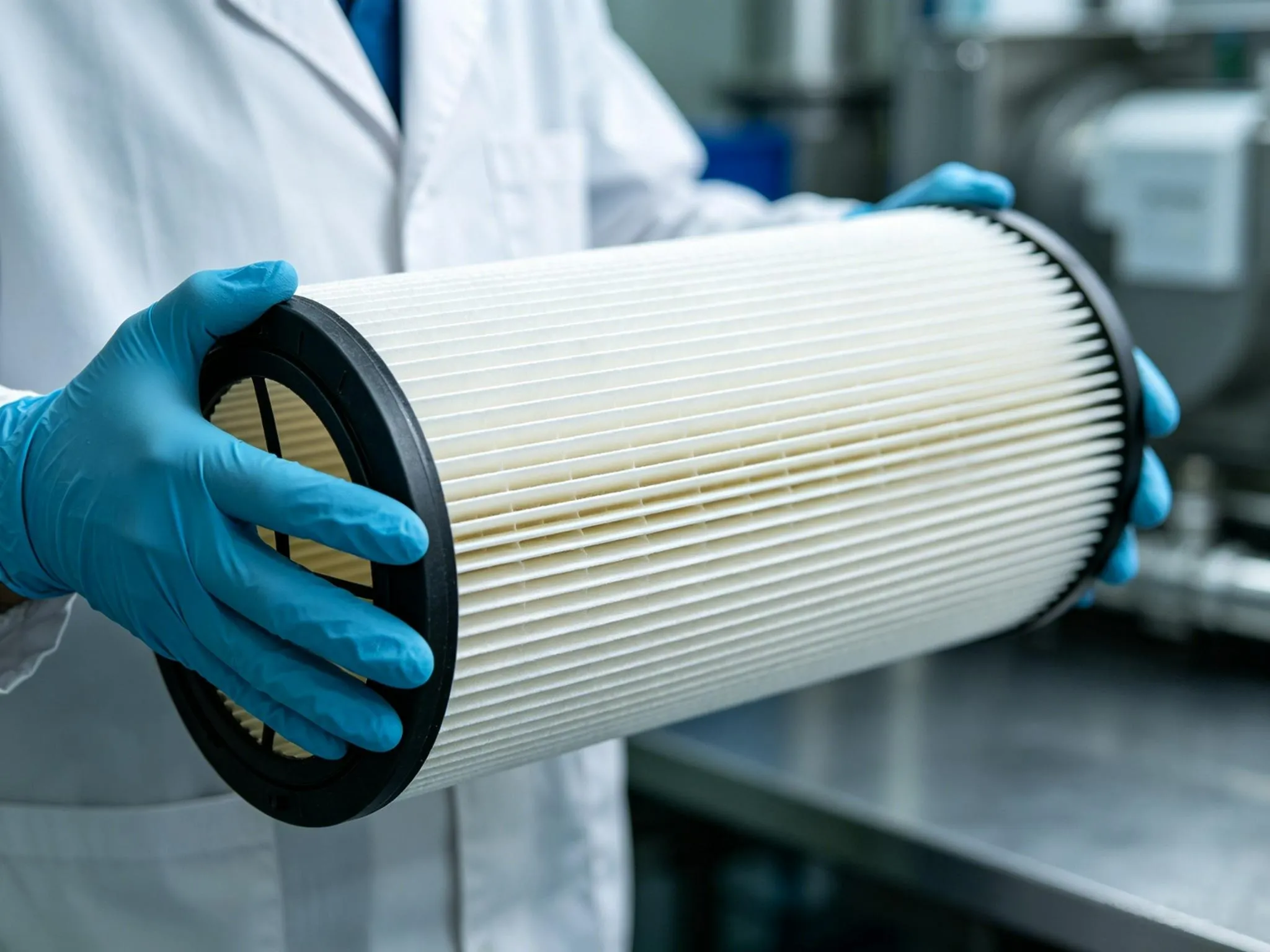
When you buy a true HEPA filter, you are buying a product that has been rigorously tested to trap fine dust, pet dander, mold spores, smoke particles, and even airborne bacteria.
When you buy a true HEPA filter, you are buying a product that has been rigorously tested to trap fine dust, pet dander, mold spores, smoke particles, and even airborne bacteria. Understanding exactly what a HEPA filter is at a microscopic level reveals how these dense, randomly arranged fiberglass webs capture pollutants that are entirely invisible to the human eye.
Check out our H13 True HEPA filter
What “HEPA-Type,” “HEPA-Like,” and “99% HEPA” Actually Mean
Now, let’s look at the cheaper alternative. What happens when a manufacturer creates a pleated paper filter that looks like HEPA, but fails the 99.97% test?
They cannot legally call it True HEPA. So, marketing teams created a loophole. They call it “HEPA-Type,” “HEPA-Like,” or sometimes “HEPA-Style.”
There is no government standard for a HEPA-type filter. There is no independent testing requirement. It is a completely unregulated term. A HEPA-type filter might capture 99% of particles that are 2 microns or larger, but it will completely fail to stop the dangerous 0.3-micron particles like smoke and fine smog.
Some brands will boldly print “Removes 99% of airborne particles!” on the box. But if you read the fine print, you will see it says “particles 2 microns and larger.” This means it is great at catching dog hair and visible dust bunnies, but useless against the microscopic allergens that actually trigger asthma attacks.
Using terms like “HEPA-type” is a way to borrow the trust and authority of the HEPA name without actually paying for the high-density filter media or the expensive testing required to prove it works.
Three Label Red Flags to Check Before You Buy
How can you tell the difference when shopping online or walking down the aisle of a hardware store? Manufacturers of fake HEPA filters are very good at hiding the truth.
Before you spend your money, look for these three major red flags on the packaging or product listing:
Missing Efficiency Percentages
A genuine manufacturer is proud of their lab results. A true HEPA filter will clearly state “99.97% at 0.3 microns” or “H13 EN1822 Certified” right on the box. If the label just says “High Performance” or “Captures Allergens” without giving you the exact micron size and percentage, you are likely looking at a HEPA-type filter.
Weasel Words
Look out for hyphenated words or modifiers. If you see the following phrases, put the product down:
- HEPA-Type
- HEPA-Like
- HEPA-Style
- HEPA-Grade
- 99% HEPA
Suspiciously Low Pricing
True HEPA media is made from a complex, dense matrix of randomly arranged fiberglass or high-grade synthetic fibers. It costs real money to manufacture and fold correctly without tearing. If you find a replacement filter for your air purifier that is 70% cheaper than the original manufacturer’s version, there is a very high chance they achieved that price by using cheap, low-density HEPA-type paper.
If you want to ensure your home or office is truly protected from microscopic pollutants, skip the marketing fluff. Browse our certified, lab-tested H13 True HEPA Filters category to see what real, industrial-grade air purification looks like.
Side-by-Side Comparison Table: True HEPA vs HEPA-Type vs Standard Filter
To make things simple, here is how these filters stack up against each other in the real world:
| Feature | Standard Air Filter | HEPA-Type Filter | True HEPA Filter |
| Testing Standard | None / MERV 1-8 | Unregulated | DOE / EN1822 Strict Standards |
| Capture Rate | Varies widely | ~85% to 99% | 99.97% |
| Target Particle Size | 10 microns and up | 2 microns and up | 0.3 microns |
| Stops Pet Hair & Dust? | Yes | Yes | Yes |
| Stops Smoke & Bacteria? | No | No | Yes |
| Best Used For | Basic HVAC protection | General household cleaning | Allergies, asthma, medical use |
Why This Matters More at Volume
Everything we have discussed so far is critical for a consumer buying one or two filters for their living room. But what if you are an overseas brand owner, a wholesale distributor, or a private label buyer on Amazon?
If you are sourcing filters by the container load, the difference between True HEPA and HEPA-type is not just about air quality—it is about the survival of your business.
Selling a HEPA-type filter labeled as True HEPA is a fast track to destroying your brand’s reputation. Today’s consumers are smart. Many air purifier enthusiasts actually buy laser particle counters to test the air coming out of their machines. If a customer buys your replacement filter, tests it, and realizes it is leaking millions of 0.3-micron particles, they will leave a devastating 1-star review with photo evidence.
On marketplaces like Amazon, a string of reviews calling your product “fake HEPA” will get your listing suppressed or permanently banned. Furthermore, in markets with strict consumer protection laws (like the EU and the US), falsely claiming a DOE or EN1822 standard can lead to heavy fines and forced product recalls.
Volume buyers need guarantees. You cannot afford to guess what is inside the shipment you just bought. If you are preparing to source large quantities of filters, knowing how to choose a reliable HEPA filter manufacturer is the most critical step to protect your investment and ensure consistent, certified quality across every single batch.
How HIFINE Tests and Certifies Every Batch
At HIFINE, we do not play word games with our clients. As a leading OEM/ODM manufacturer of HEPA filters, vacuum filters, and air purifier replacements, we know that your brand reputation rests entirely on the quality of the products we build for you.
When a wholesale client requests a True HEPA filter from HIFINE, that is exactly what goes into the container.
We don’t just assemble filters; we control the science behind them. Our facility operates with strict, in-house quality control protocols aligned with international EN1822 standards. We use advanced particle testing tunnels to test the air flow resistance and filtration efficiency of our HEPA media before it is ever folded into a frame.
Whether you need H13 medical-grade filters for a new line of smart air purifiers, or cost-effective standard filters for commercial vacuums, we provide complete transparency. We match the “golden sample” to every single batch in mass production. No swapped materials. No diluted fiber densities. Just certified performance you can confidently put your private label logo on.
FAQ
Is a HEPA-type filter bad?
Not necessarily. HEPA-type filters are not “bad” products; they are just heavily marketed. If you do not have severe allergies, do not smoke, and just want to keep visible dust, lint, and dog hair out of the air, a cheaper HEPA-type filter will do a decent job. The problem only arises when brands try to trick you into paying premium prices for them, or when asthma sufferers buy them expecting medical-grade relief that the filter simply cannot provide.
Can I trust Amazon listing claims?
You have to be extremely careful. Online marketplaces are the “wild west” for filter terminology. Many third-party sellers use keyword stuffing in their titles, combining phrases like “True HEPA Type Filter” to show up in your search results and confuse you. Always scroll down to the actual product specifications. Look for a stated 99.97% efficiency at 0.3 microns, or an H13/H14 rating. If the seller does not explicitly state these numbers or provide images of their lab testing certificates, you should assume it is a HEPA-type filter, regardless of what the title says.
Ready to source premium, lab-verified filters for your brand?
Don’t risk your business on unregulated, low-quality materials. At HIFINE, we provide industry-leading OEM/ODM filter manufacturing with verified True HEPA performance.
Whether you need custom air purifier replacements, vacuum filters, or custom appliance filtration solutions, our team is ready to deliver. Contact our wholesale team today for a custom quote and a verified product sample.