What is the full name of hepa full form?
HEPA stands for High Efficiency Particulate Air, an acronym officially defined by the U.S. Department of Energy and referenced by the EPA. A true hepa air filter is tested to remove at least 99.97% of airborne particles at 0.3 microns in diameter, the size considered hardest to catch and known as the most penetrating particle size. Particles larger or smaller than that get trapped at an even higher rate, which makes 99.97% a worst-case guarantee rather than an average.
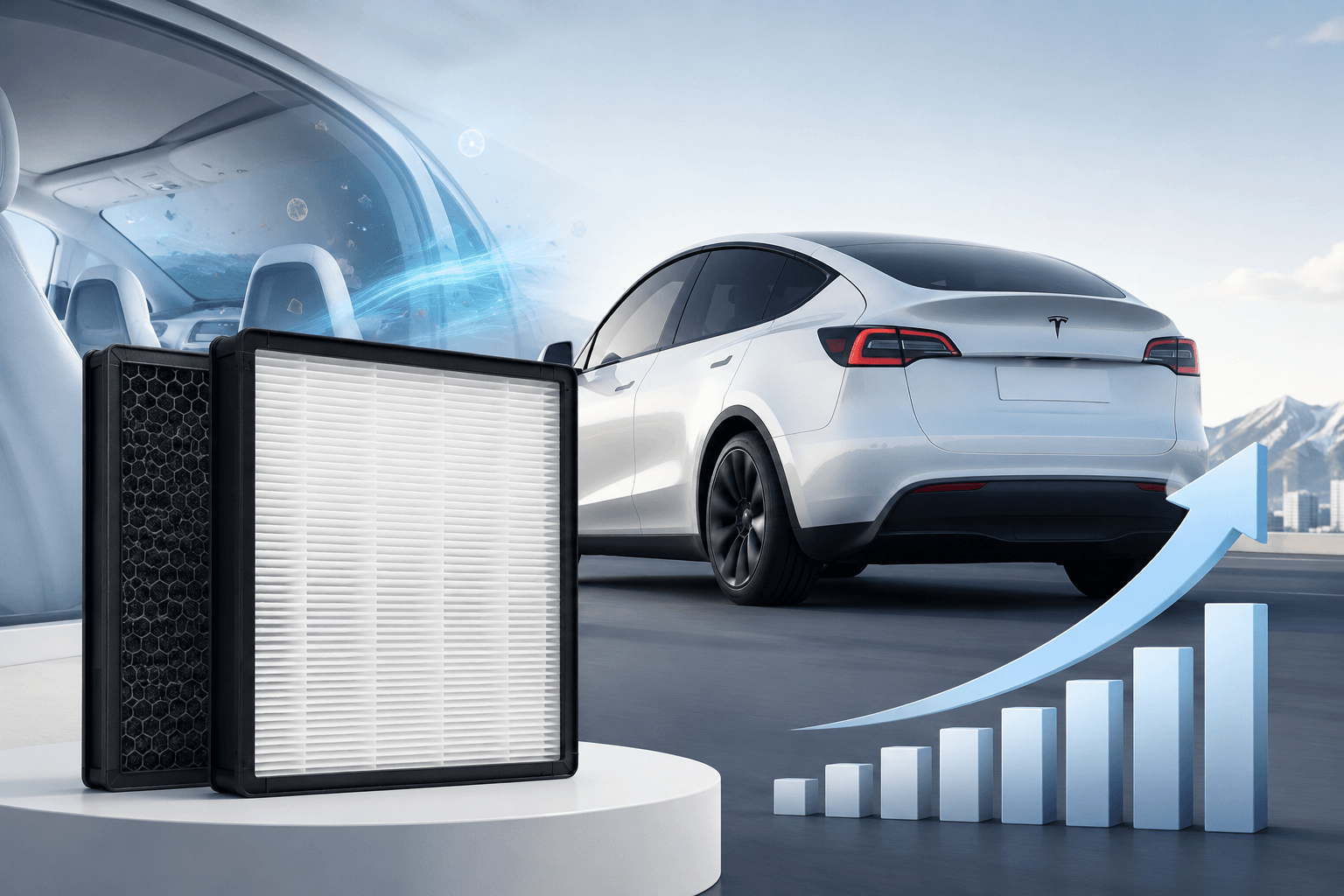
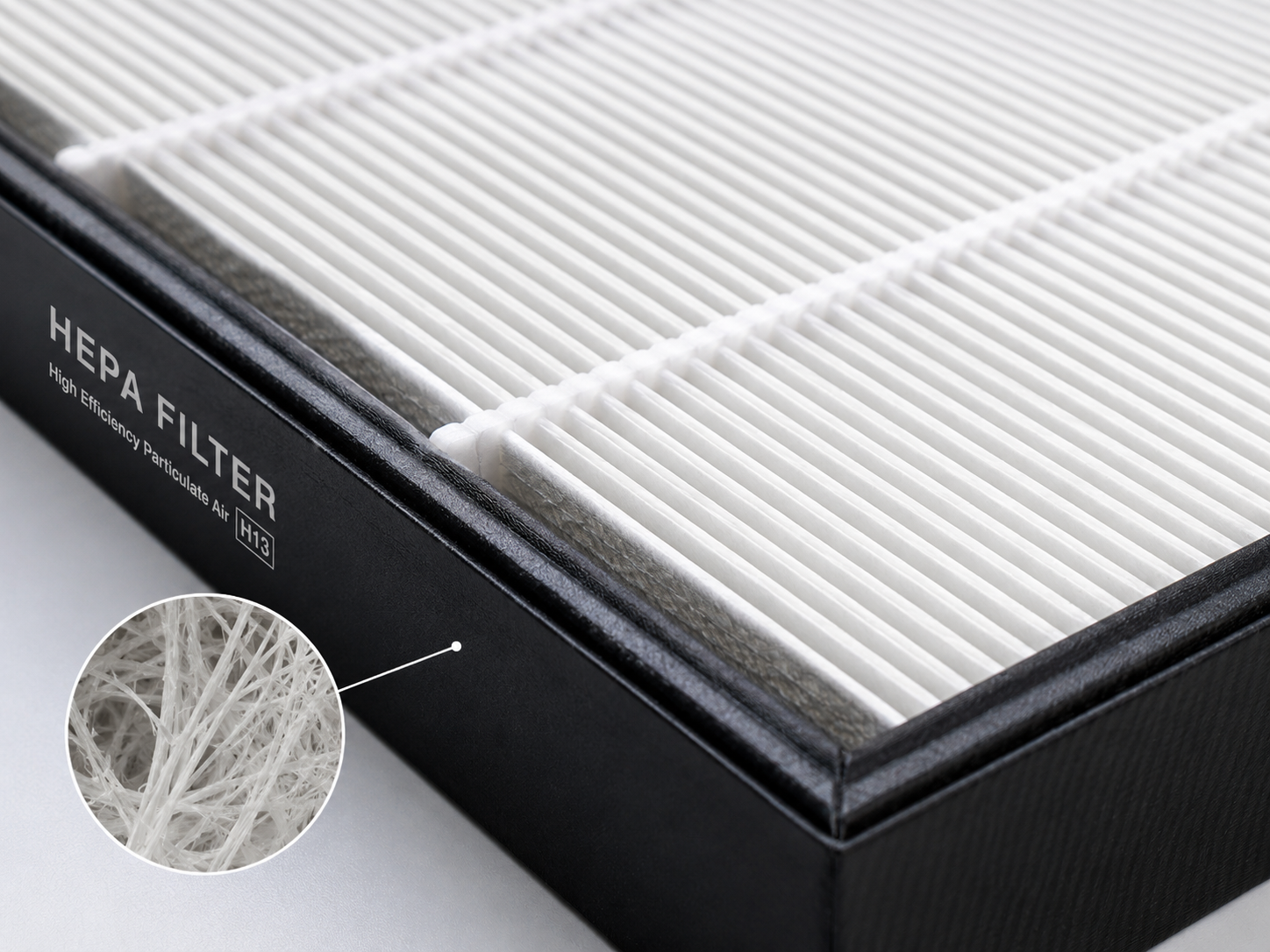
H13 air filters is the certification most home appliances lead with today. It blocks PM2.5, pollen, dust mites, pet dander, and a share of bacterial and viral aerosols, while keeping airflow resistance low enough for everyday use. That balance is why it works well for households with sensitive skin, infants, or pets: strong filtration without starving the airflow.
Alongside the H-rating system, there’s a second classification most people run into without realizing it: NIOSH. NIOSH grades filters on two separate scales at once, efficiency (95%, 99%, or 99.97%) and oil resistance. The N95 mask everyone recognizes belongs to this system, not the HEPA system. People often assume N95 and HEPA are interchangeable terms for the same thing. They’re actually two independent standards that happen to share one number: 95% efficiency, tested at the same 0.3-micron particle size that defines the HEPA threshold.
How is a HEPA filter constructed?
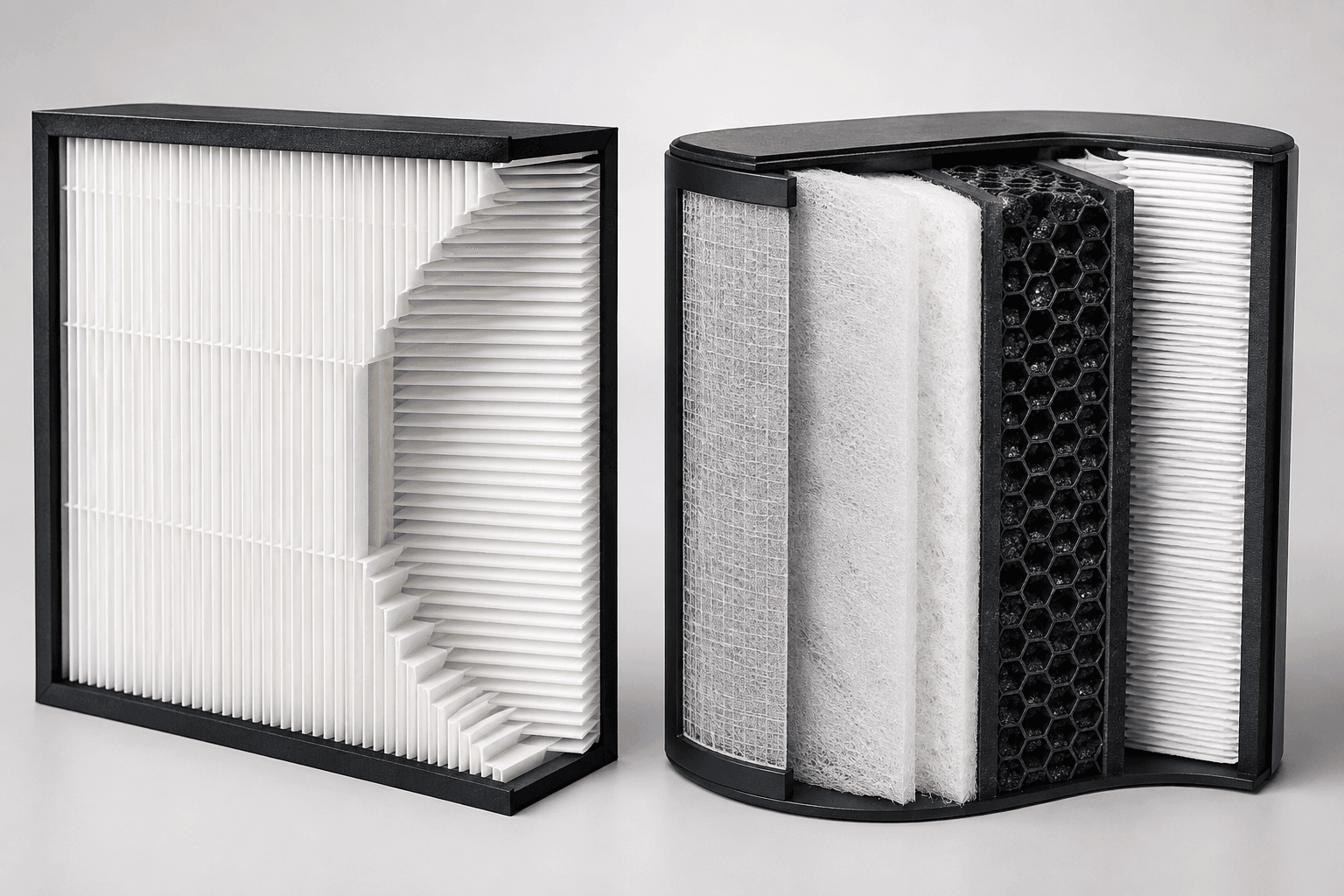
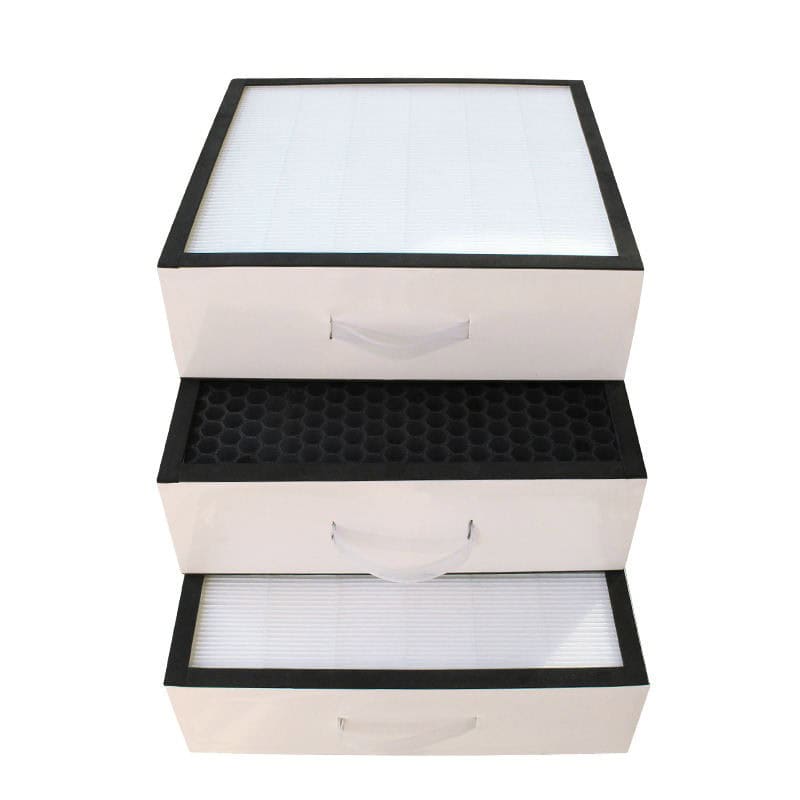
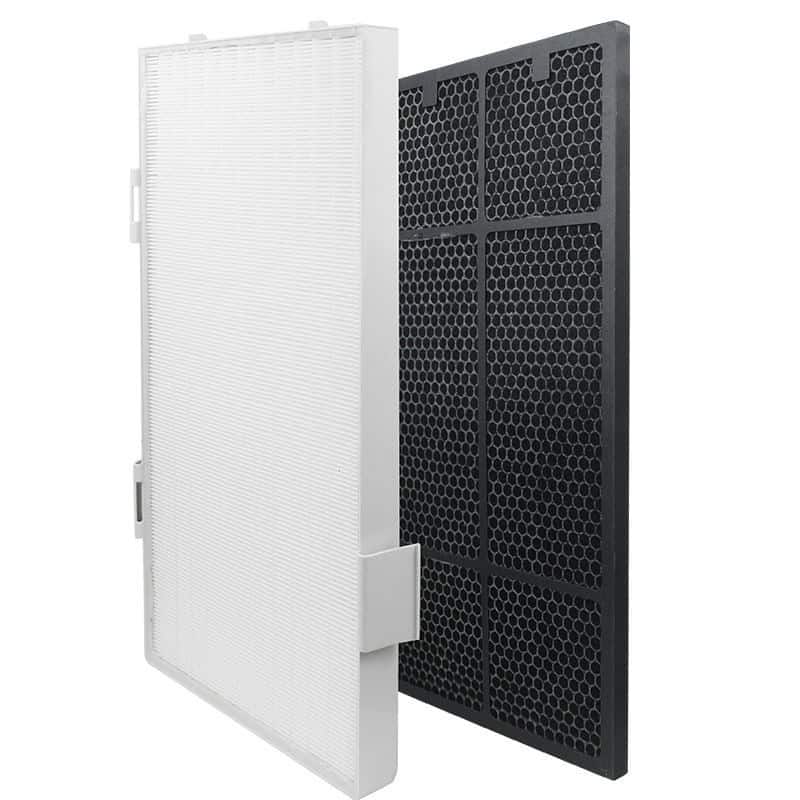
A HEPA filter isn’t just a single sheet of paper. It’s a complex, multi-layered system made up of at least four essential parts: a microfiber filtration medium, a pleated support grid, a sturdy outer frame, and a continuous sealing gasket. In OEM and industrial uses, the effectiveness of the filter relies heavily on how these layers are put together and tailored, just as much as it depends on the filtration media itself.
How a HEPA Air Filter Actually Works
Most people picture a filter as something particles either pass through or get blocked by, like a kitchen strainer. That model doesn’t describe what happens inside a HEPA filter. Three separate physical processes run at the same time.
- Inertial impaction: large particles carry too much momentum to follow the air around a fiber, so they collide with it head-on.
- Interception: mid-sized particles ride close enough to a fiber that they brush against it and stick.
- Diffusion: the smallest particles move erratically through Brownian motion and end up hitting a fiber almost by chance rather than by a direct path.
Three particle sizes, three different physics problems, and one filter medium handling all of them at once. That’s also why a HEPA filter’s toughest test sits right in the middle of the size range, at 0.3 microns, known as the most penetrating particle size. It still needs to hit 99.97% capture at that exact point.
HEPA Air Filter Types: Why Some Are Round and Some Are Square
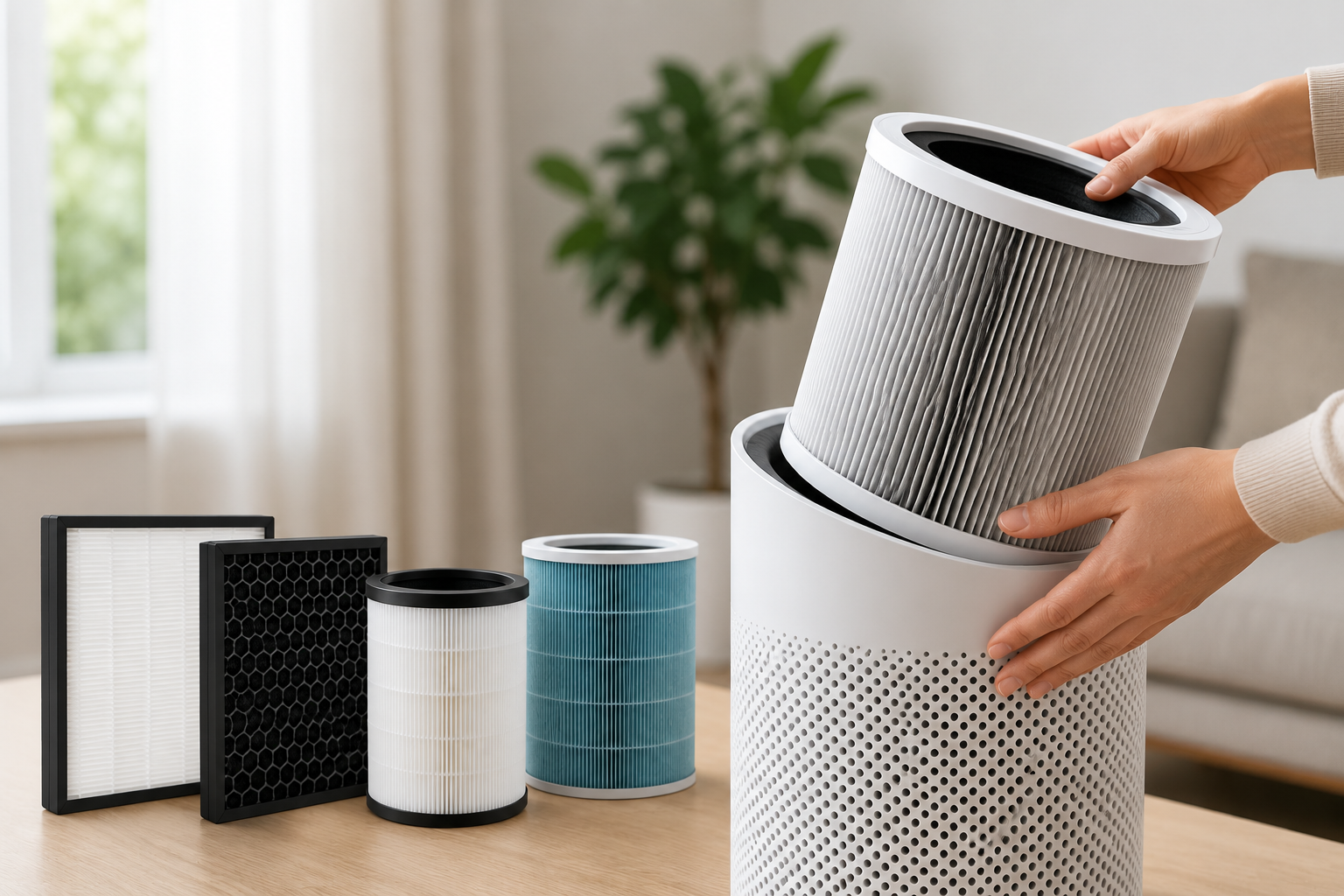
This is the question most guides skip. If HEPA is a single certification, why does a vacuum cleaner take a round cartridge while an air purifier takes a flat rectangular pad? The shape has nothing to do with filtration performance. It’s determined entirely by where the filter sits and how air moves through that space.
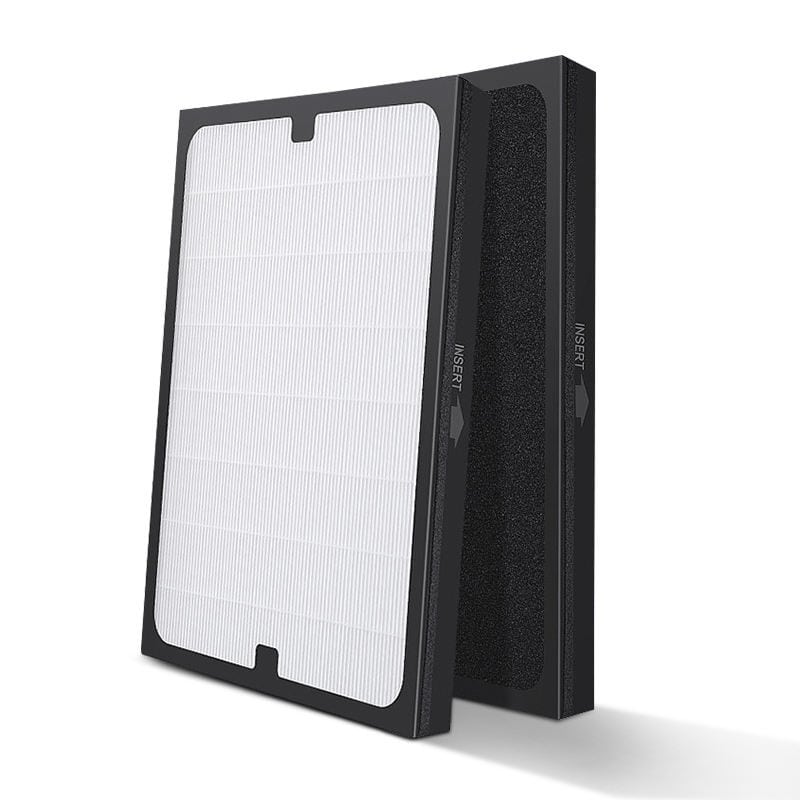
Flat Panel
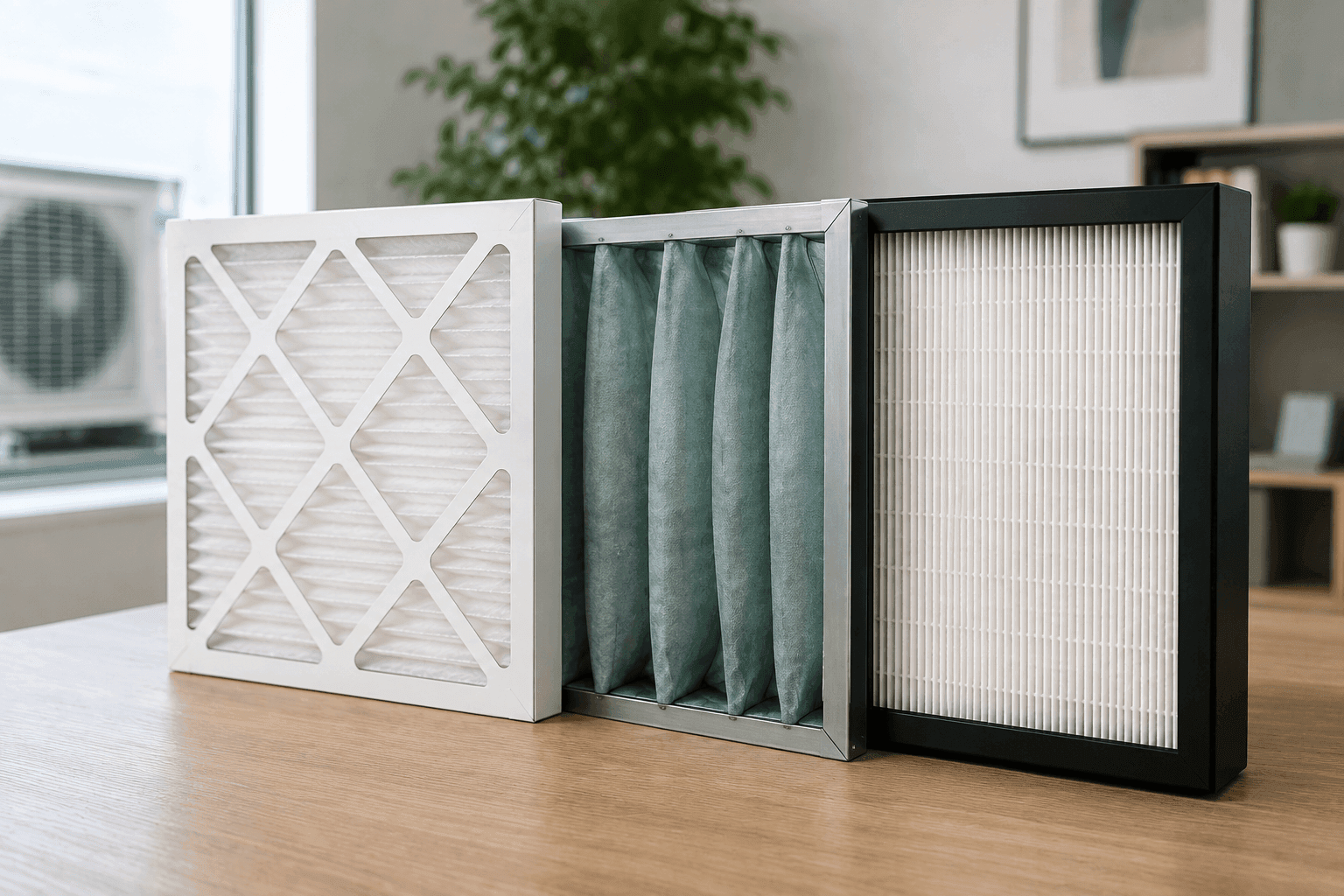
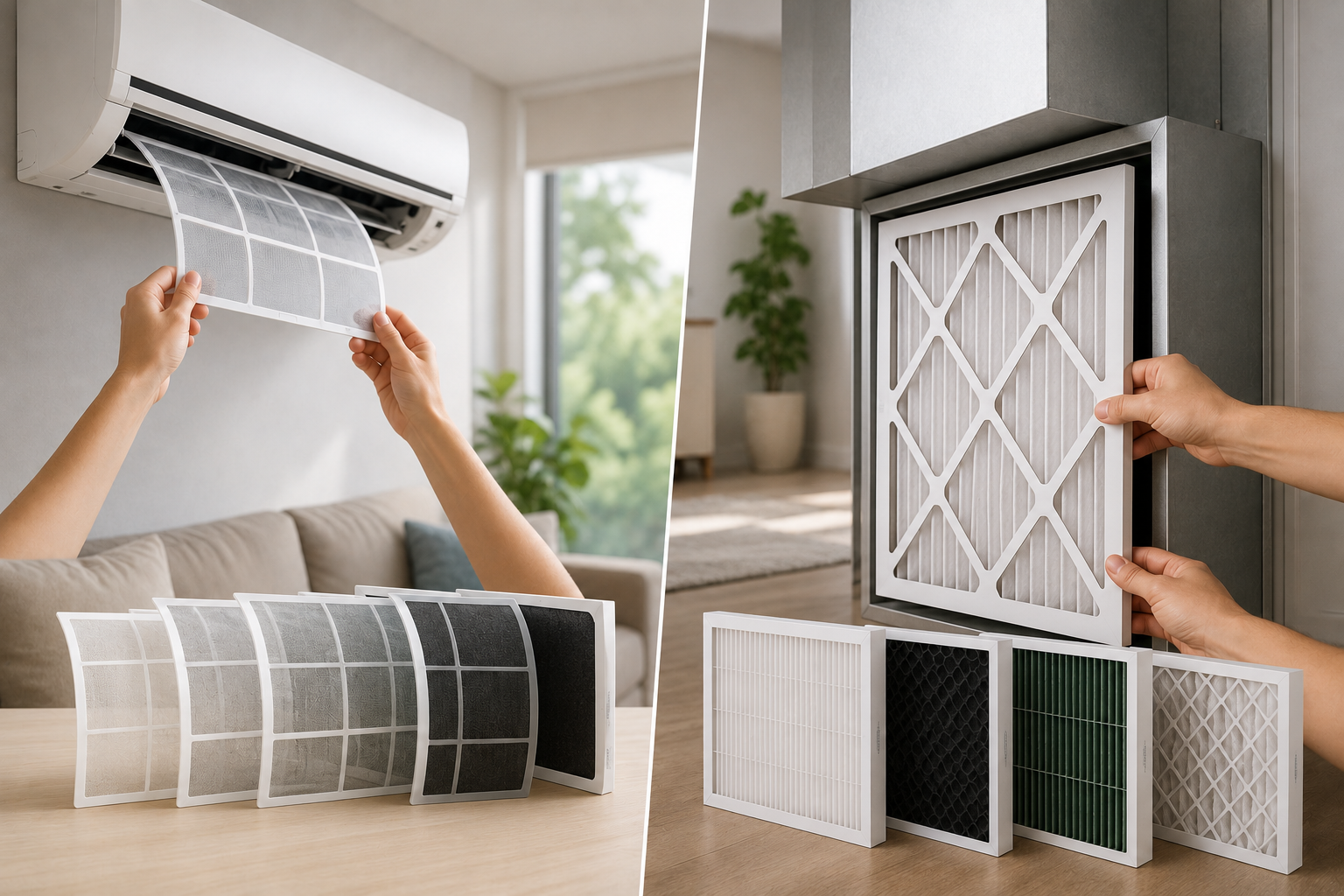
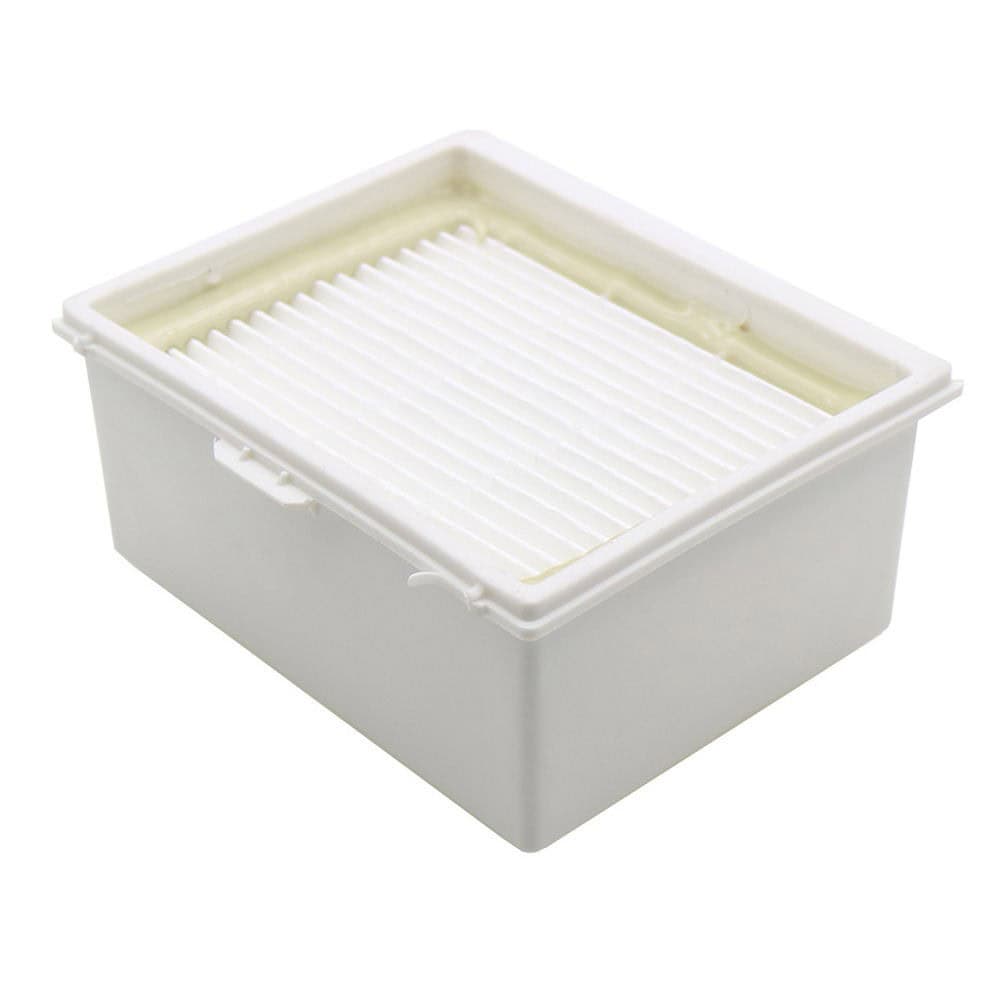
The standard rectangular design, with pleated media arranged in straight folds inside a frame. It’s the default for home air purifiers, fresh-air systems, and ordinary HVAC ducts, mainly because it’s simple to install and simple to replace.
Mini-Pleat
The same media folded into tighter, denser pleats within the same outer frame, which increases usable surface area without growing the footprint. Hospital operating rooms and cleanroom ceiling diffusers rely on this structure because it packs more filtering surface into a space that can’t get any bigger.
V-Bank
Pleats stacked in a V-shaped, accordion pattern to compress volume even further while expanding surface area. This structure shows up in large air handling units and industrial fresh-air systems built to move high air volumes.
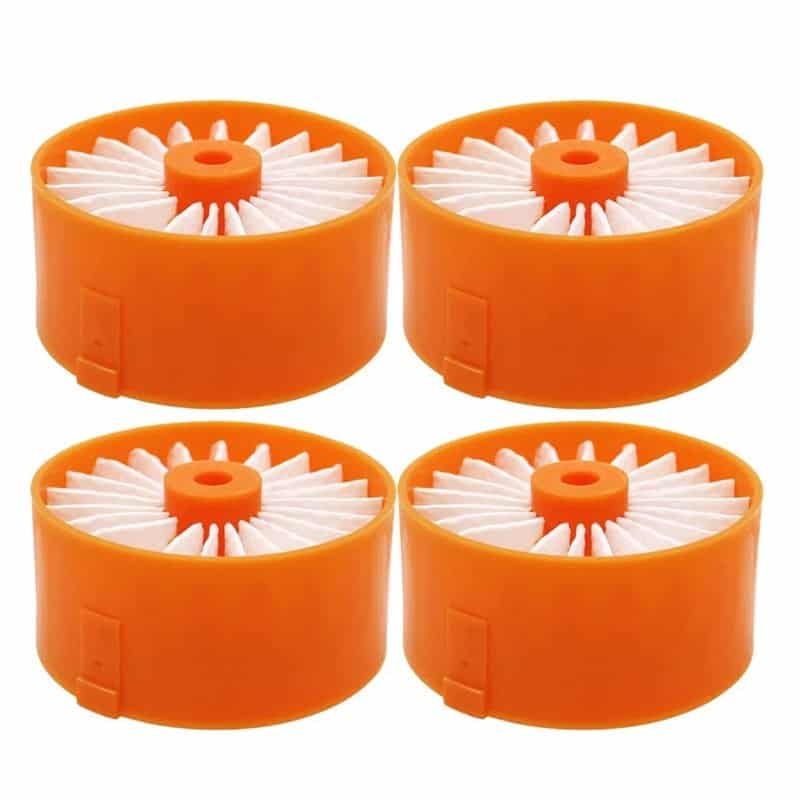
Cylindrical or Cartridge
Round because the housing it sits in is round. Vacuum motor chambers, respirator valves, and dust-collection intakes are all built around a cylindrical air path, so the filter is wrapped into a matching cylinder to let air pass through evenly from every angle.
In short, the shape is an engineering decision built around the equipment, not a performance tier. As long as the material passes H13 or H14 certification, round and square filters perform identically on efficiency.
Further reading: Single-Layer vs. Multi-Layer HEPA Filter
Hepa filter practical application scenarios
Hospitals rely on HEPA filtration in operating rooms and isolation wards, where contaminated air can be a direct threat to a patient’s life. Semiconductor plants depend on it too, since a single stray dust particle landing in the wrong spot can ruin a chip. Pharmaceutical labs and research facilities carry the same zero-tolerance standard.
At home, the stakes are lower, but the filters still do real work. A cheap vacuum cleaner pulls debris off the floor and pushes a share of fine dust straight back out through the exhaust. A HEPA-equipped model doesn’t do that, which matters if anyone in the house deals with allergies or asthma.
One question comes up often enough to answer directly: does a HEPA filter stop viruses? Viruses rarely travel through the air on their own. They attach to droplets or dust particles, and those carrier particles are exactly what a HEPA filter captures. That makes it a genuinely useful layer of protection, just not the only one worth having.
How Often to Replace a HEPA Air Filter
The replacement interval depends on the air purifier, operating hours, indoor particle levels, and the condition of the filter. If you want a more detailed guide, read our air purifier filter replacement guide to learn when to replace a filter and how to choose the right replacement.
The gap between a HEPA filter and a standard filter is real, not marketing language. A standard filter catches hair, large dust, and visible debris. A HEPA filter catches the particles small enough that you never notice them, until an allergy flare-up makes it obvious.
Genuine Replacement Filters or Wholesale Sourcing?
For a distributor, appliance brand, or facility that goes through HEPA filters on a regular basis, buying one retail pack at a time isn’t a real sourcing strategy. Three specific problems show up at volume.
Certification is the first issue. Retail shelves carry plenty of products labeled “HEPA-style” or “HEPA-type,” language that sounds official but doesn’t confirm the filter meets any actual standard. Sourcing wholesale lets a buyer require certified materials that genuinely hit 99.97%, instead of products that just borrow the name.
Fit is the second issue. Retail filters come in fixed dimensions. Custom frame sizes, specific coverage ratings, or OEM branding on the filter itself only happen through a manufacturer set up for it.
Cost and supply are the third issue. Filters need replacing every six to twelve months, and that adds up fast across a large operation. Retail prices fluctuate and stock isn’t always reliable, while wholesale sourcing locks in consistent pricing and steady availability, which matters at scale.
So, once you’ve thought it through, you can make the right decision about which option is the best fit for you.
Sourcing Through HIFINE
Hifine manufactures HEPA replacement filters for air purifiers and cylindrical HEPA cartridges for vacuum cleaners directly, which cuts the retail markup out of the equation entirely. Standard replacements, custom sizing, and OEM/ODM production are all part of the catalog, backed by ISO 9001 and BSCI certification. For a business that needs dependable volume at a competitive unit cost, it’s worth a conversation.
End
From a home air purifier to a hospital operating room, HEPA filters do the same fundamental job: keep the air clean enough for whatever happens next to matter. Understanding the certification tier, the physics behind the filtration, and why the shape changes from one device to the next makes it easier to buy the right filter the first time, whether that’s a single replacement cartridge or a full wholesale order.