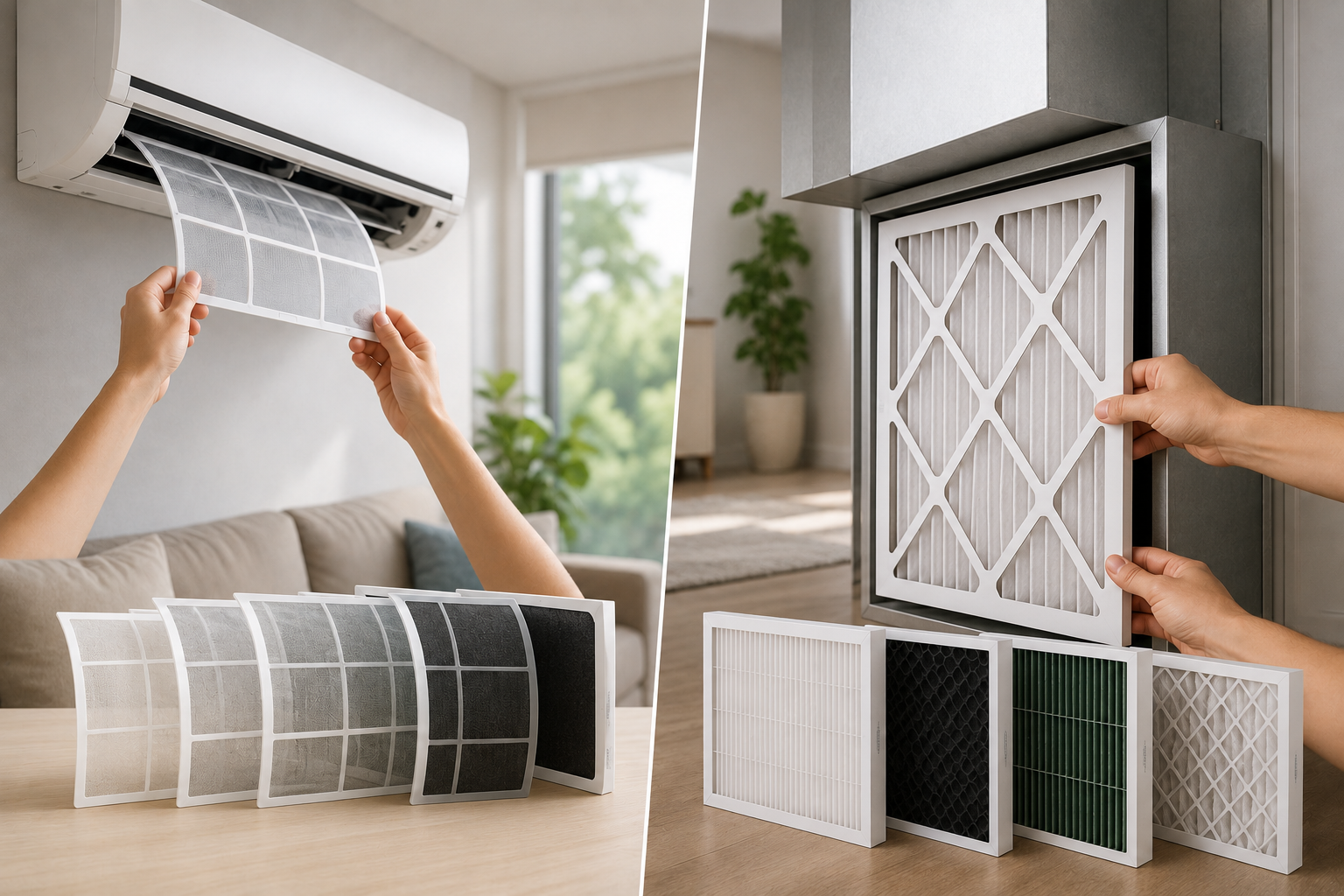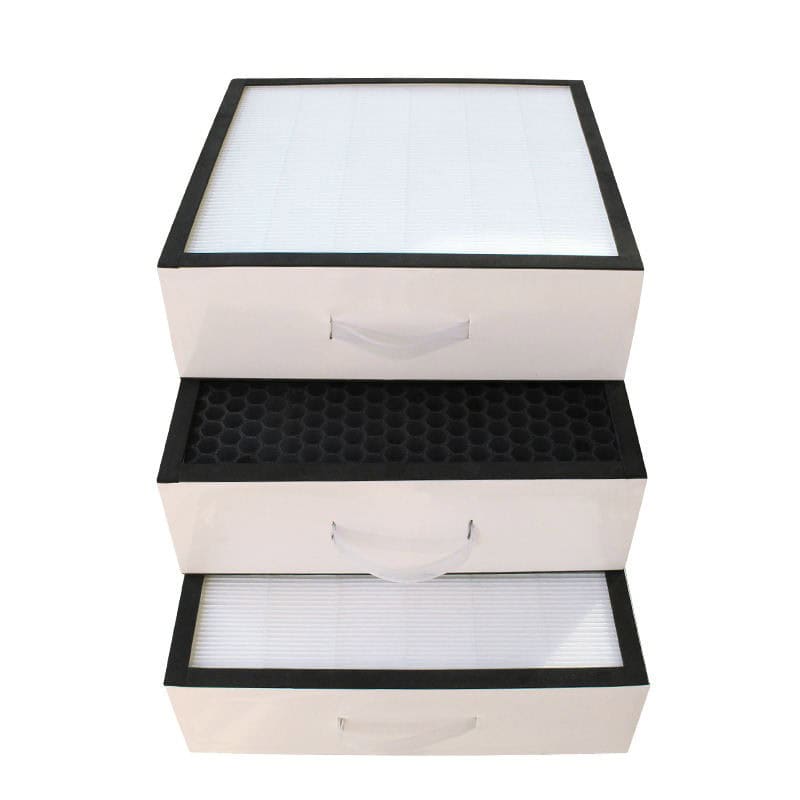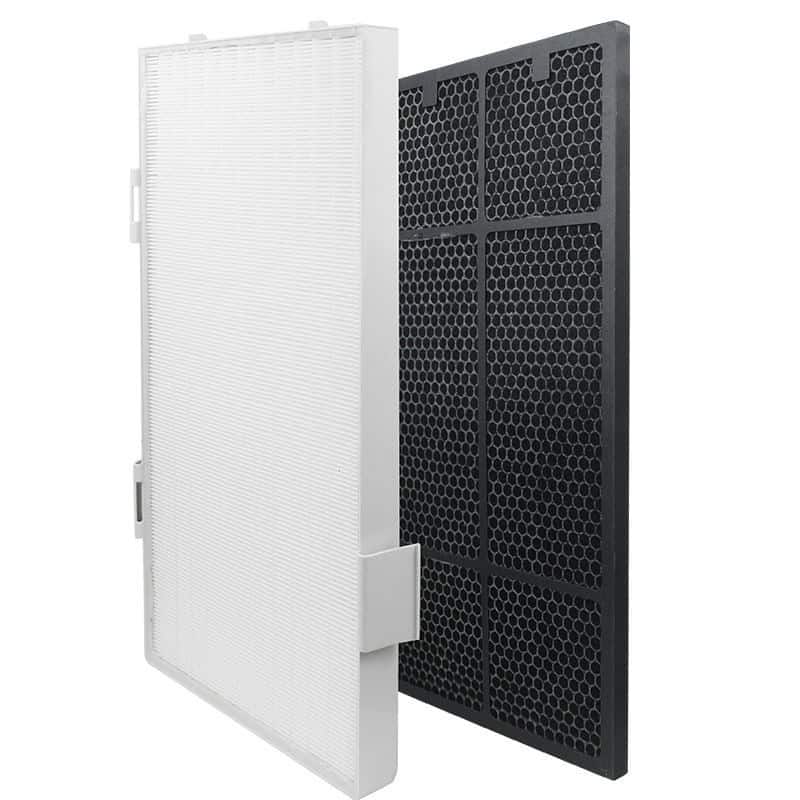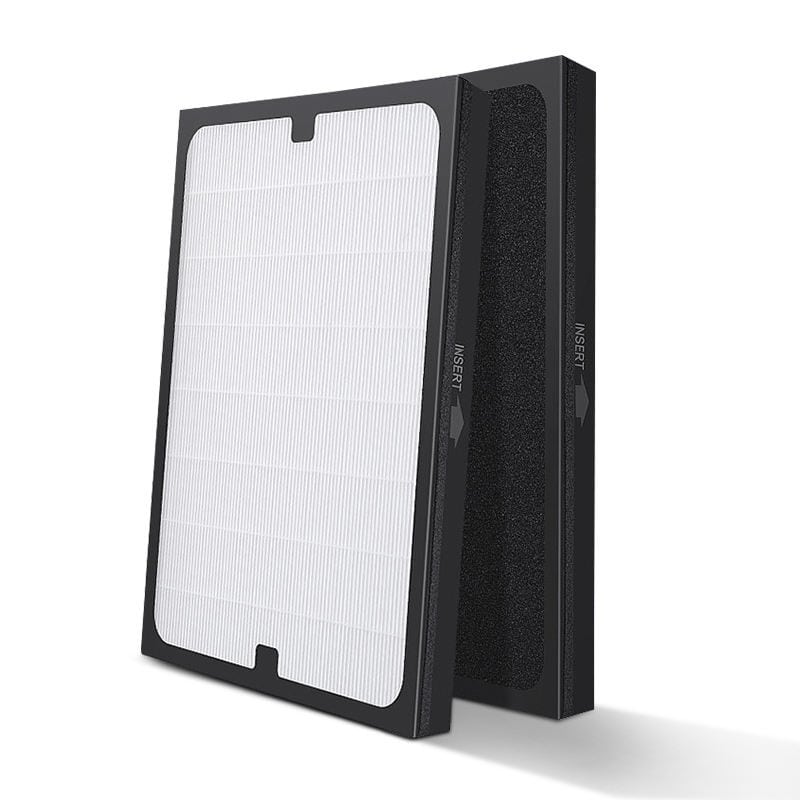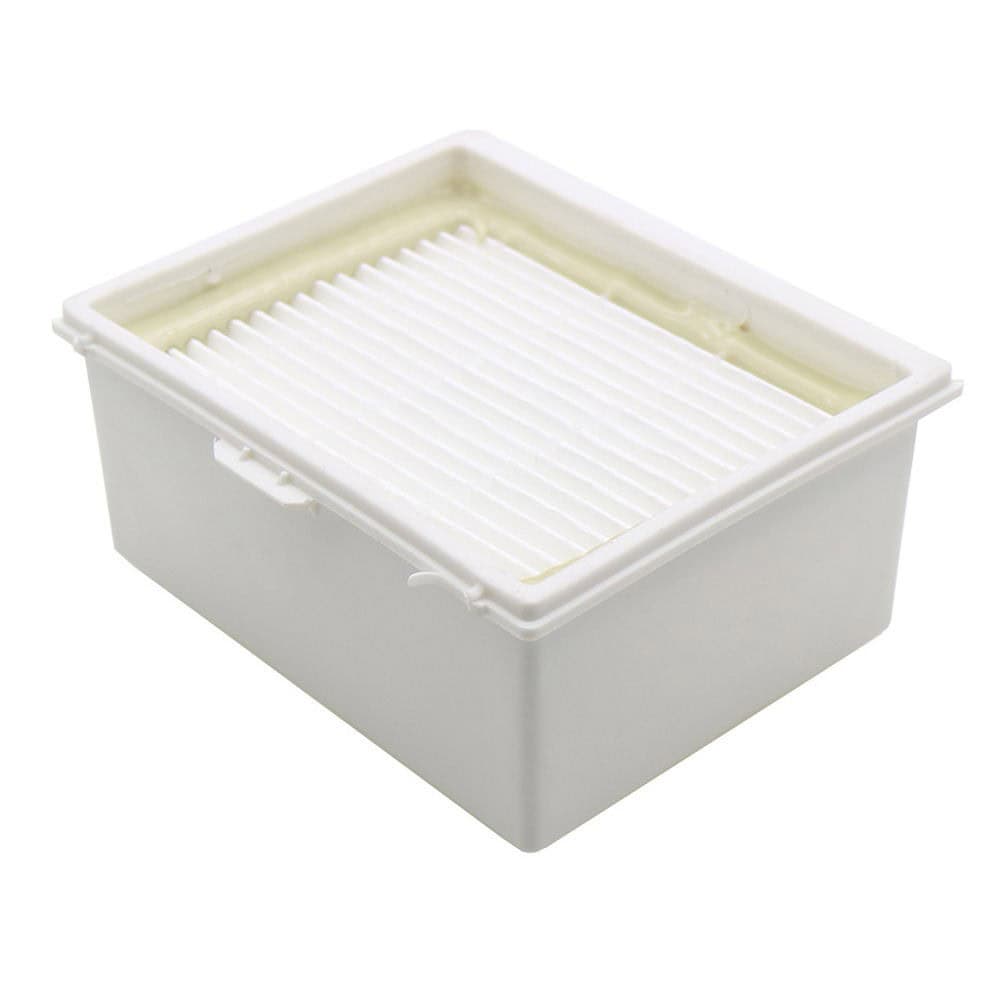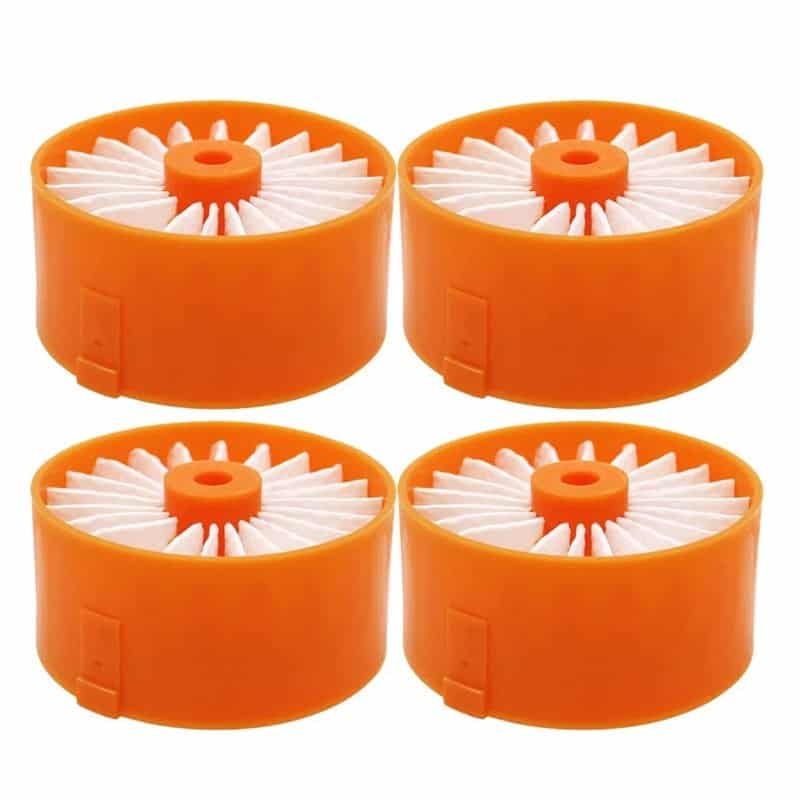
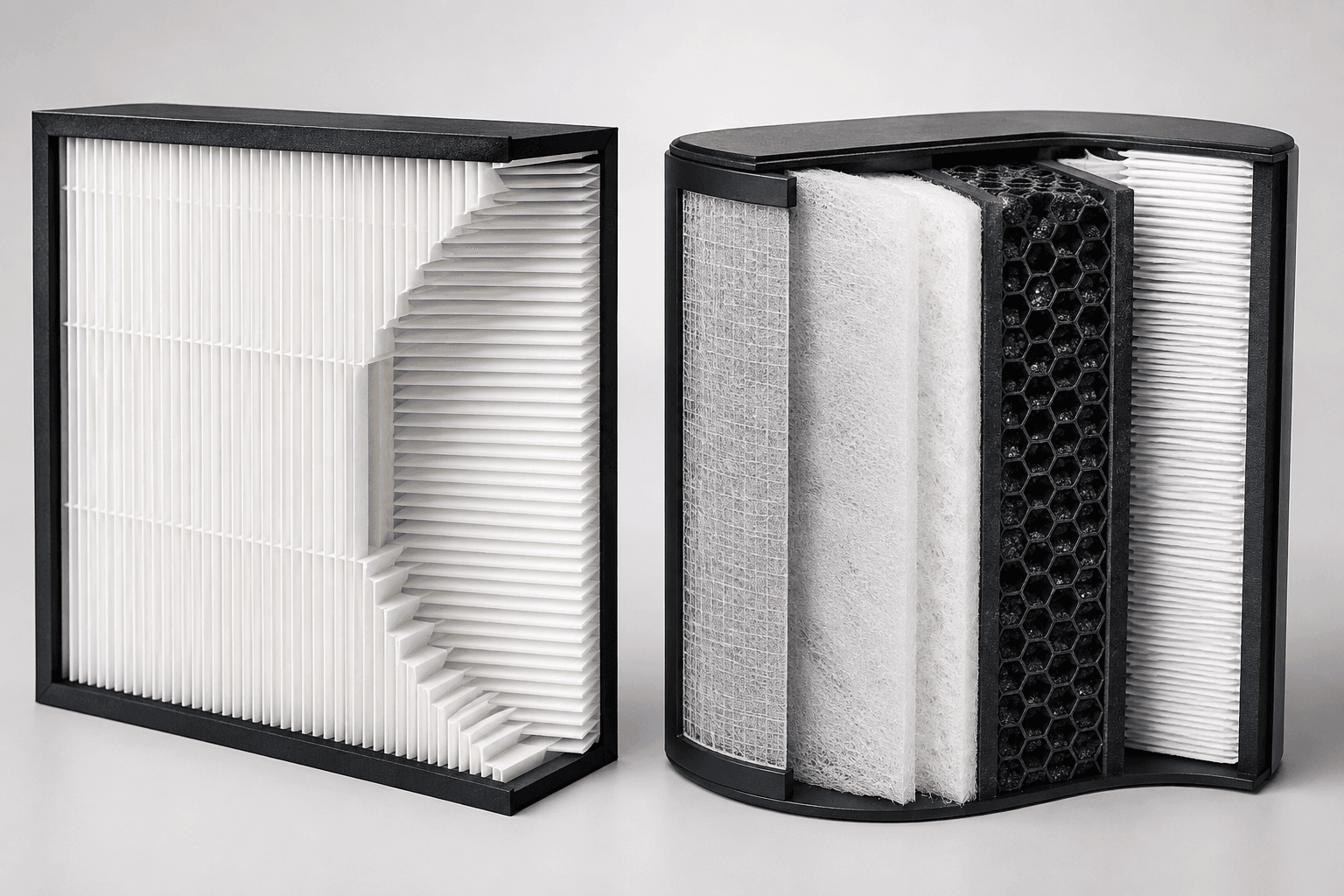
“HEPA” and “advanced filter” show up side by side on product pages constantly. They sound like two points on the same scale. They are not. HEPA is a tested efficiency threshold with real numbers behind it. Advanced filter is not defined by any standard at all. It can describe a genuinely capable filtration system. It can also describe almost nothing. This article breaks down what separates the two terms. It also covers what “advanced” usually turns out to mean, and how to check which one you are actually paying for.
What Makes a Filter Officially HEPA
A true HEPA filter has to hit a specific number under a specific test. In the United States, the Department of Energy standard requires at least 99.97 percent removal of 0.3 micron particles. That test runs under IEST-RP-CC001 protocols. In Europe, EN 1822 sets a slightly different bar. It requires 99.95 percent removal at the Most Penetrating Particle Size, usually between 0.1 and 0.3 microns. Both standards are real. Both are testable, and both produce a report with an actual number on it. HIFINE tests every HEPA batch against these thresholds before it ships, which is the only way a class label means anything.
Here is the catch. No government agency actually certifies HEPA claims on consumer packaging. The EPA has stated plainly that there is no widely accepted definition of HEPA performance once a filter reaches the consumer market. That does not make HEPA meaningless. It means the label alone is not proof. The test report behind it is the actual proof, and a manufacturer should be able to produce one on request.
What Advanced Filter Usually Means Instead
“Advanced filter” carries no such requirement. No agency defines it. No test standard is attached to it. A brand can put the word “advanced” on a basic filter, and nothing prevents that. In practice, the term shows up in two very different situations.
Sometimes it describes a real HEPA filter with something extra layered on top, such as an added carbon or UV-C stage. That version at least starts from a certified HEPA base. Other times “advanced” describes a completely different filtration approach that never claims HEPA status at all. The word is doing marketing work in both cases. Only one of them is backed by the 99.97 percent standard covered above.
Why Some Advanced Filters Are Not HEPA at All
Electrostatic and ionic air cleaners often carry “advanced” branding without ever using HEPA media. These systems charge particles and pull them toward a collector plate instead of trapping them in fiber. Some models generate ozone as a byproduct of that process. That is worth checking before buying one for a bedroom or nursery.
Photocatalytic filters are another category that gets the “advanced” label. They use a reactive coating to break down pollutants rather than physically capturing them. Neither approach is automatically worse than HEPA. They simply are not HEPA. Grouping them under the same “advanced” umbrella makes products harder to compare on equal terms. Even everyday appliances borrow the same loose language, from robot vacuums to induction cookers with built-in air treatment. The habit of checking the actual spec applies well beyond air purifiers.
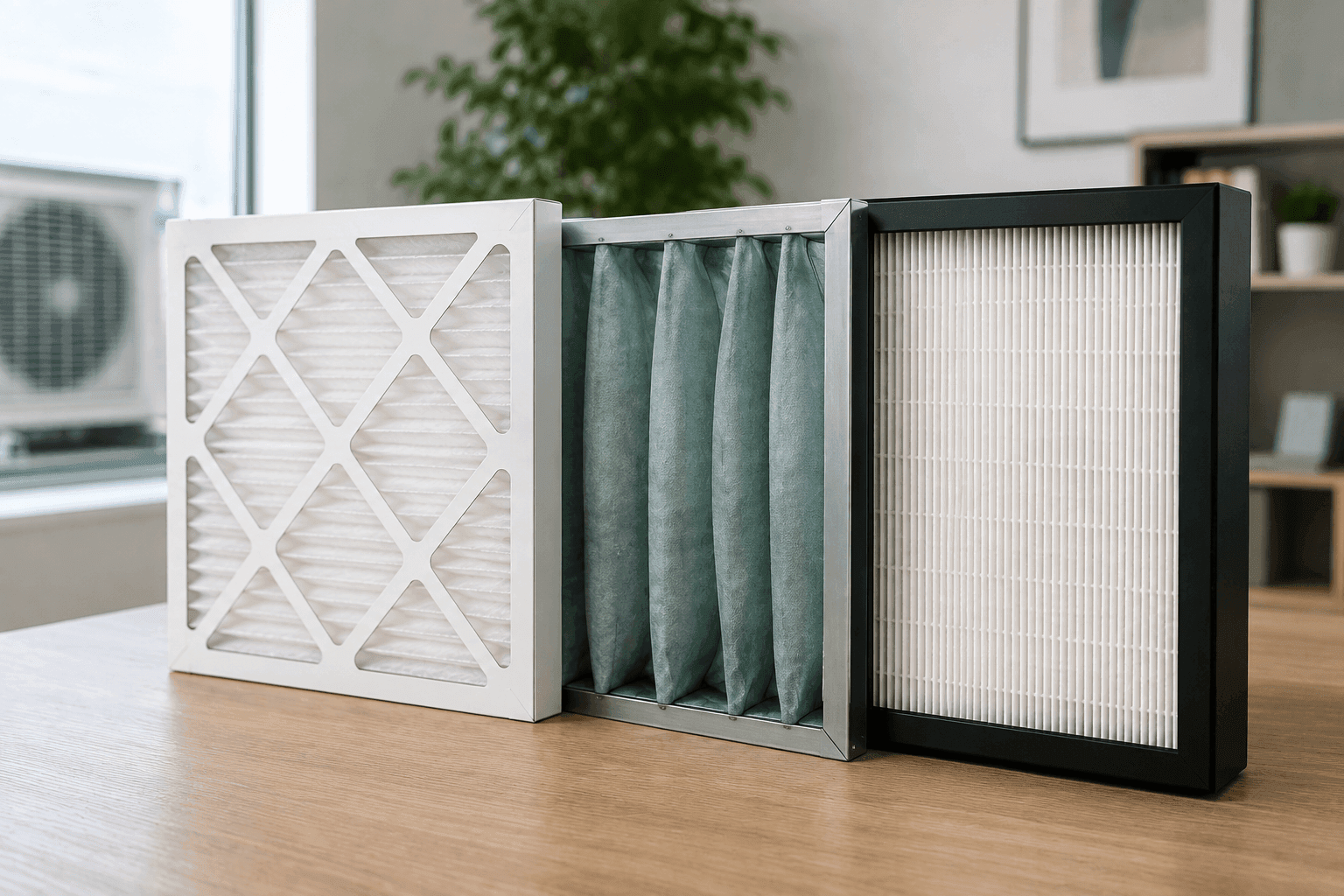
A simpler version of the same problem shows up with basic fiber filters rated only by MERV instead of HEPA. A MERV 13 filter can be marketed as “advanced” too, even though it sits well below HEPA-level efficiency on fine particles.
How to Tell Which One You Are Actually Buying
Ask for the efficiency percentage and the particle size it was tested at. A real answer looks like “99.97 percent at 0.3 microns.” It does not sound like “advanced” or “premium” on their own. Ask which standard the number comes from. DOE, IEST, and EN 1822 all test slightly differently, and none of them should be assumed by default.
Request the actual test report tied to the specific filter, not a general compliance statement for the product line. HIFINE ships that report alongside every HEPA batch it produces, with the class, the standard, and a serial number attached. If a listing cannot produce a number, a particle size, and a standard, “advanced” is functioning as a marketing word with nothing measurable behind it.
End
Brand owners building their own filtration products face the same choice from the other side. Calling a filter “HEPA” means it has to clear 99.97 percent at 0.3 microns, full stop, with a report to prove it. Calling it “advanced” gives more room. That room disappears fast if a customer or a marketplace asks for data that does not exist.
HIFINE tests every HEPA batch against DOE and EN 1822 thresholds and builds composite media that genuinely earns a stronger marketing claim, not just carries one. Buyers putting together a private label filter line can start with the OEM sourcing process. Or request a quote to talk through which standard fits the product.