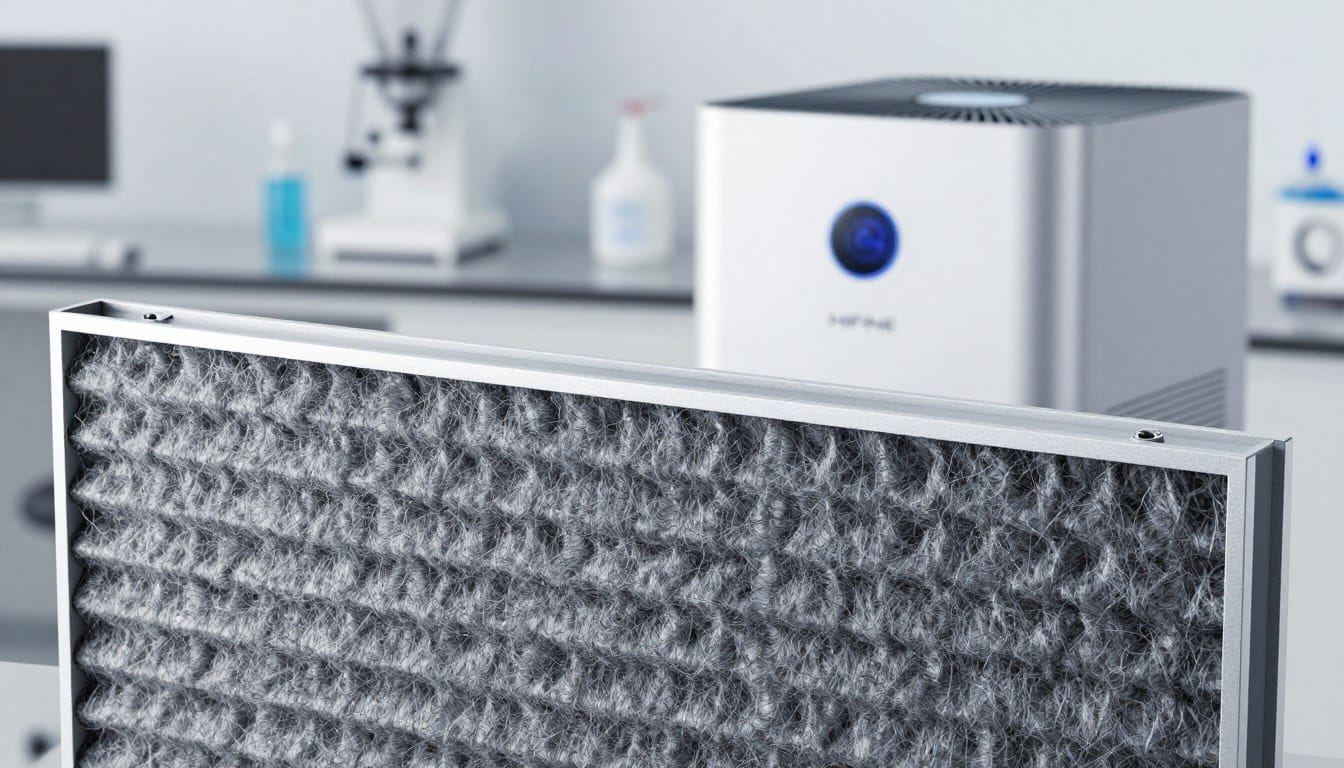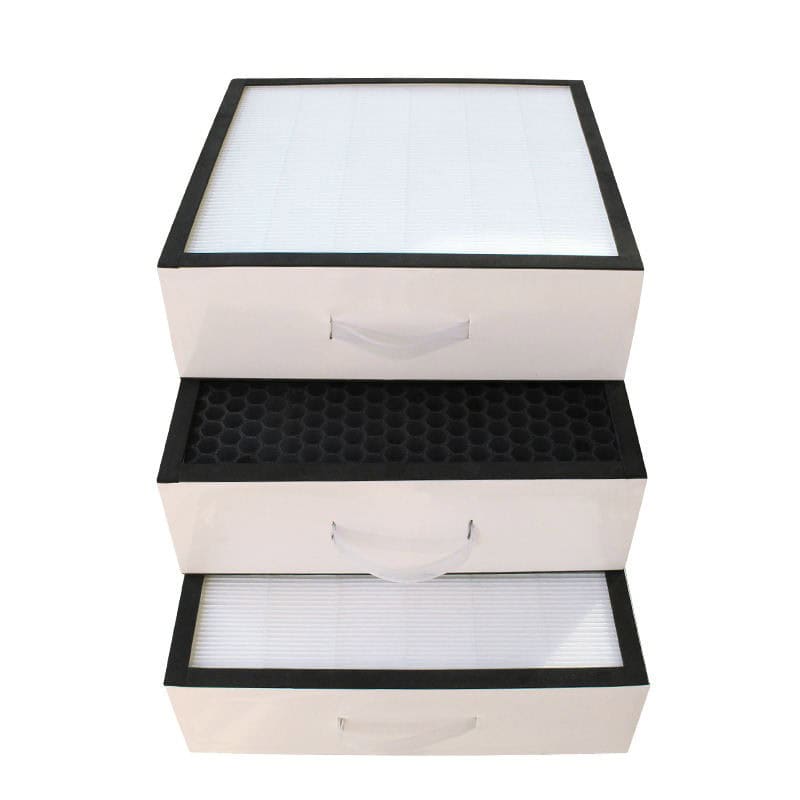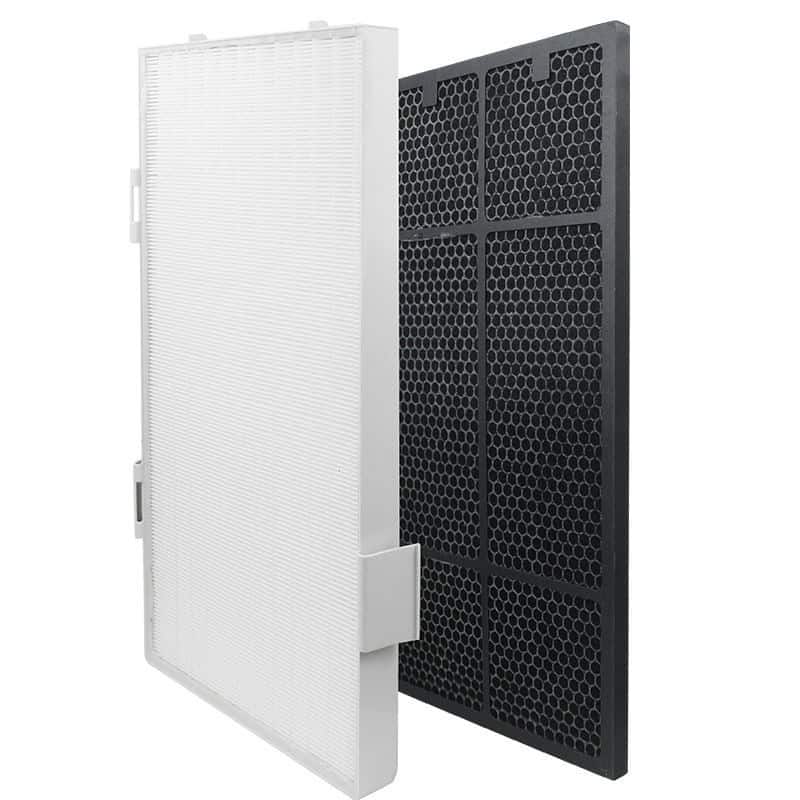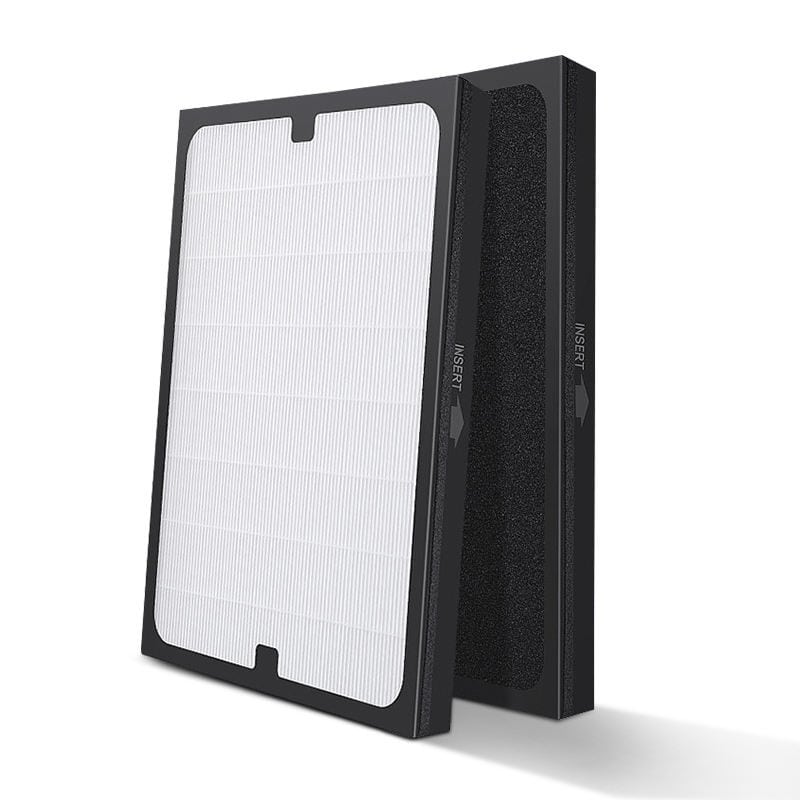

Most buyers call both units “the AC filter.” A split system’s indoor unit and a central air handler don’t do the same job, though. One filter protects a coil from lint. The other can anchor a real filtration strategy built around ratings like MERV or ISO 16890. These two standards measure very different things. Mixing up the two is one of the most common sourcing mistakes overseas buyers make when they specify replacement filters.
Two Systems, Two Different Filter Jobs
A central air handler pulls all of a building’s return air through one point. Whatever filter sits in that slot treats nearly every cubic foot of circulated air. A split system’s indoor head unit only conditions air in one room or zone. Its filter isn’t sized, positioned, or rated to match a central return filter. Calling both units “the AC filter” hides that they solve different problems.
What a Split System’s Built-In Filter Actually Does
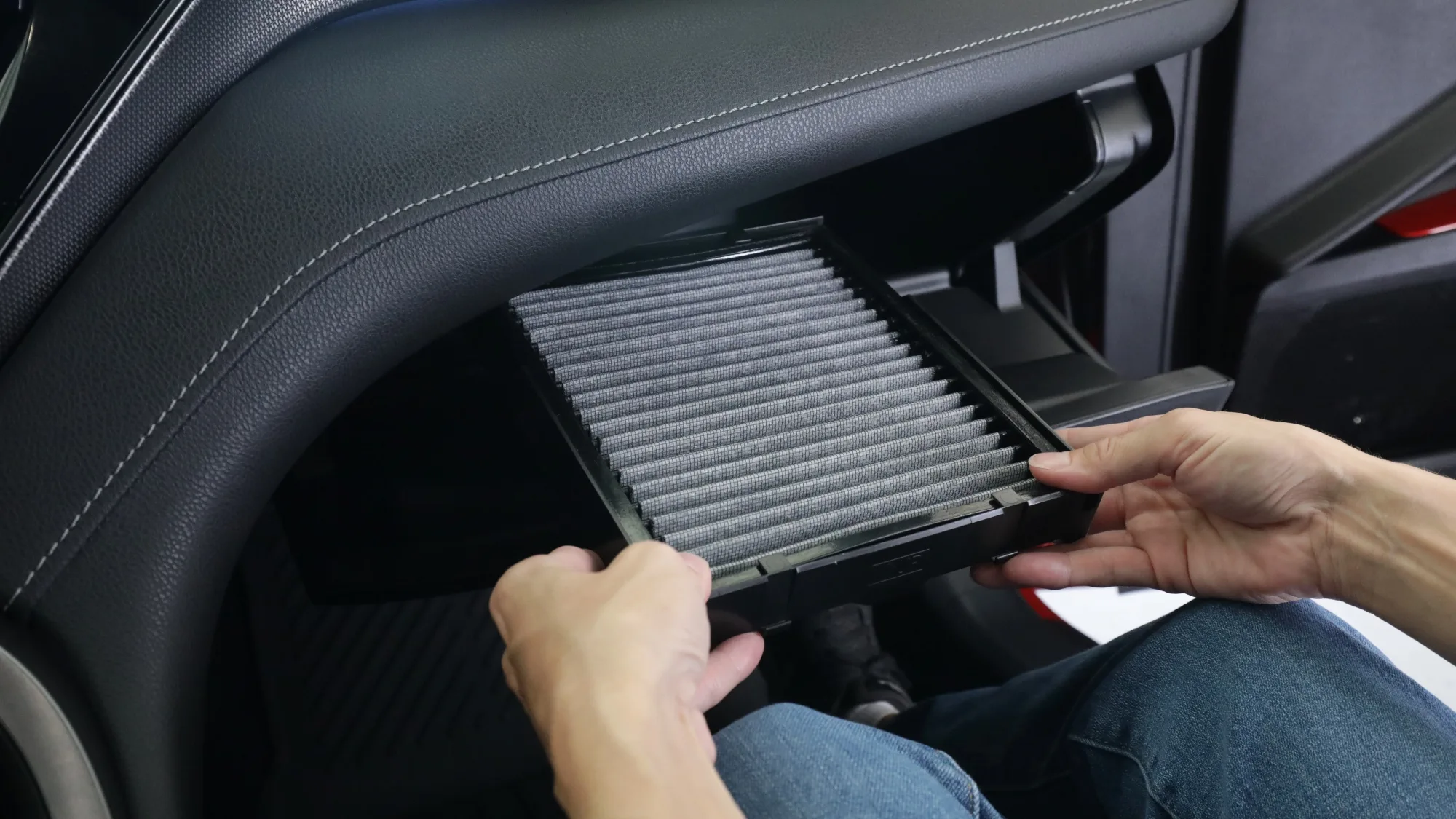
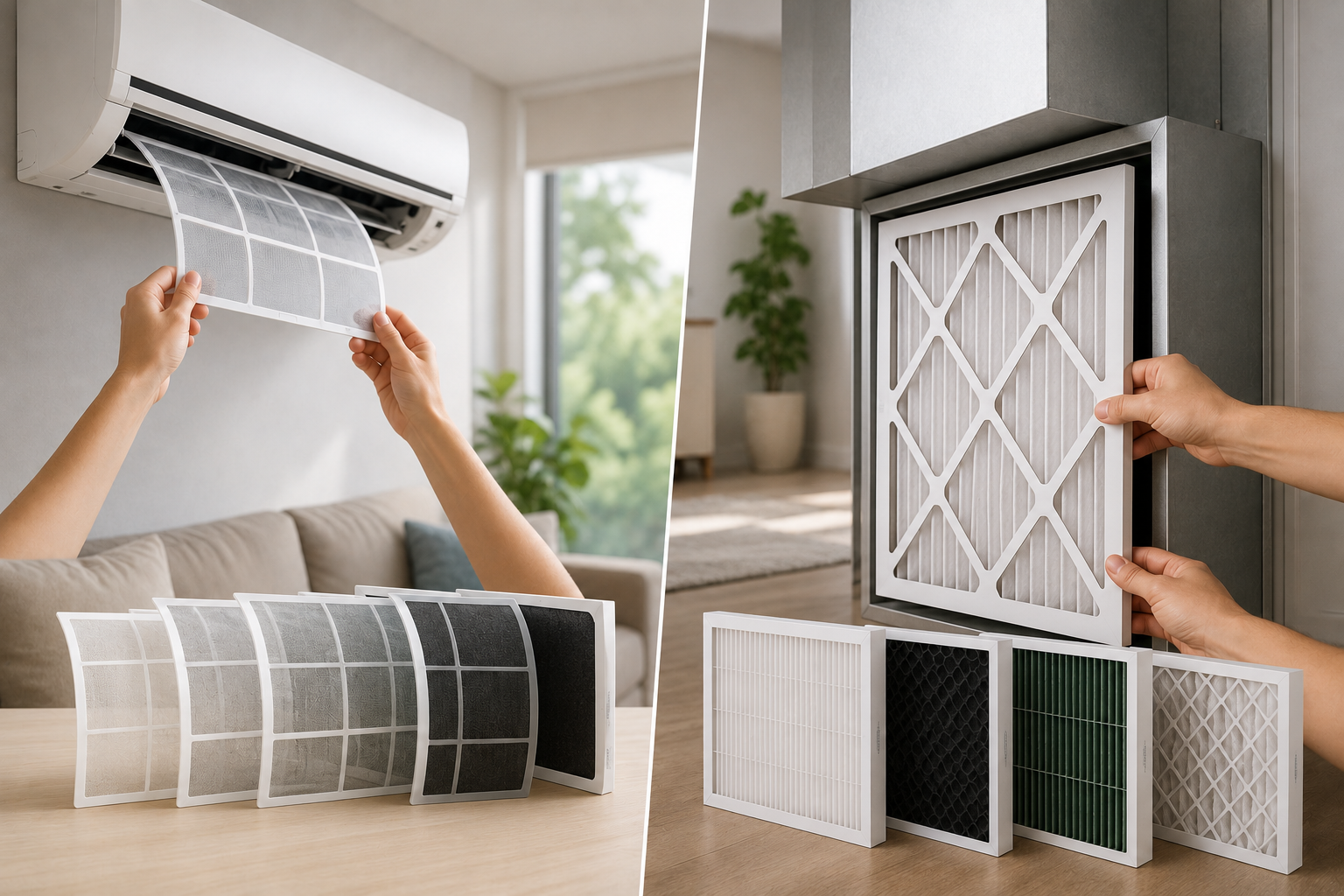
Open a mini-split’s indoor unit and you’ll almost always find a washable plastic mesh screen behind the front panel, not a MERV-rated media filter. Its job is mechanical protection. It keeps lint, pet hair, and coarse dust off the evaporator coil and blower wheel so the unit keeps running efficiently. The U.S. Environmental Protection Agency notes that ductless systems generally don’t filter fine particles. That mesh screen simply can’t capture anything down at the PM2.5 size range. Manufacturers typically recommend rinsing it every two to four weeks. Skip that step, and dust blankets the coil. That cuts airflow long before it becomes an air quality problem. The same upkeep tradeoffs apply here as with any washable filter media, HEPA or otherwise. A rinse cycle only works if you actually do it on schedule and fully dry the media before reinstalling it.
Some higher-end split systems offer optional add-on cassettes that deliver MERV 8-to-13-equivalent performance. These remain supplemental accessories layered onto the base unit. They aren’t a standard feature of split filtration.
How Central Ducted Filtration Works Differently
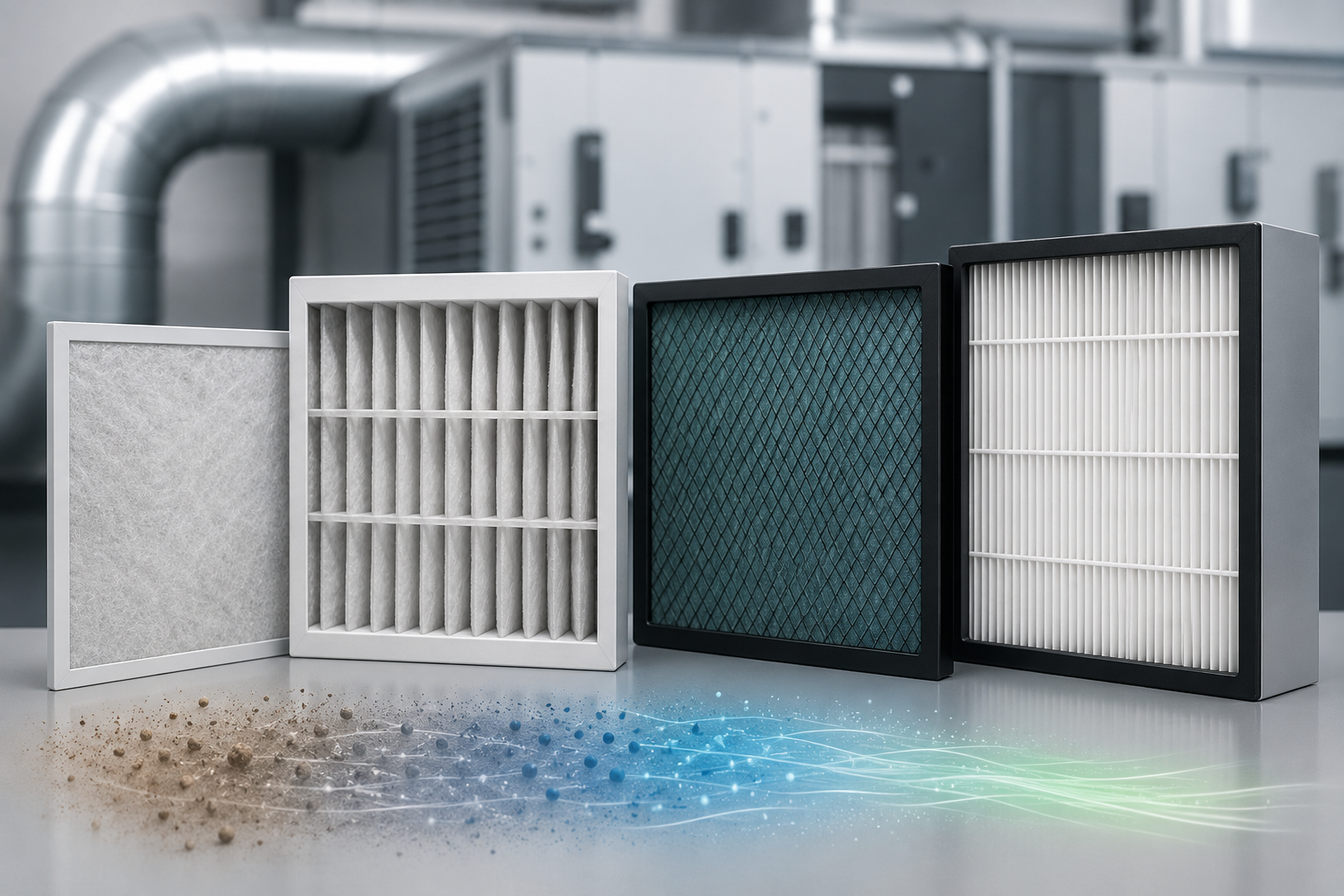
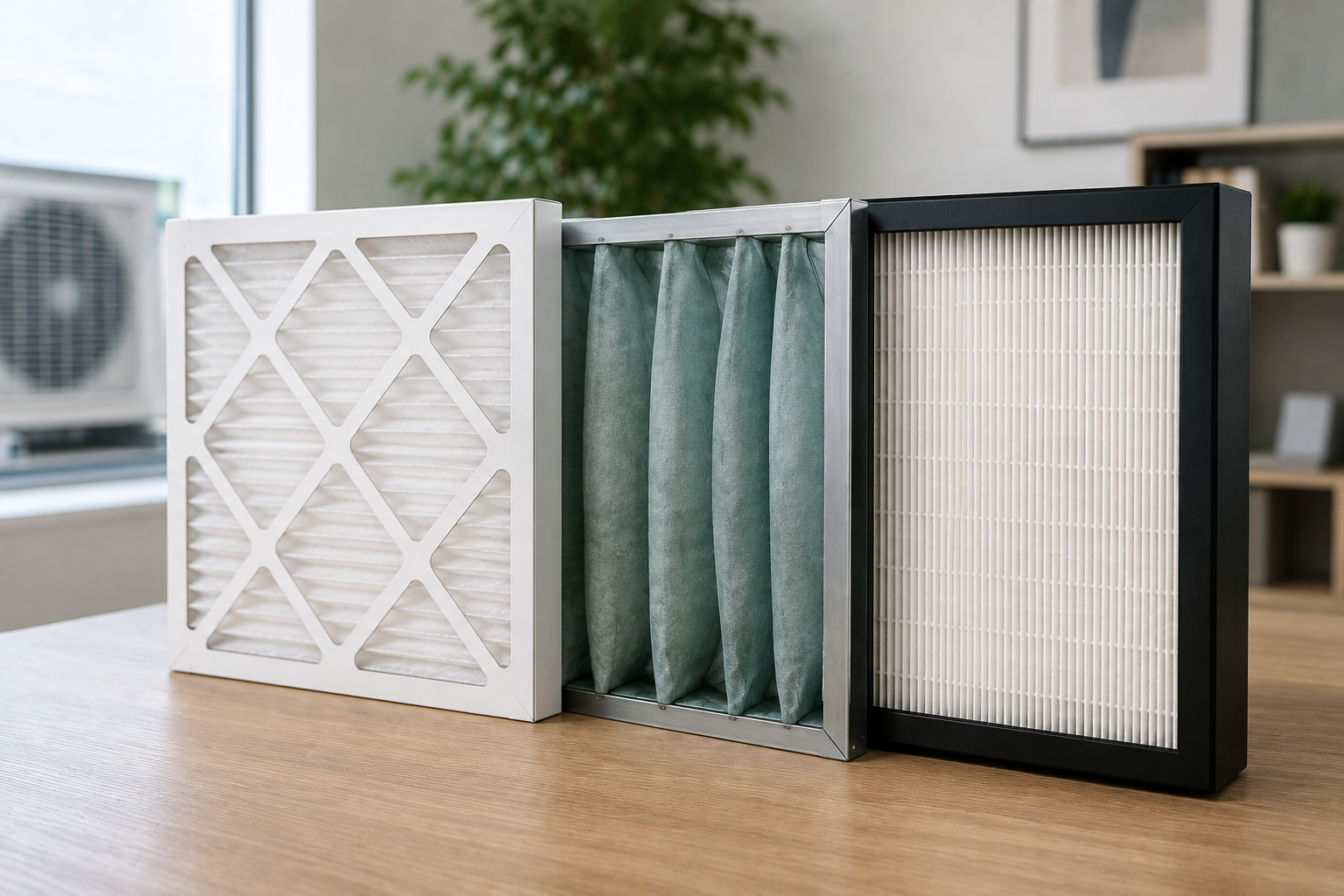
A central system routes all return air through one filter rack before it reaches the coil. That means a single MERV-rated pleated filter, typically MERV 8 through 13 in commercial settings, treats the whole building at once. This single choke point also makes central systems compatible with a real filtration strategy. Swap in a higher grade, add a UV stage, or run a multi-stage setup with a HEPA final filter, and every room downstream benefits. Technicians replace central filters on a fixed interval, generally every one to three months, instead of rinsing them as needed.
Why MERV Ratings Rarely Apply to Split Units
MERV comes from the ASHRAE 52.2 testing standard, which measures a mounted media filter in a duct, not a washable mesh screen in a wall-mounted head unit. A MERV number applied to a split system’s stock filter is technically meaningless. That’s why manufacturers who offer rated filtration sell it as a distinct accessory, not a spec on the base unit. HIFINE’s OEM engineers hear this question often from distributors trying to unify a parts catalog across regions. A buyer comparing a MERV 11 central filter to a split system filter on the same spec sheet is comparing two different product categories, not two ratings on the same scale.
Where Split Systems Dominate, and Why That Matters for Sourcing
Central ducted air remains largely a North American residential default. Builders designed that housing stock around ductwork from the start. Across most of the rest of the world, split and multi-split systems dominate instead. This holds especially true in the retrofit-heavy building stock common across Asia, the Middle East, and Southern Europe. These systems don’t require tearing into walls to add ducts. That split-system dominance explains why a filtration strategy built entirely around central-system logic doesn’t transfer to a huge share of the global installed base. MERV grades, fixed replacement schedules, and staged HEPA setups simply don’t apply. Distributors sourcing for those markets need mesh replacement screens and add-on cassette filters as a genuinely separate product line, not an afterthought to their central filter catalog.
Buildings running split units in demanding spaces feel this gap directly. A small retail unit next to a kitchen still filters air through the same washable mesh screen as a quiet back office. That’s true even when induction cookers add extra grease particulate and heat load to the space.
What This Means for Buyers Sourcing Both Product Lines
Distributors serving both central and split system markets effectively manage two different filtration categories under one catalog. MERV-rated media covers ducted systems. Mesh or cassette-style accessories cover split units. HIFINE manufactures across both categories as an OEM/ODM partner. We build mesh and cassette filter components to match specific indoor unit models, alongside standard MERV-rated media for ducted systems.
Confusing split and central filtration at the sourcing stage causes a common, avoidable mismatch. HIFINE’s product engineering treats them for what they are. They’re two different components that solve two different problems, not one filter spec that scales up or down by MERV number.