
An air purifier can keep running for months after its filter has become clogged with dust. The fan still spins, the display still lights up, and the unit may sound perfectly normal. None of that tells you whether the filter inside is still doing its job.
Every air purifier filter has a limited service life. As dust and other particles build up on the filter media, airflow resistance rises, and a loaded filter stops performing the way it was designed to. That’s why the U.S. EPA recommends replacing filters on the schedule set out in the manufacturer’s maintenance instructions.
How do you know when it’s actually time to replace one? It comes down to a handful of factors:
- Filter construction.
- How many hours a day the purifier runs.
- Indoor particle levels.
- Whether you have pets.
- Whether there’s smoke in the home.
- The interval the manufacturer recommends.
This guide walks through when to replace an air purifier filter, how to spot a worn one, and how to pick the right replacement for your machine.
When Should You Replace an Air Purifier Filter?
There’s no single interval that works for every air purifier. A filter running a few hours a day in a clean bedroom will typically last much longer than one running around the clock in a home with pets, smoke, or heavy dust.
Start with the manufacturer’s own recommendation. If your air purifier has a specified replacement interval or a filter life indicator, treat that as your baseline. From there, pay attention to how the filter actually looks and performs.
You’ll likely need to replace it sooner if:
- Your purifier runs for long stretches every day.
- Pets in the home shed hair and dander.
- The unit is used around cigarette or cooking smoke.
- The room collects a lot of dust.
- Outdoor air pollution in your area is high.
- The filter looks visibly dark or heavily coated.
- Airflow from the unit feels noticeably weaker than before.
The EPA also points out that a dirty, overloaded filter simply won’t filter as well. So the calendar alone shouldn’t decide when you swap a filter. What the filter actually looks like, and how it’s been used, matters just as much.
7 Signs Your Air Purifier Filter Needs Replacing
Watching for these signs tells you more than sticking to a fixed number of months ever will.
The Filter Is Heavily Loaded With Dust
This is the sign you can see with your own eyes: a thick layer of dust, hair, or debris covering the filter surface. A little dust buildup is normal. A filter coated across most of its surface is not.
If yours has reached that point, check the manufacturer’s instructions before you clean or replace it. Most HEPA filter elements are built to be replaced, not washed.
Airflow Becomes Weaker
Weaker airflow is one of the clearest warning signs. As particles pile up on the filter fibers, resistance to airflow increases, and the fan has to work harder to push air through. The EPA notes that this kind of dust loading raises the pressure drop across filter media.
If your purifier used to move air strongly and steadily but now feels underpowered, take a look at the filter.
The Air Purifier Becomes Louder
A change in fan noise doesn’t always point to the filter, but it’s worth checking. When a purifier is fighting higher airflow resistance, the fan can sound noticeably different. Before you replace anything, make sure the air inlet, outlet, and prefilter aren’t simply blocked.
The Filter Has an Unpleasant Odor
Over time, a particle filter collects more than just dust. If your purifier starts putting off an odd smell, check both the filter and, if your unit has one, the activated carbon stage.
This matters even more with multistage filters. A HEPA layer mainly targets particles, while activated carbon is typically there to help with certain gases and odors. The EPA notes that many air cleaners rely on separate filters for particles and for gases.
The Recommended Filter Life Has Been Reached
Many air purifiers include a filter replacement indicator or a suggested service interval. Don’t ignore it just because the filter still looks fine from the outside. A filter can be heavily loaded internally without looking especially dirty on the surface, so the safest bet is to follow the schedule set for your specific model.
The Purifier Is Used in a High Load Environment
The exact same replacement filter can last very different lengths of time depending on where it’s installed. A home with several pets, frequent cooking, smoke, construction dust, or poor outdoor air quality will load a filter far faster than a quiet office or a lightly used bedroom. That’s one reason a fixed replacement interval should be treated as a guideline, not a rule.
The Filter Has Been Damaged
Replace the filter if the media is torn, the frame is cracked, the gasket is deformed, or the filter no longer sits properly in place. A high efficiency filter only performs as intended when it’s part of a properly sealed air path. The filter media by itself isn’t the whole system.
What Happens If You Do Not Replace an Air Purifier Filter?
It’s tempting to assume an old filter just gets a little less effective over time. In reality, the problem runs deeper than that.
As a filter fills up with particles, airflow resistance climbs, which changes the relationship between filtration and airflow. EPA technical material describes this rise in pressure drop as dust builds up on filter media. For an air purifier, the chain of effects looks something like this: more resistance leads to less available airflow, which leads to longer run times or weaker air circulation overall.
The exact impact depends on the purifier’s fan, filter design, filter area, and control system. This is also why you shouldn’t choose a replacement filter on filtration efficiency alone. A filter that fits physically but creates too much airflow resistance may not actually be a good match for the original design.
How to Choose the Right Air Purifier Replacement Filter
Finding a good replacement isn’t just about picking the filter with the highest advertised efficiency rating. It has to match the air purifier’s mechanical and airflow requirements. Check these factors before you order.
Air Purifier Model
Start with the exact model number. Different versions within the same product line can use different filter dimensions or internal layouts, and the model number is usually the fastest way to narrow down the right part.
Filter Dimensions
If you can’t find the specifications, measure the original filter yourself. Check:
- Length.
- Width.
- Height.
- Diameter, for cylindrical filters.
- Frame thickness.
Even a small difference in size can affect how well the replacement installs.
Filter Shape and Construction
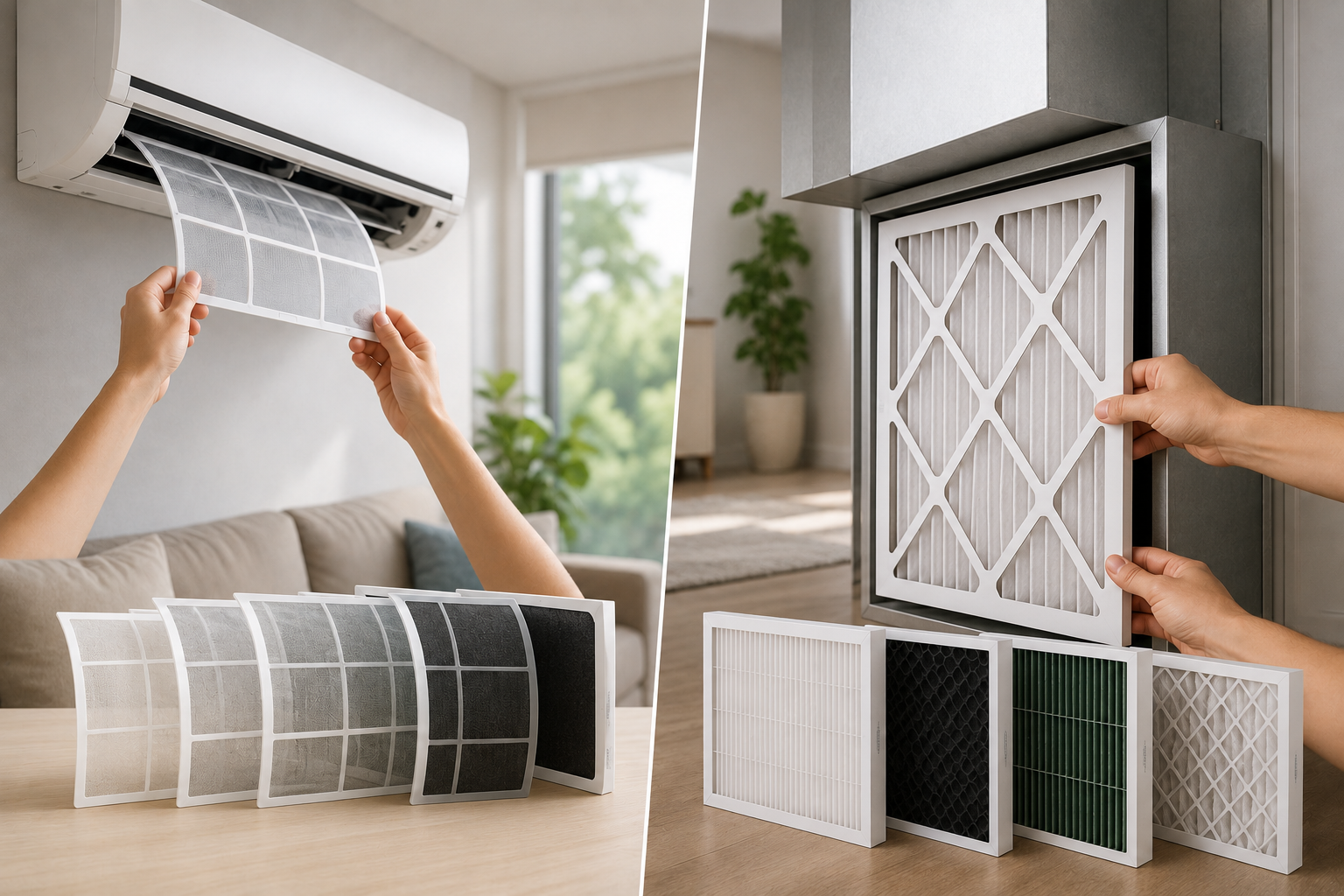
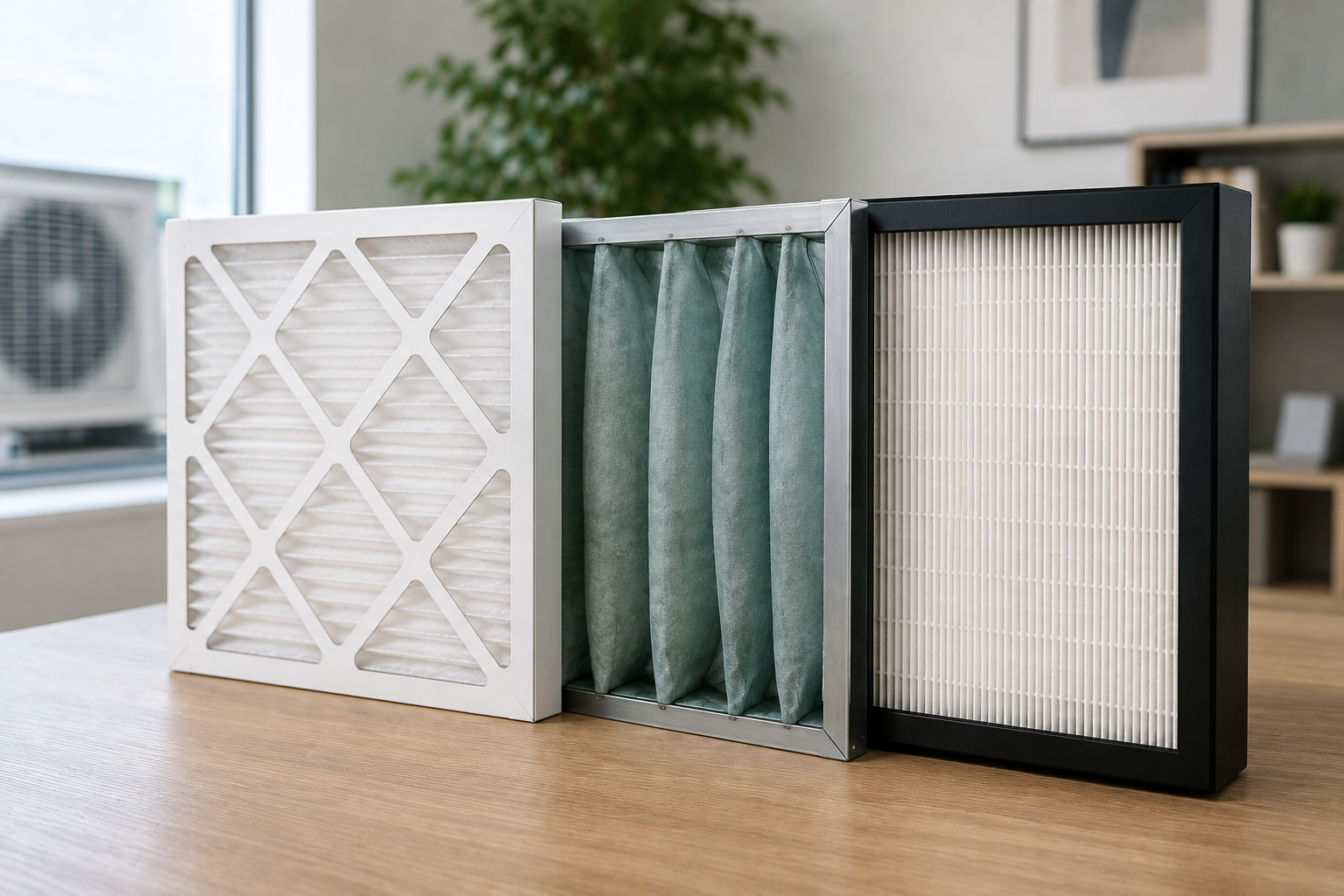
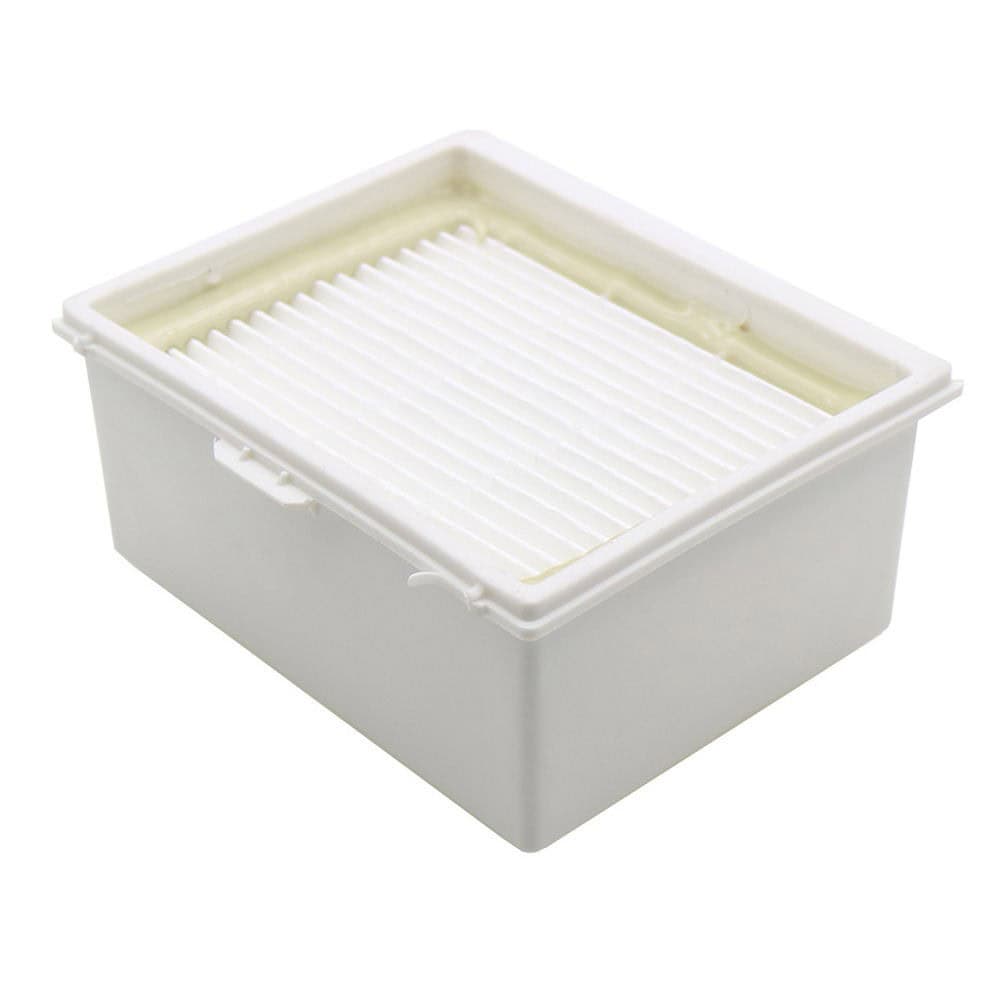
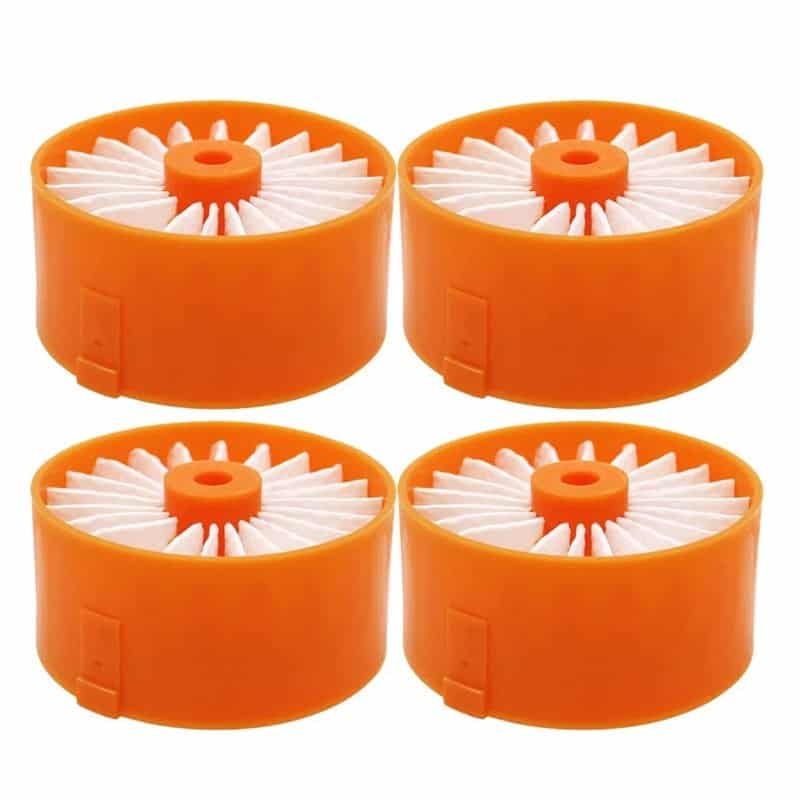
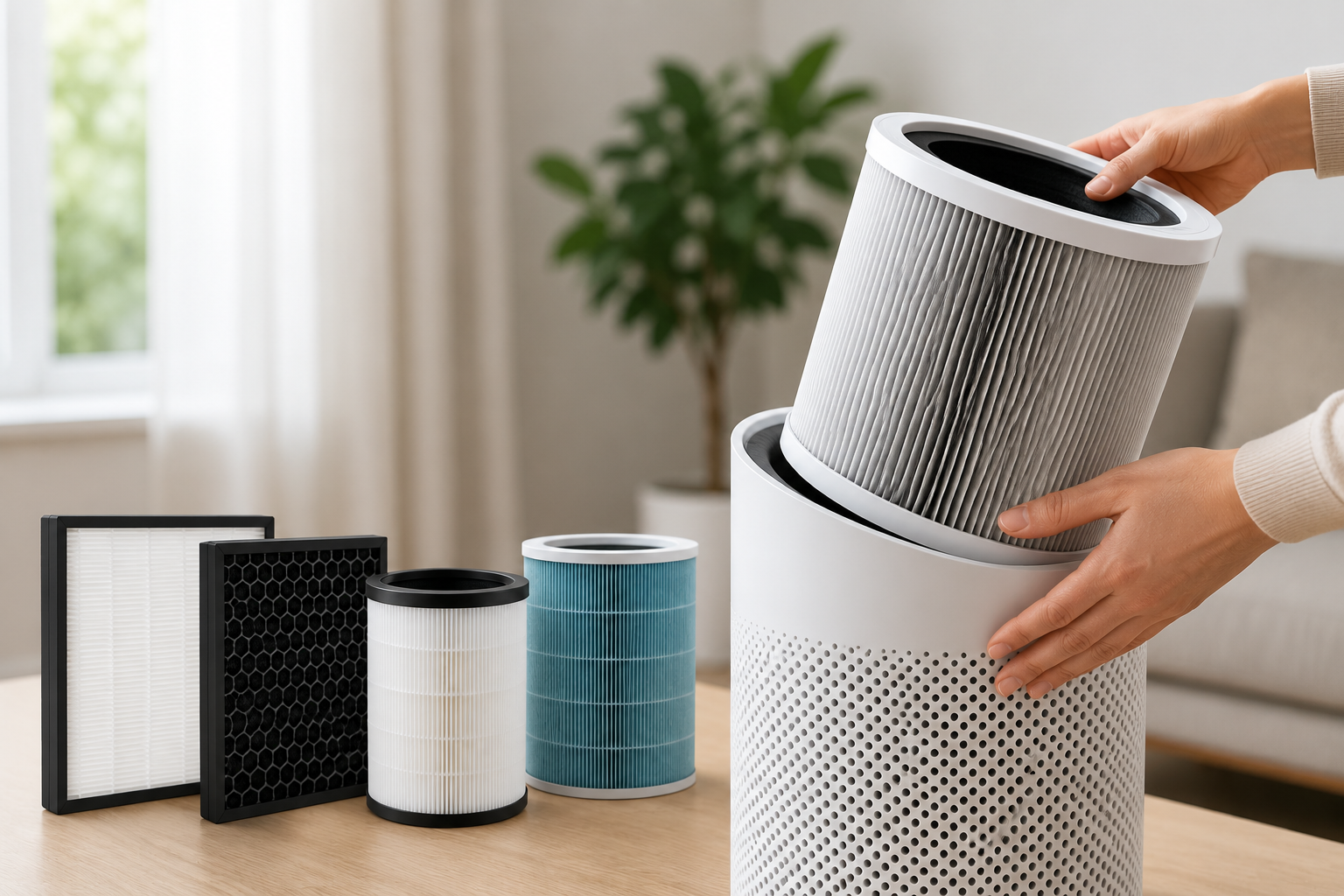
Not all air purifier filters are built the same way. Common designs include:
- Flat rectangular filters.
- Deep pleated panel filters.
- Cylindrical cartridges.
- Multilayer composite filters.
The shape is dictated by the purifier’s internal structure and airflow path. A cylindrical purifier needs a filter built for a cylindrical housing, and a flat purifier normally takes a rectangular filter assembly.
HEPA Grade
If the original unit uses a HEPA filter, confirm the required filtration specification before buying a replacement. The EPA describes HEPA as a pleated mechanical air filter that, under the standard definition, can theoretically capture at least 99.97% of particles at 0.3 microns.
Don’t assume a higher number automatically means a better filter. The purifier is engineered around a specific combination of filter area, media, pressure drop, and airflow, so the replacement needs to be compatible with that original system, not just impressive on paper.
Filter Media
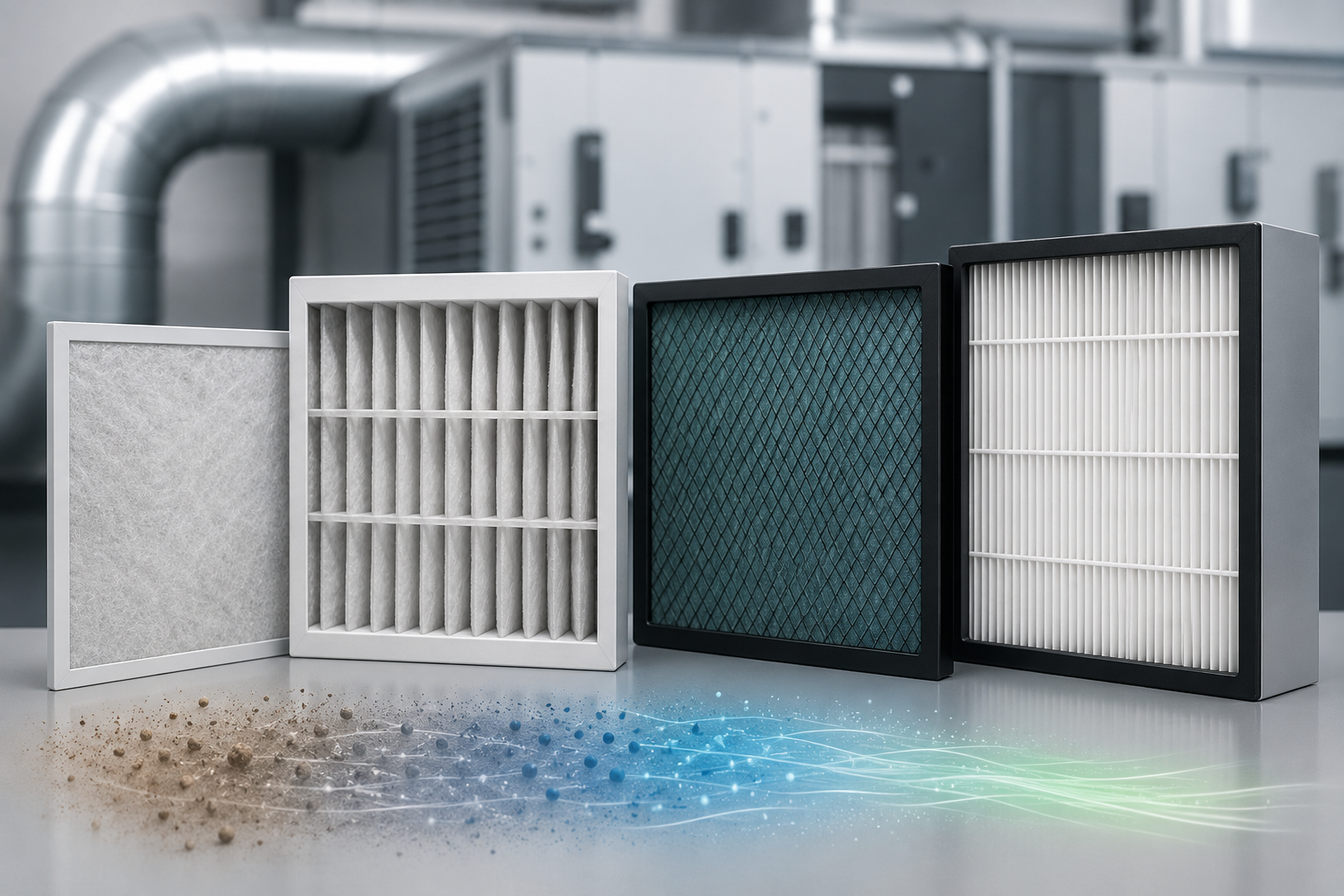
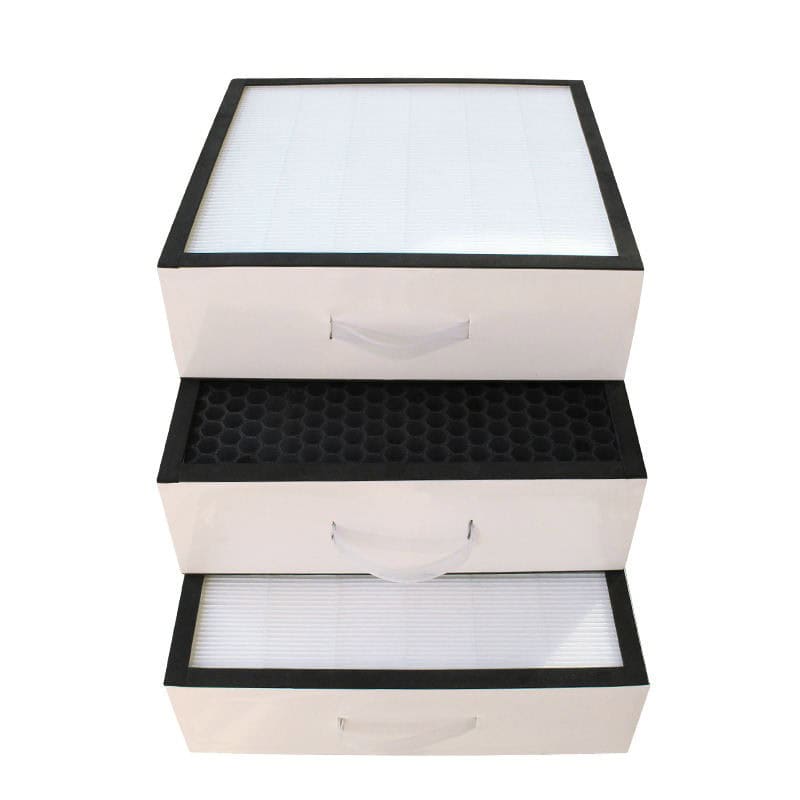
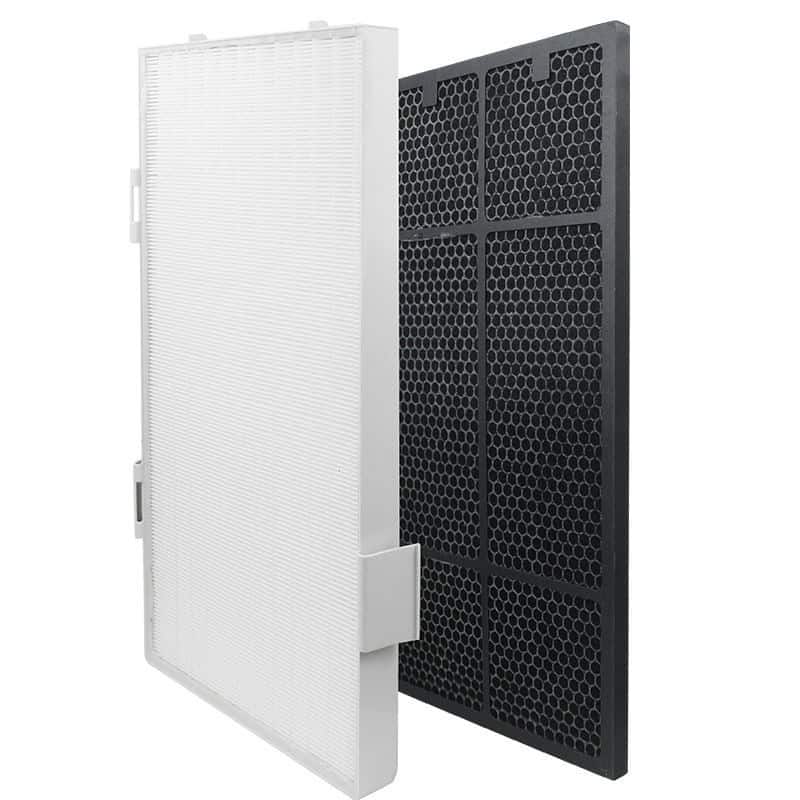
Filtration media is another key factor. A typical air purifier filter may combine a prefilter, a HEPA or high efficiency particle layer, and an activated carbon layer, though the exact structure varies by product.
The prefilter usually catches larger dust and hair before it reaches the finer filtration stage. The HEPA layer targets fine particles. Activated carbon gets added when odor control or certain gaseous pollutants are part of the job. The EPA similarly notes that many air cleaners use separate stages for particles and for gases.
Sealing and Gasket Design
The filter needs to sit securely inside the housing. Any gap around the edges lets air bypass the filter media entirely, which is why the gasket, frame, edge seal, and installation position all matter. A replacement filter shouldn’t just fit into the housing; it needs to preserve the intended airflow path too.
Airflow Direction
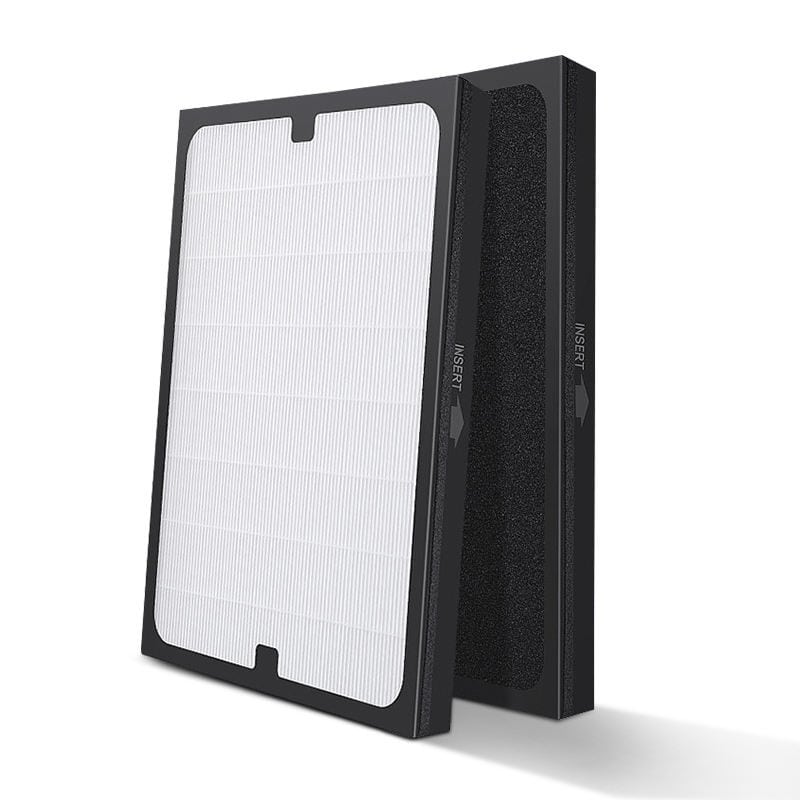
Check the airflow direction marked on the original filter. Some filter assemblies have a defined upstream and downstream side because the layers are arranged in a specific sequence, and installing the filter backward can throw off how the whole multistage system filters the air.
Air Purifier Filter Replacement vs. HEPA Filter Replacement
These two terms get used interchangeably, but they aren’t quite the same thing.
Air purifier filter replacement refers to swapping out the entire filter assembly used in the unit. HEPA filter replacement refers specifically to replacing the HEPA filtration stage. An air purifier’s replacement filter may include a HEPA layer, but the full assembly can also include a prefilter and an activated carbon layer, for example: outer prefilter, HEPA media, activated carbon.
In that case, replacing the whole air purifier filter isn’t the same thing as replacing only the HEPA media. This distinction matters when you’re shopping for replacements, because two filters can look nearly identical on the outside while having very different structures inside.
How Often Should You Replace an Air Purifier Filter?
There’s no universal replacement period that applies across every air purifier. Some manufacturers set a fixed interval. Others rely on filter life indicators based on operating hours or estimated loading.
Start with the recommendation for your specific model, then factor in how the unit actually gets used. A purifier running 24 hours a day racks up far more operating hours than one used for a few hours each evening, and a unit in a home with pets or heavy indoor particle sources will load its filter faster too.
Instead of only asking how many months an air purifier filter lasts, it helps to ask a more useful question: how much air has this filter actually processed, and how loaded is it right now? Filter life makes more sense when you consider it alongside operating hours, air quality, filter size, media area, and overall system design.
Can You Wash an Air Purifier Filter?
It depends entirely on the filter’s design. Don’t assume every filter in the unit can be washed just because the prefilter can be cleaned.
Many reusable prefilters are meant to be rinsed or vacuumed, while the main HEPA filter or composite filter is usually meant to be replaced. Water can damage certain filtration media or weaken the filter’s structure. Check the instructions for your specific model before cleaning anything, and if the manufacturer calls for replacement rather than washing, use a new compatible filter instead.
Should You Buy a Generic Air Purifier Replacement Filter?
Generic replacement filters can work well when they’re properly designed and tested for the intended machine, but the lowest price shouldn’t be the only thing you’re weighing. A compatible replacement should match the original on:
- Dimensions.
- Filter structure.
- Filtration media.
- Airflow resistance.
- Sealing.
- Filter grade.
- Installation method.
Two filters can share the same external dimensions while using completely different media or pleat structures inside. For an individual buyer, the main question is simply whether the replacement performs correctly in that specific machine. For distributors, importers, and appliance brands, the bar is higher. You need:
- Consistent dimensions.
- Stable filtration performance.
- Controlled pressure drop.
- Private labeling.
- Packaging.
- Repeat production you can count on.
Air Purifier Replacement Filters for OEM and Bulk Orders
Buying a filter for one machine is one thing. Sourcing filters as a distributor or an air purifier brand is another problem entirely, since a single order can call for hundreds or thousands of units that all need to hit the same specification. At that volume, manufacturing consistency matters far more than finding the lowest unit price. Here’s what a B2B buyer should be checking:
- Dimensional consistency: each production run needs to hold the same measurements batch after batch, so every filter drops into the target housing without extra adjustment.
- Media stability: the filtration material should perform the same way run after run, not just on the first sample.
- Predictable airflow resistance: the filter has to be engineered around the target purifier’s actual airflow profile, not something that only loosely matches it.
- Dependable sealing: the frame and gasket need to hold the airflow path in place and keep air from slipping around the filter unfiltered.
- Custom OEM packaging: brands and distributors often need their own labeling, cartons, barcodes, and packaging design built into the order.
- Ongoing supply: a real replacement filter program depends on the manufacturer repeating the same specifications order after order, not just getting one shipment right.
Why Air Purifier Filter Design Matters More Than Filter Efficiency Alone
A common mistake when comparing filters is judging them on a single number. Say Filter A is rated at 99.97% and Filter B is rated at 99.99%. The second number looks better on paper, but that alone doesn’t make Filter B the right replacement.
A filter is one part of a larger air moving system, and several factors work together to make it perform:
- Media efficiency.
- Filter area.
- Pleat depth.
- Airflow resistance.
- Fan capacity.
- Housing design.
- Sealing.
A filter with very high efficiency but too much resistance may not suit an air purifier that was engineered around a different filter entirely. This matters even more for OEM applications, where the right replacement filter isn’t necessarily the one with the highest number on the spec sheet. It’s the one that delivers the required filtration performance while working correctly with the target machine.
How to Find the Right Replacement Filter for an Air Purifier
If you’re replacing a filter on an existing unit, start with the model number, then compare the original filter against the replacement in this order:
- Model compatibility: does the replacement list the same air purifier model?
- Dimensions: do the length, width, height, or diameter match?
- Filter structure: is it the same flat, cylindrical, pleated, or composite build?
- Filtration grade: does it meet the required filtration specification?
- Media configuration: does it include the HEPA, prefilter, or activated carbon layers you need?
- Airflow and resistance: is it built for the target purifier’s airflow requirements?
- Sealing: does the frame or gasket create a proper fit inside the housing?
If any of these points are unclear, please request technical specifications from the manufacturer before placing a bulk order. Additionally, we provide compatibility guidelines to help you verify if a filter fits your specific air purifier model.
Custom Air Purifier Filter Replacement for Brands and Distributors
Not every air purifier uses a standard filter size. For appliance manufacturers, distributors, and private label brands, a custom replacement filter is often a better route than trying to force an off the shelf product to fit. Custom filter development can cover:
- Filter dimensions
- Pleat depth and spacing
- HEPA grade
- Activated carbon loading
- Frame material
- Gasket material
- Airflow direction
- Packaging
- Private labeling
- OEM and ODM production
The goal isn’t just a filter that physically fits. It’s a replacement filter that works correctly with the target air purifier and can be produced consistently at the volume you need.
HIFINE Air Purifier Replacement Filters
HIFINE supplies [replacement filters for air purifiers] for distributors, appliance brands, and other buyers who need standard or custom filter solutions. Available configurations can include HEPA filtration, multistage filter structures, and custom dimensions for different air purifier designs.
For buyers running OEM or bulk replacement programs, the filter media is only part of the picture. A few things need to work together:
- Filter dimensions.
- Pleat structure.
- Sealing.
- Airflow requirements.
- Packaging.
- Production consistency.
HIFINE also produces [H13 HEPA filters] and supports custom filter requirements for a range of applications.
If you’re comparing manufacturers, our guide on how to select an ISO certified filter manufacturer is a good place to start.
Air Purifier Filter Replacement: Final Checklist
Before ordering a replacement filter, run through these points:
- Model: does it fit the exact air purifier model?
- Size: do the dimensions match the original filter?
- Structure: is the filter flat, cylindrical, pleated, or multistage?
- Media: does it use the required filtration material?
- HEPA grade: does it meet the required specification?
- Airflow: is the pressure drop suitable for the purifier?
- Sealing: does the filter sit tightly inside the housing?
- Replacement interval: has the original filter reached the end of its recommended service life?
- Supplier: can the manufacturer deliver consistent quality across repeat orders?
For consumers, these checks help you avoid buying a filter that looks right but doesn’t actually fit. For B2B buyers, they’re a starting point for evaluating a long term replacement filter supplier.
Conclusion
Replacing an air purifier filter is more than a routine maintenance purchase. The right replacement filter needs to fit the unit, match its filtration requirements, preserve the intended airflow, and seal properly inside the housing.
For a consumer, the model number and original filter specifications are the best place to start. For distributors and appliance brands, the decision takes more digging. A few things come into play:
- Filter media
- Dimensions
- Pleat structure
- Pressure drop
- Sealing
- Packaging
- Production consistency
And once an air purifier filter is heavily loaded, damaged, or past its recommended service life, replacing it is almost always the better call rather than trying to stretch its use indefinitely.
For businesses looking for OEM and bulk air purifier replacement filters, HIFINE can provide standard and custom filter solutions built around the target equipment and application.