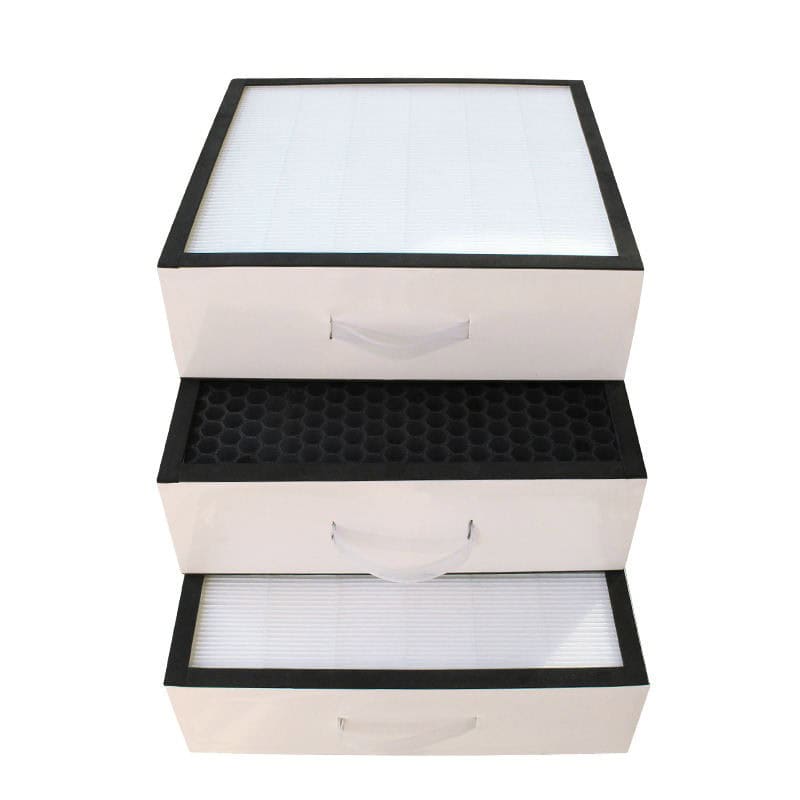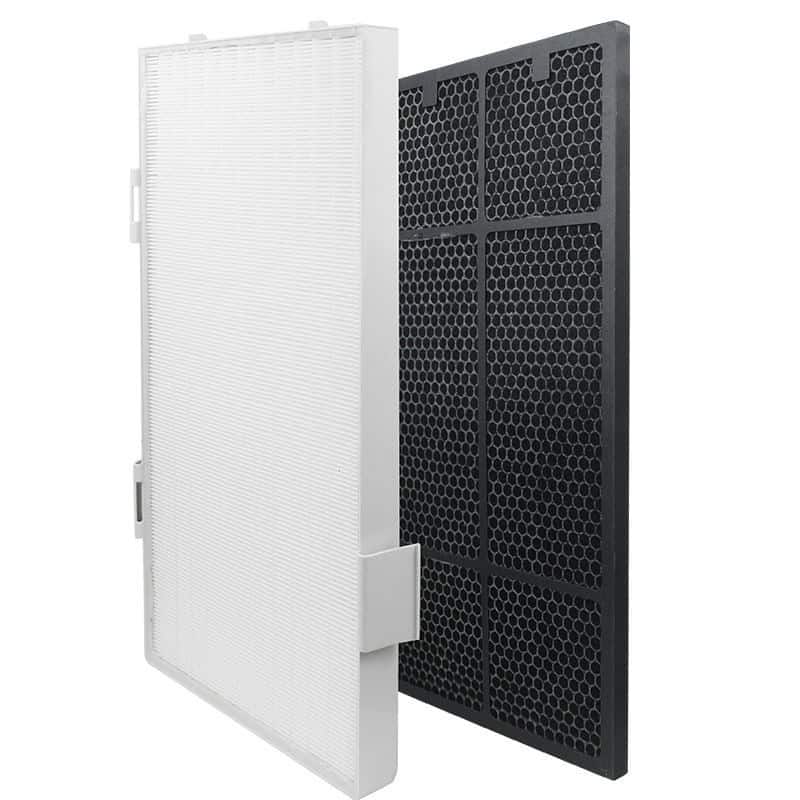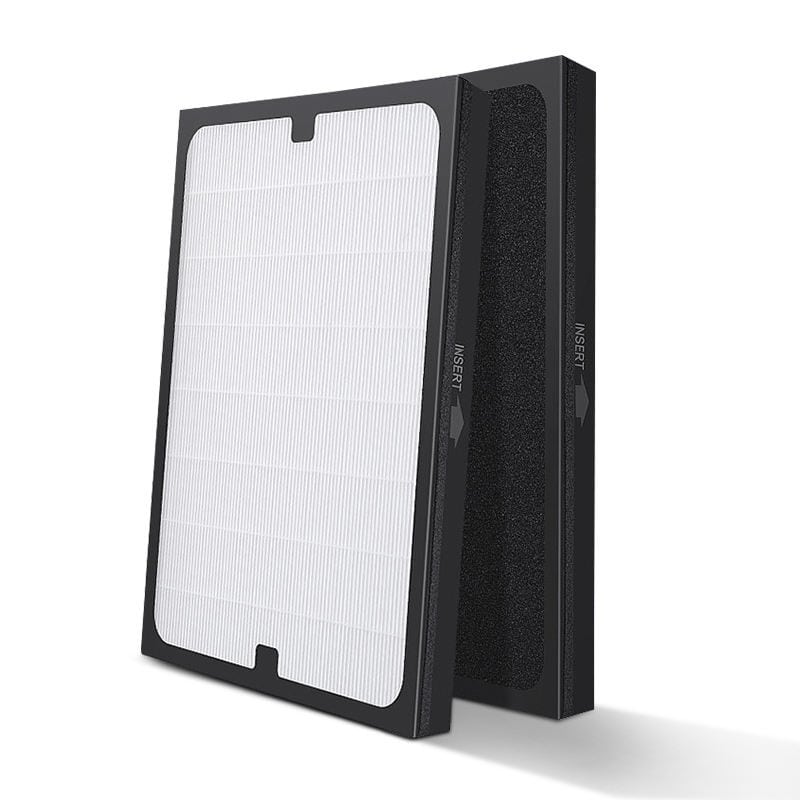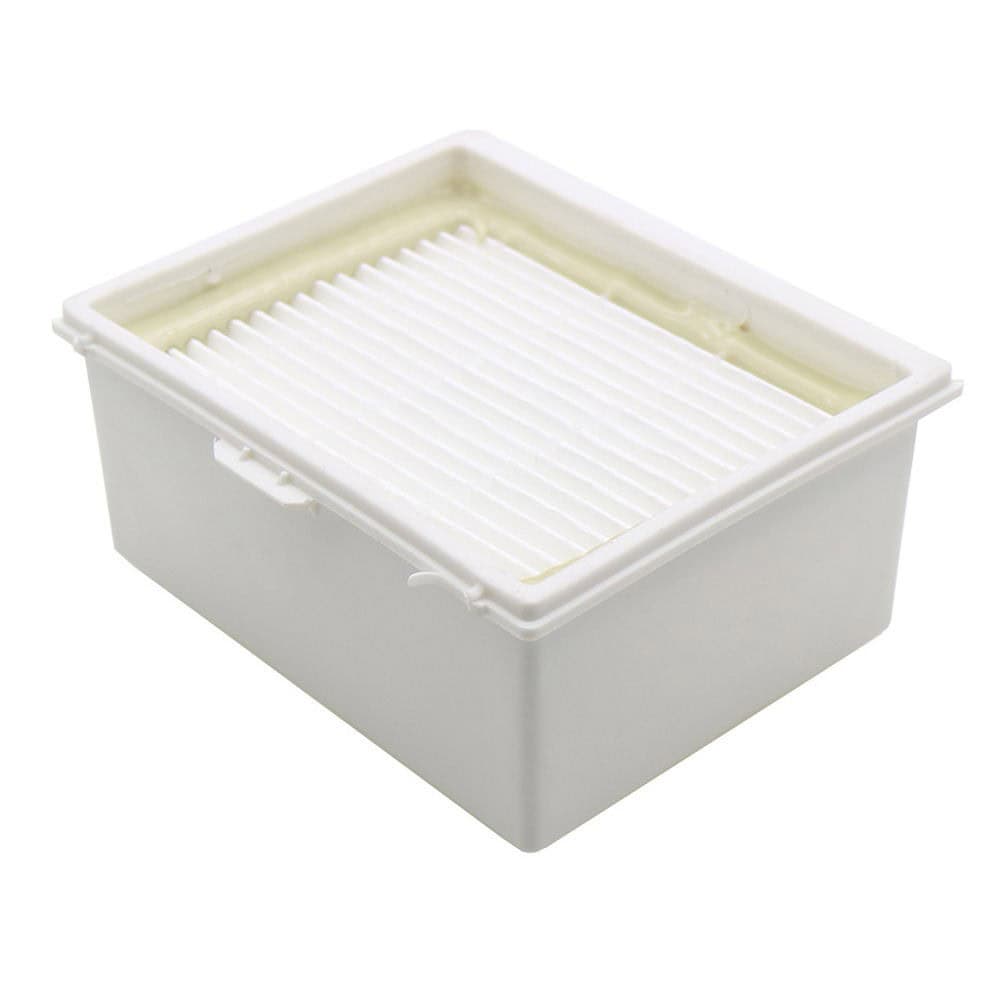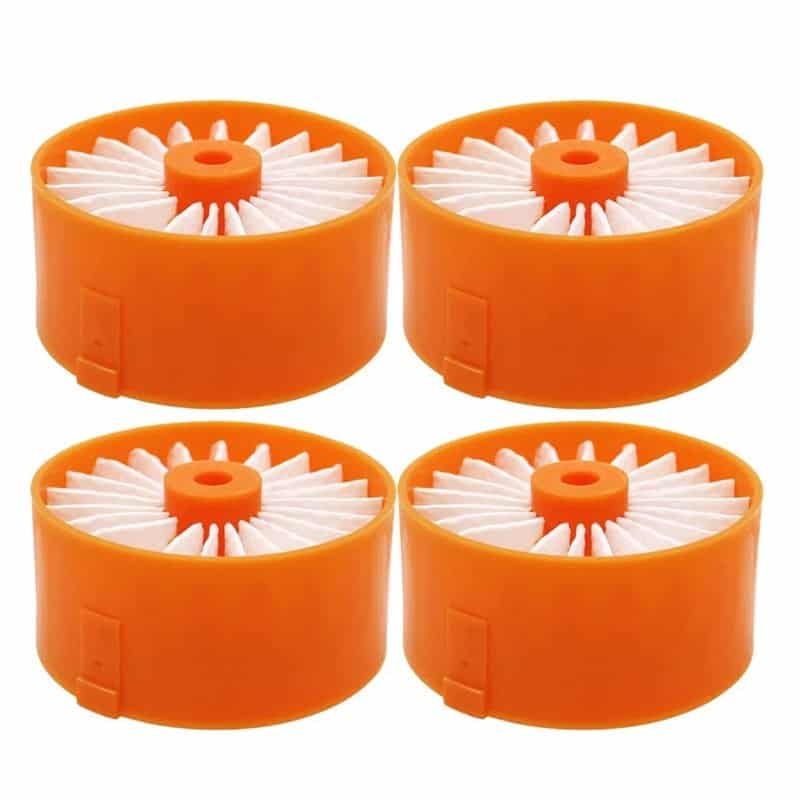
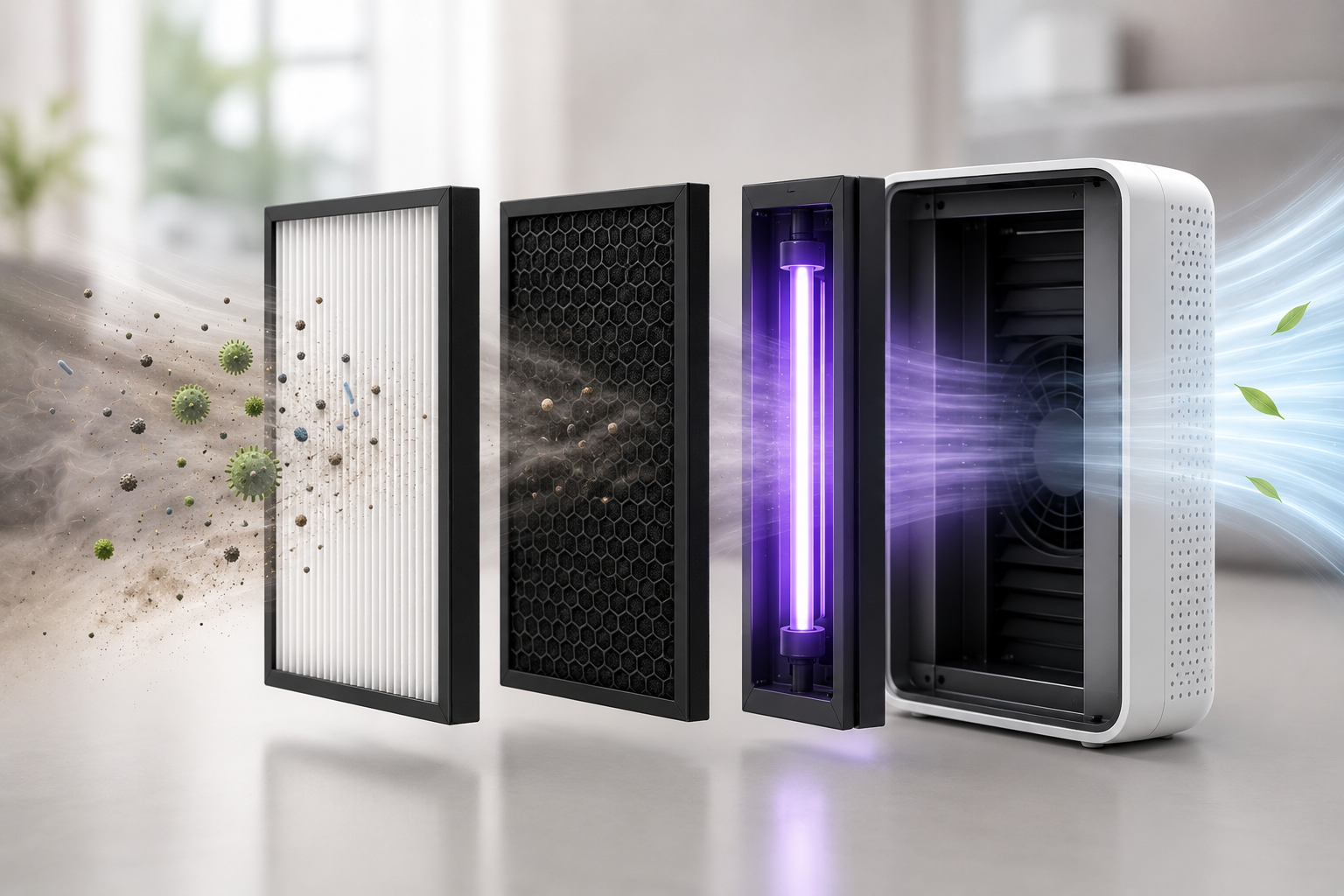
The three stage label on an air purifier box is one of the least regulated claims in the industry. No standard defines how much carbon counts as a carbon stage. No rule requires the UV C lamp to receive enough exposure time to inactivate anything. HEPA efficiency can be printed without a test report. This guide breaks down what each stage should deliver and what OEM buyers need to verify.
What Each Stage Actually Removes
A three stage system targets three different classes of contaminants because no single technology can handle all of them.
HEPA The Particle Barrier
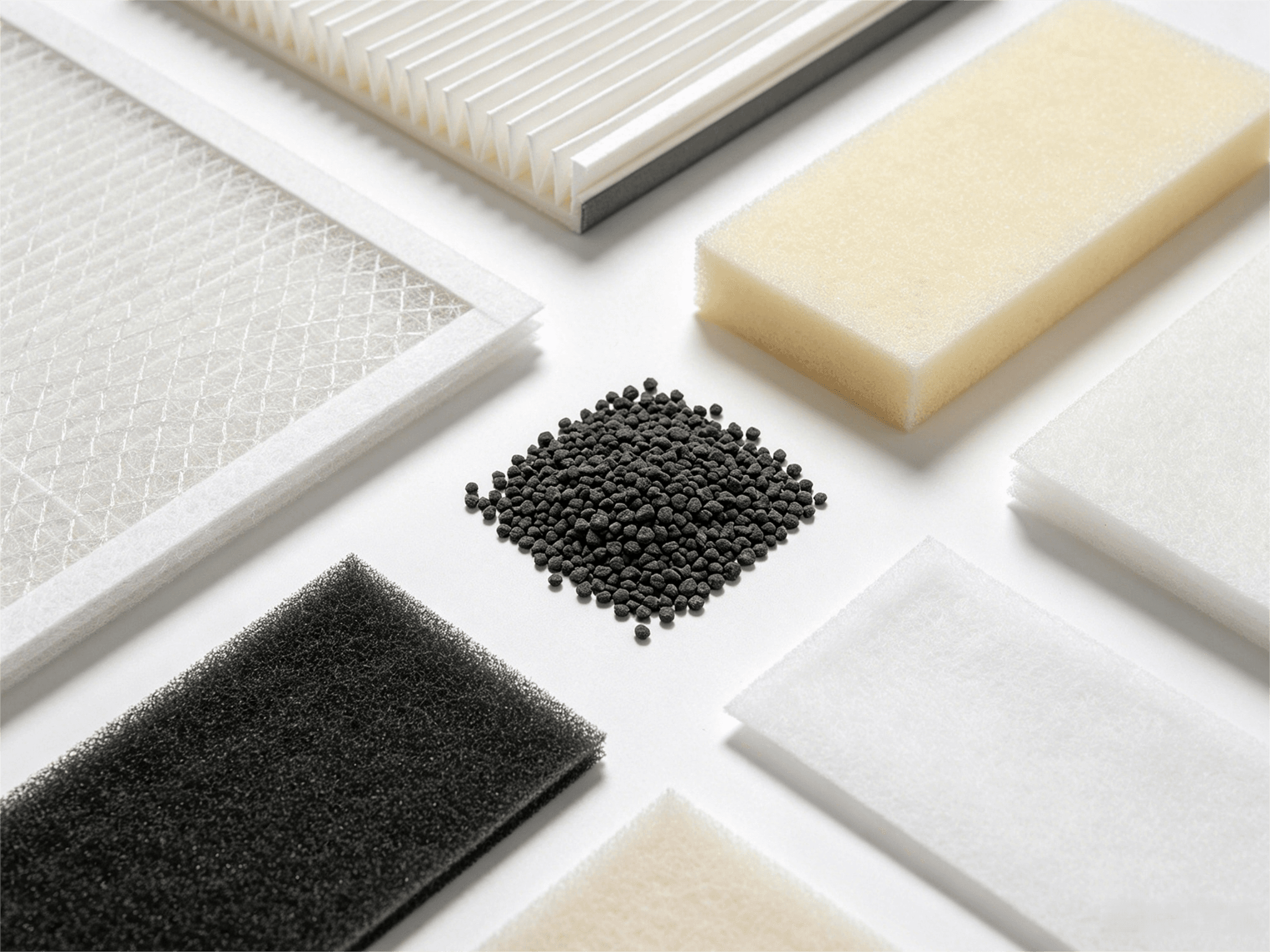
HEPA filtration uses densely packed micro fiberglass to mechanically trap particles. An H13 grade filter captures at least 99.95 percent of particles at its most penetrating particle size per EN 1822 standards. H14 raises that to 99.995 percent. This stage handles dust, pollen, mold spores, PM2.5, and particles carrying bacteria.
What HEPA cannot do is remove gases or kill microbes. A virus that lands on the filter surface remains biologically active unless a later stage inactivates it.
Activated Carbon The Gas Sponge
Activated carbon adsorbs volatile organic compounds, odors, and smoke gases through its porous surface. The key specification is actual carbon weight and quality, not the word carbon on the label. A filter with 800 grams of pelletized carbon with a high iodine value will last roughly four times longer than one with 200 grams of carbon coated foam.
Carbon does nothing for particles. It also has a finite capacity. Once the pores fill, it stops working and can even release contaminants back into the airstream.
UV C The Microbe Inactivator
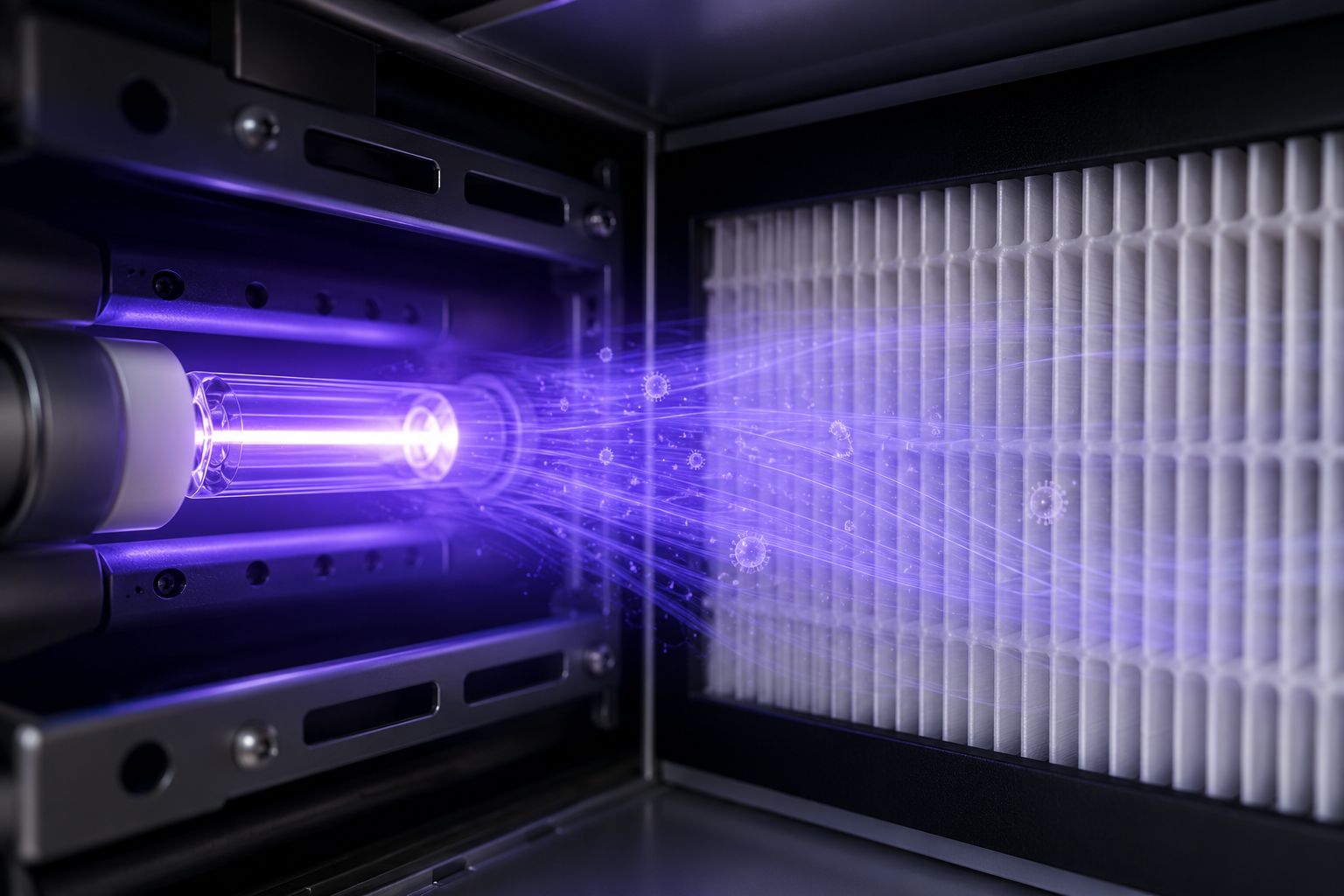
UV C light at 254 nanometers damages the DNA and RNA of microorganisms, preventing them from reproducing. The EPA recognizes UV C as an effective method for inactivating bacteria, viruses, and mold spores in air systems when applied with sufficient dosage.
The catch is exposure time. Air moving too fast past a weak lamp receives an insufficient dose. A lamp that produces ozone creates a secondary pollution problem. Any UV C stage should be ozone free and sized for the actual airflow rate.
Why the Order Changes Everything
The sequence of stages is not arbitrary. Each stage protects the next one and improves its performance.
In a correctly designed system, air flows through a pre filter first to catch large debris. Then HEPA removes fine particles. Then activated carbon handles gases. Finally UV C inactivates any remaining microbes in the cleaned airstream.
Putting UV C before HEPA is a common design mistake. Dust and pollen in untreated air block UV light from reaching microbes, reducing inactivation efficiency. The particles also coat the lamp sleeve, further weakening output over time.
Placing carbon after UV C is safe for ozone free lamps. If the lamp produces even trace ozone, however, the ozone oxidizes the carbon surface and shortens its life significantly. This is why ozone free certification matters more than most buyers realize.
When Three Stages Are Worth It and When They Are Not
Three stage filtration costs more and requires more maintenance. It earns its place in specific environments but is overkill in others.
| Environment | Recommended Stages | Reason |
|---|---|---|
| Residential bedroom | HEPA plus carbon | Dust and odors are the main concern, UV is rarely needed |
| Hospital and clinic areas | HEPA plus carbon plus UV C | Infection control requires microbe inactivation |
| Office building HVAC | HEPA plus carbon | High airflow makes UV dosage difficult to guarantee |
| Laboratory and cleanroom | H14 HEPA plus carbon | UV can interfere with sensitive equipment |
| Pet care and veterinary | HEPA plus high capacity carbon | Heavy dander and odor load, UV is optional |
| School classrooms | HEPA plus carbon plus UV C | High occupancy increases airborne transmission risk |
| Wildfire smoke season | HEPA plus carbon | Smoke has particulates and gases, UV adds no benefit |
The pattern is clear. UV C adds value where infection control is a stated requirement. Carbon adds value where gases or odors are present. HEPA is the foundation in every scenario.
What to Verify Before Sourcing
If you are an OEM brand or private label buyer evaluating three stage filter suppliers, these details separate a working system from a marketing label.
Confirm the HEPA grade with test reports. H13 is standard for residential products. H14 is required for medical and cleanroom applications. Ask for EN 1822 scan test results, not just a claim on a spec sheet.
Ask for the actual carbon weight per filter and the iodine value. A supplier that cannot provide these numbers is likely using a minimal carbon layer. For odor heavy applications, specify pelletized carbon in a deep bed rather than carbon impregnated foam.
Verify the UV C wavelength and ozone output. The lamp should emit at 254nm and be certified ozone free. Request the dosage calculation in microwatt seconds per square centimeter for your target airflow.
Check that the filter housing prevents air bypass. Even a two millimeter gap between the frame and housing lets unfiltered air pass through, rendering all three stages partially ineffective.
Summarize
HEPA, carbon, and UV C are not interchangeable. They target particles, gases, and microbes respectively. A three stage filter is only as good as its weakest layer and its sequence design. For OEM buyers, the decision is not whether to print three stages on the box. It is whether each stage is properly specified, tested, and positioned to actually deliver.
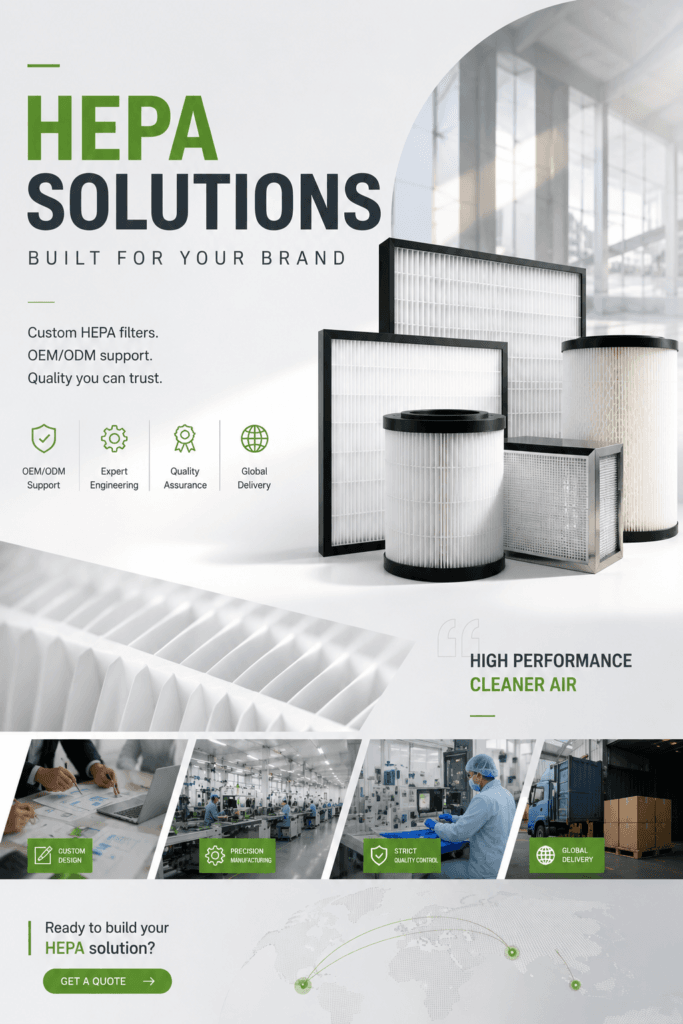
HIFINE custom-manufactures three-stage HEPA particulate air filters for global air purifier brands and HVAC equipment manufacturers. We offer H13 and H14 grade HEPA filter media and high-capacity activated carbon layers. Please send us your specifications, and we will provide you with a quote within 24 hours.