If you sit through any HEPA cartridge design review with experienced filtration engineers, you will hear the same advice within the first five minutes. Build as much effective filtration area into the design as you reasonably can.
This is not a habit or a preference. It comes from decades of test data and field failures. Increasing filtration area during the initial design phase improves every single performance metric that matters for a HEPA filter, and it does so at a lower total cost than almost any other change you can make.
Many new product teams do it backwards. They lock the housing size first, then squeeze a filter into it. That almost always leaves the filtration area too small, and the product never hits its targets without a louder, more expensive fan. Starting with filtration area first avoids that entire problem.
More Area Lowers Face Velocity and Protects Rated Efficiency
HEPA efficiency ratings are not magic numbers that hold true at any airflow. They are measured under controlled test conditions at a specific face velocity, which is the speed of air moving across the filter surface.
Under the EN 1822 standard, every HEPA grade is certified at a defined test airflow. H13 filters must reach 99.95 percent efficiency at the most penetrating particle size, and H14 filters must reach 99.995 percent. Push the face velocity above the rated level, and real world performance drops.
The reason is simple physics. The particles used for HEPA testing sit right at the boundary between two capture mechanisms. Larger particles get caught by inertia when they slam into fiber strands. Smaller particles drift randomly through Brownian motion and stick to fibers. At the 0.3 micron range, neither mechanism works at full strength, which is why that size is the hardest to capture. When air moves faster, particles spend less time inside the fiber matrix, and both capture mechanisms weaken.
A published study on HEPA and ULPA filters measured this directly. When face velocity increased from 1.58 cm per second to 4.9 cm per second, pressure drop rose from 70 Pa to 200 Pa, and efficiency shifted away from certified levels. In practical terms, an H13 media that passes certification at low velocity may perform closer to H12 levels at high velocity.
Increasing total filtration area is the only reliable way to lower face velocity for any given airflow. That keeps efficiency at the rated level across the full range of fan speeds.
| HEPA Grade | Efficiency at MPPS | Local Efficiency Scan | Common Test Airflow for 610 by 610 mm |
|---|---|---|---|
| H13 | 99.95 percent | 99.75 percent | 1700 cubic meters per hour |
| H14 | 99.995 percent | 99.975 percent | 1700 cubic meters per hour |
Source: EN 1822 standard and industry filtration test data.
Larger Area Cuts Pressure Drop, Energy Use, and Noise
Pressure drop is the single biggest factor in how hard a fan has to work. For a given airflow and media type, pressure drop follows a clear relationship with velocity. At low velocities, it rises roughly in line with speed. At higher velocities, it climbs much faster, close to the square of velocity.
Industry reference data shows this clearly. At 500 feet per minute, pressure drop is roughly four times higher than at 250 feet per minute for the same media. Even a 20 to 25 percent increase in fan speed can push resistance up by 50 to 60 percent.
This has cascading benefits for product design. Lower pressure drop means you can use a smaller, quieter fan to hit the same airflow target. For residential air purifiers, noise level is one of the most sensitive factors for buyers. For commercial HVAC systems, lower pressure drop translates directly to lower energy costs over years of continuous operation.
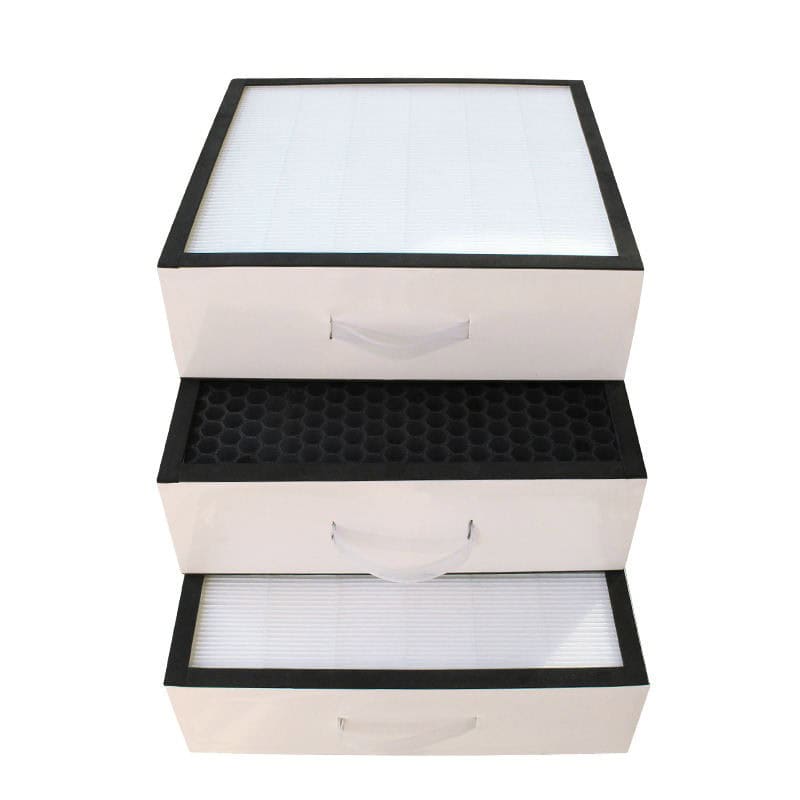
A V bank HEPA filter measuring 305 by 610 by 292 mm demonstrates this principle in practice. It handles 1700 cubic meters per hour with an initial pressure drop of just 249 Pa, because the V shaped layout packs far more media area into the same housing than a flat panel design.
This is why engineering teams focus on area before they debate media upgrades. Stepping up from H12 to H13 media usually increases pressure drop. Increasing filtration area improves efficiency and reduces pressure drop at the same time. You can read more about how design choices affect energy performance in our guide to normal pressure drop ranges for HEPA filters.
More Area Means More Dust Holding Capacity and Longer Service Life
Dust holding capacity is the total mass of particles a filter can capture before it clogs and airflow drops below acceptable levels. It scales almost directly with effective filtration area.
More filter surface means more space to trap dust, pollen, soot, and other airborne particles before the pleats fill in. For end users, this means longer replacement intervals.
Real product data shows the scale of this effect. A standard H13 filter measuring 610 by 610 by 292 mm typically holds 800 to 1200 grams of dust before reaching terminal resistance. An H14 filter of the same size holds 750 to 1100 grams. Designs with larger media area and gradient density structure can increase dust holding capacity by over 50 percent, extending replacement cycles to 18 to 24 months depending on the environment.
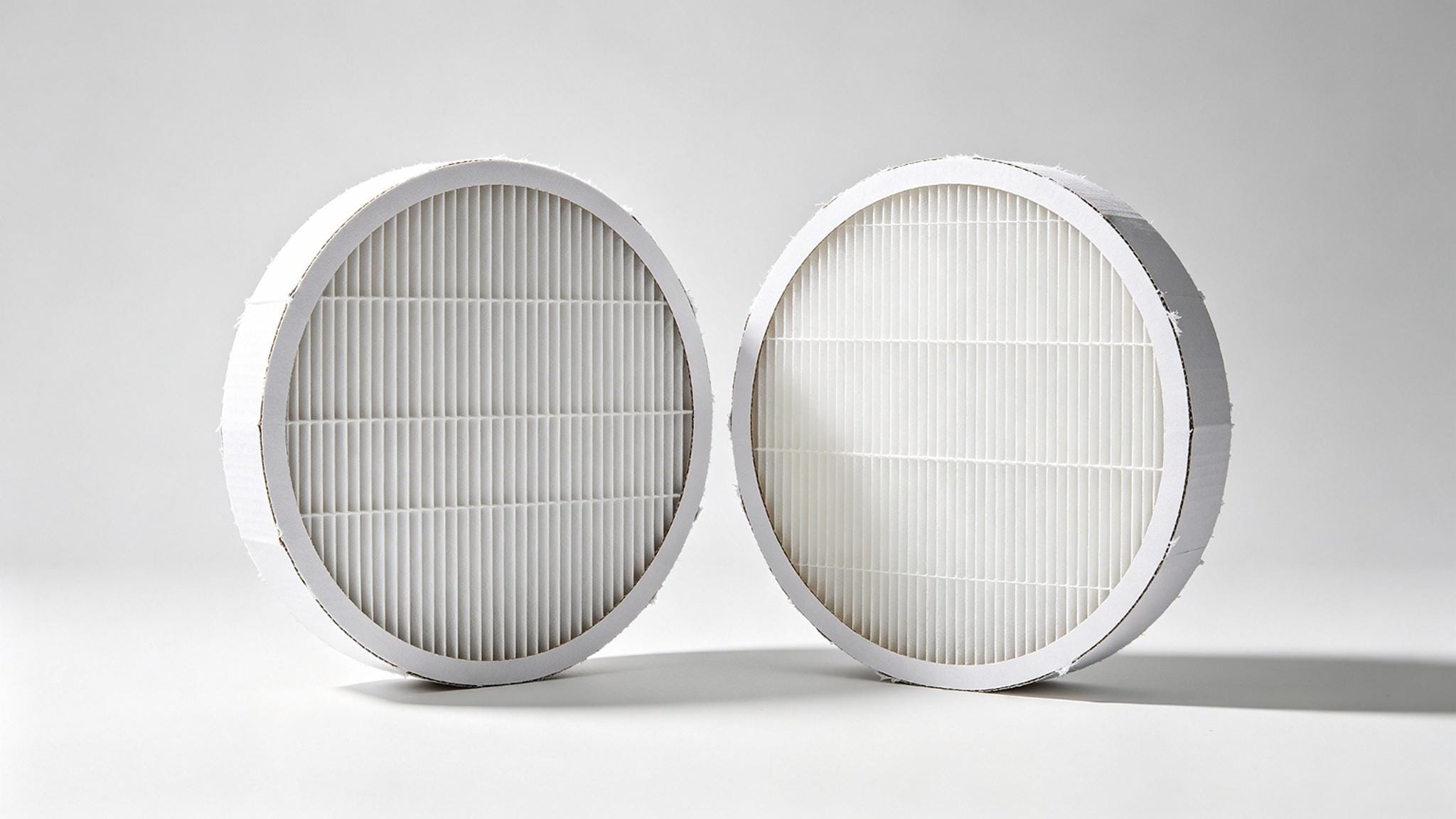
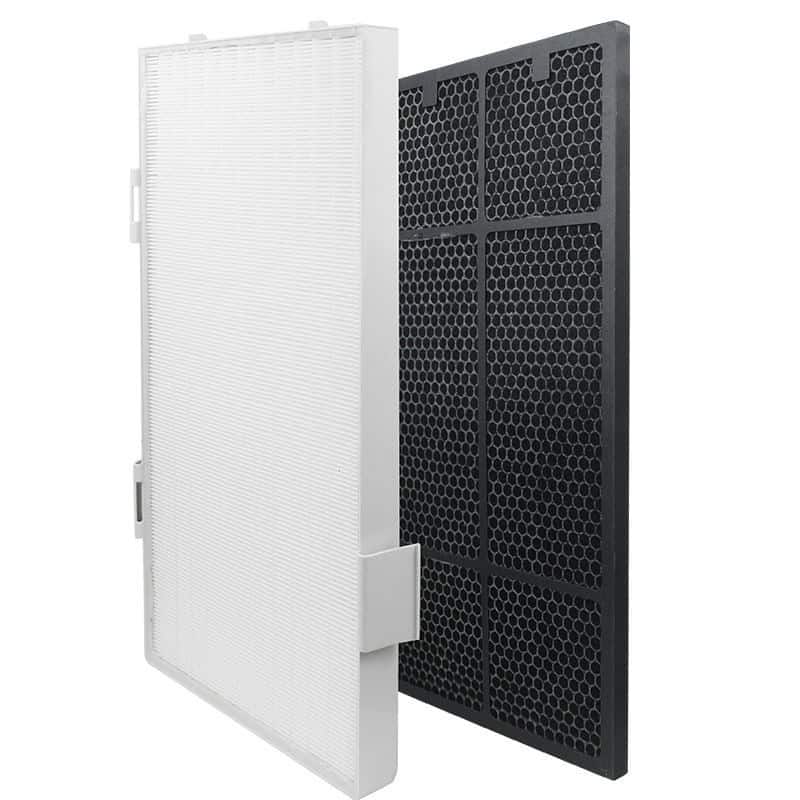
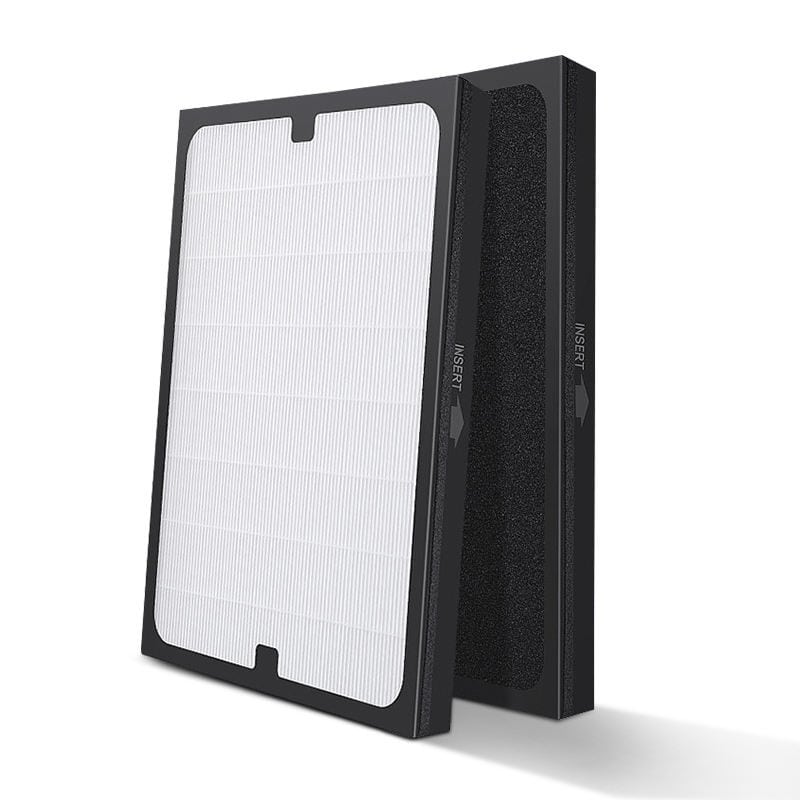
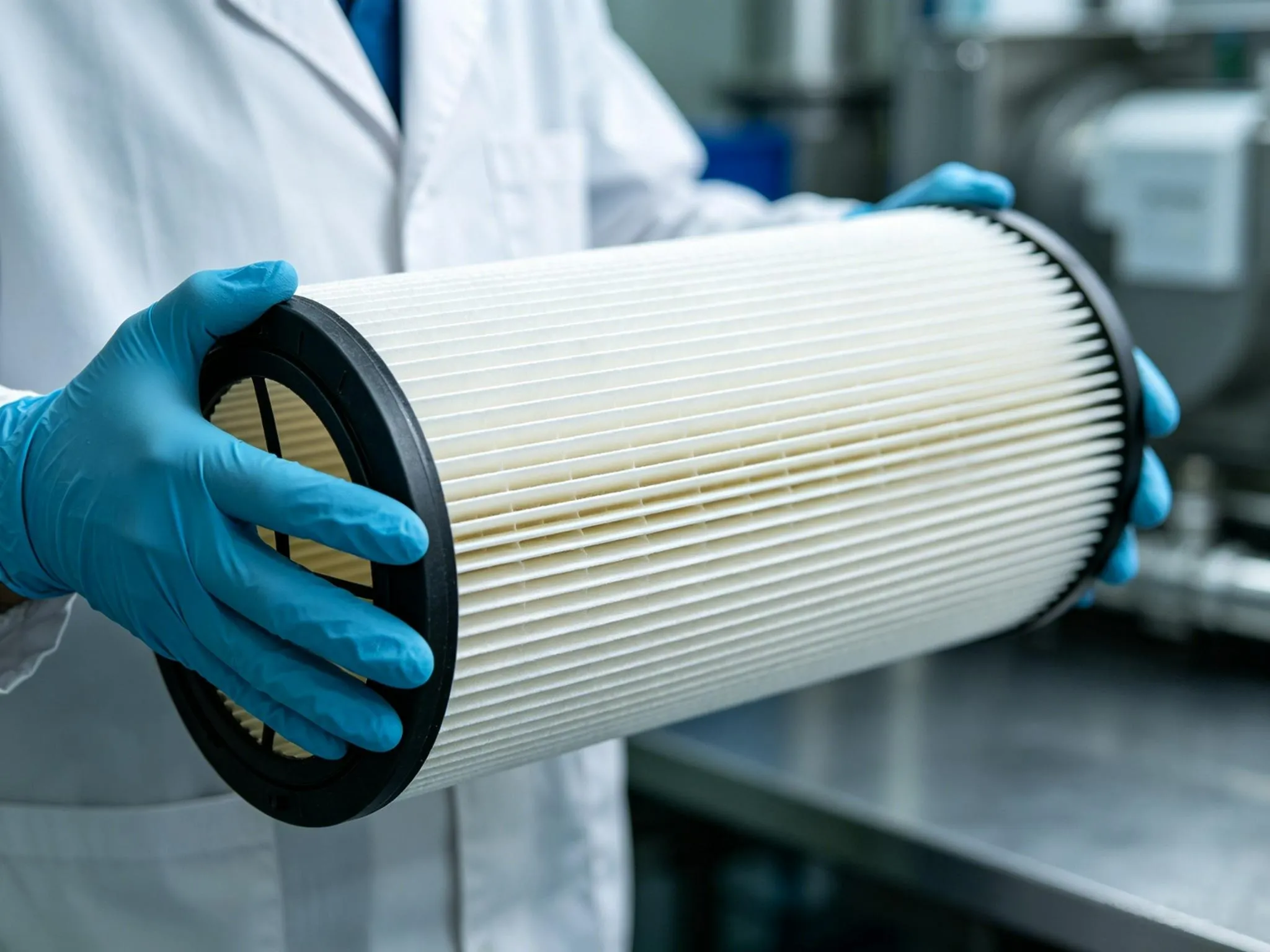
Deep pleat designs take this even further. With pleat depths of 25 to 50 mm and spacing of 2 to 5 mm, these filters achieve 2 to 4 times more filtration area per unit volume than standard HEPA designs. A 100 mm thick filter element can expand to 4 to 6 square meters of media area. For industrial cartridge filters, a single large diameter unit measuring 350 by 1000 mm with wide shallow pleats can reach 16 to 18 square meters of effective filtration area.
| Filter Design | Typical Media Area | Dust Holding Capacity | Service Life Range |
|---|---|---|---|
| Standard flat panel H13 | 2 to 3 square meters | 400 to 600 grams | 6 to 12 months |
| Deep pleat H13 | 4 to 6 square meters | 800 to 1200 grams | 12 to 18 months |
| V bank H13 | 6 to 8 square meters | 1000 to 1500 grams | 18 to 24 months |
Source: Industry product catalogs and independent filtration testing.
For commercial and industrial customers, the labor cost of changing a filter and the downtime from taking equipment offline often cost far more than the filter itself. Longer service life directly reduces total cost of ownership. For consumer products, longer filter life is a clear selling point that sets products apart from competitors.
Extra Area Builds in Margin for Real World Conditions
Laboratory test conditions are never the same as real world use. Airflow varies across fan speed settings. Dust concentrations change by environment and season. Filter media has minor batch to batch variations.
If you design a filter to barely meet requirements at ideal conditions, any real world deviation will push it out of spec. Undersized filtration area leaves zero room for error.
Building extra filtration area into the initial design creates a safety margin. It ensures your filter still meets efficiency and airflow targets when the fan runs on high, when the environment is dustier than average, or when normal manufacturing variation introduces minor differences in media performance.
The Important Limit More Pleats Are Not Always Better
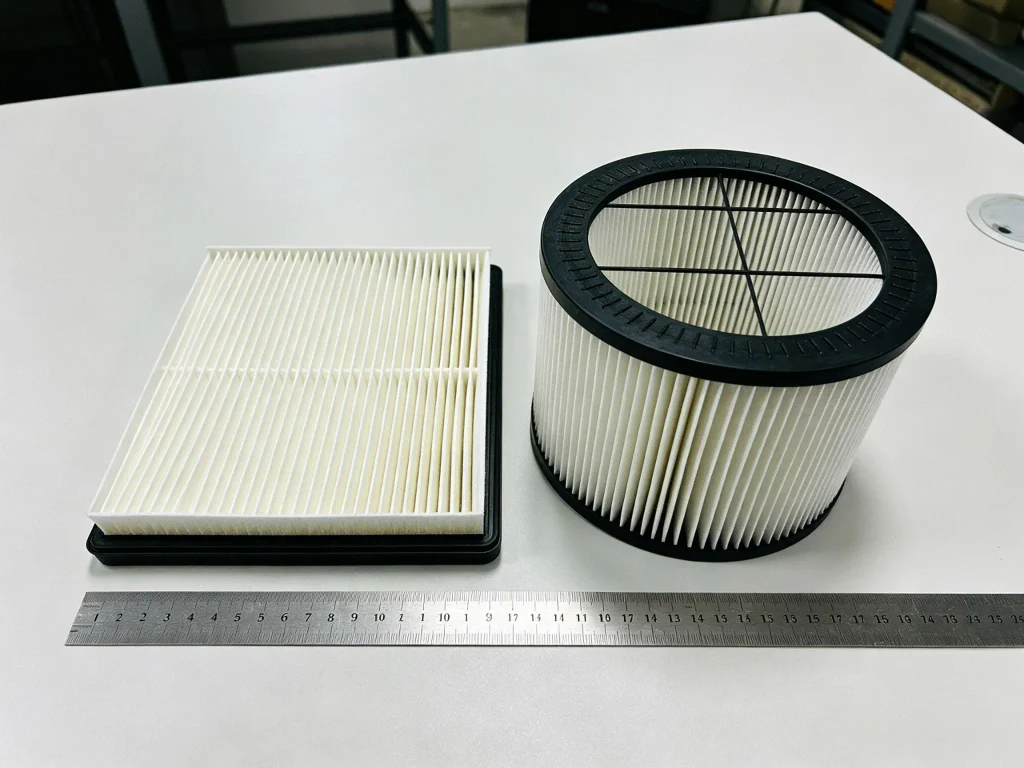
Increasing filtration area usually means adding more pleats to the filter media. But there is a hard limit, and good engineers know where to stop.
If you pack pleats too tightly together, the gaps between pleats become too narrow. Air cannot reach the lower portion of each pleat, so only the top edge of the media actually catches dust. This wastes filter material, causes uneven loading, and can actually increase pressure drop instead of reducing it.
Experienced engineers calculate an optimal pleat density for each cartridge size and airflow target. The goal is not maximum pleat count. It is maximum effective filtration area, where the entire media surface sees uniform airflow and contributes equally to particle capture.
What This Means for OEM and Private Label Product Development
For brands building new HEPA based products, getting filtration area right in the initial design phase saves enormous time and cost later. Fixing a performance shortfall by resizing tooling, upgrading fans, or reformulating products after launch is far more expensive than getting the area right at the start.
At HIFINE, we work with OEM and private label clients from the earliest concept stages. Our engineering team starts with your performance targets, including airflow rate, efficiency grade, expected service life, and maximum allowed pressure drop, then calculates the minimum effective filtration area needed to hit them. We optimize pleat design, media selection, and housing dimensions to meet your size and cost targets without sacrificing core performance.
We do not cut corners on filtration area to save a few cents on media, because we know consistent real world performance is what builds long term trust between your brand and your customers. If your team is in the early design phase of a HEPA filter product and needs support with filtration area optimization, media selection, or custom cartridge engineering, you can learn more about our full OEM and ODM capabilities at https://hifinefilter.com/
In short, increasing filtration area is not overengineering. It is the most cost effective way to lock in genuine HEPA performance, reduce operating costs, extend service life, and build the reliability that makes a filtration product stand up to real world use. That is why experienced engineers make it their first priority, not an afterthought.