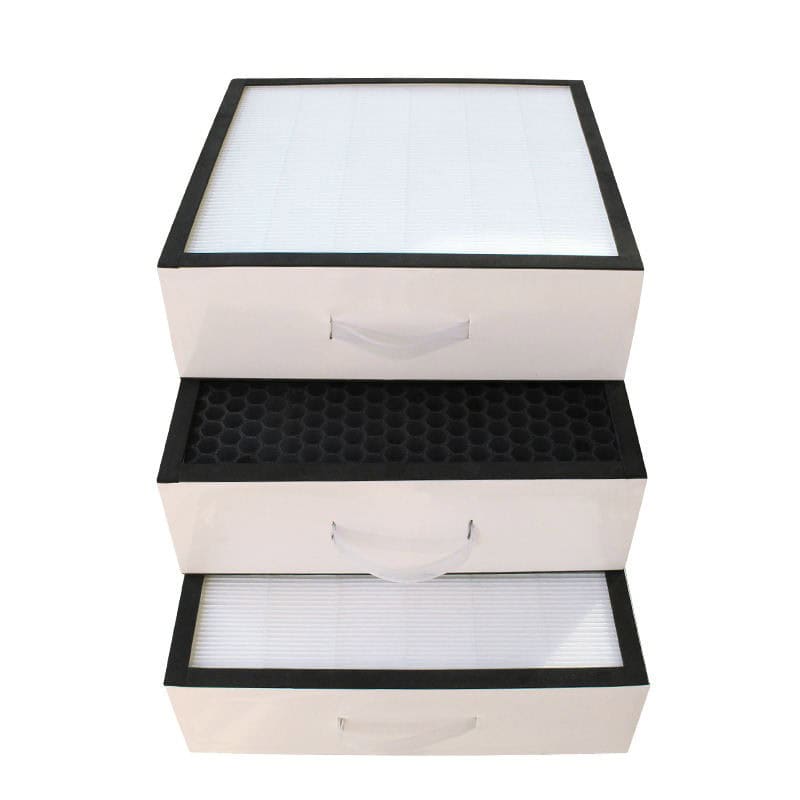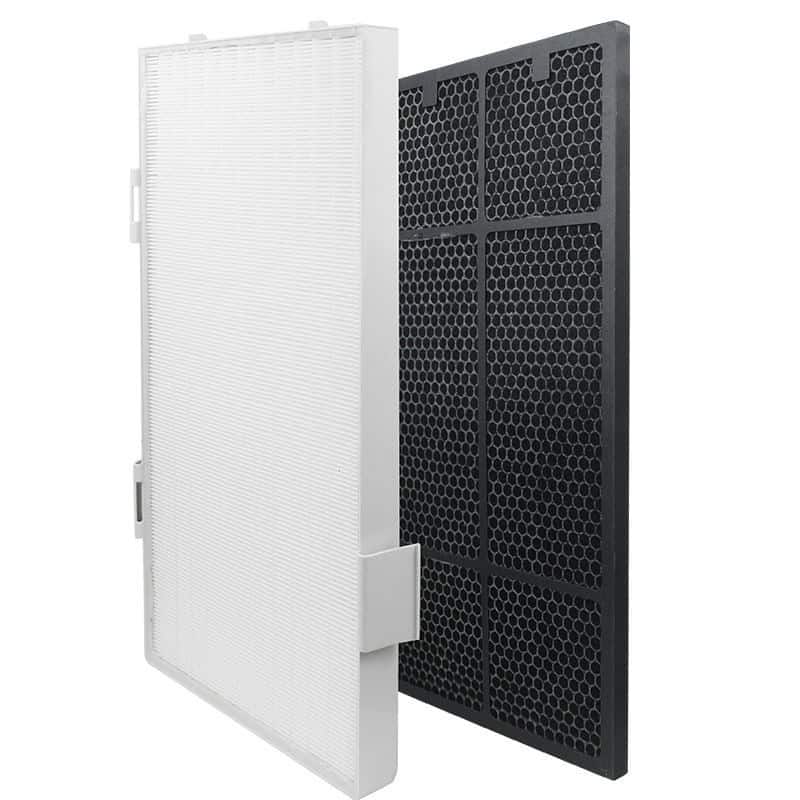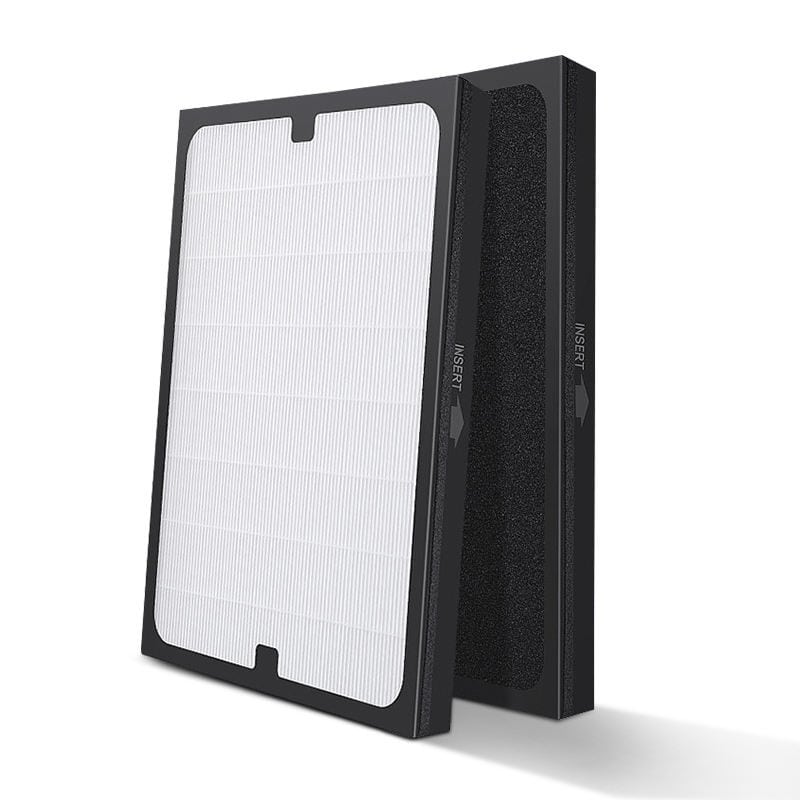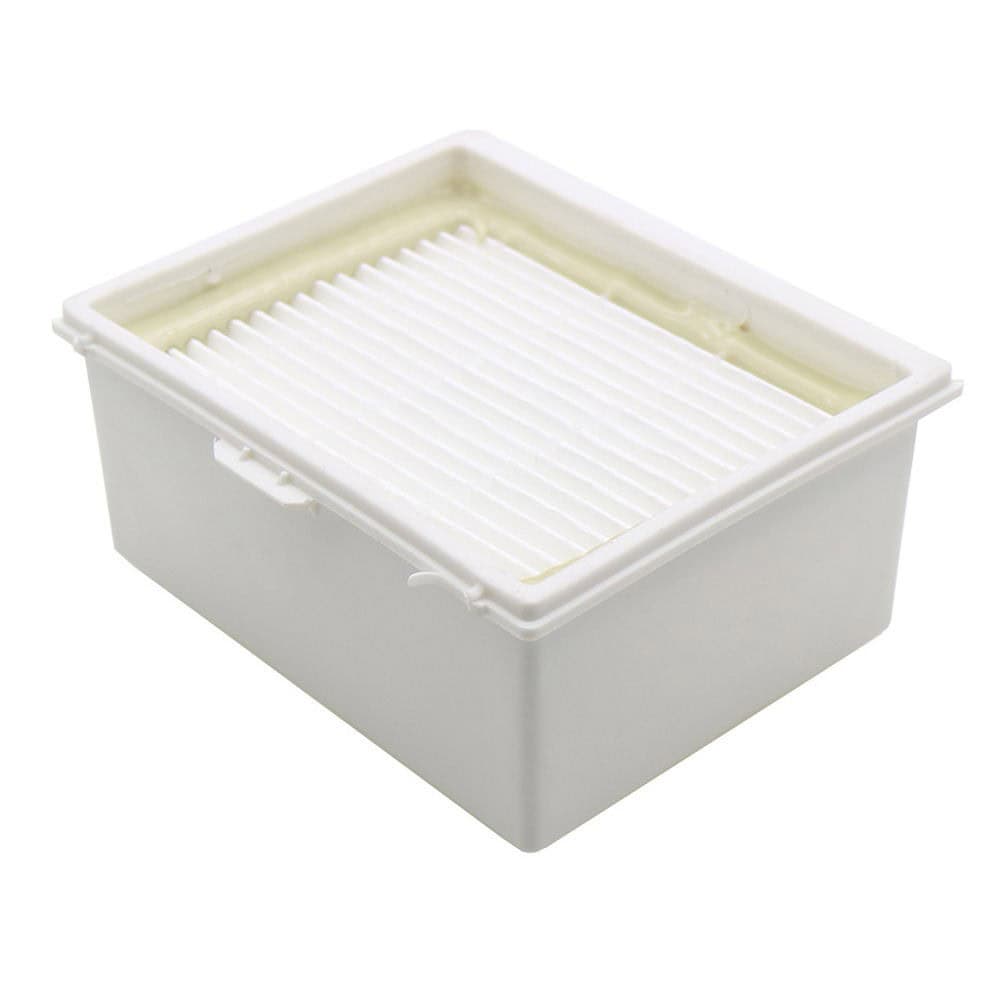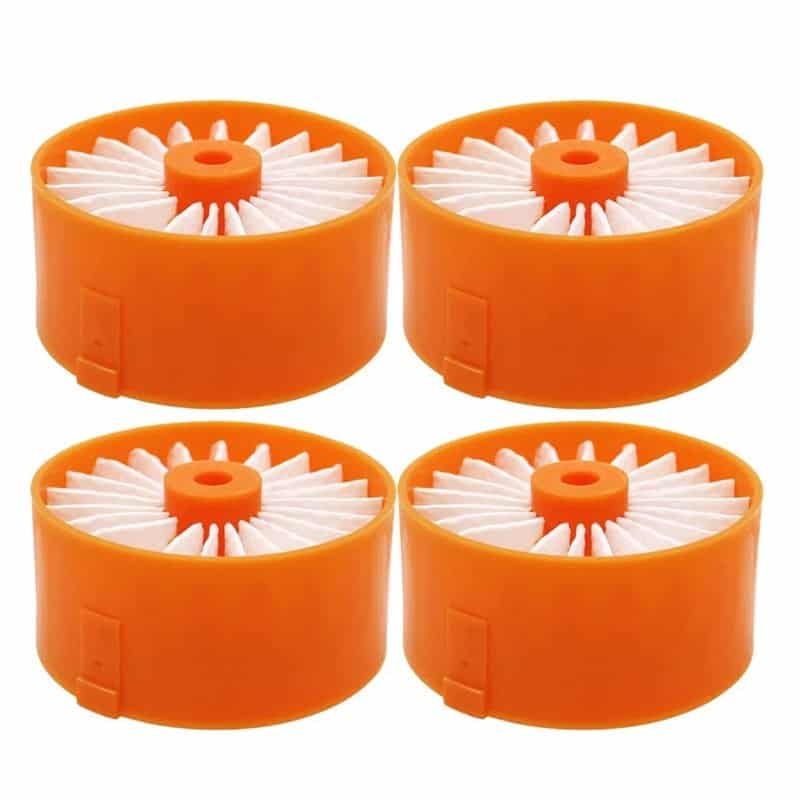

No. A good HEPA filter design does not require a custom mold by default. Many high performing filters run on existing tooling, standard frame sizes, and stock media. Tooling becomes necessary only when the design needs a dimension, frame shape, or sealing structure that no existing mold can produce. For most first orders and moderate volume programs, standard production is the faster and cheaper path. Custom tooling is an investment, not a requirement for quality.
This guide explains what tooling actually means in HEPA filter manufacturing, when a new mold pays off, and how OEM buyers decide between the two.
What Tooling Means in HEPA Filter Manufacturing
In filtration, tooling refers to the custom molds, cutting dies, and fixtures used to produce a filter at scale. It is the equipment that shapes the frame, cuts the media to exact dimensions, and holds the parts in place during assembly.
Think of it like a cookie cutter. A standard cutter makes one shape every time. If you want a different shape, you need a new cutter. The cutter itself costs money and takes time to make, but once it exists, every cookie comes out identical with almost no extra effort.
For HEPA filters, the most common tooled parts are the plastic frame, the pleating die, and the sealing fixture. A frame mold determines the outer dimensions, the wall thickness, and the sealing surface geometry. A cutting die determines the media size and pleat spacing. A sealing fixture holds the frame and media in exact alignment while the sealant cures.
Without dedicated tooling, a manufacturer builds each filter from standard parts and manual fixturing. The result can still meet spec, but consistency depends on the operator and the available standard sizes.
When a Good HEPA Filter Design Does Not Require New Tooling
A filter design does not need a new mold when it can be built from existing parts. This covers more programs than most buyers assume.
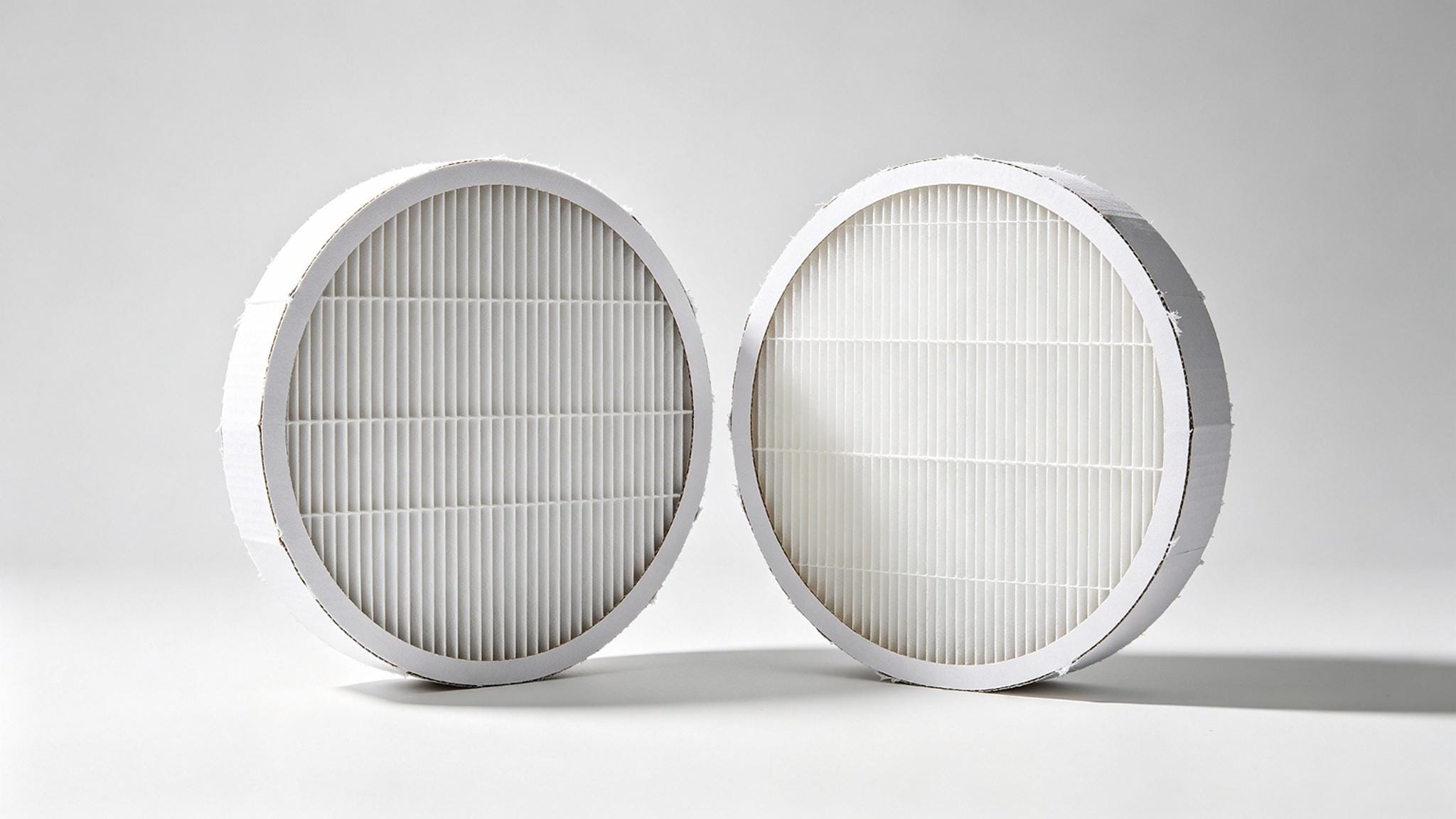
Standard frame sizes are the first case. Most residential air purifiers use a small set of common panel dimensions. If your housing matches one of those sizes, an existing frame mold can produce your filter. The media, pleat count, and sealant can all be customized without touching the frame tooling.
Stock media is the second case. H13 and H14 micro glass fiber media is available in standard rolls from multiple suppliers. A manufacturer can cut and pleat that media to your dimensions using existing cutting dies. No new media tooling is needed unless you require a nonstandard width or a custom lamination, at which point the project moves into custom HEPA filter media territory.
Small volume and prototype runs are the third case. For a first order under a few thousand units, or for a prototype to test in a housing, manual assembly and standard parts are usually enough. The per unit cost is higher, but you avoid the upfront tooling fee and the lead time that comes with it. Private label programs often start this way, with test runs as low as 500 units per SKU before committing to dedicated tooling. Our private label HEPA filter OEM guide walks through how those small runs fit into the larger tooling decision.
Replacement filters for existing models are the fourth case. If you are sourcing a compatible filter for a purifier already on the market, the dimensions are fixed by the original housing. A manufacturer that already produces that size can build your version on existing tooling.
When Custom HEPA Filter Tooling Becomes Necessary
Tooling becomes necessary when the design requires something no existing part can provide.
A nonstandard frame dimension is the most common trigger. If your housing is wider, taller, or deeper than any standard size, the manufacturer needs a new frame mold. This is also true for round cartridges, unusual aspect ratios, or frames with integrated mounting tabs. Before that mold can be cut, the manufacturer needs a complete dimensional drawing with tolerances. Our CAD drawing checklist for OEM filter manufacturing lists exactly what a drawing needs to include so the tooling quote does not stall on missing specs.
A custom sealing structure is the second trigger. Some housings require a tongue and groove channel, a compression gasket seat, or a specific locking geometry. If no existing frame has that feature, a new mold is the only way to get it consistently.
High volume is the third trigger. Even when a standard size exists, a program running tens of thousands of units per month may justify dedicated tooling. A custom mold reduces per unit cost, improves consistency, and frees the manufacturer from sharing standard tooling with other customers.
A proprietary design is the fourth trigger. If your product uses a unique filter shape that competitors cannot copy, custom tooling protects that differentiation. A standard frame can be sourced by anyone. A custom frame is tied to your mold and your product.
What HEPA Filter Tooling Costs and How Long It Takes
Tooling cost varies by the part and the complexity. A simple cutting die for a standard panel shape may cost a few hundred dollars and be ready in a week. A plastic frame injection mold can cost several thousand dollars and take three to six weeks. A full program with frame mold, cutting die, and sealing fixture can run higher still and take six to eight weeks before the first sample.
These are one time costs. Once the tooling exists, it does not need to be paid for again on future orders. The per unit cost of a tooled filter is usually lower than a manually assembled one, because the process is faster and more consistent.
The lead time is the bigger constraint for most buyers. Tooling cannot be rushed. The mold has to be designed, machined, tested, and adjusted before production can start. A buyer with a tight launch calendar should either use standard tooling or start the tooling process early enough to absorb the wait.
How OEM Buyers Decide Between Tooling and Standard Production
Run the decision against four questions:
Do you have a housing dimension or sealing structure that no stock frame can provide If yes, tooling is required.
Is the order volume enough to amortize the tooling cost to an acceptable per unit price within the product lifecycle. If so, tooling usually pays for itself.
Do you have three to eight weeks in your launch timeline for tooling? If not, the only realistic path for the first order is standard production.
Is your product strategy based on a proprietary shape or feature that competitors cannot duplicate. If so, proprietary tooling protects that differentiation.
If most of the answers are toward standard production, run the first order on existing tooling and revisit custom tooling after the product proves itself. If tooling is the answer for most, start the mold process early and factor the lead time into the launch calendar.
The Bottom Line
A good HEPA filter design does not need a custom mold. Quality comes from media selection, pleat geometry, and sealing consistency, none of which require dedicated tooling. Tooling becomes necessary only when the design needs a nonstandard dimension, a custom seal, high volume efficiency, or proprietary differentiation. For most first orders, standard production is the right call. Custom tooling is an investment that pays off at scale, not a requirement for a well designed filter.
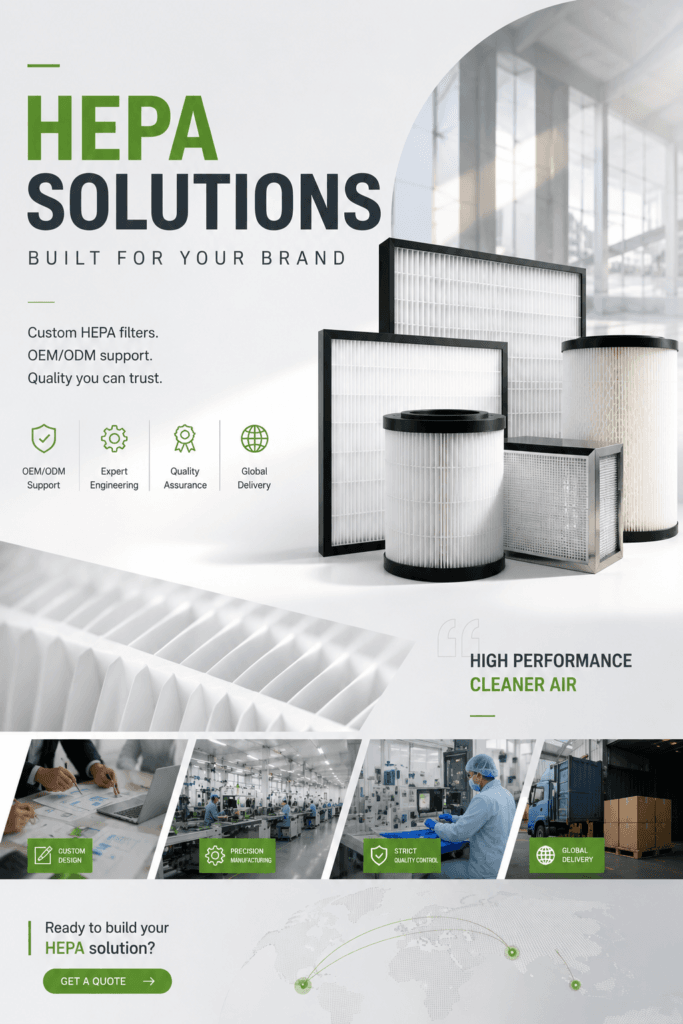
HIFINE builds HEPA filters on both standard and custom tooling. We can produce your first order from existing frame sizes and stock media, then develop dedicated tooling once volume justifies it. Send your housing drawing and target volume for a quotation that shows both paths side by side.