Cleaning hardwood floors is not the same as carpet.
A vacuum floor brush that works well on carpet may have stiff bristles or aggressive agitation. That same design can be too harsh on hardwood floors, may not pick up debris as effectively, and can leave marks on the surface.
The right vacuum floor brush will pick up dust, hair, and larger debris easily and move smoothly across the floor. The brush must be the right dimensions, connection system, and material combination for vacuum cleaner brands and replacement parts buyers.
This guide explains what to look for in a vacuum floor brush for hardwood floors.
Why is a right floor brush important for hardwood?
Hardwood floors are relatively smooth on the surface, so the cleaning challenge is different from carpet.
In fact, dust and debris normally lie on the surface of the floor, not deeply embedded in fibers. The brush does not require the same vigorous agitation as with carpet cleaning.
A good hardwood floor brush should give you three things:
- Light touch on surface: The brush should slide smoothly without the help of hard bristles or rough parts.
- Dust pickup efficiency: Fine particles and larger debris still have to get to the vacuum’s suction opening.
- Consistent speed: The brush must be able to glide over the floor with no undue resistance, dragging, or uneven contact.
This is the reason why floor brush design is important.
What is the Best Type of Vacuum Brush for Hardwood Floors?
A soft floor brush is a practical choice for many hardwood floor applications.
Soft bristles or soft roller materials can have enough contact to pick up dust but are less aggressive on the surface.
Some models combine soft bristles with a large suction opening. Others have a soft roller that rotates as the vacuum rolls along.
The best design depends on the vacuum itself, the floor finish, the cleaning environment, and the type of debris collected.
There is no single floor brush that is ideal for all hardwood applications.
Soft Roller v Soft Bristle Brush
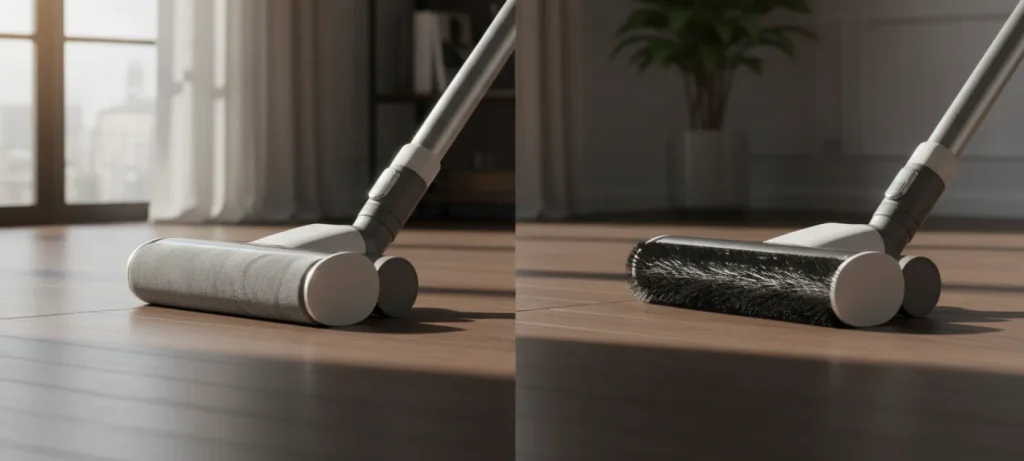
A soft bristle brush and a soft roller are two common approaches.
Soft Bristle Floor Brush
A soft bristle brush picks up surface dust and debris with rows of flexible bristles.
This design is pretty simple and can do well for daily cleaning on smooth floors
Key considerations include the following:
- Softness of bristle
- Density of Bristles
- Length of bristles
- Size of brush
- Suction inlet
- Contact height
A very dense or long bristle broom may provide resistance as you push it across the floor. The idea is controlled contact, not maximum pressure.
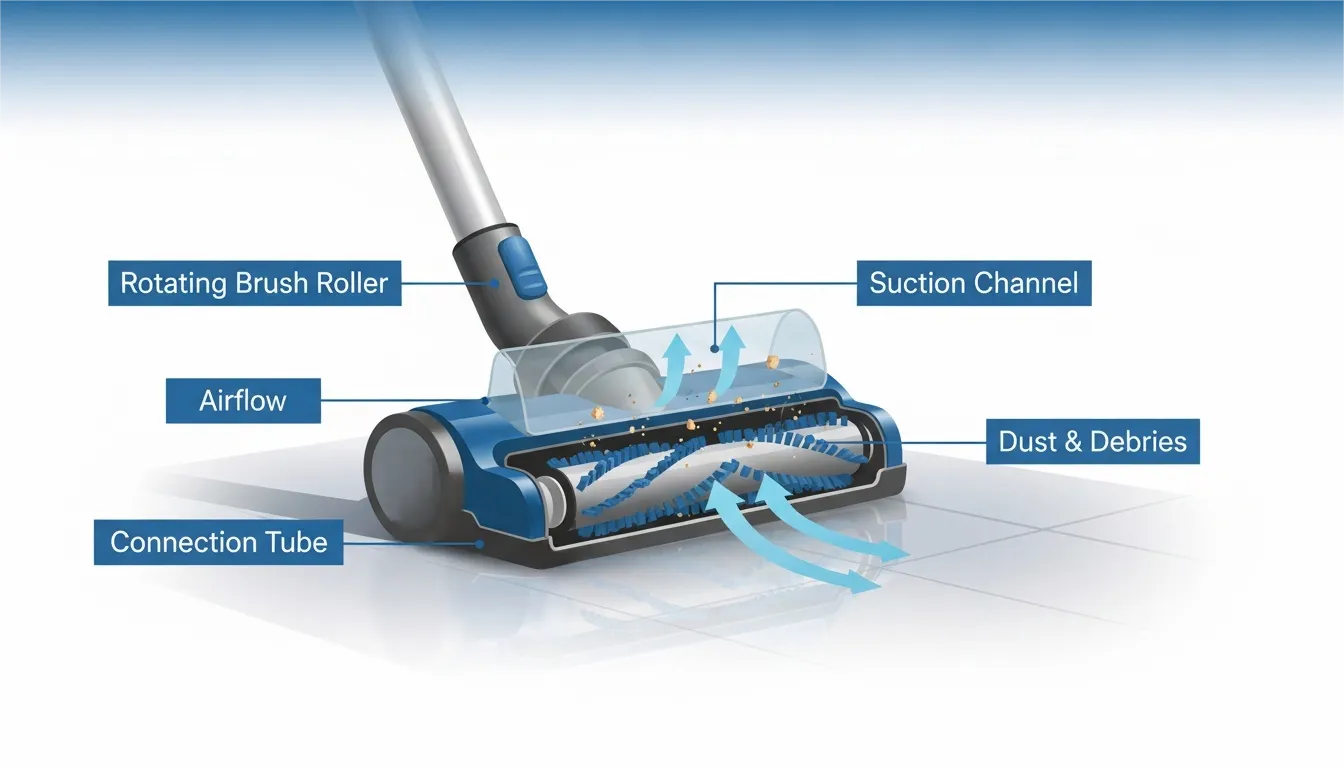
Soft Floor Roller Brush
Instead of the traditional rows of bristles, a soft roller with a soft cylindrical surface is used.
The roller can have a wide contact with the floor and is commonly used in modern cordless and stick vacuum systems.
Its performance depends on roller material, diameter, rotation speed, housing design, and the relationship between the roller and suction opening.
This design gives manufacturers more engineering variables than a simple fixed brush.
Is it okay to use a hard-bristle brush on hardwood?
In general, a very stiff bristle design is not the first choice for delicate hardwood surfaces.
The harder bristles can provide better agitation that is helpful in some carpet cleaning situations. Hardwood generally requires less aggressive contact since most of the loose debris is already on the surface.
It does not mean that every bristle brush is unsuitable.
The correct stiffness depends on the floor finish, the material of the bristles, the brush geometry, and the cleaning environment targeted.
That’s why buyers should keep the overall brush design in mind instead of judging the product by whether the bristles feel soft or firm.
How Brush Height Impacts Hardwood Floor Cleaning
Floor clearance is an important detail, often ignored.
If the brush is too high above the floor, fine dust may not be picked up.
If the brush is too close to the surface, it can create too much resistance and reduce the smooth movement.
The proper working height depends on the design of the brush and the airflow of the vacuum.
This principle is especially true for OEM development, where the floor brush has to work as part of the whole vacuum system and not as a standalone component.
What to Use to Make a Hardwood Floor Brush
Floor brushes usually have different materials, not just one single material.
The housing can be made of engineering plastics like ABS or PC, depending on product requirements.
The brush itself can be made with different soft roller materials or filament.
Material choice should include the following:
- Surface compatibility: The contact material must be appropriate for the type of floor it is to be used on.
- Wear resistance: With each stroke on the floor, the brush will gradually wear away.
- Temperature and environmental factors: Storage and operating conditions affect certain materials.
- Manufacturing needs: The material should also be appropriate for the manufacturing process and dimensional tolerances required.
For custom vacuum accessories, material selection should be part of the product development process, not an afterthought.
How to Select the Right Size
A floor brush can be made for a particular model of vacuum cleaner, or it can be made as a more universal accessory.
Before you get a replacement brush, check:
- Diameter of connection
- Connector form
- Locking device
- Total brush width
- Brush height
- Suction inlet
- Angle of wand connection
Two floor brushes may look almost identical but be incompatible because of a slight difference in connectors or dimensions.
This is especially important for spare parts.
Universal vs. Model-Specific Floor Brushes
A universal vacuum floor brush is built to fit into more than one vacuum system.
This can make inventory management easier for distributors and aftermarket retailers.
Compatibility, however, must be checked before the production or purchase.
By using a brush specific to the model, the manufacturer has more control over dimensions, connection points, floor clearance, and airflow geometry.
For OEM brands, model-specific development is a better choice when the objective is to build a branded accessory around a specific vacuum platform.
What to Consider as an OEM Buyer
With an OEM vacuum cleaner floor brush, the starting point should be the end application.
The manufacturer may be required to specify the following:
- Target floor surface: Hardwood, laminate, tile, mixed flooring, or other smooth surface.
- Vacuum table: Stick, cordless, upright, canister, commercial, or other type:
- System of connection: The brush should be a snug fit for the vacuum tube or the wand.
- Conductive material: The material selected must strike a balance between cleaning performance, durability, and floor compatibility.
- Brush size: The width, height, roller diameter, and suction opening can influence the performance.
- Branding needs: We can customize the housing, colors, markings, packaging, and point of sale presentation for private label programs.
HIFINE has vacuum accessories manufacturing service; we could provide floor head & brush, custom mold development, injection molding, material selection, dimensional tests, private label packaging, etc.
For companies that produce a full line of vacuum accessories, these capabilities can assist in moving a floor brush from concept and sampling into repeat production.
When should you change your hardwood floor brush?
When the cleaning performance is about to decline, check the floor brush.
Signs include worn bristles, damaged rollers, loose connectors, cracked housing, or excessive build-up of hair.
The worn brush may also move differently on the floor and not maintain the desired contact with the floor surface.
Keeping brush designs compatible for replacement parts suppliers can help reduce downtime and improve after-sales support.
Conclusions
Picking a vacuum floor brush for hardwood floors isn’t just about the softest brush.
The best design will balance surface protection, debris pickup, airflow, floor clearance, durability, and compatibility with the vacuum system.
Two common methods are soft-bristle brushes and soft rollers. The right method depends on the vacuum platform and target application.
The most important step for OEM and wholesale buyers before going into production is to define the required dimensions, connection system, materials, and cleaning environment.
For a wider range of Vacuum Cleaner Accessories and Replacement Parts Solutions, visit HIFINE’s Vacuum Accessories and Replacements