
Walk into most allergist or pulmonologist offices and you’ll find the same line on the printed care plan: use a HEPA air purifier at home. It shows up after asthma diagnoses, in pediatric allergy consultations, in guidance for post-viral respiratory recovery.
The recommendation is consistent. The explanation almost never is.
Most patients leave knowing what to buy but not why — or how to tell whether what they’re buying actually meets the standard their doctor had in mind. That gap is where a lot of money gets spent on filters that don’t do what people think they do.
What the HEPA Standard Actually Requires
Why 0.3 Microns Is the Benchmark
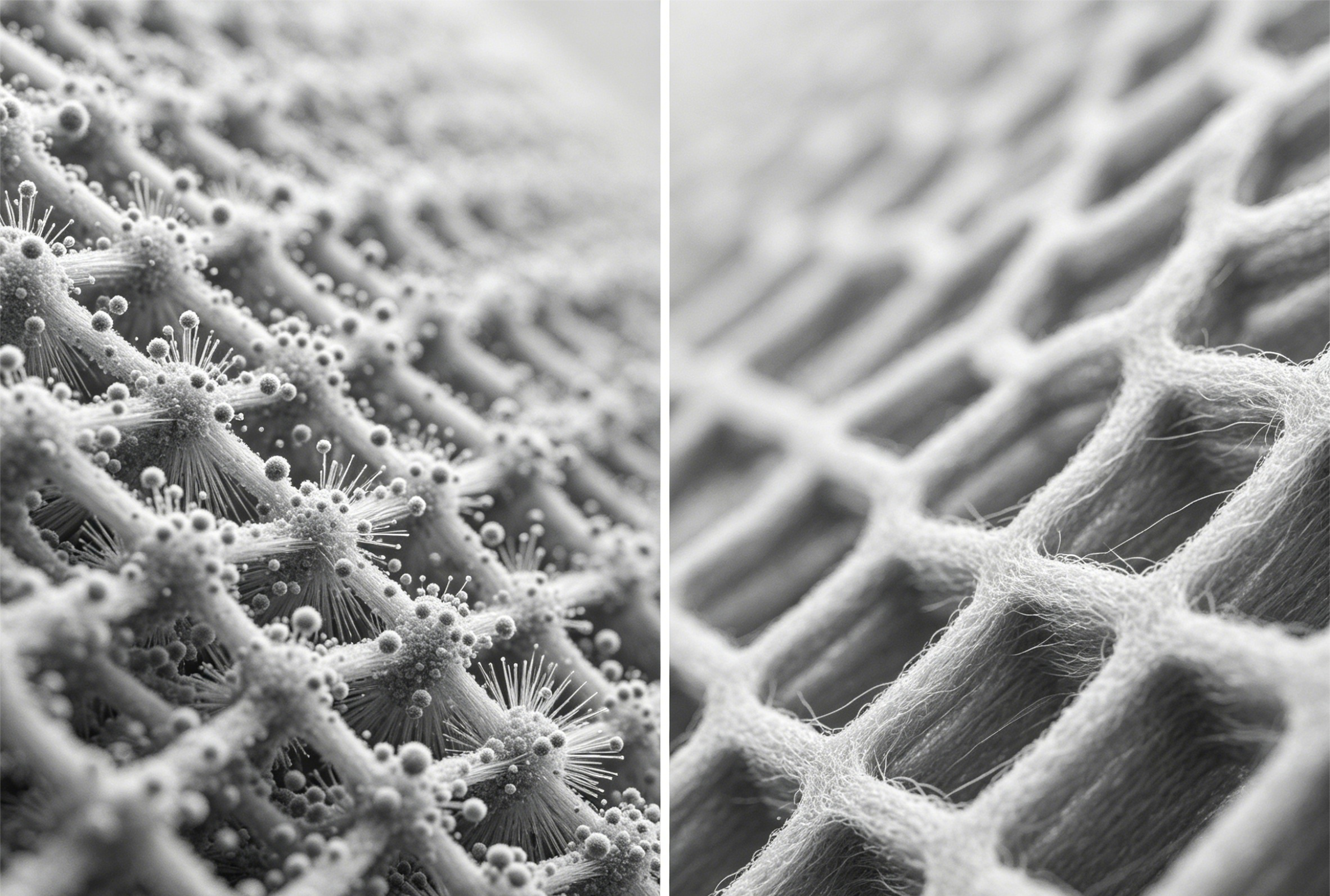
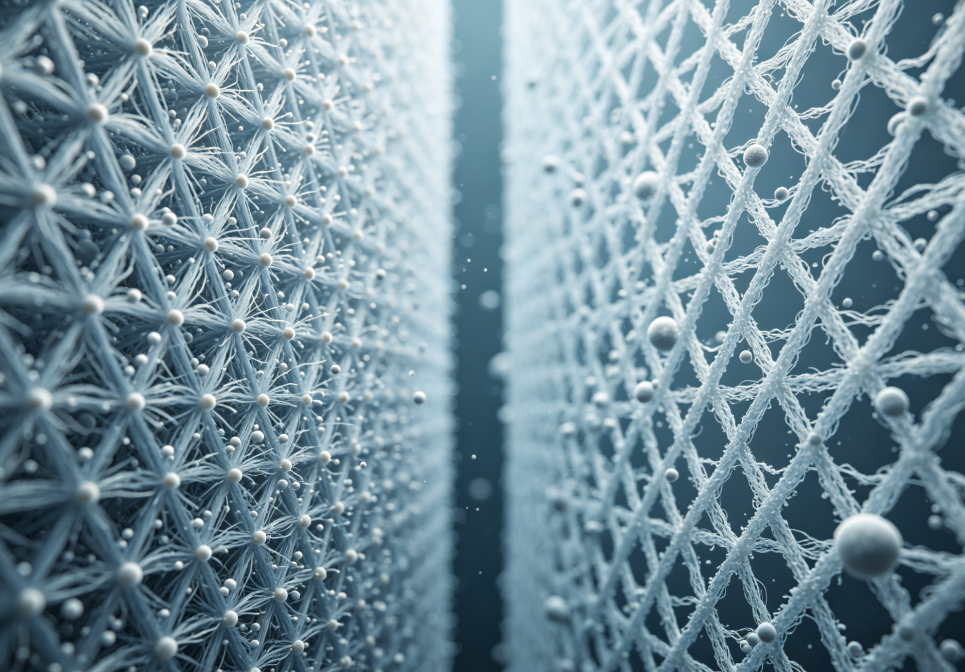
HEPA stands for High-Efficiency Particulate Air. As a certified filtration standard, it requires that a filter capture at least 99.97% of airborne particles at 0.3 microns in diameter under controlled test conditions.
That specific size — 0.3 microns — is chosen because it is the most penetrating particle size: the point where the two main capture mechanisms, inertial impaction and Brownian diffusion, are both at their weakest. A filter that meets HEPA performance at 0.3 microns is demonstrably effective across the full particle size spectrum, including both smaller and larger particles where capture is comparatively easier.
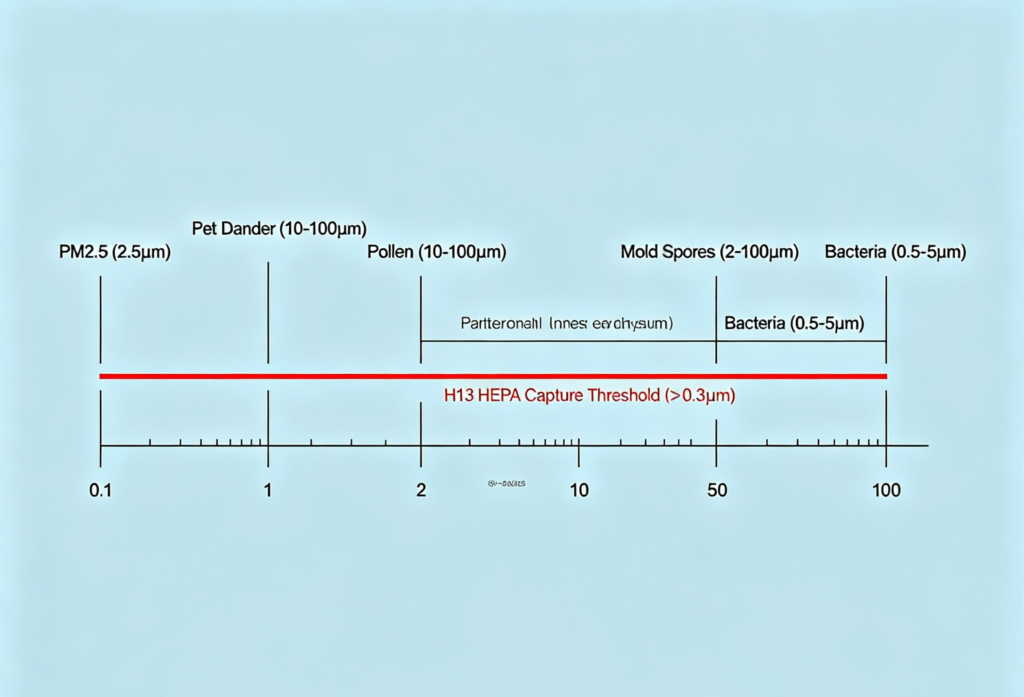
In practical terms: dust mite allergens (0.5–50 microns), pollen (10–100 microns), mold spores (1–20 microns), pet dander (0.5–100 microns), and fine combustion particles classified as PM2.5 all fall within or above the HEPA capture range. A True HEPA filter at H13 grade captures them. A filter labeled “HEPA-type” or “HEPA-style” without a certified grade number may not come close.
The H-Grade Scale: What Each Number Means
Under the European standard EN 1822 — the testing protocol used by certified manufacturers globally — HEPA filters are graded from H10 to H14:
| Класс | Minimum Efficiency |
|---|---|
| H10 | 85% |
| H11 | 95% |
| H12 | 99.5% |
| H13 | 99.97% ← clinical reference standard |
| H14 | 99.995% |
H13 is the minimum grade with documented clinical benefit for allergy and asthma management. H14 is used in surgical theaters and pharmaceutical cleanrooms. H10 and H11 have real applications in commercial HVAC pre-filtration — but they are not what respiratory specialists mean when they write “HEPA” in a care plan.
The difference between H11 (95%) and H13 (99.97%) sounds small in percentage terms. In practice, H11 allows 50 times more fine particles to pass through than H13. For someone with allergic asthma sleeping in a room with an H11 filter running all night, that difference is measurable in symptom frequency.
The Clinical Evidence Behind the Recommendation
The reason HEPA appears in clinical guidelines isn’t brand preference or general caution. It’s the result of decades of research consistently linking certified HEPA filtration to reduced airborne allergen concentrations and improved respiratory outcomes.
Asthma management: The American Academy of Allergy, Asthma & Immunology includes HEPA air purifiers in its environmental control recommendations for asthma patients. Studies examining bedroom air quality before and after H13 HEPA installation have shown reductions of 60–90% in airborne allergen concentrations. For the majority of childhood asthma cases — which are allergen-triggered — this directly reduces attack frequency.
Allergic rhinitis: Pollen particles range from 10 to 100 microns, well within HEPA capture range. Multiple randomized controlled trials have found that running HEPA filtration in living spaces during high-pollen periods produces measurable reductions in nasal symptom scores, with effects most pronounced in bedroom environments where patients spend continuous hours.
Pet allergy: Pet dander — the actual allergen, not the visible hair — consists of microscopic protein fragments shed from skin, saliva, and dried urine. These particles are small enough to remain airborne for hours and reach the lower airways. HEPA filtration is currently the highest-evidence non-pharmaceutical environmental intervention for reducing airborne pet allergen load in residential settings.
Post-viral respiratory sensitivity: Following respiratory illness, the airway lining remains in a heightened inflammatory state for weeks to months. Reducing the ongoing particulate burden in breathing air reduces the irritant load on already-compromised tissue. This has been cited in long-COVID respiratory care guidance specifically.
The underlying mechanism is consistent across all these conditions: H13 HEPA removes the particle sizes that drive immune activation and airway inflammation. It’s not a treatment, but as an environmental control measure, it’s the most evidence-backed option available without a prescription.
The “HEPA” Label Problem
“HEPA-style,” “HEPA-like,” “HEPA-grade,” and “99% HEPA” are unregulated marketing terms. In most markets, there is no legal minimum efficiency requirement to use these labels. A product marketed as “HEPA-style” could measure 70%, 85%, or 92% efficiency — there is no disclosure requirement, and no standard it must meet to use the term.
The 1% difference between “99% efficient” (an uncertified claim) and “99.97% efficient H13” (a tested certification) is not minor. At fine particulate sizes, it represents a 30-fold difference in particle pass-through. A filter passing this at a marketing level while underperforming at a particle physics level is the most common way consumers end up with air purifiers that don’t deliver what was implied.
What to verify before purchasing:
- The filter itself — not just the packaging — carries an H13 or H14 grade number
- The grade references a standard: EN 1822 (Europe and international) or MERV 17+ (North American ASHRAE equivalent)
- The manufacturer can provide third-party filter efficiency test documentation on request
Reputable manufacturers test at the filter level, not just the appliance level. A filter that tests H13 in isolation but leaks around the housing seal when installed delivers real-world performance well below its rated grade. Model-specific fit and seal integrity matter as much as the filter media rating.
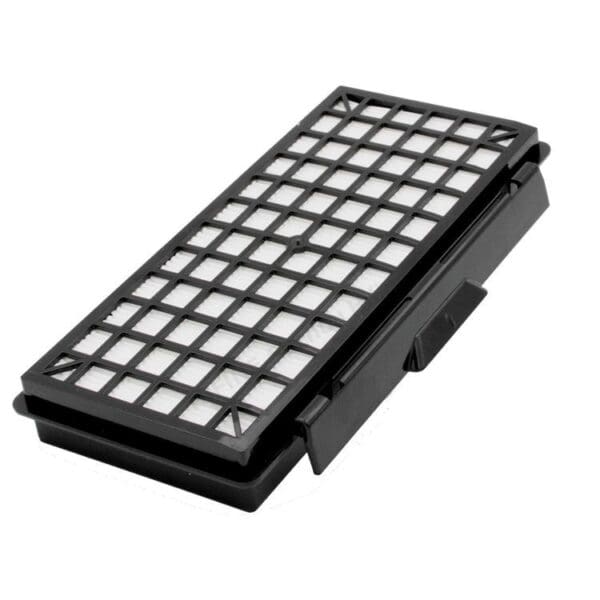
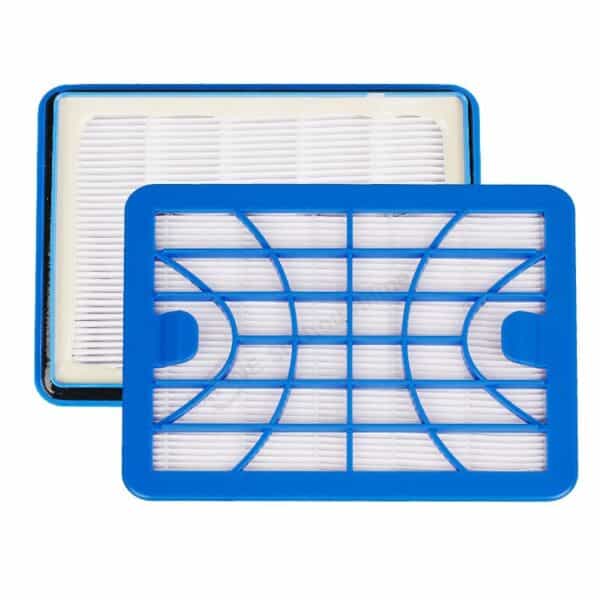
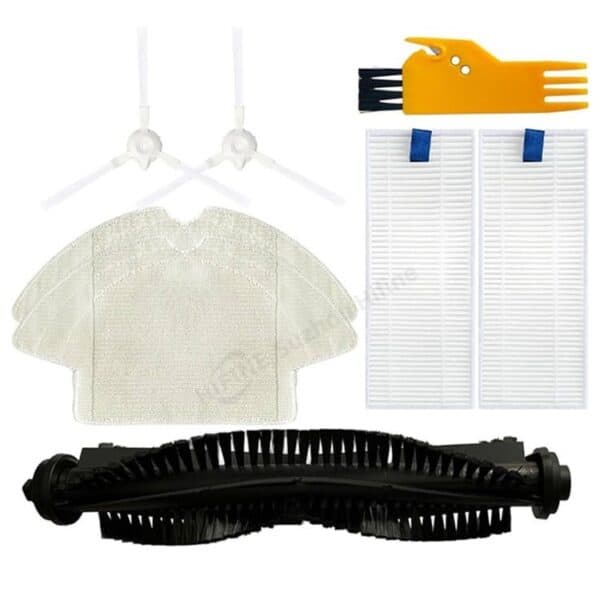
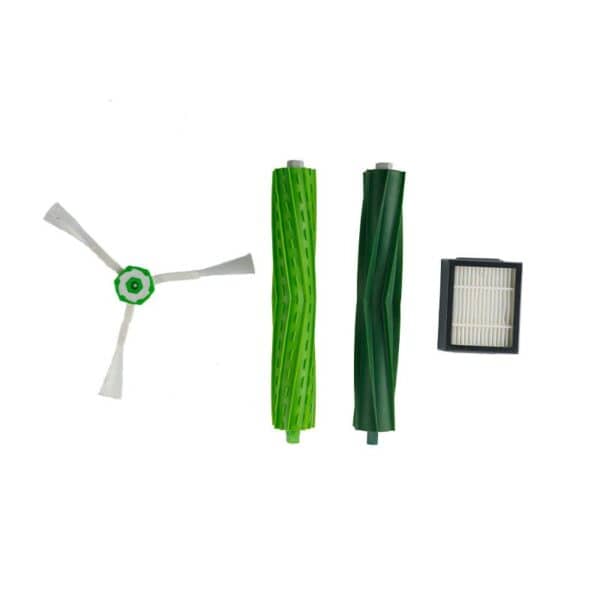
HIFINE manufactures certified H13 and H14 True HEPA air purifier filters compatible with Dyson, Levoit, Philips, and RENPHO, with full test documentation available for wholesale and OEM partners. For sourcing inquiries, see our product inquiry page.
What HEPA Doesn’t Filter
One thing worth being clear about: HEPA filtration is a particulate technology. It does not capture gases or volatile organic compounds — formaldehyde off-gassing from new furniture, benzene from cleaning products, nitrogen dioxide from cooking. These are molecular, not particulate, and pass through HEPA media.
For environments with new flooring, recent renovation, heavy cooking activity, or chemical sensitivities, a filter combining H13 HEPA media with an activated carbon layer addresses both categories. Carbon adsorbs gaseous pollutants that HEPA alone misses.
For straightforward allergen and particulate control — the primary clinical use case — H13 HEPA alone is well-supported and sufficient.