
Yes, technically, an air purifier does not cool your room. It has no compressor, no refrigerant, no evaporative pad. But the reason you might genuinely feel cooler after running one for a few hours? That story is worth understanding, because it changes how you think about home comfort — especially in summer.
What an Air Purifier Is Actually Built to Do
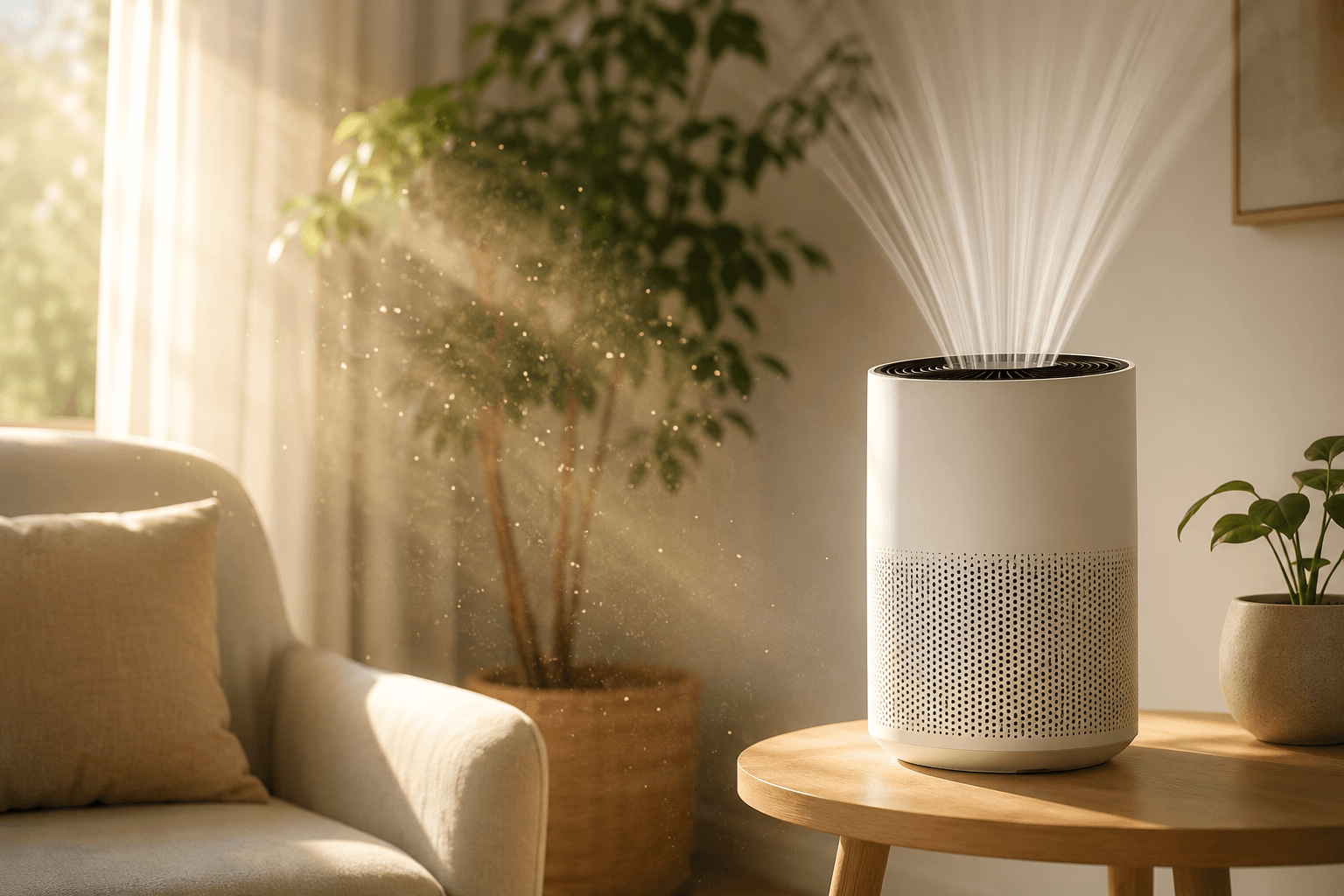
An air purifier’s job is to move air through a filtration system and return it cleaner than it came in. Most residential units use a multi-stage design: a pre-filter for larger debris, a true HEPA layer for fine particles, and often activated carbon for odors and volatile organic compounds (挥发性有机化合物).
The U.S. Department of Energy defines a “true HEPA” filter as one that captures 99.97% of airborne particles at 0.3 microns or larger — covering dust mite debris, pollen, pet dander, mold spores, and PM2.5 from smoke or traffic.
What’s not inside: any heat exchange mechanism. The fan motor in a typical residential unit draws 30–100 watts and generates trace heat as a byproduct. At high settings, a purifier might add a barely measurable fraction of warmth to room air. If anything, the physics tilt very slightly warmer, not cooler.
So why do people consistently report feeling cooler after running one? Because something real is happening — it’s just not what most assume.
Why You Might Actually Feel Cooler
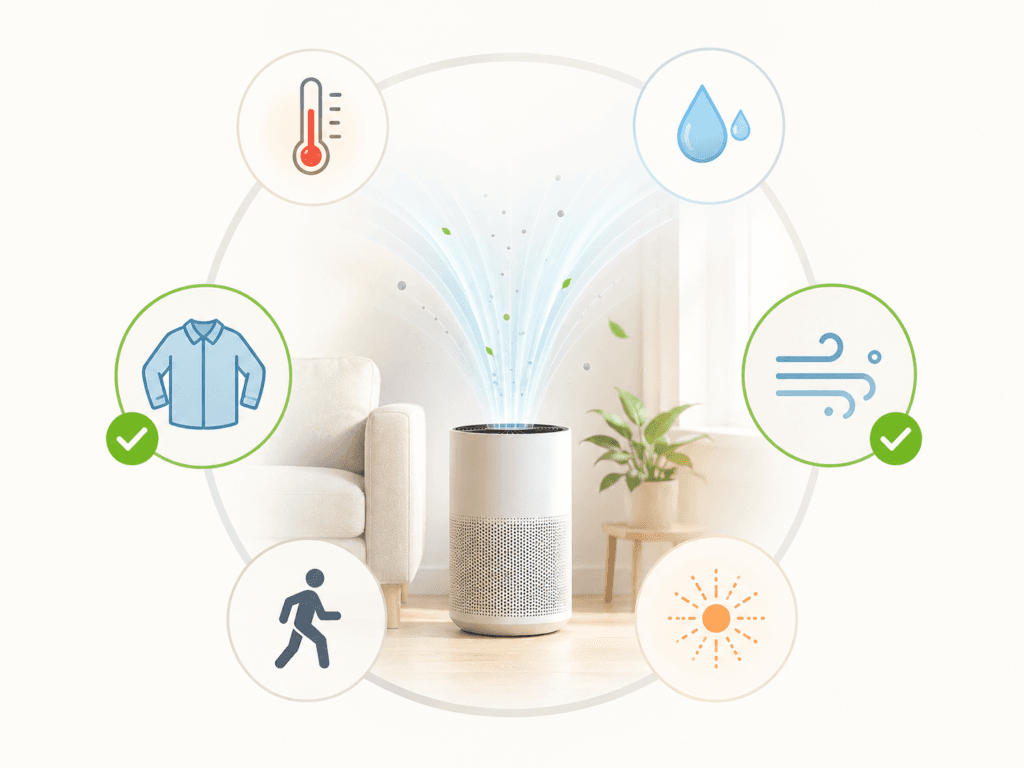
Human thermal comfort is not simply air temperature. ASHRAE Standard 55 — the benchmark for thermal comfort in occupied buildings — identifies six core variables: air temperature, radiant temperature, humidity, air speed, metabolic rate, and clothing insulation. Notice how much more that is than “what the thermometer says.”
A well-placed air purifier directly influences at least three of those.
The Airflow Effect
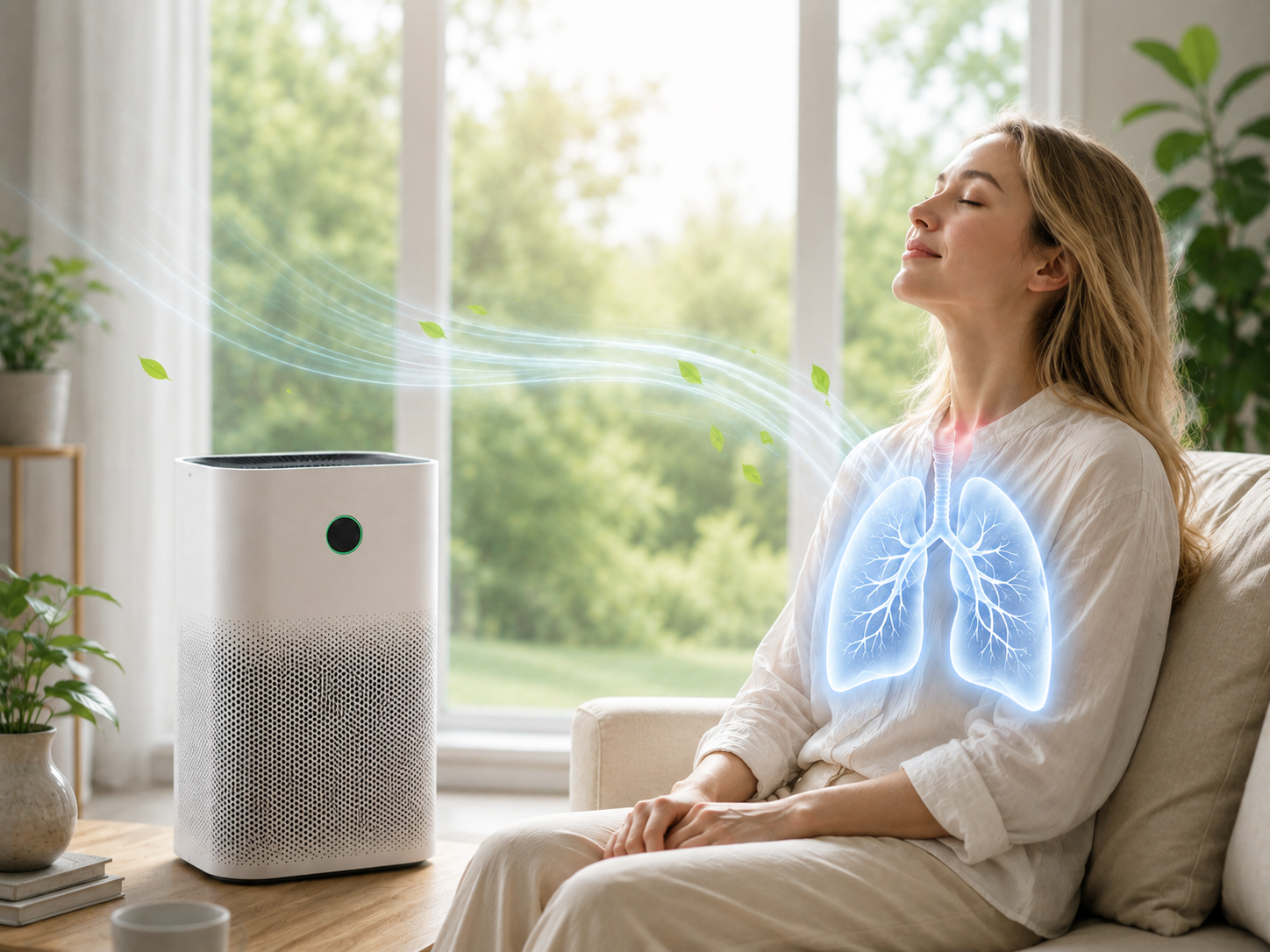
Any device moving air at volume creates a wind-chill sensation on exposed skin. Residential air purifiers typically deliver 100–400 CFM (cubic feet per minute), depending on size and fan speed. Unlike a table fan, the airflow is diffuse rather than directional — but it’s still airflow, and airflow across skin accelerates evaporative cooling.
Running a purifier on medium in a bedroom feels noticeably different from the same room with stagnant air — at the exact same temperature. The sensation is real. The thermometer hasn’t moved.
The Particulate Load Effect
This one is underappreciated: dense airborne particles change how air feels to breathe.
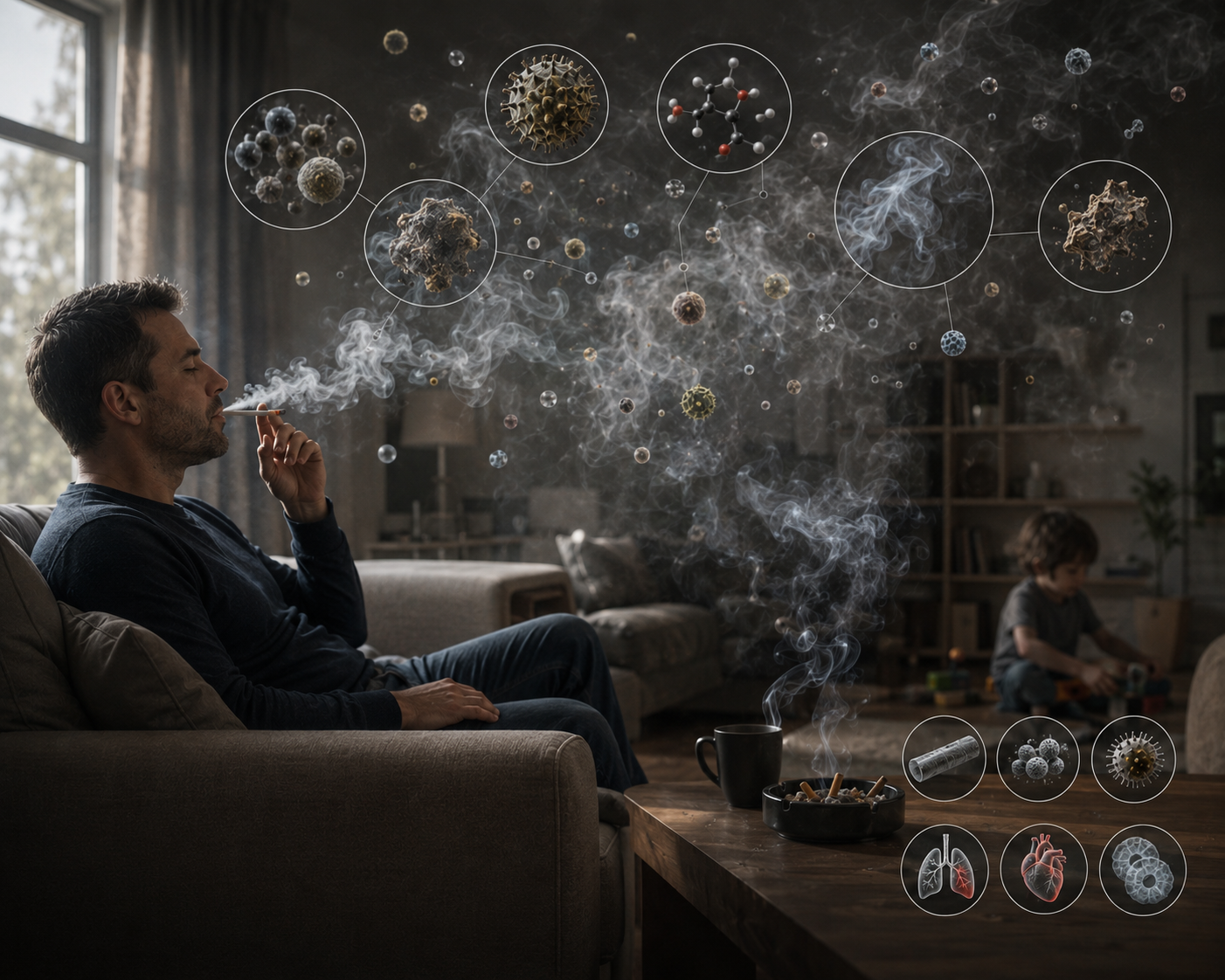
A 2019 study published in Environmental Health Perspectives identified associations between elevated PM2.5 concentrations and increased subjective thermal discomfort — independent of measured temperature. The likely mechanism involves reduced air quality signaling physical stress responses, which people experience as stuffiness and heat.
Run a HEPA purifier for two hours in a sealed room after cooking or during a high-pollen day, and 74°F will genuinely feel more breathable than it did before. Not cooler on a sensor. More comfortable to a person sitting in it. That’s not anecdote — it’s environmental physiology.
The Humidity Factor
Some air purifiers — particularly those with ionization or dehumidification modules — can marginally reduce the moisture load in sealed rooms. Humid air transfers heat poorly away from skin, which is why 80°F at 40% humidity feels nothing like 80°F at 85% humidity. Even slight reductions in perceived humidity shift the comfort calculation meaningfully.
What an Air Purifier Cannot Do
An air purifier does not lower air temperature. It cannot replace an air conditioner on a 95°F afternoon. It will not remove heat from a sealed room or reduce the BTU load in your space. Any product marketed as a “cooling air purifier” through filtration alone is overstating the case significantly.
Real cooling requires energy removal — moving heat outside the building (refrigerant-based AC) or converting it via evaporation (evaporative coolers). HEPA filtration does neither. The only legitimate exceptions are hybrid appliances that pair filtration with an active evaporative or refrigerant cooling module — but those are a different product category entirely.
Where Air Purifiers Actually Fit in a Home Comfort System
The smarter question isn’t “can it cool my room” — it’s “what role does it play in my air system?”
A well-configured home handles air with different tools for different jobs:
- Air conditioner → Removes heat, lowers temperature
- Dehumidifier → Removes moisture, reduces mugginess
- Fan → Moves air for perceived cooling, no filtration
- Air purifier → Removes particles, allergens, VOCs, odors
These aren’t competing — they stack. Running an air purifier alongside AC means your AC is circulating already-filtered air, which reduces particulate load on your HVAC system’s own filter and maintains indoor air quality at levels no AC alone achieves. Some HVAC engineers call this improving “effective comfort efficiency” — the same temperature feels better because the air carrying it is cleaner.
One thing to avoid: running your purifier at maximum output to compensate for inadequate HVAC. Filters will clog faster, motor temperature rises, and you’re using the wrong tool for the job. Matching filter specifications to actual use conditions matters — for air quality and for equipment life.
When Air Purifiers Do the Most Work in Summer
In mild climates or apartments without central AC, a combined approach works better than relying on any single device:
- Air purifier on continuous low/medium — baseline air quality and gentle circulation 24/7
- Evaporative cooler on hot days — actual temperature reduction in low-humidity climates
- Night-cycle ventilation — flush accumulated heat after 10 PM, close up before morning sun
- Window coverings — the U.S. Department of Energy estimates that reflective blinds and blackout curtains can reduce solar heat gain through windows by up to 33%
This is how households in Northern Europe and coastal Japan — where central air is far less common than in the U.S. — maintain livable indoor temperatures. The air purifier isn’t cooling here. It’s doing the quality work that makes the whole system more effective.
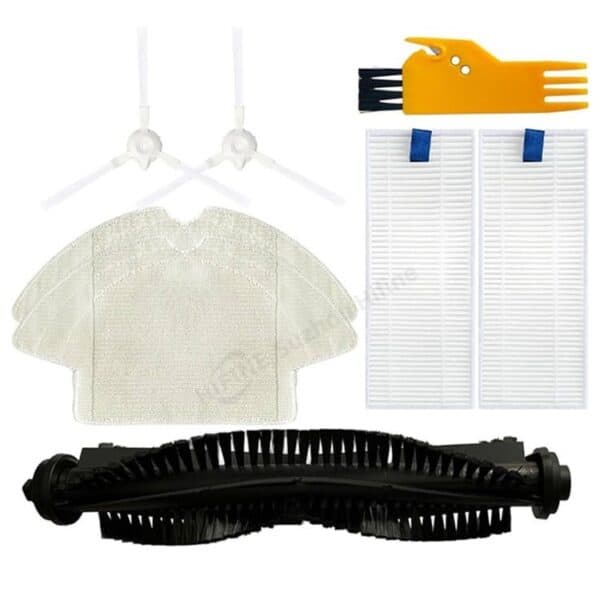
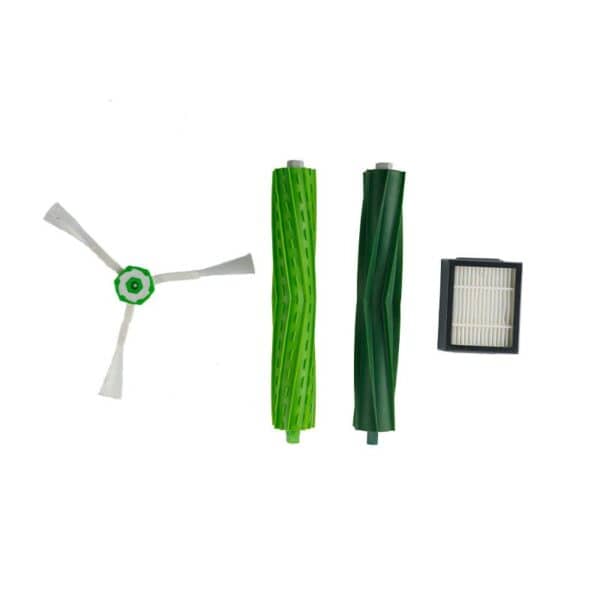
For homes with smart thermostats, pairing your purifier with occupancy-based scheduling avoids unnecessary runtime when rooms are empty. HIFINE’s smart home compatible filters are designed for use in integrated home systems, with filter life indicators compatible with major home automation platforms.
Direct Answers to Common Questions
Does running an air purifier help with sleep when it’s hot?
Indirectly, yes. HEPA filtration removes allergens and respiratory irritants that disrupt sleep quality. Low-speed fan hum functions as consistent white noise for many people. But if the room is hot, you still need cooling — the purifier handles air quality, not temperature.
Will an ionizer make the air feel fresher or cooler?
Some people report a subjective freshness sensation post-ionization. This is most likely a response to cleaner air rather than any measurable temperature effect. Ionizers do not produce cold air.
Can I run a purifier and AC at the same time?
Yes — and it’s worth doing. They serve distinct functions that don’t overlap. Your AC removes heat; your purifier removes particulates. Running both means you’re conditioning air that’s already clean, which reduces load on your AC’s filter and improves overall air quality.
How much does continuous operation cost?
At medium speed, most residential units draw 30–60 watts. At average U.S. residential electricity rates, that’s roughly $1.50–$3.00 per month for 24-hour operation — significantly less than running central air conditioning.
The Real Answer
An air purifier will not lower your room temperature. After running one for two hours, a calibrated thermometer will show essentially the same reading — or a fraction higher.
But thermal comfort is not just temperature. A properly sized purifier improves airflow, reduces particulate density, and often delivers a measurably more comfortable environment at the same temperature. That’s not a marketing claim — it’s the physics of how humans experience air.
Think of it this way: an air purifier is not an answer to heat. It’s an upgrade to comfort. And when paired with the right cooling strategy, it makes that cooling work harder and feel better.
If you’re building a home air system that handles both quality and temperature, start by understanding what each component actually does. Explore HIFINE’s full filter range — engineered for long-term efficiency in real home environments, year-round.