

Here’s the thing most brands won’t tell you: two air purifiers with identical CADR ratings can have completely different health outcomes—because one has a filter matched to your pollutant load and the other doesn’t. The unit moves air. The filter determines what stays out of it.
Indoor air contains a mix of particulate matter, biological particles, and gases. No single filter type addresses all three categories equally well. That’s not a marketing problem—it’s a physics problem.
The three foundational filter types each cover a distinct part of that spectrum:
| Filter type | What it catches | What it misses | Best for |
|---|---|---|---|
| True HEPA (H13+) | PM2.5, pollen, dander, mold spores, dust — 99.97% at 0.3 µm | Gases, odors, VOCs | Allergies Smoke |
| Carbón activado | VOCs, formaldehyde, odors, tobacco byproducts — via adsorption | Particulate matter | VOCs Cooking odors |
| Pre-filter | Hair, large dust, lint — protects downstream layers | Fine particles, gases | Filter longevity |
A HEPA filter alone won’t touch chemical off-gassing. A carbon filter alone can’t catch PM2.5. Skipping a pre-filter doesn’t clean air better—it just burns through your primary filter faster. See our filter replacement guide to understand how filter order affects overall system lifespan.
Which Air Purifier Filter Do You Actually Need for Your Specific Air Problem?
Room size tells you how much airflow you need. It says nothing about what your air actually contains. That mismatch is where most purchases go wrong.
Allergies and pet dander
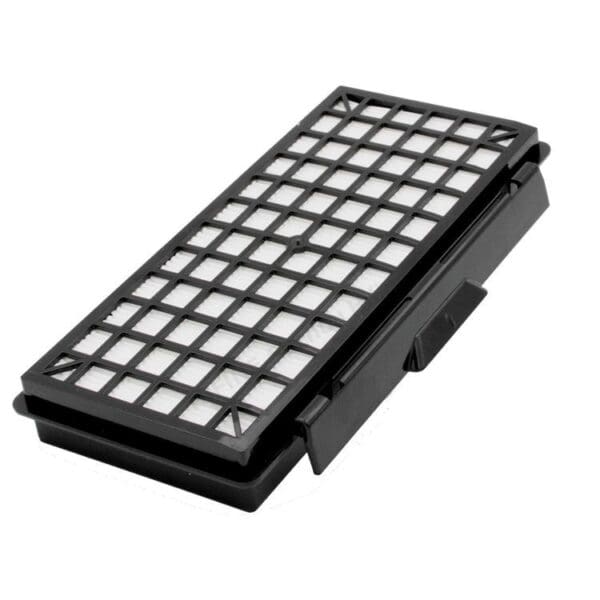
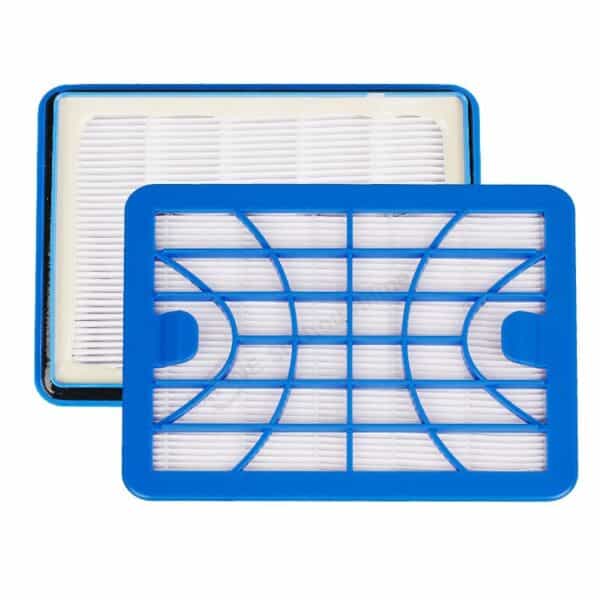
Households with pets or seasonal allergy sufferers carry a consistently high PM2.5 and biological particle load. You need a True H13 HEPA filter with a CADR rating at least 2/3 of your room’s square footage in CFM—not because the math is magic, but because that ratio gives you roughly five air changes per hour, the standard recommended by most respiratory health guidelines. Our HIFINE H13 HEPA replacement filters are tested to 99.97% capture at 0.3 microns, including the major dog and cat allergen proteins that lower-grade filters miss.
VOCs and off-gassing from new furniture or renovation
New furniture, fresh paint, and cleaning products release volatile organic compounds for months after the initial smell fades. Activated carbon weight matters more than anything else here. Thin carbon mesh—common in budget systems—saturates within weeks in a freshly renovated room. Look for filter systems with at least 1–2 lbs of granular activated carbon, not just a carbon-coated layer that’s more label than substance.
Wildfire smoke and fine particulate matter
Smoke particles cluster between 0.4 and 0.7 microns—right in the HEPA capture zone. But smoke also carries a volatile gas component that HEPA passes right through. For smoke-prone households or wildfire seasons, a three-stage system is necessary: pre-filter catches large debris, HEPA handles fine particles, and a high-density carbon layer manages the gaseous fraction. A single-stage “HEPA purifier” rated for smoke is only telling half the story.
General household maintenance
A standard combination filter—pre-filter plus H11–H13 HEPA plus a carbon layer—changed every 6–12 months covers the average home well. The variable most people overlook is actual run-time hours and local outdoor air quality index, not the calendar date. A filter in a busy urban kitchen needs replacement on a completely different schedule than the same filter in a rural bedroom.
Does Knowing Your Real-Time Air Quality Change When You Replace a Filter?
This is where the traditional purifier-first mindset breaks down. When a purifier connects to a real-time air quality sensor network—tracking PM2.5, PM10, CO₂, VOC index, and humidity simultaneously—filter performance stops being something you assume and starts being something you measure.
Without monitoring, you’re replacing filters on a schedule written for an average home that may not match yours. With a connected HIFINE smart filtration system, you can see exactly when your activated carbon is approaching saturation, when HEPA capture efficiency is dropping, and whether the air quality in your child’s bedroom differs from your living room at 2am. That’s not a feature—it’s the difference between proactive filtration and reactive replacement.
Smart systems also build a usage history over time. A household where indoor cooking and high pet activity accelerate filter saturation 40% faster than manufacturer estimates can now verify that in real data—and swap filters before air quality silently degrades. Most people don’t notice degraded filtration. The data does.