
Every time you replace a filter, there’s a hidden cost that most buyers don’t consider. The price tag on the shelf is just one part of the whole picture, and it’s often not the most crucial factor.
This guide goes beyond just brand loyalty to provide you with a practical way to make decisions. Whether you’re changing an air purifier filter cartridge, a HEPA filter for a robot vacuum, a vacuum cleaner filter, or a dust bag, the best choice relies on three key factors: how sensitive the device is, how often you need to replace it, and the certification standards. Once you grasp these three aspects, making the right choice becomes straightforward.
Should we really be concerned about real products compared to fake ones?
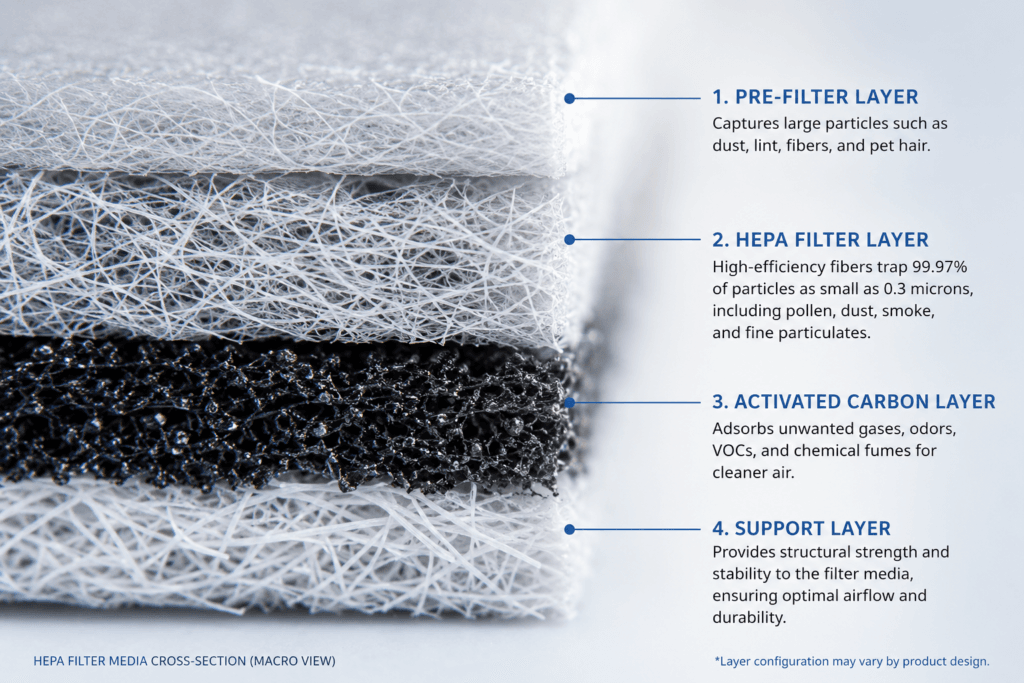
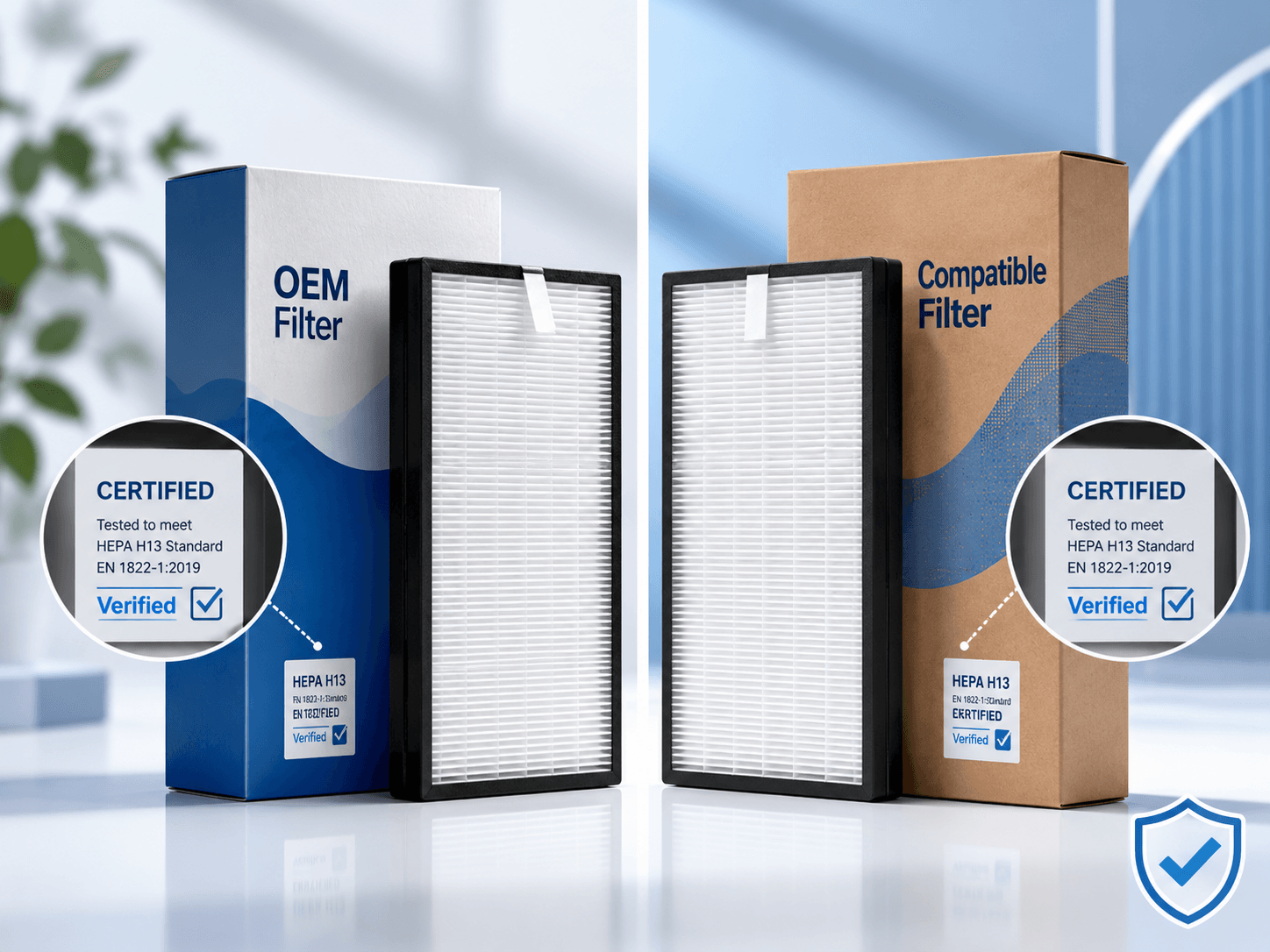
The common idea of “genuine versus fake” doesn’t accurately reflect what compatible filters really are. OEM filters are made by or under a formal license from the brand of the device. On the other hand, compatible filters, which are also known as aftermarket or third-party replacement filters, are created by independent companies to meet or even surpass the original specifications.
This difference is crucial because being compatible doesn’t imply it’s of inferior quality. According to the U.S. Environmental Protection Agency, a filter’s performance is determined by its certified filtration efficiency rating, not the brand it belongs to. A 2022 report from the Association of Home Appliance Manufacturers showed that a filter’s effectiveness largely relies on the quality of the filtration media, rather than the brand name on the box.
This shifts the real question from “Is it genuine?” to “Does it meet the specification my device requires?”
What Really Changes When You Opt for OEM
OEM filters carry three specific advantages that matter in defined circumstances.
Warranty Protection Comes First
Many appliance warranties include terms that mandate the use of OEM approved parts. If your air purifier is still under warranty and a third-party filter leads to a malfunction, the manufacturer might refuse to cover the issue. This is a standard practice in the industry, not just a guess. For devices that are still within their warranty period, opting for a genuine replacement filter serves as a legal safeguard for your investment, rather than just a choice for better performance.
Precision Fit for High Tolerance Devices
Some high end air purifiers and robotic vacuum cleaners are engineered to accept filters with near zero clearance. A dimensional gap as small as one millimeter can create bypass airflow, where unfiltered air moves around the filter instead of through it. OEM filters for these devices are manufactured to exact tolerances. Compatible manufacturers vary in how precisely they replicate those dimensions, so checking model specific fit reviews matters before committing.
Certification Traceability
OEM filters sold in regulated markets carry certifications linked to specific production lot numbers. If a filter batch underperforms, the manufacturer can trace the issue to a production point. Some reputable compatible brands publish independent lab test results and batch certification records. Others do not. Traceability is an area where OEM still holds a consistent edge.
Where Compatible Filters Exceed Expectations
Across several product categories, compatible filters are not simply an acceptable alternative. They are the financially and logistically rational choice.
High Frequency Replacement Products
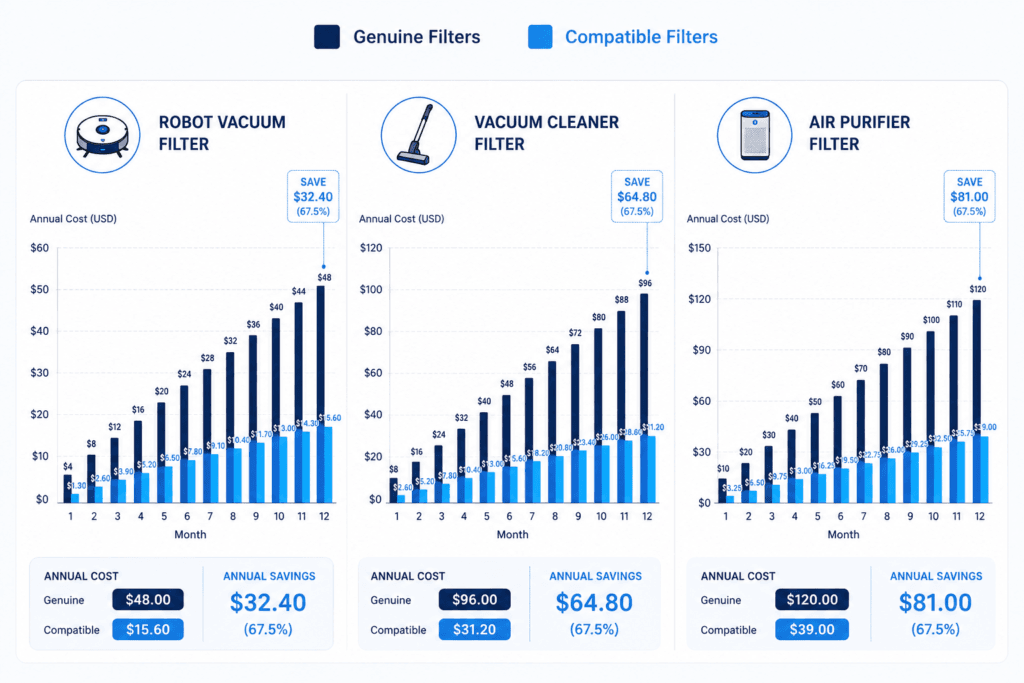
Robot vacuum filters, vacuum cleaner filters, and dust bags are designed for replacement every one to three months depending on household usage. At that replacement frequency, the annual cost difference between genuine and compatible becomes hard to ignore.
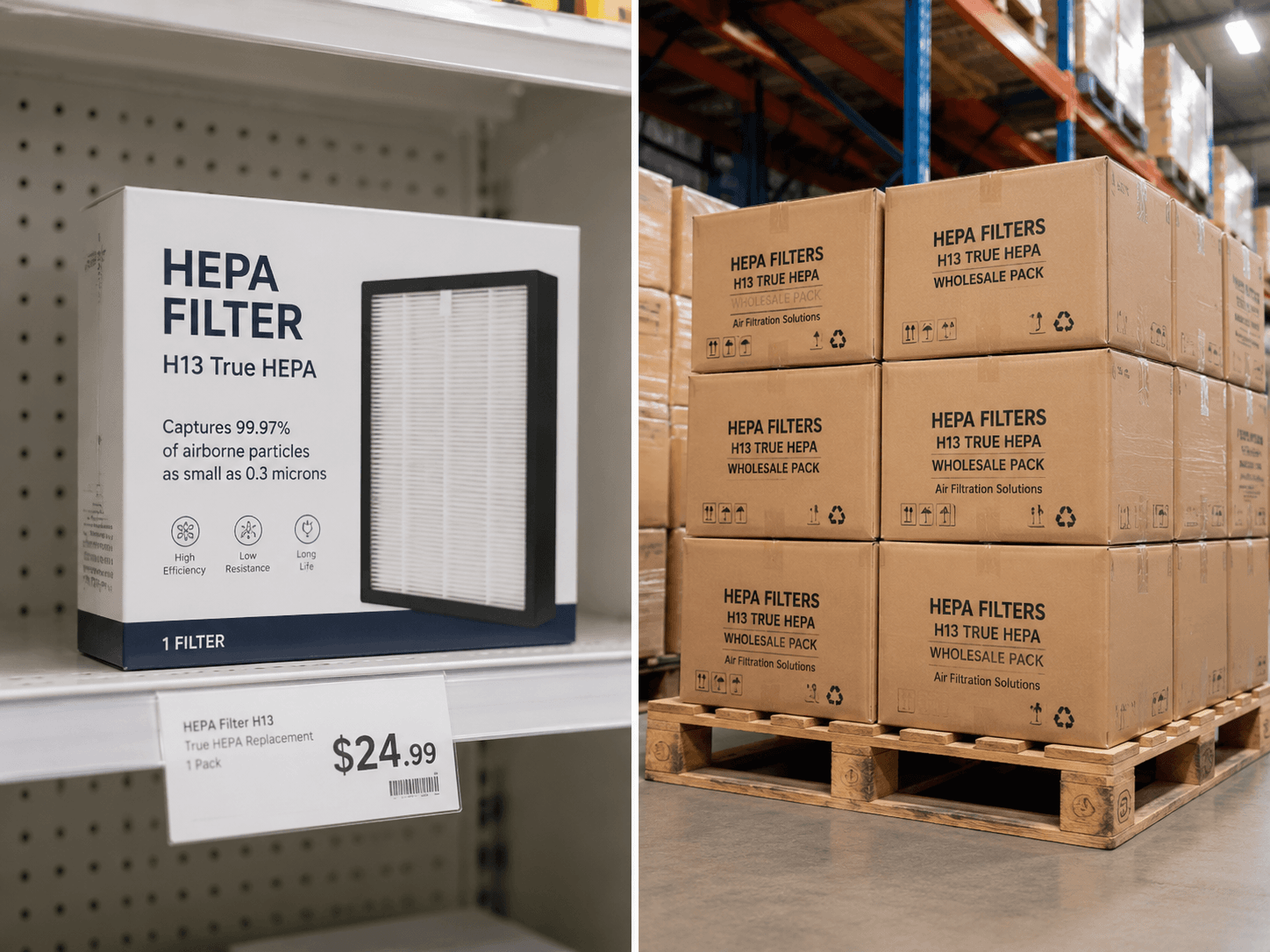
A genuine robot vacuum HEPA filter from a major brand typically retails between $12 and $25 per unit. A compatible robot vacuum HEPA filter certified to the same H11 or H13 HEPA standard commonly costs 40 to 60 percent less. Across twelve monthly replacements, that price gap adds up to a real household saving with no sacrifice in filtration performance, provided the compatible filter carries proper certification.
HIFINE compatible robot vacuum filters and vacuum cleaner filter cartridges are tested against OEM dimensional and filtration specifications before release.
Discontinued and Legacy Models
Once a device is past its warranty period, the case for paying OEM prices weakens considerably. When a manufacturer discontinues an older filter model, compatible replacements frequently become the only practical path to keeping the appliance functional. This pattern is especially common with older robot vacuum lines and legacy upright vacuum models.
Compatible manufacturers often continue producing replacement filters for discontinued models for years after OEM supply ends. For households with older appliances, compatible dust bags and filter options extend device lifespan and reduce the pressure to replace equipment that still works well.
Supply Consistency
Genuine filters for less popular or legacy models can disappear from retail without notice. Compatible manufacturers fill that supply gap reliably and often at scale, making them a more consistent long term source for specialty filter types that OEM supply chains no longer prioritize.
Three Questions That Simplify the Decision
This decision does not require extensive research. Working through three questions in order is usually enough.
- Is the device currently covered by an active warranty?
- How often each year will you change this filter?
- Does the compatible filter have independent certification?
What the Certification Number Actually Tells You
HEPA is a performance standard, not a brand trademark. A filter classified as H13 HEPA must capture at least 99.97% of particles at 0.3 microns, the most penetrating particle size for fibrous filter media, under EN 1822 and IEST RP CC001.
This means a compatible vacuum cleaner HEPA filter that carries a verified H13 certification performs to an identical physical standard as its OEM counterpart. The fiber structure and particle capture rate are governed by the certification number, not the label on the box.
For air purifier filter replacements specifically, the additional metric worth reviewing is activated carbon weight for odor and VOC reduction. Some OEM carbon filter formulas use proprietary media weights. This is one specific area where genuine filters occasionally hold a documented performance edge over generic compatible versions, and it is worth checking if odor control is a priority for your household.
Choosing the Right Filter for the Right Situation
Deciding between genuine and compatible filters isn’t just about sticking to a brand; it’s really about finding the best option for your unique needs. In some cases, the cost of OEM filters is justified by warranty coverage and the need for a precise fit. However, in many situations, filters that are frequently replaced, those that are no longer available, and certified compatible filters are the smarter choice.
HIFINE produces compatible filter replacements for various devices like air purifiers, robot vacuums, handheld vacuums, and upright vacuum cleaners. Each product line undergoes independent testing to ensure it meets OEM size and filtration standards.
The ideal filter is one that aligns with your device’s specifications, fits your replacement timeline, and has verifiable certification. While the brand is a consideration, it’s not the only factor to think about.