

A Honeywell air purifier that reeks of cigarette smoke will keep reeking, no matter how long you run the filter under the tap. The reason isn’t a defect. It’s in the spec sheet. Below is a parameter-by-parameter breakdown of why HEPA media and activated carbon solve two different problems, the exact filter part numbers a Honeywell 50250-S actually needs, and how a DIY Corsi-Rosenthal box compares on measured airflow.
Honeywell Filters: HEPA vs. Activated Carbon, by the Numbers
Both materials get marketed as “filters,” but they’re tested against different targets and rated on different scales. HEPA’s 99.97% figure comes from ANSI/ASHRAE Standard 52.2, the same framework that assigns MERV ratings; carbón activado has no equivalent standardized percentage because its performance scales directly with the mass of carbon packed into the filter.
| Parámetro | True HEPA Media | Carbón activado |
|---|---|---|
| Removal mechanism | Mechanical interception/diffusion | Gas adsorption onto pore surface |
| Rated efficiency | ≥99.97% of particles at 0.3 micron | No % standard — capacity scales with mass |
| Target pollutant | Dust, pollen, dander, smoke particulate | VOCs, smoke odor, formaldehyde |
| Typical mass in a “thin” pre-filter pad | n/a | ~1–3 oz |
| Typical mass in a deep-bed carbon unit | n/a | up to 15 lb |
| Minimum weight for real VOC reduction | n/a | ~300 g granular carbon in a standard-sized room, per composite-filter engineering guidance |
| ¿Se puede lavar? | No — Honeywell states HEPA filters should not be washed | No — saturated carbon can’t be regenerated at home |
| Typical replacement interval | ~12 months (Honeywell R-series) | 3–6 months under normal load; days under heavy smoke |
The practical takeaway: a “thin” carbon pre-filter, the kind bundled with most Honeywell HEPA consoles, can fully saturate within days of continuous cigarette smoke exposure. Once saturated, COV pass straight through untouched — engineers call this “breakthrough.” A secondhand Honeywell unit with unknown smoke history has likely gone through breakthrough more than once, and because carbon saturates chemically rather than visually, the filter can look brand new while doing nothing at all.
Honeywell Filter Compatibility: Get the Part Number Right
Search results for “Honeywell 50250 filter” mostly surface the wrong part. Here’s the actual compatibility chart, pulled from Honeywell’s own product documentation.
| Console Model | Correct Filter Part | Qty Needed | Tipo de filtro | Intervalo de sustitución |
|---|---|---|---|---|
| HPA090 / 094 / 100 / 104 / 105 | HRF-R1 | 1 | HEPA auténtico | 12 meses |
| HPA200 / HA202 / 204 | HRF-R2 | 2 | HEPA auténtico | 12 meses |
| HPA300 / HA300 | HRF-R3 | 3 | HEPA auténtico | 12 meses |
| 50250 / 13520 | HRF-F1 | 3 | Long-Life True HEPA | Not annualized — inspect at each carbon pre-filter change |
| 50150 / 11520 / 17200 / 18150 | HRF-F1 | 2 | Long-Life True HEPA | Same as above |
| 50200 | HRF-F1 | 2 | Long-Life True HEPA | Same as above |
| 50300 | HRF-F1 | 4 | Long-Life True HEPA | Same as above |
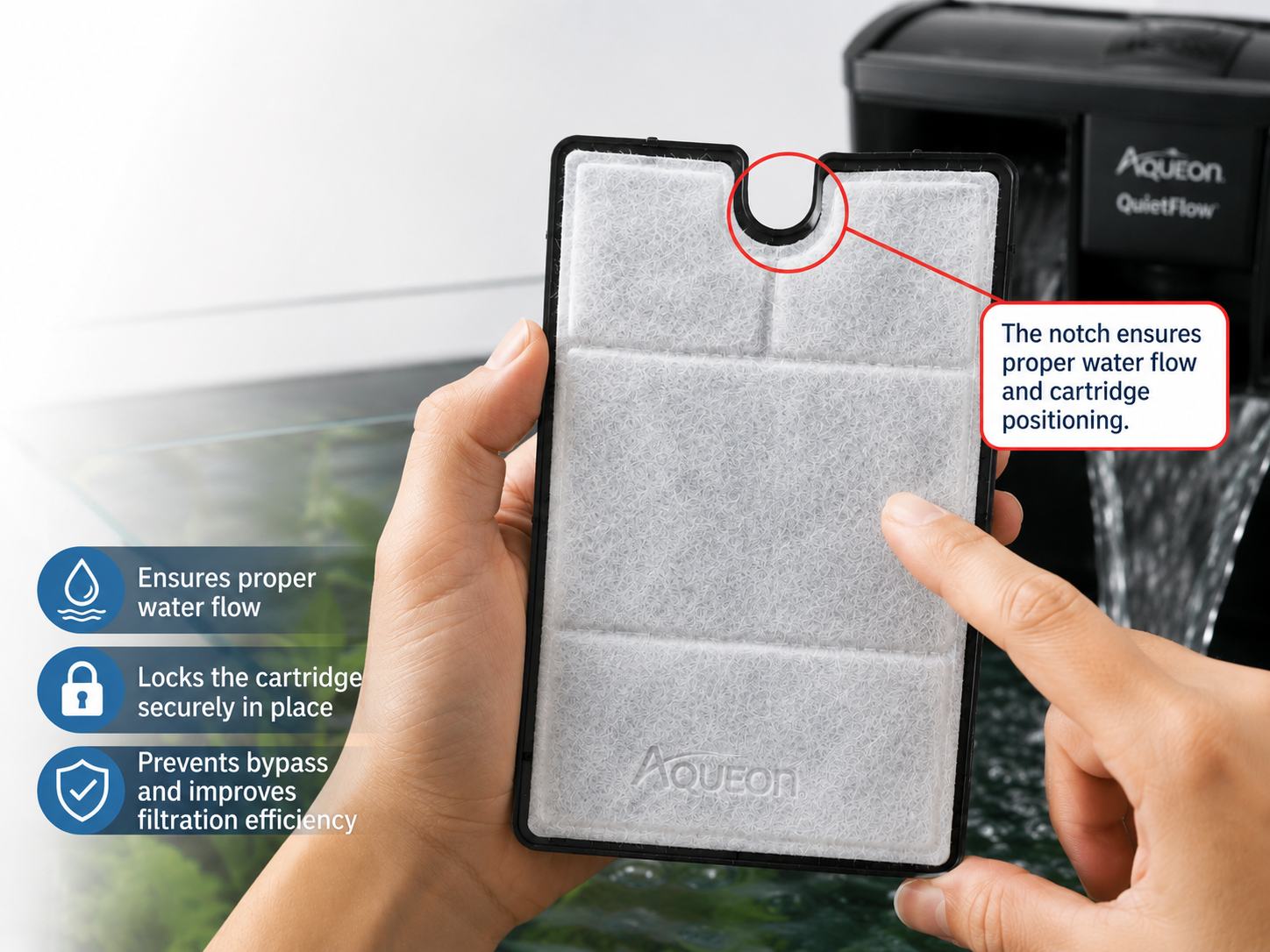
A carbon pre-filter is a separate, additional purchase for the entire 50000-series line and is sold independently of the HEPA pad. Ordering the wrong part number, R-series instead of F-series, is the single most common reason people conclude an older Honeywell console has “no filters available” when it’s actually still in production.
Three Fix Paths for a Smoky Honeywell Purifier, Compared on Real Airflow Data
| Option | Measured CADR | Approx. Build/Part Cost | Cost per CADR | Ruido | Removes odor? |
|---|---|---|---|---|---|
| Replace correct OEM Honeywell filter set | Matches original console spec | Filter cost only | n/a | Same as console | Only if carbon pre-filter is fresh too |
| New unit, same CADR class | Within the 165–239 CFM range typical of residential portable cleaners | Full unit price | n/a | Manufacturer-rated | Yes, if it ships with a real carbon stage |
| Corsi-Rosenthal box, 5-filter, box fan | 165–850 CFM depending on fan speed | ~$75–90 in parts | ~$0.08 per CADR — about 10x cheaper than a comparable commercial unit | Up to 67 dB | No, unless a carbon layer is added — MERV-13 media only |
| OEM-equivalent H13 + weighted carbon composite filter (e.g. HIFINE) | Matched to target console spec | Set by carbon weight and HEPA grade specified | n/a | Same as host console | Yes — carbon weight is specified against an odor-reduction target |
The CR box wins decisively on cost per CFM and independent testing backs its particle-capture performance: 3M testing found it captures airborne particles, including virus-sized ones, effectively. What it doesn’t solve is odor. MERV-13 filters are mechanical media, same category as HEPA, just a lower efficiency tier under ASHRAE 52.2. Smoke smell needs a carbon stage regardless of which airflow option you pick.
MERV vs. HEPA, for Reference
| Rating | Particle Size Captured | Aplicación típica |
|---|---|---|
| MERV 1–4 | >10 micron | Basic residential filters |
| MERV 5–8 | 3–10 micron | Standard home/office HVAC |
| MERV 13–16 | Down to 0.3–1.0 micron | Hospital-grade, high-efficiency residential |
| HEPA auténtico | ≥99.97% at 0.3 micron | It is not rated according to the MERV level; it uses the ASHRAE independent classification standard, which is also the standard on which Honeywell’s “True HEPA” filter is based. |
When Honeywell Doesn’t Stock Your Filter Anymore
The spec that actually predicts odor performance, whether you’re buying one replacement cartridge or qualifying a supplier for a private-label air purifier line, is carbon mass in grams or ounces per filter, not the word “carbon” on the packaging. If a legacy Honeywell console has aged out of retail availability, OEM/ODM factories such as HIFINE manufacture True HEPA media and custom-weighted activated carbon pre-filters sized to match discontinued consoles, so carbon load can be specified against a target odor-reduction claim instead of a generic label.