
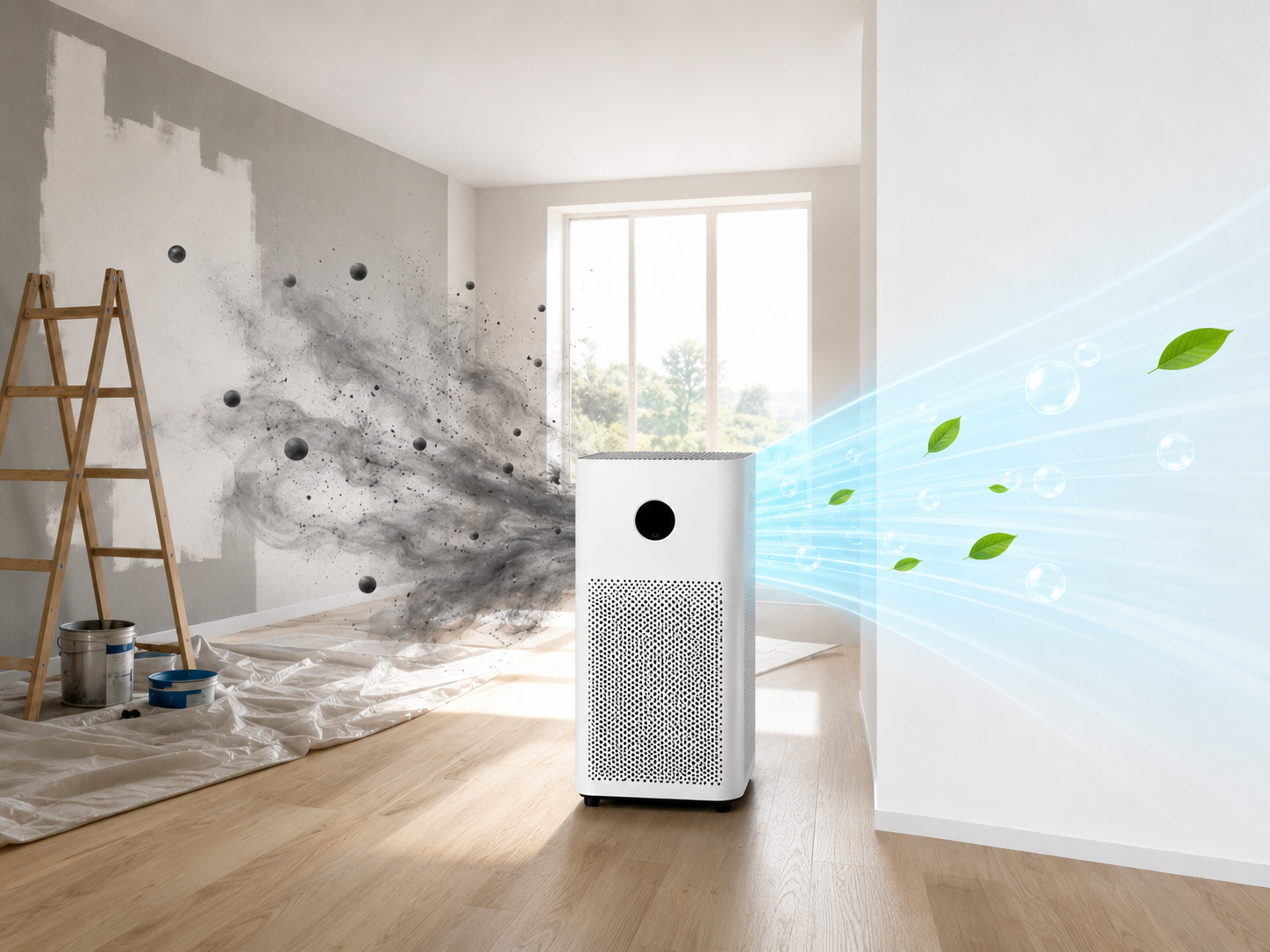
Perhaps you’ve just finished a renovation. Fresh paint, new flooring, maybe even a complete kitchen overhaul. Everything looks exactly as planned.
And then there’s the smell.
That sharp, almost chemical sweetness lingering in the air isn’t just an inconvenience — it’s your walls, floors, and adhesives releasing a class of airborne chemicals called volatile organic compounds, or VOCs, directly into the space you’re about to live in.
Most people crack a window for a few days and consider the problem solved. But here’s what most renovation checklists don’t include: VOC off-gassing doesn’t stop when the smell fades. Some compounds keep releasing at levels too low for your nose to catch — and ventilation alone, no matter how thorough, won’t fully clear them.
Can they actually be filtered out? Yes — but only with the right type of filter.
What’s Actually in Post-Renovation Air?
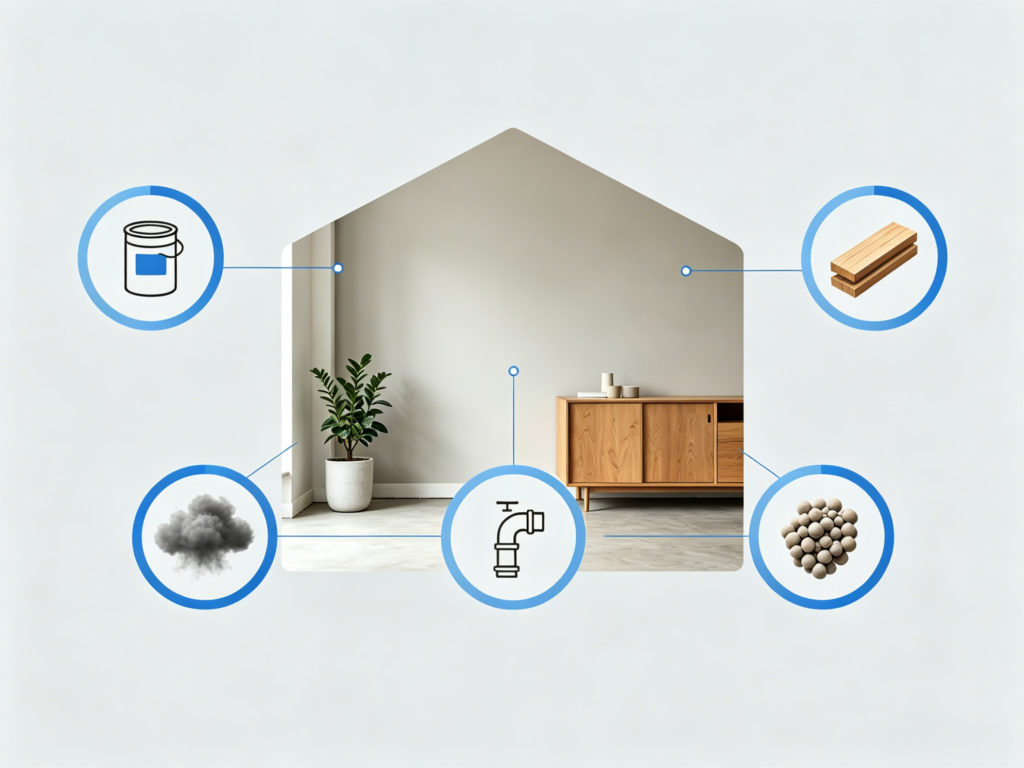
The smell isn’t “paint.” It’s a mixture of dozens of organic compounds evaporating from fresh surfaces at room temperature. The most common renovation VOCs include:
- Formaldehyd: released from certain water-based paints, adhesives, caulks, and composite wood flooring
- Benzene: found in solvent-based primers, oil-based coatings, and some sealants
- Toluene and xylene: common in oil-based paints, stains, and varnishes
- Acetone and ethyl acetate: present in lacquers, clear sealants, and some water-based formulas
The part that catches most homeowners off guard: VOC off-gassing doesn’t stop when the smell fades. Studies on indoor VOC dynamics consistently show that some compounds continue releasing at sub-odor thresholds — concentrations too low for the nose to register, but high enough to trigger persistent headaches, eye irritation, fatigue, and disrupted sleep over weeks or months.
This is why ventilation and filtration serve different purposes. Ventilation dilutes VOC concentration by introducing outdoor air. Filtration removes the compounds from indoor air entirely. For a freshly renovated home, you need both — but in sequence, not as substitutes for each other.
HEPA filters cannot filter gas molecules
HEPA is one of the most effective filtration technologies available for particles — genuinely excellent at capturing dust, pollen, pet dander, mold spores, and fine PM2.5 particulate. Anything with a physical size above 0.3 microns gets caught in the filter media.
But VOCs are not particles. They’re gas molecules. And gas molecules pass straight through HEPA media without any meaningful interaction.
This creates a real problem in how air purifiers are marketed for renovation use. When a product advertises “HEPA filtration” for paint odors, it’s technically accurate about what it captures — and completely misleading about what you actually need. A HEPA-only purifier running in a freshly painted room will capture particulate matter left over from sanding or spraying. The VOC problem? It continues unaddressed.
If a salesperson or product listing leads with HEPA when you’ve asked about paint smell, ask a harder question.
The Filter Technology That Actually Works
Activated carbon — also called activated charcoal — is what VOC removal actually requires. Here’s the mechanism.
Activated carbon is manufactured through a high-temperature process that creates an extraordinarily porous internal structure. One gram of activated carbon has an internal surface area roughly equivalent to a tennis court. That surface is lined with microscopic binding sites that attract and hold organic molecules through adsorption — a surface chemistry process where molecules stick to the carbon rather than being absorbed into it.
Renovation VOCs — toluene, formaldehyde, benzene — are organic compounds. They bond well to activated carbon surfaces. This is the physical chemistry behind why activated carbon works where HEPA does not: it’s the right tool for the right class of pollutant.
What makes one activated carbon filter better than another?
Not all carbon filters perform equally. Key variables:
- Carbon weight. More carbon means more binding surface area and a longer useful life before saturation. The thin carbon mesh or carbon-coated foam layers used in many budget purifiers have minimal adsorption capacity — they’re marketing features more than functional filtration.
- Granular vs. mesh. Granular or pelletized carbon, packed in a substantial layer, outperforms carbon-coated surfaces by a wide margin. It’s heavier. A unit with serious carbon filtration feels noticeably heavier than one without.
- Contact time. Carbon needs sufficient dwell time to adsorb effectively. Very high airflow rates reduce removal efficiency — the air passes through before meaningful bonding can occur.
- Replacement cycle. Once saturated, activated carbon can begin releasing previously captured compounds back into the air. Knowing when and how to replace the filter matters.
For a freshly renovated room under 400 sq ft, look for a minimum of 300g of granular activated carbon. Use filter specs, not marketing language, as your benchmark.
Why the Best Setup Combines Both Filter Types
The most effective post-renovation filtration isn’t choosing between HEPA and activated carbon — it’s running them together in sequence:
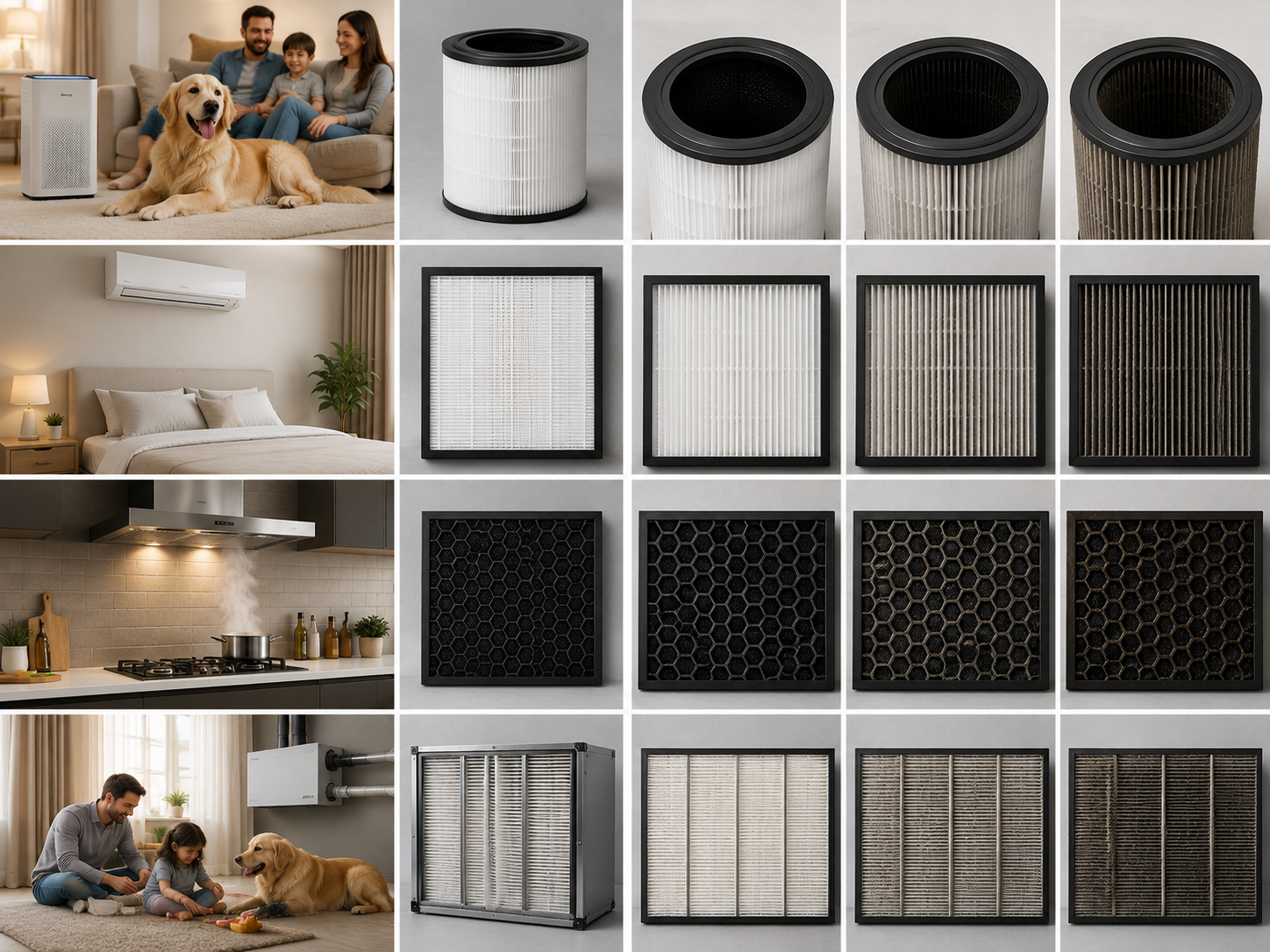
Pre-filter → Activated Carbon → True HEPA
The pre-filter catches large particles (paint dust from sanding, construction debris) before they can clog the carbon layer and reduce its effective life. Activated carbon handles VOCs and chemical odors. The HEPA layer captures fine particulate — including any paint particles still airborne after spraying or sanding that the pre-filter missed.
Post-renovation air almost always has both chemical and particulate contamination. A system that addresses only one of them is, at best, half a solution.
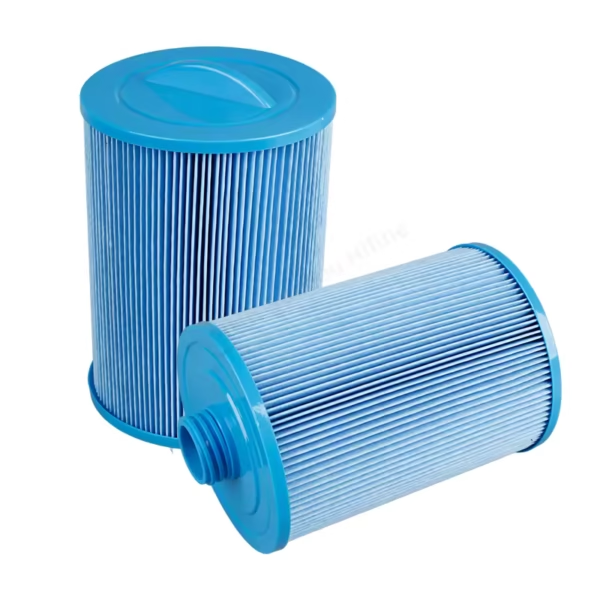
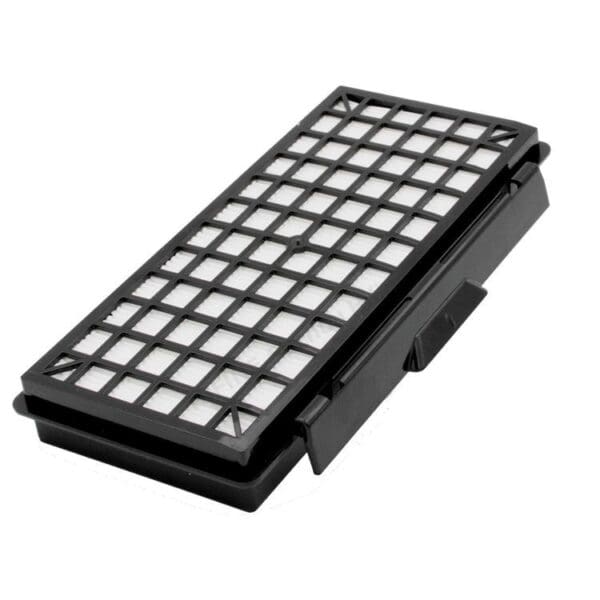
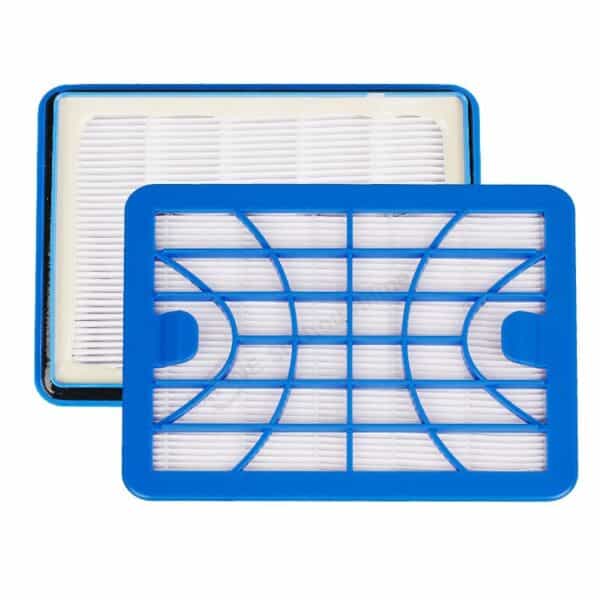
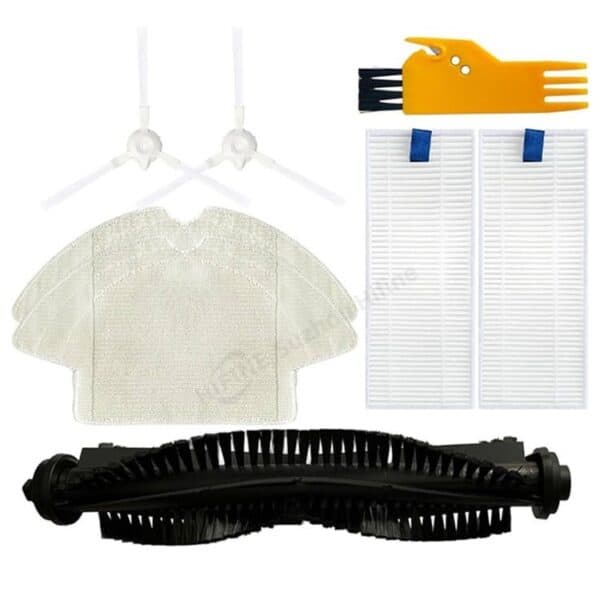
HIFINE’s filter cartridges are designed around this layered structure—because solving indoor air quality problems means addressing the root causes, not just the easiest part to sell.
A Realistic Filtration Timeline After Renovation
Hours 0–72: Ventilation first. Open windows, run exhaust fans to push air outward, and let the highest VOC concentrations escape before running active filtration. This is the off-gassing peak window.
Days 3–14: Switch to active filtration mode. Run your carbon + HEPA purifier continuously in the renovated space. Keep windows partially open if outdoor air quality is good — this creates a steady exchange that filtration alone can’t replicate. VOC levels typically drop significantly in this window.
Weeks 2–8: Off-gassing follows a long tail. It doesn’t stop abruptly. Continue filtering, particularly at night when ventilation is reduced. This is the phase where most homeowners stop early — and where lingering morning headaches and poor sleep quality often come from.
A few additional variables that matter:
- High summer temperatures accelerate the release of volatile organic compounds (VOCs).
- New furniture exacerbates this. If you refurbish and replace furniture, VOC emissions will accumulate.
- Humidity affects the rate of VOC release.
Different types of renovations result in different indoor air quality levels.
The One Question Worth Asking Before You Buy
When choosing an air purifier specifically designed for post-renovation air purification, ask yourself this specific question:
How much activated carbon does this unit contain — by weight?
“Has a carbon filter” is not the same as “provides meaningful carbon filtration capacity.” A carbon-coated foam sheet might technically be a carbon filter. It will not meaningfully address a freshly painted room. Real granular carbon filtration adds weight — actual, noticeable weight to the unit.
If a purifier feels surprisingly light for its size, that’s information.
Bottom Line
Post-renovation paint odors are filterable. But only with technology matched to the actual problem.
- HEPA alone: captures particles, not the chemical odors.
- Ventilation alone: dilutes, doesn’t remove.
- Activated carbon + HEPA together: addresses both.
The chemistry of renovation off-gassing is well understood. What often isn’t is which filter type handles which pollutant — and why that distinction matters for the weeks after your renovation wraps up.