
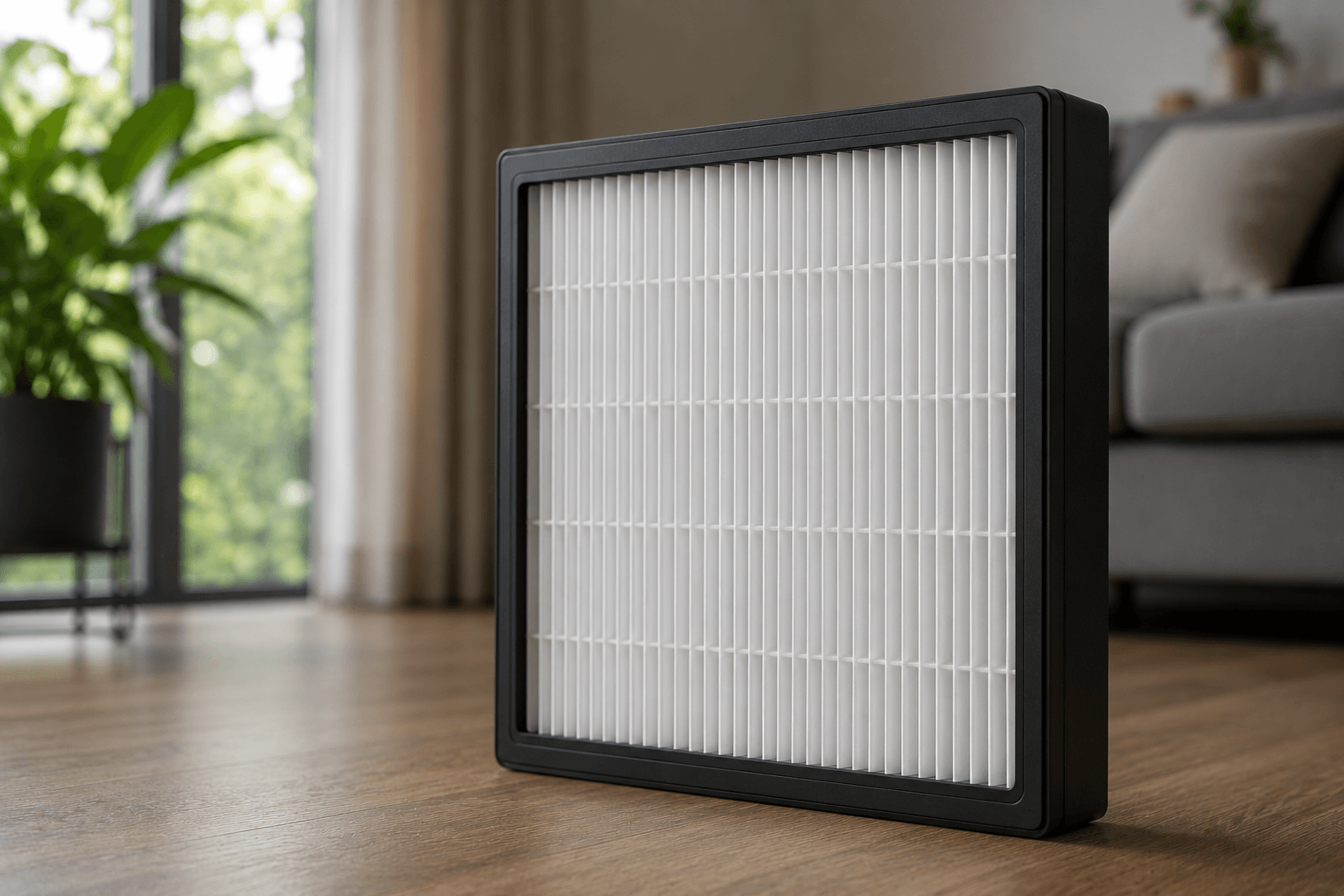
If you see many different sizes of car air filters and feel unsure how to choose, don’t worry. You only need to consider three factors to select the most suitable one for you, which I will explain below.
What’s Actually Bothering You in the Car?
Start here, not with the filter spec sheet. Your symptom points directly to the filter type you need.
- If you notice a stale, chemical, or exhaust like smell when stuck in traffic, that’s a gas phase problem. Particulate filters don’t touch it. You need activated carbon.
- If you sneeze, get itchy eyes, or notice more dust on the dashboard during certain seasons, that’s a particle problem. You need a high efficiency particulate filter, and carbon is optional.
- If you drive mostly on open highways in a low traffic area and haven’t noticed either issue, your current filter is probably fine for another service interval, and upgrading filter type won’t add much.
Don’t have a clear symptom? Use your commute as the proxy instead. The Society of Automotive Engineers has documented that particulate loading on cabin filters increases airflow resistance over time, and that loading happens faster in stop and go traffic with higher ambient particulate density. If you’re commuting through a congested city daily, treat that as equivalent to the “exhaust smell” answer above, even if you haven’t consciously noticed the smell yet.
Choose the Cabin Air Filter that suits your needs
Once you know your symptom category, the filter choice is straightforward.
Choose carbón activado if you picked the smell or traffic answer. Activated carbon works by adsorption, where gas molecules bond to the carbon’s surface area, which can run into the hundreds of square meters per gram. This is the only filter type that addresses ozone, sulfur compounds, and volatile organic compounds from vehicle exhaust. A plain particulate filter, no matter how dense, will not remove these gases.
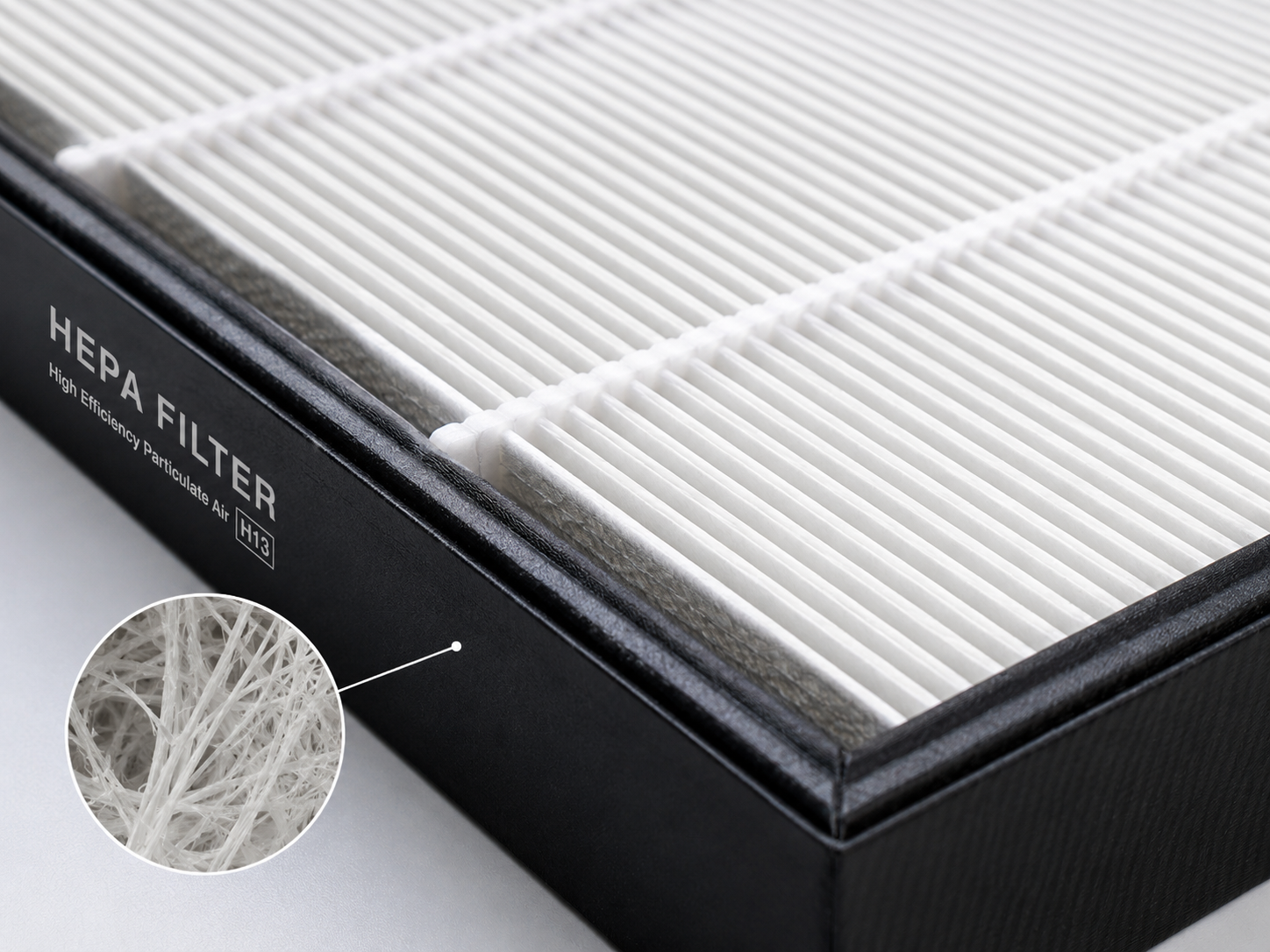
Choose a high efficiency particulate filter if you picked alergias or dust. Look for a filter rated under ISO 16890, the international standard that scores filters by particle size fraction using labels like ePM1 or ePM2.5. A filter labeled ePM2.5 70% captures 70% of particles at the 2.5 micron range under standardized testing, which is the size fraction most relevant to pollen and fine dust. This rating tells you something concrete. Marketing phrases like “advanced protection” printed without a test standard behind them tell you nothing.
Choose a combination filter if both apply to you. Most mid to premium aftermarket cabin filters now layer activated carbon over particulate media, so you’re not forced to pick only one mechanism if your situation calls for both.
Double-check the details before buying a cabin air filter
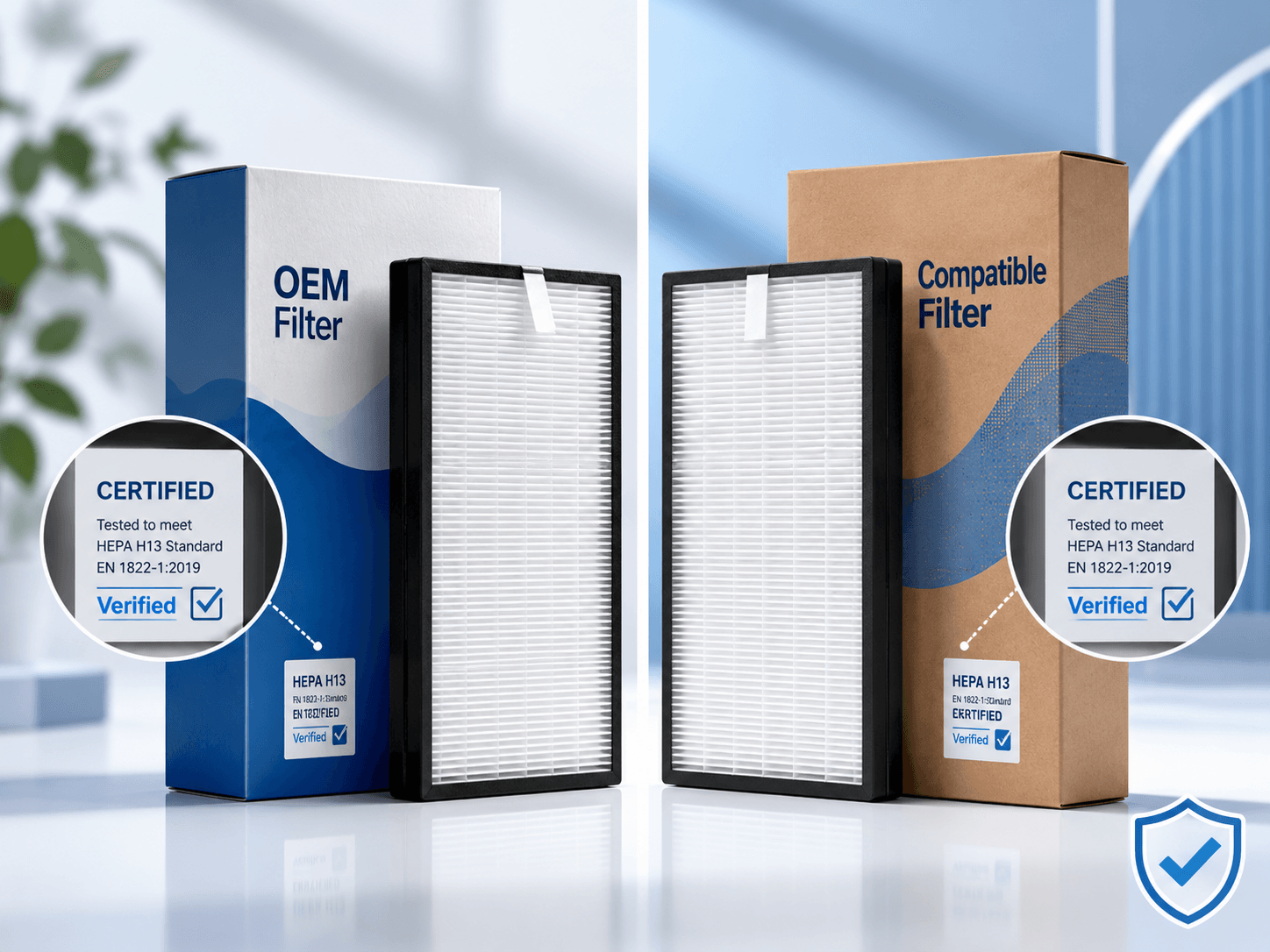
Once you’ve narrowed to a filter type, one more check separates a good purchase from a wasted one. Find the actual rating on the box or product listing.
For particulate filters, look for the ISO 16890 ePM rating. If you have respiratory sensitivity or live somewhere with documented air quality concerns, prioritize a higher ePM2.5 percentage over a vague “premium” label. The U.S. EPA classifies PM2.5 as a pollutant tied to respiratory and cardiovascular effects, and research referenced by Lawrence Berkeley National Laboratory has found that in cabin particulate levels during commute periods can run higher than ambient roadside air, since a vehicle cabin concentrates exhaust and brake dust in a partially sealed space.
For carbon filters, check whether carbon weight is stated in grams. If a listing only says “includes activated carbon” with no weight figure, that’s a sign the carbon loading may be minimal, and the filter’s gas adsorption performance will fade faster than one with a stated, adequate carbon mass.
If neither number is listed anywhere on the product page or packaging, treat that as a red flag and look elsewhere.
One Exception: Electric Vehicles
If you drive an EV, your decision process gets one extra layer. Many electric vehicles route cabin air filtration through systems tied to battery cooling intake or cabin pressurization, not just passenger comfort. That means filter resistance affects more than air quality, it can touch system efficiency too. Stick to OEM specified dimensions and airflow ratings for your specific model rather than a slightly oversized aftermarket filter, which is more forgiving in a traditional combustion vehicle but less so here.
If You’re Buying in Volume
Everything above answers “which filter do I personally need.” If you’re a distributor or private label buyer sourcing cabin air filters from an air filter wholesaler or OEM manufacturer, the decision shifts from symptoms to manufacturing consistency. Run through this before committing to a supplier.
Confirm frame sealing quality first, since a filter that leaks air around its edges will underperform regardless of what the media inside is rated for, and this defect won’t show up on a spec sheet. Ask for the carbon weight in grams rather than accepting “activated carbon included” as a description, because loading varies widely between suppliers. Request ISO 9001 certification on the production line along with batch level ePM test reports, so you have traceable data across production runs instead of a single sample that may not represent ongoing output.
HIFINE manufactures cabin air filter media and finished assemblies for OEM and private label partners, applying the same filtration media standards used across its filtro para purificador de aire y smart home filtration product lines, with batch tested particulate efficiency and consistent carbon loading documented across runs.
Your Three Step Path
Identify your symptom or commute type first. Match it to particulate, carbon, or combination filtration. Then verify the actual ePM rating or carbon weight before purchase instead of trusting a marketing label. That’s the entire decision, and it takes less time than reading a full spec sheet would.