
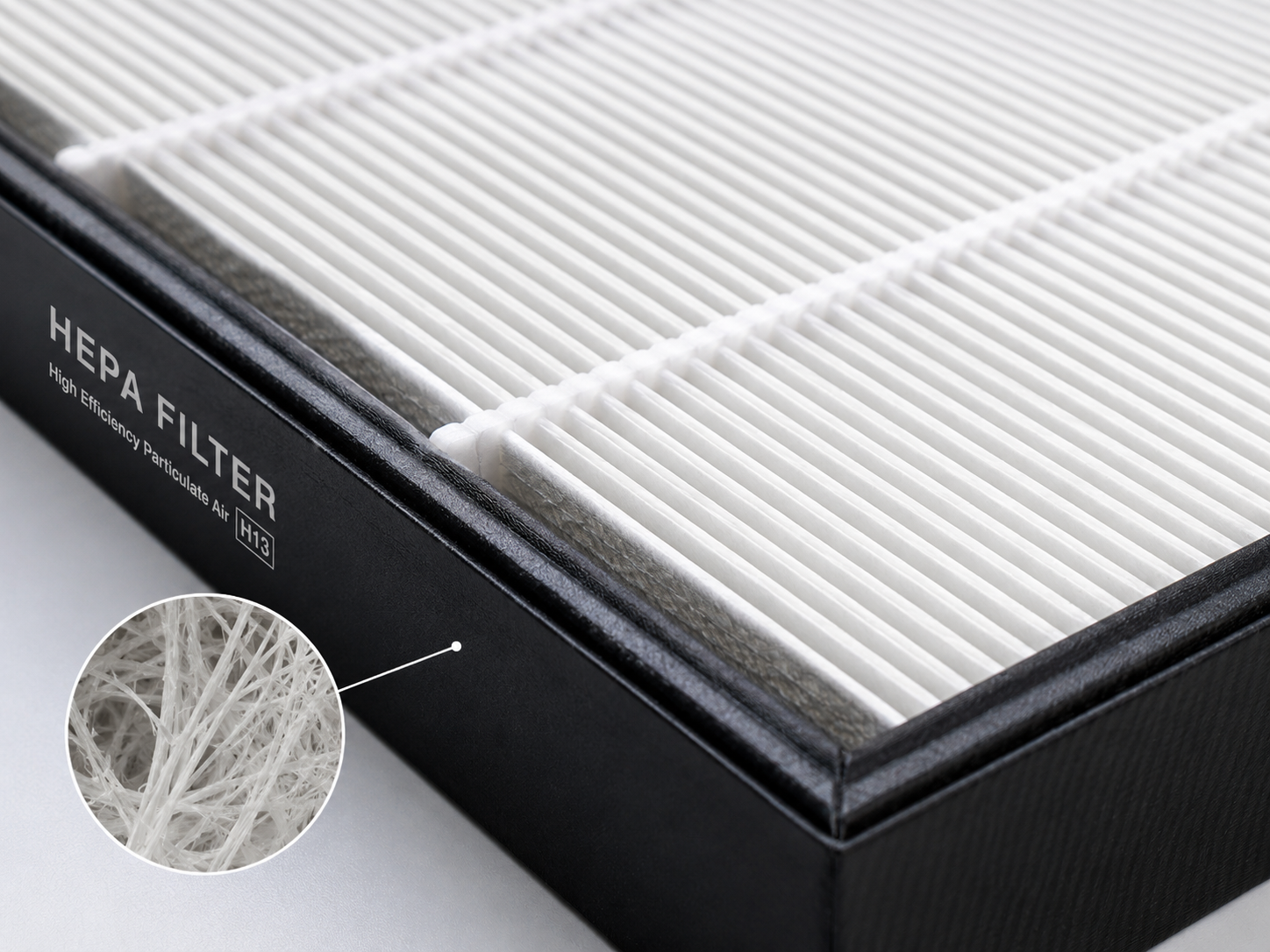
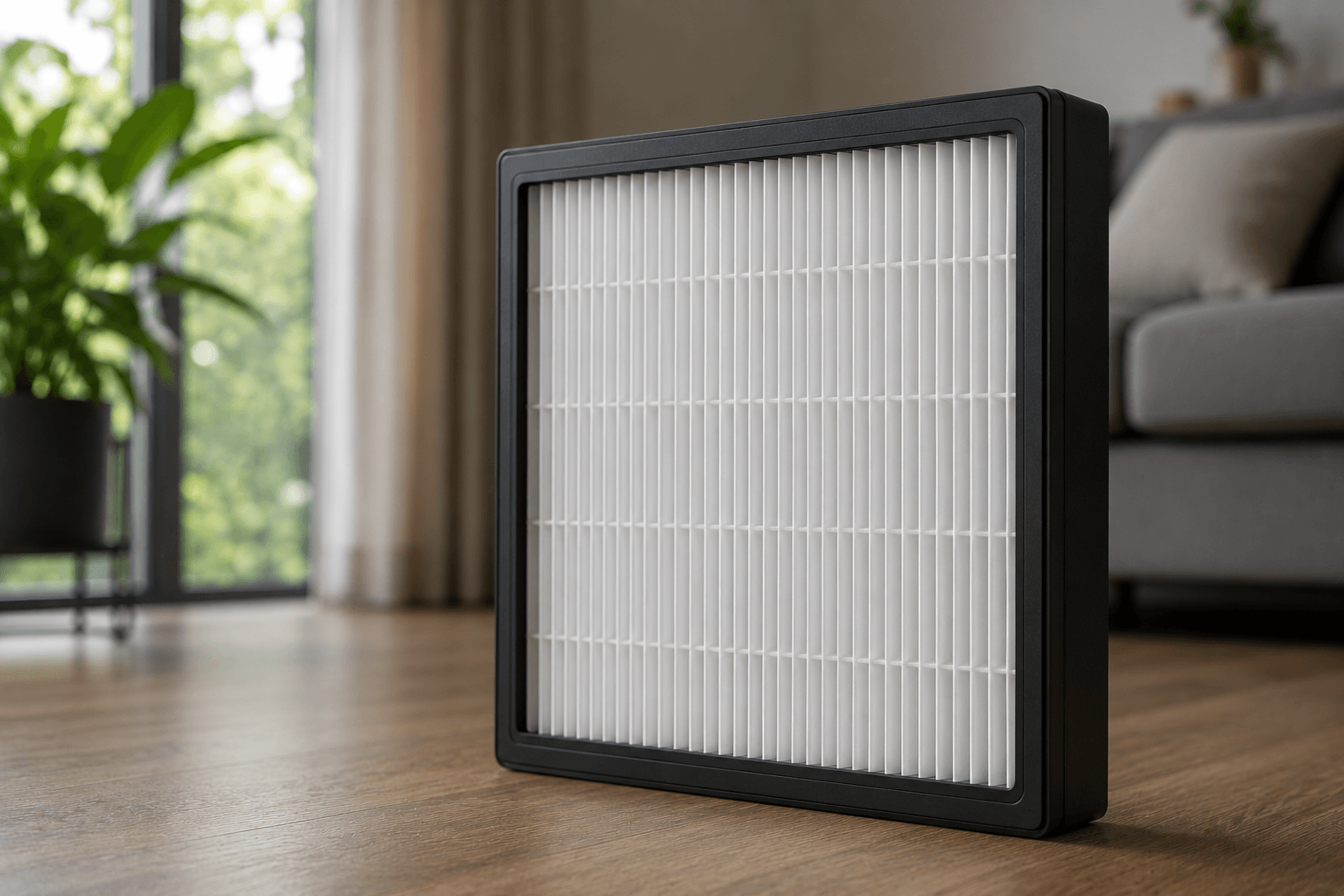
HEPA stands for High-Efficiency Particulate Air. To carry that label, a filter has to trap at least 99.97% of particles measuring 0.3 microns wide, roughly 300 times smaller than a human hair. You won’t see these particles drifting through a room. You’ll just breathe them in without knowing.
HEPA filters show up in air purifiers, vacuum cleaners, and hospital ventilation systems. Dust, pollen, mold spores, smoke, pet dander. If it’s small enough to reach your lungs, this is what’s built to stop it.
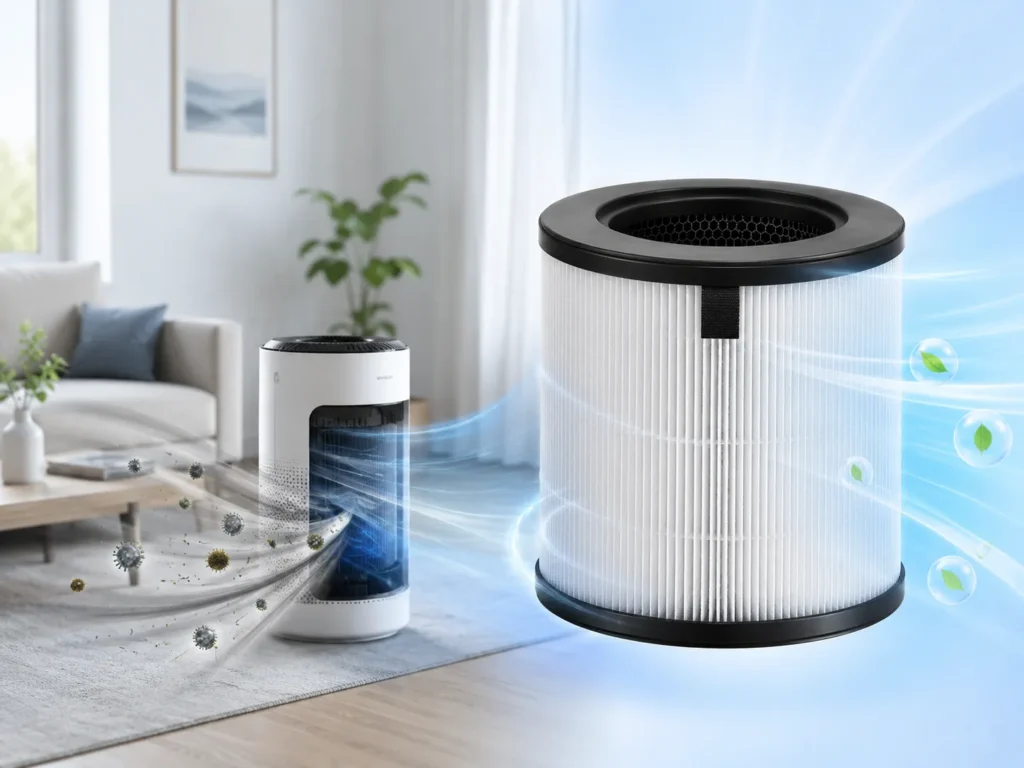
How Does a HEPA Filter Work?
People tend to picture filters like pasta strainers, where particles either pass through the holes or they don’t. HEPA filtration is a different thing entirely.
Three processes happen inside the filter at the same time. Large particles crash into the fibers because they’re moving too fast to change direction. Mid-sized particles travel close enough to graze the fibers and stick on contact. The tiniest particles bounce around almost randomly and end up hitting a fiber by accident. Different particle sizes, different capture methods, all of them ending up trapped.
Where You’ll Find Them
Hospitals use HEPA filtration in operating rooms and isolation wards, where contaminated air can directly cost a patient their life. Semiconductor factories depend on them because a single dust particle landing in the wrong spot can ruin a chip. Pharmaceutical labs, research facilities, anywhere cleanliness isn’t negotiable.
At home the risks are lower, but the filters still do real work. Cheaper vacuum cleaners pull debris off the floor and push fine dust straight back out through the exhaust. A HEPA-equipped model doesn’t do that. For anyone dealing with alergias or asthma, that’s not a small thing.
Genuine Replacement Filters or Wholesale Sourcing?
If your business goes through HEPA filters regularly, whether you’re a distributor, an appliance brand, or managing a large facility, buying off retail shelves one pack at a time isn’t a real strategy.
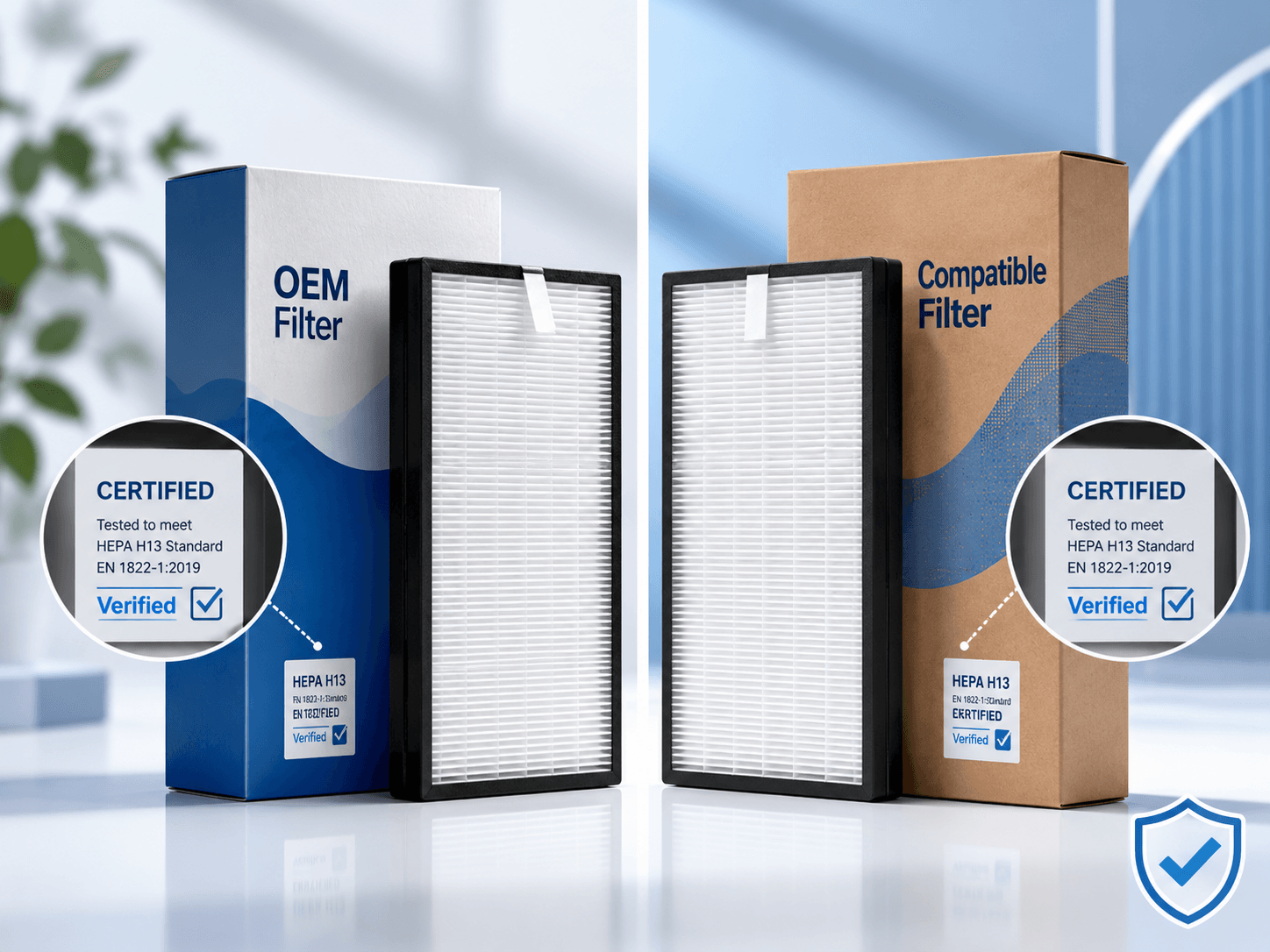
Certification is the first issue. Retail shelves are full of filters labeled “HEPA-style” or “HEPA-type,” terms that sound official but don’t mean the filter actually meets the standard. Sourcing wholesale means you can require certified materials that genuinely hit 99.97%, not products that just borrow the branding.
Fit is the second. Retail products come in fixed dimensions. If you need custom frame sizes, specific coverage ratings, or OEM branding on the filter itself, a wholesale manufacturer is the only path to get there.
Cost and supply is the third. Filters need replacing every six to twelve months, which adds up fast across a large operation. Retail prices fluctuate and stock isn’t always reliable. Buying wholesale locks in consistent pricing and steady availability, which matters when you’re running at scale.
Partnering with HIFINE
HIFINE manufactures replacement HEPA filters directly, cutting out the retail markup entirely. Standard replacements, custom sizing, OEM and ODM production. ISO 9001 and BSCI certification backs the quality. If your operation needs dependable volume at competitive unit costs, it’s worth a conversation.
Common Questions
Do HEPA filters catch viruses?
Viruses don’t usually travel through air on their own. They attach to droplets or dust particles. HEPA filters catch those carrier particles, which makes them a useful layer of protection, though not the only one you’d want.
How do they compare to regular filters?
A standard filter catches hair, large dust, and visible debris. A HEPA filter catches what you’d never notice until you’re already sneezing. The efficiency gap between the two is real and worth paying attention to.
How often do they need replacing?
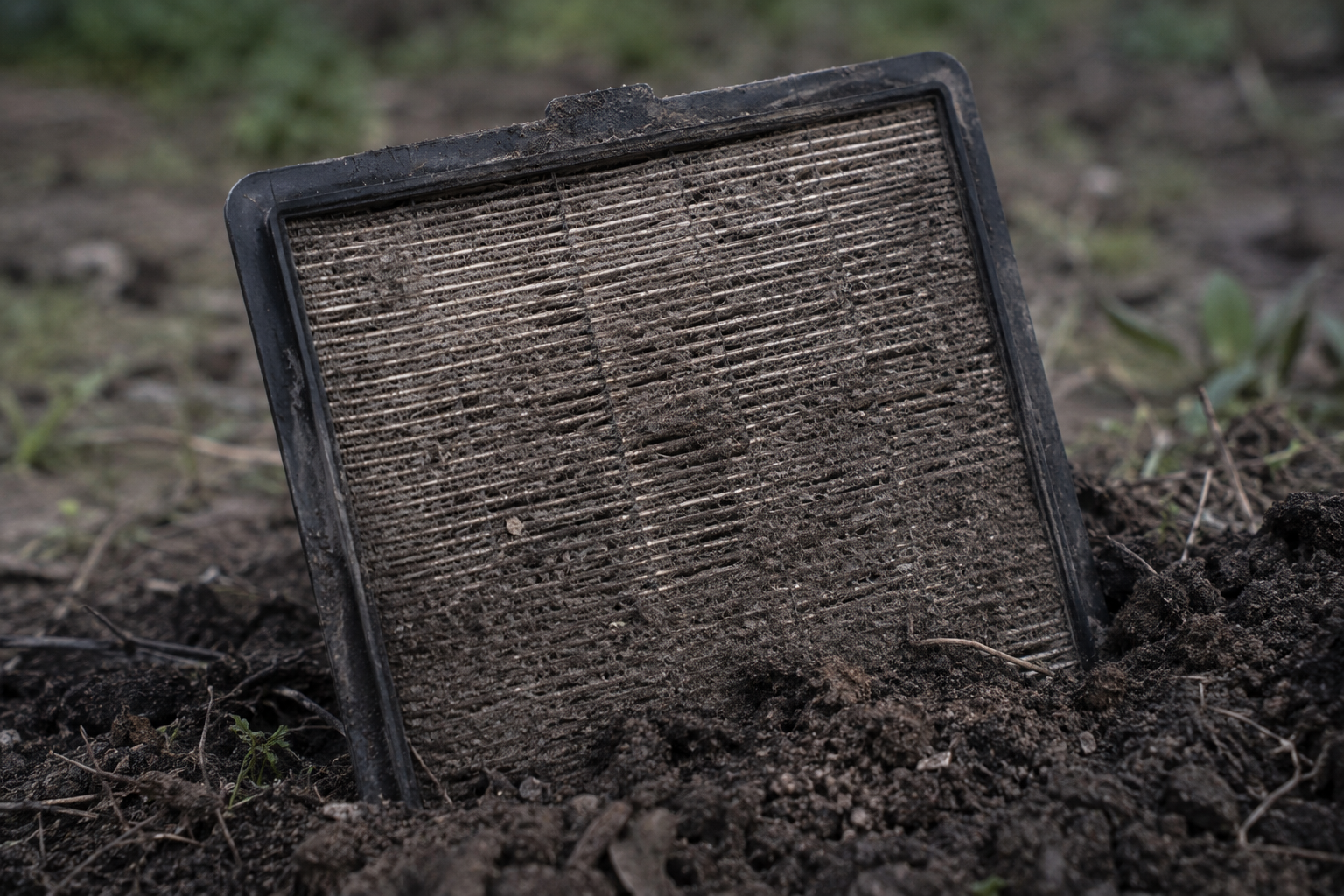
Every six to twelve months, roughly. If the device runs constantly, you have pets, or the air quality in your area isn’t great, lean toward the shorter end of that range.
Conclusión
High-efficiency particulate air (HEPA) filters play a vital role in our everyday lives, particularly in enhancing air quality and safeguarding health. Whether used in homes or industries, selecting the appropriate HEPA filter is key to achieving clean air. By learning about the functionality of HEPA filters and their various uses, consumers can make educated decisions that cater to their individual requirements.