
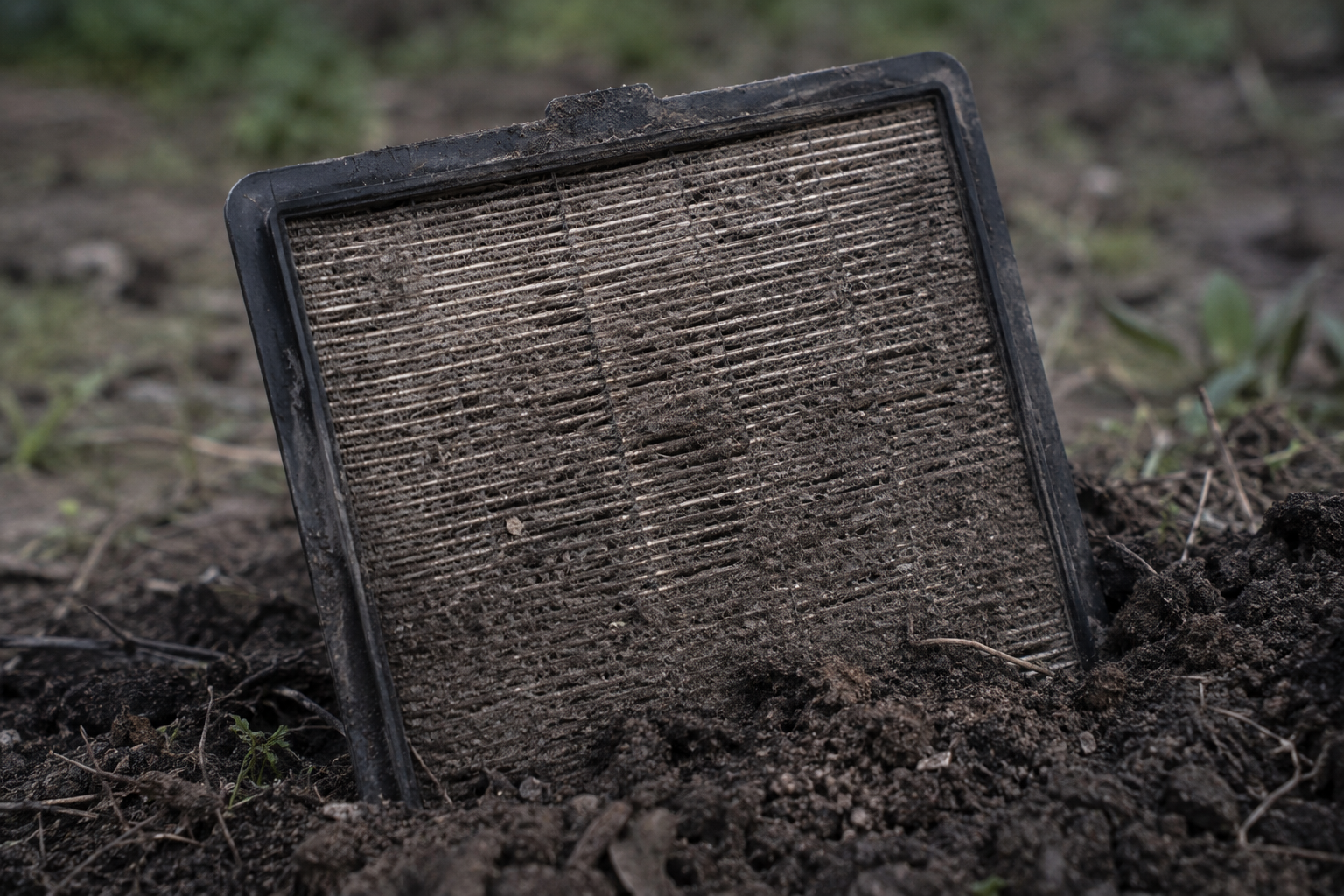
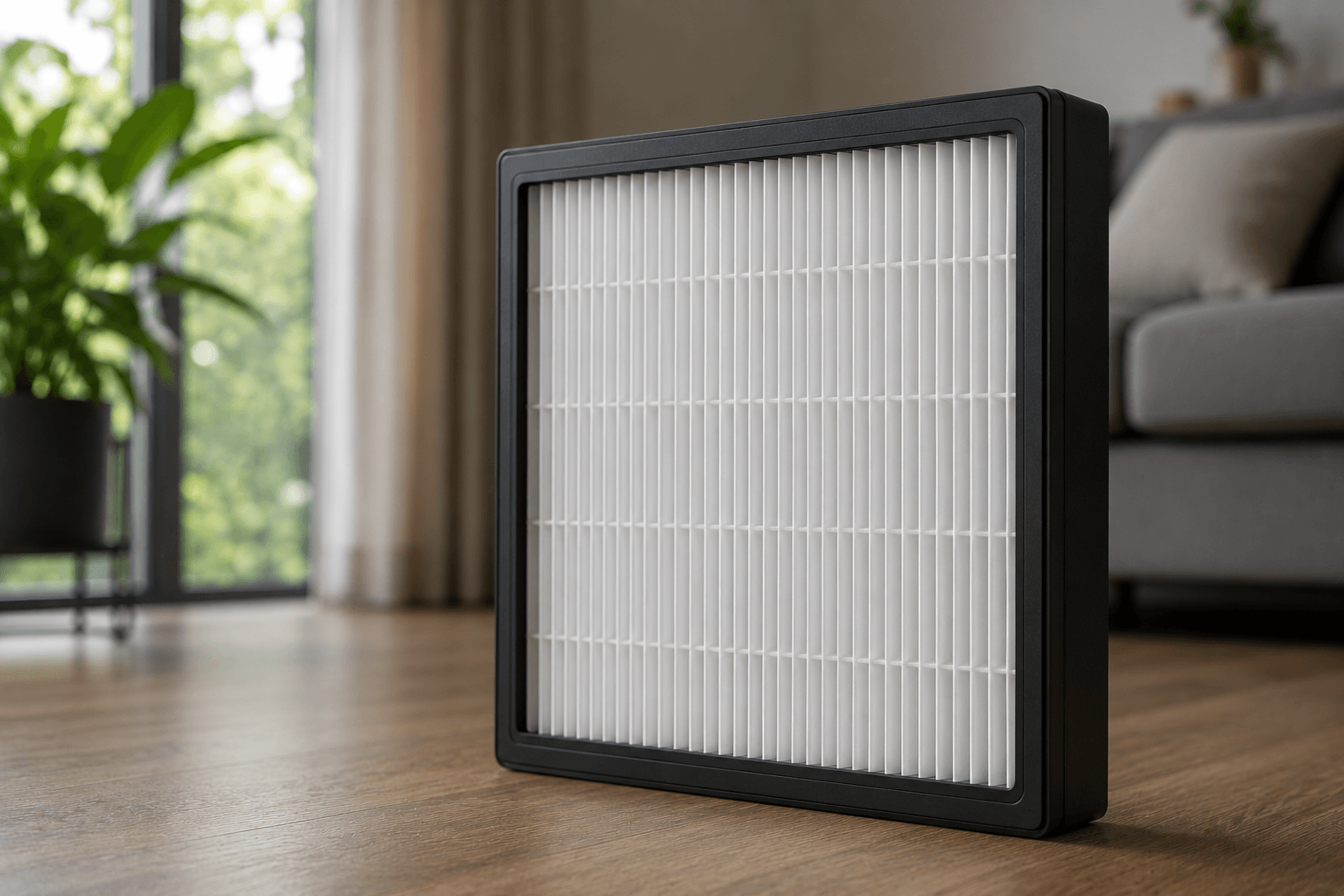
You pull out the old filter, drop it in the trash, and slide in a fresh one. Done. But that used HEPA filter doesn’t disappear—it heads to a landfill, where it can sit for decades, slowly breaking down into the very pollutants your air purifier was supposed to stop.
This is a problem the filtration industry rarely talks about. It should.
Where do discarded HEPA filters go?
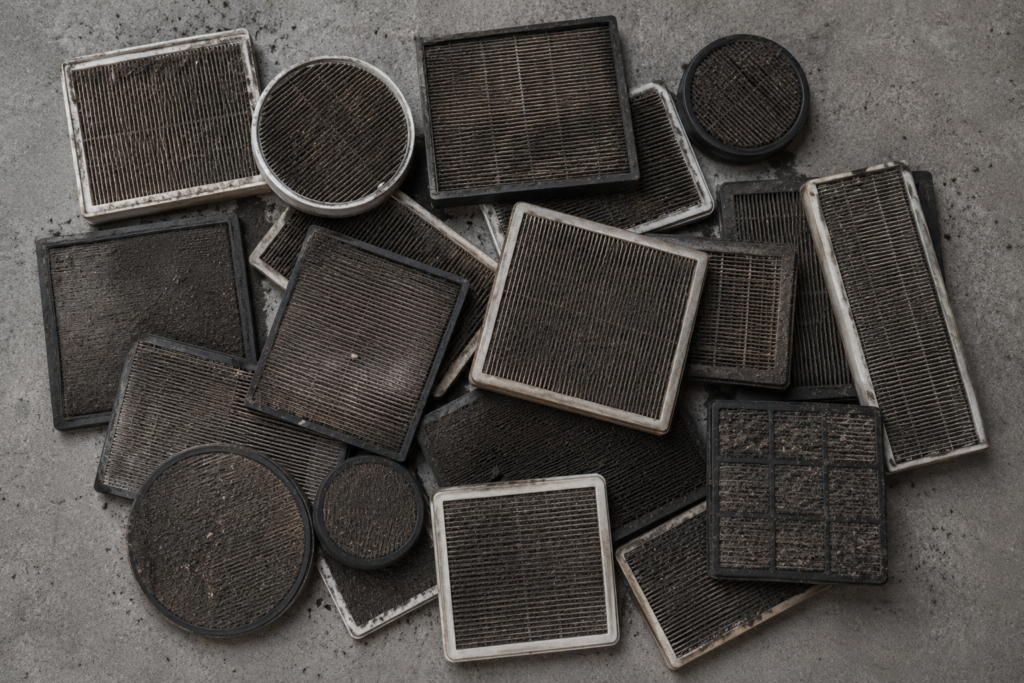
The global HEPA filter market was valued at around $4.2 billion in 2023 and is on track to hit $9.88 billion by 2032, according to market research from Allied Analytics LLP—a compound annual growth rate of roughly 9.3%, driven by stricter indoor air quality standards and wider adoption of air purification devices.
More filters sold means more filters thrown away. Most residential air purifier filters need replacing every three to twelve months depending on usage and air quality. Over a single decade, one household can go through 20 to 40 units. Scale that across tens of millions of homes worldwide, and you’re looking at hundreds of millions of used air filters entering the waste stream every year. The vast majority are landfilled with no special treatment.
That number keeps rising. And the science behind what happens next is more concerning than most filter manufacturers want to discuss openly.
Why Used Air Filters Cannot Be Recycled Through Standard Channels
To understand the disposal problem, you need to understand what HEPA filters are made of.
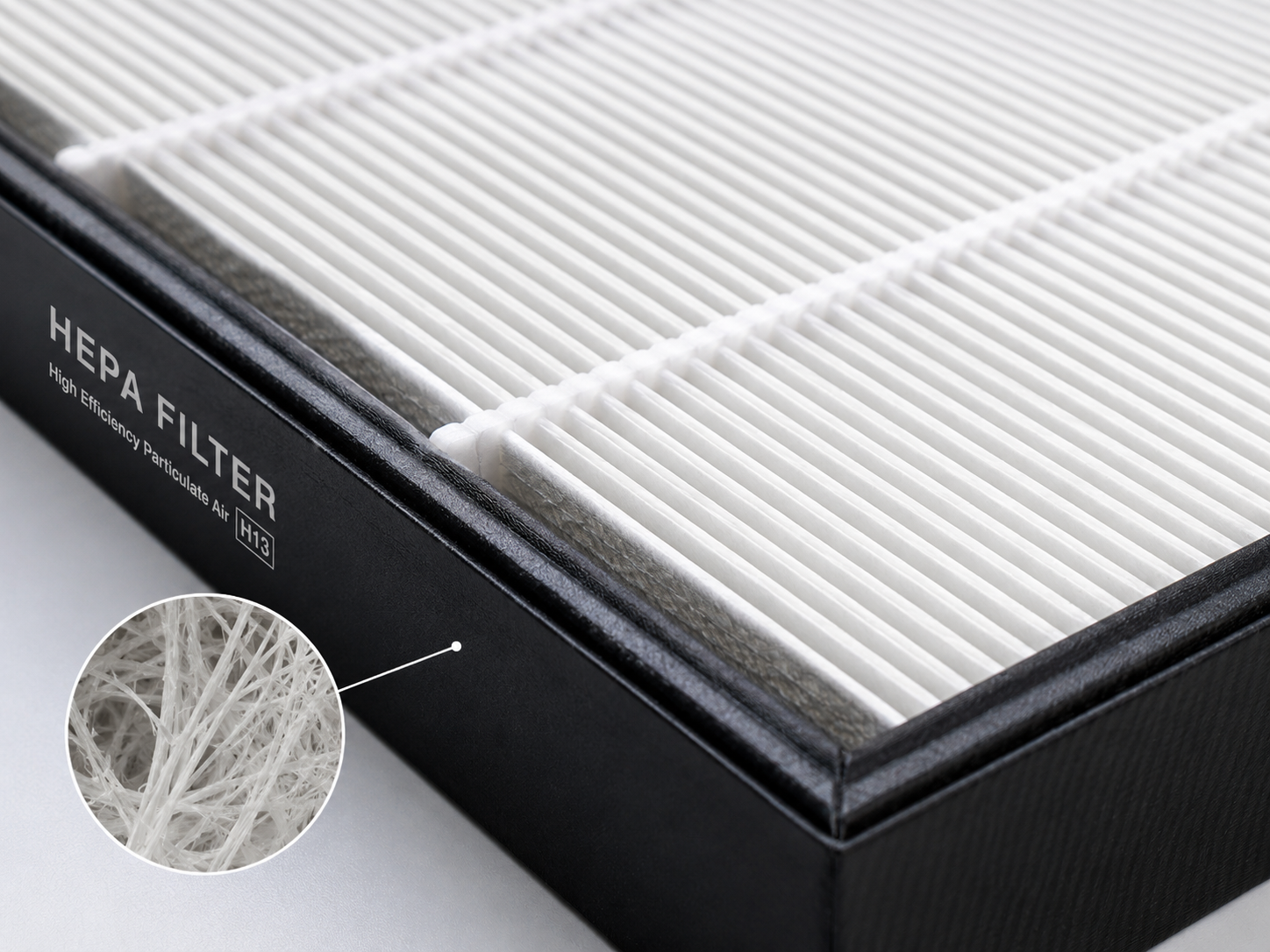
A standard filter combines a plastic or cardboard frame with synthetic fiber media—polypropylene, polyester, and fiberglass are the most common materials. That media is what captures airborne particles down to 0.3 microns. The problem is that these tightly bonded synthetic materials also make conventional recycling impractical.
Waste management systems aren’t equipped to separate the fiber layers from the frame, let alone to handle the mix of trapped pollutants—dust, mold spores, bacteria, volatile organic compounds, heavy metals—that accumulate inside a filter during normal use. The processing cost far exceeds any recovered material value. So the filters go to landfill.
What does disposable filter media mean for microplastic contamination?
Polypropylene and polyester don’t biodegrade. Physical weathering and UV exposure break them into microplastics and eventually nanoplastics. A growing body of peer-reviewed research, including studies published in Environmental Science & Technology and Science of the Total Environment, has documented synthetic microfibers in agricultural soils, freshwater systems, and even remote ocean sediments.
The European Environment Agency has estimated that agricultural soils in EU countries receive several times more microplastic pollution annually than European surface waters do. Landfills—where used HEPA filters typically end up—are one of the primary contributors to soil-based microplastic contamination.
Used Filters Release Heavy Metals into Groundwater
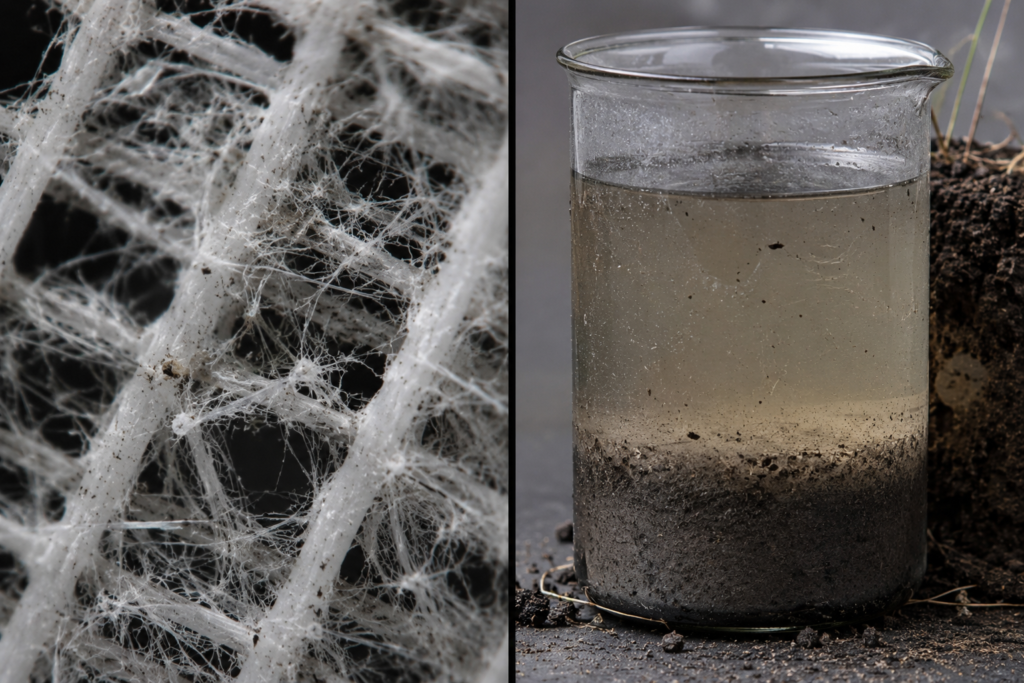
There’s another layer to this. A 2021 study in the Revista de Materiales Peligrosos tested what happens when spent HEPA filters are submerged in water, simulating landfill leachate conditions. The results showed that used filters released measurable concentrations of heavy metals—zinc was the dominant contaminant, with groundwater identified as especially susceptible to exposure.
The same study confirmed that brand-new, unused filters released almost nothing. Every contaminant detected in the leachate came from what the filter had captured during its working life. That has a direct implication: filters used in more polluted indoor environments carry a higher environmental burden at the point of disposal.
Incinerating HEPA filters is not an environmentally friendly solution
Some waste facilities burn used filters rather than burying them. It sounds like progress. In practice, it shifts the problem rather than solving it.
Burning used filter waste, which may have harmful particles, toxic substances, and heavy metals, produces carbon dioxide and other byproducts from combustion.
Researchers have pointed out these issues and are looking into alternatives such as CO₂-assisted pyrolysis, which might break down filter materials at lower temperatures and with less emissions.
However, using pyrolysis for filter waste disposal is still in the testing phase, and it will likely take years before it is widely used in industry.
Neither landfilling nor incineration provides a genuinely sustainable end-of-life solution for disposable air filter media.
What Emerging Research on Filter Recyclability Actually Shows
The situation is serious, but the research direction is encouraging.
A study published in Waste Management demonstrated that recycled High Impact Polystyrene and polyurethane foam—materials that would otherwise enter landfill—could be converted into nanofiber membranes meeting HEPA-grade filtration efficiency. A separate research group produced antibacterial filtration membranes from reclaimed polystyrene, suggesting that recycled content could eventually replace virgin polymer in filter production.
These findings point toward a potential closed-loop model: post-consumer plastic waste becomes new filter media, and spent filters are reclaimed for the same purpose. At present, no commercial-scale system like this exists for air filtration. But the materials science is ahead of the industry’s adoption curve—which means early movers have real ground to gain.
How to Cut Waste and Save Money
For B2B buyers looking for replacement HEPA filters, being sustainable isn’t just about helping the environment—it’s also a smart business move. Making the right sourcing choices can help you reduce waste and secure your supply chain for the future.
When assessing filter manufacturers, focus on these three key metrics:
- Extended Service Life: A HEPA filter that lasts 12 months reduces disposal volume by 50% compared to a typical 6-month filter. Always ask for documented lifespan data based on standardized testing. More durability means lower costs for your customers and less waste in landfills.
- Material Transparency: With changing regulations like the EU’s Extended Producer Responsibility, it’s crucial to know exactly what materials are in your products. Clear information on fiber types and frame materials helps protect your business from future compliance issues.
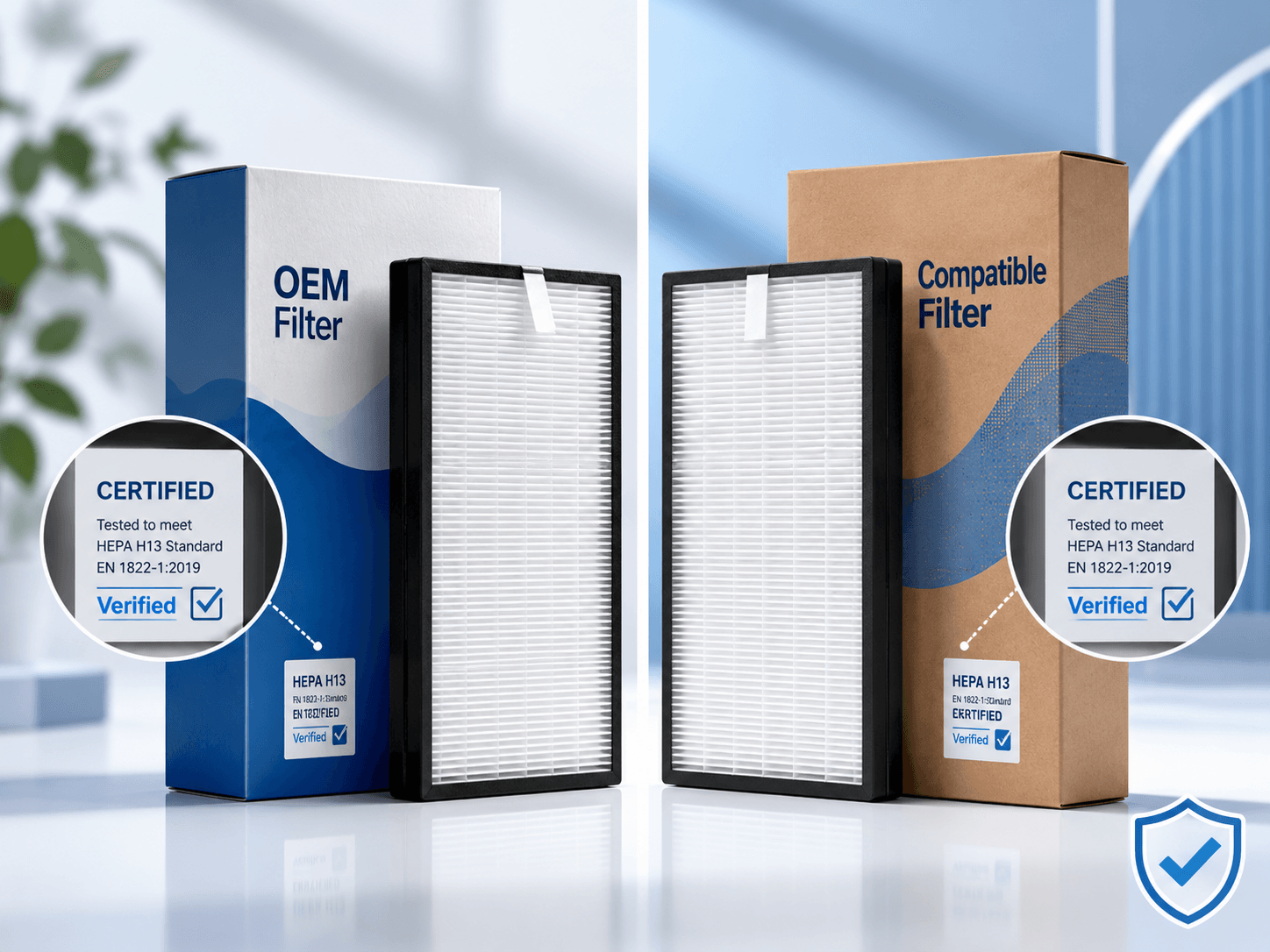
- Verifiable Certifications: Third-party audits are essential for long-term partnerships. Certifications such as ISO 9001 and BSCI demonstrate that a manufacturer follows consistent and auditable processes.
The HIFINE Advantage
At HIFINE, we create replacement HEPA filters for air purifiers, robotic vacuums, and HVAC systems with a focus on extended service life. Fully certified with ISO 9001 and BSCI, we offer the transparent data, dependable production capacity, and strict quality control necessary for responsible and profitable sourcing.
The Takeaway for the Air Filtration Industry
The environmental cost of disposable HEPA filter waste is real, documented, and growing alongside the market. Used filters in landfills shed synthetic microfibers into soil and groundwater, release trapped heavy metals as they degrade, and currently have no viable large-scale recycling pathway. Incineration shifts rather than eliminates the problem.
Research into recycled filter media and closed-loop filtration systems is moving in the right direction. But in the meantime, buyers and distributors can act now: prioritize filters with longer service life, demand material transparency from suppliers, and partner with manufacturers that operate under verified quality and compliance standards.
The air indoors gets cleaner every time a filter does its job. The air and water outdoors shouldn’t pay the price for it.