
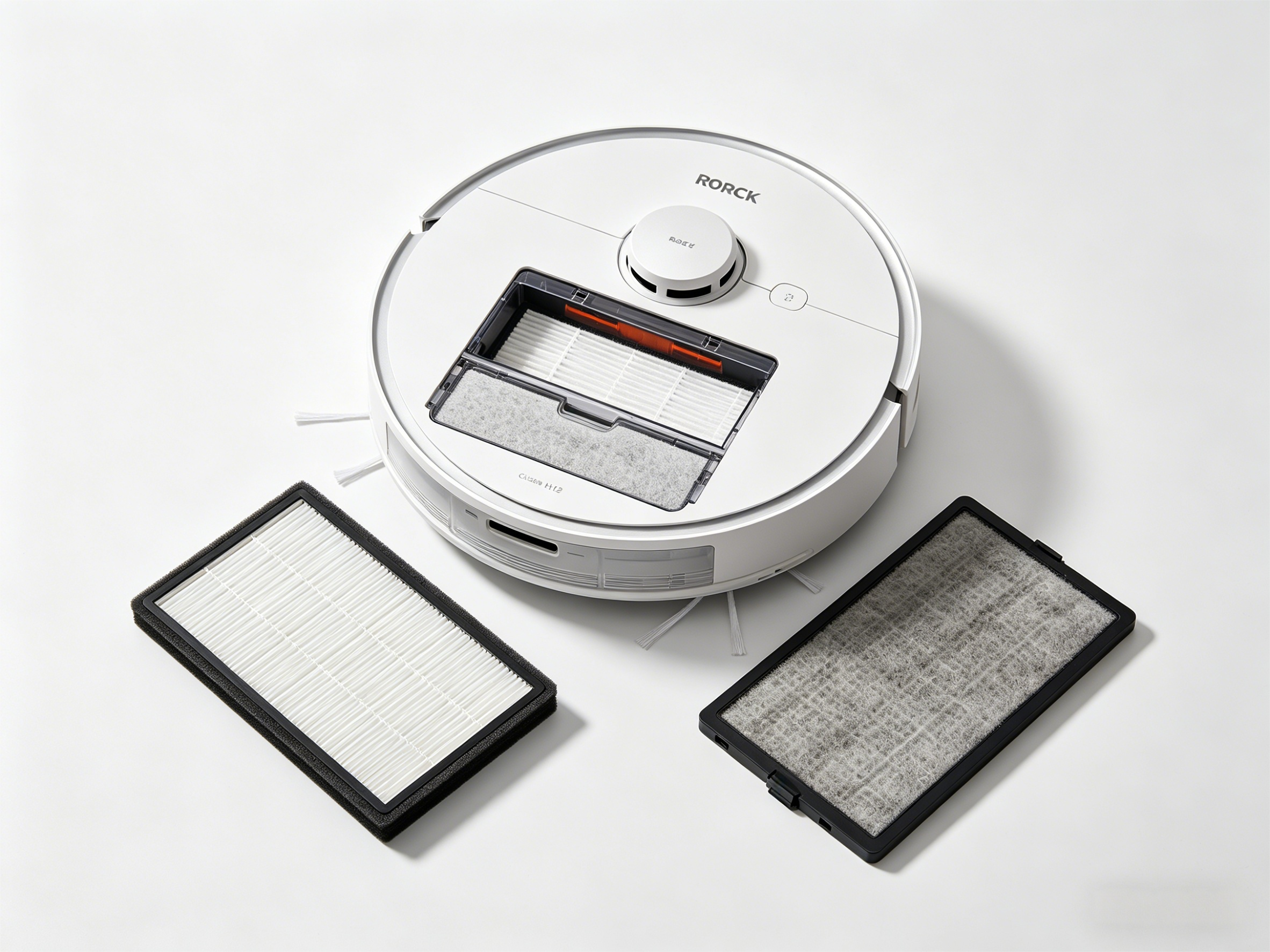
Most Roborock E35 owners assume suction loss means a dying motor or a full dustbin. In reality, the answer is sitting right inside the filter slot. We will explains the exact mechanics of why an H12 HEPA filter upgrade makes a measurable difference in cleaning performance, and what you’re actually risking by ignoring a degraded filter for too long.
Why suction and filtration are the same problem
The Roborock E35 uses a centrifugal fan motor to create negative pressure — that’s what “suction” actually is. For that vacuum to form, air needs to flow through the machine freely. The filter is the last gate before air exits the unit. If that gate is restricted, the motor fights against back-pressure instead of pulling debris in from the floor. Physics doesn’t negotiate.
A study of airflow mechanics in residential vacuums consistently shows that a filter at 60–70% saturation can reduce effective suction by 20–35%. On a machine like the E35, which runs autonomously and often goes unchecked for weeks, that degradation happens faster than most owners realize.
What H12 actually means
H12 is a European HEPA classification under EN 1822. It captures 99.5% of particles at the most penetrating particle size (typically 0.3–0.5 microns). That’s a step below H13 (99.97%) but meaningfully above the unclassified foam or fibre filters that often ship with budget robot vacuums. This is why doctors will recommend HEPA filters.
The key difference between H12 and a standard filter isn’t just filtration efficiency — it’s fibre density and structural integrity. A well-made H12 filter maintains consistent airflow resistance across its usable life, where a cheap alternative can collapse its fibres under repeated air pressure and create uneven flow lanes.
For the E35 specifically, the filter sits downstream of the dustbin. That means it catches what the pre-filter misses — fine PM2.5 dust, pet dander, and microbial particles. A low-quality filter that lets those particles through doesn’t just affect air quality; those particles reach the motor fan blades, accelerating wear.
H12 vs stock filter: what changes in practice
An OEM-spec H12 replacement for the E35 typically delivers three tangible improvements: restored airflow consistent with manufacturer specifications, cleaner exhaust air (relevant for allergy-prone households), and a longer service interval before suction noticeably drops again — because better media holds dust more evenly without collapsing.
Signs your E35 filter needs replacing now
The E35 doesn’t have a filter-life indicator, so you’re left reading the machine’s behavior. Here’s what to watch for:
Visible dust at the exhaust vent. If you can see a fine haze when the machine runs near light, the filter media has broken down. Particles are bypassing it entirely.
Shorter battery cycles for the same area. A motor fighting restricted airflow draws more current. If your E35 is returning to dock faster than it used to, filter resistance is a likely cause before battery degradation.
Persistent pet hair remaining on hard floors. The E35’s suction is calibrated to lift debris from the bristle roll. Even 15% reduced airflow drops below the threshold for reliable pet hair pickup on smooth surfaces.
Washing the filter no longer helps. A washable filter eventually reaches the end of its structural life — the fibre mat loosens and can’t recover. If performance doesn’t improve after a proper rinse and full 24-hour dry, replace it.
The replacement effect: what happens to suction the moment you swap the filter
The improvement isn’t gradual — it’s immediate. Because the restriction on airflow is removed, the motor instantly returns to its rated operating point. Users commonly report that the E35 sounds “quieter” after a filter swap, which is counterintuitive but accurate: a motor working against restriction runs at higher RPM with more acoustic strain. Restored airflow lets it reach the same suction at lower effort.
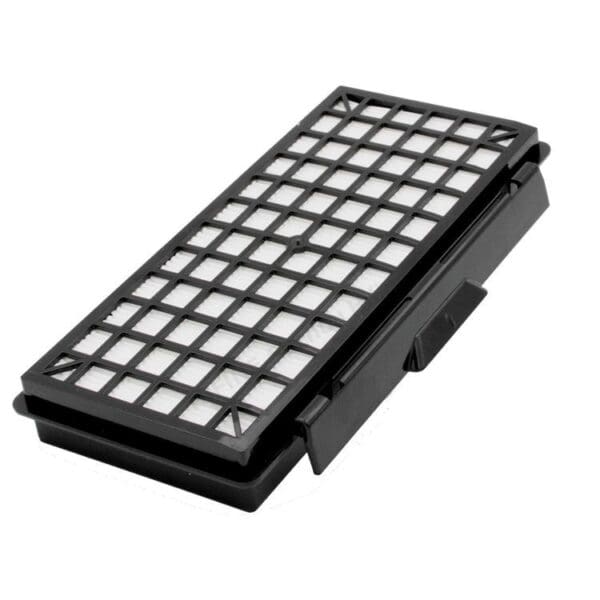
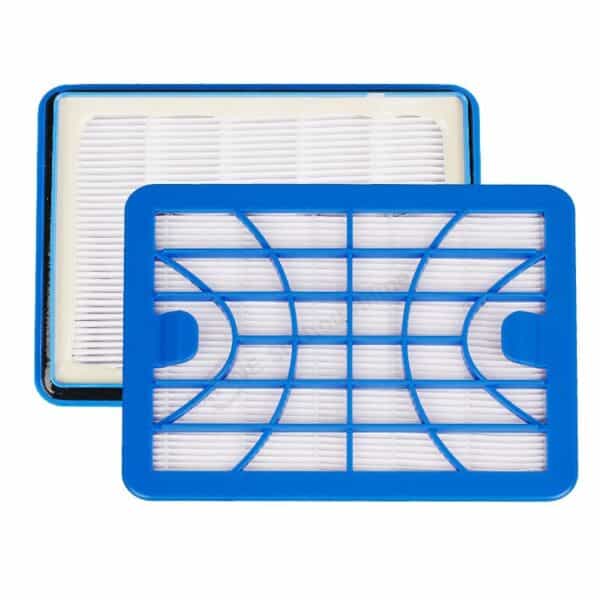
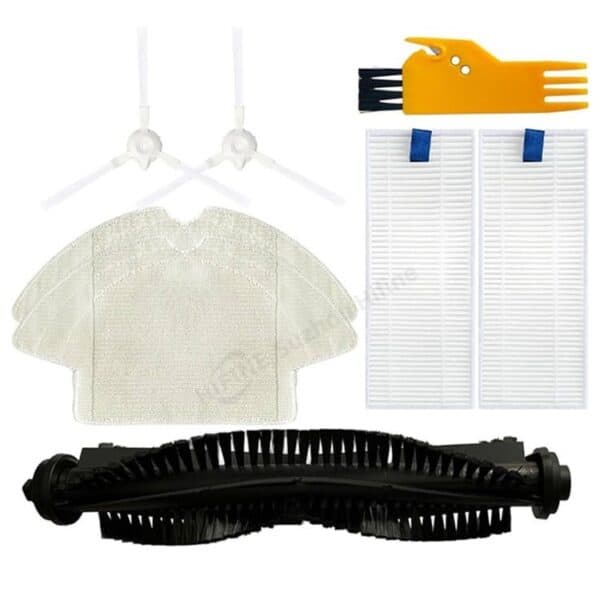
HIFINE’s replacement filter for the Roborock E35 is built to OEM-equivalent dimensional tolerances, which matters more than most buyers expect. A filter that fits loosely allows bypass airflow — air takes the path of least resistance around the filter edges rather than through the media. That bypass defeats the purpose entirely, regardless of the filter’s rated efficiency.
→ View HIFINE’s Roborock E35 compatible replacement filter
How often to replace the E35 filter
Ecovacs recommends filter replacement at 120 hours of cleaning time as a baseline. For the E35, a comparable schedule applies: every 3–4 months for single-pet households running daily, every 5–6 months for pet-free homes with 3–4 sessions per week. Homes with high-shedding breeds or allergy sufferers should lean toward monthly filter checks and quarterly swaps regardless of appearance.
If you’re sourcing filters in bulk for consistent maintenance, HIFINE’s vacuum filter range covers replacement schedules for all major robot vacuum platforms — direct from manufacturer, with low MOQ for household stock.
FAQ
H13 captures a higher percentage of particles, but for most households H12 is the practical choice — it offers strong filtration with slightly lower airflow resistance, which helps maintain suction in a smaller motor unit like the E35. H13 is worth the upgrade if someone in the household has severe allergies or asthma.
A correctly seated filter should click firmly into the dustbin housing with no visible gaps around the edges. Run the machine on a hard floor for 30 seconds — if you feel suction at the brush roll and there’s no visible dust at the exhaust, the filter is sealed and working correctly.
Yes, the stock filter is washable — rinse under clean water (no soap), tap gently, and let it dry fully for at least 24 hours before reinstalling. However, washing recovers flow temporarily. After 5–8 wash cycles, the fibre media loses structural integrity and should be replaced regardless of appearance.