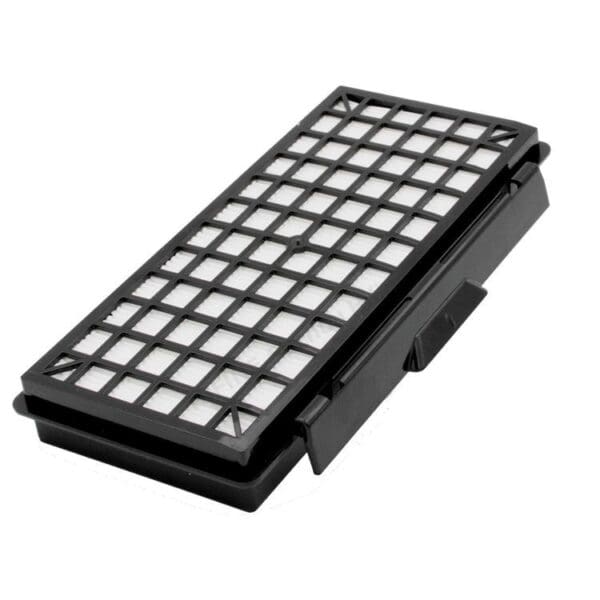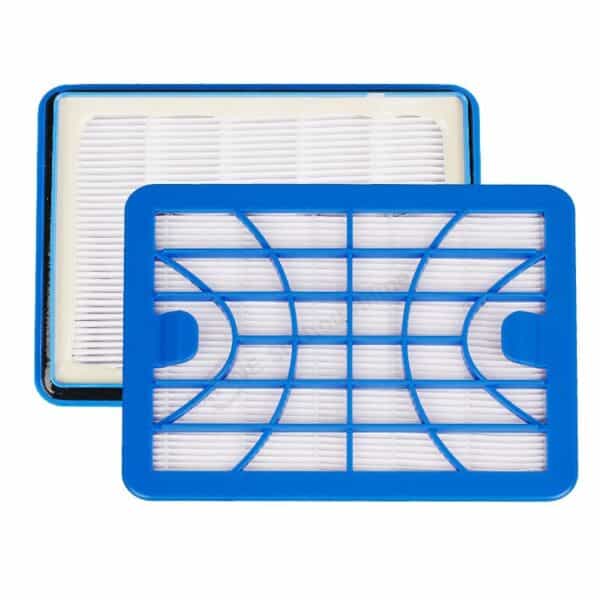

Hold a HEPA filter up to light. You can almost see through it. It bends. It weighs almost nothing. And according to its spec sheet, it stops 99.97% of particles at 0.3 microns — a size roughly 300 times smaller than a human hair.
That number should not be possible from something so thin. Yet it is, and the explanation sits at the intersection of fluid dynamics, fiber geometry, and molecular chemistry.
What Is Actually Happening Inside a HEPA Filter
HEPA — High Efficiency Particulate Air — is not a brand or a marketing claim. It is a performance standard originally developed by the U.S. Department of Energy for nuclear facilities in the 1940s, later standardized under EN 1822 in Europe and adopted by the EPA for indoor air quality guidance.
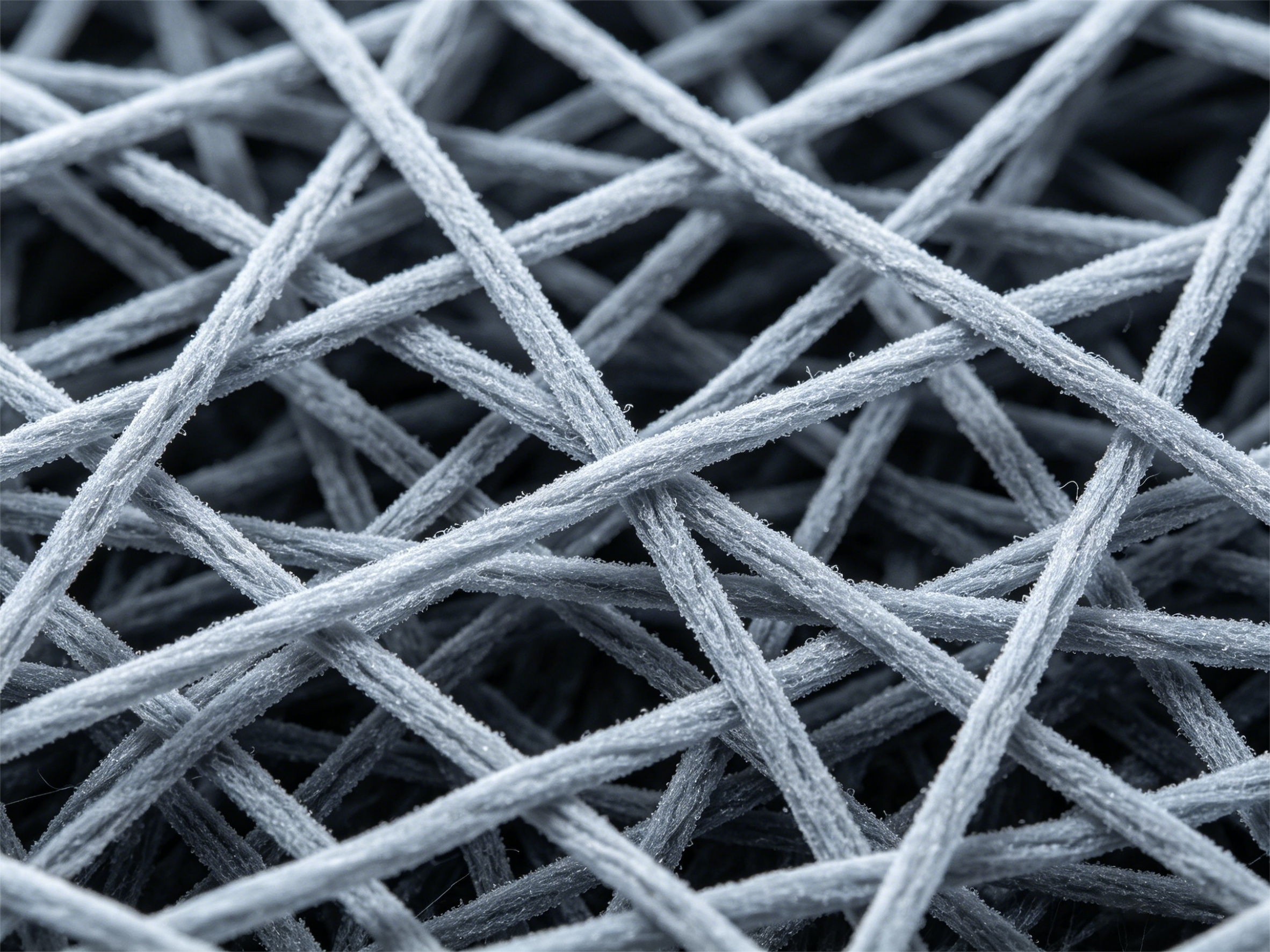
The filter medium itself is a mat of randomly arranged borosilicate glass fibers, each between 0.5 and 2 micrometers in diameter. No weaving. No uniform grid. The randomness is intentional.
The Four Capture Mechanisms
Particles do not simply get “caught” in the fibers the way a net catches fish. Four distinct physical mechanisms operate simultaneously, each dominant at a different particle size range.
Inertial impaction handles large particles above 1 micron. As airflow curves around a fiber, a particle with enough mass cannot follow the curve — it continues in a straight line and collides with the fiber. Particle size and velocity determine whether it sticks or bounces.
Interception works on mid-range particles between 0.3 and 1 micron. The particle follows the airstream closely enough to curve around the fiber, but if its physical radius brings it within contact distance of the fiber surface, it is captured. No collision required.
Diffusion is the dominant mechanism for ultrafine particles below 0.1 micron. At this scale, particles are light enough that random collisions with air molecules — Brownian motion — knock them off their streamlined path. They zigzag. That erratic movement dramatically increases the probability of fiber contact. This is why ultrafine particles are, counterintuitively, easier to capture than slightly larger ones.
Electrostatic attraction plays a supplementary role. Glass fibers carry a residual electrostatic charge that draws charged particles toward the fiber surface. This effect degrades over time as the filter loads with debris, which is one reason filter replacement schedules exist.
The particle size hardest to capture — the “most penetrating particle size” or MPPS — sits at approximately 0.3 microns. This is precisely why HEPA certification tests at that exact diameter. If a filter achieves 99.97% at its weakest point, performance at all other sizes is mathematically higher.
Is There Any Chemistry Involved
For HEPA layers: no. The process is entirely physical. No chemical bonds form between the fiber and the particle. The particle adheres through van der Waals forces — weak intermolecular attractions that become sufficient at microscale contact distances. The fiber does not transform the pollutant. It immobilizes it.
The chemistry enters through activated carbon, the second major filtration layer in most multi-stage systems.
Adsorption Is Not Absorption
Activated carbon captures gaseous pollutants — formaldehyde, benzene, VOCs, odors — through a process called adsorption (not absorption). The distinction matters. Absorption pulls molecules into the bulk of a material. Adsorption binds molecules to a surface.
Activated carbon is processed to create an extraordinary internal surface area. One gram of activated carbon can contain between 500 and 1,500 square meters of internal pore surface, according to data published in Carbon journal (Elsevier, 2019). At that scale, a filter that looks like a thin black panel contains the equivalent of several tennis courts of reactive surface.
Gaseous molecules passing through the pore network lose kinetic energy through repeated collisions with pore walls. At sufficiently low energy, van der Waals forces bind the molecule to the carbon surface. This is physisorption — a physical-chemical boundary process, technically reversible under high heat, which is why some industrial carbon filters can be regenerated.
For household filters, regeneration is not practical. Once the pore surface saturates, adsorption efficiency drops sharply. This saturation happens invisibly — the filter looks unchanged while its chemical capture capacity is exhausted. Carbon filter replacement intervals are not conservative estimates. They reflect real saturation curves.
Why Thickness Tells You Almost Nothing
The persistent assumption that a thicker filter is a better filter comes from intuition built around macro-scale barriers — walls, insulation, padding. At fiber scale, the logic inverts.
What determines HEPA performance is fiber diameter, fiber density (packing fraction), and face velocity — the speed at which air moves through the filter medium. A filter with finer fibers packed at a higher density captures more particles in less physical depth than a coarser filter twice its thickness.
The tradeoff is airflow resistance, measured as pressure drop across the filter. Denser fiber arrangements increase resistance, which increases the load on the fan motor. High-performance filters — including those used in products like the filtration systems at HIFINE — are engineered to balance capture efficiency against pressure drop, optimizing for both air quality output and system longevity.
MERV ratings (Minimum Efficiency Reporting Value, established by ASHRAE Standard 52.2) provide a standardized comparison across filter types, measuring efficiency across 12 particle size ranges from 0.3 to 10 microns. HEPA-equivalent filters typically rate at MERV 17 or above — a category not included in the original MERV scale because it was designed for HVAC systems, not dedicated air purification units.
What This Means When Choosing a Filter
Efficiency ratings are only meaningful relative to the particle sizes relevant to your environment. PM2.5 — particles below 2.5 microns — is the primary health-relevant fraction in most urban indoor environments, associated with cardiovascular and respiratory outcomes in long-term epidemiological studies (WHO Global Air Quality Guidelines, 2021 revision). A filter rated for 0.3 microns captures everything in the PM2.5 range by definition.
For VOCs and formaldehyde — common in newly furnished spaces or environments with adhesives and coatings — the activated carbon layer is non-negotiable. HEPA has zero effect on gaseous pollutants. A system without activated carbon is physically incapable of addressing chemical contamination, regardless of its particulate rating.
Replacement intervals for both layers should be treated as performance thresholds, not suggestions. Manufacturers including HIFINE publish replacement schedules based on filter saturation data, not arbitrary timelines. Running a saturated filter does not maintain partial effectiveness — in the case of carbon, it can release previously captured molecules back into the airstream under certain temperature and humidity conditions.
FAQ
No. Filtration efficiency depends on fiber diameter, packing density, and face velocity — not physical thickness. A thin, high-density HEPA filter outperforms a thick, coarse filter across all relevant particle sizes.
Both, depending on the layer. HEPA filtration is entirely physical — particles adhere to fibers through van der Waals forces with no chemical transformation. Activated carbon operates through adsorption, a physical-chemical process that binds gaseous molecules to carbon pore surfaces.
Particles below 0.1 microns undergo Brownian motion — random deflection caused by air molecule collisions. This erratic path dramatically increases the probability of fiber contact, making ultrafine particles easier to capture than mid-range particles around 0.3 microns.
You cannot tell visually. Carbon filters saturate invisibly as pore surfaces fill with adsorbed molecules. Follow manufacturer replacement schedules, and in high-VOC environments such as after renovation or with new furniture, reduce intervals by 20–30%.