
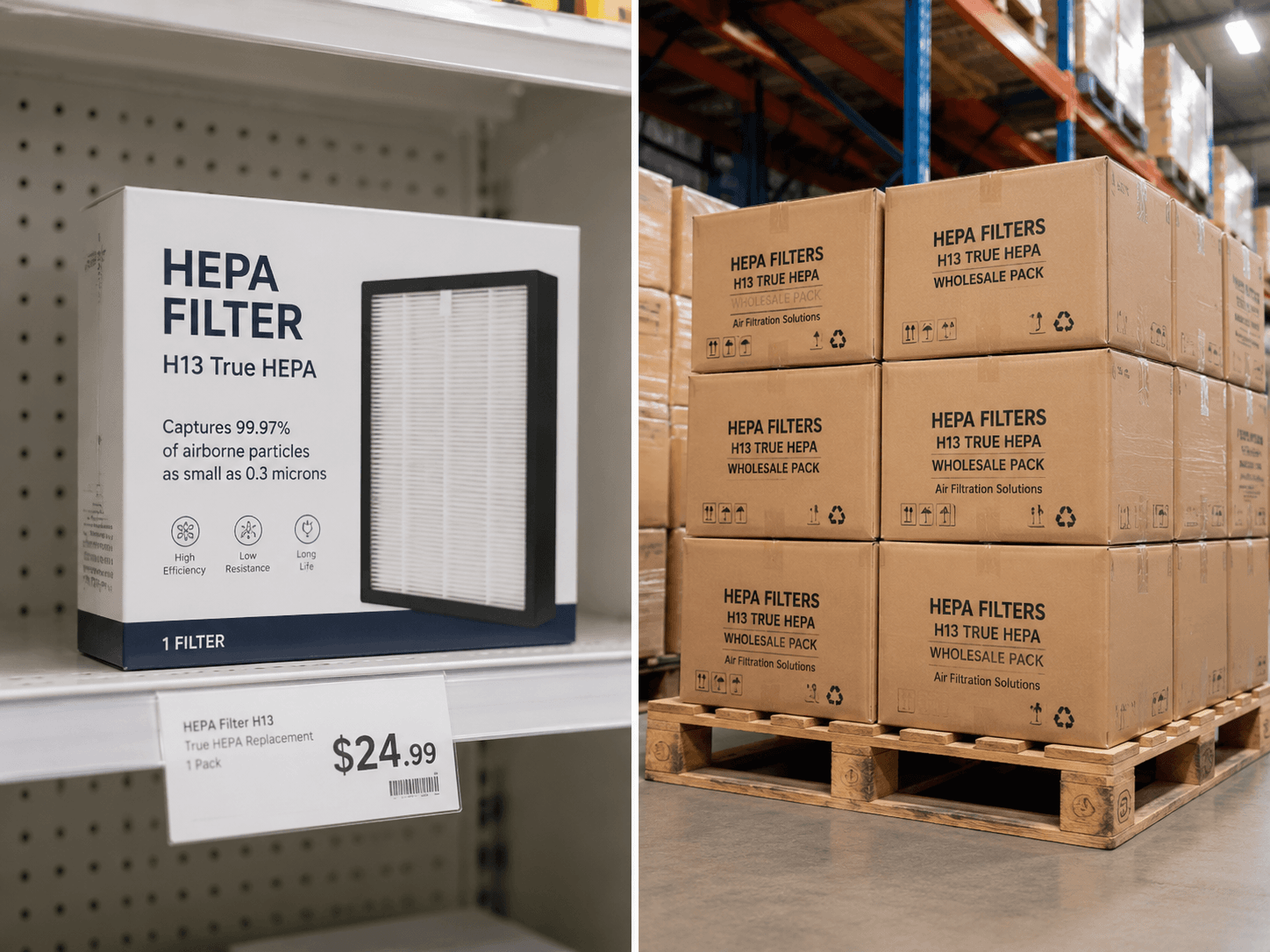
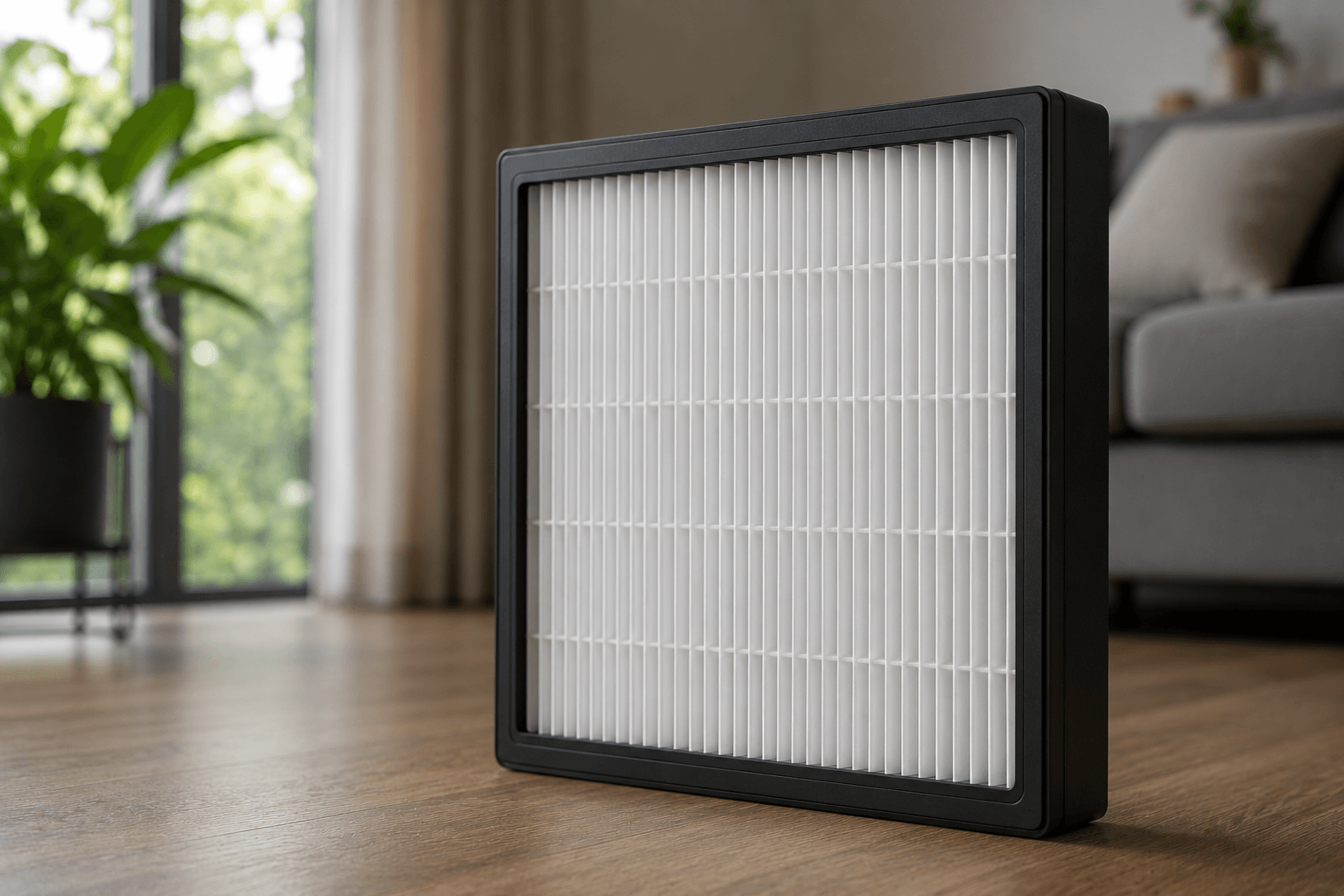
The general retail price is usually capped at $30, which renders the price of a HEPA filter quite acceptable. Nevertheless, if you operate three air purifiers and replace the filters biannually, you will be making six retail purchases each year, factoring in the different SKUs, the orders, and the shipping costs involved. This alters the nature of the conversation.
Most wholesale vs retail comparisons start with unit price. This one starts with replacement frequency, because for filter media specifically, that’s where the real cost lives.
Filters Are Consumables
A sofa depreciates slowly. A laptop holds value for years. Filters don’t work that way. They’re engineered consumables: designed to capture particulate, saturate, and be replaced on a defined schedule.
The U.S. Environmental Protection Agency recommends HEPA filters in residential air purifiers be replaced every 6 to 12 months, depending on how often they’re used and the quality of the indoor air. ASHRAE 52.2 suggests a quarterly changeout for commercial HVAC applications using MERV-rated filters in high-traffic or light industrial environments. For robot vacuum filters, leading manufacturers recommend replacement intervals as short as 60 to 90 days — approximately four to six times per year.
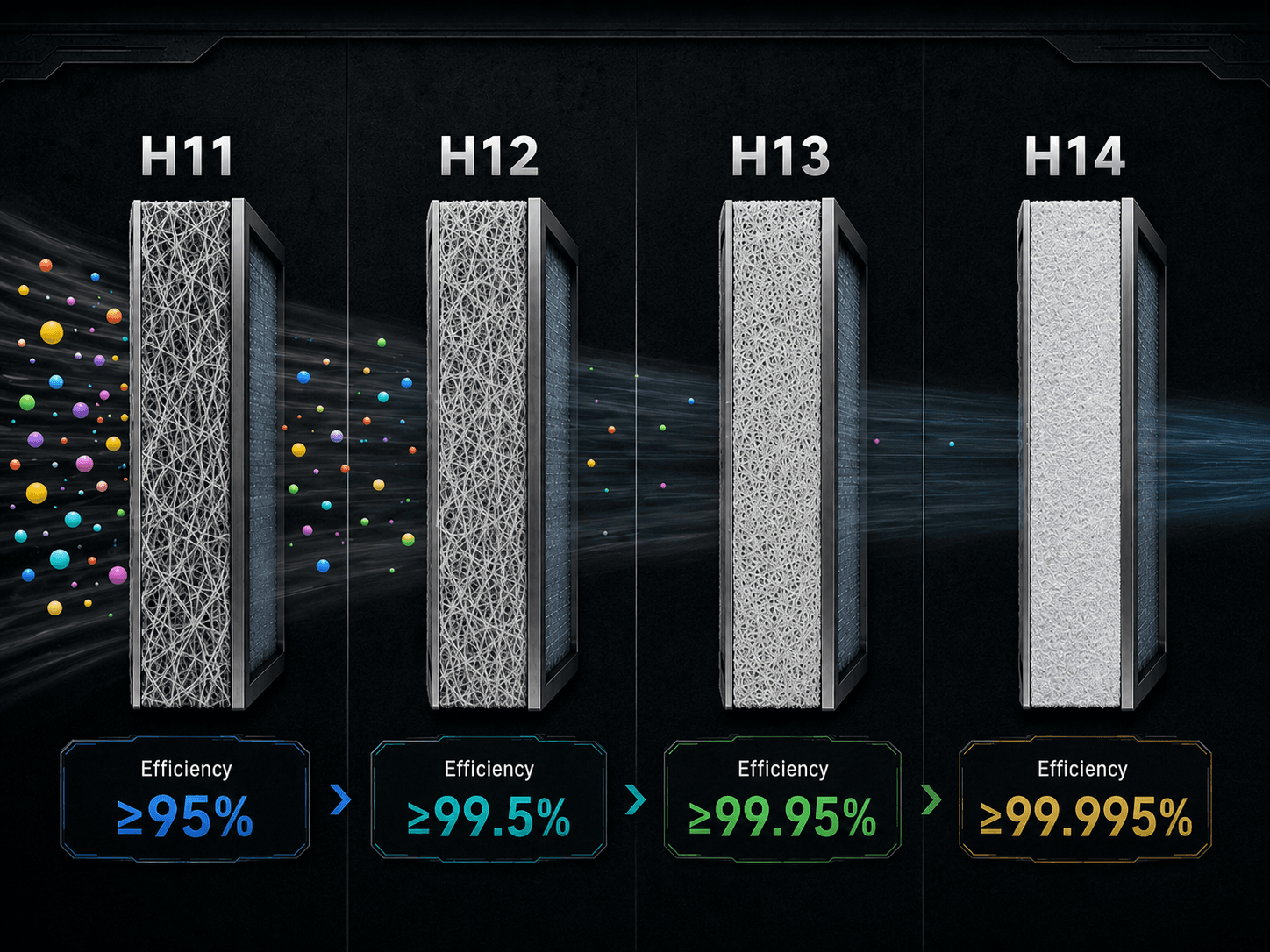
Le replacement schedule isn’t optional — it’s physics. A saturated filter increases pressure drop across the media, reduces airflow, and in H13-grade HEPA applications, falls below the rated 99.95% particle capture efficiency defined by EN 1822-1:2019. Replacement happens regardless of your purchasing channel. The only variable is what you pay when it does.
How to Actually Compare the Cost
Unit price comparisons between wholesale and retail are almost always misleading without a time horizon. The more useful metric is annualized cost per filter position.
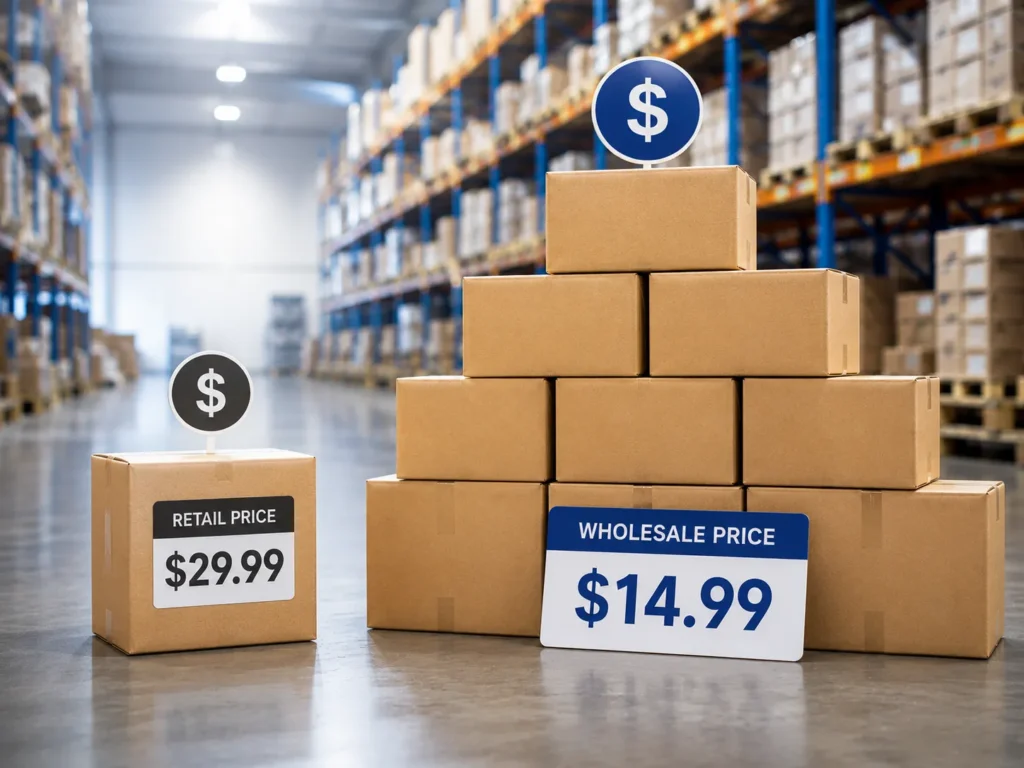
Take a standard H13 HEPA filter for a mid-range air purifier. In retail channels—whether online or offline—the price per unit typically ranges from $22 to $35. When purchasing similar filter cartridges in bulk from filter media manufacturers, the price per unit is typically between $9 and $16, provided the minimum order quantity is met, depending on the specifications and purchase volume tier.
Apply that to a six-month replacement cycle across five air purifiers:
- Retail: 10 filters/year × $28 average = $280/year
- Wholesale: 10 filters/year × $12 average = $120/year
Over three years, that’s $840 vs $360 — a 57% reduction before factoring in shipping consolidation or the time cost of repeat procurement. The gap widens further for products with shorter cycles. Dust bags, for instance, may require replacement every four to six weeks in an active household. At that cadence, the arithmetic of bulk buying accelerates quickly.
Robot vacuum filters follow a similar pattern and because robot-compatible HEPA replacement filters are now widely available from third-party filter manufacturers, buyers are no longer locked into OEM retail pricing for routine replacements.
When Retail Is Still the Right Call
Wholesale doesn’t always win. There are three situations where retail is the more rational choice, and recognizing them matters as much as the cost math above.
- Emergency or one-time replacement: If your filter breaks down unexpectedly and you urgently need a replacement, purchasing through retail channels, whether online or in-store, is far more cost-effective than waiting for a bulk order. This is the most obvious and obvious advantage of retail channels.
- Unconfirmed compatibility: Buying 20 filters before confirming fit is a common and expensive mistake. If you’re unsure whether a replacement is compatible with your specific model, purchase one unit at retail first, verify the performance and dimensions, then move to wholesale for subsequent orders.
- Very low replacement frequency: A single-unit household with one air purifier running seasonally may only replace its HEPA filter once every 14 to 18 months. At that cadence, holding excess inventory carries a real opportunity cost — and retail’s convenience may genuinely outweigh the unit price difference.
What Wholesale Actually Looks Like for Filter Buyers Today
The image of wholesale as a “minimum 1,000 units on a pallet” arrangement is outdated, at least for filter media. Tiered pricing structures now begin at quantities relevant to small property management teams, e-commerce resellers, and cleaning service operators.
Three common wholesale arrangements for filters:
- OEM supply. Filters manufactured to your brand specifications and custom dimensions, filtration grade, and private-label packaging. Common for regional appliance distributors and brands launching their own cleaning product lines.
- Compatible replacement supply. High-volume orders of aftermarket-compatible filters for brands like Dyson, Shark, iRobot, and others. This is the fastest-growing wholesale segment in the vacuum and filtration category globally, driven by cost-conscious consumers and B2B cleaning contracts.
- Bulk stock orders. Standard SKUs purchased above a pricing tier threshold. No custom specifications. Works well for facilities procurement teams, property managers, and office operations departments maintaining multiple units simultaneously.
Appliances that treat filtration as a core function — from kitchen appliances like induction cookers to whole-home air purification systems — tend to generate the kind of recurring, predictable filter demand where a supplier relationship delivers more value than repeated spot retail purchases.
How to Decide Between Wholesale and Retail Filter Procurement
First, take a look at your filter replacement habits. If you only swap out filters when it crosses your mind, you’re likely missing out on important data that could help you make a wise purchase. Keep track of one complete replacement cycle and see how it stacks up against the EPA guidelines for your specific situation. Keep in mind that running an old, clogged filter can put extra pressure on your fans and motors, leading to a “hidden cost” that most comparisons between retail and wholesale prices overlook.
Think about the scale of your operation. Managing just one unit is a straightforward retail task. However, if you’re in charge of three or more locations—especially if they have different models—you might be stepping into wholesale territory. Many property managers and commercial cleaning teams find themselves in this situation without ever analyzing the numbers.
Don’t let storage concerns hold you back. Expanding your operations doesn’t have to lead to a storage nightmare. In a dry, climate-controlled environment, sealed HEPA and carbon filters can remain effective for three to five years. Often, all it takes is designating a small, dry storage space to achieve significant long-term savings.
Le bilan
Retail and wholesale aren’t competing philosophies and they’re different tools for different demand profiles. For filter media specifically, the replacement schedule almost always tips the long-term math toward wholesale once you’re managing more than two or three units on any regular cycle.
The goal isn’t to buy more. It’s to stop paying a retail premium for something you were going to purchase anyway.
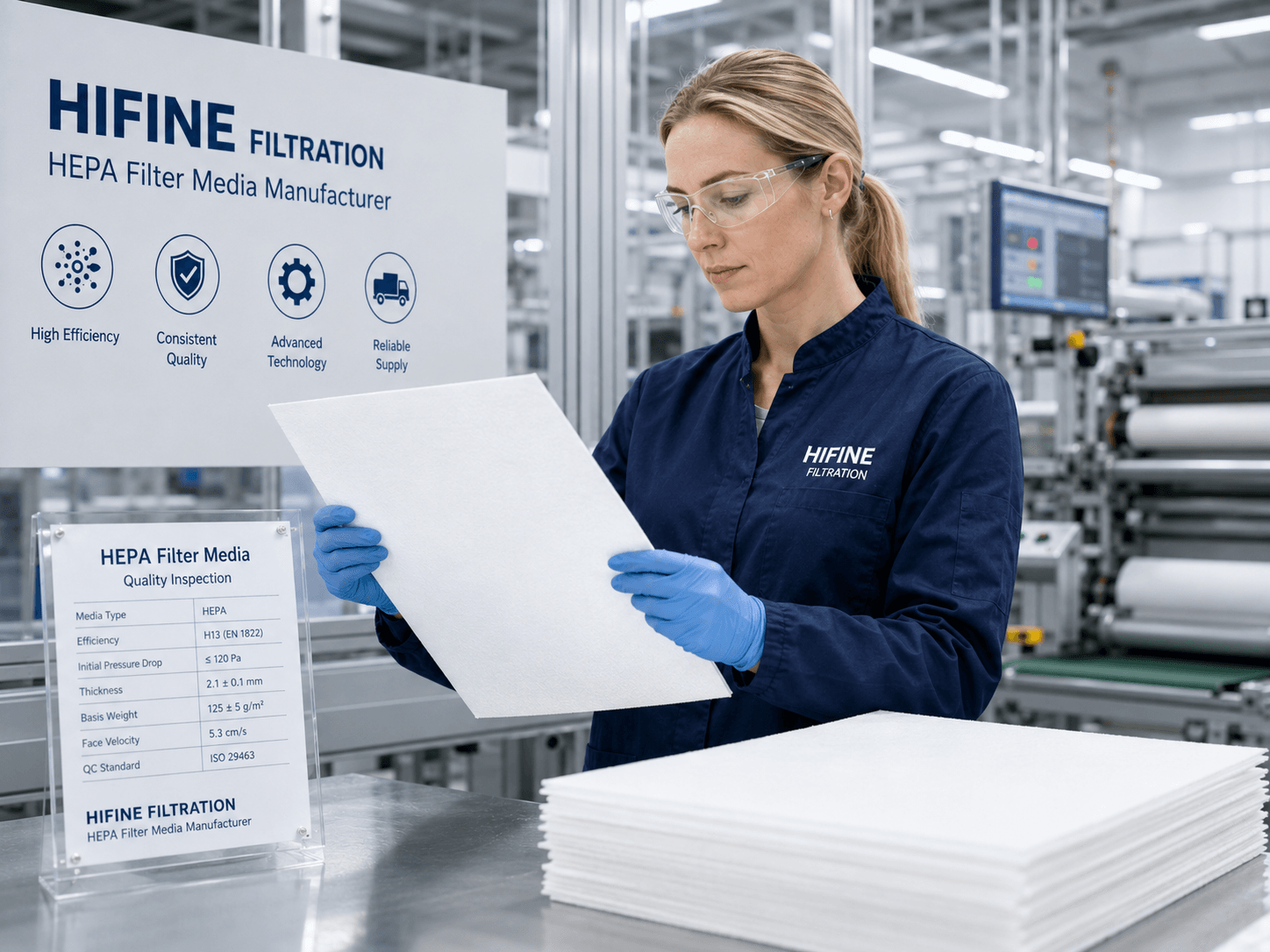
If you’re evaluating wholesale supply for filtres pour purificateurs d'air, robot vacuum components, or custom OEM filter media, HIFINE manufactures across H11 to H14 classifications with export to North America, Europe, and Southeast Asia. Contact our team for volume pricing and compatibility specifications.