
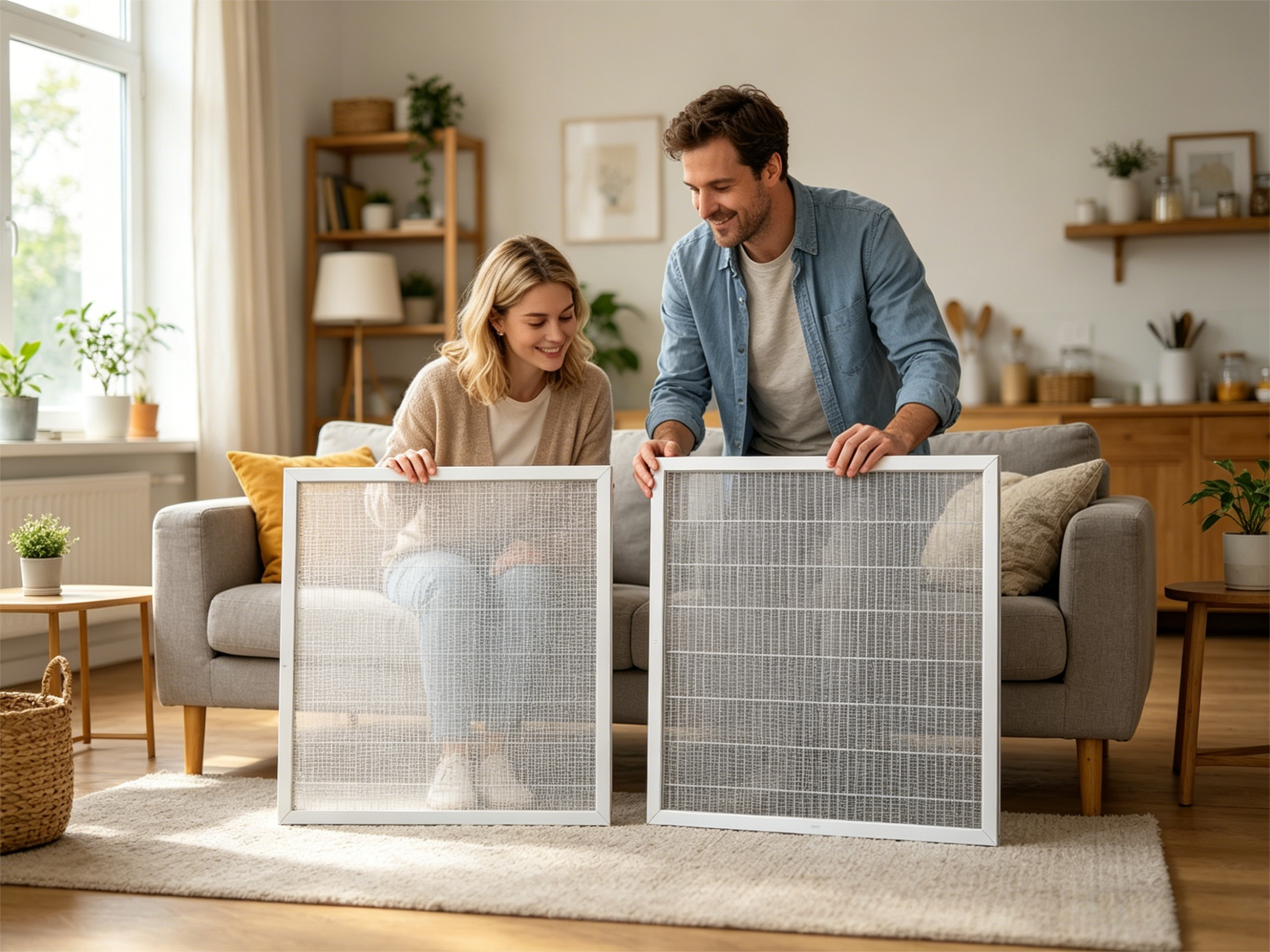
The cheap ones promise “traps dust” on the label. The expensive ones promise essentially the same thing. So what are you actually buying when you go budget — and does it matter for your family’s air?
The answer, based on independent lab data and filtration science, is: it depends — but not on what most people check. It comes down to MERV rating and filter media quality, two specs that are almost never printed on the front of a cheap filter’s packaging. That omission is telling.
What “Cheap” Actually Means in Filter Terms
Filters don’t fail in obvious ways. They don’t turn transparent or flash a warning light. A $3 fiberglass filter looks functional right up until the day you replace it — but what matters is what slipped past it while it was in service.
The filtration industry measures filter performance using the MERV scale (Minimum Efficiency Reporting Value), developed by ASHRAE. A filter’s MERV rating tells you the smallest particle it can reliably catch. Most budget filters sold in bulk packs are MERV 1–4. That’s engineered to protect your HVAC equipment from large debris — not to protect the air you breathe.
Table 1 — MERV Rating vs. Particle Capture Efficiency
| MERV Range | Type de filtre | Particles Captured | Particle Size (µm) | Avg. Street Price |
|---|---|---|---|---|
| MERV 1–4 | Basic fiberglass / polyester | Large dust, carpet fibers | >10 µm | $1–$4 |
| MERV 5–7 | Budget pleated | Mold spores, dust mite debris | 3–10 µm | $5–$9 |
| MERV 8–10 | Mid-range pleated | Pet dander, pollen, fine dust | 1–3 µm | $10–$18 |
| MERV 11–13 | High-efficiency pleated | Smoke, bacteria, fine PM2.5 | 0.3–1 µm | $18–$35 |
| MERV 14–16 / HEPA | Premium / medical grade | Viruses, combustion particles | <0.3 µm | $30–$70+ |
A MERV 4 filter stops roughly 20% of particles between 3–10 µm. A MERV 13 filter stops over 90% of particles in the 1–3 µm range. Those aren’t comparable tools — they’re almost different products. For context, pollen sits at 10–100 µm; smoke particles and PM2.5 sit under 2.5 µm. If you’re running a budget filter and smoking outside is making your indoor air worse, the filter is not helping.
The Hidden Cost Nobody Puts on the Price Tag
Restricted airflow and energy drain
Here’s the counterintuitive part: a cheap filter that loads up with dust quickly starts to restrict airflow. The U.S. Department of Energy estimates that HVAC accounts for roughly 40% of residential energy consumption. A clogged or improperly sized filter can increase energy use by 10–15%, according to data from the Building Performance Institute. At average U.S. electricity rates, that adds up faster than the price difference between filter tiers.
Table 2 — True Annual Cost Comparison
| Filter Tier | Unit Cost | Replace Freq. | Annual Filter Cost | Est. Energy Penalty | Total Annual Cost |
|---|---|---|---|---|---|
| Budget (MERV 1–4) | $2.50 | Every 30 days | $30 | +$60–$90 | $90–$120 |
| Mid-Range (MERV 8) | $12 | Every 60–90 days | $48–$72 | +$10–$20 | $58–$92 |
| High-Efficiency (MERV 11–13) | $22 | Every 90 days | $88 | Negligible | ~$88 |
The EPA reports that indoor air is typically 2–5× more polluted than outdoor air, with Americans spending roughly 90% of their time inside. The stakes of what your filter actually catches are higher than most people assume.
The brand-name trap — and the generic filter problem
Here’s where it gets nuanced. Not all cheap filters are equal, and not all expensive ones are worth the premium. Some generic replacement filters for air purifiers use the same filter media as branded versions, just sold at lower margins. The real risk is filters that don’t list a MERV rating at all, use ambiguous claims like “allergen reduction,” or don’t match your unit’s specified airflow resistance. That’s not frugality — that’s a gamble.
When a Budget Filter Is Actually Fine
Cheap filters aren’t universally bad. They make sense in specific conditions — and knowing when to use them is just as important as knowing when to avoid them.
A budget filter is acceptable when: You’re in a clean environment with no pets, no smokers, no occupants with allergies or asthma, and you’re replacing every 30 days without fail. If your only goal is protecting HVAC hardware from large debris, a MERV 4 does that job adequately.
A budget filter is a poor choice when: Anyone in the home has asthma, allergies, or respiratory sensitivities; you have pets; you live near traffic or wildfires; or — frankly — if you ever forget to replace filters on schedule. A clogged MERV 4 is worse than no filter at all in some systems. At that point you’re paying for a false sense of clean air.A useful shorthand: If you’re filtering air to protect a machine, budget filters can work. If you’re filtering air that people breathe, MERV 8 should be your floor — and MERV 11+ if anyone in the home has respiratory needs.
What Good Replacement Filters Actually Get Right
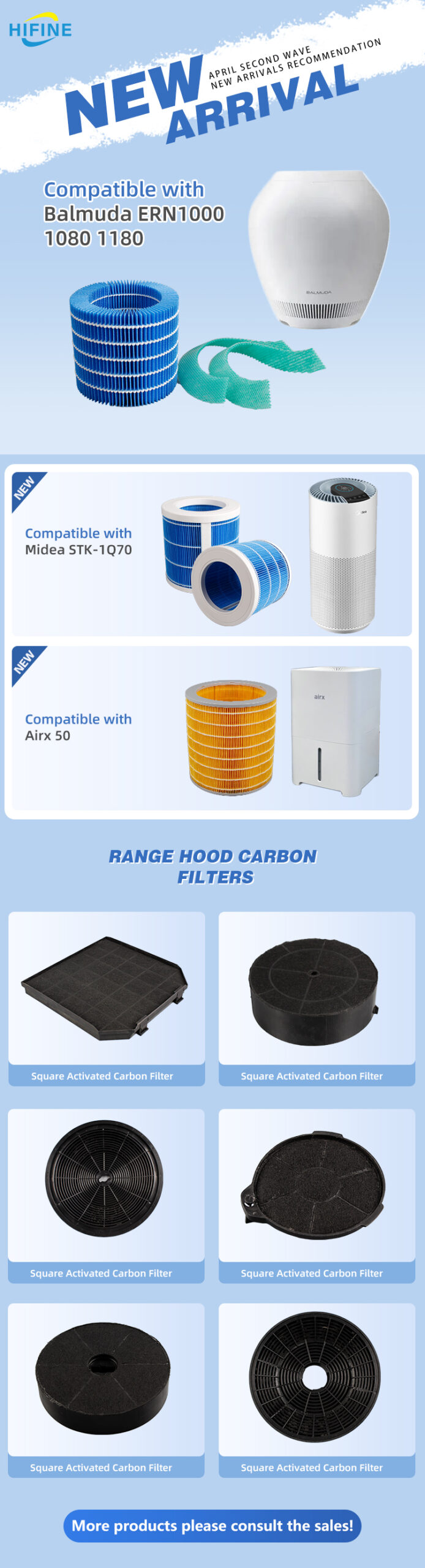
At HIFINE, we design replacement filters for both air purifiers and smart home HVAC systems with one principle: the filter spec has to match the real airflow and particle-load demands of the unit it goes into. A filter that looks like a fit but runs at 30% higher resistance will make your system work harder, shorten motor life, and reduce the air changes per hour your home actually gets.
Our filters carry verified MERV ratings, published filtration efficiency curves, and are tested to hold performance across the full service interval — not just when new. That last point matters more than most buyers realize. A cheap filter might start at MERV 7 performance but degrade to MERV 4 performance within three weeks of installation. You’re not buying a snapshot; you’re buying a consistent service window.
For homes with smart home air quality monitoring, filter performance over time becomes even more visible — and the gap between budget and quality filters becomes measurable in your app, not just theoretically.
FAQ
Indirectly, yes. A filter with a poor fit or one that loads up quickly with debris can restrict airflow and cause your blower motor to overwork. Over time, that adds wear and can increase repair frequency. Using a filter rated for your system’s airflow resistance spec is more important than price alone.
Not always. Very high MERV ratings (14+) increase airflow resistance significantly. If your HVAC system isn’t designed for that resistance, you can reduce airflow, lower system efficiency, and even cause freeze-up in cooling mode. MERV 11–13 is the sweet spot for most residential systems seeking genuine indoor air quality improvement.
Budget filters typically saturate in 20–30 days in average homes; high-quality pleated filters can run 60–90 days. But in homes with pets, smokers, or high dust load, shorten those intervals regardless of tier. A saturated filter — even a quality one — provides poor filtration and restricted airflow.