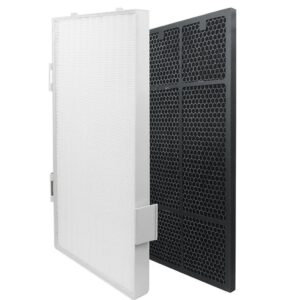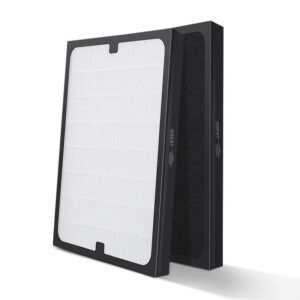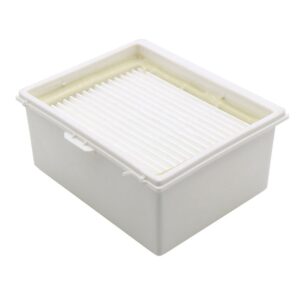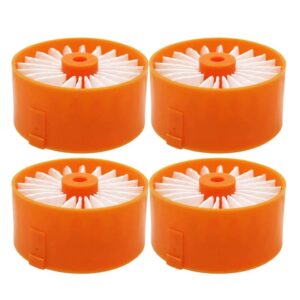

Most wholesale buyers don’t fail because they buy bad filters. They fail because they buy the wrong kind of good.
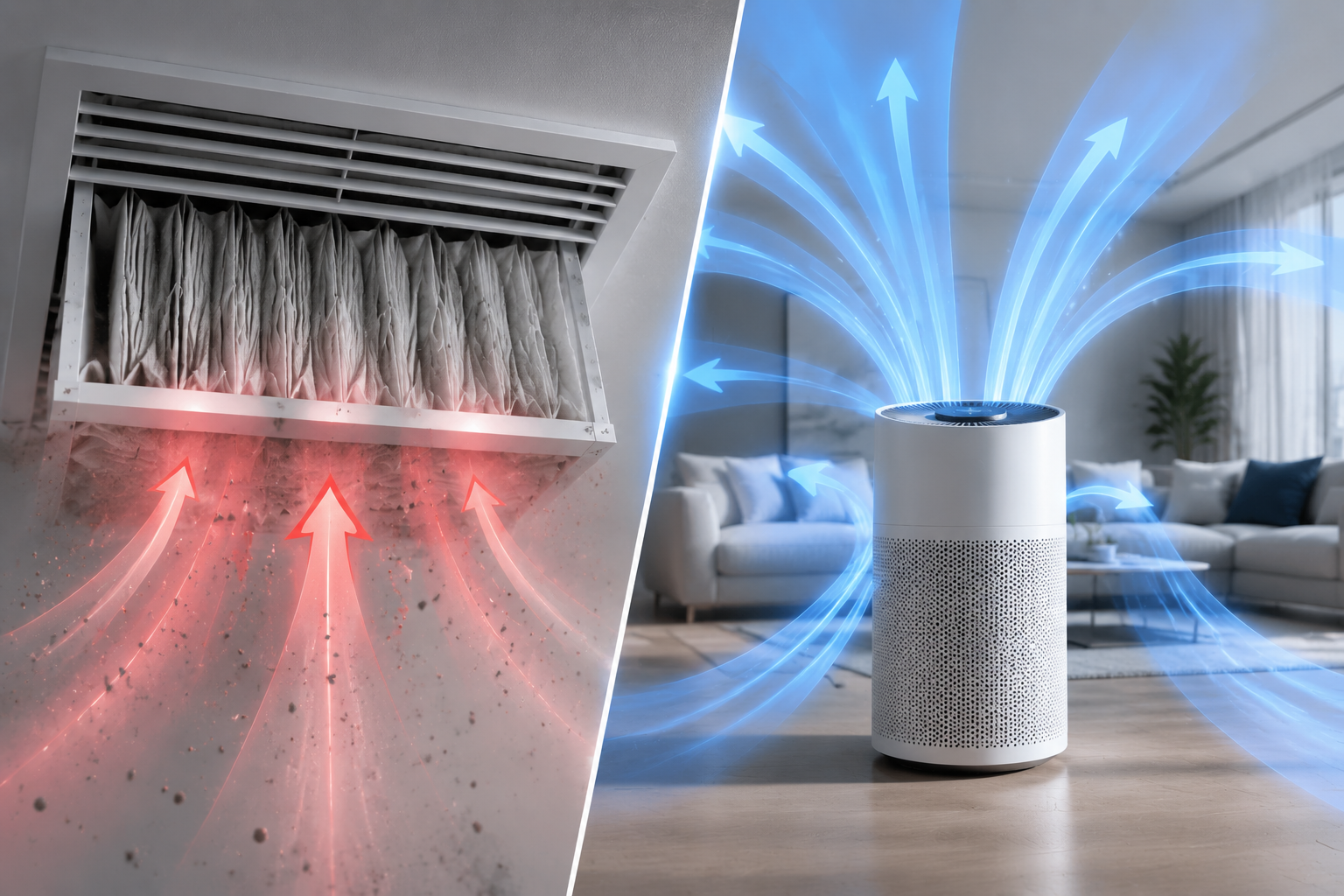
There’s a gap between what “HEPA” means on the box and what it delivers in real operating conditions — and that gap widens significantly when you’re ordering at volume. If you’re sourcing air purifier filters for distribution, private label, or fleet deployment in smart home systems, this distinction isn’t academic. It directly affects product returns, warranty claims, and customer trust.
Here’s what experienced Hifine teams check that most first-time wholesale buyers don’t.
The Label Says HEPA. That Doesn’t Mean Much on Its Own.
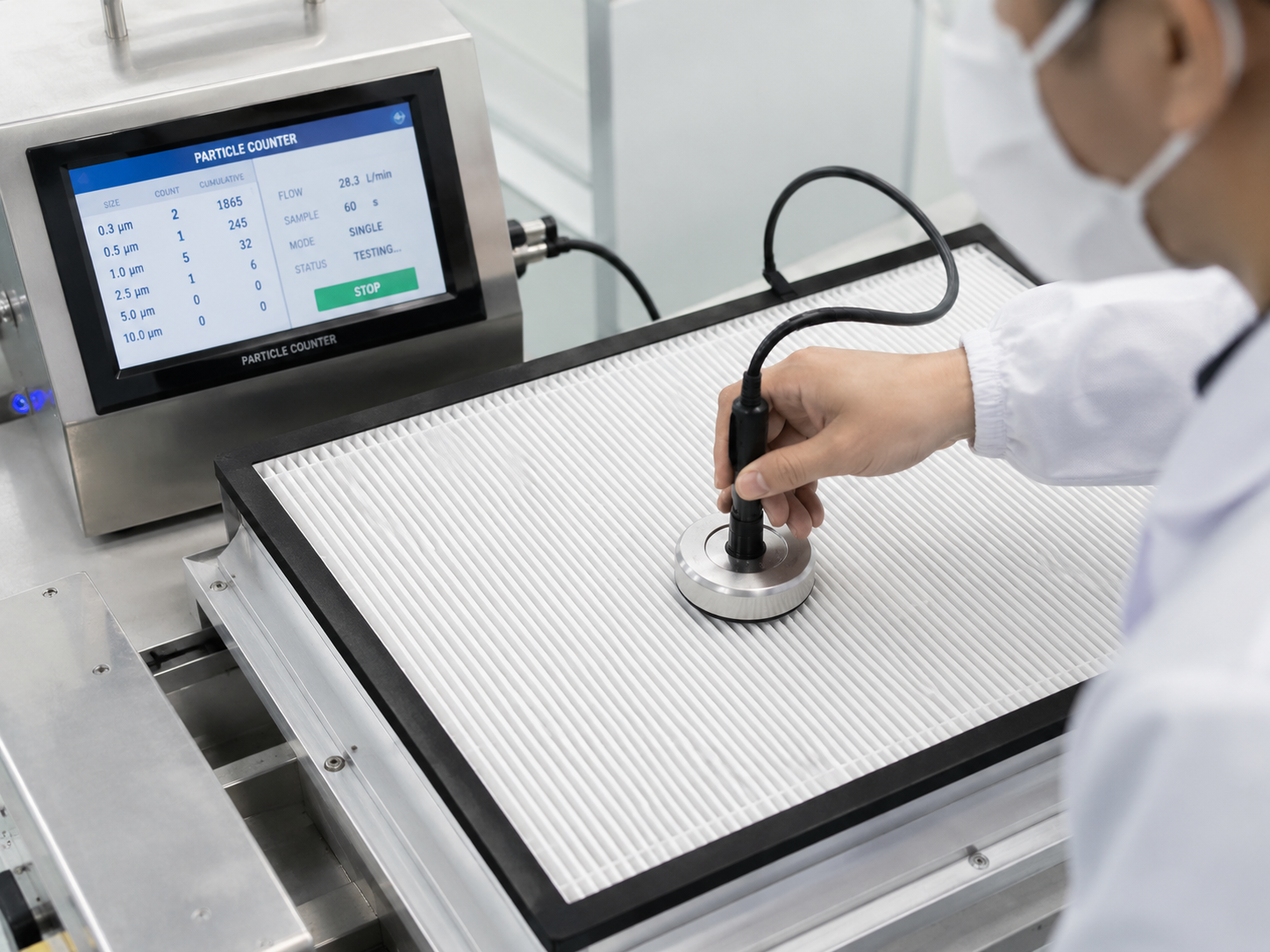
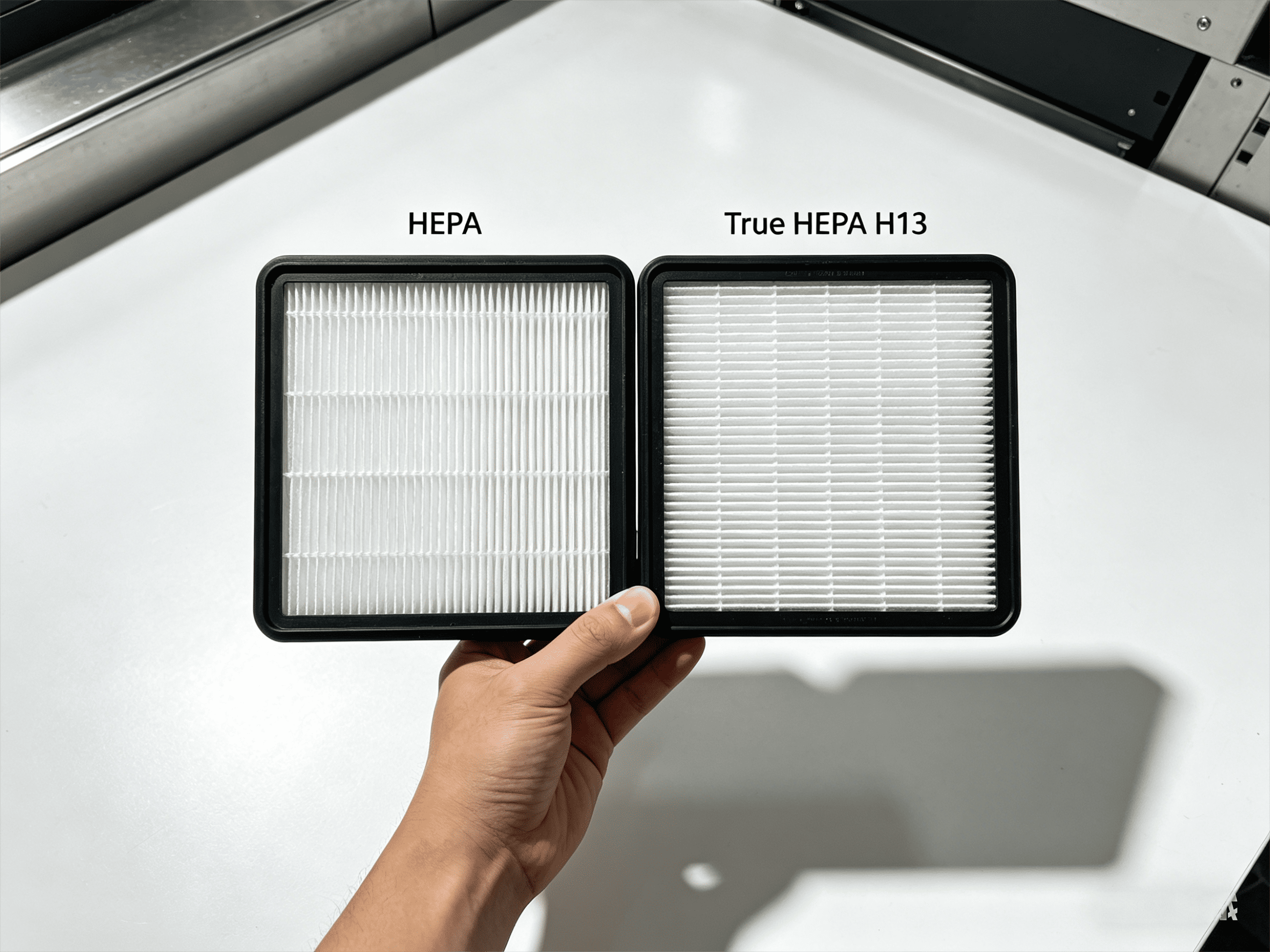
“HEPA” is not a protected trademark. Any filter can technically claim HEPA status if it captures 85% or more of particles at 0.3 microns. But True HEPA — specifically H13 or H14 grade per the EN 1822 standard — captures 99.97% or higher at that same particle size.
That’s not a minor technical footnote. In smart home environments where users expect measurable air quality improvements, a filter performing at 85% efficiency versus 99.97% is the difference between a working product and a bad review.
What to look for: Suppliers should cite the EN 1822 or ISO 29463 certification, not just a HEPA claim. Ask for the test report, not the label.
Browse HIFINE’s certified True HEPA filter lineup →
Three Checkpoints Before You Place a Bulk Order
Verify the Filter Grade — Not Just the Category
H11, H12, H13, and H14 are four different performance levels, all legally “HEPA” in common usage. For residential and smart home air purifier applications, H13 is the practical minimum. H14 is recommended for medical-adjacent or high-pollution environments.
Ask your supplier: what is the MPPS efficiency rating, and at what airflow rate was it tested?
Inspect Frame Seal Integrity, Not Just Media Quality
Even a perfect H13 filter media fails if the frame isn’t sealed properly. Bypass leakage — where air moves around the filter rather than through it — is one of the most common causes of poor real-world performance.
In bulk shipments, frame warping from improper stacking or humidity exposure is a known issue. Always request QC photos of frame edges and ask about storage and shipping standards.
Match the Filter to the Device Airflow Spec
A True HEPA filter rated at 150 CFM won’t perform correctly in a unit designed for 300 CFM. Wholesale buyers sourcing filters for a product range — not a single unit — need a compatibility matrix before ordering.
CADR matters more than filter grade alone when you’re selling or deploying across room sizes. Get the airflow specs from your device manufacturer and cross-reference them with your filter supplier.
Why Filter Efficiency Drops Faster in Wholesale Deployment Scenarios
A wholesale buyer sources 2,000 True HEPA filters. The first 200 units pass inspection. Then complaints start around month three.
The cause is rarely the filter grade. It’s usually one of three things:
Storage time before deployment. HEPA filter media, especially electrostatic-enhanced types, degrades when stored in humid or high-temperature conditions. If your downstream distributor is holding inventory for six months in a poorly climate-controlled warehouse, the filter you shipped at 99.97% efficiency may deliver 90% by install time.
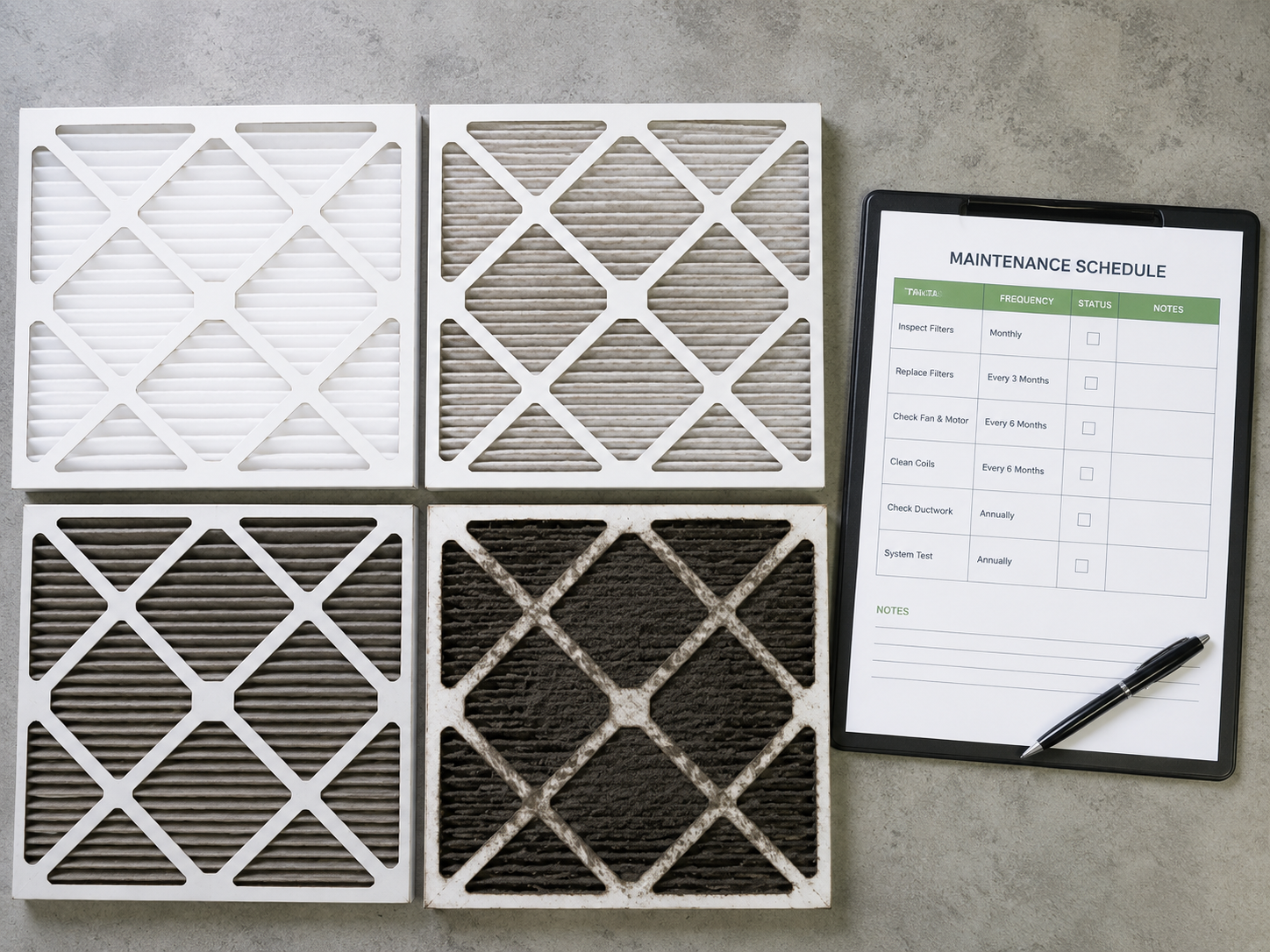
Replacement cycle mismatch. Wholesale buyers often set replacement intervals based on manufacturer specs — but those specs assume average room conditions. High-pollution areas, homes with pets, or smart home systems running 24/7 will saturate filters 30–50% faster.
Carbon pre-filter saturation being mistaken for HEPA failure. Many True HEPA units have a carbon pre-filter that captures VOCs and odors. When that pre-filter saturates, users perceive “the filter stopped working” — and request returns. The actual HEPA layer may be fine.
What “True HEPA” Actually Guarantees
True HEPA guarantees particle capture efficiency at a tested condition. It does not guarantee:
- Performance at different airflow rates than tested
- Resistance to frame bypass under real installation conditions
- Odor removal
- Longevity under heavy use or poor storage
For wholesale buyers, this means the supplier relationship matters as much as the product spec. A good OEM partner provides EN 1822 test reports, lot-level QC documentation, and clear storage guidance — not just a product sheet with “True HEPA” in large text.
HIFINE supplies True HEPA and multi-stage filtration solutions for air purifier brands, smart home integrators, and wholesale distributors. All products ship with EN 1822 certification documentation. Contact us →
Perguntas frequentes
Standard HEPA captures ≥85% of 0.3-micron particles. True HEPA (H13) captures ≥99.97%. That gap directly affects user satisfaction.
Ask for the EN 1822 test certificate by production lot — not a general brochure. A reliable supplier delivers it within 48 hours.
Every 6–12 months under normal use. High-pollution or 24/7 environments need replacement every 4–6 months.
Rarely. Airflow specs and housing dimensions differ per device. Always run a compatibility check before assuming cross-use.