
Walk through any consumer electronics store and you’ll see rows of air purifiers with HEPA printed on the box. Hospital HVAC systems, pharmaceutical cleanrooms, and semiconductor manufacturing plants all rely on the same filtration technology. The HEPA filter market is growing steadily, but if you ask people what’s actually driving that growth, you get a lot of vague answers about “air quality awareness” and “post-pandemic trends.”
The real picture is more nuanced. There isn’t one single factor pushing the market forward. It’s a combination of regulatory pressure, health consciousness, industrial expansion, and consumer adoption all moving in the same direction. Let’s break down what the data actually says.
“ HEPA filters power modern air purification systems worldwide. Use this article to analyze market growth drivers backed by authentic industry statistics, then explore our Chinese HEPA filter manufacturer services to stabilize your bulk filter sourcing.”

How large is the market for hepa filters?
Depends on who you ask. Different research firms count different things, which is why the numbers vary so much.
Research and Markets puts the global HEPA filter market at $5.38 billion in 2025, growing at a 9.06% CAGR to reach $9.88 billion by 2032. Meticulous Research comes in lower at a 7.9% CAGR, projecting $5.8 billion by 2032. GII estimates $4.93 billion in 2024 reaching $8.19 billion by 2030.
The gap comes down to scope. Some reports count only the filter media and finished filter units. Others include entire air purifier systems, vacuum cleaners, and HVAC equipment with HEPA integrated. Either way, the direction is the same: consistent mid-to-high single digit growth every year, with no signs of slowing down.
For context, the broader air filters market was valued at $16.53 billion in 2024 according to Verified Market Research, expected to hit $25.21 billion by 2032. HEPA is the premium segment within that, growing faster than basic MERV-rated filters as standards tighten across industries.
Healthcare and Life Sciences are key drivers of the HEPA filter market
If you had to name one sector carrying the HEPA market, it’s healthcare and biopharma. This segment accounts for roughly 35-40% of global HEPA filter revenue, depending on the report. Future Market Report pegs it at 39.7% specifically.
The reason is simple: regulation. Hospitals, surgical suites, pharmaceutical manufacturing facilities, and biosafety labs don’t choose HEPA because they want to—they use it because they have to. Standards like ISO 14644 for clean rooms and CDC guidelines for healthcare facilities essentially mandate high-efficiency particulate filtration. About 58% of pharmaceutical clean rooms rely on HEPA filtration to maintain sterile production environments, per Global Growth Insights data.
As the biotech and pharmaceutical industries expand globally, especially in Asia, the demand just keeps stacking up. Every new drug manufacturing facility, every hospital expansion, every research lab built requires HEPA filtration systems—and replacement filters on an ongoing basis. This is the steadiest, most predictable segment of the market because it’s driven by compliance, not consumer trends.
It’s also the segment with the highest quality bar. Healthcare and pharma buyers require full traceability, individual test certificates, and EN 1822 or equivalent certification. Price is secondary to documented performance, which favors manufacturers with strong quality systems and testing infrastructure.
The home HEPA filter market is the fastest growing sector.
The fastest-growing segment is residential, and it’s being pulled by two forces: worsening outdoor air quality in many regions, and a growing public understanding of how indoor air quality affects health.
The WHO estimates that over 90% of the world’s population breathes air that exceeds their guideline limits for pollutants. In major cities across Asia, the Middle East, and parts of Africa, PM2.5 levels regularly run multiple times higher than what’s considered safe. That’s not a trend—it’s a baseline condition that’s getting worse as urbanization continues.
What’s changed in the last five years is that consumers actually know about it now. Air quality apps, news coverage of wildfire smoke, and post-pandemic health consciousness have pushed indoor air quality from a niche concern into the mainstream. Roughly 46% of residential air purifiers sold now use HEPA technology, and that share is climbing as cheaper units move up from basic carbon or ionizer designs.
The US currently leads the residential market with about 21.4% of global share, but adoption is growing fastest in East and Southeast Asia, where pollution levels are higher and disposable income is rising. Smart air purifiers with app connectivity and air quality sensors are growing at roughly 11% CAGR in the residential space, pulling HEPA filter replacement revenue along with them.
For filter manufacturers, this segment is different from healthcare. Volume is higher, price sensitivity matters more, and there’s more competition from generic and private label products. But the replacement cycle—every 3-6 months for typical residential use—creates recurring revenue that builds over time.
Industrial and Commercial HVAC Expansion
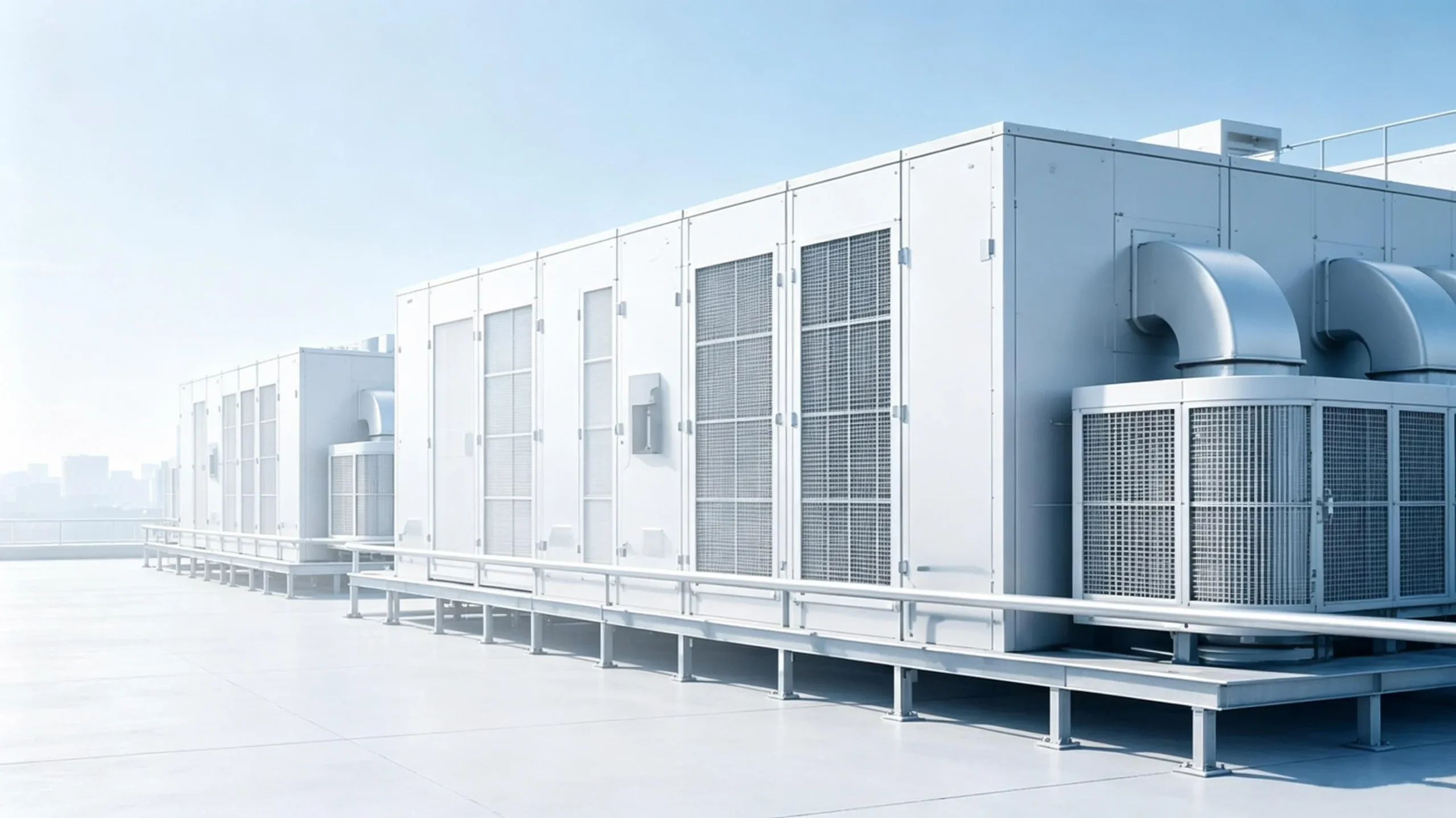
Commercial buildings and industrial facilities represent another major chunk of demand. About 65% of commercial HVAC systems now incorporate HEPA filtration in some capacity, especially in offices, schools, and public buildings where indoor air quality has become a bigger priority since the pandemic.
On the industrial side, semiconductor manufacturing is a huge and growing driver. Chip fabs require extremely clean production environments, with advanced nodes demanding ULPA and H14-level filtration throughout the facility. As the global semiconductor industry expands, particularly with new fab construction in the US, Europe, and Southeast Asia, the filtration requirements scale right along with it.
Food processing, electronics assembly, and aerospace manufacturing all contribute too. Any industry where particulate contamination can ruin product quality or create safety hazards is a HEPA customer. In-duct HEPA systems alone represent about $2.8 billion in revenue, making them the dominant product format within the industrial segment.
The commercial segment is interesting because it’s more cyclical than healthcare. It tracks with construction activity and office occupancy rates. But the long-term trend is still upward, as building codes and workplace safety standards gradually raise the bar for indoor air quality requirements.
Changes after the COVID-19 pandemic
A lot of people assumed HEPA demand would spike during COVID and then crash back down afterward. That didn’t really happen.
There was definitely a surge in 2020 and 2021, especially for portable air purifiers for homes and offices. But instead of dropping off, demand settled at a permanently higher baseline than before the pandemic. The reason is that COVID didn’t create the interest in air filtration—it accelerated a shift that was already happening.
People who bought air purifiers during the pandemic kept using them. Facilities that upgraded their HVAC systems didn’t downgrade back. School districts that installed HEPA units to protect students maintained those systems. The pandemic was essentially a massive public education campaign about airborne particles and filtration, and the market retained most of that gained ground.
The one area that did pull back was disposable mask filtration, but that was never a core HEPA market anyway. For installed filtration systems and replacement filters, the growth curve stayed intact.
The Supply Chain Angle: Why China Matters
None of this demand gets met without manufacturing capacity, and China is where the vast majority of HEPA filter media and finished filters are produced. Today, Chinese HEPA filter manufacturers are no longer just low-cost producers; many of them have production facilities with full EN 1822 testing and certification, achieving the same quality levels as their European or Japanese competitors.
The reason is vertical integration. China has the full supply chain in one place: glass fiber production, media forming, filter assembly, frame manufacturing. Factories that make their own media from raw materials can adjust formulations faster, hold tighter tolerances, and deliver shorter lead times than manufacturers that import pre-made media sheets.
As demand grows across all these segments—healthcare, residential, industrial—brands are increasingly sourcing directly from Chinese manufacturers instead of going through regional distributors or trading companies. The quality gap has narrowed substantially over the last decade, and the price and lead time advantages are hard to ignore for high-volume orders.
For consumer appliance brands and OEMs building air purifiers or HVAC systems, working directly with a Chinese HEPA filter manufacturer that controls its own media production is becoming the default way to stay competitive on both cost and performance.
So What’s the Real Key Driver?
If you had to pick one underlying force, it’s probably the simple fact that standards keep rising. What was considered “good enough” filtration ten years ago isn’t anymore—in hospitals, in factories, in office buildings, and in people’s homes.
Healthcare regulation sets the high bar. Industrial demand adds volume. Residential adoption is the growth engine. And the whole thing is supported by a maturing manufacturing base, primarily in China, that can deliver certified HEPA performance at accessible price points.
There’s no single magic driver. It’s all of these trends moving in the same direction at the same time. And with air pollution levels continuing to rise in most of the world, healthcare infrastructure expanding in developing markets, and semiconductor and biotech investment showing no signs of slowing, the HEPA filter market has a pretty clear runway for the rest of the decade.
Looking for a reliable Chinese HEPA filter manufacturer for your brand or product line? HIFINE is a vertically integrated factory producing H10 through H14 glass fiber HEPA filters, with individual EN 1822 testing on every unit and direct factory communication. We supply consumer appliance brands, HVAC OEMs. Reach out for sample test data and pricing.
Quote
| Data points | Numerical values | source |
|---|---|---|
| Global HEPA Market Size in 2025 | $53.8 亿 | Research and Markets |
| 2025-2032 CAGR | 9.06% / 7.9% | Research and Markets / Meticulous Research |
| 2032 Projected Size | $9.88 billion / $5.8 billion | Research and Markets / Meticulous Research |
| Medical Segment Market Share | 39.7% | Future Market Report |
| Pharmaceutical Cleanroom HEPA Penetration Rate | 58% | Global Growth Insights |
| Commercial HVAC HEPA Penetration Rate | 65% | Global Growth Insights |
| Residential Air Purifier HEPA Percentage | 46% | Global Growth Insights |
| WHO Population Exceeding Standards | 90%+ | WHO |
| US Market Share | 21.4% | Future Market Report |
| Smart Air Purifier CAGR | ~11% | Mordor Intelligence |
| Duct-Type HEPA Market | $2.8 billion | Dataintelo |