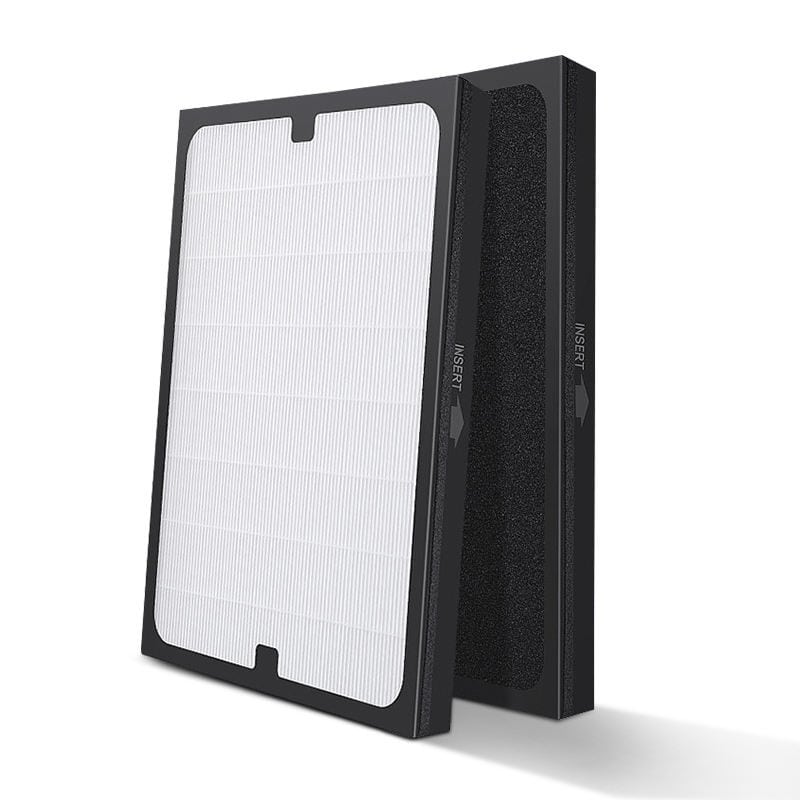
Short answer: yes, but only if the unit is holding a real amount of activated carbon. A HEPA filter alone won’t touch an odor, because HEPA is built to trap solid particles, and a smell isn’t a particle. It’s a gas. Removing a gas takes a completely different material, and how much of that material sits inside the housing is what separates a purifier that actually clears a room from one that just recirculates the smell at a slightly lower concentration. Before you buy one, or blame the one you already own, it helps to know which type of smell you’re dealing with. Not every odor has the same cause, so not every odor has the same fix.
Which Smells an Air Purifier Can Actually Fix
- Musty or mildew: something biological, mold or bacteria, is growing on a damp filter, and the blower spreads a trace of it through the room on every cycle. A fresh filter helps; if the moisture source isn’t fixed, the smell returns within weeks.
- Dirty sock smell: this one has a specific, documented cause, and it’s usually not a portable purifier’s job to fix. HVAC technicians have used the term since heat pumps became common in homes, and it describes bacteria building up on a damp evaporator coil while the system idles, then getting pushed into the room the moment the blower restarts. That coil lives inside your central AC or heat pump, not inside a portable purifier, so a purifier can dilute the smell after it enters the room, but the real fix is a technician cleaning the coil. If you’re not sure whether you’re dealing with a central-AC issue or a room-air issue, this comparison of split-system and central filtration is worth a look.
- Chemical or new plastic smell: normal in a brand-new filter for the first 24 to 48 hours, as manufacturing residue burns off. The same smell from an old filter means something else, its carbon is fully saturated and has started releasing what it previously trapped. That’s a replace-it signal, not a defect.
- Sweet or syrupy smell: stop. This isn’t a filter problem at all. It’s most likely refrigerant, and it needs a licensed HVAC technician, not a new filter.
- Cooking, smoke, or pet smell: this is where a properly sized activated carbon bed earns its keep. California’s air resources agency notes that devices with a real charcoal bed, typically 1 to 12 lbs depending on the unit, meaningfully reduce these odors and VOCs, while a thin charcoal layer only masks them briefly before breaking through.
The Carbon Spec Behind Air Purifier Smell Removal
“Contains activated carbon” is printed on almost every purifier box, and on its own it tells you almost nothing. Two numbers matter more:
- Iodine number: lab-grade carbon is rated under ASTM D4607, a standardized test measuring how much iodine a gram of carbon can adsorb, which acts as a proxy for available surface area and pore structure. For general air purification, that figure is usually only meaningful above roughly 800 to 1000 mg/g; well below it, the material behaves more like filler than a functional adsorbent.
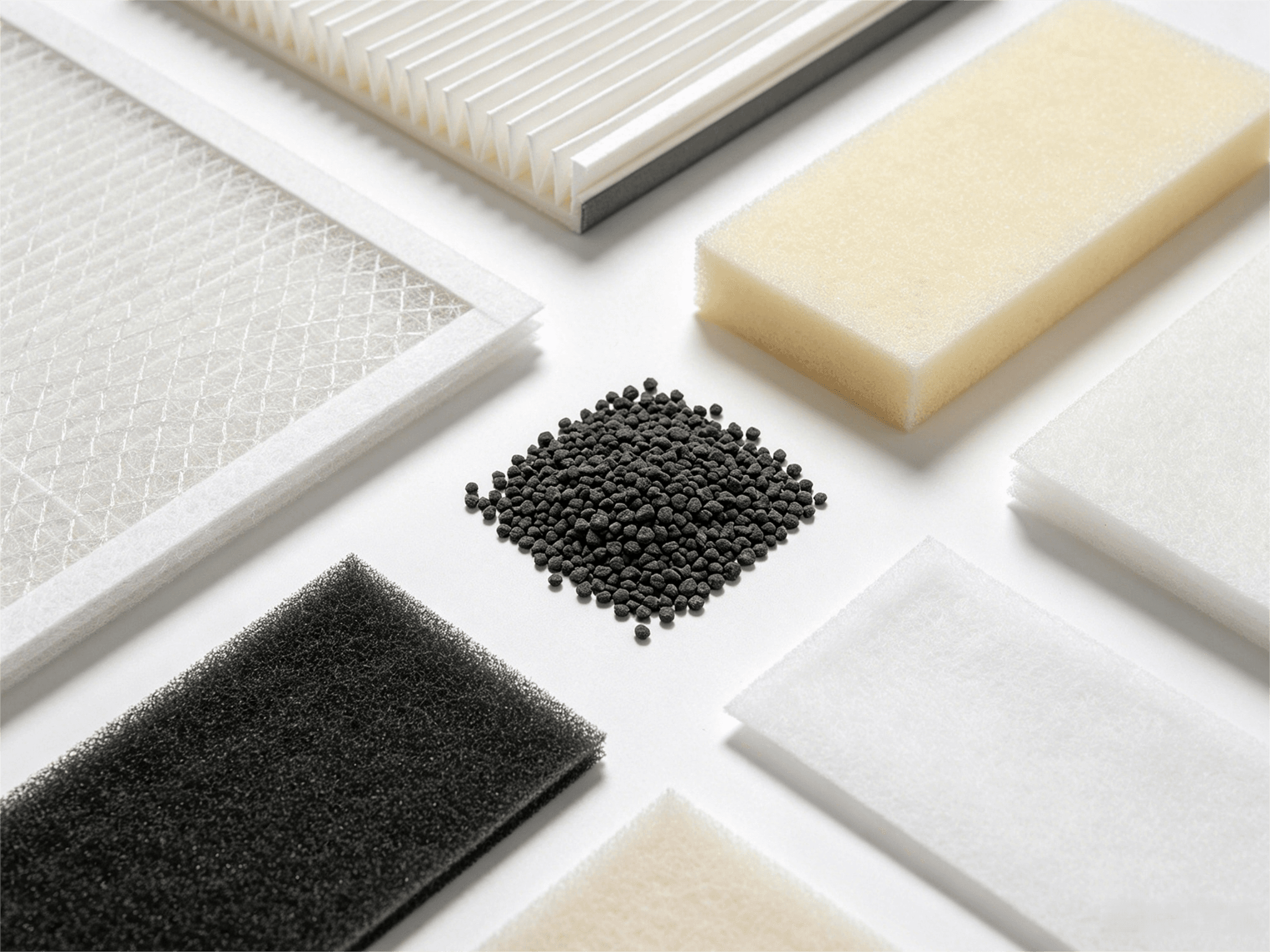
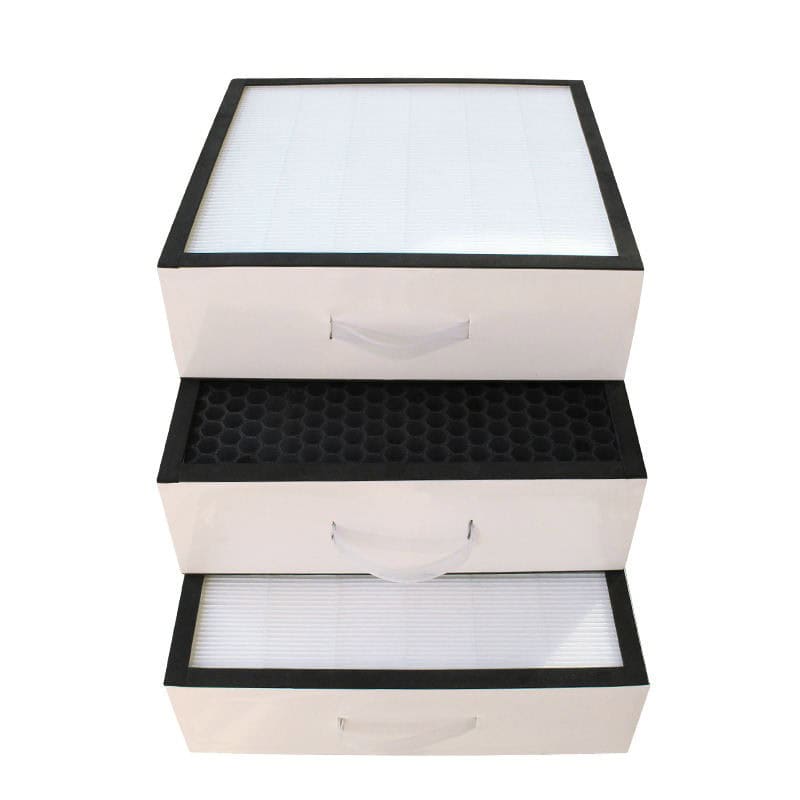
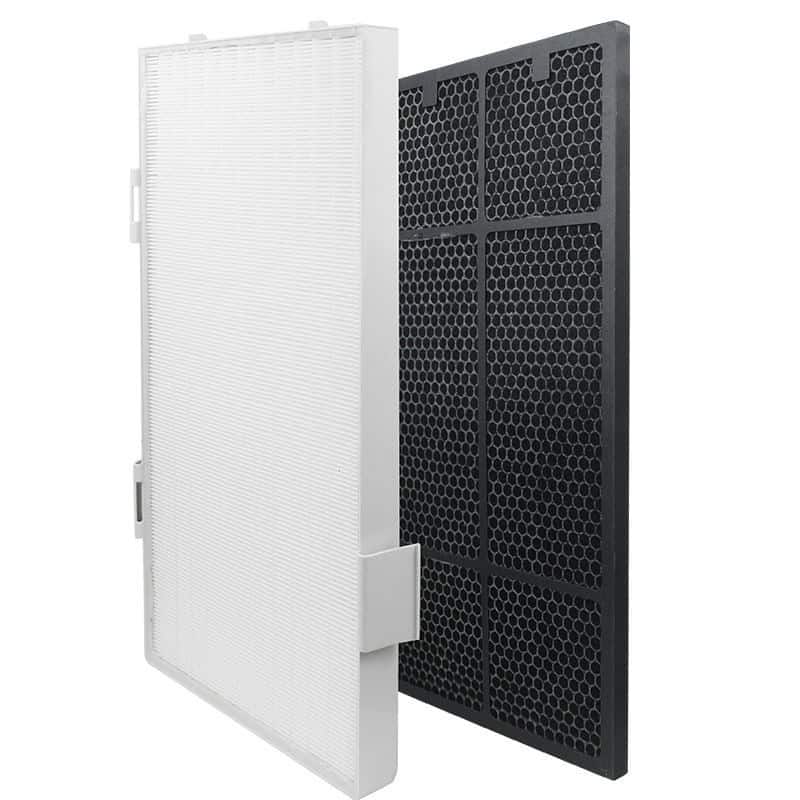
- Carbon mass: iodine number describes quality per gram. It says nothing about how many grams are actually in the filter. A cartridge can hold a genuine carbon bed or a light dusting on non-woven fabric, and both can legally print “contains activated carbon” on the box. Once that mass saturates, it stops adsorbing and starts releasing, the same mechanism behind the “old filter, chemical smell” case above.
We’ve compared how carbon and HEPA media actually perform side by side in this analysis, and looked specifically at carbon’s performance against formaldehyde and other VOCs here.
How to Check an Air Purifier Filter for Smell Removal
- Look for a published carbon weight or iodine number on the spec sheet. If neither appears, treat that as a red flag, not an oversight.
- Pull the filter and compare the carbon layer’s depth to a coin. A thin gray dusting behaves very differently from a dense black bed.
- Smell the filter directly. If it smells before it looks dirty, the carbon is already spent, regardless of how many months it’s been installed.
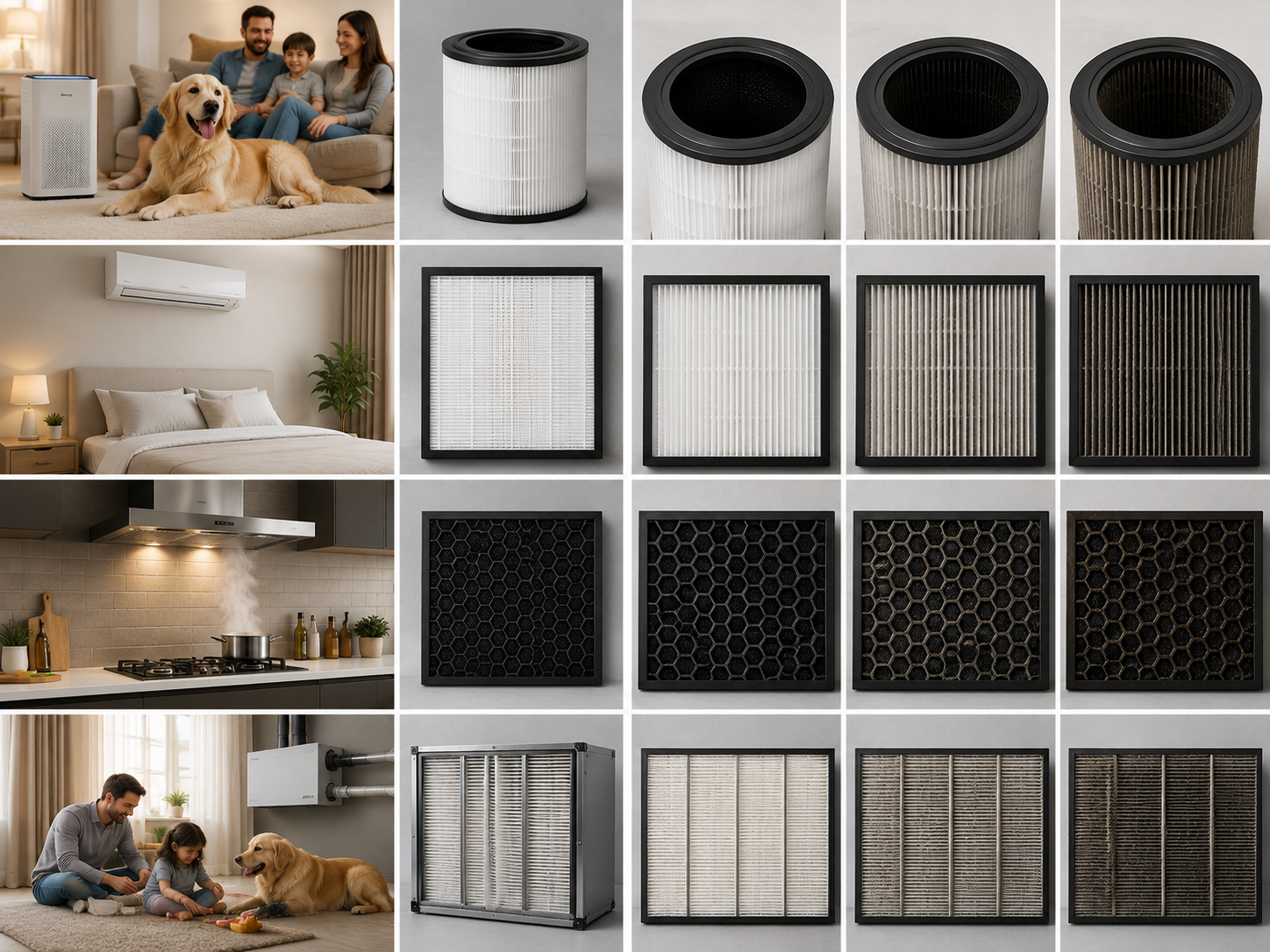
How often that carbon needs replacing depends on the household, not the calendar:
| Household | Replace every |
|---|---|
| 1–2 people, no pets, electric range | 10–12 months |
| Pets or a gas range | 5–6 months |
| Pets and a gas range, or recent renovation | 3–4 months |
| Wildfire season or heavy outdoor pollution | 2–3 months |
For a closer look at matching a replacement to your exact model, see our air purifier filter replacement guide.
When an Air Purifier Won’t Remove the Smell
A few odor sources sit outside what any portable purifier is designed to solve, no matter how good the carbon is: a blocked condensate line holding standing water under a coil, ductwork carrying a smell from the return side rather than the supply side, or refrigerant escaping a line. Those need a technician, not a filter swap. A purifier will dilute the symptom while the source keeps running.
Bottom Line on Air Purifiers and Smell
An air purifier helps with smell when, and only when, it carries a genuinely sized activated carbon bed behind the HEPA layer, and the odor is airborne rather than coming from a coil, a drain line, or a leak. HIFINE tests every activated carbon batch we manufacture against ASTM D4607 and publishes the iodine number and carbon weight for every activated carbon filter we produce, instead of leaving “contains activated carbon” to speak for itself. Brand owners and distributors building a filtration line around that kind of spec transparency can see how our OEM/ODM process works.