
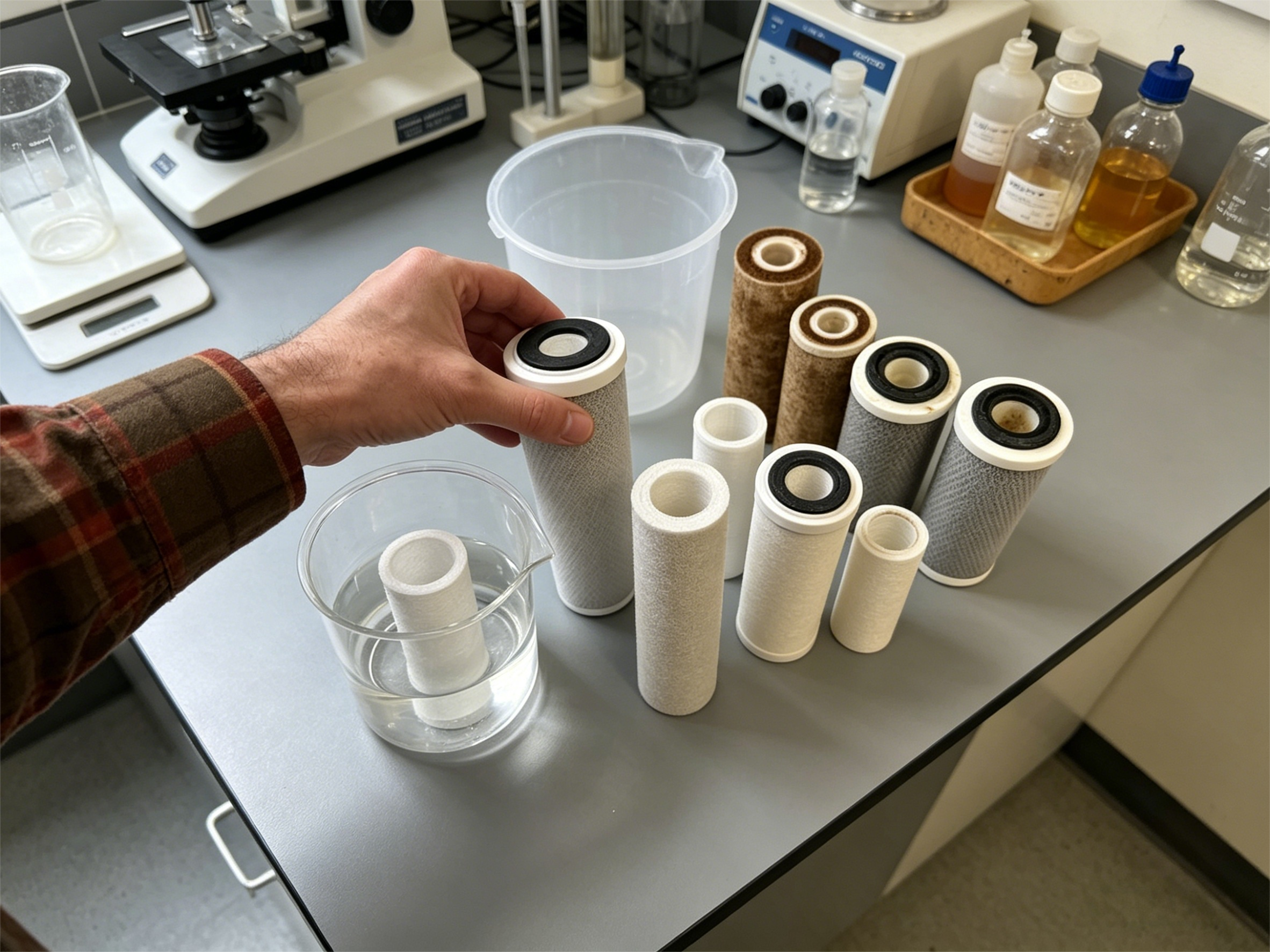
If you’ve ever doubted whether the filters in your kettle or under the sink can truly remove lead or arsenic, you’re genuinely concerned for your health. Heavy metal contamination is one of the world’s most pressing water quality issues. These contaminants are colorless and odorless, and in some cases, even trace amounts can be harmful.
The short answer is: yes, some filter cartridges can remove heavy metals. But not all of them. And the difference matters more than most people realize.
What Qualifies as a Heavy Metal Contaminant?
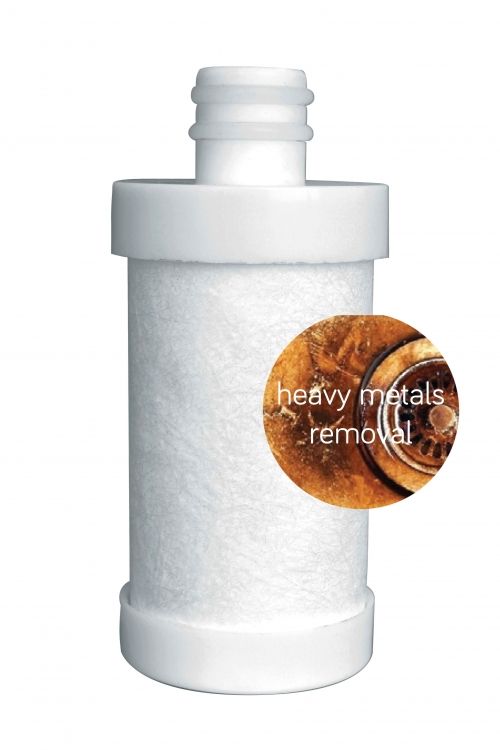
Heavy metals are naturally occurring elements with high atomic weights. In the context of drinking water, the ones that come up most often include:
- Lead – Still found in older plumbing systems and some municipal water lines
- Arsenic – Common in groundwater across parts of Asia, South America, and the western United States
- Mercury – Associated with industrial discharge and certain industrial processes
- Cadmium – Found near mining sites and in phosphate fertilizer runoff
- Chromium (hexavalent) – Industrial contamination; made widely known by the Erin Brockovich case
- Copper – Often leaches from pipes, particularly in acidic water conditions
Each of these behaves differently in water. Some carry a positive charge (cations), others a negative charge (anions), and some shift depending on pH. That’s exactly why no single filter technology removes all of them with equal efficiency.
How Different Filter Technologies Handle Heavy Metals
Activated Carbon Filters
Activated carbon is one of the most widely used filtration media in the world. It works through a process called adsorption—contaminants stick to the enormous surface area of carbon particles as water passes through.
For heavy metals, activated carbon has a complicated relationship. Standard granular activated carbon performs reasonably well with mercury under the right conditions, but it’s not reliable for lead or arsenic without chemical enhancement.
Carbon block filters combined with ion exchange resins—sometimes called catalytic carbon—perform considerably better. If a filter cartridge claims heavy metal reduction and uses activated carbon, look for independent third-party testing (NSF 53 or NSF 58 certification) before trusting the label.
KDF Media
KDF is a copper-zinc alloy that uses redox (oxidation-reduction) reactions to neutralize certain contaminants. It’s particularly effective at:
- Reducing chlorine and chloramines
- Removing mercury and lead
- Inhibiting bacterial growth within the filter itself
KDF media is rarely used alone. It’s typically paired with activated carbon in multi-stage cartridges—a combination that addresses a broader range of contaminants than either material can handle independently.
For households near older infrastructure or industrial areas, a cartridge containing KDF plus a carbon block is worth considering.
Ion Exchange Resins
Ion exchange is exactly what it sounds like: the filter swaps undesirable ions (heavy metal cations) for less harmful ones, typically sodium or hydrogen ions. This technology is the backbone of water softeners, but specialized resins can target specific heavy metals.
For lead and copper removal, cation exchange resins are particularly effective. For arsenic—which often appears as arsenate, an anion—anion exchange resins are needed instead.
The limitation is straightforward: resins have finite capacity. Once saturated, they can release previously captured contaminants back into the water, which is why timely cartridge replacement is non-negotiable.
Reverse Osmosis Membranes
Reverse osmosis is the most comprehensive solution for heavy metal removal available in residential settings. RO membranes have pores small enough (0.0001 microns) to block virtually all dissolved solids, including:
- Lead: over 95% reduction
- Arsenic: over 90% reduction
- Cadmium: over 95% reduction
- Mercury: over 95% reduction
- Hexavalent chromium: over 85% reduction
The trade-offs are real: RO systems are slower, waste some water in the process, and strip out beneficial minerals alongside harmful ones. Many quality RO systems add a remineralization stage to address that last concern.
If heavy metal contamination is a verified concern in your water supply, a multi-stage RO system with a pre-filter cartridge is the most reliable long-term approach.
Ultrafiltration Membranes
Ultrafiltration membranes have pore sizes around 0.01 microns—large enough to let dissolved heavy metal ions pass right through. UF is excellent for bacteria, viruses, and particulate matter, but it won’t significantly reduce dissolved heavy metals.
This is a common point of confusion for buyers who see “ultrafiltration” and assume it handles everything. It doesn’t. If heavy metals are your primary concern, UF alone is not sufficient.
Which Heavy Metals Are Hardest to Remove?
Some contaminants resist common filtration methods more stubbornly than others.
Arsenic is one of the trickiest. It exists in two forms—arsenite (As III) and arsenate (As V). Most filters target arsenate more effectively. If your water has elevated arsenite levels, pre-oxidation using chlorine or manganese greensand may be needed before filtration.
Chromium-6 (hexavalent chromium) requires specialized media. Standard activated carbon and even basic RO systems may not reduce it to acceptable levels without media specifically designed for the task.
Manganese, while technically not a heavy metal, behaves similarly in water and passes through many filters that consumers assume will block it.
The honest takeaway: no single cartridge removes every heavy metal at high efficiency. Effective heavy metal filtration usually involves multiple stages working together.
What Your Water Report Can Tell You
Before investing in any filtration system, get your water tested. In the United States, the EPA requires municipal water suppliers to publish an annual Consumer Confidence Report (CCR) listing regulated contaminant levels. If you’re on well water, independent lab testing is the only way to know what’s actually in your supply.
Once you know what you’re dealing with, you can match the right cartridge technology to your actual contamination profile—rather than buying a filter and hoping for the best.
What to Look for on Filter Cartridge Labels
Third-party certification is the clearest signal of real-world performance. The most relevant standards for heavy metal reduction:
- NSF/ANSI Standard 53 – Covers health effects including lead and certain other heavy metals
- NSF/ANSI Standard 58 – Covers reverse osmosis systems
- NSF/ANSI Standard 42 – Covers aesthetic effects (taste, odor) only—does NOT address heavy metals
Don’t rely on vague marketing language like “reduces impurities” or “advanced filtration.” Look for the specific contaminants listed on the certification and the tested reduction percentage.
How HIFINE Approaches Filtration Quality
At HIFINE, we manufacture filter cartridges for both air and water applications to OEM and ODM specifications. Our production process is ISO9001 and BSCI certified, with a daily output capacity of 50,000 units.
Whether you’re sourcing HEPA filter elements for air purifiers or multi-stage water filter cartridges designed for specific contaminant profiles, our engineering team can work with your requirements. contact us directly to discuss custom cartridge solutions.
If you’re also thinking about air quality, our guide on opening windows versus using an air purifier covers related filtration concepts worth understanding alongside water quality.
FAQ
It depends on water quality and usage volume, but most manufacturers recommend replacement every 3–6 months.
HEPA filters can capture heavy metal-bearing particulates, such as lead dust from old paint. However, dissolved gaseous heavy metal compounds require specialized activated carbon or chemisorption media, not standard HEPA filtration.
No. Boiling kills biological contaminants but actually concentrates heavy metals as water volume decreases through evaporation. It’s counterproductive for metal removal.