
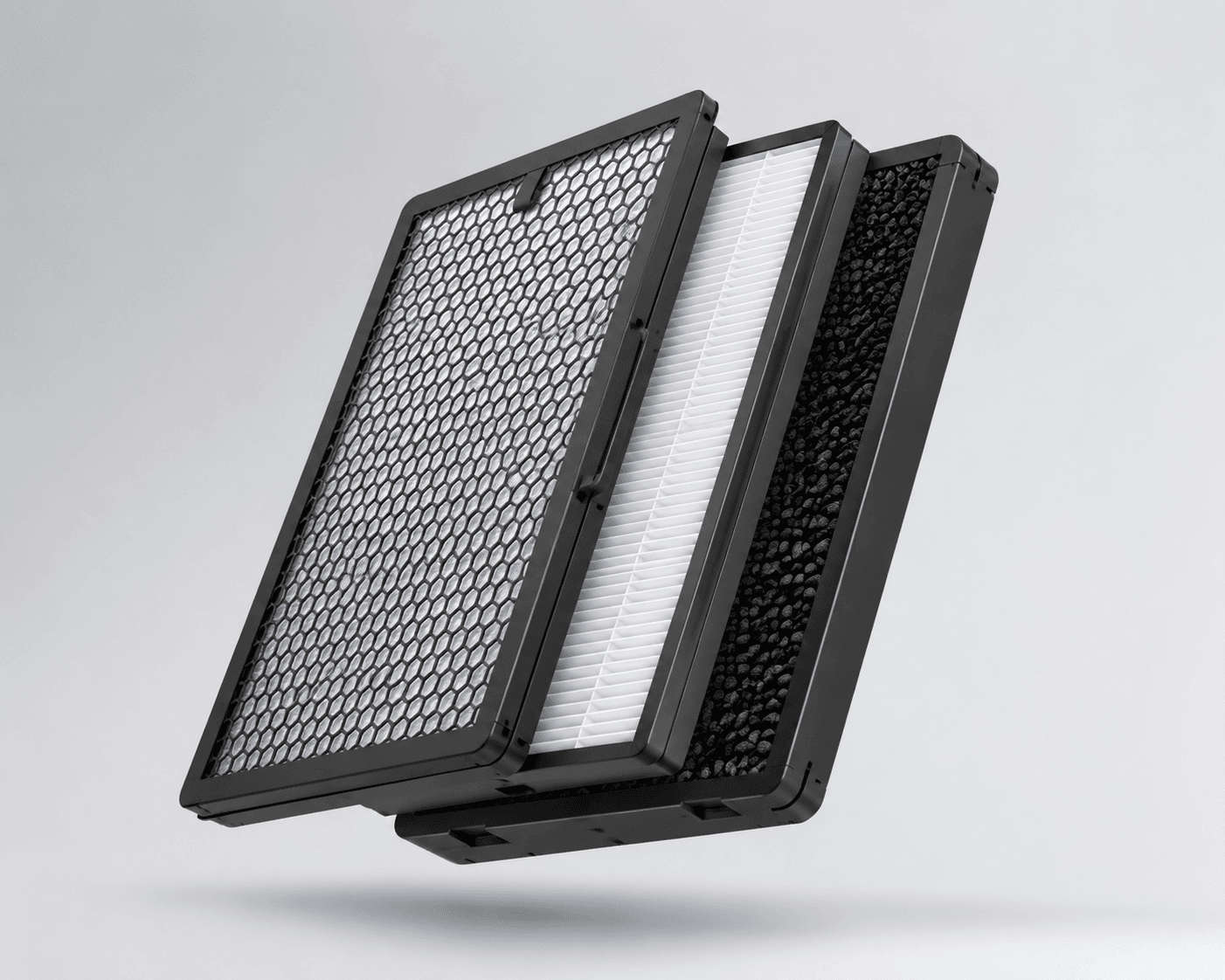
A HEPA filter cassette tells you how a filter is built. It does not tell you how well it filters. That gap causes more sourcing mistakes in air filtration procurement than any other single spec, and it rarely surfaces until a shipment fails a customer’s own lab test.
For brand owners, wholesalers, and private label buyers sourcing components for air purifiers or vacuum cleaners, this distinction matters more than it looks. Two suppliers can both list “HEPA filter cassette” on a spec sheet. One ships true H13-grade media sealed inside the cassette frame. The other ships a lower-grade filter in the same housing and calls it HEPA because the shape matches what buyers expect to see.
What a HEPA Filter Cassette Actually Is
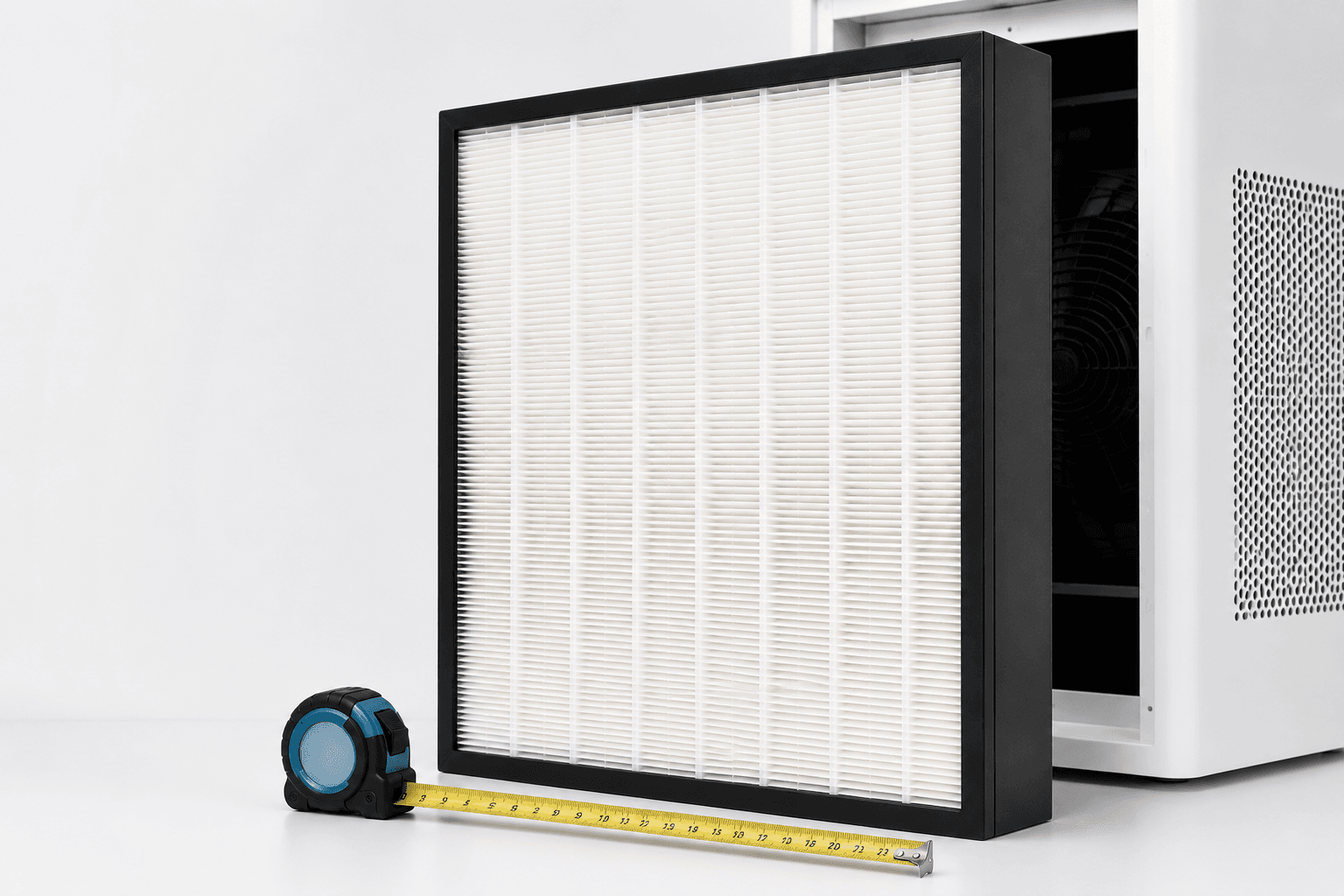
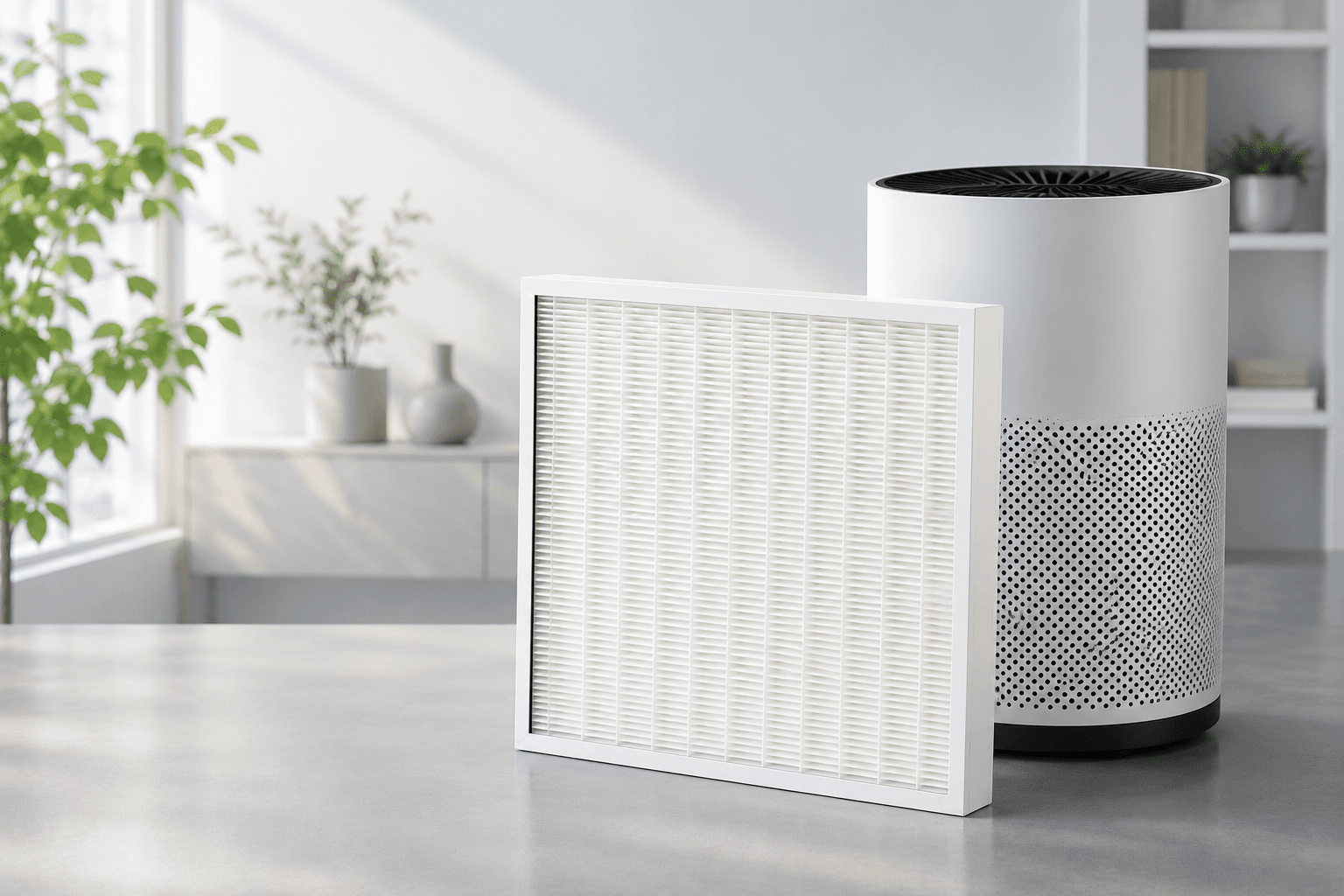
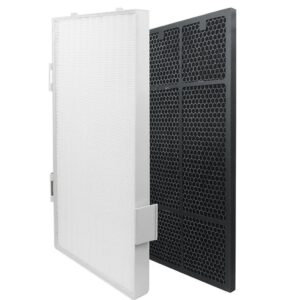
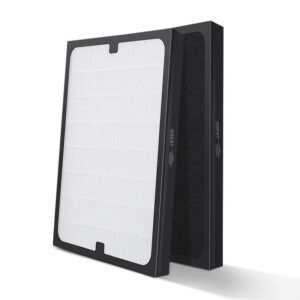
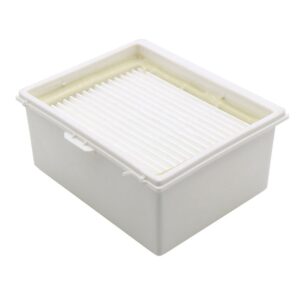
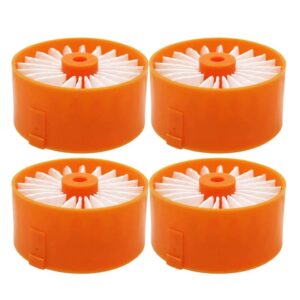
A HEPA filter cassette is a self-contained filtration unit. Pleated media, usually glass fiber or PET, sits sealed inside a rigid frame made of ABS plastic, aluminum, or coated board. The frame fixes the pleat depth and count, seals the edges with adhesive or gasket material, and creates a drop-in unit that fits directly into an air purifier housing, a vacuum body, or an HVAC terminal module.
“Cassette” describes that housing format. It does not describe a performance level. The U.S. EPA defines HEPA, using the U.S. Department of Energy’s standard, as a filter that removes at least 99.97% of airborne particles at 0.3 microns, the size range that is hardest for any filter to catch. Nothing in that definition mentions cassette, cartridge, or panel construction, so the format claim and the efficiency claim have to be checked separately. Our full breakdown of what that efficiency threshold means in practice is here: hepa filter meaning.
Why the Housing Format Doesn’t Guarantee the Filtration Class
The efficiency class lives in the media, not the box around it. Under the EN 1822 standard, high-efficiency filters split into three groups and eight classes: E10 through E12 for EPA-grade media, H13 and H14 for true HEPA media, and U15 through U17 for ULPA media used in semiconductor and cleanroom work.
Only H13 and H14 meet the technical bar for “HEPA.” Filters rated E11 or E12 sometimes get marketed as “HEPA-type” or “99% HEPA,” language that sounds close to the real standard but sits well below it, since E12 media still lets in far more particles at the hardest-to-catch size than H13 media does.
EN 1822 Filter Classes at a Glance
| Group | Class | Minimum Efficiency | Common Use |
|---|---|---|---|
| EPA | E10 | ≥ 85% | Pre-filters, general HVAC intake |
| EPA | E11 | ≥ 95% | Entry-level air purifiers, often mislabeled “HEPA-type” |
| EPA | E12 | ≥ 99.5% | Mid-tier consumer units, still not true HEPA |
| HEPA | H13 | ≥ 99.95% | True HEPA-grade air purifiers, medical settings |
| HEPA | H14 | ≥ 99.995% | Hospital, pharmaceutical, and cleanroom terminal filters |
| ULPA | U15-U17 | 99.9995% to 99.999995% | Semiconductor and ultra-clean facilities |
A supplier can build the exact same cassette frame around E11, H13, or H14 media without changing the outer dimensions at all. Unless the spec sheet or test report names the class in writing, “HEPA filter cassette” on its own only confirms the shape of the product, not the class of the media inside it.
It’s worth noting that EN 1822’s H13 threshold and the U.S. DOE’s HEPA benchmark come from different test methods, even though buyers often treat the two figures as interchangeable. Both describe true HEPA-grade performance, but a spec sheet that cites one standard is not automatically compliant with the other.
How Cassette Filters Are Actually Built
Most cassette filters use mini-pleat or standard-pleat construction. Mini-pleat designs pack more media surface area into the same frame footprint, which raises dust-holding capacity and slows the rise in pressure drop over the filter’s service life. Standard-pleat designs cost less to produce but need replacement sooner under heavy particulate load.
Between the pleats, separators, either a hot-melt adhesive bead pattern or corrugated aluminum strips, keep the folds evenly spaced so air moves through the full surface area instead of channeling through gaps. The frame itself is usually ultrasonically welded ABS for consumer air purifiers and vacuum inserts, or extruded aluminum for HVAC terminal modules that need to hold a gasket seal under continuous duct pressure.
This construction process overlaps with filter media production for other household appliances. OEM lines that produce HEPA cassettes often run the same pleating and frame-sealing equipment for range hood filters and induction cookers, since the media handling and frame-sealing steps are largely shared across product categories.
How to Vet a HEPA Filter Cassette Supplier Before You Order
A cassette that looks correct in a product photo can still ship with the wrong media class inside. Before placing a bulk order, ask for three things in writing:
- The test report tied to the actual media batch. A generic cassette datasheet from a catalog is not the same as a class certification for the media in your production run.
- Initial pressure drop and dust-holding capacity figures, not just the percentage efficiency claim. These numbers show how the filter performs over its service life, not just on day one.
- Frame tolerance for drop-in fit. Assembly lines reject cassette units over dimensional variance as small as half a millimeter, so tolerance specs matter as much as filtration class for anyone integrating cassettes into their own housings.
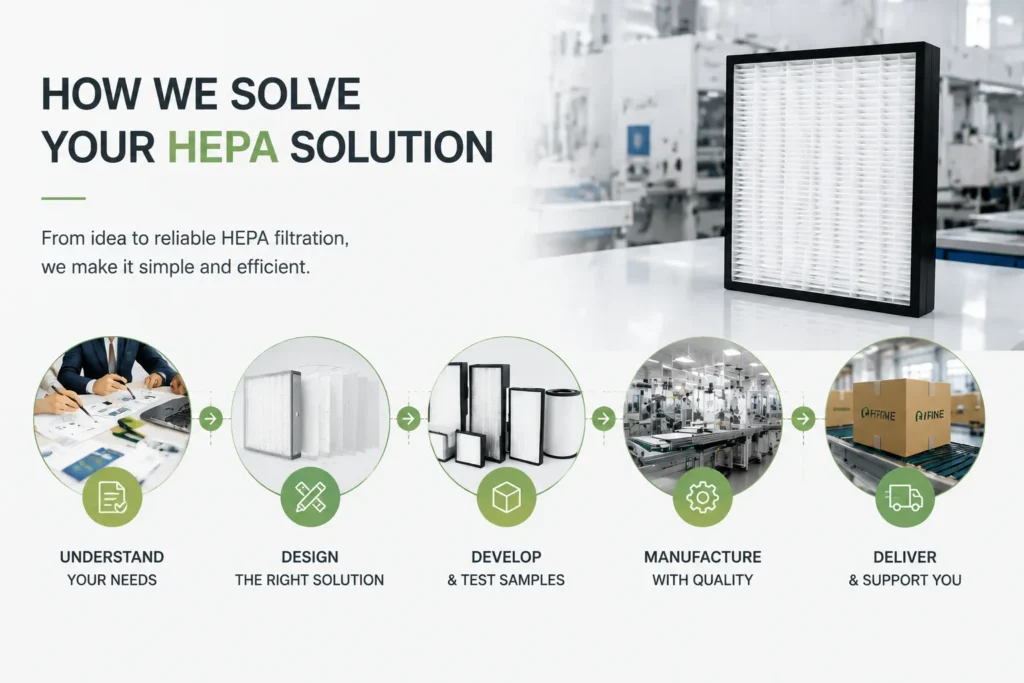
Working with a hepa filter supplier that documents class, batch testing, and frame tolerance in writing removes most of this risk before a container ever leaves the port. HIFINE’s HEPA Filter Cassettes Solution line covers pleated glass fiber and PET media across E11 through H13 classes, built to customer-specified frame dimensions for OEM and private label programs, with EN 1822 test documentation issued per production batch.
Getting the Format and the Grade Right, Together
The cassette format and the filtration class solve two different problems. The format determines whether the filter physically fits your product and assembly line. The class determines whether it actually cleans the air the way your packaging claims it does. Treating “HEPA filter cassette” as a single spec, instead of two separate ones, is how private label buyers end up with a product that fits perfectly and underperforms on a third-party lab test.
HIFINE has been producing pleated filter media and cassette-format HEPA components for air purifier and vacuum cleaner brands since 2013, with EN 1822 and DOE-referenced test documentation issued per batch for OEM and private label buyers sourcing at volume.