
Every air purifier brand claims to protect a customer’s health. Almost none of them state, in plain terms, what particle size their filter actually stops, at what rate, under what test. That gap between the marketing copy and the lab data is starting to matter, and it is quietly reshaping what private label and OEM buyers ask their filter supplier to prove before they place an order.
Air Purifier Health Claims vs the HEPA Filter Spec Behind Them
Search “air purifier for allergies” or “air purifier for home” and thousands of listings promise cleaner air. Very few name the filtration grade behind that promise. Under the U.S. definition, a true HEPA filter must remove at least 99.97 percent of airborne particles at 0.3 microns, officially set by the U.S. Department of Energy and used by the EPA as the baseline test. That number says nothing about performance at smaller particle sizes, how the filter holds up over months of use, or whether it does anything against a gas like formaldehyde.
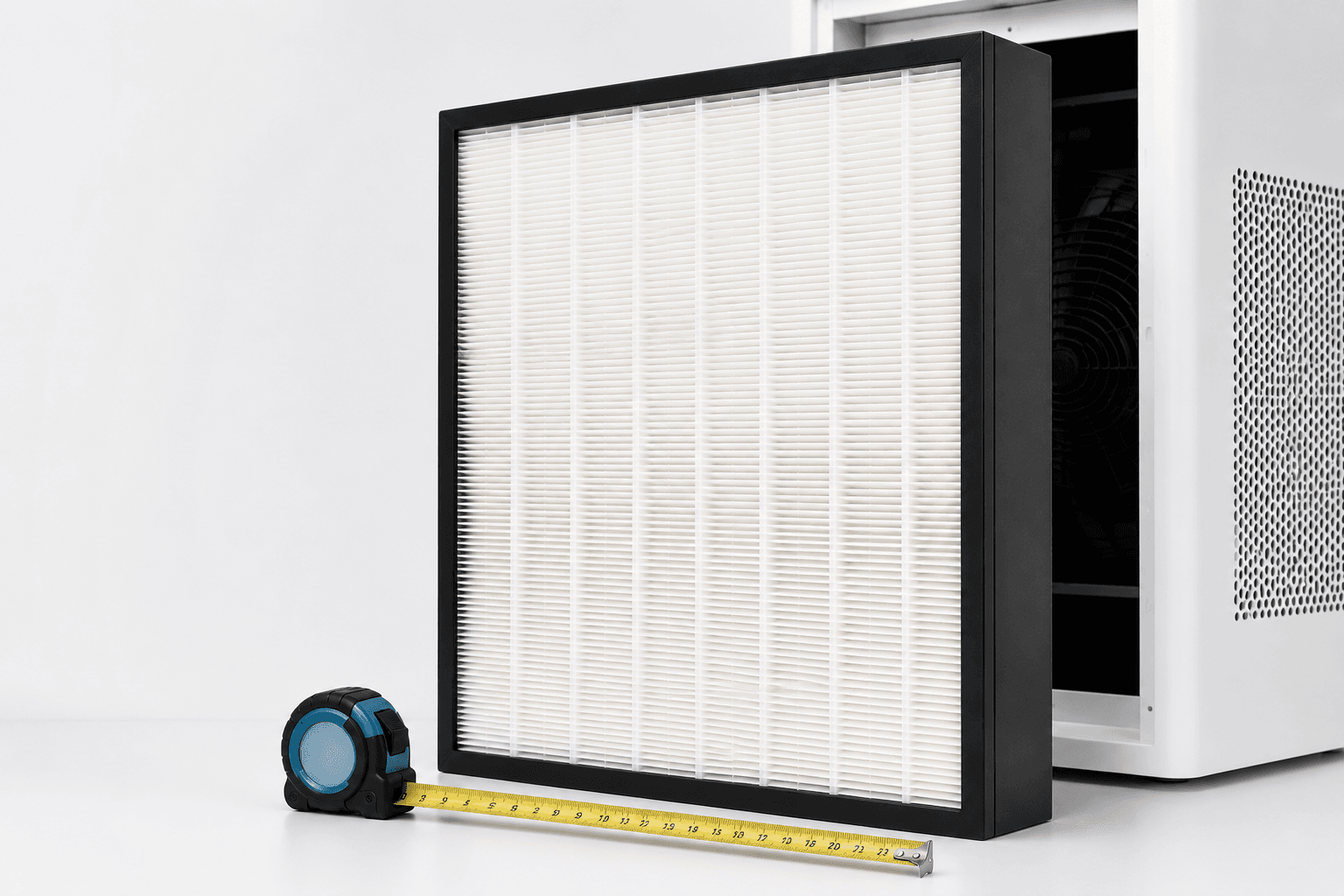
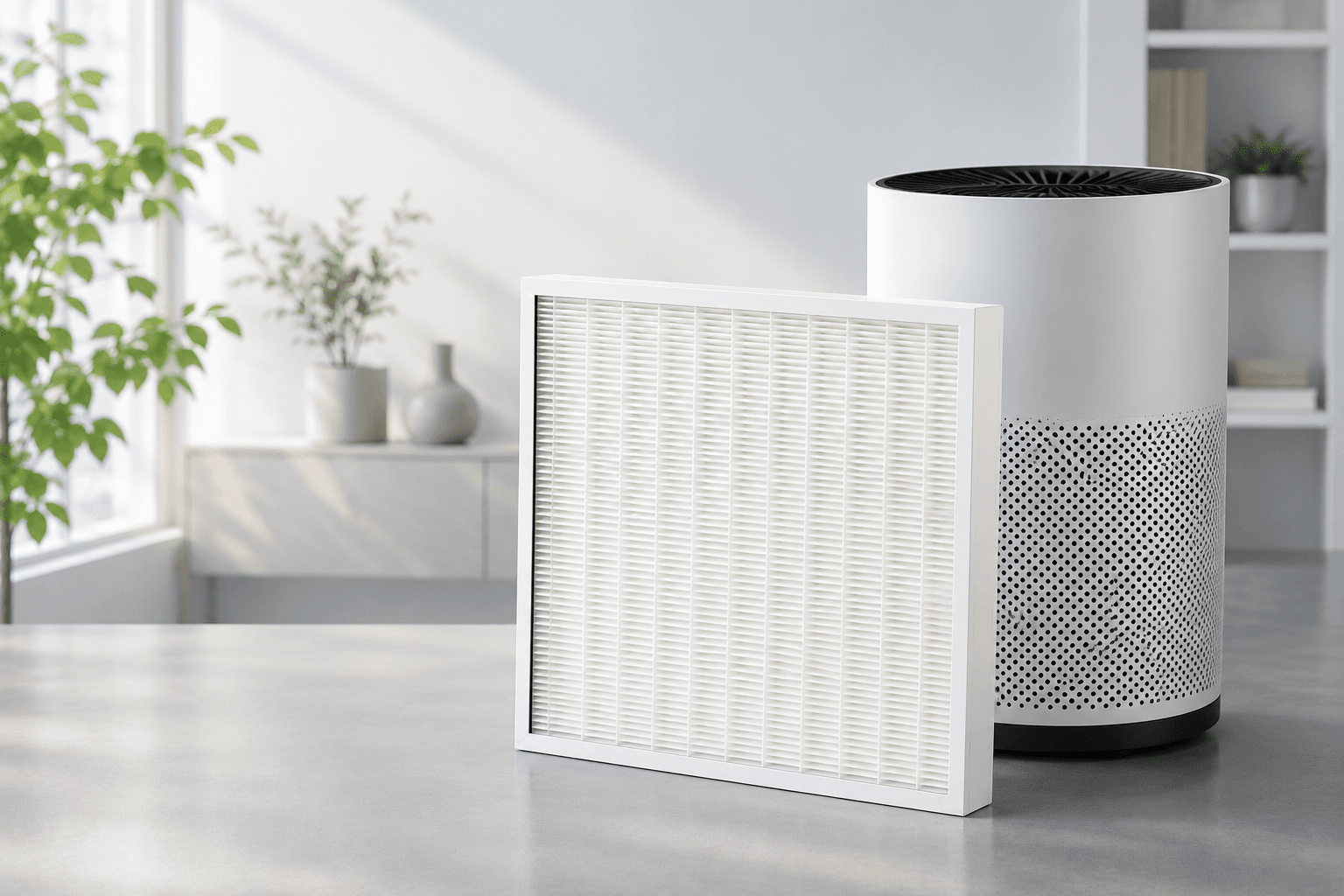
This is where the European EN 1822 classification adds a layer that buyers are starting to ask for by name. Under EN 1822, an H13 filter is certified to capture 99.95 percent of particles at whatever size is hardest for that specific media to catch, known as the most penetrating particle size, usually between 0.1 and 0.2 microns rather than the fixed 0.3 micron point used in the US test. That is a harder benchmark to pass, and it is why H13 has become the reference grade for hospital wards and airborne infection isolation rooms, not a marketing suffix printed on a retail box.
What an H13 HEPA Filter Actually Removes
A properly certified H13 filter genuinely earns its place against the categories driving most of this search demand: household dust, pollen, pet dander, tobacco smoke particulates, and general airborne debris. Long tail terms like air purifier for smoke, best air purifier for cigarette smoke, and best air purifier for dust all point to the same need, mechanical particle capture at a grade well above a standard furnace filter.
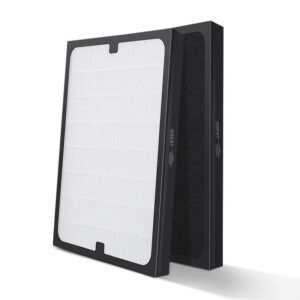
What H13 cannot do is remove gases, and this is the part most product listings quietly skip. A published research review on indoor VOCs and air cleaners notes plainly that fibrous filters such as HEPA are built to hold back particles and microorganisms, not volatile organic compounds. Formaldehyde, one of the most studied indoor pollutants, passes straight through a HEPA layer untouched. The only reliable fix is a secondary activated carbon stage, which is why the strongest listings under formaldehyde air purifier and voc air filter are almost always combination units, not single stage HEPA. A product that markets whole home odor or VOC reduction without a carbon layer behind the HEPA media will not survive a lab test, and it increasingly will not survive a return either.
H13 HEPA Filter Market Data: Why Demand Is Shifting in 2026
This is not a niche preference. Mordor Intelligence puts the global air purifier market at roughly 20 billion US dollars in 2026, and HEPA media alone accounts for about 68 percent of category revenue, largely on the strength of that testable 99.97 percent claim. That share has grown as buyers move away from vague ionizer and electrostatic technology toward filters with a number a lab can independently confirm.
For a sourcing team, that shift changes the conversation with a manufacturer from “can you make an air purifier filter” to “can you hand me the EN 1822 or IEST test report for this exact filter lot.” Retailers and marketplaces are asking for that documentation more often, especially across the EU and in any listing aimed at allergy or respiratory sensitive buyers.
Formaldehyde Air Purifiers and Hayfever Relief: The Two Categories Driving Repeat Purchases
Two health categories appear repeatedly across this keyword set, and both map to conditions that are actually measured, not vague wellness language.
Seasonal allergic rhinitis, commonly called hayfever, affected an estimated 81 million people in the United States in 2021 according to figures compiled by the Asthma and Allergy Foundation of America, close to 26 percent of adults. That is a large, recurring buyer base searching air purifier for hayfever and air purifier for seasonal allergies at the same predictable points on the calendar every year.
Formaldehyde exposure is a different problem, chronic rather than seasonal. The EPA classifies formaldehyde as a probable human carcinogen and notes that indoor concentrations of many VOCs run consistently higher than outdoor levels, sometimes by a wide margin, because new furniture, flooring, paint, and pressed wood products keep releasing the gas long after installation. A buyer searching formaldehyde air purifier is rarely browsing casually. They are usually responding to a new home, a renovation, or a specific health concern, which makes this a segment worth a dedicated SKU rather than a line item folded into a general purpose listing.
H13 HEPA Filter Sourcing Checklist for Air Purifier Brands
Brands moving from standard HEPA to H13 for a 2026 line should confirm four things with a manufacturing partner before tooling is finalized.
First, ask for the actual test standard and the most penetrating particle size result, not just a stated percentage on a spec sheet. Second, confirm whether the filter is single stage HEPA or a combination media with an activated carbon layer, since that determines whether any VOC or odor claim on the packaging is defensible. Third, check pressure drop. H13 media is denser than standard HEPA, and a poorly engineered filter can raise airflow resistance enough to force a louder fan or a lower effective CADR, undermining the exact performance claim the upgrade was meant to support. Fourth, ask for documentation you can hand to a retailer or regulator on request, not a spec sheet with no lab reference behind it.
Private Label Air Purifier Filters: Where H13 HEPA Fits
For a brand building or refreshing a private label air purifier line, the real decision is rarely HEPA or not. It is which grade, paired with which secondary media, tested against which standard, at what airflow resistance. HIFINE manufactures H13 rated HEPA air purifier filters alongside dual stage activated carbon combination filters built to close the gap between particle capture and gas adsorption, so a formaldehyde or VOC claim on your packaging is one your lab report can support. For a closer look at how the two media types divide the work between them, our engineering breakdown of carbon filters versus HEPA filters covers it in more depth.