
A “large room” or “whole house” claim on packaging is one of the easiest lines to write and one of the easiest to fail once a customer measures their actual living room. It is not really a marketing decision. It is a filter math problem, and most brands get the math wrong before the marketing team ever touches the copy.
Large Room Air Purifier Claims vs the CADR Math Behind Them
The industry benchmark here comes from AHAM, the Association of Home Appliance Manufacturers, which developed the Clean Air Delivery Rate, or CADR, testing method and runs the AHAM Verifide certification program recognized by the EPA and the American Lung Association. Their long standing rule of thumb is that a unit’s smoke CADR should equal at least two thirds of the room’s square footage. A room measuring 12 by 20 feet works out to 240 square feet, which means an honest large room claim needs a smoke CADR of roughly 160 CFM, not just a bigger fan housing and a confident label.
Most brands that miss this are not lying, they are rounding up. A unit tested and rated for a 300 square foot room gets marketed for “large rooms up to 500 square feet” because it technically still moves air in that space, just far below the exchange rate a buyer actually needs. That gap shows up later as a wave of one and two star reviews mentioning lingering odor or dust, which is really a sizing problem being mistaken for a quality problem.
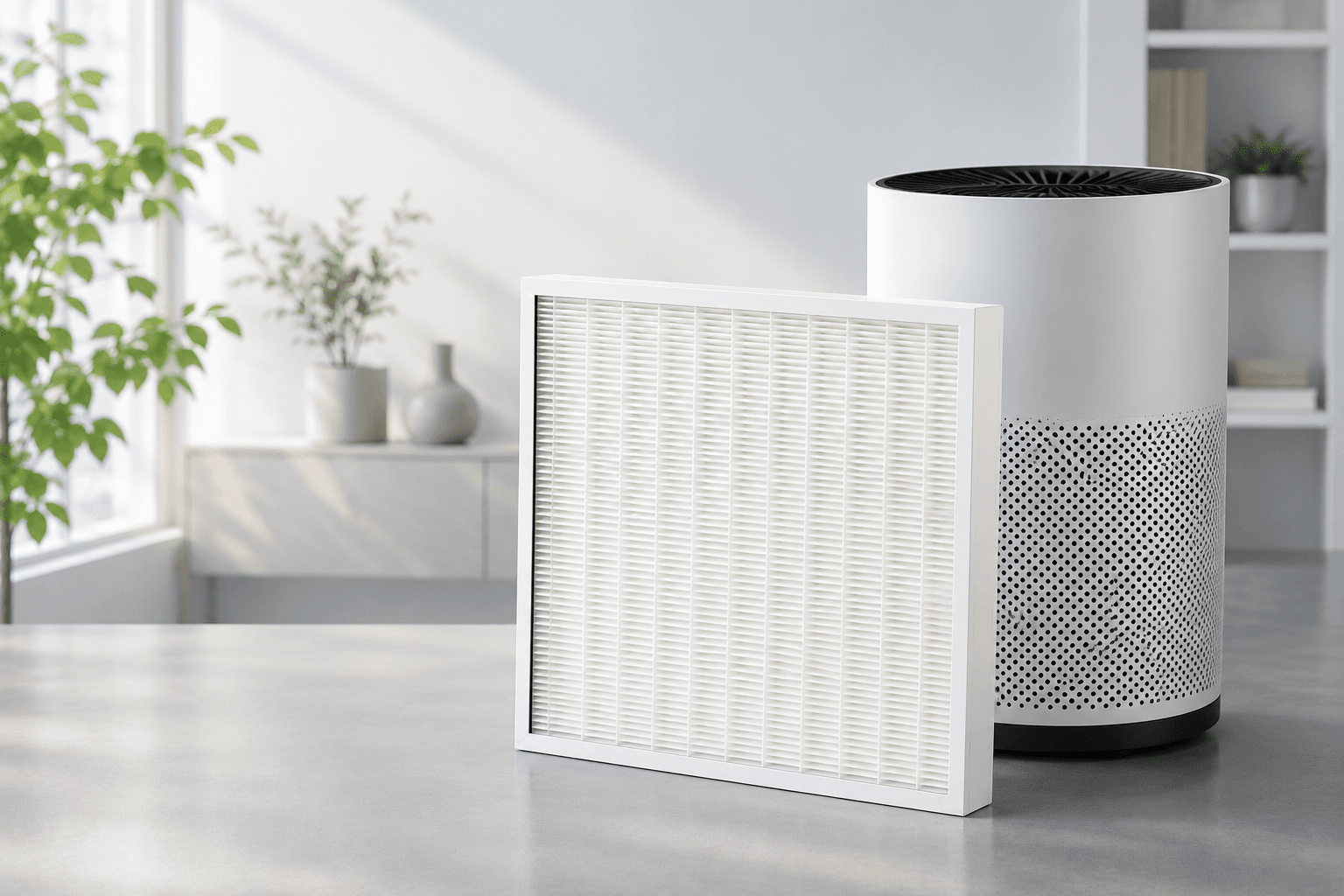
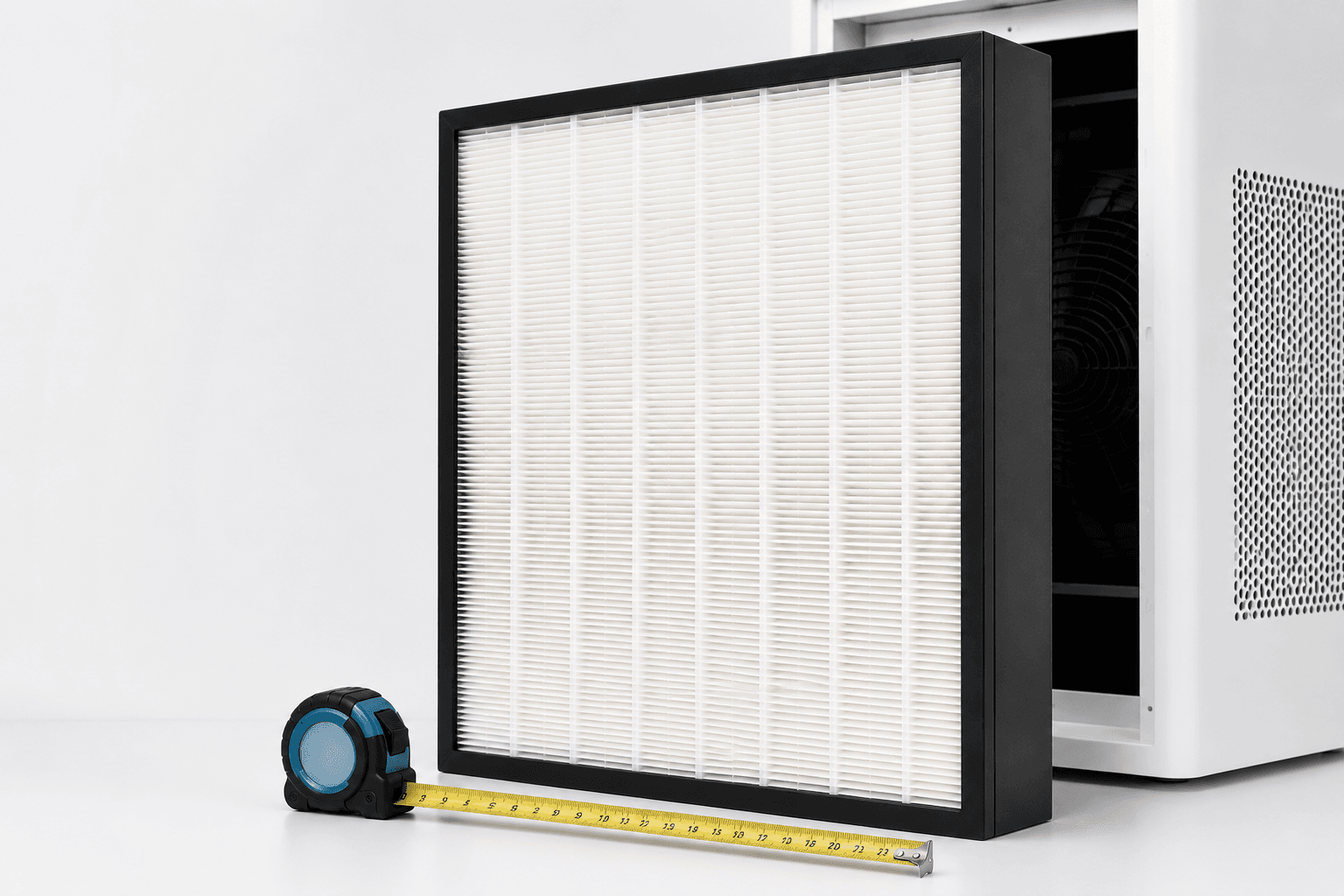
The CADR value of a large room air purifier depends on the filter surface area
The easiest way to hit a higher CADR number is to spin the fan faster. It is also the worst way. Pushing more air through the same filter media at higher speed increases airflow resistance sharply, and resistance does not rise in a straight line, it climbs as a curve. A new H13 filter typically runs somewhere between 150 and 250 pascals of pressure drop, and a filter nearing the end of its service life can climb toward 375 to 500 pascals before performance drops off a cliff. A large room unit built around fan speed alone hits that ceiling faster, runs louder, pulls more power, and wears the motor out sooner, all while the CADR number on the box quietly overstates what the unit delivers once the filter has a few weeks of dust load on it.
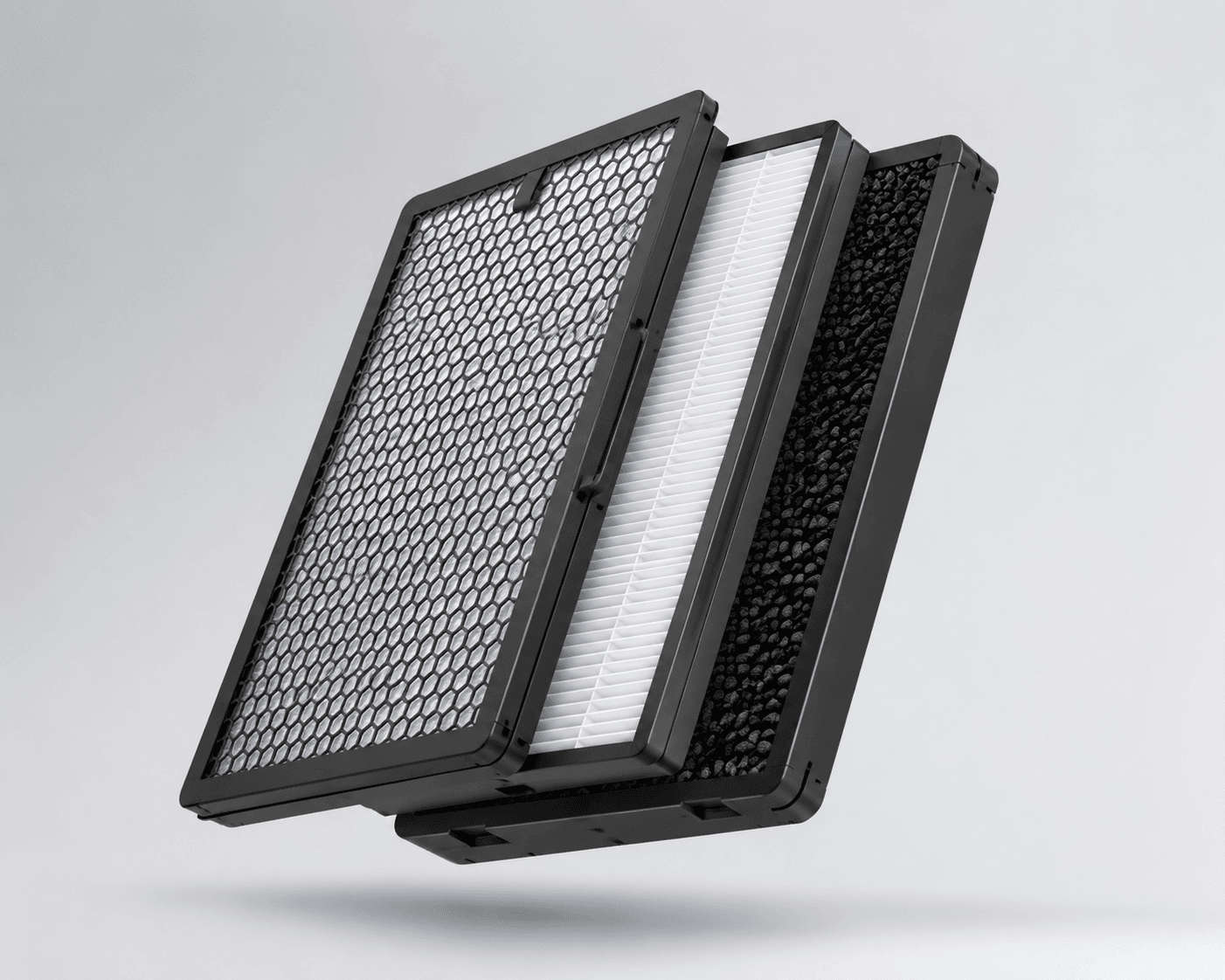
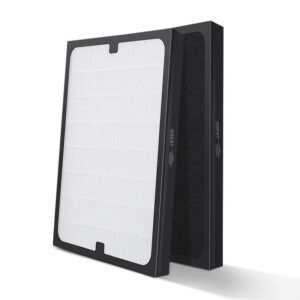
The better engineering path is more filter media surface area, not more fan speed. Deeper pleats, a larger housing footprint, or a cylindrical rather than flat panel format all increase the surface area air can pass through, which lowers resistance per unit of airflow and lets a large room unit hit its rated CADR without pushing the fan into a noisy, short lived operating range. We cover the pressure drop side of this in more detail in our guide to normal HEPA filter pressure drop.
Whole House Air Purifier vs Large Room Air Purifier
Search demand in this space actually splits into two distinct product categories that brands often bundle into one confused SKU.
Whole House Air Purifier Systems
Terms like whole house air purifier, hvac air purifier, and in duct air purifier describe filters built into central HVAC ductwork, sized to the full system airflow, often 1000 to 2000 CFM or more, and typically rated by MERV rather than CADR since they are tested under a different standard entirely. These filters need to match duct dimensions precisely and hold up under continuous system airflow, not the intermittent cycling of a portable unit.
Large Room Air Purifier Units
Terms like large room air purifier, best large room air purifier, and best bedroom air purifier describe standalone units covering roughly 400 to 600 square feet, rated by AHAM smoke CADR, and expected to run quietly enough for a bedroom or living space. A filter built for this category needs a very different pleat and housing design than one built for a ducted system, even though both get marketed loosely under “whole home” language.
Selling one filter platform against both search categories is where a lot of the underperformance in this space actually starts.
CADR and Air Changes Per Hour
AHAM’s suggested room size figures assume 4.8 air changes per hour, meaning the entire volume of air in the room passes through the filter roughly every twelve and a half minutes. This is the minimum exchange rate needed to keep pace with unfiltered air constantly entering the space through doors, gaps, and normal ventilation. Some competitor listings quietly base their square footage claim on a much lower exchange rate, which is not against any rule, but it does mean two products with the same printed square footage number can perform very differently in practice. Printing the ACH assumption alongside the CADR number, rather than just the room size, is a small change that gives a private label buyer a genuine point of differentiation on the box.
What to Specify When Ordering Large Room Air Purifier Filters
Before finalizing a large room or whole house SKU, confirm target CADR for smoke, dust, and pollen separately rather than one blended figure, the room square footage and ACH assumption behind that figure, a maximum acceptable pressure drop at rated airflow, the pleat count and media depth needed to hit that pressure target, and the expected replacement interval once the filter carries a realistic dust load rather than a clean, out of box measurement.
HIFINE’s Large Format HEPA Filters for Whole House and Large Room Air Purifiers
Large room and ducted filter formats are a matter of media engineering as much as size. HIFINE produces custom pleat depth and housing dimensions for large format air purifier filters, built to hold pressure drop targets at higher rated airflow rather than relying on fan speed to compensate for undersized media. Every production run goes through the quality control process our OEM and private label partners can request documentation on before a filter ships.