
Dyson vacuums lose suction for a lot of reasons. Nine times out of ten, it’s the filter. And the fix really is just washing it — except people keep making the same mistakes: wrong water temperature, soap that doesn’t belong there, a filter that goes back in still damp. Any one of those does quiet damage you can’t see until something’s already wrong.
What Kind of Filter Does Your Dyson Have?
This matters more than most cleaning guides let on. There are two types, and they need completely different treatment.
Washable foam and felt filters — V-series cordless vacuums
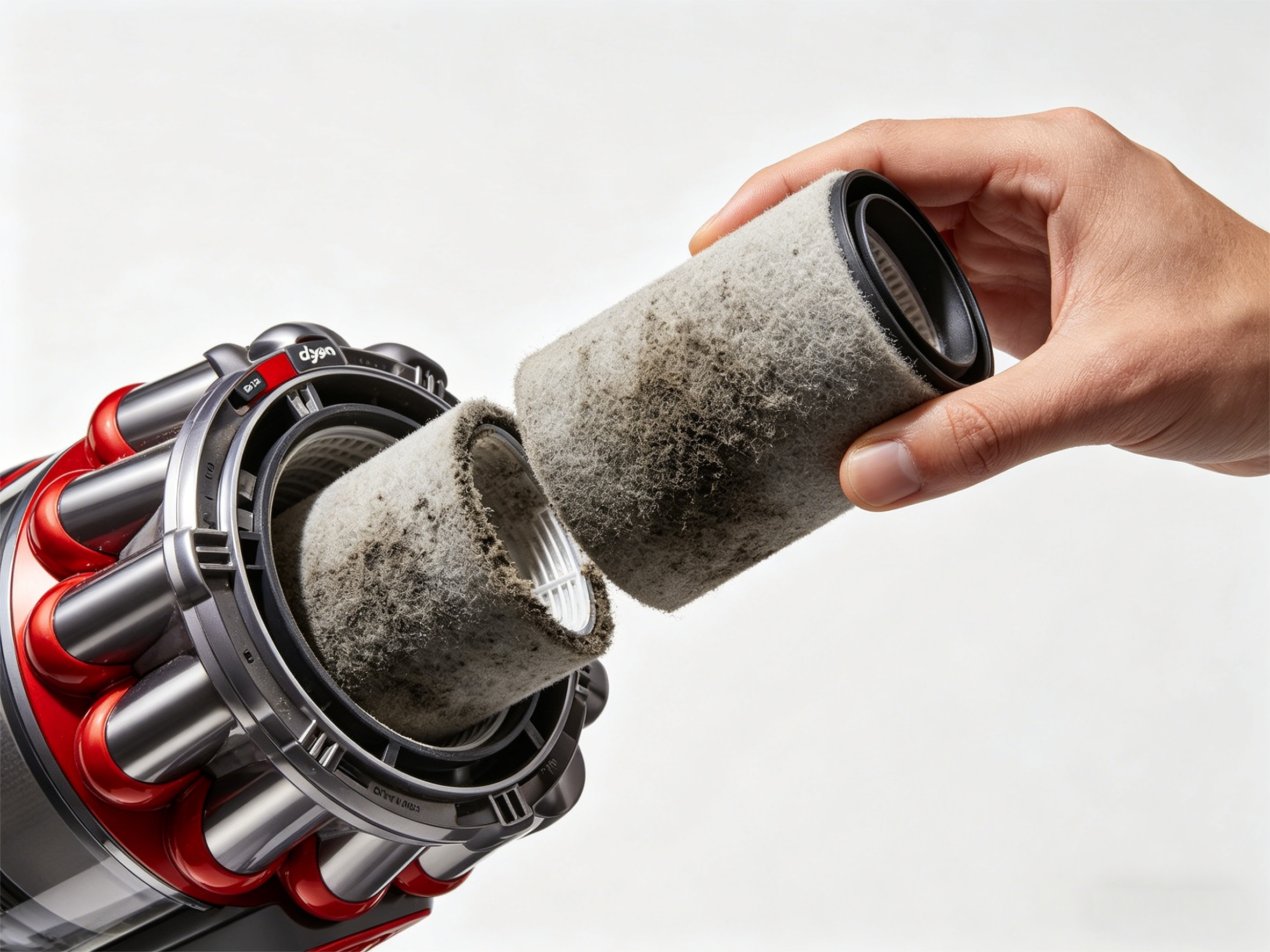
The V7, V8, V10, V11, V12, and V15 all use a cylindrical pre-motor filter built from layered foam and felt. These are designed to get wet. You rinse them, dry them, and put them back. That’s the whole idea.
Worth knowing before you start: V10, V11, V12, and V15 filters are noticeably thicker than the ones in older models. They take longer to rinse through and longer to dry from the inside out. If you have one of these, budget 48 hours for drying — not 24.
HEPA and activated carbon filters — Dyson air purifiers
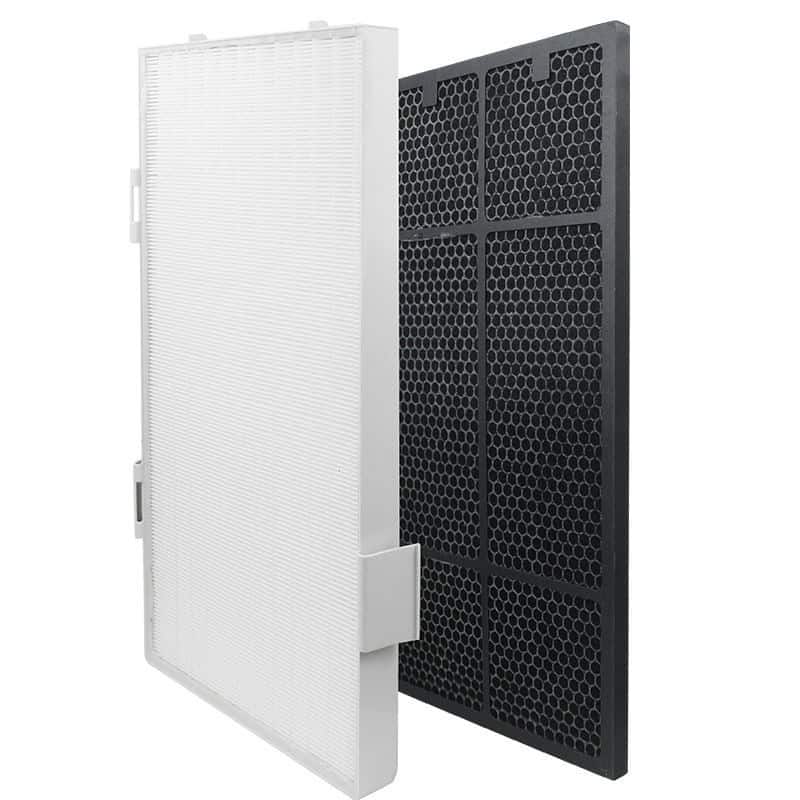
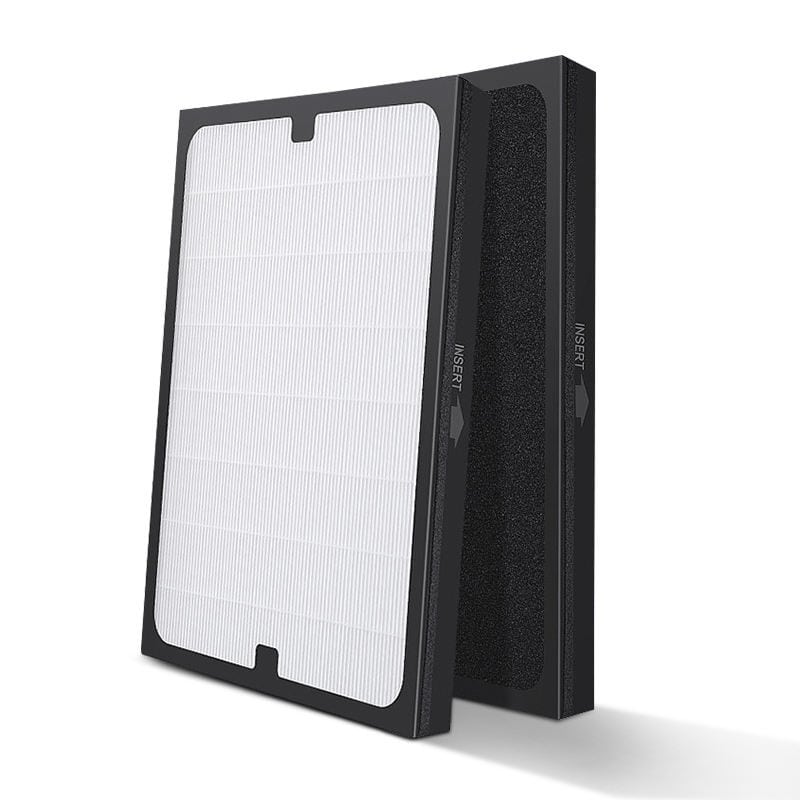
If you have a Dyson air purifier — HP04, HP07, TP07, TP09, and similar — the filter inside is a sealed combination unit. HEPA-13 layer bonded with activated carbon. These look like they could be rinsed. They can’t.
Water destroys the fiber structure that makes HEPA filtration work. Once wet, the fibers clump, gaps open up, and the filter that used to catch 99.97% of particles above 0.3 microns is now letting a good portion of them straight through. You won’t see this damage. But it’s there.
For air purifier filters, cleaning isn’t the answer — replacement is. Once a year, roughly, depending on how much you use it and what the air quality is like in your area.
Not sure which type you have? Check the label on the filter itself before you do anything.
How to Clean a Dyson Filter — Step by Step
Everything below applies to washable foam and felt filters in V-series cordless vacuums. Air purifier owners, skip to the replacement section.
Remove the filter
Turn the machine fully off first — not just standby, actually off. On most V-series models, the filter is at the top of the handle and twists counterclockwise. The V8’s filter sits at the back. V10, V11, V12, and V15 filters come off in one piece with a twist from the top.
The foam edges are softer than they feel. If it catches, work it gently rather than forcing it.
Tap out the dry dust first
Hold the filter over a bin and tap it firmly a few times before any water gets involved. You can shake out a surprising amount of loose debris this way — it’s a step a lot of people skip, and they shouldn’t. If you have allergies, do this outside.
Cold water only
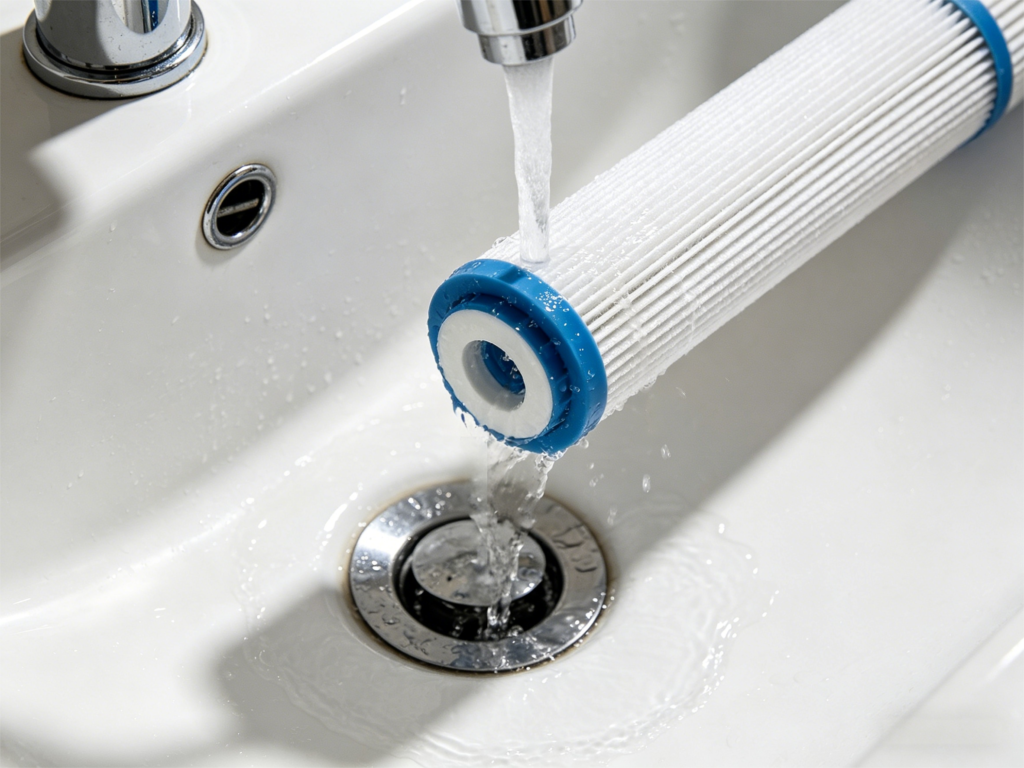
Cold tap water, filter in hand. Squeeze the foam gently while you rotate it, letting water push through from all sides. Keep going until what drains out runs clear. Two minutes if you’ve been keeping up with it. Closer to four if it’s been a while.
No soap. No dish detergent. No surface spray. Soap leaves residue in the foam that water can’t fully rinse out — and once it’s in there, it acts like a dust trap. The filter will clog faster after being “cleaned” than it did before.
The dishwasher question comes up a lot: don’t. The heat warps the foam and it never seats properly in the machine again.
Squeeze firmly
Press the filter with both hands to push standing water out. What you want to avoid is twisting or wringing it. The filter is cylindrical for a reason — it needs to sit flush against the housing. Twist it out of shape and air finds a gap to sneak past without being filtered at all.
Let it dry
Somewhere warm and ventilated. Upright, with the mesh end facing up. An open window works. A gentle fan works. A hair dryer does not. A radiator does not. The tumble dryer definitely does not.
The foam outer surface dries faster than the layers inside. Press your thumb into the center after 12 hours — if it feels cool or slightly resistant, the middle is still wet. In a humid climate, or during summer, 48 hours is the safer call. This is where most people go wrong. Not the rinsing — the drying.
Put it back only when it’s actually dry
A damp filter reinstalled into a running vacuum pulls moisture through the motor housing. Over time, that causes mold and puts wear on the motor. If your Dyson smells musty a few days after a filter clean, a wet reinstall is almost always what happened.
If you need to vacuum before the filter is ready, a spare is the straightforward fix. They’re inexpensive and worth having around.
How Often Should You Clean Your Dyson Filter?
Once a month is the baseline for normal household use. Every two to three weeks if you have pets, vacuum daily, or live somewhere on the dustier side.
Signs the filter needs attention before you hit 30 days:
- Suction has dropped noticeably
- The vacuum is cutting in and out while you’re using it
- There’s a burning smell or a musty one during use
- The filter indicator light has come on — this feature is on the V10, V11, V12, and V15
- The foam is visibly gray or brown across large sections
One thing that catches people off guard: the filter light staying on after cleaning and drying. Usually it means the filter isn’t seated quite right — give it a firm clockwise twist, restart the machine, and see if the light clears. If it doesn’t, the filter has likely reached the end of its useful life.
For air purifier filters — HP04, HP07, TP07, TP09, and the rest — keep an eye on the replacement indicator in the Dyson app or on the unit itself. Plan for around the 12-month mark, though heavy use and poor indoor air quality both shorten that window.
Common Mistakes That Damage Dyson Filters
Most filter damage traces back to a handful of errors. They’re worth knowing about before you start.
Soap is the biggest one. It seems reasonable — the filter is dirty, soap cleans things. But the residue bonds to the foam structure and acts as an additional particle trap from that point on. The filter clogs faster, not slower.
Then there’s the HEPA washing mistake. People look at a Dyson air purifier filter, see that it’s dirty, and assume it can be rinsed like a vacuum filter. It can’t. The HEPA fiber matrix that does the actual filtration work — trapping allergens, PM2.5, fine dust — physically collapses when it gets wet. The damage is invisible but permanent. If you’ve washed one and put it back, it isn’t protecting your air the way you think it is.
Heat drying is another common one. A hair dryer seems like a time-saver. It isn’t — it deforms the foam in ways that make the filter seat badly and filter less effectively. Same goes for radiators, microwaves, and tumble dryers.
And then there’s the classic: putting the filter back in because it feels dry. The outside does feel dry after a few hours. The inside doesn’t get there for at least 24.
What Washing Can and Can’t Fix
For foam pre-motor filters in cordless vacuums, washing works. Cold water removes the surface dust that’s restricting airflow. Suction comes back. Motor strain drops. The filter does what it’s supposed to do again.
But there are limits, and they matter.
Activated carbon traps odor molecules, formaldehyde, and VOCs inside tiny pores. Those pores fill up over time. When they’re full, the carbon is saturated — and washing with water can’t reopen those pores or dislodge what’s locked inside. The filter comes out of the rinse looking clean. For odors and gases, it’s doing nothing.
HEPA fiber layers face a different problem. Run water through them enough times and the fiber matrix degrades. Gaps open up. The particle capture rate drops. You’re still running the machine, still moving air — but the air coming out isn’t much cleaner than the air going in.
So washing extends the life of foam pre-motor filters meaningfully. For anything with a carbon or HEPA component, cleaning maintains airflow. It doesn’t restore what those filtration materials have already lost.
When to Replace Instead of Clean
Washing a worn filter is just moving the problem forward. At some point, replacement is the only thing that actually helps.
Replace your Dyson filter when:
- The smell doesn’t go away after a correct wash and a full dry
- The foam has gone stiff or brittle to the touch
- Suction doesn’t improve after cleaning
- It’s been more than 12 months in service
- There are visible tears, holes, or permanent discoloration
For foam pre-motor filters in V-series vacuums, 12 months is a reasonable benchmark with monthly cleaning. Air purifier HEPA and carbon combo filters get replaced annually regardless of how they look on the surface — the carbon saturation that’s built up inside isn’t visible.
HIFINE makes Dyson-compatible replacement filters to the same airflow and filtration density specs as OEM, with an activated carbon layer added for odor and VOC control. ISO9001 certified, fit-matched to Dyson model tolerances, and priced well below the manufacturer option.
→ Find your Dyson filter replacement at HIFINE
FAQ
Any soap or detergent leaves residue embedded in the foam that is nearly impossible to fully rinse out. That residue then acts as an additional particle trap — your filter clogs faster, not slower. Cold water is all you need, and all you should use.
Not if it hasn’t been 24 hours. Foam dries unevenly — the outer surface feels dry while the inner layers are still holding moisture. Reinstalling too early pulls damp air over the motor, which causes mold and long-term mechanical stress.
It depends on the type. For pure foam/felt pre-motor filters, repeated washing does gradually degrade the foam — but the bigger issue is structural wear. If washed and dried correctly each time, most last 12 months before filtration performance drops meaningfully. If it smells, has tears, or no longer restores suction after a wash: replace it.