

Sunlight kills mold spores on a deck, a roof, or a windowsill. It does almost nothing for the mold spores circulating through your ductwork, carpet, and furniture. That gap explains why “just get outside” is common advice for mold illness, and why it rarely fixes anything. A HEPA air filter targets the part of the problem sunlight can’t touch.
What Mold Illness Actually Means
Physician Ritchie Shoemaker gave this condition its clinical name: Chronic Inflammatory Response Syndrome, or CIRS. It’s a whole-body illness caused by mycotoxins, the toxic compounds released by mold species like Aspergillus, Stachybotrys chartarum, and Penicillium when they grow inside a water-damaged building. The CDC links most mold-related health problems to exactly this kind of prolonged indoor exposure.
Common symptoms include:
- Fatigue that doesn’t improve with sleep
- Brain fog and trouble concentrating
- Chronic cough or shortness of breath
- Headaches and light sensitivity
- Joint pain and mood changes
These symptoms come from immune dysregulation, not a lack of sunshine. Shoemaker’s research also found that about one in four people carry HLA-DR gene variants that make them far more sensitive to mold toxins. That’s why one person can live in a moldy building and feel fine while another person in the same building gets seriously sick.
The effects of sunlight on mold and its limitations
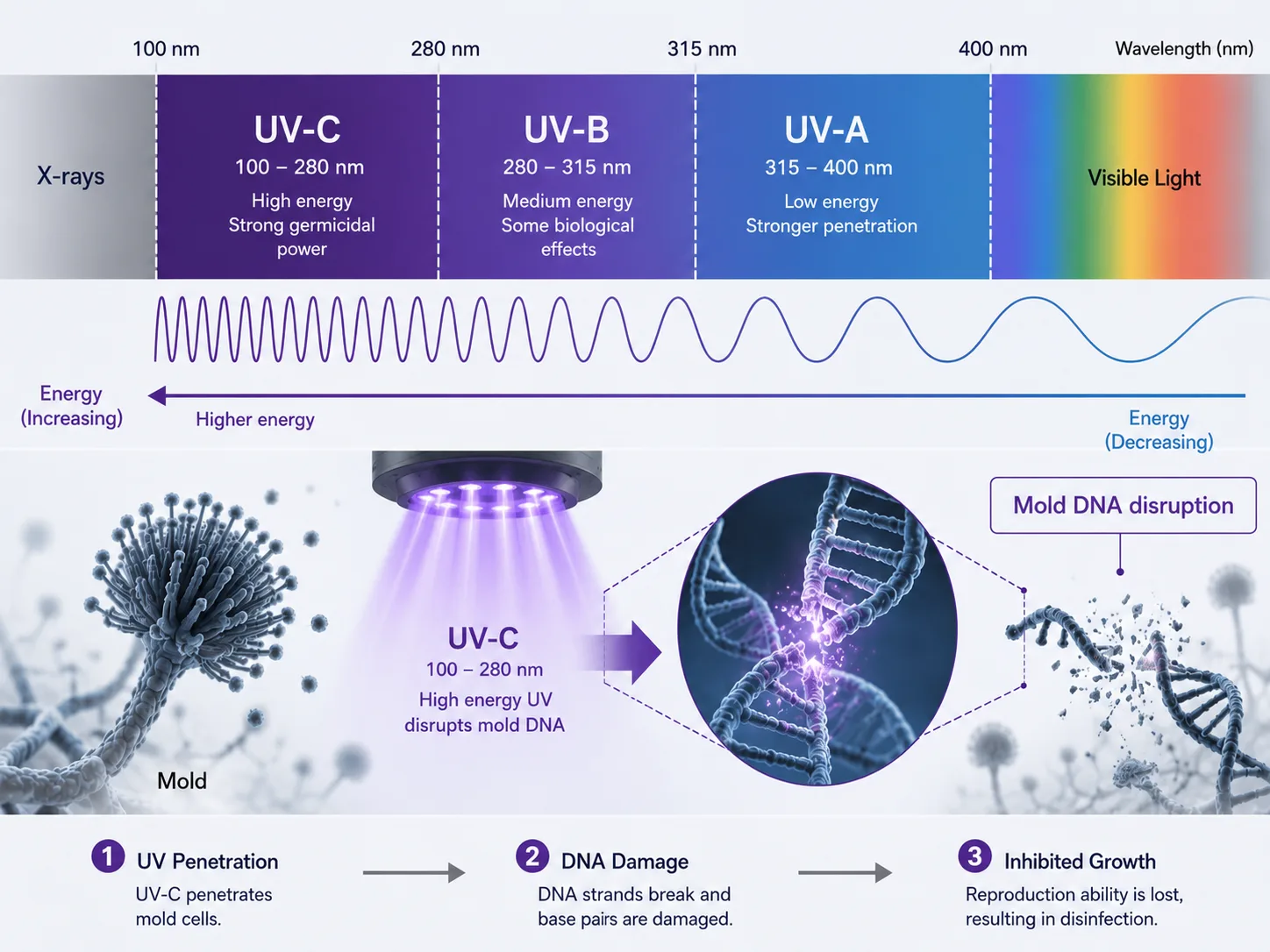
UV-C light, in the 200 to 280 nanometer range, damages mold spore DNA and stops it from reproducing. Regular sunlight only carries UV-A and UV-B, which are weaker than UV-C but still reduce mold on exposed outdoor surfaces. A study in Photochemistry and Photobiology confirmed that UV-B exposure disrupts fungal DNA enough to lower spore viability outdoors.
That effect stays outdoors. The EPA estimates people spend about 90% of their time indoors, and indoor air can be two to five times more polluted than outdoor air. Standard window glass blocks most UV-B before it enters a room, so sunlight through a window adds warmth and light, not mold-killing UV. It also never reaches inside ductwork or wall cavities, which is exactly where mold problems tend to hide.
Why UV Air Purifiers Still Need a HEPA Filter
UV-C air purifiers apply that same germicidal effect to indoor air by pulling it through a UV-C chamber. But the EPA notes these systems work best paired with high-efficiency particle filtration. UV-C kills spores; it doesn’t remove them from the air. Dead spore fragments and mycotoxin particles can still trigger symptoms when inhaled, which is why a maintained HEPA air filter is the standard partner for any UV-C system, not an optional extra.
The Real Job of a HEPA Air Filter
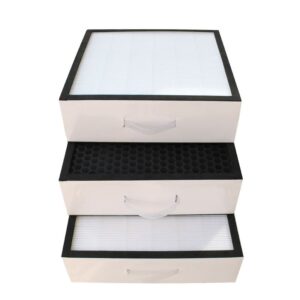
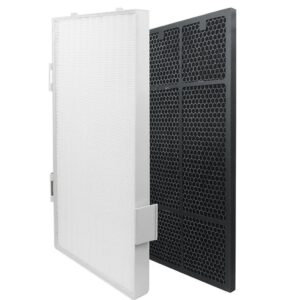
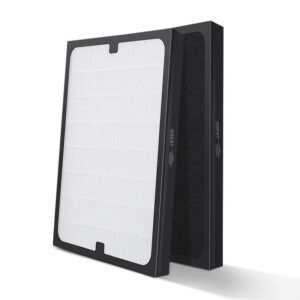
A true HEPA air filter captures 99.97% of particles at 0.3 microns and larger. That range covers mold spores and the mycotoxin-carrying particles that ride along with them. Running an air purifier with a properly maintained HEPA filter is the most direct, ongoing way to reduce how much of that material you actually breathe.
Whole-house duct systems complicate this. Fitting true HEPA media into an existing return often overloads the blower’s static pressure rating, which is why most HVAC contractors recommend a standalone HEPA unit or a bypass loop instead of forcing HEPA into the main ductwork. We cover the mechanics of that trade-off in our guide on HEPA filters in ducted systems. For most households, a standalone purifier with a properly rated replacement HEPA filter solves the problem without touching the HVAC system at all.
Where Vitamin D Actually Helps
Sunlight does earn a real role here, just not the one people assume. UV-B exposure converts a compound in skin into previtamin D3, which the liver and kidneys turn into active Vitamin D. Vitamin D regulates immune function, and that matters directly for CIRS.
A study in the Journal of Investigative Medicine found Vitamin D deficiency far more common in CIRS patients than in the general population. A 2020 review in Nutrients concluded that adequate Vitamin D, from sun or supplements, may help regulate the chronic immune activation seen in environmental illness. Vitamin D helps control TGF-β1, an inflammatory marker that stays elevated in CIRS, and it supports the regulatory T-cells that normally tell the immune system when to stand down.
None of that clears mold from a building or mycotoxins from the body. It supports the immune system while the real exposure problem still needs to be fixed at the source.
The Overlooked Mistake: Your Vacuum Filter
Most people respond to mold concerns by cleaning more. That instinct backfires if the vacuum runs on a degraded filter. A weak filter pulls spores out of carpet fibers and exhausts them back into the air as smaller, more inhalable particles. Robot vacuums make this worse because they run on a schedule, often overnight, cycling through the same rooms with whatever filter happens to be installed.
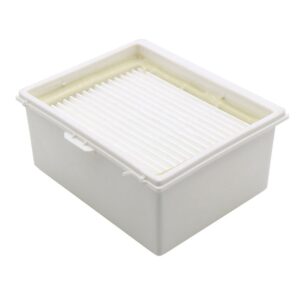
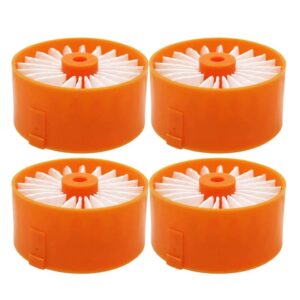
Vacuum filters generally need replacing every three to six months, and every one to three months in a mold-affected home. A compatible vacuum filter replacement keeps suction and filtration working the way they’re supposed to, instead of quietly turning a vacuum into a spore distributor.
A Short List That Actually Works
- Find and fix the moisture source. The EPA recommends keeping indoor humidity between 30 and 50%. A cheap hygrometer in high-risk rooms tells you where you stand.
- Run a true HEPA air filter and keep it on a replacement schedule.
- Replace vacuum filters every one to three months in a mold-affected home.
- Get 15 to 30 minutes of direct sunlight several times a week for Vitamin D. Ask a physician before starting supplements.
- See a CIRS-literate practitioner. Mold illness gets misdiagnosed as chronic fatigue, depression, or fibromyalgia often enough that HLA-DR testing and a proper workup are worth pursuing.
The One-Line Version
Sunlight helps your skin make Vitamin D and helps kill mold on your deck. It does nothing for the air inside your home. A maintained HEPA air filter is what actually protects the air you breathe every day.