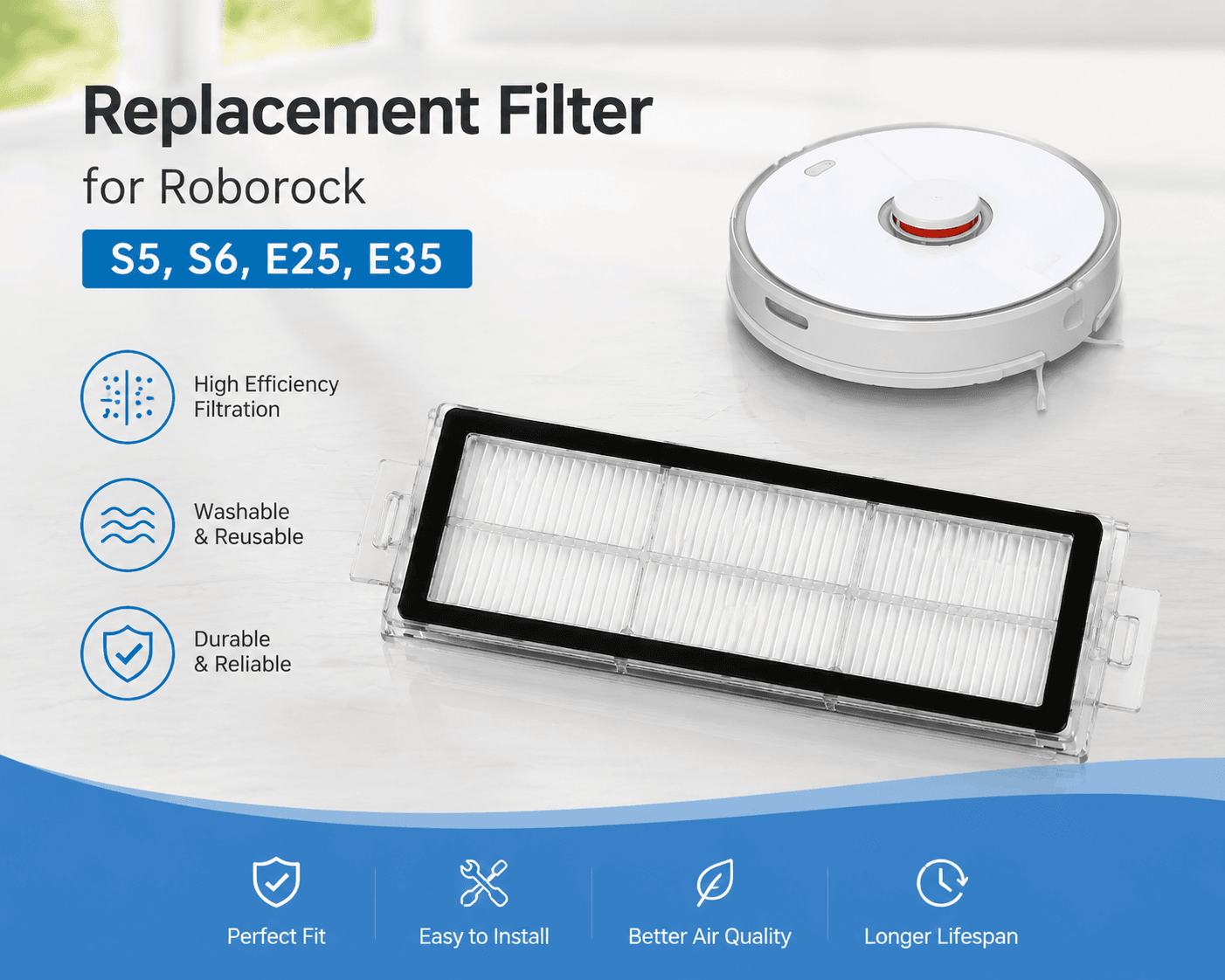

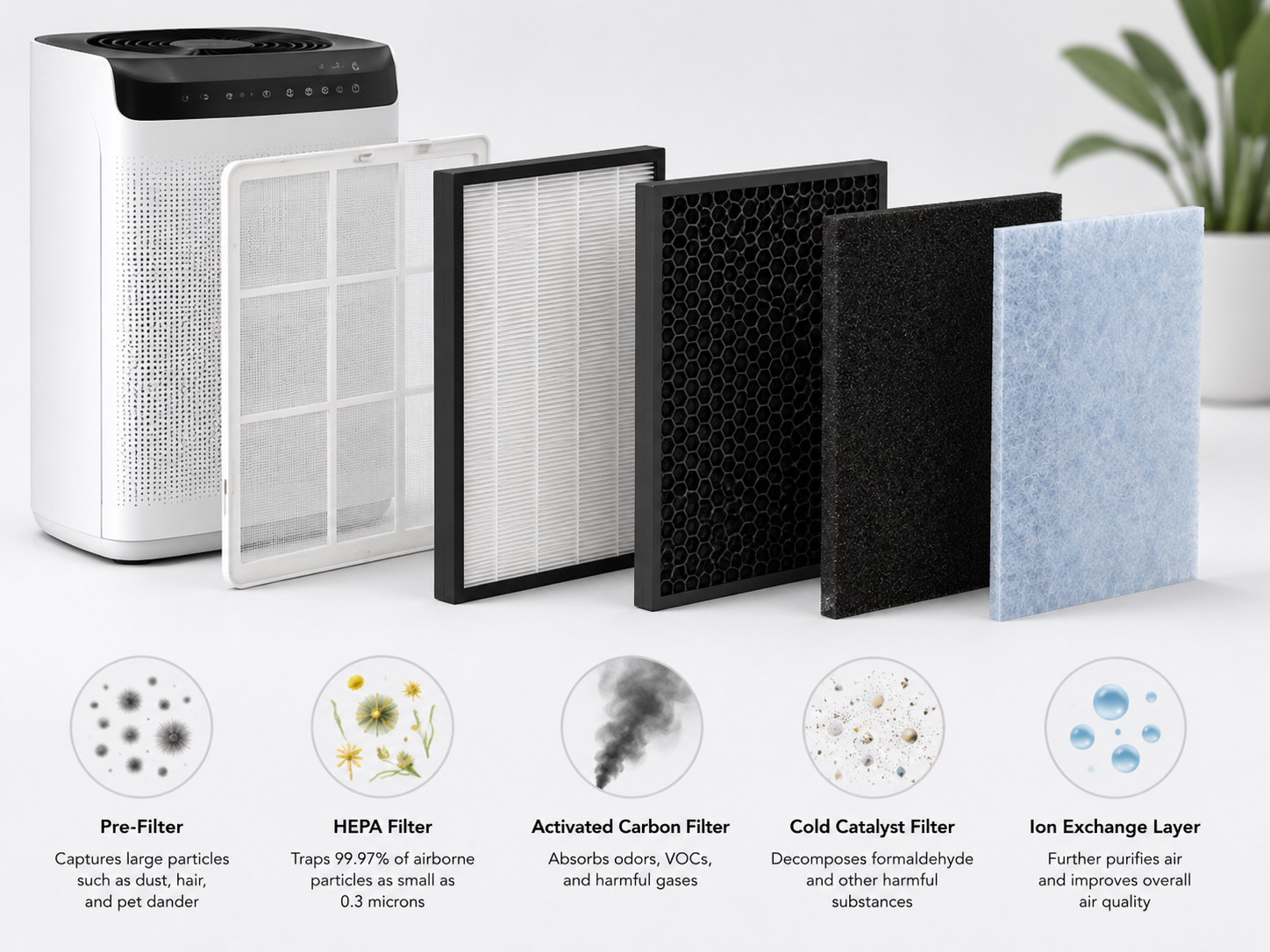
HEPA, carbon and combination filter cartridges for household and commercial air purifiers, produced in round, panel and custom cartridge formats to match an existing housing or a new design.
Single-cartridge and multi-stage designs
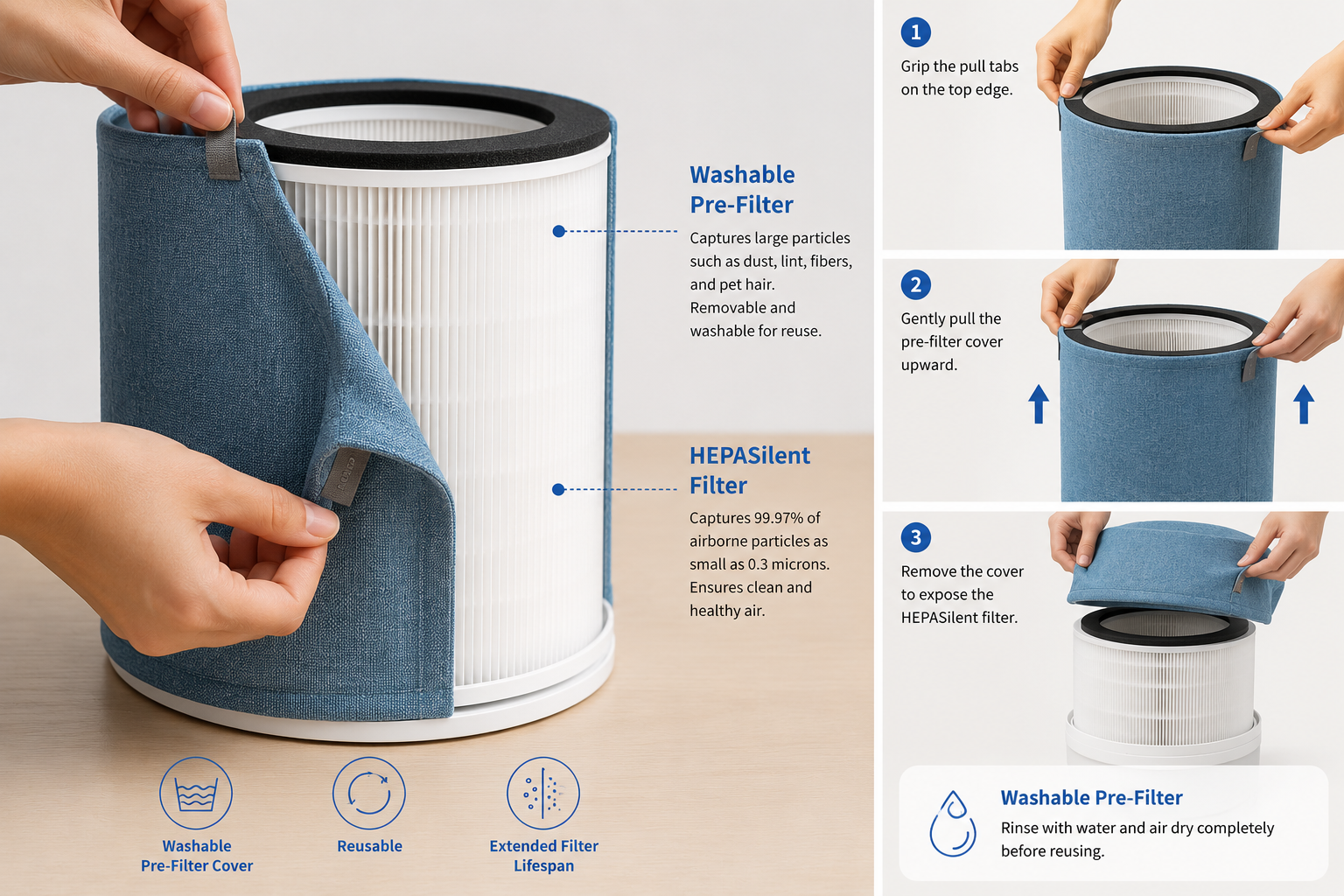
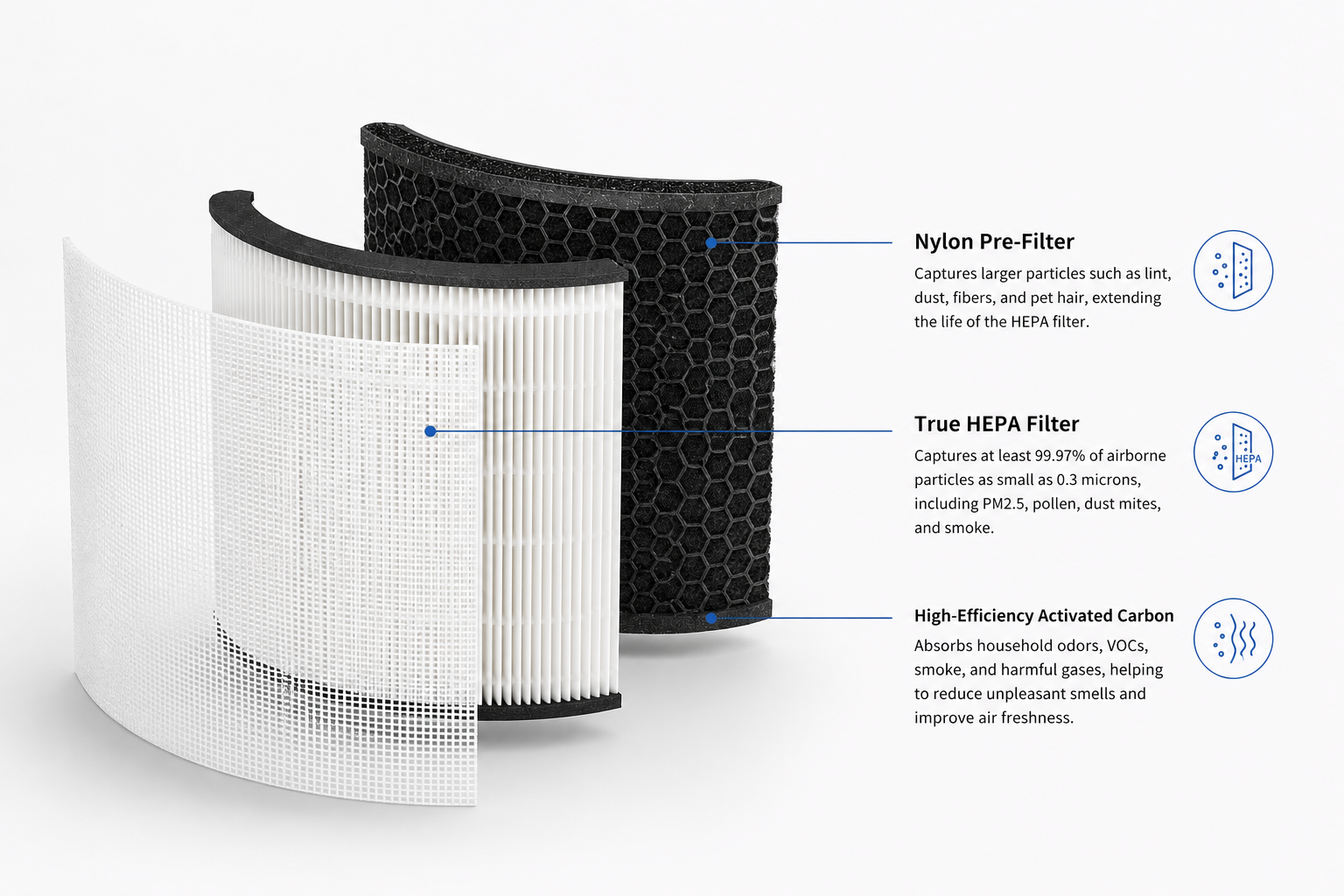
Most air purifier filters on the market do more than one job in a single part. The internal construction is what actually determines performance, not the marketing name printed on the box. A basic single-stage cartridge is usually just a pleated HEPA or synthetic medium in a plastic or cardboard frame. A 3-in-1 cartridge stacks a pre-filter layer, a HEPA or high-efficiency layer, and a carbon layer into one removable part. Most household purifiers use this design because it keeps replacement simple for the end user. The trade-off is that all three stages wear out on the same schedule, even though the pre-filter layer typically loads up with dust much faster than the HEPA layer underneath it. If your product line targets buyers who want lower running cost, a design that separates the washable pre-filter from the replaceable HEPA/carbon core will cut the number of full cartridges a customer buys each year.
Round vs. panel cartridge geometry
Round cartridges wrap the filter media into a cylinder around a central core. This packs more pleated surface area into a compact footprint, which suits tower-style purifiers with 360-degree intake. Panel cartridges are flat, rectangular pleated blocks, more common in desktop units and purifiers with a single front or side intake face. The table below lays out the trade-offs.
| Property | Round cartridge | Panel cartridge |
|---|---|---|
| Media area per footprint | More, for the same base dimension | Less |
| Airflow / CADR potential | Higher, without a louder fan | Adequate for most desktop units |
| Tooling cost | Higher | Lower |
| Ease of resizing later | Less forgiving | Easier to adjust |
| Typical use case | Tower-style purifiers, 360° intake | Desktop units, single-face intake |
| Best for | Performance-focused designs | First production orders, small OEM runs |
Panel designs are usually the more practical starting point for a first production order, since they cost less to tool and are easier to manufacture in small OEM runs.
Sequencing the filtration stages correctly
Stage order matters more than most spec sheets show. A coarse pre-filter, typically a non-woven or open-cell foam layer, should always sit ahead of the HEPA stage. Its job is to catch hair, lint and larger dust before that debris reaches the fine media and shortens its life. Carbon placement depends on the design goal. Putting carbon after the HEPA stage protects the carbon from particulate loading, and it’s the more common layout. Some designs put a light carbon layer first instead, to pre-treat heavily polluted intake air. If you’re developing a new cartridge and haven’t settled on layer order, send us your target application (general household, kitchen, pet odor, wildfire smoke), and we’ll recommend a sequence based on similar OEM builds we’ve run.
Sizing a cartridge to an existing purifier housing
Replacement and private-label cartridges both start from the same requirement: matching an existing housing exactly. That includes the gasket seat, any locating tabs, and the airflow direction arrows molded into the frame. A cartridge that’s even a millimeter undersized around the frame will let air bypass the media instead of passing through it. That tanks real-world CADR, even though the media itself tests fine on its own. We ask for either a physical sample unit or a dimensioned drawing before running matched-fit tooling, and we keep the tooling on file so repeat orders don’t need to be re-measured.
Private label and packaging for OEM buyers
Beyond the cartridge itself, most wholesale buyers in this category need retail-ready packaging: printed boxes, model-number labeling, and sometimes a multi-pack configuration for e-commerce bundles. We handle private label production as a standard part of the order. Carton artwork, barcode placement and country-of-origin labeling get set up alongside the tooling run instead of as a separate project, which keeps first-order lead times shorter.