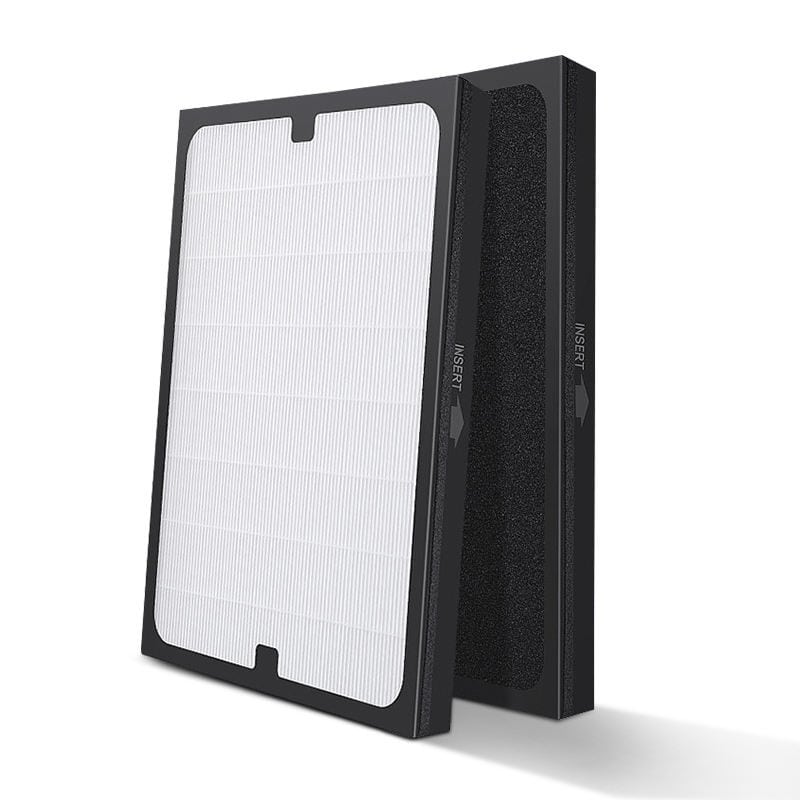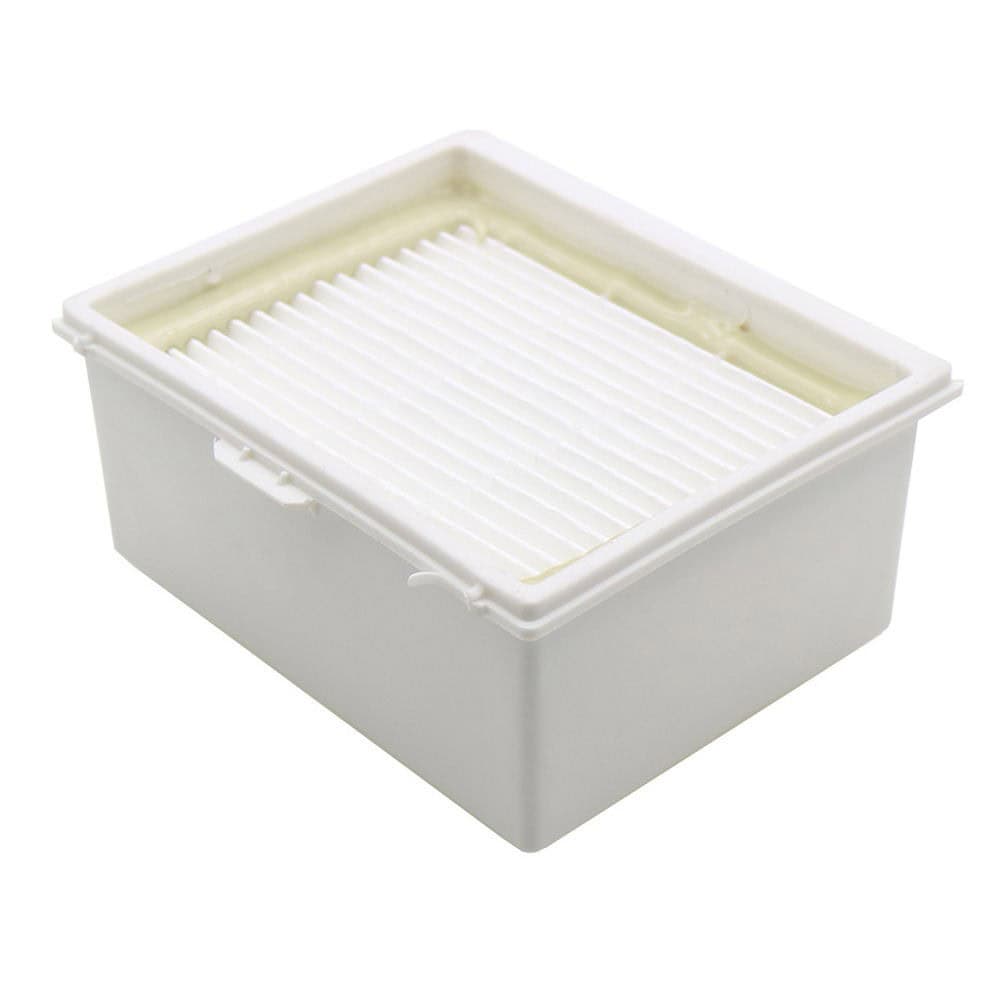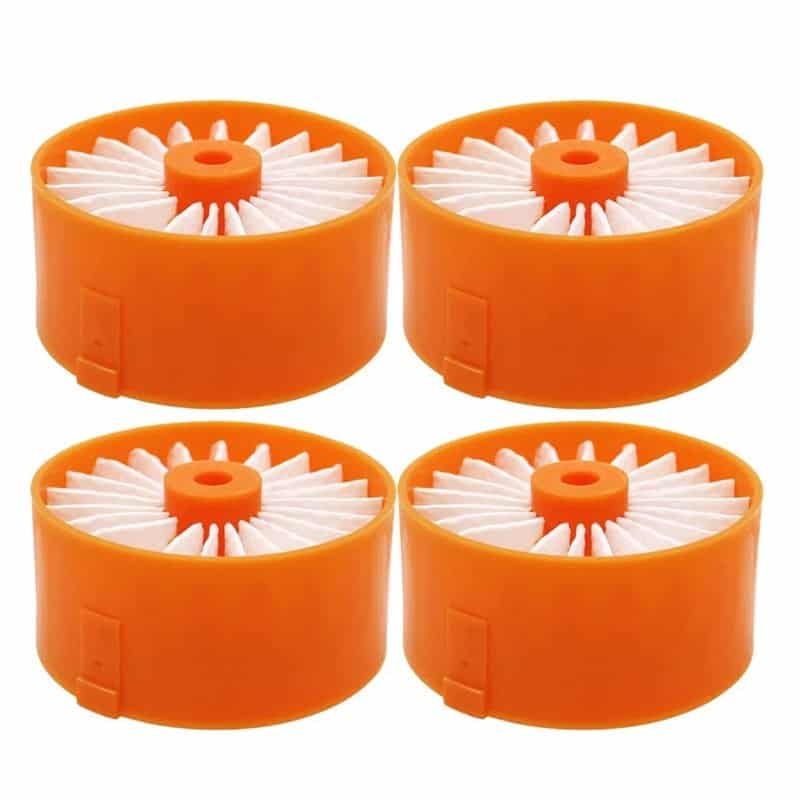
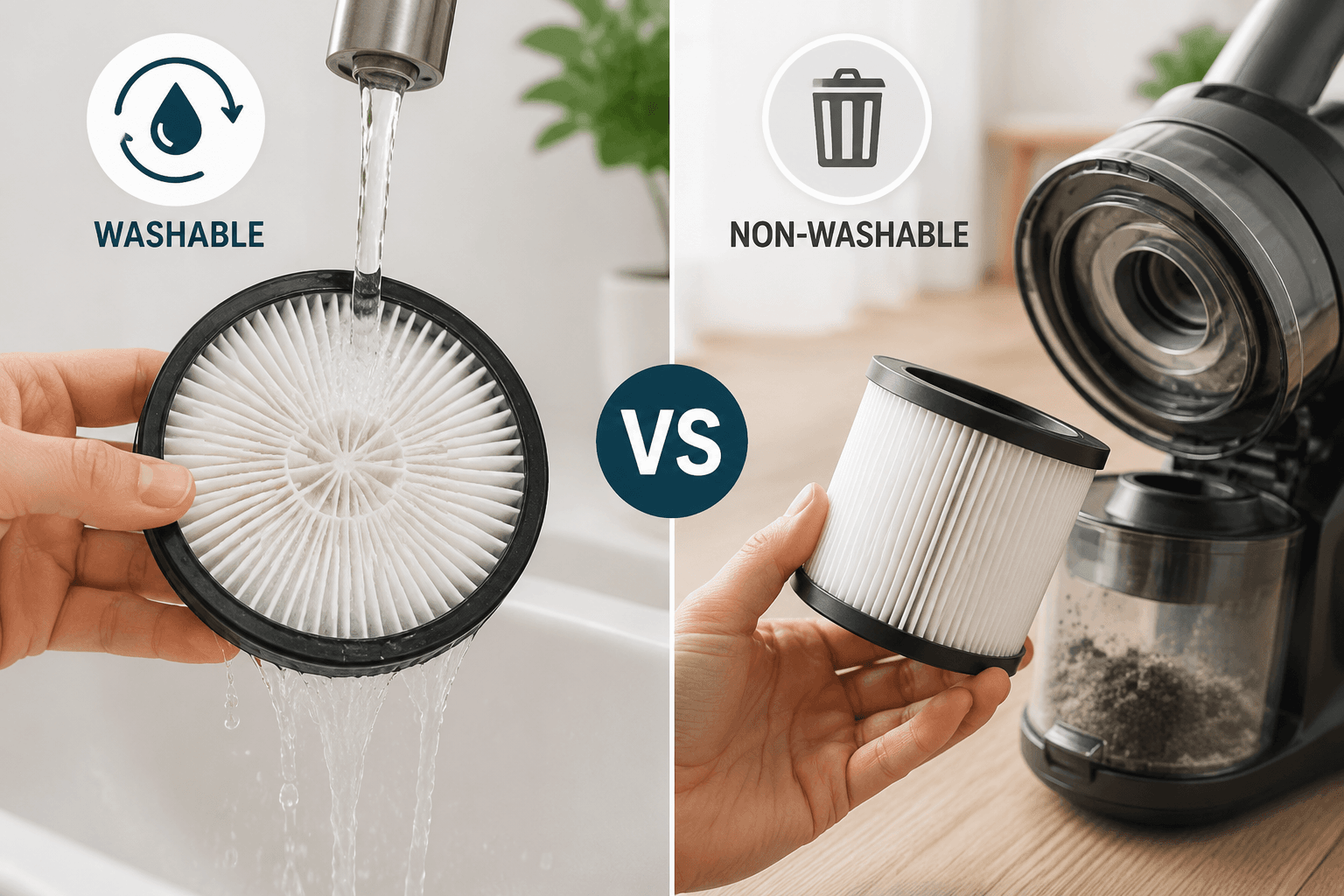
In short: It depends on the type of filter. If your filter is labeled as non-washable, then no. Even if it looks clean after washing, rinsing will permanently damage the fiber structure and reduce its filtration efficiency. If the filter is designed to be washable, then yes, but only with cold water, never with soap, and it must be completely air-dried for 24-48 hours before reinstallation.
Most users don’t think about their vacuum filter until suction drops or they accidentally ruin it by washing a filter that was never meant to get wet. That mistake is common, and it usually leads to customer frustration.
For vacuum appliance brands, wholesalers, and distributors, choosing the right filter for your product line is critical. It directly impacts machine performance, user satisfaction, and replacement part revenue.
This guide breaks down the practical differences between washable and non-washable HEPA filters, so you can make informed sourcing decisions for your private label or distribution network.
What Makes Them Different?
Both washable and non-washable HEPA filters are designed to capture particles as small as 0.3 microns. The real difference comes down to the materials used and how they handle moisture.
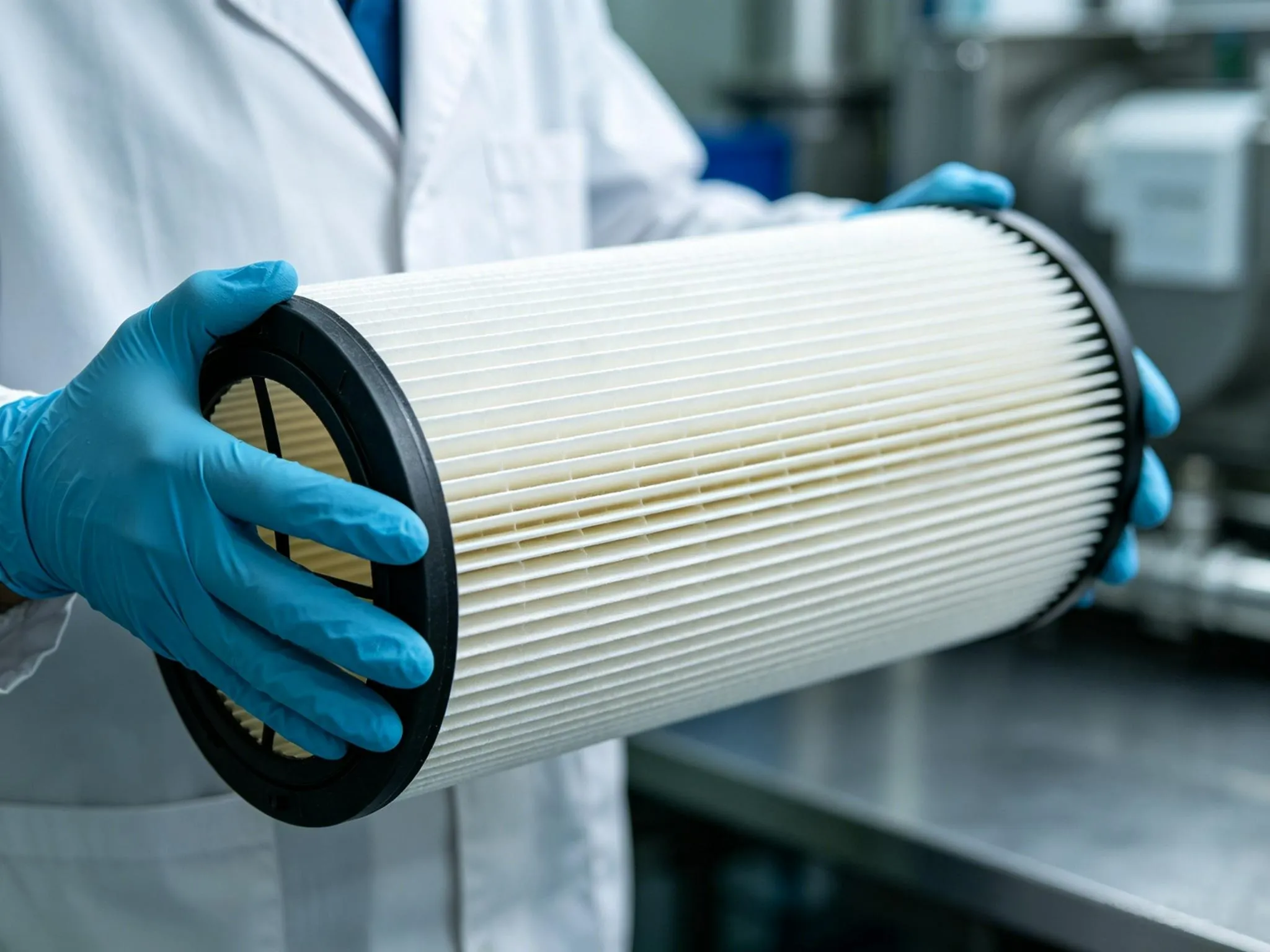
Non-Washable HEPA Filters: These are built from ultra-fine glass fibers or synthetic polymer fibers woven into a tight, irregular mesh. This structure is what traps microscopic dust so well. However, water destroys this fiber matrix. If a user washes one of these, the fibers clump together, creating permanent gaps. The filter might look clean, but it loses its efficiency entirely.
Washable HEPA Filters: These rely on open-cell foam or highly treated synthetic fabrics that hold their shape when wet. While some are technically “HEPA-type” rather than True HEPA, high-quality washable designs are engineered to maintain strong filtration even after multiple wash cycles.
True HEPA vs. HEPA-Type: What Your Customers Need to Know
This is where product marketing matters.
To be certified as “True HEPA,” a filter must capture at least 99.97% of particles at 0.3 microns. Most non-washable filters easily meet this standard.
On the other hand, many washable filters fall into the “HEPA-style” category. Their filtration rate usually sits between 99% and 99.9%. For severe allergy sufferers, that 0.9% difference is huge. But for routine household cleaning, most consumers won’t notice a difference.
- When to source non-washable: If your brand targets allergy-sensitive households or medical-grade cleaning, non-washable True HEPA offers consistent, certified performance.
- When to source washable: If your target market prioritizes eco-friendly designs and lower long-term maintenance costs, quality washable filters are a major selling point.
More detailed information can be found in our article True HEPA vs. HEPA-Type.
Maintenance Guidelines: Can You Wash HEPA Filters Safely?
Providing clear maintenance instructions reduces warranty claims and keeps vacuum motors running longer. Here is the standard advice you should pass on to your customers.
For Washable Filters:
- Remove the filter and tap it over a trash can to drop loose dirt.
- Rinse under cold running water. Tell users to avoid hot water, soap, and harsh scrubbing.
- Squeeze gently and reshape.
- The most crucial step: Let it dry completely in a well-ventilated area for 24 to 48 hours. A damp filter will breed mold and strain the vacuum motor.
- Note: Washable filters don’t last forever. Recommend replacement after 5 to 8 wash cycles, or whenever suction drops.
For Non-Washable Filters: Keep it simple: do not wash. Users should only gently tap the filter over a trash bin or use a soft dry brush to clean the pleats. Depending on household traffic and pets, these should be completely replaced every 6 to 12 months.
Will a Hydrophobic Coating Make a HEPA Filter Cleanable?
For reusable filters, research is also being done on the use of a hydrophobic or superhydrophobic coating on the filter surface.
Hydrophobic surface allows water to be less prone to spread out over the filter media. Water tends to bead up and can move across the exposed surface instead of soaking in. In some experimental filter designs, this behavior has been used to help remove dust from the surface during water based cleaning.
There’s an important caveat, though. However, just coating a regular non-washable HEPA filter with a water-repellent compound doesn’t automatically make it a washable one.
The filter media, pleat structure, adhesive system, coating durability, airflow resistance and filtration efficiency should be stable after repeated cleaning. Though a coating can help water flow over the surface, it cannot substitute a filter damaged by washing.
This is an interesting area of filter engineering for air purifier brands that are working on reusable HEPA filters. The aim is not simply to make the filter water resistant. The real goal is to make the whole filter structure cleanable without impacting filtration performance or airflow.
So, if a conventional HEPA filter is labeled non-washable, do not assume that spraying a hydrophobic coating will make it safe to rinse. A genuinely reusable filter needs to be designed and tested for repeated cleaning from the beginning.
Sourcing Reliable Vacuum Filters with HIFINE
Whether your product line requires certified True HEPA performance or durable washable designs, the quality of the filter defines the quality of the vacuum. A clogged or degraded filter forces the vacuum motor to work harder, shortening the machine’s lifespan and hurting your brand’s reputation.
At HIFINE, we specialize in the OEM/ODM manufacturing of premium HEPA filters, air purifier filters, and vacuum accessories. We partner with overseas brands, wholesalers, and private label clients to deliver custom filtration solutions that meet exact specifications and budget requirements.
Ready to upgrade your product lineup or secure a more reliable factory-direct supply? Contact the HIFINE team today to discuss custom manufacturing and bulk orders.
FAQ
No. Even a single rinse damages the glass fiber matrix in most non-washable filters. The filtration efficiency drop isn’t always visible — but it’s real. Once a non-washable filter gets wet, replace it.
Yes — but gradually. A well-maintained washable filter holds its efficiency for multiple wash cycles. The decline accelerates after heavy use or if the filter isn’t fully dried before reinstallation. HIFINE’s washable filters are rated for performance across a defined number of wash cycles, which is listed on each product page.
Check the filter itself — most washable filters have a printed water-drop icon or the word “washable” molded into the frame. If you can’t find markings, check your vacuum’s user manual or the manufacturer’s website. When in doubt, don’t rinse it.
It depends on how well you maintain it. A properly cleaned and fully dried washable filter performs well for most allergy sufferers. If you have severe sensitivities to mold or dust mite allergens, a non-washable true HEPA filter with a strict replacement schedule is the more controlled option.