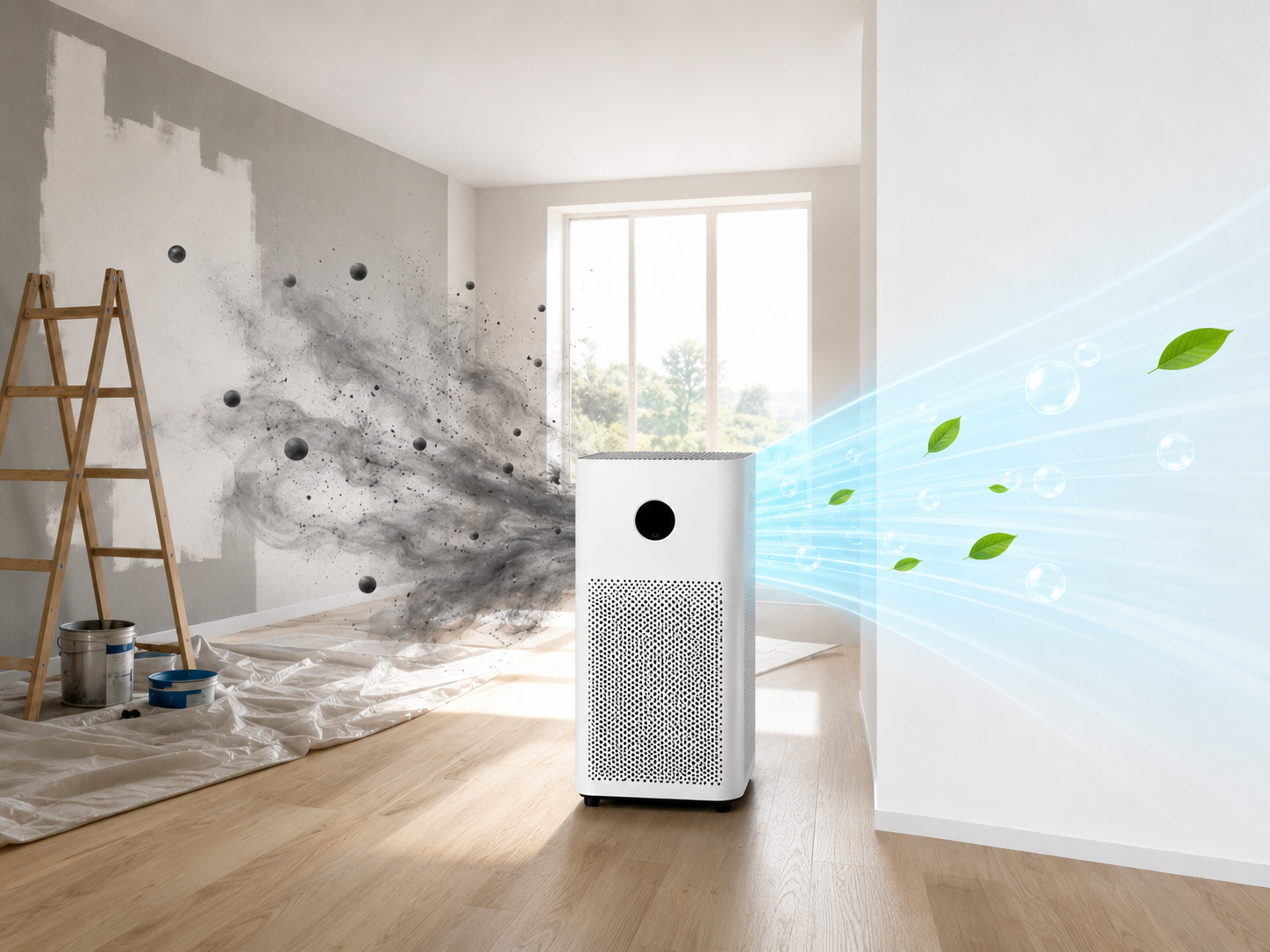
New furniture smell, fresh paint, that faint chemical scent after a home renovation. Most people register these as temporary and harmless. Some of what’s causing that smell is formaldehyde, and it doesn’t disappear as quickly as the smell does.
This category also has more overclaiming than most. A 2021 MIT study tested several consumer air cleaners marketed for VOC removal and found actual VOC removal was often minimal, and in some cases the cleaners produced formaldehyde as a byproduct of the chemical reactions they used to claim they were “eliminating” VOCs. Knowing what genuinely works here matters more than in most air purifier categories, whether you’re trying to clear your own home or sourcing filtration for a product built around this claim.
What Formaldehyde and VOCs Actually Are
VOCs, or volatile organic compounds, are a broad family of chemicals that evaporate into the air at room temperature. Formaldehyde is one specific VOC that gets particular attention because it’s common indoors and irritates eyes, nose, and throat even at low concentrations.
Pressed wood products are the biggest indoor source: particleboard, plywood, and MDF used in furniture and cabinetry all off-gas formaldehyde, especially when new. New carpet, paint, adhesives, and some cleaning products contribute the rest of the VOC load. The EPA’s guide to indoor air cleaners lists formaldehyde alongside particulate matter, mold, and pollen as one of the most common indoor air contaminants.
Why a HEPA Filter Alone Doesn’t Touch This
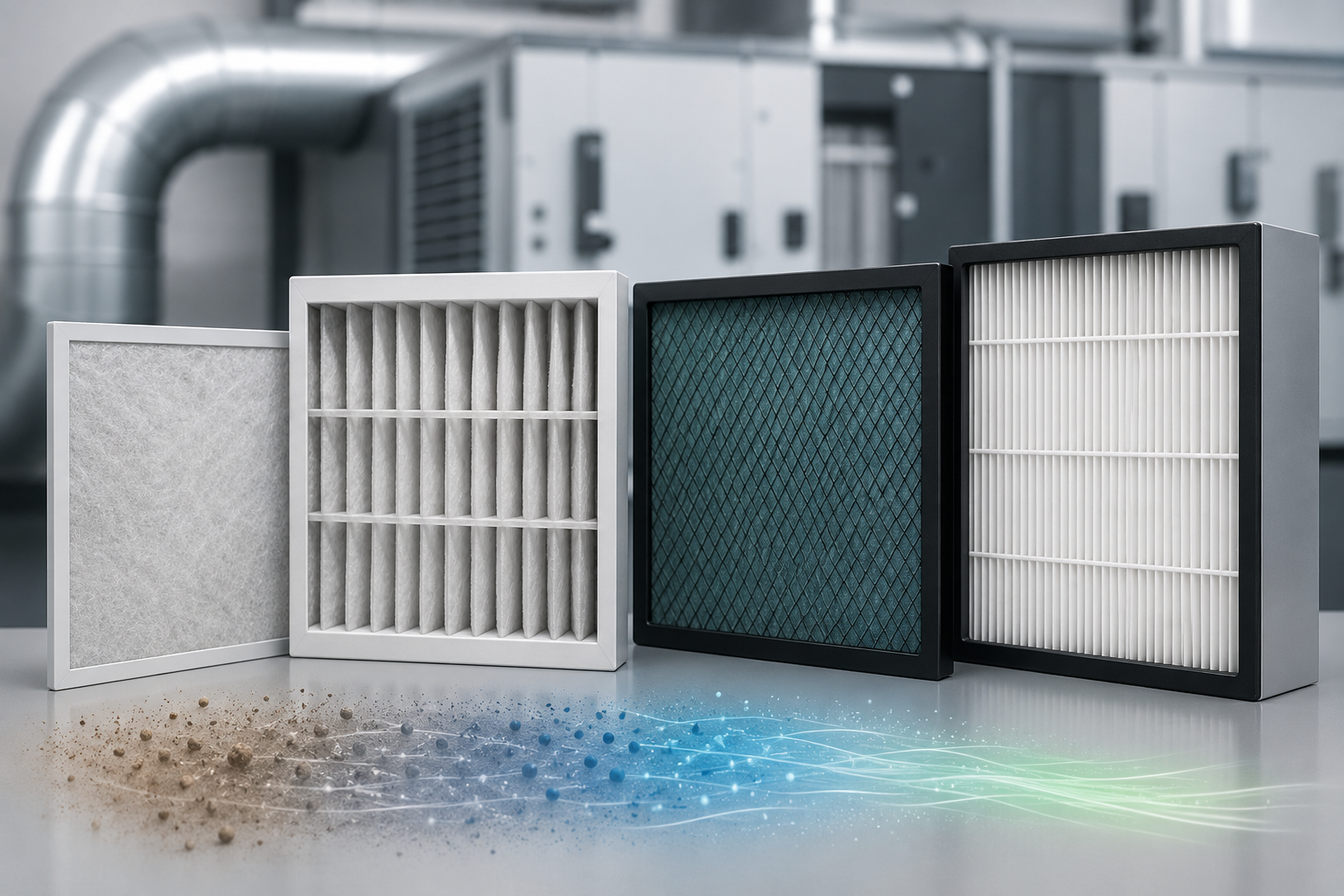
A true HEPA filter is built to trap particles: dust, pollen, pet dander, smoke soot. Formaldehyde and other VOCs aren’t particles. They’re gas-phase molecules that pass straight through HEPA media without being caught, the same way HEPA filtration does nothing for smoke odor by itself.
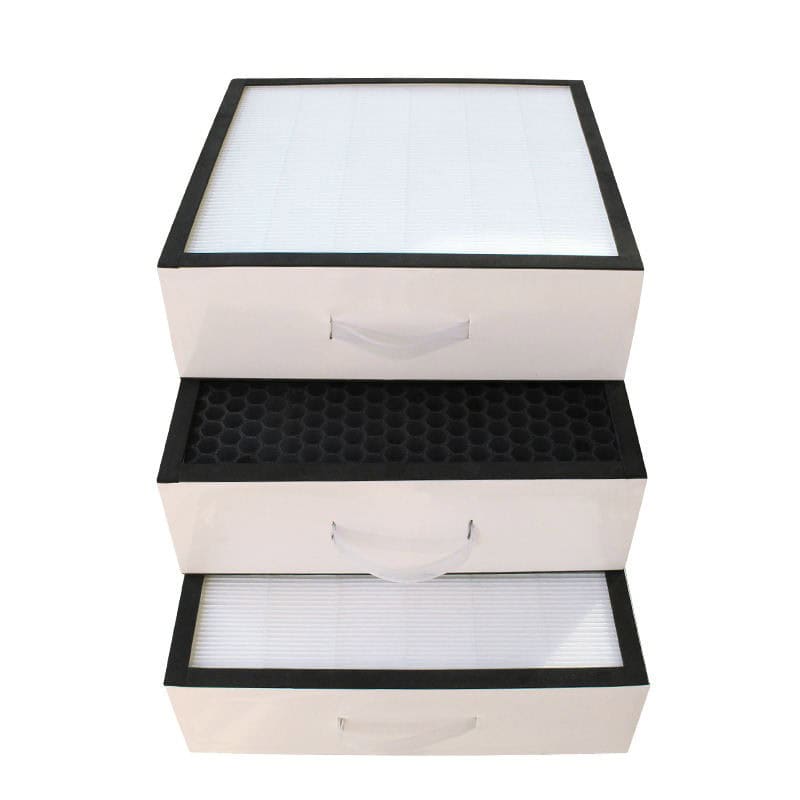
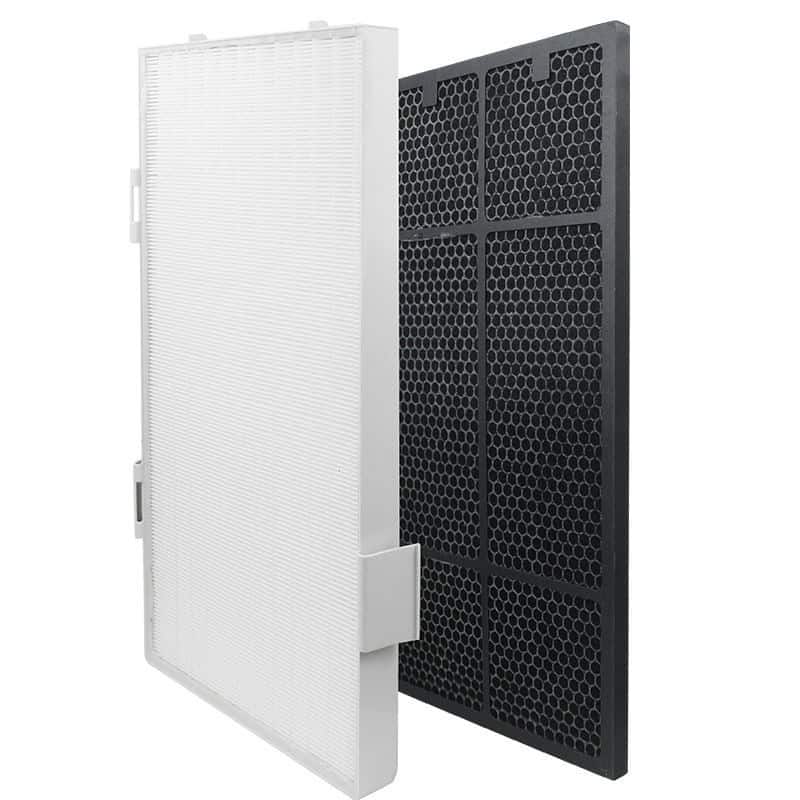
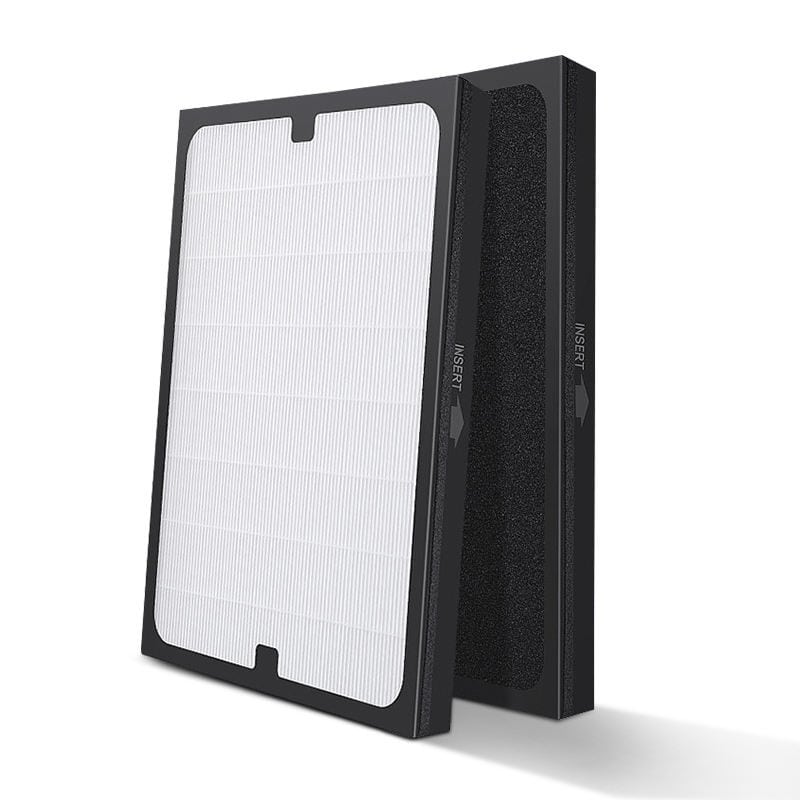
This is the single most common misunderstanding in the category. A unit can carry a strong HEPA certification and still do almost nothing for formaldehyde, because HEPA and VOC removal are two entirely separate jobs handled by two entirely different parts of the filter.
What Actually Removes Formaldehyde and VOCs
Activated carbon adsorbs gas-phase molecules, which makes it the only part of most air purifiers actually doing anything against VOCs. But the EPA’s own testing found a caveat worth taking seriously: most published carbon effectiveness data comes from tests run at much higher pollutant concentrations than what actually shows up in a home. At the low, real-world concentrations typical of indoor air, EPA testing found that gases can break through a carbon bed faster than manufacturers’ marketing suggests, particularly in thinner carbon layers built for general odor control rather than sustained VOC capture.
Carbon quantity and bed depth are what separate a functional layer from a decorative one, and the difference matters most right after a renovation, when off-gassing is at its highest and most sustained.
The Ozone and “VOC-Destroying” Trap
Some air purifiers skip adsorption entirely and claim to chemically break down VOCs instead, through ozone generation, ionization, or photocatalytic oxidation. The MIT study mentioned earlier tested products using these approaches and found the chemical reactions did comparatively little of the actual pollutant removal. Physical adsorption through carbon and filters did most of the real work. In some cases, the reactions created new byproducts, including formaldehyde itself, adding to the pollutant load rather than reducing it.
A unit that markets itself as “destroying” or “eliminating” VOCs through a chemical process, rather than filtering them through carbon, is worth a closer look before buying, and worth avoiding entirely as a spec to build a product line around.
Source Control Comes First
The EPA is direct about this: air cleaners alone cannot ensure adequate indoor air quality, and reducing or removing the source of a pollutant is usually more effective than filtering it out after the fact. For formaldehyde specifically, that means choosing solid wood or low-formaldehyde-emission materials over pressed wood products where possible, letting new furniture and paint off-gas in a ventilated space before extended exposure, and opening windows when outdoor air quality allows it.
An air purifier with a substantial carbon stage helps manage what’s left after those steps, not instead of them. Running a strong unit continuously in a room with an active, ongoing formaldehyde source reduces exposure, but it doesn’t eliminate it the way addressing the source does.
Building Formaldehyde and VOC Claims Into a Product Line
Carbon depth and weight are easy specs to understate on a product listing and hard for a buyer to verify without testing. A supplier should be able to state the actual carbon bed weight per filter, not just confirm that carbon is present. For anyone replacing a filter regularly because of an ongoing formaldehyde source at home, it helps to know when the filter itself is the problem, since the carbon stage can lose capacity well before the HEPA layer shows any visible wear.
HIFINE builds activated carbon stages with a substantially larger carbon bed than typical budget filters, sized for sustained VOC and formaldehyde exposure rather than occasional odor control. Brand owners, distributors, and private label buyers sourcing filtration for a formaldehyde or VOC-focused line can work through our supplier checklist before committing to an order.