A clean room is only as clean as its weakest filter. Most facility failures trace back to one decision made long before the wall panels go up: choosing the wrong HEPA grade for the target ISO classification. Under ISO 14644-1, an ISO 7 room allows 352,000 particles per cubic meter at 0.5 microns, while an ISO 5 room cuts that limit to just 3,520 — a 100-fold gap that no amount of gowning or surface wiping can overcome if the terminal filters are underspecified. This guide explains how to match filter performance to classification, avoid the three most expensive specification mistakes, and validate that your filters actually do what the data sheet promises.
The global cleanroom technology market reached $9.39 billion in 2026 and is growing at 6.6% annually, driven by semiconductor manufacturing and biopharmaceutical expansion. Semiconductors alone accounted for 37.8% of cleanroom equipment spending in 2025. Yet cleanrooms consume 15 to 50 times more energy than ordinary commercial buildings, with HVAC systems responsible for 50 to 75% of that load. Getting the filter specification right is not just a compliance issue. It is the single biggest lever for controlling long-term operating cost.
How ISO Classification Maps to HEPA Filter Grades
The ISO 14644-1 standard defines nine cleanliness classes based on particle concentration, not on filter type. But in practice, each class requires a terminal filter that can hold the particle count below the legal limit. The table below shows the practical match between classification and filter grade, based on EN 1822 efficiency ratings and common industry design practice.
| ISO Class | ≥0.1 µm | ≥0.5 µm | ≥5.0 µm | Airflow Pattern | Terminal Filter Grade | FFU Ceiling Coverage | FS 209E Equivalent |
|---|---|---|---|---|---|---|---|
| ISO 4 | 10,000 | 352 | — | 0.3–0.5 m/s unidirectional | H14 / ULPA U15 | 60–90% | Class 10 |
| ISO 5 | 100,000 | 3,520 | 29 | 240–480 ACH | H14 / ULPA U15 | 40–80% | Class 100 |
| ISO 6 | 1,000,000 | 35,200 | 293 | 70–160 ACH | H13 / H14 | 20–40% | Class 1,000 |
| ISO 7 | — | 352,000 | 2,930 | 30–70 ACH | H13 | 10–25% | Class 10,000 |
| ISO 8 | — | 3,520,000 | 29,300 | 15–60 ACH | H13 | 5–15% | Class 100,000 |
| ISO 9 | — | 35,200,000 | 293,000 | 5–10 ACH | G4–F9 / H11 | 2–5% | Ordinary room air |
Particle limits per ISO 14644-1. Filter grades per EN 1822. Airflow and FFU coverage based on common industry design practice.
A common mistake is assuming that any filter labeled “HEPA 99.97%” meets every class. That 99.97% figure refers to removal efficiency at 0.3 microns, the most penetrating particle size. An H13 filter removes 99.95% at MPPS, while H14 removes 99.995%. The difference sounds small on paper, but it represents a tenfold gap in allowable penetration. For an ISO 5 room, that gap is the difference between passing certification and failing it.
The Three Filter Specification Mistakes That Derail Certification
Overspecifying Without Calculating Pressure Drop
Higher-grade filters create more airflow resistance. An H13 panel starts at roughly 0.5 inches of water gauge when new but can climb to 2.0 to 3.0 inches by the end of its service life. If the HVAC fan was sized for the initial resistance only, airflow drops as filters load, and the room falls below its required air change rate. Design with a 10 to 15% safety margin above the calculated minimum, and select filters with larger media area to extend service life and reduce peak resistance.
Ignoring the Pre-Filter Chain
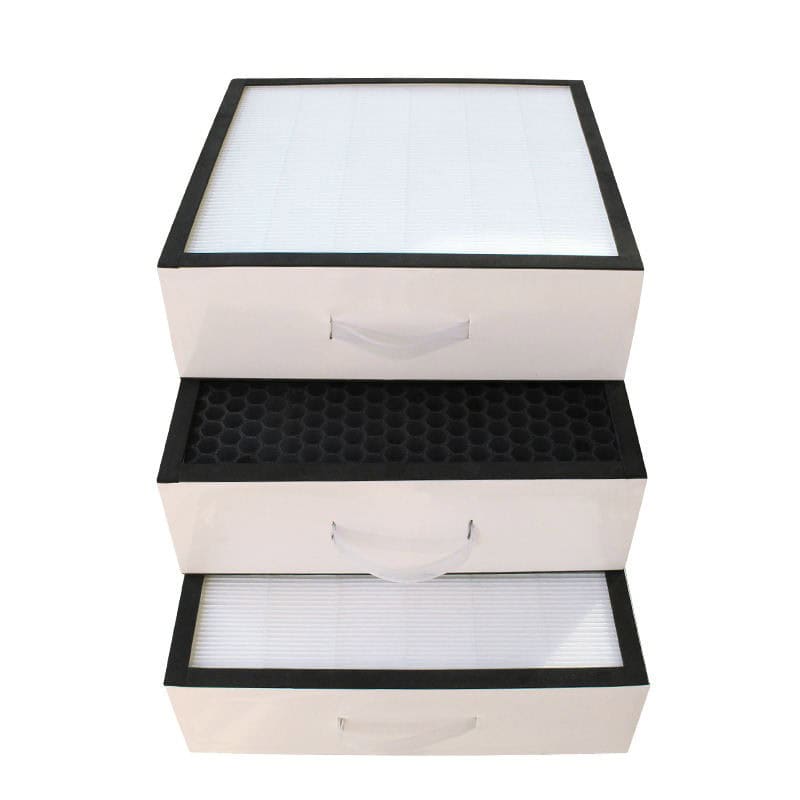
Terminal HEPA filters are expensive and fragile. A pre-filter and a medium filter catch 80 to 90% of incoming dust before it reaches the HEPA stage. Skipping or undersizing these stages means the terminal filter loads faster, raises pressure drop sooner, and needs replacement more often. In high-dust industrial settings, a proper pre-filter chain can double or triple HEPA service life. For H13 and H14 applications, this is not optional. It is the difference between a filter that lasts three years and one that lasts eighteen months.
Trusting the Data Sheet Over the Leak Test
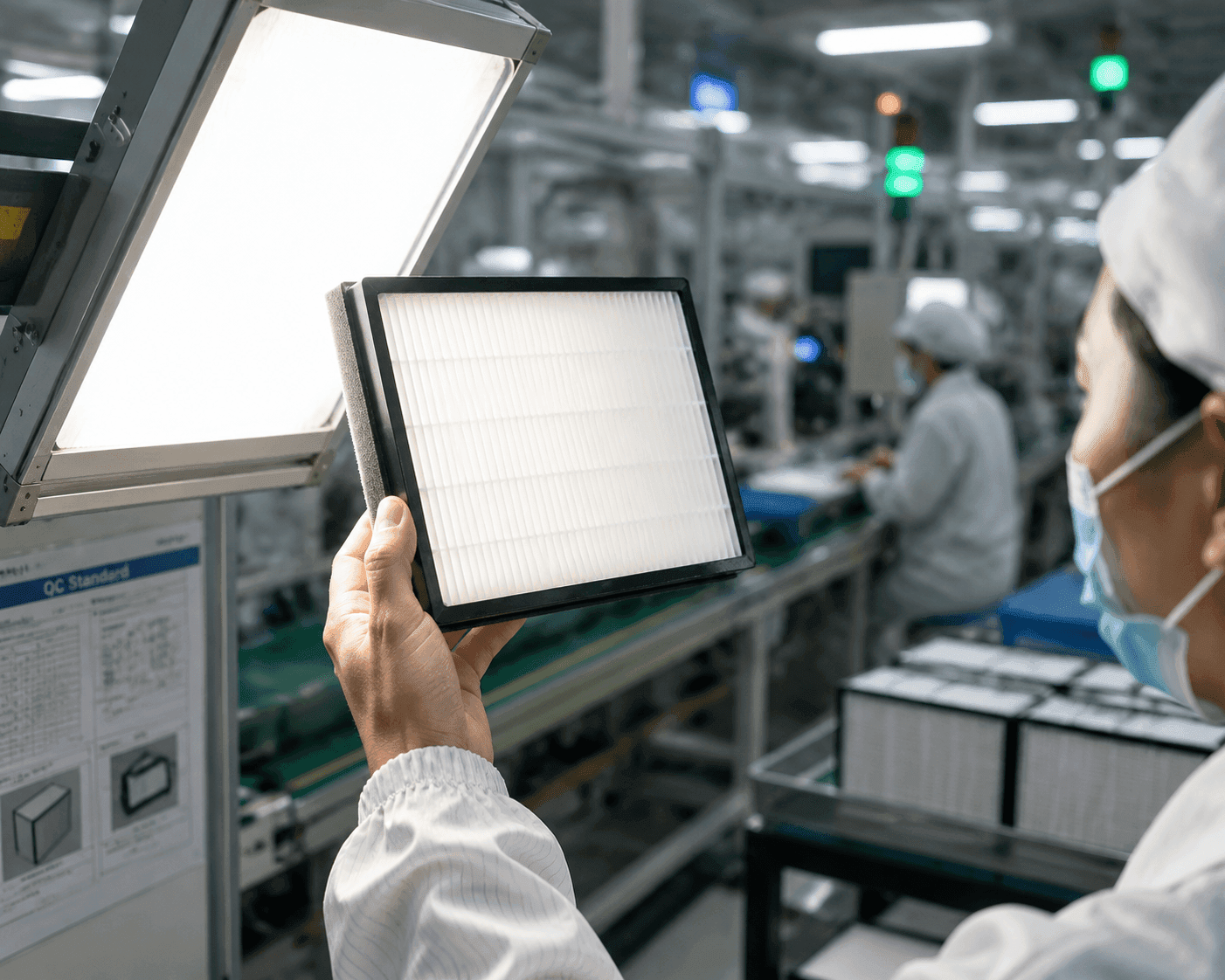
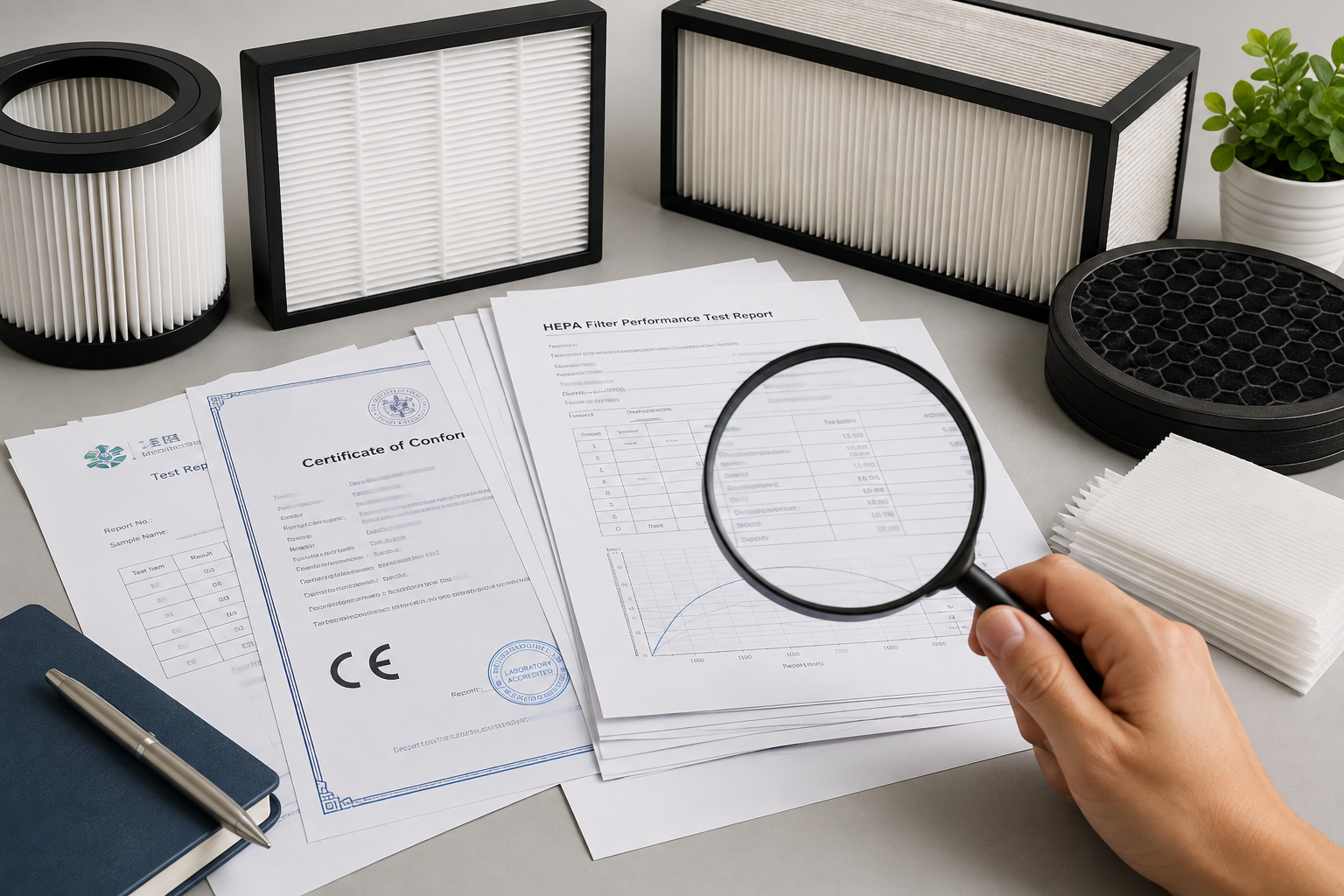
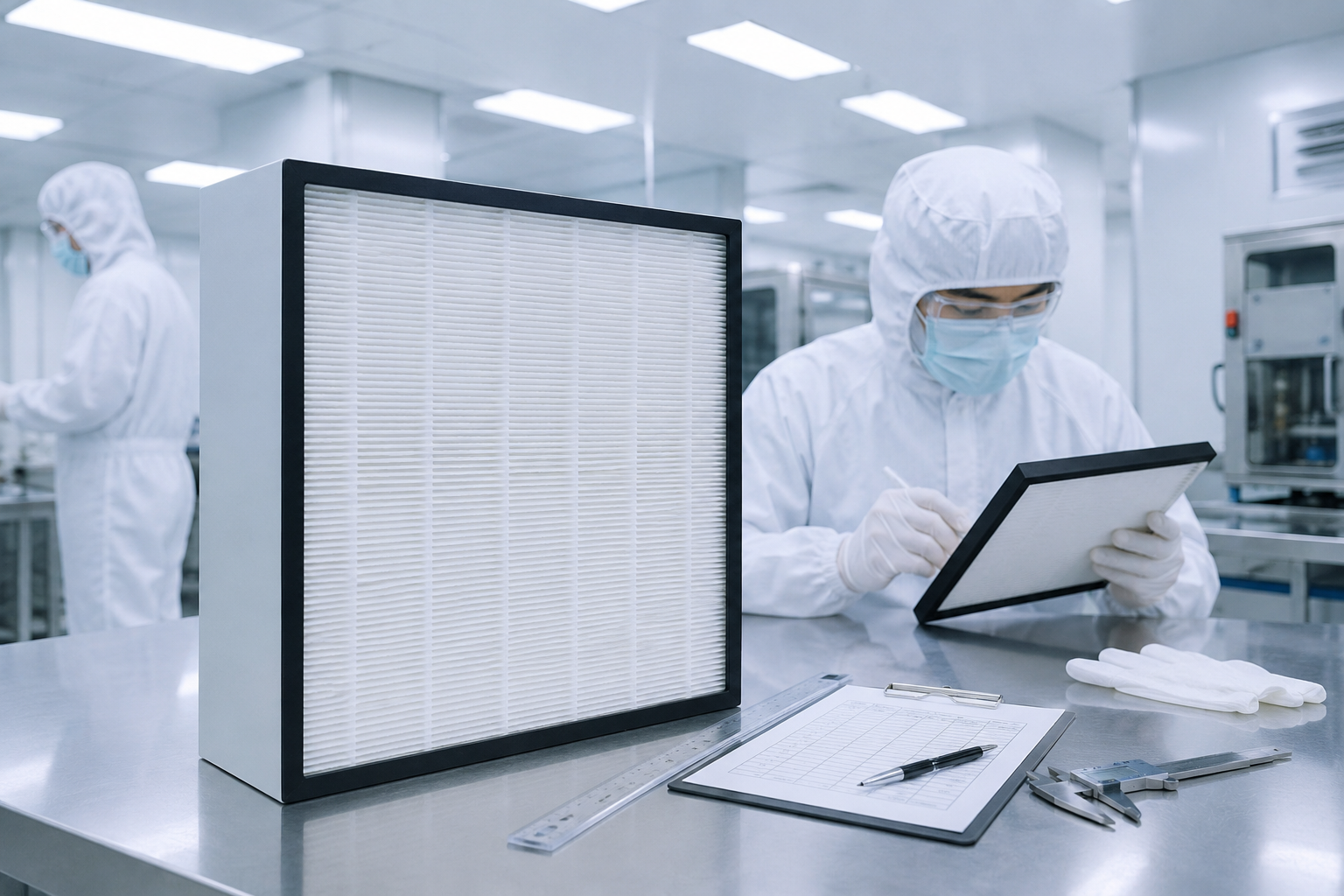
A filter can pass factory efficiency testing and still fail on site. ISO 14644-3 requires an installed leak test using a PAO or DOP aerosol challenge. The technician scans the entire filter face, frame, and gasket at no more than 5 centimeters per second, holding the probe 1 to 3 centimeters from the surface. For H14 and higher grades, any local penetration above 0.01% of the upstream concentration is a failure. For H13 and lower, the threshold is 0.1%. A single pinhole in the media or a gap in the gasket can dump enough particles to push an entire room out of classification.
Matching Filter Selection to Real Operating Conditions
Clean room design is not a one-size-fits-all exercise. The right filter depends on what the room is used for, how often personnel enter, and what the makeup air quality is.
For pharmaceutical facilities operating under EU GMP Annex 1, aseptic filling zones require unidirectional airflow with H14 terminal filtration and 20 to 60 air changes per hour depending on the grade. Support areas can often use H13 at lower air change rates, which saves significant energy over the life of the facility.
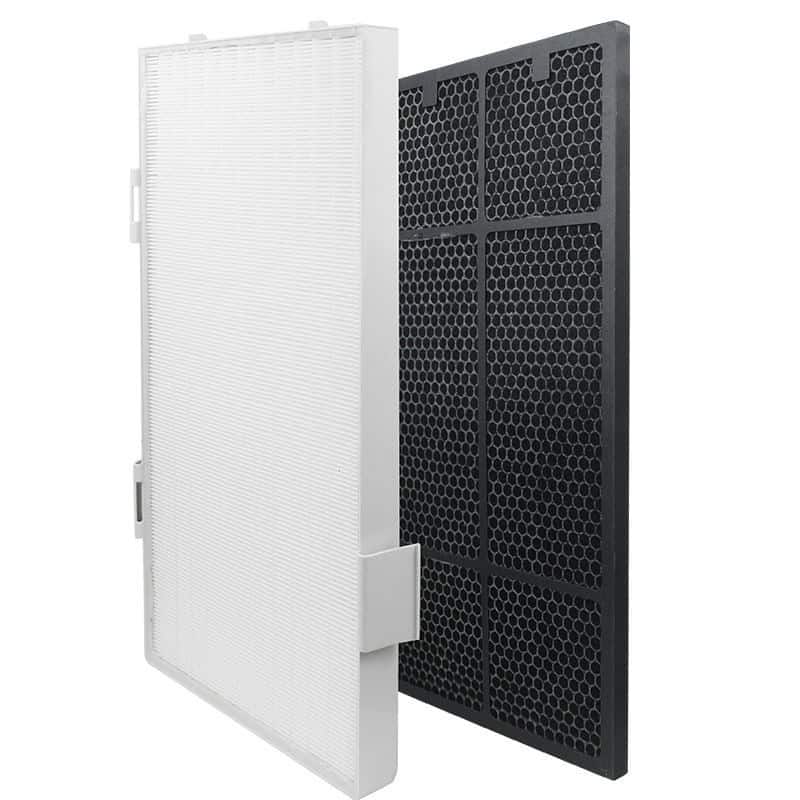
For semiconductor fabs, the challenge extends beyond particles to molecular contamination. Many fabs pair H13 or H14 HEPA filters with chemical filtration using activated carbon or ion-exchange media to control airborne molecular contaminants that corrode wafer surfaces. The filter selection here must address both particle and gas-phase threats, which standard HEPA panels alone cannot handle.
For medical device assembly, ISO 7 or ISO 8 rooms with H13 terminal filters are standard. The key is maintaining positive pressure relative to adjacent non-clean areas, typically 10 to 15 Pascals, to prevent unfiltered air from leaking in through door gaps. This pressure differential is only effective if the filter system delivers enough supply air to overcome door openings and personnel movement.
When to Customize Filters for Your Clean Room
Standard off-the-shelf HEPA filters work for many applications, but custom dimensions, frame styles, and seal types often deliver better performance and lower total cost. Gel-seal filters, for example, create a knife-edge seal that eliminates the gasket gaps responsible for many on-site leak test failures. Custom depth and media area can reduce pressure drop by 15 to 25% compared with standard panels, directly cutting fan energy use.
If you are designing a new clean room or retrofitting an existing one, work with a filter manufacturer early in the process. Specifying the filter after the HVAC system is already designed locks you into whatever pressure drop and dimensions the system can handle, which often means settling for a lower grade or paying more for custom fan upgrades. An OEM partner that produces both standard and custom HEPA panels can advise on media area, frame construction, and seal type before the ductwork is sized.
Key Takeaways
ISO classification sets particle limits, but filter grade determines whether you can hold them consistently. Match H13 to ISO 7, H14 to ISO 5, and validate every installed unit with an ISO 14644-3 leak test. Pressure drop rises as filters load, so size the HVAC for end-of-life resistance, not just the initial reading. Pre-filters protect terminal HEPA units and can double their service life. Finally, custom filter dimensions and gel seals reduce both energy cost and certification failure risk — but only if they are specified before the HVAC design is locked in.